Tag: Tokyo 2020

  • The safest pair of hands

    The safest pair of hands

    The race to host the 2020 Summer Olympic and Paralympic Games was a tightly fought campaign, right until the allimportant secret ballot in Buenos Aires.

    In the first round of voting no clear frontrunner emerged: Tokyo fell just short of a majority, with the remainder of votes split evenly between Istanbul and Madrid. In the run-off round that followed, a slender four vote lead enabled Istanbul to progress to a final round of voting, in which Tokyo garnered 60 votes to Istanbul’s 36. Scenes of jubilation from Japanese delegates ensued. After the initial elation of winning the bid, Tokyo is now faced with the reality of preparing for the biggest event in the world. “It is a huge task to host the Olympic and Paralympic Games, but it is also an incredible honour as well as extremely exciting,” bid CEO Masato Mizuno tells HOST CITY.

    “This post-election phase is a period of transition, during which time we must create the Organising Committee. Our primary job is to now establish the committee in collaboration with the Tokyo Metropolitan Government, the Japanese Olympic Committee and the central government. The entire nation, or ‘Team Japan,’ will work together in a unified effort to deliver the Games in 2020.

    “Our promise to the IOC is to deliver a superb Games in 2020. Delivering early will allow us to focus on the extras that will make the difference between the Games being good or fantastic.”

    Different degrees of risk
    IOC Vice-President and IOC member in Great Britain, Sir Craig Reedie chaired the Evaluation Committee that assesses the bid cities’ capacity to hold the Games. “The three cities that remained in the race all put together very coherent and first class candidatures,” he reminds HOST CITY. “The Games could be run in any one of these three cities, but they all presented different projects with different degrees of risk.”

    Each city faced its own challenges, from the badly damaged Fukushima nuclear plant in Japan and the plight of the Spanish economy to the Turkish authorities’ reaction to the Gezi Park protests in Istanbul.

    “It’s interesting that the questions marks featuring in all of the three cities were issues over which the bid committee had absolutely no control. This is the story of Olympic bids; bid committees have to be able to deal with situations that arise over which they have no control.”

    If the promise of opportunities in new regions was the defining feature of Rio and PyeongChang’s winning bids for the 2016 and 2018 Games, this time it was guarantees of stability that would clinch the matter. With Spain floundering in a turbulent global economy and with public protests disrupting Istanbul’s bid, Tokyo was considered to be the safest bet.

    The Tokyo 2020 team highlighted the commercial potential of holding the games in Asia and Tokyo’s USD 932m sponsorship revenue forecast. “Tokyo had its funding in place, it had a pretty compact plan using reclaimed land in Tokyo Bay and they benefitted from the fact that they still have a number of the splendid buildings that were built for the 1964 Games,” says Reedie.

    The destruction caused by the 2011 tsunami in Japan and the leaks that followed at the Fukushima nuclear plant became a major focus, which Prime Minister Shinzo Abe tackled head on in Buenos Aires. Describing Tokyo as “one of the safest cities in the world,” Abe told IOC members: “Some may have concerns about Fukushima. Let me assure you, the situation is under control. It has never done and will never do any damage to Tokyo.”

    At the same time as representing a risk factor, the disaster also created a powerful emotional aspect to the bid. Paralympian Mami Sato, whose home town was devastated by the Tsunami, emphasised the point that sport and the Olympics had the potential to reinvigorate and rebuild Japan following the disaster.

    “They were very grateful to the rest of the world for the sympathy and help they had when they suffered the tsunami,” says Reedie. “The IOC contributed to the fund and the Olympic movement rallied round. So to that extent they were grateful and therefore it was emotional.”

    Public support was another challenge that Tokyo faced throughout the bid process. “In early 2012, the first IOC figures suggested that only 47 per cent of the population was behind us,” says Mizuno. “We worked intensively to improve support for the Tokyo 2020 Games, and indeed it grew steadily, especially once people celebrated Japan’s medal success at London 2012. A halfmillion spectators turned out to cheer our national heroes during Japan’s first-ever parade for Olympic medallists.

    “We were pleased that the IOC survey in March confirmed 70 per cent support and that the most recent figures are around 90 per cent, according to a survey by the Ministry of Education, Culture, Sports, Science and Technology.”

    Keep it compact
    Fifth-time bidder Istanbul was viewed by many as the frontrunner for much of the campaign. But as well as the controversies surrounding the Gezi Park protests and recent doping scandals involving several Turkish athletes, Istanbul’s bid was also hindered by the wide scope of its concept.

    “Quite clearly the transportation issue was the one that concerned the Evaluation Commission and there was no doubt, despite claims made, that some venues would involve a considerably longer travel time than some of the other cities,” said Reedie. “The larger amounts of money that were being spent weren’t being spent simply for the Games; they were being spent to keep the city moving.”

    Reedie points out that hosting the Games can leave a lasting legacy without the need for the huge amounts of capital spending proposed for Istanbul and seen in London.

    “London chose to develop the most deprived part of the capital and that’s been the most wonderful legacy – but it’s not a condition of bidding for the Games. The IOC doesn’t say we need you to spend billions of dollars. It’s your call as a city; and in fact we go out of the way to separate the organising committee budget and the non-organising committee budget. What cities frequently do is use either the bidding for the Games or the winning of the Games as a catalyst to do things they might not otherwise.”

    Could you host the Games?
    There can be only one winner, but Reedie says the strength of all three bids and the commitment put into each one is testament to how important the Olympic Games is to cities and nations around the world.

    “At the end of the day all three cities presented wonderfully well. It’s not often the IOC is blessed with three Prime Ministers, from three candidates, all coming from the G20 summit in St Petersburg all the way to Buenos Aires to make their presentations. It just gives you some idea of the regard in which hosting the Olympic Games is held and the importance of it to the cities and the countries who support them.”

    The newly elected IOC President Thomas Bach recently revealed he wanted a far greater range of countries and cities to bid for future Games. Baku in Azerbaijan and Doha in Qatar were the two other applicant cities that failed to make it to the candidature stage of bidding for 2020 and the likes of Nairobi, Casablanca and Taipei are considering bids for the 2024 Summer Games.

    Reedie says the success of London 2012 is stimulating interest the world over. “The Olympic brand and the Games are now at a very high level after the success of the London Games and it would be a very good thing if more cities applied in future years to host summer, winter and youth Games. “There is a feeling out there that you have to spend vast amounts of money to do it; I don’t believe that to be the case. There are many cities with lots of sports facilities which could be used to host the Games.”

  • IOC impressed by Tokyo 2020 progress

    IOC impressed by Tokyo 2020 progress

    The International Olympic Committee (IOC)’s coordination commission concluded its first visit to Tokyo on Friday, leaving with positive impressions of planning, personnel and infrastructure.
    John Coates, chairman of the commission, said at the close of the meeting: “We have been very impressed with what we have seen this week during our visit. 
    “The current level of planning; the venue layout; the involvement and integration of the Government authorities at all levels; and the experience and diversity of the new Executive Board all leave us confident in Tokyo’s ability to deliver great Games for the athletes in 2020.”
    The IOC delegation also included Vice-Chair Alex Gilady, IOC Olympic Games Executive Director Gilbert Felli, and Deputy Olympic Games Executive Director Christophe Dubi.
    From 2 to 4 April, the group participated in the first IOC project review of the Games preparations and were updated on progress made since Tokyo was elected as the host city of the 2020 Olympic and Paralympic Games in September 2013.
    The IOC executives were introduced to members of the new Tokyo 2020 executive board. The Commission was particularly pleased to see that a number of athletes and women are on the Board, representing the culture and diversity of Japan, the IOC said in a statement.
    Coates said: “Since my last visit to Tokyo with IOC president Thomas Bach in November 2013, Tokyo 2020 has successfully undertaken a number of important steps on its seven-year Olympic journey. The establishment of the organising committee, the constitution of its executive board, the creation of a high-level advisory committee, and its participation in the observer programme for the Sochi 2014 Olympic Winter Games will all enable Tokyo to face the coming six and a half years with a high level of confidence thanks to this quick start.”
    The Games organisers presented on a number of topics, including governance, legacy, sustainability, accommodation, finance, commercial matters, engagement, medical, athlete preparation, venues and infrastructure. 
     
    Venue visits
    The delegation visited a number of the venue sites, including Yoyogi National Stadium, the Olympic Stadium, Nippon Budokan, Imperial Palace Garden, Tokyo International Forum, Kokugikan Arena, Odaiba Marine Park, Tokyo Big Sight, and viewed the sites of all the other future venues of the Tokyo Bay Zone. 
    The venue visit also included a trip to the site of the future Olympic Village, where the delegation was joined by Tokyo Governor Yoichi Masuzoe, Olympic champion Koji Murofushi, and a number of young Japanese rowers, including Olympian Haruna Sakakibara, who took part in the London 2012 Games.
    Yoshiro Mori, chairman of Tokyo 2020 said: “We have just completed three days of meetings, and I am very pleased that we were able to hold a range of productive discussions. We now have a much clearer understanding of the direction required for us to take to deliver successful Games.”
    The first full IOC coordination commission visit to Tokyo will be held from 25 to 27 June 2014. This will be the first of 10 Commission visits to the 2020 host city over its seven-year lifecycle. 
    “We will now work towards implementing the action plan that we have formulated together over the past three days, and we look forward to welcoming the members of the IOC Coordination Commission back to Tokyo this summer,” said Mori.

  • Olympic host Tokyo ranked world’s riskiest city

    Olympic host Tokyo ranked world’s riskiest city

    A ranking of cities under threat from natural disasters, “Mind the Risk” by reinsurance company Swiss Re, has placed Tokyo top of the list. 
    The International Olympic Committee nonetheless told HOST CITY that it stands by the findings of its Evaluation Commission, which highlighted Tokyo’s “well thought-out proposals for the successful planning and delivery of security operations, which would deliver safe and secure Games.”
    Tokyo successfully dispelled safety concerns during its bid to host the 2020 Olympic and Paralympic Games. Speaking to IOC members during the bid presentation in September, Prime Minister Shinzo Abe described Tokyo as “one of the safest cities in the world.”
    The IOC on Wednesday reaffirmed its confidence in Tokyo’s ability to respond to potential seismic events. “It goes without saying that we cannot predict natural disasters, but Tokyo is known for having some of the most comprehensive construction practices to help protect buildings against the effects of earthquakes,” an IOC spokesperson told HOST CITY.
    “The local authorities are also very well prepared to handle these types of emergency situations and we have complete confidence in them, as the Evaluation Commission noted in its report.”
    Matthias Weber, Swiss Re’s Group Chief Underwriting Officer said in the report: “We know from past events that physical prevention measures alone do not suffice to build a resilient city, since damage from the most severe catastrophes cannot be fully averted.
    “An important part of resilience is how well urban societies are able to cope with the financial consequences of a disaster, which includes access to the requisite funding for relief, recovery and reconstruction.”
    HOST CITY also contacted Tokyo 2020, which was unavailable for comment at time of writing.
    Seven of the ten cities found to be at highest risk are in East Asia, due to their combination of high seismic activity and large populations. 
    Los Angeles, which is taking steps towards a highly anticipated bid to host the 2024 Olympic Games, has the seventh largest number of people at risk of natural disaster, according to the Swiss Re report.

  • IOC signs Japan’s Bridgestone as Worldwide Partner

    IOC signs Japan’s Bridgestone as Worldwide Partner

    The world’s largest multi-sports rights holder has partnered with the world’s largest tyre and rubber company. 
    In an agreement through to 2024, The Bridgestone Corporation, headquartered in Tokyo, has joined The Olympic Partner (TOP) programme – the IOC’s small group of sponsors with exclusive marketing rights.
    This is the first sponsorship agreement is the first to be signed under the watch of the IOC’s new marketing commission chairman, Tsunekazu Takeda.
    “I am delighted that a leading Japanese company, Bridgestone, will become the 11th Worldwide TOP Partner and the second TOP Partner to commit through to 2024,” said, the IOC’s marketing commission chairman, who is also president of the Japanese Olympic Committee and vice president of the Tokyo 2020 Organising Committee.
    “As the first Partner the IOC has signed under my Chairmanship of the Marketing Commission I am also personally very happy that we were able to make this global announcement in Tokyo,” said Takeda.
    Alongside 10 other Worldwide TOP Partners including McDonalds, Coca Cola and Visa, Bridgestone will not only partner with the IOC but also all 204 National Olympic Committees and their Olympic teams.
    The tyre manufacturer will also partner with the organisers of future Olympic Games, including the Rio 2016, PyeongChang 2018 and Tokyo 2020 Olympic Games, as well as the 2022 and 2024 Olympic Games – the host cities of which have yet to be elected. 
    Bridgestone will supply tyres and related services to support the transport operations at Games time, including the vehicles for the athletes, media and officials. 
    “The long-term, global support the TOP Programme provides is essential to the entire Olympic Movement, as well as to the staging and operations of each Games,” said Takeda.
    As well as tyres, the product categories covered by the agreement include seismic isolation bearings and non-motorised bicycles. The company also manufactures industrial rubber and chemical products and sporting goods.
    Bridgestone CEO and Chairman Masaaki Tsuya said, “As a global corporation, Bridgestone is excited to partner with the entire Olympic Movement, a group of organisations that not only brings together the world’s athletes at the greatest athletic festival, but also blends this celebration of sport with a spirit of service to community, social responsibility, a respect for diversity and a commitment to the fundamental principles of Olympism.”
    As a Worldwide TOP Partner, Bridgestone will partner with the IOC and all 204 National Olympic Committees and their Olympic teams.
    “The TOP programme is a truly global sponsorship programme, as it benefits all future Games organisers and all the National Olympic Committees and their athletes, ensuring that athletes from all over the world, and not just the largest countries, are able to compete at the Games,” said IOC President Thomas Bach.
    “Indeed, the IOC redistributes over 90 per cent of its revenues to the wider sporting movement. Bridgestone is a global leader in its field, and we are delighted to welcome the company to the TOP programme and are excited about the long-term commitment they have shown to the Olympic Movement.”
     

  • IOC hails Tokyo 2020’s quick start and strong partnership

    IOC hails Tokyo 2020’s quick start and strong partnership

    For the first time, Tokyo last week welcomed the International Olympic Committee’s Coordination Commission, which found that the city was on the right path towards hosting an excellent Olympic Games in 2020. 
    “The Organising Committee and its government partners have got off to a quick start and are putting in place solid foundations for the next six years of preparations,” said John Coates, the chairman the body of experts tasked with assessing and facilitating the city’s progress. 
    “We are very pleased with Tokyo 2020’s progress under the leadership of President Yoshiro Mori.”
    In addition to chairing the Coordination Commission for Tokyo 2020, Coates is on the Coordination Commission for Rio 2016. His praise of Tokyo 2020 is in direct contrast with the concerns he raised over Rio 2016 in recent months. 
    Where delays have been described as “critical” in Rio, Tokyo is off to a “quick start”. And while Rio 2016 has been criticised for poor communication between different levels of government, Tokyo 2020 has benefited from good coordination within government.
    “The close cooperation of all levels of government with Tokyo 2020 was clearly felt by the Commission, particularly following our meeting with Prime Minister Abe and with Governor Masuzoe’s participation in the visit,” said Coates. 
    “Their support for the Games, as well as the support of many high-profile Japanese personalities through the Tokyo 2020 Advisory Meeting, are greatly appreciated, and will stand the 2020 Games in good stead. Their commitment underlines that Tokyo 2020 is for all Japan, and is encouraging Japanese everywhere to get behind these Games and see how they can engage in helping Tokyo to welcome the world in 2020.”
    Yoshiro Mori, President of Tokyo 2020 said “Even though our team consists of members of the sporting community, the Tokyo Metropolitan Government, the national government and various related organisations, I was able to gain a real sense that all members of the Organising Committee were pulling together in the same direction as a truly integrated unit. Over the next six years, the members of the Coordination Commission and the Organising Committee will work together as a united team, all sailing in the same boat towards a shared objective, and I believe we have got off to an excellent start.
    “However, the members of the Commission did point out one or two things that need addressing. We will of course be incorporating all the advice we received into our preparations for the Games at the earliest opportunity.”
     
    Venue review
    The Commission visited many venues in the “Bay Zone” including the Velodrome, Gymnastic Centre, Tennis Park, Olympic Village, Tokyo Big Sight, Aquatics Centre, Wakasu Olympic Arena and Sea Forest venues. Twelve of Tokyo 2020’s venues are already existing, including four originally built for the 1964 Olympic Games. 
    The visit took place at a time when Tokyo 2020 has been reviewing the venue plans outlined in its bid, amid widespread speculation about the implications of this review. This review was sparked by the observations of the IOC Evaluation Commission, which monitored the city’s bid for the Games. 
    In a statement, the IOC said “The review will not affect the core principles of the bid. The objective is to refine the legacy and operational assumptions of Tokyo’s plans. The Tokyo organisers are looking to ensure that their Games leave a sustainable long-term legacy to the host city and its citizens. The review is being carried out in cooperation with all the key national and international stakeholders.
    “The legacy vision and objectives are consistent with discussions around Olympic Agenda 2020, a process that will provide an ambitious strategic roadmap for the future of the Olympic Movement.”
    Mori said “With regard to the review of our venue plan, I informed the Coordination Commission that, based on such aspects as the kind of legacy we will leave, the impact of the Games on the lives of Tokyo residents and the cost of construction and maintenance of the venues, the Organising Committee will examine all issues closely and collaborate with the IOC, the International Paralympic Committee (IPC), and both domestic and international sports federations, to ensure the success of the Games.”
     

  • Tokyo 2020 organisers propose venue relocation

    Tokyo 2020 organisers propose venue relocation

    The organising committee has informed the IOC of possible revisions to the locations of some of the Games venues and organisers are considering moving certain venues into locations in the Greater Tokyo area, some as far as an hour’s drive from the city centre.
    The original Tokyo bid promised a compact Games with the majority of the venues located within a five mile radius of the Olympic village, far more condensed than many recent Games. Only the shooting, modern pentathlon and football events were originally planned to be held outside of the five mile Olympic village zone.
    The new plans could see some venues being moved out as far away as the city of Saitama which could result in some considerable transportation headaches. However, organisers have insisted that the revised plans would be made possible with improved transport infrastructure whilst still cutting costs. The IOC has previously praised Tokyo’s venue layout and have been impressed by the city’s progress.
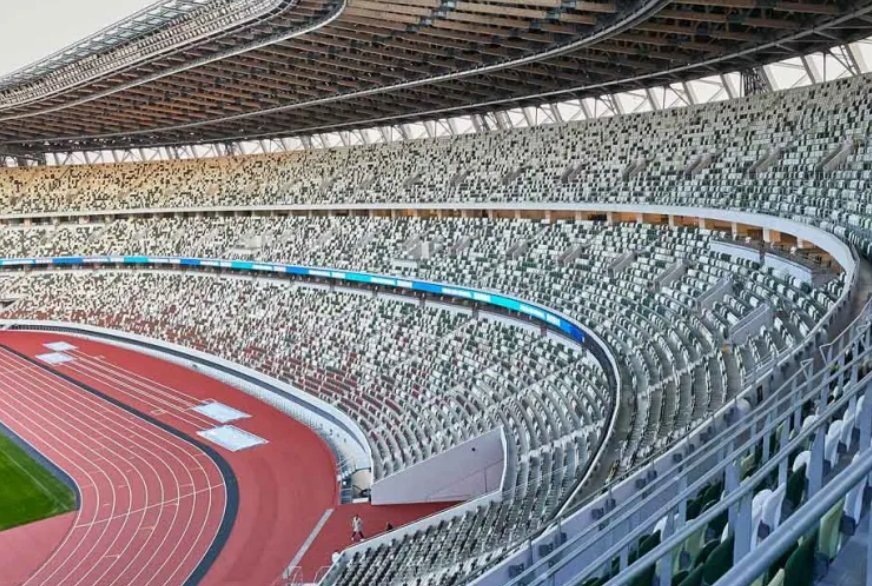
    The cost of the Games has been a cause of contention amongst Tokyo’s citizens with protests being held against the new 80,000 seated stadium which will replace the current National Stadium.
    Tokyo governor Yoichi Masuzoe has had to defend the new plans and told a press conference at the Foreign Correspondents’ Club of Japan that he has a responsibility to Tokyo taxpayers.
    “How can I persuade the taxpayers to pay this kind of money? We are working with the IOC and the various sports federations to make the Games sustainable. Legacy is very important. If you abolish everything after the Games who can accept that?” said Masuzoe. 
     

  • Arup to aid Tokyo 2020 preparations

    Arup to aid Tokyo 2020 preparations

    Arup will provide advice for the Tokyo Metropolitan Government and the Tokyo Organising Committee of the Olympic and Paralympic Games to develop venues and infrastructure for the Games.
    Arup’s service for the Tokyo Olympics includes masterplan review and advice for cross-sectorial specialty areas such as transport, security, sustainability and legacy. Jointly with partner consultant AECOM, Arup will also advise on the venue briefs and contribute to the strategy development for overall delivery of design and construction through the preparation stage to the legacy transformation.
    “Arup is proud to have played a part in renewing Beijing and London in advance of the Olympics and is looking forward to continuing our contribution to the 2020 Tokyo Games,” Jerome Frost, the Arup director who was head of design and regeneration for the London Olympics, said.
    “Through our experience in preparing cities for the Olympics and other international events, the firm has been responsible for much of the urban renewal of the host cities, ensuring the events serve as a catalyst for long-term investment and development.”
    The partnership comes with construction work on Tokyo’s Olympic Stadium for the Games being delayed until mid-December at the earliest, according to the Japan Sport Council (JSC).
    Under proposals, the city’s current National Stadium will be demolished for a $1.6bn (€1.2bn) 80,000-capacity facility to be built in its place. However, the demolition of the existing arena has faced a raft of delays in light of concerns over construction costs.
    The JSC owns the current national stadium but plans have been put back once more due to complaints of irregularities in an earlier round of bids for the demolition project. A mid-December start date would be five months later than work on the stadium was originally slated to begin.
    A Tokyo construction firm filed a complaint with the Government Procurement Review Board after a second round of bidding in the summer. The first round failed as all bids submitted were too high. 
    “There was a complaint about the process and it was recommended to us that we hold another round of bidding,” a JSC official said, according to the Reuters news agency. “We accepted that suggestion.”
    A JSC internal investigation has led it to reject claims by workers from the company in question that bids were opened before the final price was set and that a firm other than the lowest bidder secured the job. The Government Procurement Review Board ordered another round of bidding despite reporting no evidence of wrongdoing.
    Education Minister Hakubun Shimomura, whose ministry is in charge of Games preparation, admitted to “basic mistakes” being made in the process last month. 
    He added: “This is extremely regrettable and we are taking it extremely seriously. We are recommending that another round of bidding be held.”
    The JSC remains confident of meeting a contraction deadline for the new stadium to host matches when Japan stages the 2019 edition of the IRB Rugby World Cup.
    Tokyo 2020 organisers are reviewing the locations of their current venue plans because of concerns over the rising costs of the Games.

  • AECOM adds to Arup expertise for Tokyo 2020 delivery

    AECOM adds to Arup expertise for Tokyo 2020 delivery

    Arup, which was appointed to serve as the lead adviser of the 2020 Games earlier this month, will work alongside AECOM to contribute towards strategy for the overall delivery of venue design and construction.
    AECOM will also review the Games’ master plan and advise on the associated transportation, security, sustainability and legacy components. It will be the global company’s third consecutive Olympics after it was also responsible for the London 2012 and bid-winning Rio 2016 Olympic and Paralympic Games master plans.
    “Olympic Games are an important part of AECOM’s success in regenerating and promoting cities around the world,” Michael S. Burke, AECOM president and chief executive, said. “By harnessing our global expertise as the world’s premier fully integrated infrastructure firm, AECOM will be able to support the Tokyo Olympic Organising Committee in delivering a memorable Olympic Games.”
    Part of AECOM’s presence around the Games preparations will be to hold a number of workshops in Tokyo focused on the delivery of the Games and its subsequent legacy.
    Meanwhile, the Korean government has confirmed that the opening and closing ceremonies for the 2018 winter Olympics in PyeongChang will take place in the city.
    The decision backtracks on a proposal to renovate an existing sports centre in Gangneung to host the ceremonies in order to rein in costs. A purpose-built facility will now hold the events in PyeongChang.
    The Gangneung plans had proved deeply controversial and a protest group said in a statement on Monday: “If the government goes through with the plan to move the opening and closing ceremonies outside PyeongChang, we will stage a boycott of the Olympics. If they were moved to Gangneung, it should be called Gangneung Olympics. It is outrageous for the government to be even considering such a move with only just under four years left until the Games.”

  • Olympics can help Tokyo overtake London, says Governor

    Olympics can help Tokyo overtake London, says Governor

    Tokyo Governor Yoichi Masuzoe rounded up his visit to London with an audience at the Royal Institute of International Affairs, where he stated his ambition for Tokyo to use its own Olympic legacy to overtake London. He led a delegation that last week took in a tour of the Olympic Park and a reception at Host City Bid to Win conference.
    On arriving in London on the evening of 27th October, Masuzoe met with Sir Craig Reedie – keynote speaker at Host City Bid to Win – and sent a senior representative to a Host City reception. All members of the Tokyo delegation received a copy of Host City’s first Japanese edition, which includes an interview with the President Mori of the Tokyo Organising Committee of the Olympic Games.
    The following day the Tokyo delegation visited the Queen Elizabeth Olympic Park, where Masuzoe met with his London counterpart, Boris Johnson. 
    “This was the first time for us to meet, and we got along very well. Maybe we have a lot in common, except in our hairstyles,” Masuzoe told the Royal Institute of International Affairs. 
    Masuzoe said that he wants the 2020 Games to be not only the best ever: he wants the Olympic effect to transform Tokyo into a more competitive city than London.
    He cited a Japanese think tank, Mori Memorial Foundation, whose Global Power City Index has ranked London top and Tokyo fourth.
    He said a major priority is to use the Games to revive the economy, drawing in people, money, and information from around the world and making the Japanese capital “the number-one city in the world” within six years. 
    The aim is to make Tokyo a global financial centre to rival the City of London and New York’s Wall Street. “I said to Boris, I will be at London. Sorry about that. That’s the reason for my visit.”
    He said he and Boris Johnson had agreed to further strengthen the partnership between London and Tokyo cemented by a possible visit by Boris to Tokyo next year. 
    He said Tokyo wanted to find out how London managed to sustain its economic development in the aftermath of the 2012 Olympic and Paralympic Games. 
    Masuzoe said he was impressed to see such a packed programme of events in facilities built for the highly successful Games in 2012. He said it was important for the Tokyo Games to leave an equally palpable legacy.
    He said the 2012 Games had changed London significantly and Tokyo would also change after 2020. Abenomics started the process of Japan’s economic recovery, said Masuzoe, a positive shift that quickened further after winning the bid to host the 2020 Games.
    However, the language barrier has hampered Tokyo’s growth, with a perception that a small number of foreign nationals live in Japan, he said. This would be rectified by increasing the number of multi-lingual signs and improving accommodation and services for the international community. These shortcomings would be addressed, he said, with the aim of making Tokyo a “people-friendly city”.
    The Governor also said Tokyo would follow London’s example in creating a festival of culture as well as sport in 2020. 
    Emissions would also be reduced, he said. “At the 2020 Games we hope to attract attention to the advent of a hydrogen society by providing visitors with a fleet of vehicles running on hydrogen.
    “I understand that here the use of bikes increased after the 2012 Games, the so-called Boris bikes. Tokyo would also create a better environment for bicycle use and promote bicycle sharing.”
     
    Reaching out to world cities
    Tokyo has also established partnerships with other world cities including Beijing, Berlin, Moscow, New York, Paris and Seoul. 
    “I plan to build a win-win relationship with cities around the world and thereby strengthen Tokyo’s appeal,” Masuzoe said.
    If relations between China and Japan have historically been tense, visitors from Beijing to Tokyo are most welcome in the modern age. 
    “It is one of the good achievements of my visit to Beijing,” he said. “They buy many things in Ginza department houses and big shops, and they pay much money, and these shops pay much tax to me, and I can use this money to make our Games successful, right?”
    This report includes information from Global Travel Industry News
     

  • Tokyo 2020: we must stay close to IOC and IFs

    Tokyo 2020: we must stay close to IOC and IFs

    HOST CITY: Congratulations on your appointment as President of Tokyo 2020. How have your previous experiences prepared you to take on the responsibility of organising and delivering the world’s greatest and most complex event? 
    Mr Yoshiro Mori: Of course, it is a great honour to have been appointed as President of the Tokyo Organising Committee of the Olympic and Paralympic Games. However, I am also keenly aware of the huge responsibilities that come with this position and the many challenges that lie ahead. 
    As well as having served as Prime Minister of Japan, I have also been engaged in the promotion of sports for many years. I have served as President of the Japan Sports Association, and am currently President of the Japan Rugby Football Union and Vice President of the Rugby World Cup 2019 Organising Committee. 
    Throughout my long involvement in sport, I have always recognized the importance of forging close working relationships based on mutual trust with a variety of stakeholders both domestically and internationally, and have always endeavoured to put this into practice. It is fullest intention to make the most of my extensive experience, and exert my utmost efforts towards building productive relationships with the International Olympic Committee, the International Paralympic Committee and international sports federations, as well as the wider international sporting community. 
     
    HOST CITY: Why do you think Tokyo was selected as the host city for the 2020 Olympic Games?
    Mr Yoshiro Mori: The main objective of the presentation given by the Tokyo bid committee at the 125th IOC Session in Buenos Aires last September was to demonstrate to the members of the IOC that the people of Japan had once again realised the power of sport to act as a force for good through their struggles in overcoming the tragic earthquake and tsunami of March 2011, and their strong desire to further promote these values and make a significant contribution to the international community. 
    I believe that that many IOC members were persuaded by Tokyo’s presentation, and this is a major reason behind Tokyo being elected as the host city for the 2020 Games. Other important factors were Tokyo’s meticulous plans for the successful delivery of the Games, the fact that Tokyo is a safe pair of hands for the Olympic Movement, and the fact that Tokyo has a proven track record of successfully hosting several major international sports tournaments.  
    Our overarching aim is to deliver a seamless and successful Olympic and Paralympic Games, and to communicate the power and values of sport. In so doing, I hope that we are able to respond to the expectations that the world has towards the Tokyo 2020 Games. 
     
    HOST CITY: What is the global significance of Tokyo and Japan hosting the Olympic Games in 2020, as compared to in 1964?
    Mr Yoshiro Mori: The 1964 Olympic and Paralympic Games left an immeasurable amount of both tangible and intangible legacies in Japan. Furthermore, a vast majority of these legacies remain in regular use even now, a half century later. The 1964 Games served as a platform for Japan to showcase its economic strength and technological capabilities to the world, and provided Japan with the opportunity to claim its rightful place among the world’s leading industrial nations in the second half of the 20th century. 
    Now, as we prepare for the 2020 Games, Japan has already reached the status of a ‘mature nation.’ Evidence of this can be seen by the fact that Japan, along with other mature societies, is now working towards realisation of a largely equitable society and is tackling the problem of an increasingly ageing society. I believe that countries around the world are looking to Tokyo and Japan to come up with solutions to the kind of problems faced by mature societies through its hosting of the Olympic and Paralympic Games. From a global perspective, I feel that this is one of the roles expected of Japan by the international community. 
     
    HOST CITY: What are the organising committee’s most important priorities for the second half of 2014 and for 2015?
    Mr Yoshiro Mori: The most important task facing us for the remainder of 2014 is the formulation of our Games Foundation Plan. The Organising Committee is obligated to submit our finalised Games Foundation Plan to the International Olympic Committee early next year, and we are currently working feverishly on ensuring that the plan is completed on time. 
    From next year, we will enter the phase of putting our finalised plans into practice. Accordingly, it is essential that we forge close working relationships with the IOC, the IPC, IFs, NOCs and all other stakeholders. We realise that our first priority must be to establish a relationship of trust with all the aforementioned stakeholders. 
     
    HOST CITY: Further ahead, which of the functional areas, such as security and transport, do you think will require the most attention?
    Mr Yoshiro Mori: The Organising Committee is composed of ten separate bureaus, each with responsibility for a specific function. The bureaus are Administration, Planning and Finance, Engagement, Marketing, International Relations and Sports, Games Preparations and Operations, Security, Telecommunications, Venues, and Coordination for Infrastructure. 
    Each of these is a vital function, and without even one of them a successful Games would not be possible. Of course, among these functions, it is important that some bear fruit quicker than others, but rather than saying which of the functions is more important, it is perhaps more accurate to say that our greatest responsibility should be to ensure that all functions are acting in unison towards the ultimate objective of delivering a successful Games. 
     
    HOST CITY: How do you expect media scrutiny to grow as you get closer to 2020 and how does the organising committee plan to manage the media coverage of Tokyo’s preparations?
    Mr Yoshiro Mori: Both the London and Sochi Games drew a huge amount of attention from the international media. I am certain that the Tokyo Games will attract the same amount of media attention, if not more. 
    The organising committee already has a specialist communications team in place to handle enquiries from both the Japanese and international media, and they are able to respond swiftly to the many requests for interviews we receive from journalists on almost a daily basis. The team also shares information each week with the IOC communications team by teleconference. 
    In addition, we have also set up a network to maintain regular contact with the communications teams of the Tokyo Metropolitan Government, the Japanese Olympic Committee, the Japanese Paralympic Committee and the Japan Sport Council, and we plan to further expand this collaborative network in the future. 
     
    HOST CITY: What role do you see for the many international partners and suppliers that can support Tokyo’s staging of the Games?
    Mr Yoshiro Mori: Various types of expertise and technical abilities are essential for hosting the Olympic and Paralympic Games. Of course, it is impossible to include all these areas of expertise in the organising committee. Therefore, it is essential that we avail ourselves of the professional products and services provided by sponsors and suppliers in specialist business fields. One could even say that they are indispensible partners in ensuring the successful delivery of the 2020 Games.
    Sponsors and suppliers also play a vital role in helping to create a vibrant atmosphere for the Games. The organising committee will work closely with sponsors and suppliers to further contribute to the Olympic and Paralympic Movement. 
     
    HOST CITY: HOST CITY magazine helps event organisers to deliver the best events in the world, by sharing the experience of different host cities. How important is information like this in preparing to host the greatest show on earth?
    Mr Yoshiro Mori: Without doubt, the Olympic and Paralympic Games is the most complex sporting event in the world to organise, and preparations require an inordinate amount of time and effort. It is important that we obtain as much expertise and knowhow as possible in the least amount of time. 
    We have learned much and gained vital experience of previous Games through our participation in the IOC’s Observer Programme and Olympic Games Knowledge Management Programme. However, we also realise that there is still much more we can learn from specialist international media outlets such as HOST CITY magazine.
     
    This interview first appeared in the Autumn issue of HOST CITY magazine. Register here