Tag: Tokyo 2020

  • Tokyo 2020 signs NTT and Asahi as Gold Partners

    Tokyo 2020 signs NTT and Asahi as Gold Partners

    Nippon Telegraph and Telephone (NTT) Corporation and Asahi Breweries have both signed as gold partners of the Tokyo 2020 Olympic and Paralympic Games, within the space of two days. 
    On Monday, the Tokyo-based NTT Corporation signed as Official Telecommunications Services Partner.
    NTT Corporation will provide telecommunications services for hosting the Games. 
    On Tuesday, Asahi Breweries was announced as the second Gold Partner in the “Beer & Wine” category. 
    The world’s highest earning telecommunications company, NTT also worked on Japan’s three previous Olympic Games: Tokyo 1964, Sapporo 1972 and Nagano 1998.
    “NTT has a long and distinguished history of connecting people across the length and breadth of Japan, and it is my earnest wish that we will be able to work together to further strengthen bonds between people and ensure that we deliver a successful Olympic and Paralympic Games in 2020,” said Tokyo 2020 President Yoshir? Mori.
    In today’s world, security is a major function of the telecommunications partner. 
    “With the rapid evolution of ICT (information and communications technology), the Tokyo 2020 Olympics and Paralympics require telecommunications convenience to be accompanied by safety more than ever before,” NTT said in a statement.
    “In addition to helping make the Games’ telecommunications safe, secure, and welcoming, NTT is taking advantage of the Group’s telecommunications related security technologies and its telecommunications service infrastructure inside and outside Japan, endeavouring to act as a ‘value partner’ in providing an unprecedented level of hospitality to the Tokyo 2020 and other relevant organisations, as well as competitors and guests from Japan and overseas.”
    The second Gold Partner to sign, Asahi Breweries, is already a Gold Partner of the Japanese Olympic Committee. 
    “As becoming the Tokyo 2020 Gold Partner (Beer & Wine), we are greatly looking forward to support not just the Japanese national team, but also every single athlete competing in the Games, allowing them to perform beyond their limits, and convey the message of the magnificence of having hopes and dreams to the children who bear the future,” said Akiyoshi Koji, president of Asahi Breweries.
    “Asahi Breweries has an excellent slogan, which translates roughly as ‘Let’s share the emotion,’” said Mori. 
    “This slogan very much echoes the efforts of the Tokyo 2020 Organising Committee to support athletes in their endeavours and to provide a stage where that emotion can be shared.
    “During the Games, the whole of Japan will be raising their glasses and cheering on the athletes, and we are looking forward to working closely with Asahi Breweries to share the emotion of the Tokyo 2020 Games.”
    The Tokyo 2020 organising committee is reported to be targeting $1.1bn of sponsorship revenue to fund staging the Games, with the top tier gold category said to be valued at $128m. At these prices, Tokyo 2020 could already be 30 per cent of the way towards its sponsorship revenue target. 
    The domestic sponsors of the organising committee are distinct from the International Olympic Committee’s global TOP sponsorship programme, which also makes a major contribution to hosting the Games while supporting the Olympic movement worldwide and includes Japanese companies Bridgestone and Panasonic.
     

  • Nomura sponsors Tokyo 2020 as securities Gold Partner

    Nomura sponsors Tokyo 2020 as securities Gold Partner

    Tokyo 2020 has signed Nomura Holdings as a Gold Partner in the category “Securities”.
     “I am delighted that today Tokyo 2020 has concluded a Gold Partner agreement with Nomura Holdings, Inc,” said Tokyo 2020 President Yoshiro Mori.
    “Naturally, I look forward to the support that Nomura will provide as a Tokyo 2020 Gold Partner, but I also hope that the company will continue the vital role it is playing in the securities market, which forms the foundation of the Japanese economy.”
    Nomura provides services to individuals, institutions, corporates and governments through its three business divisions: Retail, Asset Management, and Wholesale (Global Markets and Investment Banking). 
    “We are proud to support athletes on their journey to the Tokyo 2020 Games,” said Nomura Group CEO Koji Nagai.
    “The Olympic and Paralympic Games provide significant economic benefits to host countries and we see the Tokyo 2020 Games as the perfect opportunity to revitalize the Japanese economy. 
    “By supporting athletes aiming for their personal best and companies adapting to a changing environment, we hope to contribute to the success of the Tokyo 2020 Games while fostering economic growth and social development in Japan.”
    As well as helping to fund the delivery of the Games, domestic sponsors are a core component of Tokyo 2020’s marketing programme. They are accorded the rights to use Olympic and Paralympic designations and imagery including emblems, mascots and slogans. 
    As Gold Partners, the top tier domestic sponsors, Nomura joins Asahi, Canon, Eneos, Tokio Marine & Nichido Fire Insurance, Nissay, NEC, NTT and Fujitsu.
    In addition to domestic sponsors, the IOC’s Worldwide Olympic (TOP) Partners – Coca-Cola, Atos, Bridgestone, Dow, GE, McDonald’s, Omega, Panasonic, Procter and Gamble, Samsung, Toyota and Visa – also contribute to the financing and delivery of the Games. 
     

  • 26 sports vie for Olympic inclusion at Tokyo 2020

    26 sports vie for Olympic inclusion at Tokyo 2020

    The organising committee of the Tokyo 2020 Olympic Games revealed on Friday that 26 international federations (IFs) are bidding for inclusion, with sports ranging from American football, baseball and karate to surfing, bridge and flying disc. 
    Tokyo 2020 said the additional events must “serve as a driving force to promote the Olympic Movement and its values, with a focus on youth appeal,” and “add value to the Games by engaging the Japanese population and new audiences worldwide, reflecting the Tokyo 2020 Games vision.”
    Since the IOC’s approval of Olympic Agenda 2020 last December, hosts of the Games are able to propose one or more additional events to add to the sports programme – much like the process employed by the Commonwealth Games Federation.
    Applications for the additional events opened on 8th of May with a deadline of 8th June. The long list of 26 applicants was revealed after an Executive Board meeting on Tuesday 12th June.
    The applicant IFs represent the following sports: air sports; American football; baseball softball; billiards; bowls; bowling; bridge; chess; dancesport; floorball; flying disc; karate; korfball; netball; orienteering; polo; racquetball; roller sports; climbing; squash; sumo; surfing; tug war; underwater sports; waterski and wakeboard; and wushu.
    The applications will now be reviewed by the seven Japanese members of Tokyo 2020’s “Additional Event Programme Panel” and a shortlist will be announced on 22 June 2015.
    The shortlisted will then submit further details and make a presentation to the Additional Event Programme Panel, who will then propose its recommendations to the Tokyo 2020 Organising Committee, which will decide on the events to be proposed to the IOC. 
    The final decision will be made the IOC at its 129th Session in Rio in August 2016.

  • Japanese Olympic Committee clears Tokyo bid of breaking law

    Japanese Olympic Committee clears Tokyo bid of breaking law

    The Tokyo 2020 Olympic bid committee did nothing wrong in making payments to the Black Tidings consulting company during its campaign, the Japanese Olympic Committee (JOC) has concluded after an investigation into allegations of illegal activities.  
    The Guardian newspaper in the UK revealed in May that the Tokyo 2020 Olympic bid committee had made a payment of GB£1m to Black Tidings – a company headed by Singaporean consultant Ian Tan Tong Han.
    Tan has since the 2008 Beijing Olympic Games been a close associate of Papa Massata Diack, the son of Lamine Diack – who himself resigned from the IOC amid claims that he accepted bribes to cover up positive drugs tests when he was president of the International Association of Athletics Federation.
    The payment to Black Tidings, reportedly signed off by JOC President Tsunekazu Takeda, was the subject of an investigation by French police into whether the money was connected to votes in the host city election.
    But the report by the JOC, released on Thursday, said there was no evidence that the relationship between the Tokyo 2020 bid committee and Tan was “illegal or invalid under the civil laws or criminal laws of Japan, and there is no doubt that it is lawful”.
    The JOC also said the payment did not break French laws or violate any IOC ethical guidelines.
    “I believe that Tokyo has been cleared of any suspicion of bribery”, said Yoshihisa Hayakawa, a lawyer who led the three-member panel told the Guardian.
    The news comes shortly after the recently elected Yuriko Koike governor of Tokyo hit out against the spiralling cost of hosting the 2020 Olympic Games, saying that the plan needs to become sustainable and credible again.
    In a video interview with the Wall Street Journal, Koike said: “The budget for Tokyo Olympic and Paralympic games is currently increasing.
    “I think we need to go back to our original plan of sustainability and credibility, and make a plan once again. This is what I have come to believe.”
    Since Tokyo won the bid to host the Games, Zaha Hadid’s initial designs for the main stadium have been rejected due to cost concerns. The Games logo also had to be redesigned due to allegations of plagiarism.
    And the former Tokyo Governor Yoichi Masuzoe resigned in June 2016 over a scandal relating to public funds for personal use.
    The new Governor Koike, appointed at the end of July, has highlighted sustainability as an area of focus for the Games. “Spending money does not necessarily lead to improved result,” she said. “The keyword is the three Rs: reduce reuse and recycle.”

  • Sapporo 2017 will provide ‘valuable experience’ for Tokyo 2020

    Sapporo 2017 will provide ‘valuable experience’ for Tokyo 2020

    Yoshiro Mori, president of the Tokyo Organising Committee for the Olympic and Paralympic Games 2020, believes the Sapporo 2017 Asian Winter Games will provide “valuable experience” in the build-up to Tokyo 2020.
    The Olympic Council of Asia’s 8th Asian Winter Games opened at the Sapporo Dome in February featuring five sports, 11 disciplines and 64 events at 12 competition venues.
    Mori said: “It is a great honour for Japan to be able to host such a prestigious event as the Asian Winter Games for the fourth time. The Tokyo 2020 Organising Committee would like to welcome and wish the best of luck to the athletes from 32 countries and regions who are competing at this birthplace of the Asian Winter Games.
    “We would also like to send our best wishes to the organisers who will be able to showcase the best of what Sapporo and Japan have to offer: world-class facilities, a centuries-old culture imbued with a modern and cosmopolitan spirit, as well as a unique Japanese kind of hospitality we call ‘omotenashi’.”
    A record 1,200 athletes and 32 National Olympic Committees competed in Sapporo 2017 and Mori added that the logistics behind the Asian Winter Games are important for Tokyo 2020 preparations.
    Mori said: “For Tokyo 2020, the Sapporo 2017 Asian Winter Games offers the experts we are engaging in various fields, from transportation to medical services, media operations and venue management, an opportunity to gain valuable experience in advance of the Tokyo 2020 Games.
    “For international delegations and sports fans, they also offer a foretaste of the experience that awaits them at the Tokyo 2020 Olympic and Paralympic Games.”
     

  • Tokyo 2020 and Rugby World Cup 2019 team up in landmark agreement

    Tokyo 2020 and Rugby World Cup 2019 team up in landmark agreement

    [Source: Tokyo 2020] The Tokyo 2020 Organising Committee and the Rugby World Cup 2019 Organising Committee have signed a landmark collaboration agreement in which the two organisations will exchange knowledge and resources to maximise benefits and impacts for their respective events – two of the world’s biggest – being hosted by Japan over the next three years.
    The organisers will share their experiences preparing for and managing major sporting events, including security measures, transport infrastructure, venue management, volunteer programmes, and anti-doping programmes.
    A signing ceremony to mark the inauguration of the agreement was held on Wednesday (26 April), attended by Toshiro Muto, Tokyo 2020 Chief Executive Officer (CEO) and Akira Shimazu, CEO, Rugby World Cup 2019 Organising Committee.
    John Coates, vice-president of the International Olympic Committee (IOC) and chairman of the IOC Coordination for the Games of the XXXII Olympiad Tokyo 2020 commented:
    “The attention of the sporting world is already focused on Tokyo and Japan as they prepare to host the 2019 Rugby World Cup and Olympic Games in 2020. Just as there are many significant opportunities and benefits that will accrue to the host country from these events, there will be synergies and benefits, such as in the training of volunteers, from the two Organising Committees working closely together in the preparation years.”
    Bill Beaumont, Chairman of World Rugby commented: “World Rugby welcomes this landmark agreement, which will further boost preparations for two very special major sporting and cultural events. There are many synergies between the hosting of these two events, from technology to venues, and from security arrangements to volunteer training. We look forward to working with all parties to deliver on this opportunity. Rugby is a sport where a strong common vision, shared values and teamwork underpin success and I am sure that this agreement will be great for Rugby World Cup, great for the Olympic Games and great for the people of Japan.”
    The organisers expect the agreement between Rugby World Cup 2019 and Tokyo 2020 to maximise the combined legacy of the events for Japan, for the Asian region and for international sport. Improved sporting facilities, as well as enhanced security systems, transport infrastructure and what is hoped will be an emerging volunteer culture will continue to benefit Japanese society long after the two events are over. The events will also aim to renew Japan’s international reputation as an experienced sporting event host.

  • Olympic overlay and procurement, from Rio to Tokyo

    Olympic overlay and procurement, from Rio to Tokyo

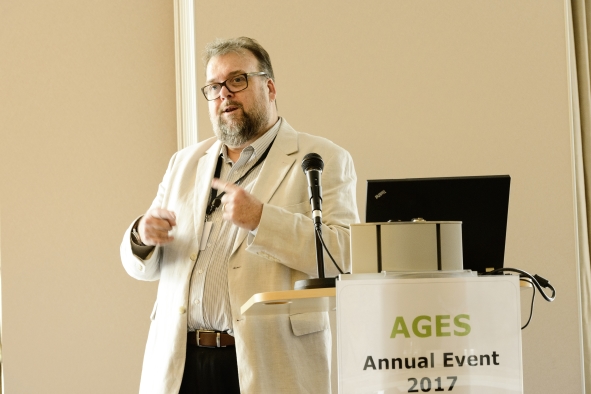
    At this year’s Annual Event of the Association of Global Events Suppliers (AGES) in March 2017 in Basel, Daniel Cordey, Chairman of AGES moderated a panel discussion featuring: Gilbert Felli, IOC’s Senior Olympic Games Advisor; Masamitsu Isaka, Senior Director, Tokyo Organising Committee of the Olympic and Paralympic Games (TOCOG); Paul Jouanneau, Director of Installation Centralised Services, Rio Organising Committee of the Olympic and Paralympic Games (Rio2016); Jeff Keas, Senior Event Architect / Senior Principal at Populous; and Hans Verhoeven, CEO of MTD and deputy chairman of the Association of Global Event Suppliers (AGES).
    AGES shared with Host City some of the panellists’ comments.
     
    Daniel Cordey: What were your personal ups and downs as the Director of Centralised Services, including the overlay for the Rio 2016 Games?
    Paul Jouanneau: To summarise my feelings, I would say I felt:
    Despair to have so much do to do and so little time and few people when joining the organiser. This resulted in a huge learning curve.
    Fear of failure due to the quantity of crucial decisions to be done in a such a short time, while staying optimistic.
    Proud of the achievements, even though there is still a way to go to finalise all deals because of the finance gap.
     
    Daniel Cordey: How can you describe your experiences as the senior IOC advisor for the Rio 2016 Games, or in other terms, what were your major challenges?
    Gilbert Felli: The experience from Rio was that altogether there was a low understanding about the requirements for temporary infrastructure for an event such as the Olympic Games. However, the bigger challenge was the fact that we never had a finalised responsibility matrix between the different partners for the delivery of this temporary infrastructure. Not only was this matrix not clear on every subject but, many times, agreements that had been reached between parties were completely reversed a few weeks later. This gave an uncertainty for the Organising Committee and the delivery partners on what they had to deliver and who would finance it. This delayed decisions and put both the organisers (OCOG) budget and the operation plans at risk.
     
    Daniel Cordey: You mentioned that the constant transfer of responsibilities between the stakeholders affected the delivery of the infrastructure. Can you specify?
    Paul Jouanneau: Sure, as example: by the end of 2014, City Hall required Rio2016 to assume the execution of International Broadcast Centre’s HVAC and Energy and Electrical power and outlets. This scope was never forecast and no team available. The tender process restarted from scratch to comply with Rio2016 Governance.
    At a certain point Maracana and Copacabana Clusters overlays were to be supplied trough City Hall and federal government respectively. The decision took close to six months, was negative and implied in a huge delay in project and construction.
     
    Daniel Cordey: The use of temporary infrastructures is promoted through the IOC Agenda 2020 to reduce costs and to avoid so-called “white elephants”. Do host cities know how to deal with temporary infrastructures?
    Gilbert Felli: Let me reassess that the IOC had always clearly stated, during the bid process or as soon as the Games were awarded, that venues with no legacies should be constructed in a temporary manner. However, this message was never clearly understood by all partners, both from the Olympic Family and the local organisers.
    On the organisers’ side, there was always an optimistic view on possible future legacies of the venues. Agenda 2020 finally clarified the IOC position both within the Olympic Family and with the organisers. Following this clarification, the IOC will have to be more proactive in the future with assisting organisers in managing all the temporary infrastructure delivery process.
     
    Daniel Cordey: You deplored the lack of inventory of certain overlay items and too little cooperation between the national and the international supply chain. What went wrong?
    Paul Jouanneau: The cooperation between local and international supplier occurred but not on long-term perspective as it would be expected. Cooperation seemed to happened just by necessity. Somehow, the difficult economic and political situation contributed to that approach.
     
    Daniel Cordey: From a global supplier’s point of view, how could the cooperation between local and global suppliers be triggered?
    Hans Verhoeven: Local involvement is important to close international deals. The format for this can change per commodity supplier and per country. It can go from joint ventures with local companies or just supplying equipment to a local supplier or hiring a local representative and offer to set up a local company with local purchasing of equipment and hiring local employees. My experience is that the event supplier must always have a local component in their offer. The more local content in your offer, the more chance to close the deal.
     
    Daniel Cordey: What would you wish the organiser to change or improve in the procurement process?
    Hans Verhoeven: Procurement should start earlier (about two years ahead of the Games), the procurement process itself talking with the international event suppliers even earlier. Experienced overlay suppliers can provide valuable inputs to the Overlay team with workshops and other means. This helps them with the design and budget processes. Also, specialised suppliers can help the organiser with feasibility studies and value engineering. With clear and practice orientated information the procurement process and quality of tender documents can be improved. Another point would be to have contracts with a rate card to enable the process in closing early contracts at least one year in advance.
     
    Daniel Cordey: You are often involved in the Venue Development and Planning process for Olympic Games. What do you focus on when consulting, or supervising local design companies, in particular when it comes to temporary infrastructure?
    Jeff Keas: We get involved at different timelines in the life of a major event including the bid phase and after a city has won the rights to host a major event.  After a city has won, we work on both permanent facility design (masterplans, stadia, arenas, etc.) as well as temporary or overlay design. When working with an organising committee on the overlay design Populous looks at major events from what I would describe as a holistic approach – meaning strategy and program management, design, procurement, delivery/site management and operations. 
    The overlay design is a reflection on the operations.  The design should reflect the procurement and delivery strategy.  And the overall program management strategy will impact the overlay process.
    Many of our clients are new to major event planning and overlay so we inform them about overlay and the overall overlay process.  We advise on cost efficient methods but also look for opportunities to raise the level of design.  We focus on the experiential side while also looking for opportunities to generate revenue for our clients.
     
    Daniel Cordey: You visited Rio as the responsible of procurement of the next Olympic Games. What were your key learnings with respect to the procurement of overlays when visiting the Rio 2016 Games?
    Masamitsu Isaka: I learned a lot from Rio2016. I have visited Rio and by visiting the actual place of the Games, I have gained a lot of information such as the scale for the Games and had the opportunities to contact global companies.
    Firstly, I learned the importance of speed and timing. Specifically, it is important to evaluate and make decisions at an appropriate timing in order to prevent costs rising. For that purpose, I also learned that it is important to exchange information with enterprises who have experiences and knowledge, like AGES members.
    The second one is the balance of price and quality. The third one is the difficulty of handling after Games.
    It is difficult to procure a large scale of commodities, but I learned that dealing with them after the Games is also difficult. Thus, we need to think about after the Games at the time of procurement. For that purpose, we would like to rent and lease as much as possible.
    Finally, I learned about the importance of the proper use of turnkey and commodity base, with regard to the procurement method.
    In Japan there are few transactions with international suppliers in terms of overlay, thus we need to deepen mutual understanding.
     
    Daniel Cordey: How do you expect the global event suppliers to prepare for the Tokyo 2020 Games?
    Masamitsu Isaka: I believe that cooperation and input from global event suppliers with abundant experiences and knowledge is necessary for the success of the Games. Not only introducing past achievements, but to make suggestions on what AGES and its members can do for Tokyo 2020. Therefore, we invite you to deepen the understanding of our culture and customs and to offer competitive services, which we will truly need.
     

    Panellists’ Biographies

    Gilbert Felli, IOC’s Senior Olympic Games Advisor, Former Olympic Games Executive Director and Honorary Member of AGES. Gilbert was based in Rio during the last two years, holding the key role of liaison contact between the Rio 2016 OC, Brasilian authorities and IOC.
    Masamitsu Isaka, Senior Director, Tokyo Organising Committee of the Olympic and Paralympic Games (TOCOG). He joined TOCOG in January 2015 as the Senior Director of Procurement.
    Paul Jouanneau, Director of Installation Centralised Services, Rio Organising Committee of the Olympic and Paralympic Games (Rio2016). Paul joined Rio2016 in January 2014 as responsible for the Venues and Infrastructure Department (VED), which included overlay.
    Jeff Keas, Senior Event Architect / Senior Principal at Populous, Denver. Jeff has worked on several major events including seven Olympic and Paralympic Games and two FIFA World Cups. He was the project design lead for London 2012 and now provides design services for the 2020 Olympic and Paralympic Games in Tokyo.
    Hans Verhoeven, CEO of MTD and deputy chairman of AGES. MTD is a full-service organisation with turn-key solutions for the installation of temporary water infrastructures and water treatment with a large Olympic Games experience.
    Daniel Cordey, Chairman of the Association of Global Event Suppliers (AGES). Previously Daniel was at the helm of a global event supplier for more than 2 decades. He also managed many major events projects.


  • Organising committees combine art, culture and sport on Olympic day

    Organising committees combine art, culture and sport on Olympic day

    [Source: IOC] As the next hosts of the Olympic Games, the organising committees for PyeongChang 2018, Tokyo 2020 and Beijing 2022 each featured celebrations of art, culture and sport for thousands of people on Olympic day.
     
    PyeongChang 2018
    With less than eight months to go until the Olympic Winter Games PyeongChang 2018, the Korean organisers seized on Olympic Day as an opportunity to spread the Olympic values far and near.
    In Gangneung, the PyeongChang 2018 House featured a mascot photo zone, colouring projects and an Olympic torch exhibition. The festivities spilled over into Saturday, with opportunities for children to craft their own clay mascots, while families also tested their Olympic knowledge with interactive quizzes.
    On the other side of the country in Seoul, students from Seoul University formed 70 dance teams at the Seoul Olympic Park and Lotte World Mall to create flash mobs that also featured Soohorang, PyeongChang’s mascot for next February’s Olympic Winter Games.
     
    Tokyo 2020
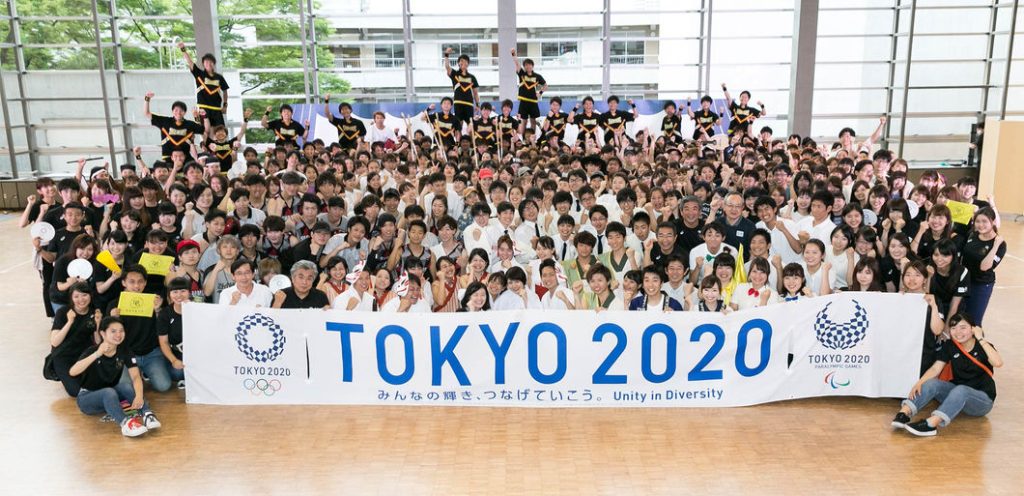
    While PyeongChang got creative on Olympic Day, Tokyo combined art with action, as students from 12 universities across the city came together for a day of music, dance and cheerleading performances. After watching dynamic routines, members of the audience voted for winners that they felt had achieved their “personal best”, which is one of the mottos of the Olympic Games Tokyo 2020.
    Almost 1,000 students, in association with Tokyo 2020, co-organised the event. With students engaged in the planning and promotion of the festival, the celebration reflected both sport and Japan’s famous youth culture, providing a glimpse of what the world will get to enjoy as part of the Olympic Games Tokyo 2020.
     
    Beijing 2022
    More than 20,000 Chinese people from nine provinces took part in Olympic Day celebrations. The cities jointly launched a variety of activities that promoted the Olympic spirit, including a road race with nearly 2,000 athletes at the National Olympic Sports Centre. Beijing 2022 also organised “Olympic culture camps”, which allowed participants to practise both summer and winter Olympic sports.
     
    Source: www.olympic.org

  • IOC hails Tokyo 2020’s “remarkable” plans
    IOC hails Tokyo 2020’s “remarkable” plans

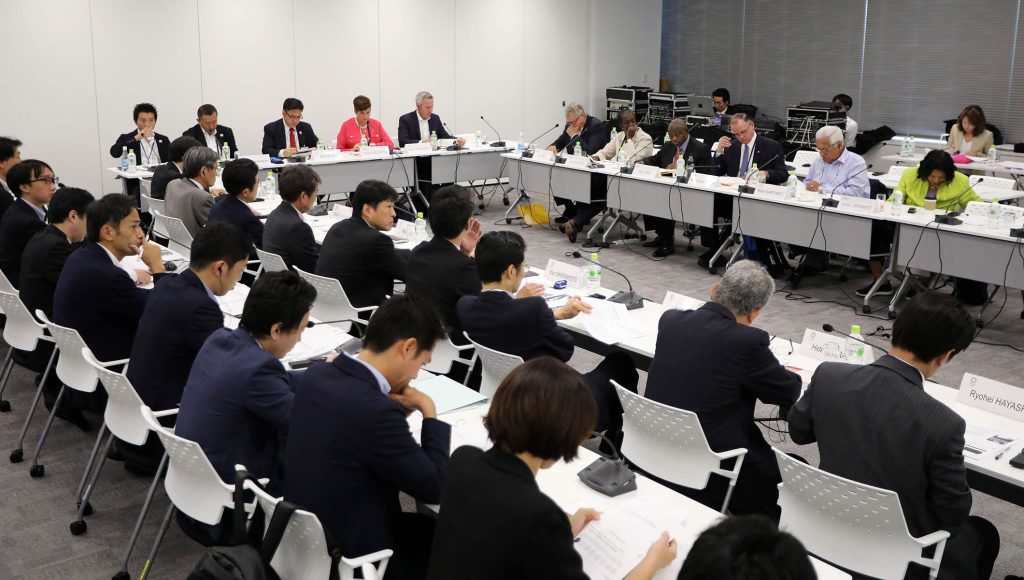
    On 28 to 30 June the International Olympic Committee (IOC)’s Coordination Commission met with the organising committee of the 2020 Olympic and Paralympic Games (Tokyo 2020) to visit venues and discuss hosting plans.
    The IOC gave a very positive appraisal of Tokyo’s budget, Games infrastructure and ability to reach new audiences.
     
    Budget efficiencies
    Earlier this year, Tokyo responded to pressure to minimise the cost of hosting the Games by reducing the budget from US$18.1bn to $12.9bn, comprising US$5.6bn for the organising committee and further expenditure by the Tokyo Metropolitan Government and the Japanese National Government.
    During meetings with the Coordination Commission, these organisations affirmed their commitment to work with the IOC to find further opportunities to reduce cost. The Coordination Commission also noted Tokyo’s 2020’s ability to generate revenue.
    “Planning is going extremely well; it is exceptionally detailed and precise; and Tokyo’s commercial programme is remarkable,” said IOC Coordination Commission Chair John Coates. “We do not have any concerns about this.
    “We continue to work with the Organising Committee, led by President Mori, and all of the local stakeholders to ensure that the Games are a force for good. We encourage our Japanese friends to engage with young people and inspire their citizens, while also identifying additional efficiencies to reduce the overall Games budget.”
     
    New audiences
    The IOC said in a statement the Coordination Commission was “impressed with the Japanese host city’s plans to bring the Games to new audiences.”
    These efforts include projects to engage the whole country in the build up to the Games and a renewed focus on gender balance, youth and urban events in the sports programme.
    “The Olympic Games Tokyo 2020 will not only inspire the world during 16 days of competition but will bring new audiences to the Games and their values in the lead-up”, said Coates.
    “With the support of Tokyo 2020, we recently added 15 events to the Olympic programme, delivering greater gender equality and more of an urban and youth focus, while reducing the overall number of participants. Our discussions this week have highlighted several ways in which this significant step forward will benefit the athletes and allow Tokyo to involve people who might not necessarily have been interested in the Games before.
    “The ongoing work on an urban feel in the waterfront zone, pre-Games engagement activities, and Tokyo 2020’s athletes first focus means that we leave Tokyo excited about what the future holds for these Olympic Games.”
    Ways of involving Japanese citizens in preparing for the Games include donating old electronic devices to be used to create medals, and participating in a nationwide flag tour.
     
    Games infrastructure
    At the Olympic Village, the Coordination Commission members were briefed on the “uniquely Japanese experience” that the athletes will receive in 2020.
    The IOC noted that planning and construction for the National Stadium are proceeding on budget and on track for completion in November 2019. At 72,400 sq m, this is Tokyo 2020’s largest competition venue construction project, set to have 3,000 workers on site at the height of construction.
    The IOC said “Tokyo 2020 has been able to benefit significantly from the recommendations of Olympic Agenda 2020. This is reflected not only in the modernisation of the Olympic programme, but also in the ability to help it to invest as efficiently as possible in the organisation of the Games, such as the approximately USD 2.2 billion of savings from the revised construction budget.”
    The itinerary included a stop at the downtown Aomi Sports Cluster, where by sport climbing, skateboarding, and Paralympic Football 5-a-side athletes hoping to compete in Tokyo 2020 expressed their excitement at being a part of the Games.
    “It was my first visit to the venue site for the Olympic Games Tokyo 2020,” said IFSC Climbing World Championship bronze medallist Akiyo Noguchi. “Today’s visit made me feel that this is becoming a reality, and I am now totally determined. I would love to climb the wall right here three years from now.”
    “I have never taken part in a skateboarding contest in a venue this size – the audiences are going to be huge,” said 15 year-old skateboarder Nishimura. “I think it will be a good opportunity to show everyone what kind of sport skateboarding is. I am looking forward to it.”
     
    Responsibility to athletes
    Other areas of Games preparations discussed included services to athletes, National Olympic Committees, International Federations, the media and spectators; marketing; and the Paralympic Games.
    “We had very productive discussions at the Coordination Commission meetings this week,” said Yoshiro Mori, President of the Tokyo Organising Committee. “I’d like to express my deepest gratitude to the members of the Commission for their valuable advice.
    “The young rising athletes who came to meet us on Wednesday at the Aomi Sports Cluster, where their sports events will take place in three years, told us with such excitement about their dreams and expectations for Tokyo 2020. It reminded me of all the other young athletes around the world who are working very hard towards their dreams. I felt once again the importance of my responsibility to them. We will continue to strive to deliver successful Olympic Games, and display the value of sports to the world.”

  • Aggreko awarded $200m contract to power Tokyo 2020 Olympics

    [Source: Aggreko] Aggreko plc, the global leader in the rental of power, heating and cooling, is pleased to announce that its subsidiary Aggreko Events Services Japan Limited (‘AESJL’) has been awarded the supply contract in the category of ‘Temporary Electricity Generation’ by The Tokyo Organising Committee of the Olympic and Paralympic Games.
    As part of the supply contract AESJL will provide temporary electricity (generation and distribution) systems to support the Tokyo 2020 Olympic and Paralympic Games. AESJL’s extended scope of supply includes temporary medium and low voltage power systems across 43 competition venues, the Athletes Village and the International Broadcast Centre, ensuring reliable power for all stakeholders in the venues and uninterrupted television broadcast to millions of viewers.
    The value of the supply contract is expected to be in the region of $200m, and reinforces Aggreko’s confidence in its ability to achieve its mid-teens ROCE target in 2020.
    Aggreko has a proven track record in supporting high profile events including this year’s PyeongChang Winter Olympics, Gold Coast Commonwealth Games, European Championships in Glasgow and Ryder Cup in France.
    Chris Weston, Chief Executive Officer said: “We are delighted to have secured what is one of the most prestigious event contracts won by Aggreko. Our experienced team will support the Tokyo 2020 Organising Committee to ensure our role in the success of the 2020 Olympic and Paralympic Games is flawlessly delivered.”