Tag: winter olympic games

  • Killy, Felli and Chernyshenko pass on experience to RIOU students in Sochi

    Killy, Felli and Chernyshenko pass on experience to RIOU students in Sochi

    Masters students at the Russian International Olympic University (RIOU) in Sochi have quizzed three of the key sports administrators behind the Sochi 2014 Olympic Winter Games.
     
    Jean-Claude Killy, the IOC coordination commission chairman for Sochi 2014; Gilbert Felli, IOC senior advisor and former Olympic Games executive director; and Dmitry Chernyshenko, CEO of Gazprom-Media Holding and former president and CEO of the Sochi 2014 Organising Committee, made a visit to RIOU’s state-of-the-art campus in Sochi city centre to meet students.
     
    The three senior administrators visited Sochi to mark the anniversary of the 2014 Olympic Winter Games Opening Ceremony on February 7. The RIOU is one of the key legacy projects of the 2014 Olympic Winter Games.
     
    During their meetings with RIOU’s current intake of Master of Sport Administration (MSA) students, the trio talked about various organisational aspects of Sochi 2014, including finances and budgeting, sponsorship, recruitment and leadership.
     
    After meeting with the MSA students, Killy, a triple Olympic champion in Alpine skiing and an IOC Honorary Member, said: “RIOU is a direct legacy of the 2014 Olympic Winter Games. I was delighted to talk to the students and share my experiences with them. We are completing our careers as they are just embarking on theirs. This is how continuity in the Olympic Movement works.
     
    “The students were very keen to have as much information as possible so we gave them a lot of advice because they are young and are at the beginning of their careers.”
     
    RIOU offers its MSA students a unique experience: a one-year immersion in Olympic culture and best-practice, in an Olympic Games host city, with access to expert professors from all over the world, as well as high-profile guests from the Olympic Movement.
     
    Chernyshenko, who is also the president of the Kontinental Hockey League, described how Sochi’s status as a centre of Olympic learning was established during the preparations for Sochi 2014.
     
    He said: “The preparations for the Sochi 2014 Winter Games involved thousands of specialists, who accumulated invaluable experience. Now they are working all over Russia, applying and disseminating their knowledge, and thus helping to raise the quality of standards in different areas of the sports industry.”
     
    The core modules on RIOU’s MSA include: Economics of Sports and the Olympics; Governance, Policy and the Olympic Movement; Research Paradigms in Sports Management;  Business of Sports and the Olympic Games; and Sport Marketing and Communications.


  • OCA president: Asia is ready to host a third consecutive Winter Olympics

    OCA president: Asia is ready to host a third consecutive Winter Olympics

    The president of the Olympic Council of Asia (OCA), Sheikh Ahmad Al Fahad Al Sabah, believes Asia is ready to stage a third consecutive Winter Olympics, should Sapporo decide to commit to an official bid for the 2026 edition.
    Sheikh Ahmad said Sapporo had “all the tools, all the facilities and all the experience” to organise the Winter Olympics for a second time, following the city’s hosting of the 1972 Winter Games.
    “I am happy to hear that Sapporo is ready to host the Olympic Winter Games. Sapporo is capable and ready,” he said.
    The next two Winter Olympics will be held in Asia – at PyeongChang, Korea, next February and Beijing, China, in 2022 – and Sheikh Ahmad said one of the key factors for Sapporo would be how many cities showed a firm interest to host the 2026 Winter Games.
    “I am happy and proud because, after Beijing, Asia will be ready to host the Olympic Winter Games again,” he added.
    “If there is a lot who bid, we will have to evaluate the situation, but if not then we have a good chance. We are ready to host a third Olympic Winter Games.”
    Sheikh Ahmad said Sapporo held “special memories” for the OCA, having played a pioneering role in establishing the Asian Winter Games (AWG) in 1986 and now hosting the event for the third time in eight editions.
    That first AWG attracted only seven teams, but that figure has grown to 32 for Sapporo 2017, including guest teams from Australia and New Zealand.
    “A lot of the Olympic champions have started in the Asian Winter Games, and we wish our athletes from Sapporo 2017 can win a medal at PyeongChang 2018,” he said.
    “We have seen our athletes win medals at the Winter Youth Olympic Games in Lillehammer in 2016 and now we find their names in our Asian Winter Games. This is what we are trying to do – to prepare a good environment to show their talent.”
    Sheikh Ahmad also spoke of next year’s Asian Games in Indonesia, and described OCA sports events as a testing ground for the world, with the five new Olympic sports for Tokyo 2020 all joining the Asian Games programme.
     

  • Will Beijing be ready to host the Winter Olympics by 2022?

    Will Beijing be ready to host the Winter Olympics by 2022?

    With PyeongChang 2018 just around the corner, the following Winter Games might seem a long way away – but four years is a short time in the Olympic movement.
    According to the Beijing Organizing Committee for the 2022 Olympic and Paralympic Winter Games, all venues will finished by the end of 2019, in time for test events in 2020.
    The Beijing 2022 Olympic Games will feature 26 venues, all of which are under construction. Some of these are being repurposed after hosting the 2008 Olympic Games. Others, mostly in Yanqing and Zhangjiakou, are being built from scratch.
    Speaking at World Winter Sports Expo in Beijing, Irina Gladkikh, Winter Sports Director, IOC said: “There is a great progress across all areas. The IOC president attended the opening of the China National Games where he took the opportunity to visit several Olympic venues of the 2022 winter Games. And the IOC president was very excited about progress in the venue development.
    “The sport department of the organising committee is working in close collaboration with the IOC sport department and they are doing a fantastic job.
    “We are also delighted to see that the Winter Olympic federations are heavily involved in the Games planning and delivery in the venue development progress, in the test event planning and building a good strong team to deliver the Games. The international federations bring great knowledge and experience and they do share your vision for the great Games, for the great legacy and for the growth of winter sports in China and the global promotion of China as a winter sports destination.”
    Risto Nieminen, President, Finnish Olympic Committee and Member of IOC Coordination Commission for Beijing 2022, expressed Beijing’s readiness with an allegory from Canadian Paralympic athlete Chantal Petitclerc, winner of 13 Paralympic gold medals.
    “I was listening to her presentation in Montreal in a Congress in 2012 and she was explaining about her career and told her life story, and her progress to be in the Paralympic Games in Beijing in 2008 where she won five gold medals in wheelchair racing.
    “In the end of her presentation she showed us a video in which she was achieving her greatest victory in the 100m in the Paralympic Games. It was so exciting, because she only won in the last metre. Everyone jumped up from the audience and started applauding.
    “And then she said, thank you for applauding but this is not the reason I came here today to tell my life story. And thanks for the empathy – she was paralysed when she was 13 years old – but that’s what I need either.
    “She said, I came here to tell you to understand that I didn’t win the gold medal in the 16 seconds you just saw – I won it in the 16 years I spent preparing for it. And if you have respect for me, don’t have respect because of the 16 seconds, but because of the 16 years I spent trying to achieve my goal.
    “And I think this is the essence of sport. It’s not about the victory, it’s not about the instant wins – it’s about the pursuit. It’s about giving everything you have and trying your best, and that’s where the respect comes from.
    “We all understand that China will achieve the goals. I know we will build every facility that is needed. But at the same time, we need to be cultivating the winter sports culture behind it, understanding that it’s not the instant victories –  it’s the long-term pursuit, trying your best at building the culture that actually makes the result.
    “My second remark is about the very extraordinary thing we have to understand about winter sports. Snow and ice include a very playful, joyful element. Every time you see a kid in the snow – and that includes me at my age; when I see snow and ice it makes me want to place – every kid wants to play with the snow and ice.
    “That makes winter sports very special, because lots of winter sports are not only about skills but about having fun and playing, and that’s part of the winter sports culture that’s unique. It makes people want to play – it’s very joyful and very playful sport. That makes it a sport for all. That is something that’s very necessary to understand when we are building facilities, that it is sports for all.
    “And it includes the fact that winter sport is always open to new forms of sport. We know that China is very strong in new sports and is open for creating new forms of sport, and that’s very necessary for the development of sport in our society.
    “My third remark comes to the issue of sustainability. When we are building facilities and speeding up building, we have to keep up the sustainable ideology. Every method that we are using must be sustainable and the process of planning must be very sustainable so that we are not building anything that’s not necessary or that has no real use. I know that here for Beijing 2022 we are not building anything that does not have a plan for using it as a sports facility for the future.
    “To conclude, it’s very much about building and cultivating a winter sports culture, involving a joyful element, remembering winter sports is a fun sport for all, and it’s about understanding youth and new sports in a sustainable environment.”
    This comments in this article were made at World Winter Sports Expo in Beijing in September 2017 and first appeared in the Winter issue of Host City magazine.

  • PyeongChang 2018 ushers in “Asia’s Olympic era” with message of peace

    PyeongChang 2018 ushers in “Asia’s Olympic era” with message of peace

    At the opening ceremony of the 2018 Winter Olympic Games in PyeongChang, the presidents of the organising committee and the International Olympic Committee joined in presenting Korea’s first Winter Games as bringer of peace.
    Following the procession of athletes that culminated with the combined teams of Republic of Korea and the Democratic People’s Republic of Korea, Lee Hee-Beom, president of the PyeongChang Olympic Committee of the Olympic Games (POCOG) said the event “ushers in the Olympics Asia era”, pointing to the upcoming 2020 and 2022 Games in Tokyo and Beijing.
    “Now we are facing the historic moments in our lifetime,” he said.
    “Sport has a great power to unite people.
    “PyeongChang will provide a light of hope for all citizens yearning for peace.”
    He described the 2018 Games as “a festival of peace and harmony”, reminding athletes that it is “not the winning but the taking part; not the triumph but the struggle”.
    IOC President Thomas Bach addressed the athletes by saying “You will inspire us all to live together in peace and harmony… You can only enjoy your Olympic performance if you respect the rules and stay clean.
    “While you compete with each other, you live peacefully together in the Olympic village. In sport we are all equal.
    “A great example of this unifying power is the joint march of the two teams of the republic of Korea and the Democratic People’s Republic of Korea. We all join and support you in your message of peace.”
    “United in our diversity we are stronger than all the forces that want to divide us.
    “Two years ago in Rio with the first Refugee Olympic Team, the IOC sent a powerful message of hope.
    “Now we send a powerful message of peace to the world.”
    The speeches were followed by a rendition of John Lennon’s Imagine featuring traditional Korean folk instruments.

  • Prepare for an extraordinary Beijing 2022 Olympic and Paralympic Games

    Prepare for an extraordinary Beijing 2022 Olympic and Paralympic Games

    I am very excited to be invited to participate in Host City Asia and have the opportunity to share the development of sports in China and Asia with fellow experts and industry peers.
    I believe that everyone is very interested in the preparations for the Beijing Olympic Winter Games in 2022. Today, I address the theme of “Past, Present, and Future” to share the preparations for the Beijing Winter Olympics.
    Chinese President Xi Jinping attached great importance to the preparatory work for the Beijing Olympic Winter Games and pointed out that it is necessary to adhere to the concept of green Olympics, shared Olympic Games, open Olympics, with honesty, and to strive to hold an exciting, extraordinary, and outstanding Olympic Games.
    In 2008, Beijing hosted an unparalleled Olympic Games. In 2022, Beijing will become the first city in the world to host both the Summer Olympics and Winter Olympic Games.
    China has had an enduring bond with the ice and snow sports since ancient times. Firstly, I would like to take everyone back to the past and review one of the origins of the earliest ice and snow movements. Let’s look at two ancient paintings. The first one is “Altaian Rock Paintings”. The Altai region is located in the northern part of Xinjiang and is one of the earliest regions where ice and snow come each year. As early as 10,000 years ago, the ancient Altaians recorded their skis on rock. This is the earliest known ski. After research, the history of this rock painting has been dated to 10,000 to 30,000 years ago. It can be regarded as the most direct evidence of the origin of human skiing history.
    In addition, the Palace Museum’s “Ice Play” is a court painting that represents the history of ice sports in China, from the Qing Dynasty of China more than 300 years ago. From “Ice Play”, we can see that each person performs various difficult moves like figure skating. From “Altay Rock Paintings” to “Ice Play”, we can see that China had its own ice and snow movements long ago. We have a close relationship with ice and snow sports.
    Now Beijing, as the host city for the 2022 Winter Olympics, is making every effort to promote various preparatory work and is striving to organise and host the Beijing Olympic Winter Games. It will showcase the historical and cultural charm of China, the achievements of contemporary construction and development, and show the world an open and confident country image.
     
    Venues and infrastructure construction
    In terms of venues and infrastructure construction, the Beijing Winter Olympics upholds the concept of sustainable development and maximises the use of existing venues for the 2008 Olympic Games. The Beijing Winter Olympic Games includes the three competition areas of Beijing, Yanqing and Zhangjiakou.
    The Beijing competition area holds all ice events. Except for the construction of a new national speed skating hall, all other projects use existing and transformed venues.
    Yanqing Alpine skiing and snowmobile sledding projects have started construction.
    The masterplan for the core area of ??the Zhangjiakou District has been determined. The national winter biathlon circuit and shooting range has started construction. The design for the deepening of the platform for the national ski jump centre has taken shape and the earthwork has been completed. The basic construction of the cross-country ski track has been completed.
    The three divisions are being connected by the Beijing-Zhangjiakou high-speed rail with an average speed of 350 km/h, taking only 20 minutes from Beijing to Yanqing and only 30 minutes from Yanqing to Zhangjiakou.
    The Beijing Olympic Winter Games Organising Committee is now located in an industrial site in the west of Beijing and has become a successful case of the Olympics promoting sustainable urban development. It has won high praise from the international community.
     
    Promotion and cultural activities
    In terms of publicity and promotion and cultural activities, on December 15 last year, the “Winter Dream” logo of the Olympic Winter Games and the Winter Olympics Paralympic Games logo “The Leap” were formally released. It is widely believed at home and abroad that the ideas are novel, rich in meaning and strong in communicating China’s style and cultural charm. More than 100 media at home and abroad participated in the launch ceremony and more than 1,500 articles were published around the logos. The Beijing Olympics Organising Committee’s logo microblog readership exceeded 8.48 million, and the Weibo topic readership exceeded 330 million.
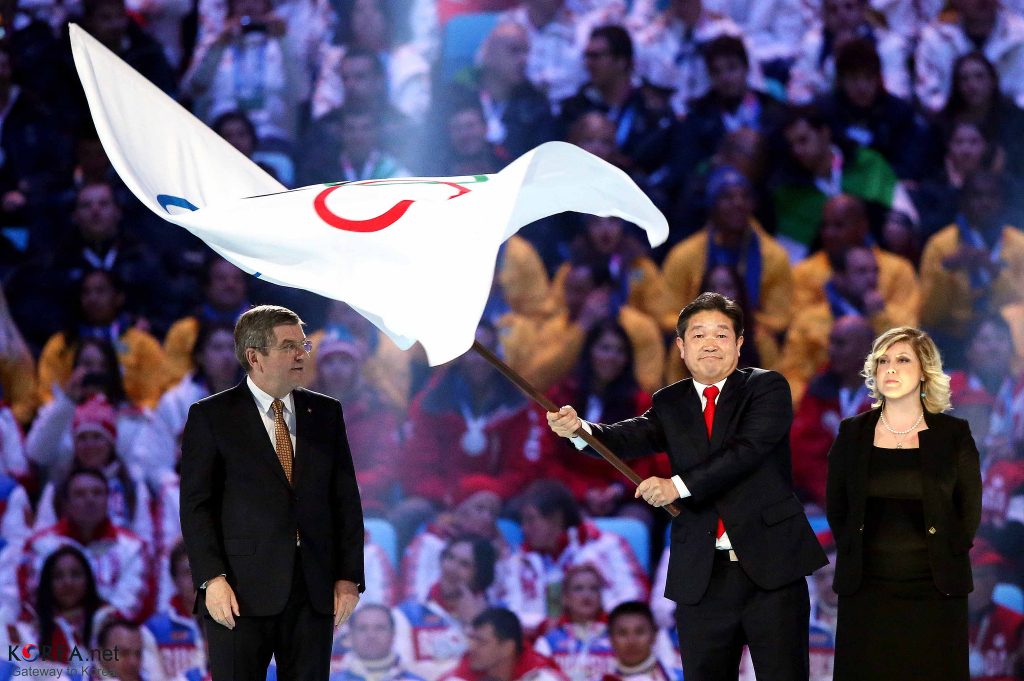
    At the closing ceremony of the PyeongChang Winter Olympic Games on February 25 this year, Beijing took over the Olympic Flag as a host city and presented the world with a wonderful and captivating cultural performance. President Xi Jinping and hundreds of millions of people shared the video with the world. Issued as a sincere invitation to Beijing in 2022, this video was actively watched and discussed by Internet users at home and abroad. Within 24 hours, 720 million views were broadcast on the WeChat social network.
    This event also became the most attended performance in the Olympic history. A total of 130 million Internet users sent invitations to the world via the “Winter Olympics, Me and Stars” voice interaction app and the “Winter Olympics Send Invitation” WeChat H5 page to reach the closing ceremony of the PyeongChang Winter Olympics through the Internet.
    We are also actively using new media to explore the Winter Olympics network promotion.
    A series of micro-videos created by the Beijing Olympic Winter Games Organising Committee has been formally launched under the brand “Winter Premiere”. 11 micro-videos have been released on the official website, microblog platform and related video websites related to the development of the competition area, sports work, market development and cultural events, with cumulative plays of nearly 10 million.
     
    Public participation and Olympic education
    While promoting the Beijing Olympic Winter Games with international events and major events, the Beijing Olympic Winter Games Organising Committee also actively works on the goal of “300 million people participating in the ice and snow sports” proposed by General Secretary Xi Jinping.
    To promote ice and snow sports in the country and popularise the knowledge of ice and snow sports, we launched the “Share Winter Olympics” action plan jointly with central ministries and commissions such as the Ministry of Education, the State General Administration of Sport, and the Central Committee of the Communist Youth League. The national guidance documents such as educational plans, social civilisation plans, youth plans and image publishing plans have been released to the public one after another. We have vigorously promoted “ice and snow in the campus.” As of now, Beijing and Zhangjiakou have named the first batch of 84 primary and secondary snow and ice sports schools, and have held training classes for primary and secondary school ski instructors. Beijing has held two consecutive sessions of middle school students in winter.
    The Games held a series of ice and snow popularisation and promotion activities such as the “My Winter Olympic Dream” National English Junior Reporter Competition, which attracted the attention of young people from both places. We also organised a Beijing Winter Olympics delegation composed of Olympic champions, volunteers, small athletes, community sports enthusiasts and other representatives. We have organised Winter Olympics lectures in institutions, enterprises, communities and schools in Beijing, Zhangjiakou, Heilongjiang and other places. In 2017, the number of direct participation of the Youth Exchange Fun Olympics Experience Camp was 16,000.
    Two snow and ice photo solicitations for professional photographers attracted nearly a thousand professional photographers to participate, recruiting 11,000 high quality images of ice and snow. In addition, in Beijing last year, 40 city-level ice and snow events were created, and 13 districts have created ice and snow activities with special characteristics. In 2017, 500 million people participated in these ice and snow activities.
    In terms of market development work, five companies including Bank of China, Air China, Yili, Anta, and China Unicom have now been identified as official partners, and a trial program for licensed products has been launched. Commemorative stamps have been officially issued, and licensed merchandise sales have enjoyed a good momentum.
     
    The Winter Olympics Beijing Cycle
    After the 2018 PyeongChang Winter Olympics concluded perfectly, we officially entered the Winter Olympics “Beijing Cycle”. In the future, the Beijing Olympic Winter Games Organising Committee will strengthen cooperation with all sectors of the society and go all out to do a good job of various tasks.
    The first is to systematically plan the construction and operational management of venues, to learn from the relevant experiences of the PyeongChang Winter Olympics and Tokyo Olympic Games, to adjust and optimise in time, to study the use of venues ahead of schedule and to promote sustainable development.
    The second is to do a good job of organising the competition, to listen earnestly to the opinions of the International Olympic Committee, the International Paralympic Committee, and the individual sports federations, and learn from the experience of running the host city.
    Third, it is necessary to detail the guaranteed service tasks during the competition and carefully prepare and coordinate efforts in areas such as transportation, medical care, accommodation, catering, and security to ensure that the standards of the three competition areas are consistent and linked.
    The fourth is to promote foreign exchange and cooperation in an all-round manner, strengthen ties and cooperation with international organisations, snow and ice-sports powerhouses, and the host city of the previous Olympic Winter Games to promote exchanges in humanities, economics and non-governmental sports organisations. Soon, we will create the Beijing Winter Olympics and Winter Paralympic Games mascots and welcome everyone around the world to participate in the design exchange activities.
    Fifth, we must plan the sustainable development of the Winter Olympic Games and integrate the concept of sustainable development into all aspects of preparatory work.
    There are less than four years to 2022 and I hope that people from all walks of life will care for and support the preparations for the Beijing Olympic Winter Games. The Beijing Olympics Organising Committee looks forward to working together with everyone to create a wonderful and extraordinary event for the world in 2022. Finally, I wish Host City Asia a complete success.
     
    This transcript of Chang Yu’s keynote address at Host City Asia also appears in the Summer issue of Host City magazine

  • Beijing 2022 ticketing solutions to be provided by Alibaba group

    Beijing 2022 ticketing solutions to be provided by Alibaba group

    [Source: IOC] The Beijing 2022 ticketing programme will harness Alibaba’s technological and data expertise, ensuring a fully digitally enabled ticketing programme and modern user experience that allows fans to purchase and redistribute tickets securely. The OCOG will be responsible for the overall planning and delivery of the ticketing programme.
    The appointment of Alibaba has been made with the objective of securing a single provider to deliver ticketing services and operations over several Games editions, reducing costs and the complexity of hosting the Games in line with Olympic Agenda 2020’s recommendations on efficient turnkey solutions. As a result, OCOGs will benefit from the opportunity to have a continuity of service through the provision of established systems and delivery experience, alleviating the need to design, engineer and deliver a solution for each individual Games edition.
    Timo Lumme, Managing Director, IOC Television and Marketing Services, said: “The ticketing solutions provided will drive further innovation at the Olympic Games, enhance the spectator experience and reduce costs for organisers, delivering on the commitments made by Olympic Agenda 2020.”
    Chris Tung, Alibaba’s Chief Marketing Officer, added: “We are proud to extend our partnership with the Olympic Games, beyond e-commerce and cloud, by supporting the Beijing 2022 ticketing programme. We look forward to leveraging our technology to help provide streamlined, digitally-enabled ticket sales services to create a seamless ticketing experience for fans around the world.”
    In addition to existing work with the IOC on the development of its digital strategy and ecosystem, Alibaba’s expertise in engaging Chinese consumers and ownership of Damai, one of China’s largest ticketing platforms, makes it perfectly positioned to become the Beijing 2022 Ticketing Systems and Services Provider.
    The 109 events in seven Olympic winter sports will take place from 4 to 20 February 2022 in the three competition zones of central Beijing, Yanqing and Zhangjiakou.