The quality and quantity of speakers at Host City 2020 has reached even greater heights in the days leading up to the world’s largest meeting of sports, business and cultural events.
Host City 2020 takes place online on 8-9 December, hosted from Scotland and Glasgow with supporting partners EventScotland and Glasgow Life. Attendance is free.
New speakers addressing the conference theme The Big Restart: Recovery with a Purpose for the Digital Age include H.E. Reem Al Hashimy, Director General, Expo 2020 Dubai, who also bring Mandy Keegan, Director Media Operations.
Saoud Al Ansari, Precinct Director of Al Thumama Stadium, Competition Venues, Supreme Committee for Delivery & Legacy will give an update on the Qatar 2022 FIFA World Cup preparations.
Other VIP speakers joining Host City in recent weeks include Fiona Hyslop, Scottish Government Cabinet Secretary for Economy, Fair Work and Culture, and Baroness Grey-Thompson DBE, DL, Independent Crossbench Peer, The House of Lords.
International federations continue to join Host City, with Kate Caithness CBE, President, World Curling; Christian Hirschmüller, Head of Technical Services & Overlay, UEFA Events; David Leather, CEO, CGF Partnerships and Jidong Wang, Project Coordinator, ASOIF joining, and David Grevemberg CBE, CEO, Commonwealth Games Federation stepping in to chair the discussion on BLM.
Global Esports Federation – a Host City Strategic Partner – bring expertise from their Chief Operating Officer Paul J. Foster and Chester King, Vice President & Chair, Education, Culture and Wellness Commission.
Generation Z takes to the stage for the first time at Host City 2020, with Formula E’s Open Talent Call Finalists Tati Baker, Derin Adetosoye, Aiden Vincent and Alexa Rendell telling us how to make events appeal to them.
Birmingham 2022 and Paris 2024 bolster their top-level delegations with Joe Ryan, Head of Health and Safety and Olivier Debargue, Director of Procurement respectively.
The Krakow 2023 Games is represented by Monika Stepniak, Director of the Office for Coordination of the 3rd European Games, Ministry of State Assets. Janusz Koziol, Plenipotentiary of the Mayor of the City of Krakow will also speak in an invitation-only Knowledge Transfer workshop.
Coventry City of Culture 2021 is well represented by Chenine Bhathena, Creative Director and Jacob Gough, Production Director. They are joined by Festival UK* 2022 Programme Director Sam Hunt.
Major music festivals are well represented by Geoff Ellis, CEO, DF Concerts and Stephen Davis, Managing Director and Founder, SDD Concerts.
Angela Adams Suggs, President & CEO, Florida Sports Foundation is joined by Jose Sotolongo, Director of Sports & Entertainment Tourism, Greater Miami Convention & Visitors Bureau and Jason Siegel, President & CEO of Greater Orlando Sports Commission.
Other new speakers from the Americas include Jimena Saldaña, Vice President, Mexican Olympic Committee and Mike Libber, Baltimore-Maryland 2026 FIFA World Cup bid.
Other host destinations include Marion Schoene, CEO, Olympiapark Munich – host of Munich 2023 European Championships – Angeline van den Broecke, Global Business Development and Marketing Director, Kuala Lumpur Convention Centre and Neil Brownlee, Head of Business Events, VisitScotland.
Event suppliers are represented by Daniel Cordey, Chairman, Association of Global Event Suppliers, David De Behr, Head of Sales, Aggreko Event Services and Eoghan Gill, Director of Strategy, Foamhand.
These fresh faces join an incredibly strong and diverse line up of speakers including the already announced Paul Bush OBE, Director of Events, VisitScotland; Bridget McConnell CBE, Chief Executive, Glasgow Life; Sir Craig Reedie GBE, IOC Member; Etienne Thobois, CEO, Paris 2024; Roxana M?r?cineanu, Minister of Sports, France; Ian Reid, CEO, Birmingham 2022 Commonwealth Games; Brian Lewis, President, Trinidad & Tobago Olympic Committee; Tim Briercliffe, Secretary General, AIPH; Sir Russell Coutts, SailGP; World Athletics CEO Jon Ridgeon; Michael D’hulst, CEO, Super League Triathlon and many more.
Get your free pass today at https://www.hostcity.com/host-city-2020-free-registration
Category: City Development
-
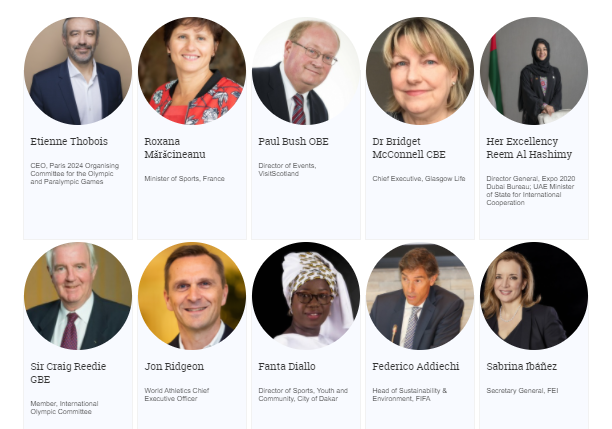
Qatar 2022, Dubai 2020, Krakow 2023, Coventry 2021, Festival UK* 2022, Global Esports Federation and Gen Z join Host City’s star speakers
-
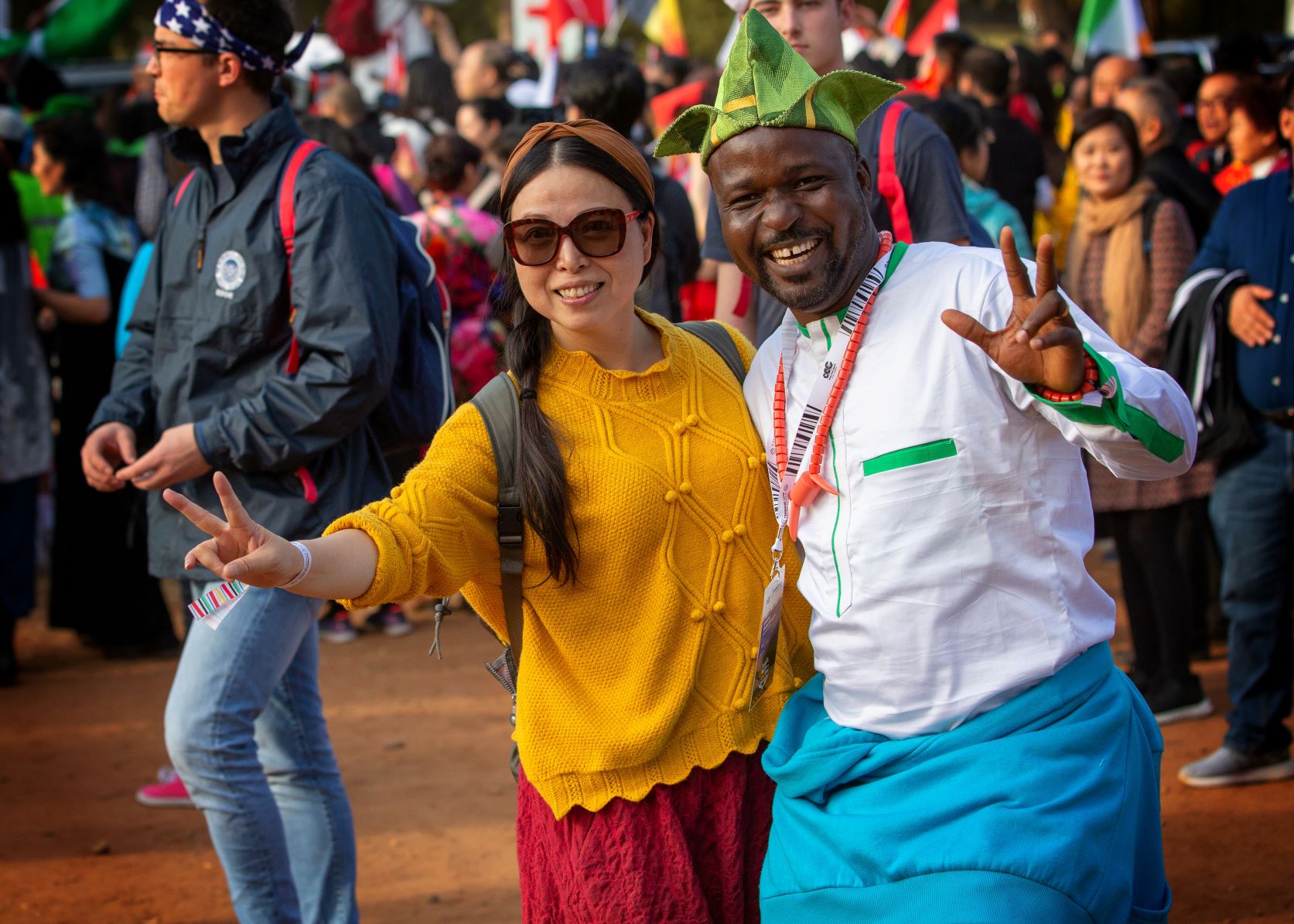
Singing is the key back to our normal lives
Singing is one of the most beautiful things in the world. It is healthy and makes people happy – whether as a singer or a listener. Without a song, the world would be silent.
Music and especially singing have always been a comfort to people in the darkest times. Be it the many spirituals describing the hardship of slavery, the Singing Revolution in the Baltic States, and, most recently, the many songs sounding from balconies in neighbourhoods all over the world at the beginnings of the current pandemic.
There are an estimated 37 million choir singers in Europe alone, with millions more scattered all over the world. All have been suffering from restrictions since the start of the Covid-19 pandemic, but at the same time it quickly became obvious that the choir singers not only handled the given circumstances with high responsibility, but also got immensely creative in keeping their community alive: choirs were among the first to create fun and emotional virtual music videos when social distancing started to become the name of the game.
And especially this high spirit of hope and confidence among the choral community will be the key to get out of the current situation. INTERKULTUR, as the world’s largest organizer of international choir competitions and festivals all over the world, comprises a strong network of choir singers, conductors and musical institutions all around the world. Its events are an experience of international communication – connected through the universal language of music. Whether in Hoi An (Vietnam), Barcelona (Spain), Princeton (USA), Vienna (Austria), or Guangzhou/Canton (China), at more than 230 international events in the last 30 years INTERKULTUR has brought people together from 107 countries, regardless their origin, religion or world view. And every two years INTERKULTUR organises the world’s largest international choir competition in different cities on different continents: the World Choir Games, known as the Olympics of Choral Music.
Three World Choir Games editions are already in preparation, holding the spirits among the choral community high during an ongoing global low. The outlook on celebrating the World Choir Games in Flanders, Belgium (2021), Gangneung, Republic of Korea (2022) and Auckland, New Zealand (2024) are exciting goals to approach with new motivation.
And there is hardly any other event that visualises so clearly why arts and culture are sorely needed here, in a deeply troubled world.
Anyone who has witnessed a World Choir Games event on site will immediately understand how this unique event for this special group of people is able to inspire an entire city and an entire community with an unprecedented spirit of music, culture and international community. The World Choir Games is an occasion to experience the most beautiful sounds and emotions of humanity: listening to music from all over the world, watching singers in traditional costumes presenting their individual cultures, and meeting people from countries one could barely visit in a lifetime. Together, all participants, residents and visitors are celebrating a great festival of music, song and joie de vivre – all at one single place, in the World Choir Games host city.
An unforgettable experience for all involved and especially for the host city itself! You can find more information here: http://host.worldchoirgames.com -

The corona crisis and its effects on the choral world
Around the turn of the year 2019/2020, the first news about the novel coronavirus reached the world. China in particular, but also numerous other countries, found themselves in a difficult situation and everyday life came to a standstill. The virus continued to spread and new infections were reported daily.
The Chinese city of Wuhan was hit hardest at the beginning of the year. But the rapid spread of Covid-19 soon meant that the entire world had to face the pandemic and all the challenges it entailed. This globe-spanning crisis had a profound impact on humanity – and the choral world in particular. We all had to keep our distance – and yet we have moved closer together – even across national borders!
And then there was silence…
The pandemic brought public and private life to a standstill. In many places, a state of emergency was declared and a lockdown imposed. Stores, restaurants and cultural institutions had to close, and schools and workplaces were moved home.
This life at a distance also hit the choirs of this world especially hard. Concerts, festivals and even choir rehearsals had to be cancelled or postponed and stages remained silent. In most countries, choral life has come to a complete standstill and many choirs and choirmasters have lost their financial support and perspective. Li Peizhi, president of the Chinese Choral Association, described the feeling of these drastic impairments of everyday life in an interview as a “train that comes to an abrupt halt”.
In all areas of life and also in choral work, the technical possibilities of our time and global networking with the help of the Internet gained completely new relevance and significance from one moment to the next. The choirs around the globe did not lose confidence and developed ideas to continue to live out their passion for choral music, to maintain their choral community together with their fellow singers, to stay positive and to break new ground in terms of rehearsals – and the silence of the choral world did not last long.
…but not for long
Tim Sharp, a member of the Advisory Board of the World Choir Council, wrote in an interview that “singing not only gives something to the listener, but also to the individual singer. Singing requires us to use our bodies and connects us directly to our emotional lives.
Every single aspect of the singing process is physical. And, while the experience of singing is highly individual, choral singing connects and harmonizes these individual sounds into a community.“
Music is a powerful, courage-giving force that connects people and inspires spirits. In many places around the world, music was played together just as the pandemic began. Neighbourhoods sang together on their balconies, at their windows or on the street and grew closer. This community at a distance, this community in music and song, has also given hope to many people.
The choirs were particularly limited in their work and could only meet virtually. But they got creative and took advantage of the new technologies: choir rehearsals online, classes at home in the living room, virtual choir projects, video premieres instead of performances in concert halls.
Besides all these creative projects and new approaches to choral work, this time of special challenges has also brought the choral community closer together.
The (choral) world has come closer together
Of course, all these approaches and the virtual choir projects cannot replace the community of the choir and the experience of a live performance, but they have given confidence to the singers of this world. New ways were tried out to continue learning together and to continue singing together.
With the help of workshops, online tutorials or direct exchange in social networks or forums, choirs and choir directors helped and supported each other.
Following INTERKULTUR’s motto “Singing together brings nations together”, many choirs have also used these projects and collaborations to come together virtually with other choirs from all corners of the world.
The new possibilities of technologies were used extensively and became a popular tool to overcome creative self-isolation, which also affected the rehearsal process. Even though synchronous singing and choral rehearsals in large groups are technically impossible or difficult, the digital applications are a good opportunity to maintain social contacts and community.
Li Peizhi, president of the Chinese Choral Association, said in an interview, “I think people, and especially musicians, are using their ability and energy to express and transmit their emotions and their thoughts. [The] projects are wonderful because the message they send out is consistently positive and has made people realize the great power of music.”
This bond and solidarity that has united the choral world in recent months, even if only virtually, will hopefully accompany us in the future and we should continue to cherish it. What will the new normal look like after the pandemic?
The questions that now arise at the beginning of the new year, as vaccinations begin worldwide and (hopefully) with the end of the crisis in sight: What are the lessons we learn from this crisis? What impact will these experiences have on the choral world and how will choral work change?
Russian choral legend Vladimir Minin commented on this in an interview: “Digital technologies are a temporary means, a way out, a tool for information exchange – but nothing more. No technology can convey the living energy of the choir, and the subtle intricacies of the movement of its collective soul.“
Li Peizhi, President of the Chinese Choral Association, has a similar view: “These new forms of singing and online lectures are currently very popular all over the world. I personally think that this is a special countermeasure in a special time to satisfy the strong desire for singing. Choral singing is a fantastic way for people to communicate emotions, but this requires contact and time to rehearse. Therefore, it‘s imperative that we experience the artistic engagement that occurs in actual rehearsals to unleash the full beauty and charm of the choral art.“
Tim Sharp, a member of the Advisory Board of the World Choir Council, hopes “to be able to use these tools when we sing together again. I firmly believe that we will emerge from this time stronger, and we will also have learned how to teach and communicate with new tools that are appropriate for choral music education, performance, composition, and advocacy.”
Digital technologies are good and valuable tools for the current time and they will certainly be able to enrich choir work in certain areas in the future. However, it is also clear for the choral world that the virtual will not be the new normal. What is missing is the interpersonal aspect, the dynamics, the immediate communication with fellow singers – the essence of singing together that we all sorely miss.
We don‘t know what the future will look like, but we are confident that it will be beautiful and, above all, full of singing!
This editorial was written by Franziska Hellwig of INTERKULTUR, the world’s leading organizer of international choir competitions and festivals. For more information visit www.interkultur.com -
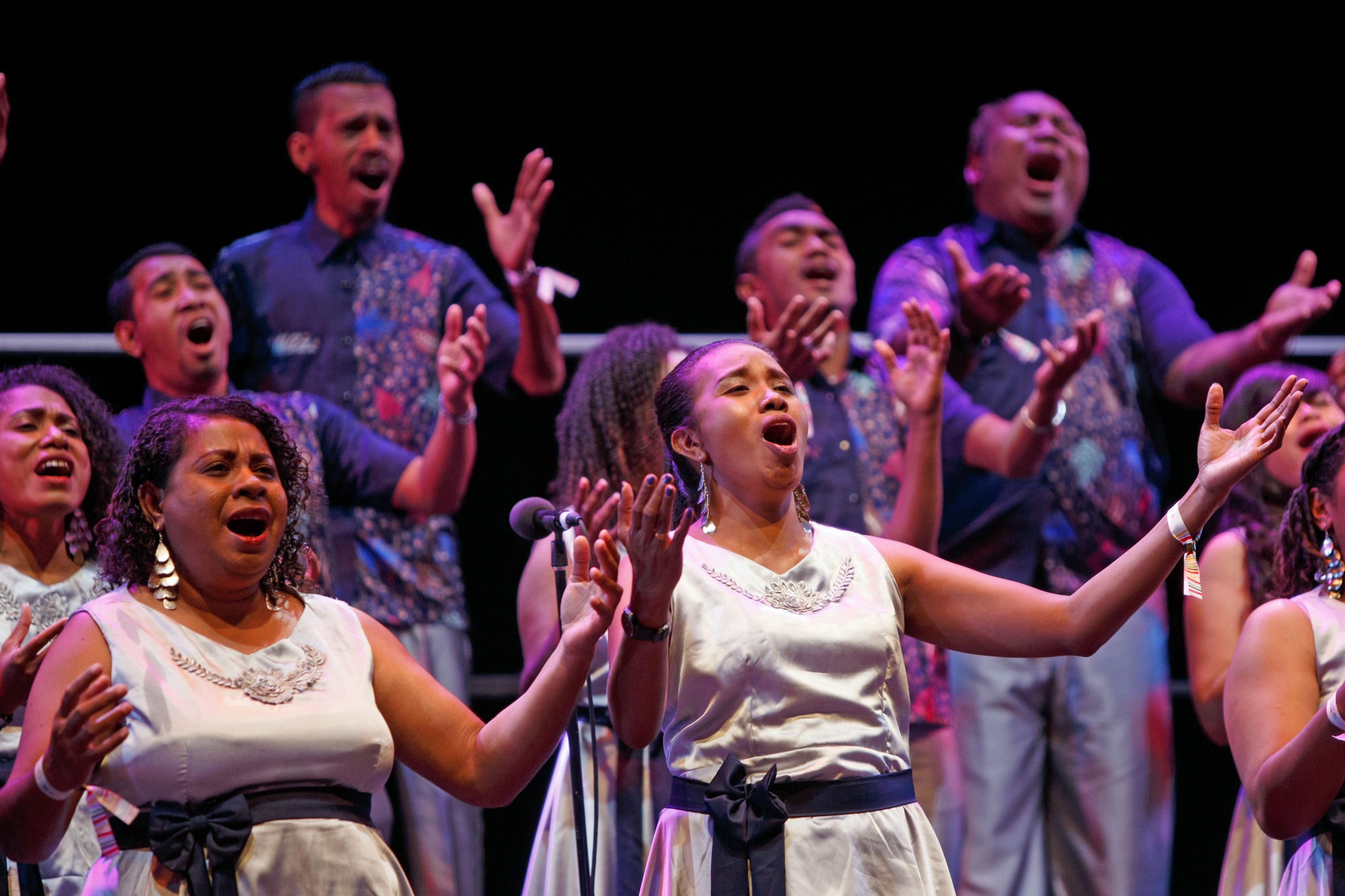
Songs of spirit: singing unites religions
It was “the miracle of Sochi”, back then at the World Choir Games 2016. Afghanistan’s Noor-e Omid choir competed in the world’s largest international choir competition, the so-called Olympics of Choral Music.
During the Taliban regime, religious extremists had censored singing and music in society. It was only after 2001 that Afghanistan’s music scene slowly began to re-emerge and by 2016, the miracle happened: Afghanistan had its first ever polyphonic choir, and it was the country’s first choir to take part in the World Choir Games.
The story left a lasting impression on everyone involved, including the then Artistic Director of the World Choir Games, Prof. Dr. Ralf Eisenbeiß. “In their country, people have not known music for generations, but now these young people somehow heard about the ‘Choir Olympics’, learned sheet music, rehearsed a programme, and fulfilled a lifelong dream by participating in the Games.”
Yet this story is just one of the many “miracles” that happen year after year at INTERKULTUR’s international choral events like the World or European Choir Games. Wherever people of different faiths and cultures come together, a great deal of understanding and tolerance is needed. At INTERKULTUR events, this spirit of acceptance arises naturally – after all, singing together calls for harmony.
And so choirs from countries that are opponents on a political level, such as Iran and Israel, meet in the choir competitions and festivals regularly and peacefully. And different religions connect in a very direct way, as happened at the World Choir Games 2010 in Shaoxing, China, when a German gospel choir visited a Buddhist temple and sang a Christian gospel – to the great joy of everybody on site.
At the European Choir Games 2013 in Graz, Muslim, Hindu, Buddhist and Christian singers appeared together on one stage as one large festival choir and performed Giuseppe Verdi’s Messa da Requiem together.
Such large concerts with hundreds of singers from different countries, cultures and religions have long tradition at the World Choir Games. No one sums up the immense impact better than a singer from Australia who, after taking part in the large festival choir concert of the World Choir Games 2016, said: “Well, this was fantastic, I’ve never been to such a happening before. It shows what you can do, if you invest in culture and if you invest in youth. Much better than buying weapons and guns: invest in culture and music!”
The debate about singing in public in Afghanistan continues today, with a social media campaign recently overturning a ban on teenage girls singing in public.
On the world stage, singers can discover the great diversity and enthusiasm with which people express their different cultures and religions through song. Find out how you can turn your city into such a special stage that brings people from all cultures and religions together here: https://worldofchoirs.com/wcg/
This article was written by Henriette Brockmann of INTERKULTUR. -
CityAccord to explore event hosting outlook in evolving landscape at SportAccord 2021
[Source: SportAccord] Following the CityAccord host welcome by Evgeny Kuivashev, Governor of the Russian Federation’s Sverdlovsk Oblast region, a presentation focusing on major events and sport tourism will provide delegates with an insight into the SportAccord 2021 host city’s capabilities and ambitions.
“Ekaterinburg and Sverdlovsk Oblast are justly considered not only the industrial and cultural but also the sports center of Russia, with the sports community’s interest in the region growing year by year.” Kuivashev said. “We hosted FIFA World Cup games, the World Boxing Championships, Grand Slam tournaments, the Ski Jumping World Cup, and other major competitions. I am convinced CityAccord will help us demonstrate all our sports and tourism potential and will be the ground for discussing new challenges the top-level contest organizers are going to face amidst the global transformations.”
The packed programme will also feature case studies and panel sessions that will shine a spotlight on topics such as relationships between International Sport Federations and host cities, mixed-gender sports and gender equality within events, grassroots sports development, and the influence of sports infrastructure on a country’s social and economic development.
Furthermore, a series of Toolbox Sessions will also deliver quick-fire presentations, with experts offering their insights into areas ranging from ‘smart’ sports infrastructure through to a data-driven approach to targeting new event audiences amongst others.
The opening remarks will be provided by members of the CityAccord Steering Committee, including World Union of Olympic Cities Secretary General Mélanie Duparc, Los Angeles Sports Council Senior Advisor David Simon, and Sports ETA (Sports Events and Tourism Association) President and CEO Al Kidd.
CityAccord will sit alongside SportAccord’s other conference streams – HealthAccord, the newly launched InvestAccord and ArtAccord, LawAccord, MediaAccord and the main SportAccord Summit programme – offering delegates clear signposts to specific areas of interest during a busy week of meetings and networking opportunities in Ekaterinburg.
The annual World Sport & Business Summit is a six-day event attended by leaders of the global sports community. As the only global sports industry event attended by all International Sport Federations and their stakeholders, SportAccord also brings together organising committees, hosting cities and regions, governments and administrations, rights-holders, agencies and athletes, as well as top-level experts and organisations from the sports media, technology, investment, medical and legal sectors.
Registration is open for the SportAccord World Sport & Business Summit 2021 in Ekaterinburg, the 19th edition of SportAccord’s flagship annual event. Organisations interested in becoming an official partner or exhibitor can contact SportAccord to discuss these investment opportunities by emailing sales@sportaccord.sport, with SportAccord also offering an interactive exhibition floorplan and 3-D flyover of the SportAccord 2021 exhibition space.
You can follow SportAccord’s portfolio of events via Twitter @sportaccord or keep up-to-date via LinkedIn, Facebook, YouTube, Flickr, VK, and Instagram. -
Announcing the AIPH Champions of Green Cities Conference
[Source: AIPH] The International Association of Horticultural Producers, AIPH, is the world’s champion for the power of plants. Through their Green City programme, AIPH uses knowledge exchange, advocacy, and networking to increase the quality and quantity of living green in urban spaces; motivating the multifunctional benefits that this delivers to people and the planet.
The AIPH 2021 International Green City conference on 22 April is a chance to inspire people, organisations, city councils and government administrations to join this challenging movement and lead global thinking on the successful integration of nature into the built environment. As part of AIPH’s Green City programme, the conference is offered free-of-charge to registered delegates.
Our environment, wellbeing, social cohesion, and economies are all improved by intelligently designed green space. AIPH’s Green City principles promote the essential role of plants in creating vibrant urban areas in which people and businesses can thrive.
At the AIPH 2021 International Green City Conference, you will hear about innovations and advances in city greening from ‘Champions of Green Cities’; a line-up of expert international speakers who:
• Share best practice and experiences of how they have increased living green in cities.
• Present innovative thinking in how living green shapes city form and function
• Describe case studies of cross-disciplinary benefits from city greening
Event Speakers
“Transforming the urban landscape of central Melbourne – from grey to green” is the subject of our keynote speaker, Prof Rob Adams AM, City Architect, City of Melbourne. Prof Adams will describe the many actions taken by Melbourne over the last three decades to transform its downtown, starting from a realisation in 1985 that the City was going backwards financially, socially and environmentally. Like many cities around the world the centre was emptying out in favour of the suburbs, and the car was increasingly dominant. With a breakthrough in 1992, Melbourne has risen from the back of the pack to become, on seven occasions, the World’s most liveable city as determined by the Economist magazine. Many cities have followed what Melbourne pioneered, and it remains a powerfully influential exemplar for the battle against climate change.
Ms Maria Vassilakou, Vienna Solutions draws from her experience as Vice Mayor of Vienna and independent advisor on urban transformations to describe what makes a city liveable.
Mr Peter Massini, Director of Future Nature Consulting Ltd, UK, presents an overview of greening metrics that are used in policy development, discussing some of the challenges and drawbacks and how effective they are in practice.
Ms Jennifer McKelvie, Councillor for City of Toronto, Canada, gives insights from her experience in inspiring the next generation of climate leaders through the C40 Women for Climate mentorship programme.
Prof. Tim Beatley, founder of Biophilic Cities, USA, explains the power of community in making cities more nature focussed, and the influence of biophilia in inspiring change.
Ms Ingrid Coetzee, Director of Biodiversity, Nature & Health for ICLEI Africa describes the organisation’s projects on mainstreaming nature, its benefits, and nature-based solutions into urban planning and decision-making in cities and city regions thereby helping them become healthier, and more resilient and liveable places.
Dr Audrey Timm, Technical Advisor to AIPH introduces the AIPH 2021 Green City Guidelines – an essential digital resource to support decision making.
Ms Anne Jaluzot, UK, delivers a case study of Barcelona, the city which changed traffic patterns, replacing roadways with living green, thereby increasing social interactions, and reducing pollution.
AIPH Green City Chair, Mr Bill Hardy, Canada, will bring the focus onto the AIPH Green City initiative and how the content of this conference programme integrates with the AIPH vision as the world’s champion for the power of plants.
AIPH presents the Champions of Green Cities
Launching at the AIPH Green City conference will be the AIPH World Green City Awards 2022 to celebrate cities that show leadership and innovation in bringing more living green into their city.
The ongoing impact of safety measures against coronavirus means that rather than a physical international conference, the event will operate using the multi-faceted Hopin platform to host this online international conference, where delegates from around the world can meet in real-time.
Register free-of-charge for the AIPH International Green City conference to hear from city leaders worldwide and find out how your city can enter the AIPH World Green City Awards. https://aiph.org/event/2021greencityconference/
AIPH is grateful to our Gold Sponsor PERA Events and AIPH World Green City Awards Partners 2022 Biophilic Cities, Cities and Health, Trees For Cities and Urban Land Institute. Thank you to our Event Partner ICLEI, and our Media Partners FloraCulture International and Host City. -
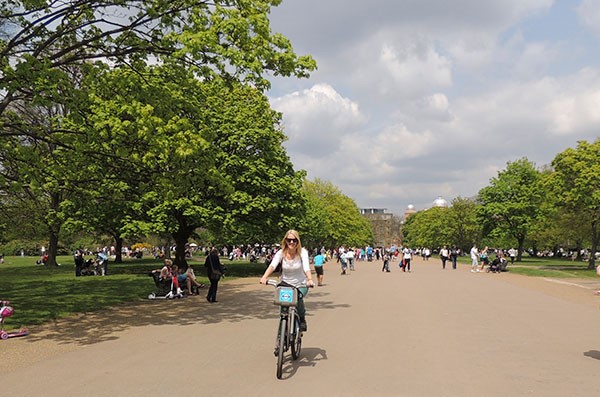
AIPH Green City Conference presents Champions of Green Cities who share their inspiring stories
[Source: AIPH] The AIPH 2021 International Green City conference on 22 April is a chance to inspire people, organisations, city councils and government administrations to join this challenging movement and lead global thinking on the successful integration of nature into the built environment. As part of AIPH’s Green City programme, the conference is offered free-of-charge to registered delegates.
Breaking old ‘progressive’ thinking after a global pandemic
The coronavirus pandemic brought issues around the planning of our urban spaces into sharper focus. Some people living across the urban landscape could escape the confines of lockdown and connect with nature to enjoy the benefits of good greenspaces. While for others, the crisis highlighted the fact that some built-up areas have insufficient quality greenspaces.
For our health and wellbeing, for tackling biodiversity loss, for our battle with climate change, new look urban areas are surely the way forward.
At the AIPH 2021 Green City Conference, you will hear about international innovations and advances in city greening from ‘Champions of Green Cities’ – a line-up of expert international speakers who can positively demonstrate that transforming our cities from grey to green need not be an unrealistic quest, but a practical solution.
Event Speakers who are inspiring change
“Transforming the urban landscape of central Melbourne – from grey to green” is the subject of our keynote speaker, Prof Rob Adams AM, City Architect, City of Melbourne. Prof Adams will describe Melbourne’s many actions over the last three decades to transform its downtown, starting from a realisation in 1985 that the City was going backwards financially, socially, and environmentally. The design was to focus on the movement of people and not vehicles. Since 1992, with the incremental and significant greening and reorientation of roadscapes, Melbourne has risen from the back of the pack to become, on seven occasions, the World’s most liveable city as determined by The Economist magazine. Many cities have followed what Melbourne pioneered, and it remains a powerfully influential exemplar for the battle against climate change.
Prof Adams continues his greening crusade and in a recent podcast he argued that recovery from the pandemic should involve refurbishing office buildings into apartments.
Carbon emissions did fall, and city centre air quality did improve during the Covid-19 lockdown from the reduced use of fossil fuel. While the latter may not be a permanent situation now, the images of clear skies overhead, and clear water in Venice showed that things can quickly change for a better environmental outcome. Ms Maria Vassilakou, Vienna Solutions draws from her previous experience as Vice Mayor of Vienna, and now independent advisor on urban transformations, to describe what makes a city liveable.
Ms Vassilakou serves as a member of the EU-Horizon Mission experts board on “Climate-neutral smart Cities” advising the European Commission on the design and implementation of the respective mission aiming at 100 European climate-neutral cities by 2030.
People reported feeling exposed to greater risk of infection on public transport during the pandemic, and during lockdown these systems were running at less than full capacity. Will this change now people look towards ‘returning to normal’? Mr Peter Massini, Director of Future Nature Consulting Ltd, UK, presents an overview of greening metrics that are used in policy development, discussing some of the challenges and drawbacks and how effective they are in practice. For the past 10 years he has led on green infrastructure and natural environment policy for the Greater London Authority.
Empowerment is a strong tool, and the green recovery needs a powerful voice. Ms Jennifer McKelvie, Councillor for City of Toronto, Canada, gives insights from her experience in inspiring the next generation of climate leaders through the C40 Women for Climate mentorship programme. This programme builds upon the City of Toronto’s commitment to fight climate change, as participants work on self-initiated projects that align with TransformTO and the Resilience Strategy. Launched in 2017, TransformTO lays out a set of long-term, low-carbon goals to reduce local greenhouse gas emissions. The Resilience Strategy sets out a vision, goals, and actions to help Toronto survive, adapt, and thrive in the face of any challenge, particularly climate change.
Prof. Tim Beatley, founder of Biophilic Cities, USA, explains the power of community in making cities more nature focussed, and the influence of biophilia in inspiring change.
Ms Ingrid Coetzee, Director of Biodiversity, Nature & Health for ICLEI Africa describes the organisation’s projects on mainstreaming nature, its benefits, and nature-based solutions into urban planning and decision-making in cities and city regions thereby helping them become healthier, and more resilient and liveable places.
Dr Audrey Timm, Technical Advisor to AIPH announces our latest update of the AIPH 2020 Green City Guidelines – a digital resource providing evidence that supports innovative policy and practice in green cities.
Ms Anne Jaluzot, UK, delivers a case study of Barcelona, the city which changed traffic patterns, replacing roadways with living green, thereby increasing social interactions, and reducing pollution.
Mr Niek Roozen, the founder of Niek Roozen Landscapes bv, Netherlands, introduces the power of plant selection in dominating landscape performance, using Almere as a case study for motivating plant selection linked to function, and the multi-functionality of urban greening.
Dr Andrew Hirons, Senior Lecturer in Arboriculture at Myerscough College, UK, explains the science of tree selection for city landscapes, and how essential this is to creating resilience in our urban forests.
AIPH Green City Chair, Mr Bill Hardy, Canada, will bring the focus onto the AIPH Green City initiative and how the content of this conference programme integrates with the AIPH vision as the world’s champion for the power of plants.
AIPH presents the Champions of Green Cities
Launching at the AIPH 2021 Green City conference is the AIPH World Green City Awards which celebrate cities that show leadership and innovation in bringing more living green into their city.
The ongoing impact of safety measures against coronavirus means that rather than a physical international conference, the event will operate using the multi-faceted Hopin platform to host this online international conference, where delegates from around the world can meet in real-time.
Register free-of-charge for the AIPH Green City conference to hear from city leaders worldwide and find out how your city can enter the AIPH World Green City Awards. https://aiph.org/event/aiph-2021-green-city-conference/
AIPH is grateful to our World Green City Award Partners Biophilic Cities, Cities and Health, The Nature of Cities, Trees For Cities and Urban Land Institute. Our Event Partner ICLEI and our Media Partners China Flowers & Horticulture, FloraCulture International, HostCity and Pod Oslonami PL. -
AIPH World Green City Awards launched to champion ‘Living Green’
[Source: AIPH] AIPH strongly believes that the correct use of plants and the landscape in cities plays a critical role in the fight against climate change and all its associated impacts. It is proven that greener cities make healthier citizens and stimulate social and economic development.
The AIPH World Green City Awards celebrate the inclusion of plant life and nature into city design, planning and function and applaud the leaders of this growing movement.
Bernard Oosterom, President, AIPH says, “It is imperative that we embrace a nature-orientated approach to city design and operation. Through the AIPH World Green City Awards, we promote the essential role of plants in creating vibrant urban areas in which people and businesses can thrive. We are calling on city authorities all over the world to showcase what they have done and how they have used ‘Living Green’ to make their cities better for all residents, more sustainable, and more resilient.”
Entries are invited from city governments and relevant organisations around the world that promote and support ‘Living Green’ in their plans. Cities will be celebrated through six categories: Health and wellbeing, Climate change, Economic recovery and inclusive growth, Biodiversity, Water and Social cohesion.
Supporting the Awards, Tim Beatley of Biophilic Cities says:
“The importance of nature in our urban lives has never been clearer. Nature can’t just be an afterthought. It must be the central design and planning principle.
We need to recognise and celebrate those cities around the world that are investing in nature, and that understand and see nature as an essential ingredient in happy, healthy, and meaningful lives.
I am excited that for the first time there will be a global award that shines a light on those most exemplary green cities. We believe this award will play an important role in accelerating the global biophilic and green cities movement.”
We want to celebrate every city that, like AIPH, is a champion for the power of plants – Enter the AIPH World Green City Awards 2022.
Visit aiph.org/green-city/green-city-awards
Register an expression of interest to receive application documentation Register your interest in the AIPH World Green City Awards
AIPH is grateful to our AIPH World Green City Awards Partners 2022 Biophilic Cities, Cities & Health, Trees For Cities , The Nature of Cities , ICLEI CitiesWithNature and Urban Land Institute. Thank you to our Media Partners FloraCulture International and Host City. -
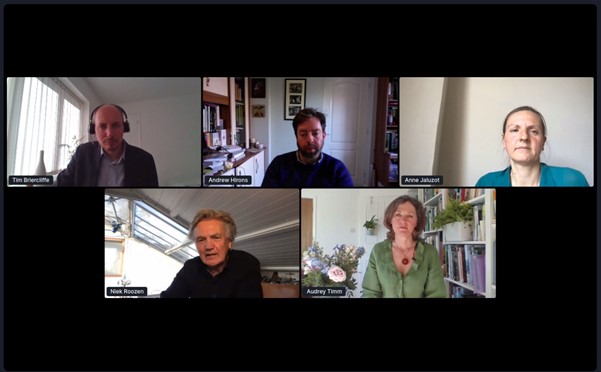
AIPH Green City Conference sparks purposeful thinking on greening for urban living and the future of our planet
[Source: AIPH] The AIPH 2021 International Green City conference brought together a worldwide audience of professionals, organisations, city councils and government administrations to hear how international experts on greening urban spaces have met this challenge.
Incremental steps to reach for the skies
For the keynote speaker, Professor Rob Adams, his journey to greening the city began in the early 1980s in Melbourne, Australia, when he was an urban designer helping to write a 1985 strategy plan to make Melbourne “a better city to attract people”. Through incremental actions to improve the characteristics of the city that they already had, he spoke passionately on how they reclaimed street space, widened pathways, tore up the “asphalt and planted trees” creating active recreational areas with natural shading canopies. In 1992 there was a breakthrough in traffic routing, pushing forward the greening and pedestrianisation of the city. Melbourne is now recognised as one of the most liveable cities and acts as an exemplar of the battle against climate change.
In a question-and-answer session after his speech, Prof Adams said a “political inertia problem for many cities is holding back progress”.
Cool streets and community spirit
For the past ten years, Vienna in Austria has been planning and managing its green transition. To put this into context, Vienna has 23 boroughs, substantial public transport infrastructure and a population that grows annually by 25,000 with 62% living in subsidised housing. Now Vienna is 53% green, and its journey has included the collaboration of the public and private sector, “shared visions, and strategies and a culture of working together closely over longer periods of time”. The family has been at the heart of the vision to create spaces for children to grow up and thrive, changing brownfield sites into living quarters, connecting to the city with green walkways and the public’s community spirit with urban farms. Artificial islands protect the city from flooding and are also weekend retreats to unwind. Cool streets pop up for citizens to escape the summer heat, with no concrete visible, only vertical planting and shady trees.
Former Vice Mayor Ms Maria Vassilakou proudly took us on a virtual tour of the city that holds the number one title as the world’s most liveable city for the past three years. She is now serving as a member of the EU-Horizon Mission experts board on “Climate-neutral smart Cities”, advising the European Commission on the design and implementation of the respective mission. Ms Vassilakou added, “Urban recovery after the pandemic will pretty much rely on the transformation and the greening of public space to create cities that we love and new opportunities for us all.”
The need for better planning
Mr Peter Massini, Director of Future Nature Consulting Ltd, UK, presented an overview of greening metrics that are used in policy development, discussing some of the challenges and drawbacks and how effective they are in practice. When talking about the challenges in the UK, he said, “If we are going to make London a sustainable city, then its dense urban spaces have to provide space for people, space for wildlife, but hold functional benefits around climate change and public health.”
Empowerment for climate change
Empowerment is a vital tool, and green recovery needs a powerful voice. Ms Jennifer McKelvie, Councillor for the City of Toronto, Canada, gave insights from her experience in inspiring the next generation of climate leaders through the C40 Women for Climate mentorship programme. This programme builds upon the City of Toronto’s commitment to fighting climate change as participants work on self-initiated projects that align with TransformTO and the Resilience Strategy. Launched in 2017, TransformTO lays out a set of long-term, low-carbon goals to reduce local greenhouse gas emissions. The Resilience Strategy sets out a vision, goals, and actions to help Toronto survive, adapt, and thrive in the face of any challenge, particularly climate change.
For the love of nature
Prof. Tim Beatley, the founder of Biophilic Cities, USA, explained the power of community in making cities more nature focussed and the influence of biophilia in inspiring change. He poignantly pointed out that cities disconnect from nature, and we urgently need to find ways to reconnect. He gave examples of biodiverse activities across the globe where people are actively pursuing wildlife habitats in the buildings of city centres.
Ms Ingrid Coetzee, Director of Biodiversity, Nature & Health for ICLEI Africa, described the organisation’s projects on mainstreaming nature, its benefits, and nature-based solutions into urban planning and decision-making in cities and city-regions thereby helping them become healthier, and more resilient and liveable places. She said we should be “flicking on the green switch” as a top priority for the planet, humanity and society”.
Green City tools
Dr Audrey Timm, Technical Advisor to AIPH, presented the latest update of the AIPH 2020 Green City Guidelines – a digital resource providing evidence that supports innovative policy and practice in green cities. It has themes on Green Neighbourhoods, Green Streets, Green Buildings, and case studies on Green Cities.
Green City case studies
AIPH’s Green City principles promotes the essential role of plants in creating vibrant urban areas in which people and businesses can thrive. We heard case studies from the following experts.
Ms Anne Jaluzot, delivered a case study of Barcelona, the city which changed traffic patterns, replacing roadways with living green, thereby increasing social interactions, and reducing pollution.
Mr Niek Roozen, the founder of Niek Roozen Landscapes bv, Netherlands, introduced the power of plant selection in dominating landscape performance, using Almere as a case study for motivating plant selection linked to function and the multi-functionality of urban greening.
Dr Andrew Hirons, Senior Lecturer in Arboriculture at Myerscough College, UK, explained the science of tree selection for city landscapes and how essential this is to creating resilience in our urban forests. He also stressed how vital plant health is, and the careful management of each tree and shrub in situ is essential for the survival of green spaces in city landscapes.
AIPH Green City Chair, Mr Bill Hardy brought to focus the AIPH Green City initiative and how the content of this conference programme integrates with the AIPH vision as the world’s champion for the power of plants. In summing, he said, “Today there has been a wealth of information and inspiration. We have seen how new cities can be built using Green City principles. We also learnt how older cities can be fixed to meet the same goals without huge infrastructure costs. We need to rethink our streets, and make green spaces for people, not parking for cars.”
All recordings are available to watch here https://bit.ly/3u5vcAA
Green Cities Champions
AIPH is a champion for the power of plants, and at this conference, we launched the AIPH World Green City Awards 2022, to recognise and celebrate every city that champions nature in its design. Visit aiph.org/green-city/green-city-awards Register an expression of interest to receive application documentation Register your interest in the AIPH World Green City Awards.
AIPH is grateful to our AIPH World Green City Awards Partners 2022 Biophilic Cities, Cities & Health, Trees For Cities, The Nature of Cities, ICLEI CitiesWithNature and Urban Land Institute. Thank you to our Media Partners, FloraCulture International and Host City. -
MinisterAccord launch at SportAccord 2021 in Ekaterinburg to strengthen cooperation
[Source: SportAccord] SportAccord will bring together political leaders and governmental decision-makers from around the world for the inaugural MinisterAccord at the SportAccord World Sport & Business Summit 2021 in Ekaterinburg, Russia.
MinisterAccord, on the afternoon of Thursday 11 November 2021, will be an exclusive gathering of Ministers from sport and tourism, designed to discuss and examine the most pressing and relevant issues for countries and regions within the international sport movement.
MinisterAccord will provide nations, leaders and ministries with a unique opportunity to work together to develop the future of sport and consider how to engage with International Sport Federations and ultimately drive growth opportunities within sport and sport tourism.
In addition, the gathering will allow for key governmental decision-makers to share best practices and explore how sport can break down barriers for the development of a healthy society and economy by inspiring people to live an active and healthy lifestyle.
MinisterAccord will feature a Welcome Address from SportAccord President Dr. Raffaele Chiulli and a Host Nation Address from Russian Federation Minister of Sport Oleg Matytsin, as well as further speeches, and an open and interactive discussion session followed by a lunch gathering.
“MinisterAccord is an exciting addition to the programme for SportAccord 2021 as it will strengthen co-operation between nations to ensure the continuing development of sport and sport tourism around the world,” SportAccord Managing Director Nis Hatt said.
“MinisterAccord will be an opportunity to build bridges for the betterment of society and sport by sharing best practices and discussing essential topics. We look forward to welcoming leaders, ministers and decision-makers to Ekaterinburg for this new and exciting initiative.”
Speaking at the recent Virtual Launch Celebration for SportAccord 2021, Russian Federation Minister of Sport Oleg Matytsin said: “Sport and government must work together. In order for us to recover stronger, we must act like players on the same team.
“There will be areas that require the skills of sports players, and other areas that require the skills of government players, especially concerning Ministers of Sport. For this reason, I am very happy to see MinisterAccord introduced to SportAccord in Ekaterinburg.”
MinisterAccord will sit alongside SportAccord’s other established conference streams, offering delegates clear signposts to specific areas of interest during a busy week of meetings and networking opportunities in Ekaterinburg, from 7-12 November 2021.
The annual World Sport & Business Summit is a six-day event attended by leaders of the global sports community. As the only global sports industry event attended by all International Sport Federations and their stakeholders, SportAccord also brings together organising committees, hosting cities and regions, governments and administrations, rights-holders, agencies and athletes, as well as top-level experts and organisations from the sports media, technology, investment, medical and legal sectors.
Registration is open for the SportAccord World Sport & Business Summit 2021 in Ekaterinburg, the 19th edition of SportAccord’s flagship annual event. Organisations interested in becoming an official partner or exhibitor can contact SportAccord to discuss these investment opportunities by emailing sales@sportaccord.sport, with SportAccord also offering an interactive exhibition floorplan and 3-D flyover of the SportAccord 2021 exhibition space.
You can follow SportAccord’s portfolio of events via Twitter @sportaccord or keep up-to-date via LinkedIn, Facebook, YouTube, Flickr, VK, and Instagram.