At the opening of SportAccord Convention on Monday, professional services firm PwC have revealed research that shows that the event will bring a major increase in the economy of the host city, Belek / Antalya.
PwC, a Gold Partner of the event, estimates that the local economy will benefit to the tune of US$3.85 million from hosting the sports industry gathering, which will also help Antalya and Turkey to achieve longer-term development goals.
The organisers anticipate that the 12th annual edition of the Convention will bring more than 1,500 delegates, most of whom will stay in the city for the entire week.
Non-resident participants in the event are expected to spend around US$2.25m, much of which will benefit local companies. The biggest proportion of this direct spending – 83.6 per cent – will go to hotels and restaurants.
The transport, retail, social and cultural services industries are also expected to benefit from the direct impacts of SportAccord Convention. Indirect economic impacts throughout the value chain are estimated at US$1.59 million.
“SportAccord Convention has become an important vehicle for popularizing sport and healthy lifestyles worldwide,” said Bob Gruman, Managing Partner of PwC’s Global Sports Mega-Events Centre of Excellence.
“Hosting 1500 delegates from global sports associations and media for a full week also provides an excellent opportunity to promote Antalya’s beautiful landscape and rich cultural heritage, while encouraging delegates and guests to visit the city again for personal or business reasons.”
According to PwC, SportAccord Convention will support the Turkish government’s 2023 Strategic Plan and the region of Antalya’s development plan by encouraging business activity in areas related to the event through the development of social and intercultural networks. Demonstrating the region’s ability to host such events will attract further major events to Antalya.
Hosting a significant number of delegates from all over the world and publicizing the event through global media will promote Antalya as an important global destination for sporting and cultural activities. Promoting sports and the hosting of sports events will also inspiring healthy lifestyles, the PwC reports states.
SportAccord Convention’s managing director Nis Hatt said “We are extremely pleased to know that our event will deliver real economic benefit to Belek and Antalya. To be validated by PwC’s authoritative research means a great deal to our organisation and to our stakeholders.”
Category: City Development
-
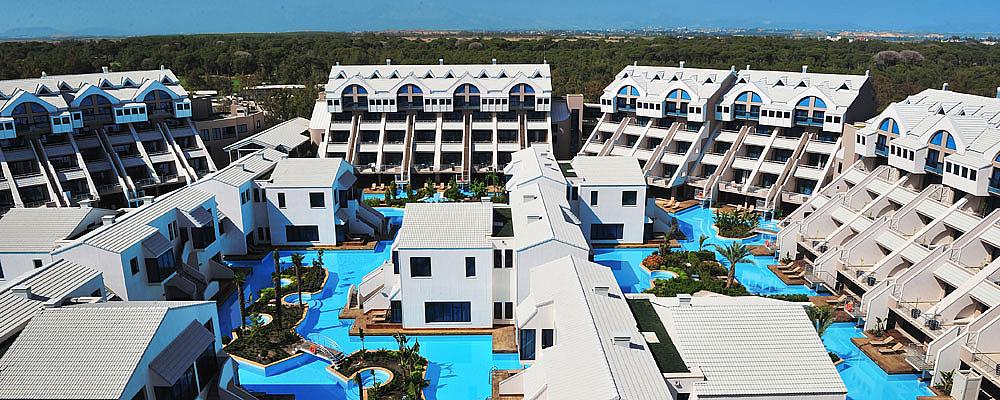
SportAccord Convention to boost host’s economy
-
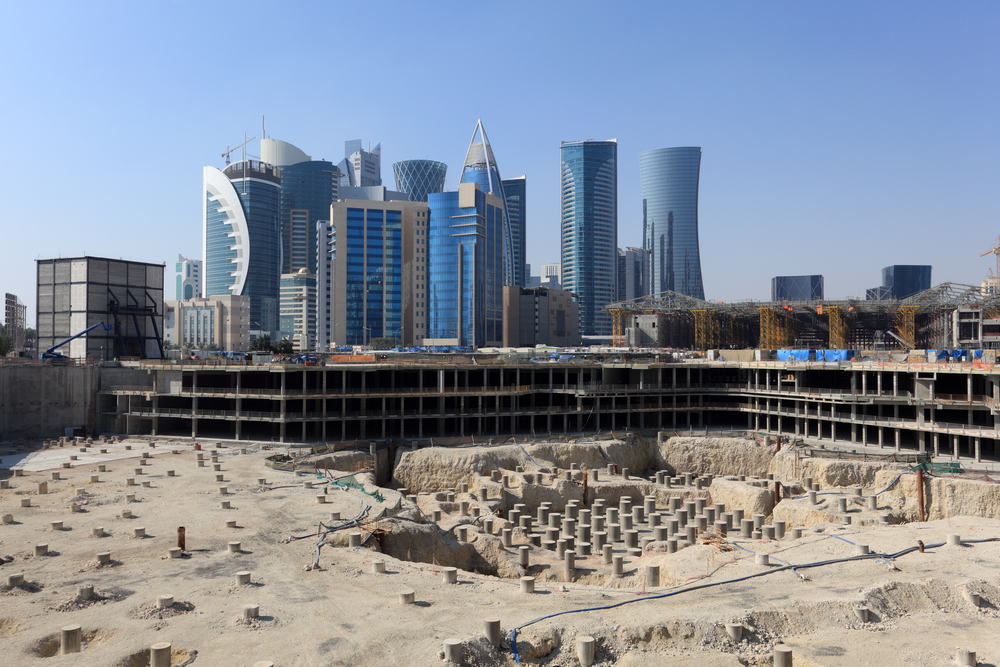
Qatar construction event attracts growth market exhibitors
As Qatar works towards the FIFA World Cup in 2022 and the Qatar National Vision 2030, international interest in the country continues to grow. This is reflected by Project Qatar 2014, to which 2,100 companies from 47 countries expected to attend.
A total of 24 countries are setting up international pavilions at Project Qatar 2014, the International Construction Technology & Building Materials Exhibition, which takes place on 12-15 May at the Qatar National Convention Centre.
Three of these countries – Indonesia, Palestine and Romania – are taking pavilions to the event for the first time, reflecting the desire of growing markets to get involved in the construction industry in Qatar.
More established countries taking international pavilions include major event hosts Austria, Canada, China, France, Germany, Greece, India, Italy, Korea, Spain, Turkey and the United Kingdom.
“The international pavilions have been fundamental to the success of Project Qatar, which has a long history of attracting many global exhibitors and visitors. The pavilions offer international exhibitors a central platform to showcase their expertise, products and services,” said Rawad Sleem, Project Manager, Project Qatar.
“The participation of all these international pavilions demonstrates their recognition of the importance and commercial value of partnering with Project Qatar 2014, positioning their nations in Qatar amongst key global leaders in a market experiencing world leading exponential growth in infrastructure, building and construction.”
Francois Sporrer, French Trade Commissioner, Director of UBIFRANCE Middle East said, “There are many construction and infrastructure projects in Qatar, in preparation for the FIFA World Cup in 2022. In 2014, US$40 billion are going to be invested in various projects in this booming market. Project Qatar 2014 is definitely the place to be which is why the French pavilion, organised by UBIFRANCE, will gather nearly 30 French companies offering various state of the art technologies and French know-how for the building industry. Some of these companies are already active in the Qatari market and a number of others are looking forward to Project Qatar 2014 to network with partners and distributors. -
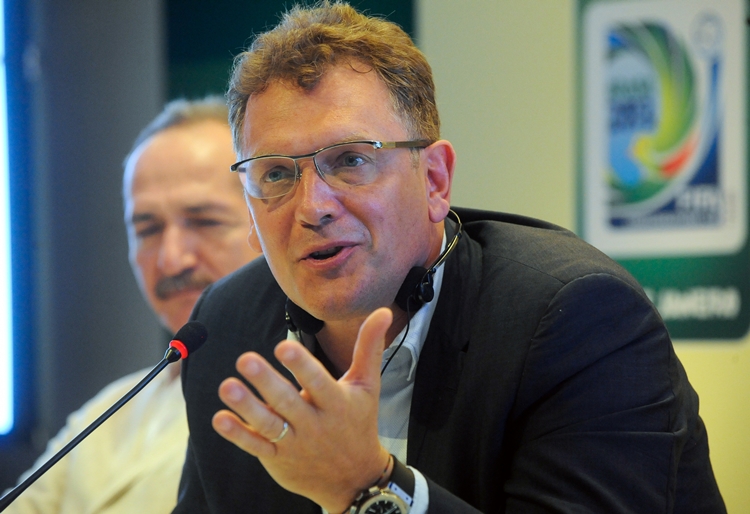
Valcke and Felli to discuss Brazil’s legacy in Lausanne
Gilbert Felli, the IOC Olympic Games executive director and Jérôme Valcke, the General Secretary of FIFA, are to share the stage with other major figures in sports events to discuss the legacy of the 2014 World Cup and the 2016 Olympic Games.
The conference, which is hosted by the International Centre for Sports Studies (CIES), takes place in French on 6 May at the Expo Beaulieu Lausanne. Other speakers include CIES director and IOC member Denis Oswald, lawyer and former IOC executive director François Carrard and sports architect Miranda Kiuri.
The meeting comes at a time when both Valcke and Felli have been closely scrutinising the progress of the FIFA 2014 World Cup and the 2016 Olympic and Paralympic Games. Both events are experiencing serious delays that have threatened to impact the successful delivery of Brazil’s mega-sports events. Any problems in event delivery would reflect badly on the host nation and have a knock-on effect on legacy plans.
“The results of such major sporting events are never guaranteed and therefore the legacy is always a theme of discussion, notably because of the costs incurred,” the CIES said in a news release on Thursday.
“It is true that some countries have been able to deal with legacy better than others and for this reason CIES has decided to host this round table and gather experts just before the FIFA World Cup and the 2016 Olympics. This conference will allow everyone to better understand this challenge and its related issues, as well as the real legacy to these two major Brazilian competitions.
More information about the event is available at http://www.cies.ch/cies/agenda/ -
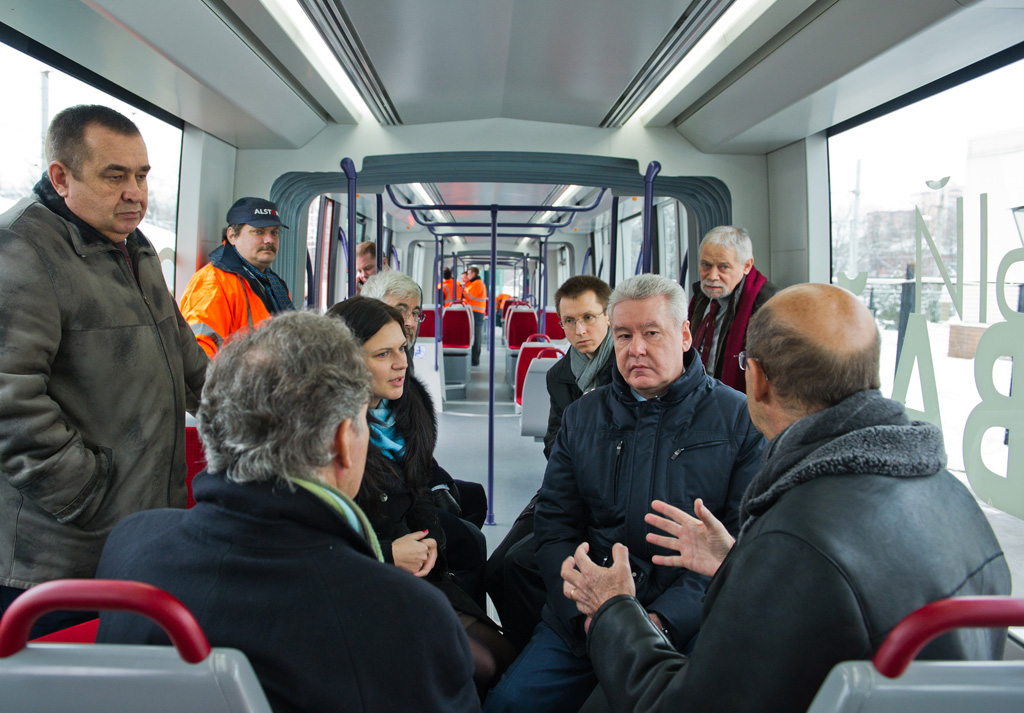
Moscow ready to host the World Cup, says Mayor
Moscow’s urban systems could cope with hosting an event on the scale of the FIFA World Cup “tomorrow”, Sergei Sobyanin, Mayor of Moscow said on Saturday in an interview with TV channel Moscow 24. He also said that football infrastructure will need to be fully modernised before the city is ready to host.
The Mayor’s comments come just a few days after the revelation from his office, City Hall, that Moscow will spend US$8.1bn on preparing for the 2018 FIFA World Cup. This figure was four times as much as the US$2bn that the city’s top sports official Alexey Vorobyov said earlier in April would be spent on sporting and transport infrastructure.
The largest proportion of City Hall’s revised budget will be allocated to urban infrastructure indirectly associated with the event. Two thirds of the budget will go towards transport upgrades in Moscow, which currently experiences some of the heaviest traffic in the world.
Eleven per cent of the spending will be spent on sports facilities, including the major task of redeveloping Luzhniki Stadium, which is Moscow’s biggest sporting infrastructure project.
“The works are fully under way,” said Sobyanin. “At the same time, training fields are being built and football infrastructure will become modern by then.”
Sobyanin confirmed that the new Otkrytie, or Spartak stadium will open this year, along with a new Spartak metro station. He also said the number of hotel rooms in Moscow is growing by 1,000 each year.
The successful hosting of the IAAF World Athletics Championships in 2013 is evidence of Moscow’s capacity to host mega events, he said. “In terms of number of teams this is the second most spectacular event after the Olympics.” -
Brazil 2014 World Cup visitors to offset carbon
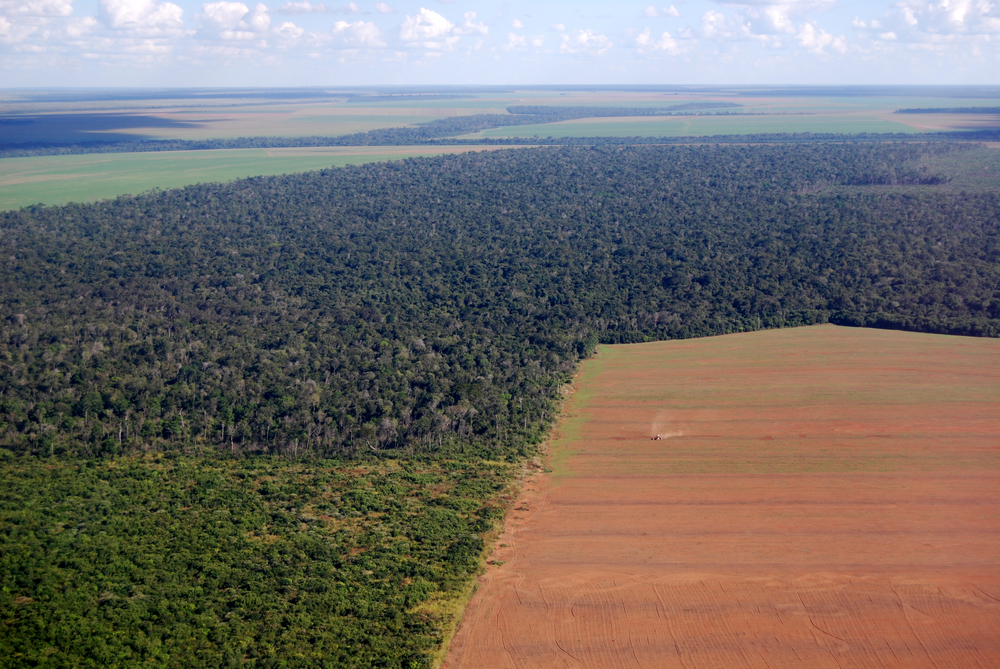
Fans holding tickets for the World Cup in Brazil are being encouraged to offset the carbon emissions caused by their travel to the tournament.
A programme launched by FIFA on Thursday allows successful ticket applicants to sign up on a carbon offsetting page on FIFA.com, where they can enter a prize draw to win two tickets for the World Cup final.
FIFA is bearing the cost of the carbon offsetting; all that is required is a FIFA.com Club account and a successful ticket request reference ID.
The owner of the flagship event of the world’s most popular sport will be keen to generate a positive legacy, given the problems Brazil is encountering in the construction and delivery phases.
“FIFA takes its environmental responsibility very seriously,” said Federico Addiechi, FIFA’s head of corporate social responsibility.
“As part of our two-fold strategy with the non-profit carbon management programme BP Target Neutral, FIFA and the Local Organising Committee will offset 100 per cent of their own operational emissions and through the campaign launched today, we are encouraging fans to neutralise the carbon emissions resulting from their travel to Brazil.
“At the same time we use the FIFA World Cup as an opportunity to engage with millions of people and raise awareness of the environmental impact of our journeys and the ways to mitigate it.”
In a press release, FIFA acknowledged that “staging a tournament of this scale inevitably has an impact on the environment. Offsetting is one way of limiting this impact.”
The programme is supported by Cafu, the world’s only player to have appeared in three World Cup finals. “It just makes sense”, he said. “Supporting your team and supporting low carbon development in Brazil at the same time is a win-win for all. I am offsetting my travels related to the FIFA World Cup Brazil 2014 and encouraging everyone to do the same. It’s really easy to do and only takes a minute”.
The emissions will be offset through a portfolio of low carbon projects in Brazil, chosen by BP Target Neutral.
“Each project is selected through a rigorous tender process and adhering to the standards set by the International Carbon Reduction and Offsetting Alliance with final selection made by an independent panel of environmental NGOs. The list of the exact offsetting projects selected, all of which result in social and economic benefits to local Brazilian communities, will be announced in June,” says FIFA. -
Brazil must make the benefits of hosting clearer
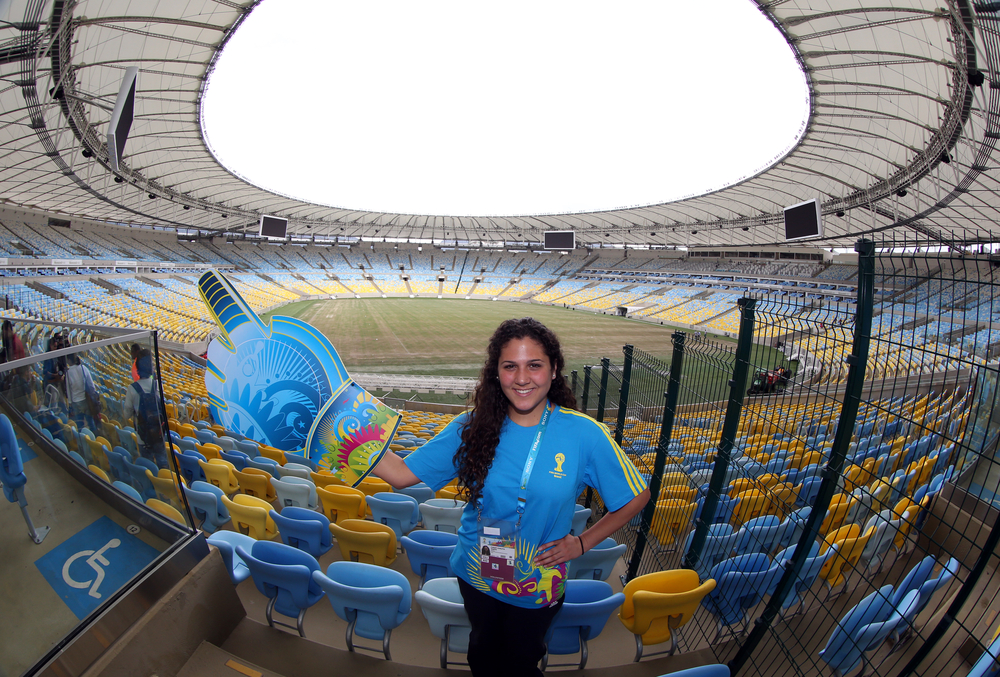
Speaking to a select group of international media including HOST CITY on Wednesday, Brazil’s deputy sports minister Luis Fernandes said the federal government should have worked more closely with the local organising committee in the earlier stages of preparing for the World Cup.
The government also made the mistake of assuming that the Brazilian public would support the event and understand the benefits of hosting it, he said, acknowledging that these mistakes should not be repeated in the run up to the Olympic Games in 2016.
“We should have communicated more strongly the benefits that the World Cup brings to the country,” Fernandes said.
“I think basically we thought that the benefits were evident and that the World Cup addresses our main sport, which is football or soccer in the US, so that support and understanding of the benefits in the event would be almost automatic.
“That’s something that we will have to communicate stronger for the Olympic Games.”
The government should also have made it clearer that investments in civic infrastructure are not part of the cost of hosting the World Cup, Fernandes said.
“In a lot of infrastructure investments, which are not essential for the event, but which the Brazilian government decided to anticipate, were sometimes understood as costs of the World Cup.
“So, we’ve learned from that lesson and for the Olympic Games, we’re separating in our communications these two aspects. The matrix of responsibility will only include for the Olympic Games those investments that are specifically directed to the event, to the global sporting events.
“All communication about separate investments in infrastructure that will spur national and regional development are in a different plan, which is a plan for anticipation and exploration of investments in public policy. So, that’s maybe a lesson we learned from the World Cup experience.”
He also admitted that the federal government should have been more closely integrated with the local organising committee at an earlier stage.
“We were only included in the board of the local organising committees of representation of the federal government a little bit more than two years ago. I think that if we had been included from the very beginning, the level of integration in World Cup preparation would have been greater, and that would have been better.” -
Russia’s road to smarter transport
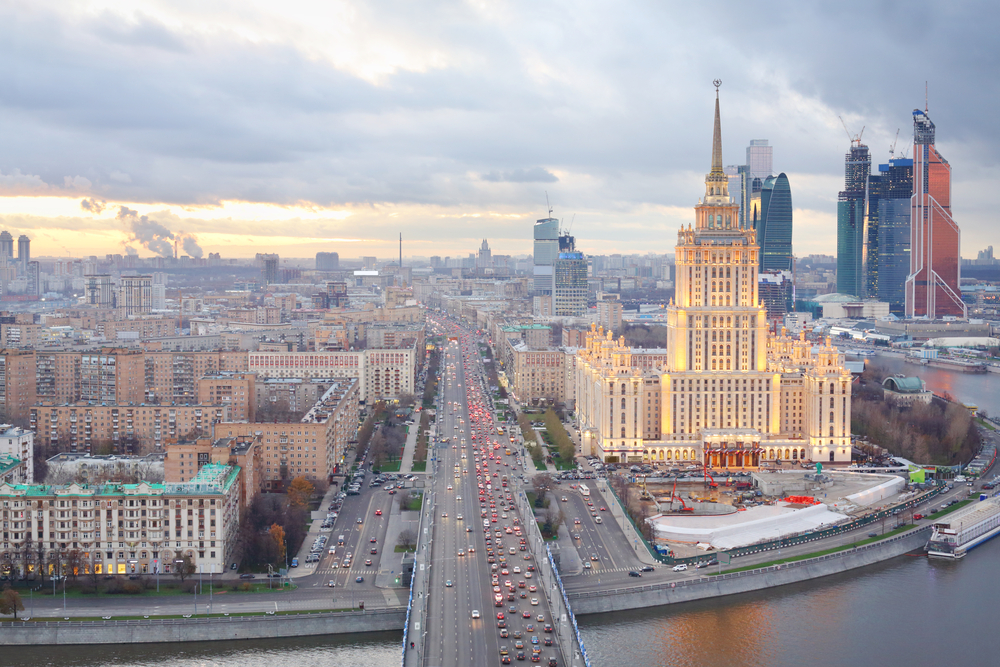
Russia, with a population of just over 140 million, spans continents. Its sheer scale, coupled with some harsh weather conditions and very large cities, provides plenty of challenges for transportation.
As Igor Levitin, Russian Minister of Transport put it, “Due to the geographical peculiarities of the Russian Federation and those of the territorial location of its production forces, transport has always been considered in Russia as a key economic sector providing for the country’s economic and political integrity.
“In some major cities such as Moscow, Saint Petersburg and Nizhny Novgorod, which are in a critical situation with regard to road congestion, a range of measures is underway aimed at increasing the capacity of the cities’ road network, limiting the use of personal vehicles and motivating the population to use public passenger transport.”
According to Vladimir Kryuchkov, CEO of ITS Russia, “The understanding is growing gradually that the limited access of personal and cargo vehicles to central parts of the cities and more tough parking policy are inevitable.”
In Moscow, the average traffic jam lasts 2.5 hours – the longest in the world. With 2.6 million cars in the city on a daily basis, a lack of parking space is also on the list of problems.
Speaking to the ITS Moscow conference in 2013, the city’s deputy head of transport, Tatiana Malashenkova announced plans to reduce the length of average journey times in the city to 50 minutes. This is to be achieved by reducing car journeys by 30 per cent and increasing public transport journeys by 40 per cent.
Malashenkova also highlighted the introduction of two park and ride schemes: one on the approach to the outer ring road for 80,000 cars and one between the outer ring road and the third ring road for 30,000 cars.
Global positioning
NIS, a Russian public-private company, has been tasked with developing and deploying a ERA-GLONASS GPS system throughout the Russia, which involves fitting GLONASS satellite navigation communication devices, or terminals, into all new vehicles sold in the country.
In the event of an accident, the terminal is automatically activated and transmits the vehicle location and other key information to an emergency response centre, allowing the swift intervention of the emergency services.
The ERA-GLONASS system will help to reduce the number of fatalities and injuries on Russia’s roads and boost the safety of both freight and passenger transport. In addition, NIS plans to develop commercial applications for GLONASS and create a mainstream market for navigation services and devices.
The communication carrier for the ERA-GLONASS system is 3G. This requires additional infrastructure to be provided to ensure that there is sufficient coverage, not only in cities but also across the Russian strategic road network. This will open up the possibility for additional ITS devices to be utilised in Russia.
Commercial vehicles are also being targeted for ITS deployment. A nationwide tolling system is in development for vehicles weighing more than 12 tonnes, again using the GLONASS GPS system.
In November 2013, NIS and Kapsch TrafficCom were among four companies that tendered for the project, which is being administered by the federal road agency, Rosavtodor and is scheduled to run for 13 years.
Russia and Europe
ERTICO and ITS Russia are working together to research, develop and deploy ITS technologies. A number of areas for cooperation have been highlighted, including a pilot of the “eCall” system, which enables crashed cars to call emergency services automatically.
Another area for cooperation is ITS for large events, particularly in the context of the FIFA World Cup in Russia in 2018. Another target is to improve traffic and traveller information for transport corridors, especially the Helsinki to St Petersburg corridor.
The “Smart Transport Corridor: Helsinki – St. Petersburg” project aims to create a continuous and interoperable intelligent transport service between Finland and Russia, while increasing the interoperability of services between the EU and Russia.
The aim is to improve commuter services, boost traffic safety and make traffic flow more smoothly, especially at the border. The project also aims to increase cooperation between Finnish and Russian private and public sector operators and facilitate the growth of business in the intelligent transport area.
Five pilot services are scheduled to get underway in 2014: a weather and road condition service; a traffic incident information service; traveller services in real-time; a public transport information service on the Allegro train; and automatic emergency calling using eCall/ERA Glonass.
These services are being implemented by a consortium founded by private companies and will be demonstrated in Helsinki at the ITS Europe Congress 2014. -
Prince Feisal of Jordan launches social sport campaign
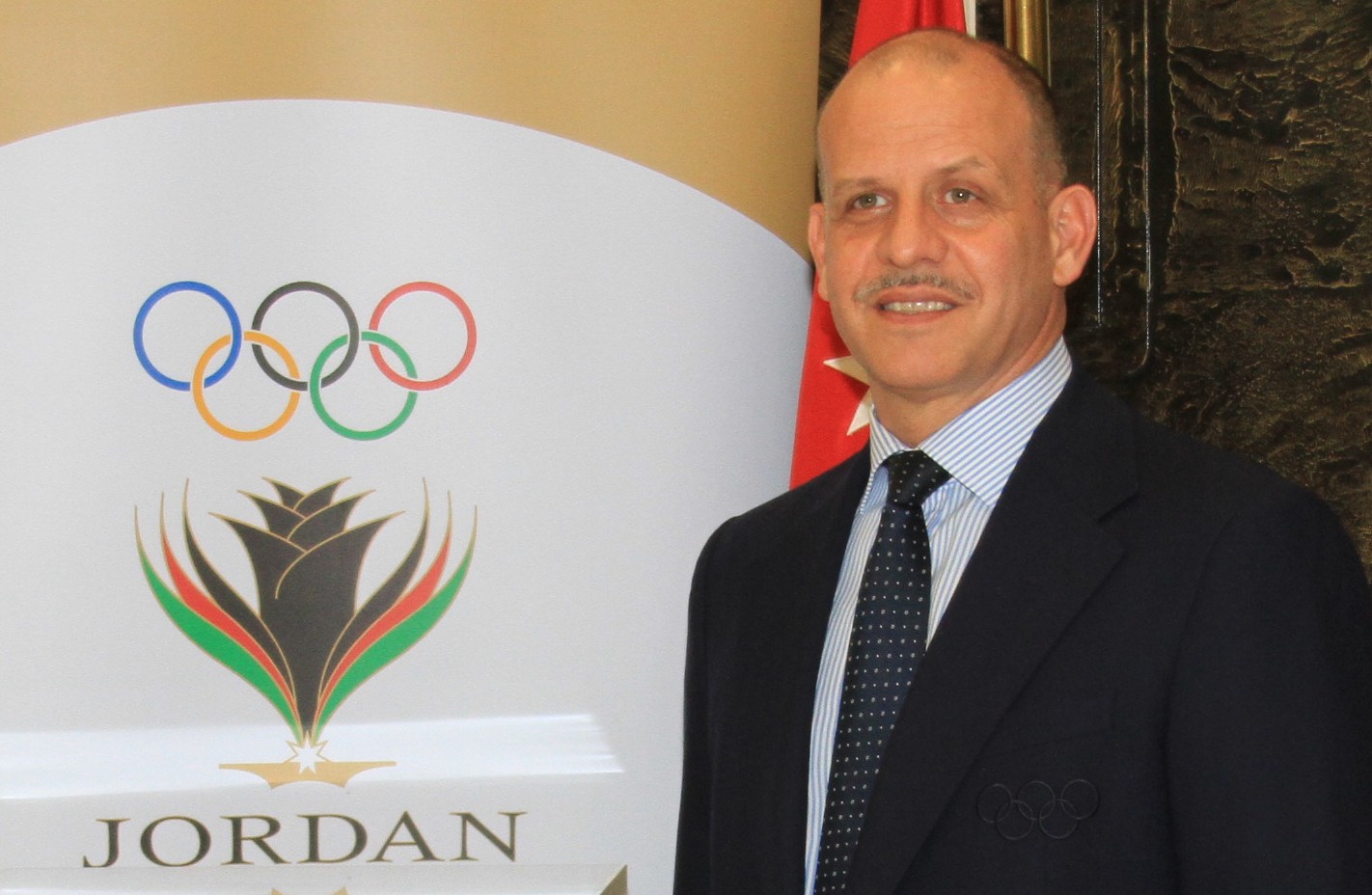
The President of the Jordan Olympic Committee (JOC), HRH Prince Feisal Al Hussein, has launched a national communications initiative to boost sports participation among Jordanians.
Concerned over the Kingdom of Jordan’s collective health and what it describes as “the continuous threat of our young people falling victim to damaging and anti-social distractions”, the JOC has launched a series of initiatives under the banner of “Living Sport” with the aim of making sport play a part in the lives of all Jordanians.
“We, in the Olympic Movement, truly believe in the power of sport to make a positive difference, and the Jordan Olympic Committee is taking responsibility, alongside like-minded organisations, in making that difference,” said HRH Prince Feisal Al Hussein, President of the Jordan Olympic Committee.
The programme was launched on Thursday during celebrations held in Al Hussein Sports City in advance of Olympic Day (23rd June). The JOC was joined by representatives from all 34 sporting federations under its umbrella, as well as 200 school children who took part in activities promoting Living Sport and the Olympic values.
The programme is set to run indefinitely. “There is no end date to sport making a difference to the lives of our citizens and so Living Sport has no end date,” said Prince Feisal.
A one-month campaign will be launched every year on Olympic Day to address key health and social issues. Specially created JOC committees will promote sport as universal and without barriers to participation, and organized in an environment-friendly way through green initiatives.
Living Sport will target six to 11 year olds through an “Ambassador” initiative, steering children away from anti-social distractions by bringing fun into sport.
Through the JOC News Service, sporting successes will be celebrated, bringing a sense of collective national pride. The JOC is also taking steps to make sport more marketable and attractive to all non-participants, from fans to sponsors.
“Living Sport is a long-term programme which will be at the heart of all JOC activity and operations, and which will evolve as needed through time to remain relevant to all that we do,” said Prince Feisal. -
Games of culture
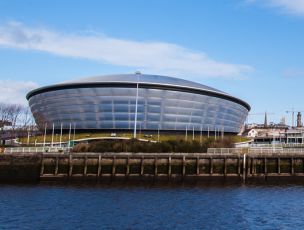
Many will be looking forward to the Glasgow 2014 Commonwealth Games this summer purely because of the sporting action that will be taking place across Scotland’s largest city, with stars such as Mo Farah set to be competing. However, in recent years major sporting events have not only been required to provide a city full of the best in sporting stadiums and facilities but also a comprehensive cultural programme.
The Cultural Olympiad, which took place as part of the London 2012 Summer Olympics, included artists from across the country taking part in large scale cultural events. The Glasgow 2014 Commonwealth Games is planning a similar array of arts projects to take place around the Games.
Organisers have called the Glasgow 2014 Cultural Programme an ‘unprecedented nationwide programme of activity’ that includes 200 projects and exhibitions and over 800 events. The programme is split into two separate brands: Culture 2014, which is a longer term project that is taking place across Scotland, and Festival 2014, which is the Glasgow-based side of the project that will run alongside side the sporting activities.
Culture 2014 is set to include dance performances, stand-up comedy and theatre projects across Scotland which will aim to involve a large number of people from a wide range of backgrounds. Festival 2014 will then provide two weeks of culture and arts in the host city of Glasgow, which organisers hope will act as a celebration of the Games.
A sporting and cultural event
The head of this ambitious cultural programme is Jill Miller. She says the cultural function of the Commonwealth Games is now a key element of the event that needs to be integrated in with the sporting aspects.
“The organising committee for the Games has been very clear about this, it is a sporting and cultural event,” explains Miller. “I think that’s something that’s changed. What we’re really keen on is that this is about strengthening what’s happening in the city to make the city the very best host is possibly can be.”
Miller experienced the cultural side of the Commonwealth Games in Melbourne, Manchester and Delhi and she says this experience has given her team a great insight into how best to put together a cultural programme.
“We went to look at what was happening in terms of how these festivals were delivered. We came back from all of those experiences and developed a model in Glasgow that was about engaging with our existing cultural sectors, to make sure they had the opportunity to accelerate their ambitions.”
Legacy is often cited as one of the key aspects of any cities’ bid to host a major sports event, but this is usually looked upon from a sporting and infrastructure perspective. In London the regeneration of the East End and the lasting effects of inspirational sporting achievements were cited as key parts of the legacy of the 2012 Olympic Games.
However, Miller wants to also include the legacy element of the Games into the cultural programme. “I would suggest the festival we have in the city is much more integrated into the plans and the developments for the future… what we’re trying to do is get people to come back post 2014,” she says.
Host with the most
As part of this legacy, the programme aims to promote the host city to the rest of the Commonwealth, and vice versa, through working with a range of government bodies and wider international organisations. “This is absolutely about showcasing Scotland and Glasgow within the Commonwealth and working with the Commonwealth in a way that we can actually showcase them in Scotland and Glasgow.
To read the rest of this feature, register to receive the next issue of HOST CITY magazine -
Glasgow City Council reveals Games impact on city regeneration
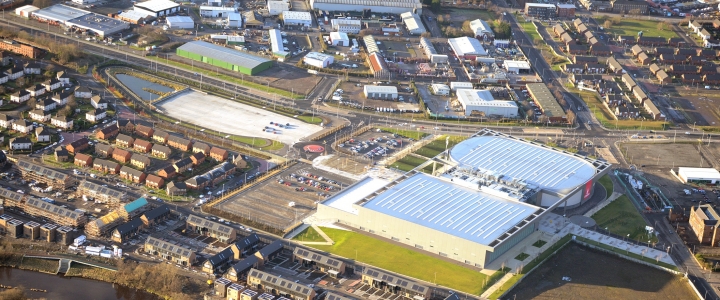
The council claim the ‘Glasgow Legacy Story’ has already made impacts on Glasgow’s economy and infrastructure as well as boosting sports participation in the city. 550 jobs have been created directly through the Games and 4,500 young people have been put into work or training due to Games related investment, according to the council.
The development of Glasgow’s East End was also highlighted by the council and the 700 houses and flats that have been built as part of it as well as the £700 million invested in the city’s transport infrastructure.
As well as the effects on the local economy the Games have brought with them a participation legacy to Glasgow. The council boasts an 130% increase in cycling in the last 5 years thanks to a £10 million spend on 13.6km of walking and cycle networks as well as a city-wide mass cycle hire scheme.
“The Games have undoubtedly seen a huge surge in Glaswegians taking part in sport and we’re fortunate to have some outstanding clubs, offering a wide range of sports and activities for all ages and abilities,” said Councillor Gordon Matheson, Leader of Glasgow City Council.
“To further build on this success, we have invested £198 million in sports facilities across the city including those currently serving as Games venues since 2009. During this time, attendances across all of Glasgow Life’s sports facilities have surged to 6.6 million.”
“We want to host the best ever Games, but I’ve always said we will have failed if we don’t leave a lasting legacy for Glaswegians.”