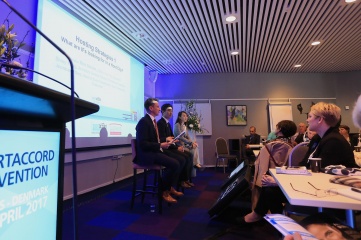
[Source: SportAccord Convention] Recognised as one of the most influential sports business leaders in Los Angeles having played a significant role in bids for almost every major sporting event that has been brought to the region in the last three decades, David Simon, President of the Lost Angeles Sports Council will co-chair CityAccord and City-to-City at the SportAccord Convention in Bangkok, Thailand from 15 – 20 April 2018.
In 1984 LA was the first Olympic Games ever to generate an operating surplus (US$235 million) and the region is eager to repeat this economic achievement in 2028. So how do cities go about selecting the right events and turning them into an outstanding success?
“Making relationships a priority – this year’s theme for CityAccord – is one of the pillars of success when it comes to bidding for and hosting major events. However, in order to achieve great success, selecting the right events is also key and requires clear thinking.
“As a city you need to look at your specific community and determine what is achievable based on your resources: human, financial and physical. Once you’ve identified these critical factors, forging strong relationships with event stakeholders will help you achieve your vision and deliver successful results. Cities and stakeholders will be able to examine these elements and more during CityAccord.” commented David Simon.
A popular day at SportAccord Convention, CityAccord will take place on Tuesday 17 April 2018 from 14:00 at the Centara Grand & Bangkok Convention Centre. Aimed at cities, regions, sponsors, international sport federations, organising committees and industry, delegates are encouraged to register.
Giles Morgan, HSBC Global Head of Sponsorship & Events of HSBC – Global Financial Organisation, will take part in the CityAccord Interactive Q&A entitled: “How do sponsors determine which sports and events to partner with?” where delegates will have the opportunity to ask sponsors about their approach and choices.
“It is a most timely question and one that will no doubt elicit a wide variety of responses. One thing is for sure – the sponsorship landscape is changing and it’s an incredibly exciting time to be involved. In short, we want our customers and our four key sports – golf, rugby, tennis and cycling – to thrive. We believe the way to achieve this is to invest in our sports through innovation, grass roots, entertainment and much more; by doing this we add value to the sports we sponsor and at the same time deliver spectacular brand experiences for our customers.”
Melanie Duparc Co-ordinator of Smart Cities & Sport Network – an Official Supporter of SportAccord Convention, will also co-chair CityAccord and City-to-City.
Further information can be found on the webpage CityAccord. Watch highlights from last year’s successful #SAC2017 City Day including comments from Melanie Duparc of Smart Cities & Sport, Ben Avison of Host City, as well as the #SAC2017 Convention City Co-Host, Lars Lundov, CEO of Sport Event Denmark. Registration for #SAC2018 is open.
Category: City Development
-
David Simon, President of Los Angeles Sports Council to co-chair CityAccord and City-To-City at SAC2018
-
How cities can realise their visions for a sustainable future
How important is the legacy of large economic investment in cities for major events, and what role can architects play?
This is a fundamental issue for any city that is interested in hosting major events. For such a large investment to secure local support and take advantage of focused global attention, a lasting legacy must be priority number one. Unfortunately, it is all too often an afterthought.
Brought in at the ground level, architects can effectively communicate a long-term vision for cities and local organising committees (LOCs). Through the built form, and through innovative design decisions, both the one-off event and the future legacy can be realised as one coherent journey.
Architects can help develop the best solutions for long-term infrastructure reuse and economic outcomes for a city. Even a sport cluster that is intended to be used for its original purpose can leave a practical legacy if the surrounding support infrastructure improves the wider city region. Likewise, enhancements to the built environment that support a City of Culture event need long-term business planning to make sure that the running of a new collection of large public buildings is self-sustaining.
AFL Architects is putting together a major events whitepaper for just this reason. We want to help LOCs plan wisely for a sustainable legacy when bidding for major events. After all, the single largest cost in most events is the built form. Getting this right – while at the same time preparing for the long-term use post-event – can make or break a city for years to come.
Why should sports, residential, healthcare and other building types be considered together when masterplanning?
Masterplans are the bedrock of any major city development. It goes without saying that the most successful masterplans incorporate appropriate mixes of many building use types around generous public open spaces and good transport links.
AFL’s multi-sector design studio positions us very well for large scale development sites where residential development, for example, may be necessary to underpin the financial viability of a stadium or arena development. Likewise, a community health and wellbeing centre could form a hub for a sustainable masterplan mixed with a new or improved educational facility to provide the long-term community facilities that a city region requires to maintain family life.
How will the Hull Venue help the UK City of Culture to attract cross-sector events and visitors beyond 2017?
The story of Hull Venue’s development is an interesting case study for how architects can influence a long-term legacy. When we were first approached by Hull City Council to design a new multi-purpose events arena as part of its tenure of UK City of Culture, our first question to the council was – why do you want to build a 10,000-seat arena? From a pure business standpoint, we were talking our way out of a larger job! However, our overriding feeling was that the building had to be designed with a solid business plan underpinning the legacy use.
Our second question was – what did multi-purpose truly mean? We wanted to break away from the traditional approach of designing a sports arena that was a second-class venue for alternative uses, so we decided to dig down and create something that was truly multi-purpose.
We brought in experts in venue business planning to create a truly three-dimensional brief. This would take in the appropriate scale of the venue and the ideal mix of event types that Hull would benefit from long term. Essentially, we all agreed that the venue needed to be sized based on the regional catchment and facilities provided that were lacking in the city and wider region.
The outcome of this process was a venue sited right in the city centre with a maximum capacity of 3,500. This would be perfect for its primary use as a live music venue, with the ability to scale down for entertainment shows and smaller events. At the same time, functions such as conferences, exhibitions and banquets requiring only 800 attendees would benefit from the large floor plate that the building would provide.
The design process was a delicate balancing act which we believe has played out well in the final design. Now being constructed and due to open next year, Hull Venue will continue the legacy of Hull 2017, attracting thousands of visitors right into the centre of Hull for years to come.
How do you think your work at the AIMAG will contribute to the ongoing development of Ashgabat and Turkmenistan?
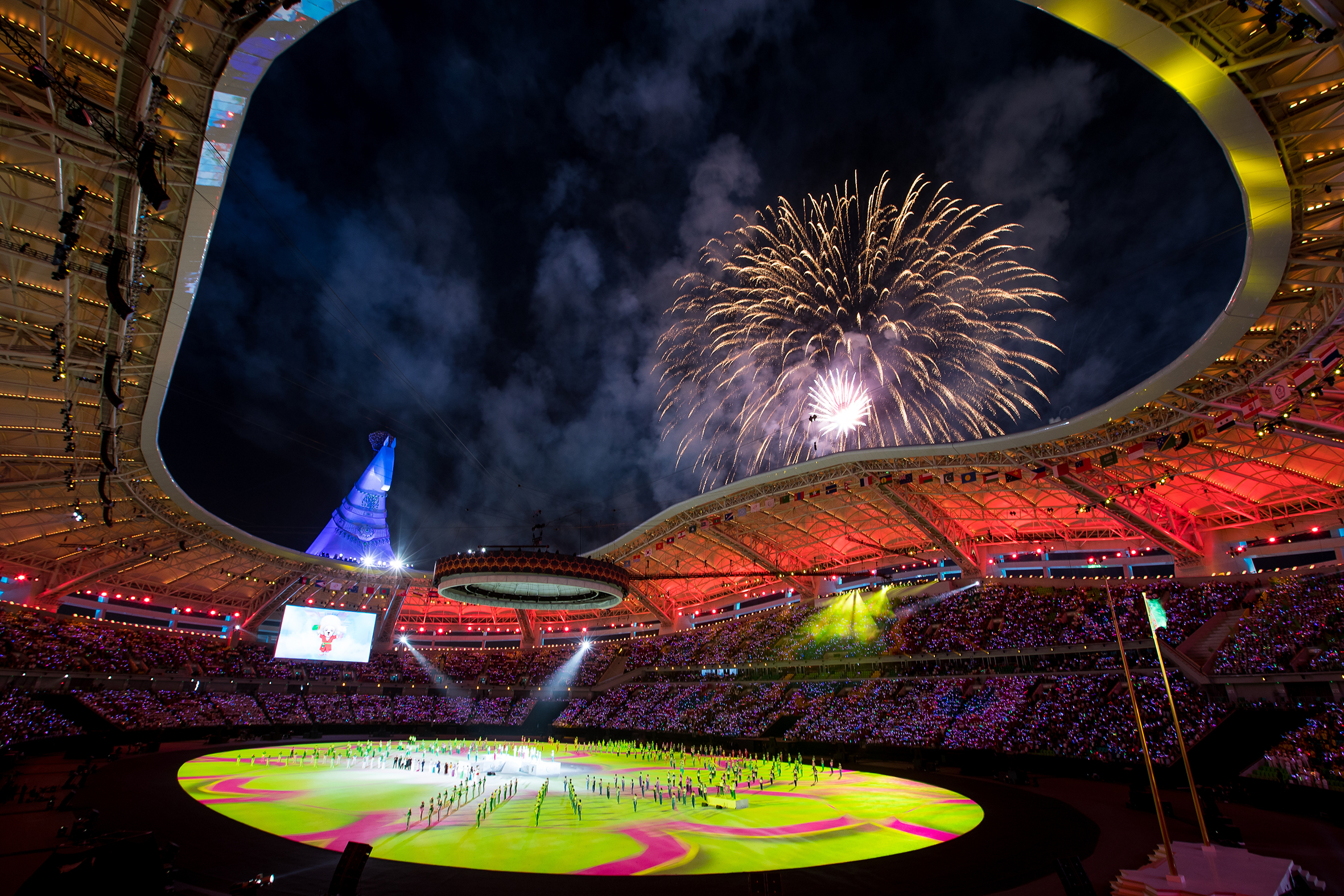
Although the stadium was built to host the opening and closing ceremonies for the Asian Indoor and Martial Arts Games 2017, it needed to also be designed for a sporting legacy as part of the wider Olympic Complex in Ashgabat.
The brief was to be both IAAF and FIFA compliant while being able to host ceremonies and concerts. As these are not directly compatible we took the approach to design for athletics first while optimising for football use and then incorporating other events into the design modes.
Configuring the stadium seating bowl and sports facilities for all these events was a challenging exercise, with conflicting sight lines, c-values and program. The final design optimises all the requirements while minimising seat loss in football, which is a common issue with this type of multipurpose venue. This means that with only minor modifications, this venue could feasibly host a future FIFA Football World Cup group game on top of its existing capabilities to host tournaments such as the IAAF World Athletics Championships.
What are your further ambitions for the major events sector internationally?
As world leaders in delivering truly flexible and adaptable stadiums, arenas and masterplans, we want to create closer collaborations with our clients at the very start of their major event journeys. It is only in this way that cities can realise their visions for a sustainable future.
Above all, we want to create legacies that improve the places where we live and work, optimise costs and above all – deliver a world-class experience.
Marcel Ridyard is speaking at Host City 2017 in Glasgow on 28 and 29 November -
Using major events as a springboard for sustainable urban innovation
Public scepticism about the value of major events such as the Olympic Games is at an all-time high. A continued era of austerity, economic and political uncertainty means that the parties driving such events have to work even harder to justify their value.
While this may sound daunting for some, when cities step back and look at the bigger picture they will realise that major events like this are more relevant than they have ever been. They represent the very confidence in our urban futures that we need to pull us through challenging times. They’re expressions of multi-cultural unity, open-mindedness, acceptance and cooperation. Their successful delivery has the power to re-invent the image of a country, accelerate and transform cities at a record-breaking pace.
To deliver this potential it is imperative that these events are seen as being primarily for the hosts’ and their citizens’ benefit, and align perfectly with their longer-term ambitions. In this context they can be presented to host citizens as accelerants to pre-existing ambitions and expressions of their hosts’ confidence and clarity of purpose.
Recent Arup-led research conducted for the Cities Alive: Rethinking legacy for host cities report, highlighted three tactics that are likely to have greatest impact in achieving this:‘Urban overlay’: mapping the city’s ambitions and accelerating change through its neighbourhoods and streets. At its heart the approach takes the event as an accelerant in realising a city’s longer-term ambitions. In the same way that overlay design is used to create the ‘look and feel’ of an event, the event itself is used to create the ‘look, feel and function’ of the future city.
Operational excellence: transforming city management and embedding highly efficient Games time organisational models to increase future resilience
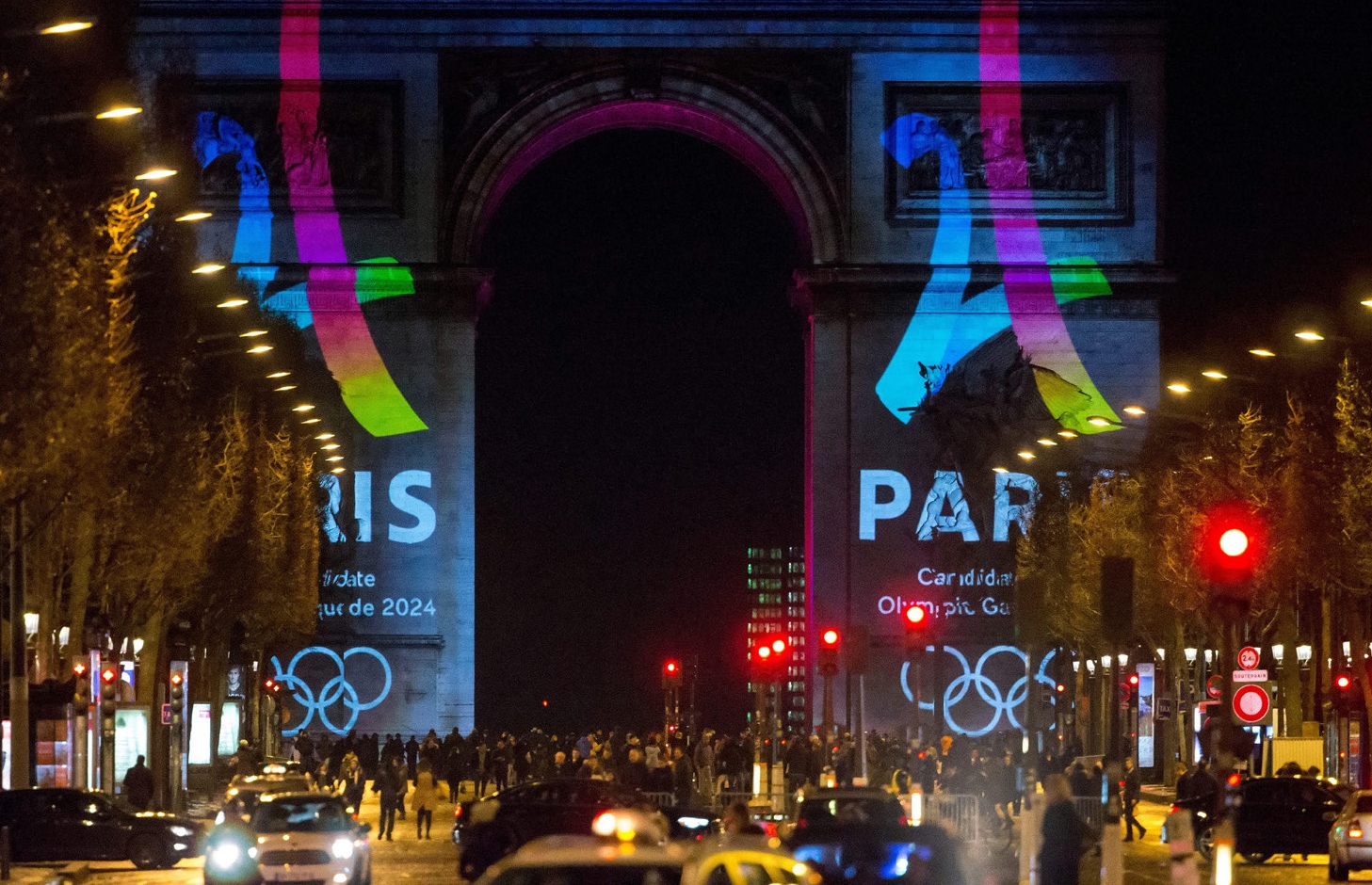
Cleaner and greener infrastructure: inspiring and accelerating action to tackle climate change by developing hard and soft ‘climate ready’ infrastructureWith eyes turning to Paris and LA as the hosts of the 2024 and 2028 Olympic Games, its time to consider how cities may evolve their approach to hosting, to ensure Games are delivered cost effectively, while leaving a lasting, positive legacy for their communities.
Closer to the action through virtual reality and live sites
The London 2012 Live Sites generated real excitement and enabled more people to get into the spirit of the Games. Advances in hand-held technology, virtual reality and streaming media will enable spectators to tune into any number of live sports, get guided tours of venues or experience being at the virtual trackside with their favourite athletes. Formula-e Motor Racing is a great example, with the use of 360-degree cameras, live streaming of races, almost instant highlights and even the opportunity for fans to ‘vote’ to give their favourite drivers an additional boost of power.
Flexible, temporary venues
Most major event venues will be temporary in the future, allowing land to be swiftly released for redevelopment after the Games. More affordable – off-the-shelf or pre-engineered sporting venues will significantly reduce cost. Reduced venue capacities can also bring significant savings, with smaller facilities resulting in fuller capacities and a better atmosphere for fans.
New financial models
Cities are cautious about bidding for major sporting events, with Boston, Hamburg, Rome and Budapest pulling out of the running for the Olympics and Los Angeles seeking an advance from the International Olympic Committee. New ‘value’ focussed financial models are emerging, which should be encouraged. Investment in regeneration can drive huge increases in surrounding land values. This model would see a percentage of this increased land value returned and put towards the cost of infrastructure. Another approach is tax increment financing (TIFs), which diverts future property tax revenues towards upfront infrastructure investment.
Streamlined transport
The greatest single risk to the successful legacy of a major event is the potential disruption it can bring to the daily life of a host city. A combination of new technologies, greater use of data and more effective management will reduce cost, improve experiences for residents and visitors and strengthen the long-term resilience of host cities. Examples include the idea of ‘logistics hubs’ outside city centres, where deliveries can be consolidated so that they minimise the number of trips required, reduce emissions and congestion and load packages onto smaller, electric vehicles. London 2012 also saw the adoption of a highly efficient multimodal ‘transport coordination centre’, as well as greater use of travel planning apps. Arup expects most host cities to explore ways of using predictive modelling tools, data analysis, mobile apps and live updates to deliver smooth running transport and logistics.
Creating a resilient legacy
Cities should see the Games as a catalyst to help them tackle the major challenges they are facing – such as rising air pollution; energy shortages; housing shortages and an increasing number of extreme weather events. Rather than focusing on event related sustainability outcomes, such as reducing energy use during sporting events – the report recommends it is used as an opportunity to scale up and accelerate ambitions having a long-term impact. For example, this could involve helping cities establish their own localised energy, cooling and water systems.
Large scale sporting events have huge potential to act as change catalysts for cities, helping them to tackle the major challenges facing them – from rising air pollution and carbon reduction, to housing shortages. For too long legacy has been viewed narrowly, with the emphasis on the physical structures left behind. We need to think about how we build institutional muscle power – able to deliver benefits before, during and after the events. The real prize of the games should be the opportunity for cities to scale up and accelerate ambitions that have a long-term impact.
The above presents a distillation of Arup’s Cities Alive: Rethinking legacy for host cities report. -
UNESCO and UCI reveal how international federations can prioritise relationships ‘between events’ at CityAccord
[Source: SportAccord Convention] During the session ‘Between Events’, delegates who register for SportAccord will hear about ground-breaking initiatives from UCI (Union Cycliste Internationale) and UNESCO (United Nations Educational, Scientific and Cultural Organization), and the tremendous impact these initiatives are having at both governmental and grassroots levels.
With non-communicable diseases (NCDs) now accounting for the majority of health-related deaths in Asia and the Pacific, especially among youth[1], interventions to increase or improve the quality of spaces in urban planning, can have a transformative effect on the lives of individuals and the community.
Caroline Baxter Tresise, International Consultant for Sport, Social and Human Sciences Sector, UNESCO Paris, will reveal how they are working with IFMA (International Federation of Muaythai Amateur) in Thailand as part of the initiatives, Sport is Your Gang and The New Urban Agenda. Together, these programmes are helping to combat the rise of NCDs as a result of the increase in dedicated urban green public spaces for sport and physical activity such as Muaythai.
“Parks and celebrated public spaces for sport are rapidly disappearing across the world in favour of shopping malls and highways. Sport federations can play an important role at the local level to reverse this trend through dynamic, multi-stakeholder partnerships involving Governments. Join us at CityAccord to find out how!”
Jérôme Lacroix, Business Development Manager, Union Cycliste Internationale will reveal the latest insights from its global initiative UCI Bike City label, including the work they are undertaking in Bangkok. The programme rewards cities and regions that invest in everyday cycling and related infrastructures, as well as elite cycling events. Its long-term vision is to develop a network of UCI Bike Cities enabling them to maximise the impact of sport regardless of age, level of fitness or cycling activity.
“IFs have a fantastic opportunity to not only grow sport followers, but also encourage active and healthy individuals of all ages. This can be done in partnership with cities and regions hosting their events. In return these same hosts can also greatly benefit from such events to showcase and develop areas, including outside of the sports sphere. Lacroix went on to say:
“The UCI Bike City label recognises cities and regions that act as inspiring examples of how elite and everyday cycling can contribute to creating better, safer, healthier and more sustainable communities. We look forward to sharing examples from this programme with the audience at CityAccord.”
SportAccord is also delighted to confirm the Co-chairs for this year’s CityAccord and City-to-City: Melanie Duparc, Co-ordinator of Smart Cities & Sport Network and an Official Supporter of SportAccord; and David Simon, President of the Los Angeles Sports Council.
Organisations looking for opportunities to connect and increase their visibility at this prestigious global gathering and take advantage of the opportunities associated with becoming an Exhibitor or Partner, should contact the sales team: sales@sportaccord.com or phone +41 (0)79 126 08 42.
As part of the Official Schedule, SportAccord will host well over 20 networking events, a 3-day Exhibition as well as an extensive Conference programme to include: the Summit (Plenary), CityAccord, LawAccord, MediaAccord and HealthAccord.
Other key features include: Speakers’ Corner, the Thai Pavilion, the Opening Ceremony and Closing Event. Follow developments and updates via Twitter @sportaccord using #sportaccord, as well as LinkedIn and on Facebook.
[1] WHO 2016
-
Zhang Jiandong: hosting the Olympic Games twice accelerates Beijing’s development
In 2015, Beijing and Zhangjiakou jointly won the bid for 2022 Winter Olympic Games and Beijing therefore became the first city that will hold both the summer and winter Olympic Games.
As the biggest, most influential and comprehensive sports event in the world, the Olympic Games has great importance for development. The Olympic legacies have provided resources and momentum for the city’s development.
In order to continue the success after the 2008 Olympic Games in Beijing, we specifically established Beijing Olympic City Development Association (BODA) and a specific fund to develop of the city and our facilities.
Physical Games legacies
The broadcasting centre from the 2008 Olympic Games was converted into the China National Convention Centre after the Olympic Games, hosting more than 7,000 conferences including the Belt and Road Forum and the APEC summit. This conference centre is one of the Olympic Games legacies.
Other facilities like the Bird’s Nest and the Water Cube have become landmarks of Beijing; these places are also hosting other major events. Eight facilities in Beijing will serve as venues for the Winter Olympic Games.
The Beijing 2008 Olympic Games also brought forward the construction of our metro system. Carrying more than 10 million people every day, it is the city’s biggest transportation system. During the organising of the Beijing 2008 Olympic Games we did a lot to control pollution and traffic; we have made this a long-term effort in Beijing.
We continue to work on the sustainability of our facilities. We plan to use 25 facilities [in Beijing, Yanqing and Zhangjiakou] for the Winter Olympic Games and are working with other organisations to comprehensively utilise these facilities, both for the Games and for future functions.
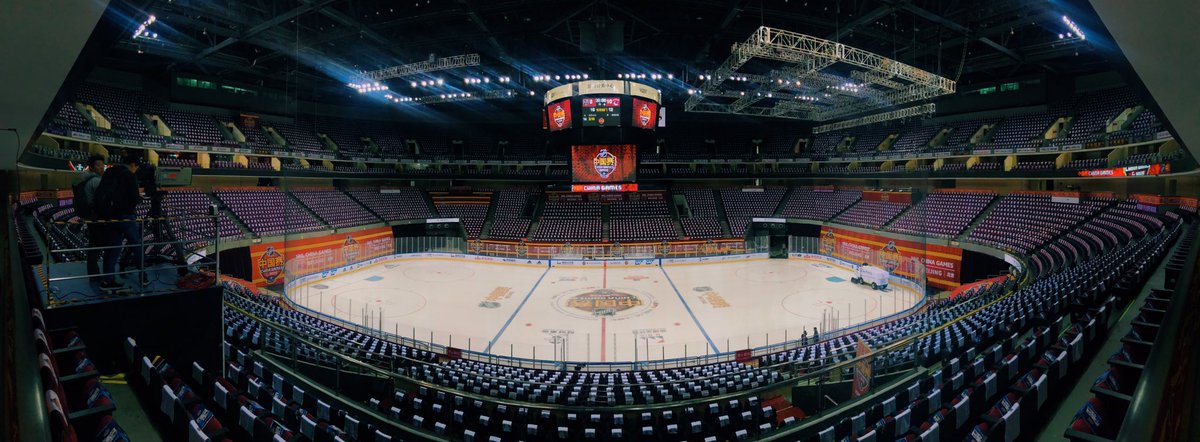
Our design and construction teams are all engaged in this process of making plans for legacy. For example, the Wukesong Arena can be transformed into the venue for ice hockey from basketball within six hours.
We will also promote the coordinated development of Beijing, Tianjin and Hebei area. The Winter Olympic Games in Beijing and Zhangjiakou will become very important drivers for economic development in the region. The coordinated development in this region will be closely related to the Olympic Games and they will be mutually beneficial. They will have better transportation and industries will also be boosted.
We will also work on environmental protection; public services will also be further enhanced and this will be a pilot project for the coordination of this region. More benefit to welfare will be brought to this region and its people.
The Olympic spirit
The Olympic Games influence people to participate in sports activities as part of the daily routine. In Beijing, people benefited greatly from the spirit of the Olympic Games. More than half of our citizens are frequent participants in sports activities. Our people are constantly improving their health.
We’ve also got the legacy of talent from the Olympic Games. Beijing 2008 cultivated a large number of high quality organisers of sporting events who have gone one to work on, for example, the 2010 Guangzhou Asian Games; and in 2019 we are hosting the Military World Games and other major international events, all reflecting the talent.
More than half of our staff for the 2022 Beijing Winter Olympic Games will be from the 2008 summer Olympic Games organising committee.
We place great importance on legacy, making a very inclusive model for our organising work so that all people can engage in the Olympic Games and share its benefits.
We will also continue to work on education, volunteering and spreading the Olympic spirit, so that the general public will be more active and healthy in their lifestyle.
With the leadership of the Chinese government we want to conduct a wonderful and excellent winter Olympic games and fully implement green ideas and cost reduction.
We pay special attention to winter sports in China. In China, winter sports are mainly concentrated in the northern area. With the Beijing Winter Olympic Games, we hope to ignite the torch of winter sports in China and we try to engage more than 300 million people to participate in winter sports, at the same time trying to cultivate a high professional level and give us a good legacy of winter sports talent.
We will also endeavour to promote equipment manufacturing in winter sport and create great momentum in this global industry.
We will also work hard on the cultural legacy. The world will witness the Olympic Games, which will be held during China’s Spring Festival, a very important traditional festival in China. With this integration of Chinese culture and the Olympic Games, we can provide a unique cultural experience for Chinese and global audiences.
*This article, based on a presentation by Mr Zhang Jiandong at World Winter Sports Expo (WWSE) in Beijing in September 2017, first appeared in the Winter 2017 Issue of Host City magazine. Host City was the only foreign media reporting from WWSE -
Ten ways to create winter sports hubs
1: Jiang Xiaoyu, Vice President, Beijing Olympic City Development Association
“In China, the popularity of ice and snow activities needs to be improved.
“In order to make China an ice and snow power we should not only focus on competitive events. Meanwhile we should also focus on cultivating the ice and snow culture, the popularity of ice and snow activities among the normal people. That’s the solid basis for the sustainable development of the ice and snow industry in China.
“So I really hope everyone can pay special attention to our 2022 Olympic Games but meanwhile focus on the ice and snow activities among the citizens to further spread the Olympic spirit.
“Tourism, sports, culture and health are regarded as the industries of happiness.”
2: Nasima Razmyar, Deputy Mayor, Helsinki
“Helsinki is sister city of Beijing and recently an action plan was signed between the two cities, extending the bond between the cities to include winter sports.
“We were very honoured to have President Xi visit Finland and meet our President in April 2017. The two Presidents made the joint declaration where both sides can cooperate in several areas. I was extremely happy that both presidents promoted the exchange in winter sports and cooperation in the organisation of the Olympic Games.
“This gives a very good basis to share also the urban city development between Beijing and Helsinki to support Beijing Winter Olympics 2022. We know that you will have a great Games in China in Beijing, but we are very happy of the friendship that Helsinki and Beijing has built over the years.
“Finland is world renowned for education. clean tech and winter sport. Finland ranks first in quality of primary education and has some of the cleanest air in the world. Education and clean technology are very important when discussing winter sports.
“Most Finns learn skiing, ice hockey, skating and other forms of winter sports in their childhood.
“I moved to Finland when I was eight years old. My first touch with winter was holding snow in my hand. When holding the snow, I asked my parents why does this feel like holding diamonds in my hand? It felt so pure and so unique.
“There are also special programmes like Schools on the Move which encourage students to have more physical activity during school and support learning during activity based methods.”
3: Mattis Raustøl, Minister Counsellor, Royal Norwegian Embassy in Beijing
“We take pride in our Olympic history; it’s a strong spirit in Norway. We are the country that has the most number of gold medals in [winter] Olympic history.
“Building a winter sports culture takes devotion, it takes time. It requires a broad-based perspective; you need to focus on the top elite athletes but you also need the base and grass roots level. The Norwegian sports model is based on a very strong volunteer culture; it’s focussed on education and sport in schools.
“It also reflects the connection we have with the outdoors, and particularly with snow and ice. Norway tops the happiness index – we are top of that happiness interest. We are able to make use of the outdoors all year, and have the equipment and infrastructure to experience outdoor living.”
4: Ingunn Trosholmen, Vice Mayor of Lillehammer, Norway
“We are a very small city in a very small country, yet we have hosted two Olympic Games – one in 1994 and the Youth Olympic Games in 2016.
“One thing that was very important was that we had snow every winter. In addition, we had the technology to produce snow and the knowledge of how to store it from one season to the next.
“Another crucial thing is the narratives that they bring from one generation to the next: we are skiers.
“Lillehammer’s coat of arms consists of a skier and alongside this beautiful picture of a skier is a courageous story of skiers saving our future king in 1206. Narratives like this create identity and fosters ski culture. The saying goes like this: we are born with skis attached to our feet.
“And I know for a fact that China has also a cultural heritage in skiing, because when we were looking for a cultural heritage in the glaciers up north in our county we found wooden skis from China. So we have been exchanging ski heritage for many years now.
“The nature surrounding our history of skiing is the foundation of Lillehammer’s identity as a winter destination.”
5: Peter Hirvell, CEO, Austria AST Eis-und Solartechnik
“It’s not enough to have the technology, it’s also important to get the people in there, especially children and families.
“The Vienna Ice Rink has 600,000 visitors per year. All children in Vienna from first grade in school or final year of kindergarten are invited one day to go free of charge to go skating. They then come back at the weekend with the whole family. So out of one child we have made four to five people experience ice skating and curling.
“Even at larger schools, it is very common to have an ice rink there.
“In Europe we have a tradition of sports clubs, where in every city there will be ski clubs and skate clubs who have programmes for children and also top athletes and retired people.”
6: Takatoshi Machida, Vice Mayor of Sapporo
“We were the first Olympic Games held in Asia in 1972. The Games aimed to make Sapporo into an international city. It is precisely because of the Games that we created the city.
“We developed a subway line that went from the city centre to the athletes’ village and the stadium, and the runway was extended to turn the airport into an international airport.
“There have been a lot of changes in terms of our environment as well. Until the 1960 the snow was black with pollution. However due to the Olympic Games we began to aim for a city free of pollution.”
7: Urs Eberhard, Deputy Director, Switzerland Tourism
“There is no other experience that feels so great as gliding on snow. It’s like flying without wings.”
8: Nick Sargent, President of SnowSports Industries USA
“Winter sports more than just a passion – it’s a lifestyle and culture that sits within everyone. We want to develop this culture beyond competitive sport, into the heart and soul of the people of China and here in Beijing.”
9: Yoshinori Otsuki, International Director of Nagano-ken County Culture Department
“The prefecture of Nagano is in the centre of Japan and close to the three major cities – Tokyo, Osaka and Nagoya.
“With a population about 2.1m, Nagano has the longest life expectancy for men and women in Japan and the world. For those wishing to live a long a happy retirement, by all means come to Nagano – you are welcome.
“In 1998 Nagano hosted the Winter Olympic Games. During the opening ceremony the president of the IOC Samaranch declared, you have presented to the world the best organisation in the history of the Winter Olympic Games.
“Some aspects of the legacy of the Games can be presented in financial terms. From an economical perspective, the infrastructure developments were of great benefit for Nagano. The bullet train, which opened in October 1997, shortly before the Nagano Olympics began, cut journey times from 180 minutes to as little as 80 minutes. The upgrade of the highway network progressed quickly and it is now accessible to almost all areas of Nagano within just 30 minutes
“Regarding the economic effect of the Nagano Olympics, 1.43 trillion yen was the cost of the freight train and highway network and event facilities came from public investment. This equates to roughly 10 times the prefecture’s annual public investment budget.
“But the benefits cannot all be expressed in financial terms. Our visibility has risen. Local pride and appreciation have increased and through the actions of the 32,000 volunteers present at the Olympics are volunteer culture has taken root.
“Hosting the Winter Olympic Games rapidly increased the number of people participating in winter sports in north east Asia and also developed businesses in this industry.
“The number of people participating in snow sports in Nagano reached its peak in 1998 during the Olympics at 18 million people and sharply dropped over the following years to just 40 per cent of that figure in 2013, decreasing to 7.7 million. However, in recent years this decrease has stopped and, thanks to an increase in the number of international visitors, it has begun to show signs of recovery.
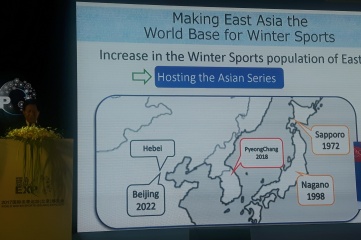
“I would suggest that Beijing, Hebei prefecture, PyeongChang, Sapporo and Nagano join together to host a new international tournament – the Asian Series of Skiing and Skating.”
10: Irina Gladkikh, Winter Sports Director, IOC
“At the IOC Sport Department, we have a very good tradition of receiving others who come to talk about their experience of the Olympic Games, on and off the field of play. They talk to us about their participation in the Games and shared with us their magical moments.
“Early this year we have the honour to receive Olympic medallists from China and world legends gymnast Li Ning and Chen Yongyan. Li Ning talked to us about the pride of being chosen to carry the torch during the opening ceremony of the Olympic Games in 2008. We watched a video of his performance and we all felt his emotions and excitement at this unforgettable moment. And we of course felt a pinch of insight to think what surprises the Opening Ceremony 2022 will bring to us.
“In June this year, Beijing’s commitment to support athletes was further underlined when it hosted the 8th athletes career programme forum with over 85 participants from more than 30 countries. The event was held successfully and our links with Chinese Olympic Committee got stronger.
“Beijing is also a truly unique Olympic city. In just four and half years it will become the first city to have hosted both summer and winter Olympic Games. This is very much supported by your incredible vision for 300 million people to be practicing winter sports in China. I personally find it incredible; these are amazing plans.”
This article, based on comments made at World Winter Sports Expo (WWSE) 2017 in Beijing, first appeared in the Winter issue of Host City magazine. -
Impacting humanity: The Special Olympics World Games
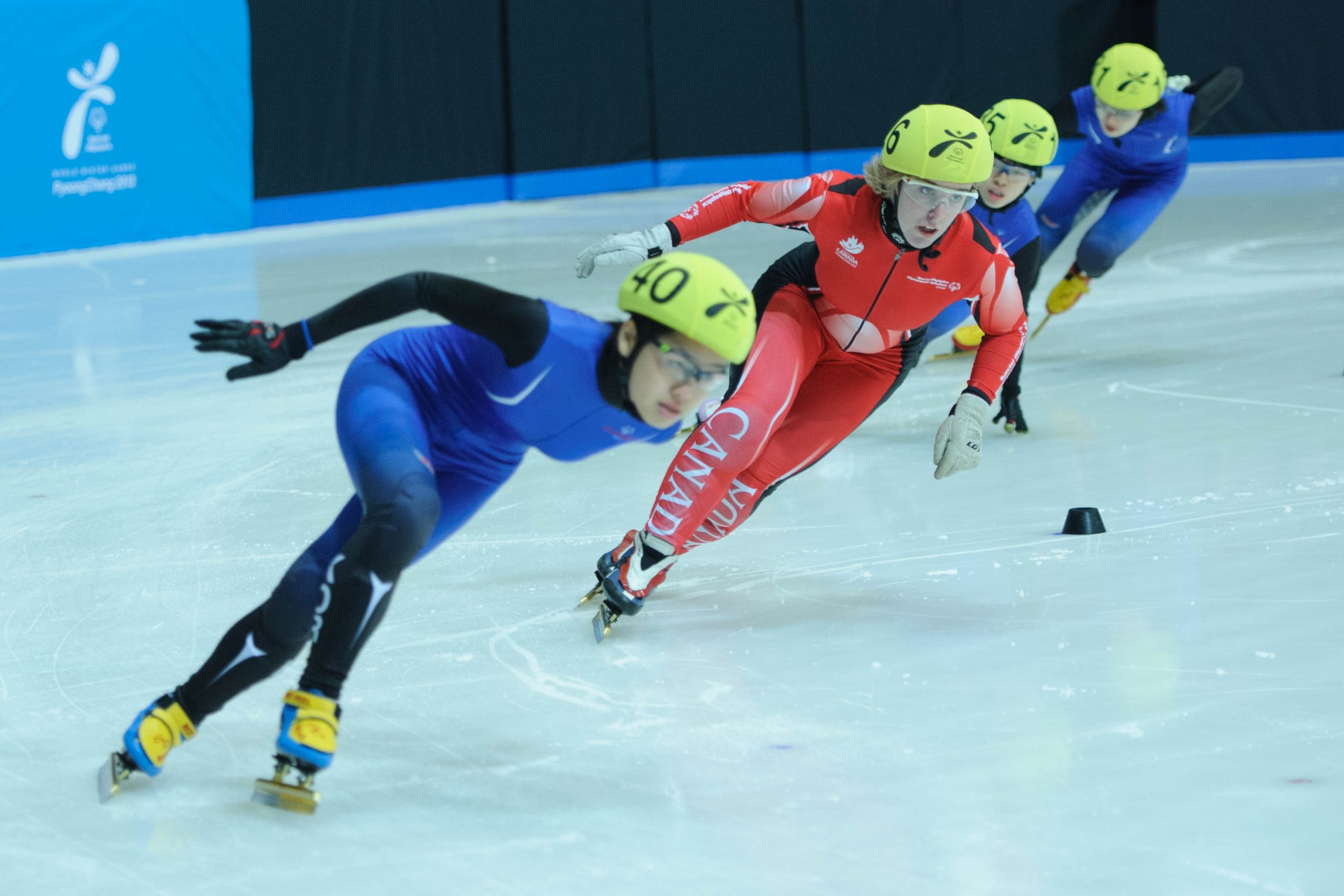
The Special Olympics World Games have changed a lot since they first began in Chicago, Illinois nearly 50 years ago. What started in 1968 as a one-day athletic event has expanded into a week-long empowering competition for thousands of athletes of all abilities. This ground-breaking movement for people with intellectual disabilities now spans the globe – every region, every continent – with more than five million athletes in more than 172 countries.
And, while local Special Olympics competitions happen every day around the world, it’s the World Games that leave the biggest and most inspiring legacy for the athletes who participate and, especially, the nations that host.
“No event has the social value and direct impact of the World Games,” said Lou Lauria, Special Olympics Global Chief of Games and Competition. “That’s because the Games are about more than sports. They’re about humanity.”
“Governments see how the Games have a positive impact that lasts long after the competition ends,” added Lauria. “We leave a legacy of inclusion and understanding that carries over into each community, plus in areas like education and health.”
At the most recent Special Olympics World Summer Games in Los Angeles, more than 6,200 athletes from 165 countries competed in 25 sports. With nearly 2,000 coaches, 10,000 volunteers and an estimated 500,000 spectators, the 2015 Games set records for participation and enthusiastic fans in the stands. Millions more tuned in remotely, watching the Games nightly on ESPN, ABC-TV, and networks in more than 190 countries around the world.
“This has been a seminal moment for our company,” said John Skipper, ESPN President and co-chairman of Disney Media Networks. “We are extremely proud of this work and our role. It has had a profound impact on our employees, and we cannot thank you enough for letting us work with you on this incredible event and bring it to fans across media and around the world.”
The excitement was magnified by high-profile corporate partners – including Coca-Cola, Microsoft, Bank of America and Toyota – whose video and commercial tie-ins starring Special Olympics athletes brought even more attention ahead of Games, during and afterwards. The LA2015 Games also broke social media records, racking up 20 billion impressions in multiple media worldwide.
Tim Shriver, chairman of Special Olympics International and son of founder Eunice Kennedy Shriver, says he’s seen first-hand how – for the cities, states and nations who host the Games – Special Olympics can positively transform their society. “From China to Greece, from Ireland to Korea and beyond, each host country that embraces these Games shows the world their recognition of the value of every human being.”
He adds, “We’ve seen over and over again how the World Games are proven to trigger positive societal changes in ending discrimination and breaking down fear of difference.” Shriver recalls how the 2007 World Summer Games in Shanghai marked a turning point in the country’s attitudes toward people with intellectual disabilities.
Similarly, the 2003 World Summer Games – the largest sporting or cultural event ever held in Ireland – united the country as never before during the Games, and left an indelible change in attitudes and understanding afterwards. “The spirit of the Special Olympics movement has a power that cannot be imagined until you come directly in contact with it,” said Bertie Ahern, Ireland’s prime minister (Taoiseach) during the 2003 Games.
The recent 2017 World Winter Games in Austria turned out to be more successful and popular than anyone had expected. The Opening Ceremony alone reached millions of viewers in more than 190 countries, marking the broadest reach ever for a World Winter Games Opening Ceremony. Smaller in scale than World Summer Games, the 2017 World Winter Games involved 2,600 athletes from 105 countries competing in nine sports.
“It was wonderful to see that we all can change the world to be a better and more inclusive place, when we treat each other respectfully and most importantly: have fun together,” said Austria’s Federal Minister of Social Affairs Alois Stöger.
With more than five million athletes worldwide, Special Olympics has come a long way since those 1968 Games at Soldier Field. The organization now includes Special Olympics Health programs, which help fill a crucial gap for people with intellectual disabilities, who often get inadequate health care – or none at all. There are also Athlete Leadership and Young Athletes programs, expanding all around the world.
While Special Olympics has always stood for inclusion, the goal for the next 50 years is to multiply the power of Unified Sports, which brings together people with intellectual disabilities and those without. For Tim Shriver, this means nothing less than a worldwide “Inclusion Revolution.”
“Every single Special Olympics event creates a unified culture that welcomes and values difference,” says Shriver. “Now we’re inviting people to #ChoosetoInclude – and they’re answering the call – in more than 170 countries around the globe. It’s how we’re building a better, more inclusive world, one volunteer, one coach, one country at a time. It’s the revolution everyone wants to join!”
The next World Games are set for March 2019 in Abu Dhabi, United Arab Emirates. UAE is breaking new ground as the first to host Special Olympics World Games in the Middle East/North Africa Region.
In addition to the World Games there are opportunities to host Special Olympics Regional Games and Special Olympics National Games in your own country.
This article, written by Special Olympics, first appeared in the Winter 2017 issue of Host City magazine. Learn more about the Special Olympics World Games by contacting Lou Lauria, Global Chief of Games and Competition at llauria@specialolympics.org. For information about Special Olympics, please visit www.specialolympics.org. -
China’s industrial revolution of sport
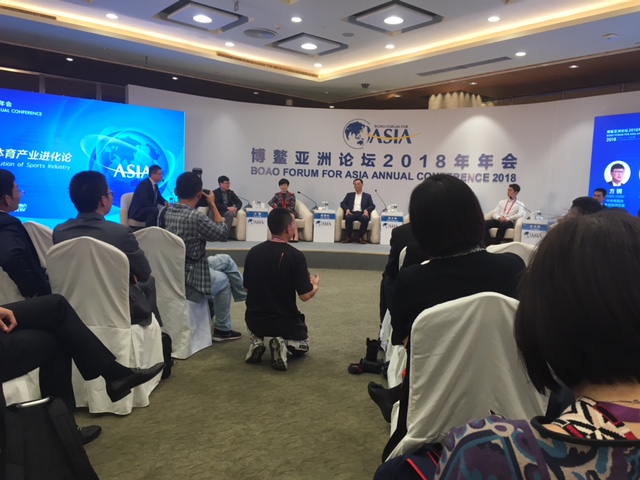
The Boao Forum for Asia takes place annually on the Chinese island of Hainan. This year’s event included a panel discussion on “Potential of the Sports Industry” with VIP speakers including Olympic champions, national sports association leaders, leading Chinese brands and media owners.
The panel opened with reflections on the leadership of the President Xi Jinping, under which sports has played an important part of the drive for healthier living and the development of China’s “soft power”.
Fang Gang, Director of CCTV’s sports channels said “Sport is part of national strategy for fitness and healthy living – sports has critical role in society.”
“Everybody is behind the national plan – it is substantial”, said Qian Jiannong, Senior Vice President, Fosun International.
The 2016-2020 National Fitness plan set ambitious targets for improving fitness and increasing sports participation by raising awareness of health and integrating exercise into everyday life.
Opening sports facilities for free to local people is an important aspect of the plan.
Alisports is using the Alibaba online retail platform to help achieve the 19th NPC goals by giving Ali credits as online incentive for users to exercise more.
“Sport is independent, something special and different,” said Zhang Dazhong, CEO of Alisports, whose project is laying foundations “to empower industries and provide services to national fitness.”
Alisports is also working with badminton, table tennis and tennis teams to improve performance.
He emphasised Alisports’ commitment to the empowerment process of sports, while also focussing on the enjoyment of sports.
Zhang Dazhong, CEO, Alisports said: “China must accumulate its own sports and not just buy international assets.”
Zeng Gang, Vice President of Suning Sports emphasised the importance of investment into education while also making it fun. “Sports is one part of entertainment… we try to promote enthusiasm and a positive feeling for sport”.
The ability to develop a sport is also linked to the availability of venues and equipment, which is one reason for the rapid growth of snooker in China. “Anyone can play in snooker halls,” pointed out Ju Cunguo, general manager of Daqing city’s Cultural Media Co., Ltd.
According to Rupert Hoogewerf, Chairman of the Hurun Report, motor sports, fitness and horse racing are increasing and leading demands in China for sport.
Digital boost for winter sports
China has its eyes on great success at the 2022 Winter Olympic Games, hosted in Beijing.
“Whilst there is pressure on for Beijing2022, all sportspeople can do is their best for their country,” said Li Yan, Chairwoman of the Chinese Skating Association.
Fang Gang said CCTV wants to showcase sport stars who can lead and inspire Chinese people and play sports. “The advantage of CCTV is that it is a national channel working for national good,” he said.
One such star is Wu Dajing, who has been incredibly busy ambassador for winter sports since PyeongChang 2018, where he became the first Chinese man to win Olympic short track gold.
According to Fang Gang, 20 million per minute watched Wu Dajing win his gold medal.
“I could not believe how many people were at the airport on my return. But my coach said it will only last for 40 days!” said Wu.
He said he wants to “make a contribution to Winter Games and promote speed skating and skiing.”
“Three years ago, nobody in South of China knew short track speed skating – they do now!”
Wu Dajing is asking for help from digital platforms to help promote Beijing2022.
While Alibaba is the biggest online retailer in China, the biggest communication platform is WeChat, owned by Tencent.
“Sports is so substantial” said Chen Juhong, Vice President of Tencent. “Wu Dajing made a huge impact.”
Tencent is also working with tennis, soccer, and baseball organisations to find out how data can be used in China.
“Tencent owners are very forward looking – there is no need to monetise data today,” he said. “We are looking for a win-win of Tencent working with people.”
Li Yan, Chairwoman of Chinese Skating Association was interested to find out how digital platforms can help their 60 national events. “Work with us… Do not let the sport get lost in data and size of market,” she asked.
Zhang Dazhong said Alibaba expects a doubling of winter sports sales and higher value per sale for winter sports, but stressed that more investment is needed in winter sports infrastructure.
Zeng Gang, Vice President of Suning Sports invited skaters to work more closely with Suning to promote stories about athletes, generate more content and get more engagement.
He also said that football in China needs to fulfil its potential. The Chinese Super League must find a home for football fans and “create a tie from fan to club”.
The Chinese Super League is working with English Premier League to learn how to customise and commercialise football in China, said Zeng.
Suning is considering offering new membership events for Chinese Super League.
It’s not just online where sales are growing; Suning has recently opened a sport store in Nanjing as it promotes a “hybrid offline-online model for sport.”
This article was based on a panel discussion at Boao Forum For Asia on 9 April 2018. For more detailed discussion on Sports development in China please attend Host City Asia in Beijing on 31 May 2018 -
£4.1m funding approved for new Yorkshire film and television studio
Grant funding for a new film and television studios, to be built on the site of the former High Melton campus of Doncaster College, has been agreed by the Sheffield City Region (SCR) Combined Authority (CA).
On 11 June, at the first meeting chaired by the new Mayor of the Sheffield City Region, Dan Jarvis, CA members agreed that £4.1m of Local Growth Fund (LGF) cash should go towards the project headed up by 360 Degrees Media.
The scheme incorporates a film and TV studios, a visual effects production facility, a film and TV training academy and a hotel and events business. It is projected to create around 220 direct new jobs, and potentially thousands more in the supply chain, while driving more than £60m of gross value added within SCR over the next 10 years.
Mayor Dan Jarvis said: “A creative investment on this scale is fantastic news for Doncaster and the wider region, and will add to the Sheffield City Region’s already-outstanding creative assets.
“As well as jobs at the 360 Degrees Media studios, the scheme can also create countless opportunities in the supply chain, drive economic growth and provide real-world training opportunities for our young people.
“But the benefits go both ways. Our region is a hotbed of creativity and is already driving forward excellence in the digital sector. So where better to base a new film and television studio that can tap into the talent we already have here, build upon it, and create a genuinely exciting and innovative scheme to put Doncaster on the digital map.”
Sir Nigel Knowles, chairman of the Sheffield City Region Local Enterprise Partnership, was instrumental in the decision by 360 Degrees Media to locate here.
He said: “LGF funding allows LEPs to drive forward economic growth across the country, helping to build a country that works for everyone.
“I am delighted that we were able to use this fund to secure the 360 Degrees Media investment for Sheffield City Region. This is further proof that, as a LEP, we work in a straightforward and practical way to bring in investment and make it easy for companies to do business here.
“I look forward to seeing this project delivered.”
360 Degrees Media is managed and operated by media financiers Alistair Maclean-Clark and Mark Beilby, both of whom have more than 30 years’ experience in the sector.
Alistair Maclean-Clark, chief executive of 360 Degrees Media, said: “Ever since we first visited South Yorkshire we knew there was potential for a game-changing project here and we are delighted that the SCR, as well as Doncaster Council and DN Colleges Group, have backed our vision for High Melton.
“We want to pioneer a European first for media that brings together training, production, post-production and innovative tech on one site, offering film and television makers an end-to-end service and a creative ecosystem that will reinforce and help to build all the existing creative industries in South Yorkshire.”
The project has also been welcomed by the council and businesses in Doncaster.
Ros Jones, Mayor of Doncaster, said: “It is fantastic news for Doncaster that the College’s High Melton site is set to become the new home to this international film and TV studio. We have been happy to support the College in bringing this to Doncaster. This will create jobs and growth for Doncaster’s economy and encourage more young people to pursue a career in the Film and TV industry.
“During 2017, £1.6 billion was spent on UK film and TV projects. This shows this is a thriving industry which we are excited to welcome to the town. We are ambitious for Doncaster and fully support the creation of this new site that will create more than 220 jobs for the borough.”
Dan Fell, chief executive officer at Doncaster Chamber of Commerce, said: “The Chamber believes that the project has the potential to be as transformative for Doncaster as the Yorkshire Wildlife Park or Doncaster Sheffield Airport.
“Crucially, the scheme will do much to diversify Doncaster’s economy by attracting overseas investment and students, and by catalysing growth within the creative sector.
“This will make our economy more resilient whilst also engendering a dynamism and buzz about the area.”
Andy Tuscher, DN Colleges Group Chair of Governors, said: ““We are delighted with today’s decision, and we now eagerly await the transformation of High Melton into a world-class hub for media production, placing Doncaster at the heart of the UK’s media sector and directly benefiting our communities through local investment and employment.
“We are thrilled that this development will include an innovative partnership between 360 Degrees Media and Doncaster College to create a Film and TV Academy.
“Having direct access to these state-of-the-art facilities is going to create unparalleled opportunities for Doncaster College students and we are really excited about the employment opportunities this will open up for them, both locally and in the wider media industry.”
By 2021 Government will have invested over £12bn through the Local Growth Fund, allowing LEPs to use their local knowledge to get all areas of the country firing on all cylinders.
There are 38 LEPs covering the whole of England, which are investing LGF money in a wide range of projects including transport, skills, business support, broadband, innovation and flood defences. -
UK Sport targets double-figure medals at Beijing 2022 with £24m investment
[Source: UK Sport] UK Sport believes the range of medal possibilities for the Beijing Games currently sits between 5-12 Olympic and 7-11 Paralympic medals at the next Winter Games, which if achieved would at the very least sustain success from the PyeongChang Games this year but could also surpass those record-breaking achievements.
Based on assessed future medal potential, World Class Programme investment will be made into the three Olympic sports of Ski and Snowboard (up to £6.75 million) Skeleton (up to £7.2 million) and Curling (up to £6.35 million) and the Paralympic sport of Para Ski and Snowboard (up to £3.5 million).
In addition Short Track Speed Skating world champion Elise Christie will be offered innovative new Medal Support Plan investment given her significant and consistent world level success in the PyeongChang cycle. This investment approach has recently been directed to target medal success in the sports of Badminton, Climbing, Karate and Archery in Tokyo 2020.
Total National Lottery and taxpayer investment across the four years to Beijing will be around £24 million, compared with the £32 million investment in the PyeongChang Cycle. This will enable support for around 70 athletes who have the potential to win medals at the next or future Games.
Investment will be able to go further due in part to a planned voluntary integration between the British Ski and Snowboard and British Para Snowsport programmes, which will create efficiencies as well as enabling cutting-edge coaching and innovation to be shared between the squads.
The funded winter sports have pledged £3.4million of co-funding into their world class programmes, with the bulk of this coming from the booming popularity and commercial success of the Ski and Snowboard sector.
The application of UK Sport’s investment principles – which prioritises sports with clear future medal potential in order to maximise inspirational returns from public investment – means that the world class programmes of Bobsleigh, Figure Skating, Wheelchair Curling and Short Track Speed Skating will be transitioned off funding with the annual opportunity to make a case for support based on world-class level results if achieved thereafter.
UK Sport is committed to ensuring that the impact of its decisions on athletes, staff and sports are carefully and sensitively managed, and will therefore be working closely with all sports that will no longer be in receipt of – or in receipt of significantly reduced – investment on an appropriate transition plan for athletes and staff. A transition fund of circa £1.5 million will be available and plans for each sport to access this will be developed in partnership with the relevant home country sports institute. For example, the transition funding could enable athletes to compete through to world championship events in February/March 2019 for which they are already training.
UK Sport CEO Liz Nicholl said: “After a record-breaking PyeongChang 2018 which saw Team GB and ParalympicsGB hit their Olympic and Paralympic medal targets of 5 and 7 respectively, today marks an important step on the path to Beijing 2022 as we target further inspirational success at the Winter Games.
“We have been working in partnership with sports for more than a year to develop their Beijing strategies and I would like to thank them all for their professionalism during this process. While UK Sport would like to be able to invest in every Olympic and Paralympic sport our role is to prioritise within agreed resources in order to protect and enhance the medal potential within the system. We believe these strategic investments will deliver medal winning success to inspire the nation once again in Beijing in 2022.
“We fully understand the huge significance of our decisions and that they will impact on the hopes and dreams of the athletes, coaches and support staff that we are unable to invest in at this time. We are committed to managing this with appropriate care and will be working closely with those affected by these decisions to help support them in their transition.”
UK Sport has currently put out to public consultation the future funding strategy of elite sport in the country, which will come into effect following the Tokyo Summer Games from April 2021 and which will apply to the 2026 winter investment cycle after Beijing. All members of the public, stakeholders and partners are encouraged to have their say at www.uksport.gov.uk
Governing bodies being funded through to Beijing 2022 will also be expected to be compliant with the Code for Sports Governance as of October 2018. UK Sport is currently also conducting an options appraisal as to where the World Class Programme for Skeleton will be housed in the Beijing cycle.
[Source: UK Sport]