An overwhelming majority of IT professionals in US cities expect to be hit by cyber attacks that could pose a threat to public safety, according to the results of a survey announced on Thursday.
The survey assessed cyber security challenges associated with smart city technologies. Respondents included more than 200 IT professionals working for state and local governments.
Eighty-eight percent of respondents said “yes” when asked if a cyber attack targeting critical city infrastructure posed a threat to public safety
And seventy-eight percent of respondents said a cyber attack against smart city services was likely in 2016.
The survey was conducted by Dimensional Research on behalf of Tripwire, a leading global provider of security and compliance solutions for enterprises and industrial organizations.
The smart city sector is growing rapidly, with revenues from global smart city technology revenue predicted by Navigant Research to reach US$36.8 billion in 2016.
But cyber security experts are concerned that these technologies are being implemented faster than the technology required to safeguard them.
“While smart cities offer great efficiencies for their citizens, the same internet connectivity that enables these efficiencies can be used to deliver physical damage to infrastructure and also cause loss of life if accessed by malicious actors,” said Rekha Shenoy, vice president and general manager of industrial cyber security for Belden, Tripwire’s parent company.
IT solutions are deployed by smart cities to manage utilities such as electricity grids and wastewater treatment as well as transport, surveillance and more.
The survey also found that eighty-one per cent believe a cyber attack targeting critical city infrastructure could cause physical damage.
Eighty-three of the respondents said they are worried about cyber attacks that target smart city transportation initiatives.
And just three per cent believed there would be no cyber attacks against smart city services this year.
“As we use more and more technology to innovate around the management of cities and their infrastructure, we also create new attack surfaces that can be exploited,” said Tim Erlin, director of IT security and risk strategy for Tripwire.
“Protecting public infrastructure from cyber and physical attacks is a key consideration in the evolution of smart city technologies. We need to build smart cities with cyber security in mind, not add it as an afterthought.”
Category: City Development
-

Smart cities worried about cyber attack threat
-
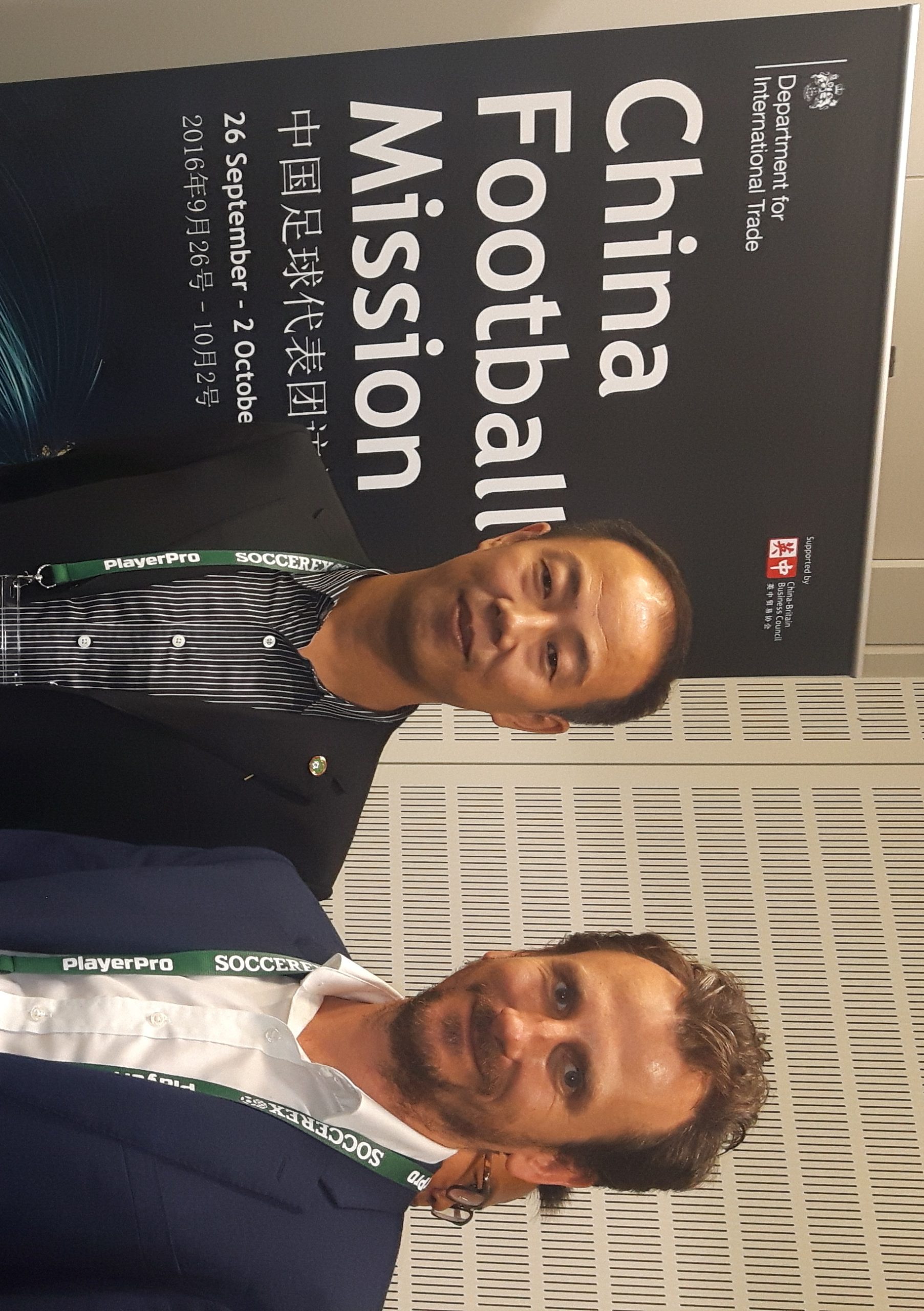
Do foreign players help or hinder national football development?
In all sectors, we gain invaluable experience from working alongside skilled professionals from overseas. This brings all kinds of benefits – and sport is no exception, except for the fact that it is structured around international competitions.
Does foreign talent in leagues really overshadow the development of national teams, or is that just an excuse for other issues around local football development? And what difference would quotas make, if any?
Everyone seems to have a view on these subjects and there were plenty to be heard at Soccerex Global Convention.
Andy Burnham MP, Mayoral Candidate, Greater Manchester
“The English Premier League was set up with a very specific objective: to improve the England team. Clearly that hasn’t happened.
“Can you have the best league in the world and the most successful team? Of the countries that have tried to do that I think Spain has got the closest to managing that, but I think here we haven’t managed that.
“And I think we need to give more thought to that, because a strong national team is something that builds pride in football and boosts participation at the grass roots.
“In the 25 years of the Premier League we’ve had one semi-final, at our own home European championship in 2016.
“Could Brexit mean something different for football? Could Brexit mean that English football takes a step away from the European directives in relation to free movement in sport – and could we look at introducing quotas for our homegrown players, so that the Premier League doesn’t become a playground for the world’s best talent, but actually we make sure that we bring through more English homegrown players in our domestic league.
“We look at the European Championships in France in the summer and I observed the England team’s disappointing performance, and it seemed to me that there was a lack of heart; a lack of hunger, or desire. And you have to ask the question; is that something that the modern game is increasingly bringing – a sense that there’s nothing playing for, because these players have it all.
“And you look, by comparison at Wales, at Iceland and Slovakia, and there was a different sense of team spirit. I think the game also has to ask where its priorities truly lie.
“The nature of the game has changed, I believe, since the 25 years that the premier league started.”
Li Jiuquan, Director of Marketing Department, Chinese Football Association
“I think there are conflicts for some clubs; they want to have more international players.
“Some suggest that we should have more foreign players in the clubs so we can have better performance in the club championships. They say if we have more international players we will have better performance. But we need to have a balance between the league and the national team.
“Is it good for china to have foreign coaches? It depends how you see it. If you say big names can bring something new, they can bring their knowledge and the Chinese coaches can learn from them, it’s good. But they get their positions and for the Chinese coaches have no practice at all. For most of the CSL clubs, we have almost no Chinese coaches.
“Personally I think there might be some problem, because the Chinese coaches have no chance to practice. It’s the same for the national team; if all the strikers are foreign, we have no good strikers.”
Simon Li, Chairman, International Football Connections Limited
“In my experience in the Chinese Super League they have a four plus one rule: four foreign players that can come from outside Asia, plus one Asian player.
“That might change to three plus one, from January 2017. The league below can have only three foreign players full stop.
“For the league below there is no restriction – apart from one important thing: no foreign goalkeepers allowed.”
Gerard Houllier OBE, former Liverpool FC Manager
“Quotas can work for under21s, but they are not suitable in Europe. In France, for example if you were to say you were to have five French and six European or whatever, I don’t think this would work.
“If a player has been developed in your country, if that player is at the same level as the foreign player I would always take that player. At Liverpool, if two players were the same level I would take the local above the foreign.”
The above are a combination of exclusive interviews with Host City and statements made to the conference at Soccerex Global Convention -
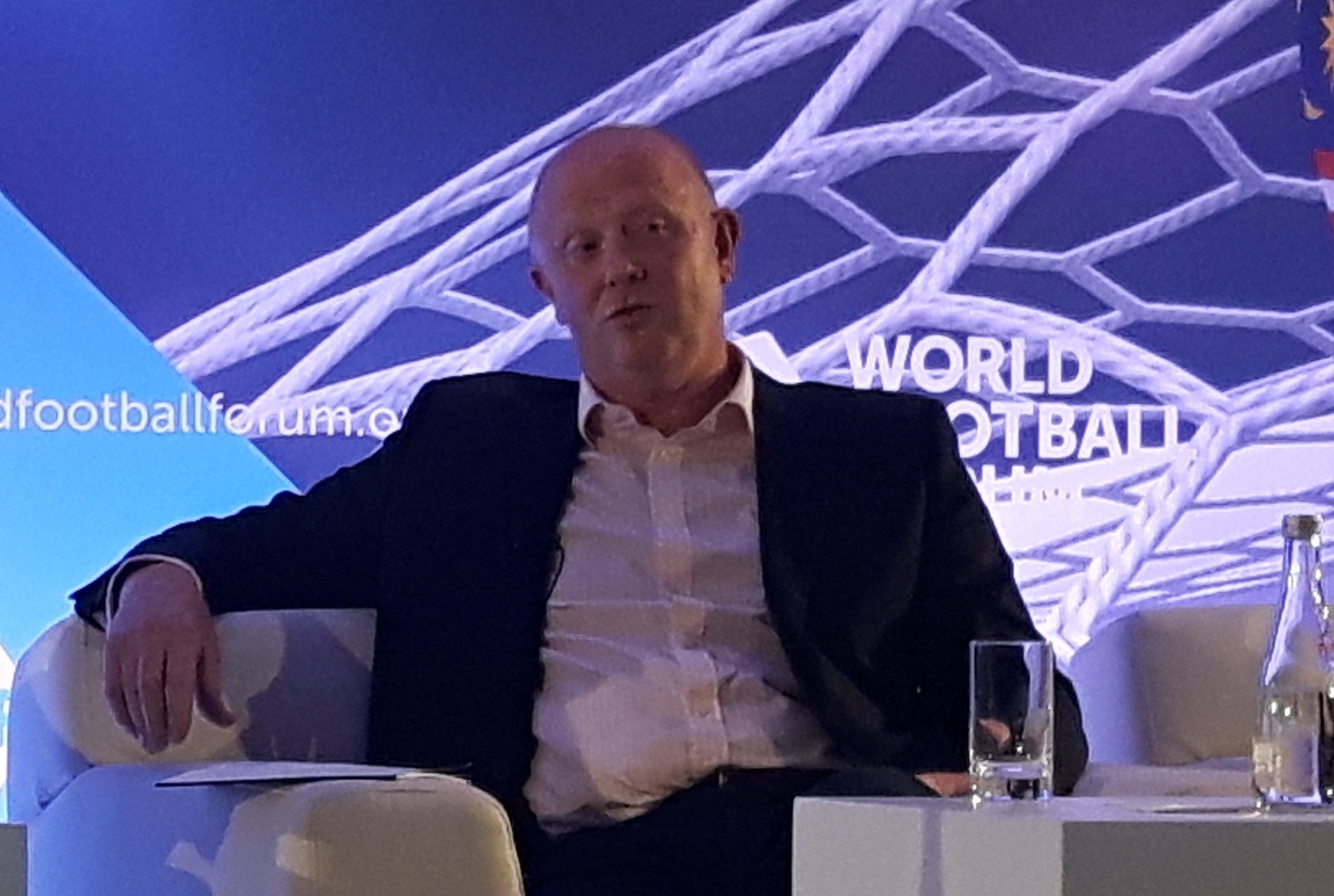
Football rises within Asia’s giants
After decades of economic growth fuelled by exports, China is now concentrating on building domestic markets to sustain its economic growth. Sport has been identified as a particular area of potential, with $850m being invested in a programme of “Development of Sports Industry and Promoting Sports Consumption”.
Football is pivotal to this development programme. The Chinese Football Association has set targets for China to become a world football superpower by 2050 and President Xi Jinping has declared his ambition for the national team to win the World Cup.
The Prime Minister of India has also highlighted football as part of the National Vision. Just how far and fast can the development of football in India and China go, and how is it being achieved?
“What I perceive of those two countries is that there is clearly a much stronger interest in football. There is more dedication from the government,” Alexander Koch, Head of Corporate Communications at FIFA told delegates at World Football Forum.
“There is a much better focus from the FIFA side and we are working on interesting programmes on developing football.”
The growth of football in Asia is already bringing commercial rewards, with revenues from broadcasting international football in Asia on course to equal those from Europe.
“FIFA’s TV income for the 2018 World Cup will, for the first time, have more from outside Europe than in Europe,” he says. “Maybe in the long term we could think of getting one third from Europe and Africa, one third from Asia and one third from the two Americas.”
China and India may be geographical neighbours, but the world’s two most populous countries show contrasting approaches to development.
“It’s very dangerous to generalise,” says Mike Pfister, Senior Development Manager at FIFA. “An emerging market does not equal an emerging football market.
“India is vastly different to China, both in terms of development of football, the way it is structured as well as the opportunities and challenges for development.”
Indian renaissance
Way back in 1950, India was a regionally successful footballing nation that qualified for the World Cup, although they were unable to participate due to a lack of resources. But the 60s and 70s saw a marked decline in football development and it was not until 2005 that a permanent headquarters for India’s national football federation was established.
“There were no professional structures to develop football,” Mike Pfister says. “The first General Secretary came into FIFA in 2011. So in a way that’s a federation that’s just five years old!”
Peter Hutton, CEO of Eurosport was working for IMG when he moved to India in 1994 and found very little football on television. “I finally found an Indian football match on TV – the national cup final. It went to extra time, and the moment it went to penalties it cut off for the news and it didn’t come back! At that point you’ve got to think there’s an opportunity there.”
IMG launched the India’s first national league a year and a half later. “It didn’t follow all the dreams we had for it, but you tapped into the undeniable enthusiasm for football in India and you knew there was something there that could really grow, and it’s fantastic to see how it has grown in the last 20 years.”
The scale of India’s investment into football is incomparable to China’s. “We are behind in terms of investment; there is no comparison,” says Kushal Das, General Secretary at the All India Football Federation.
“But then that’s still the case for every industry – the investment levels in China have been significantly higher in every aspect. We don’t have that kind of money, that’s for sure – but we also don’t have a bubble.”
Outbound investment in sports
Chinese companies are rapidly investing in overseas sports and entertainment brands. Dalian Wanda alone has recently bought the Ironman triathlon, Infront Sports & Media, a 20 per cent stake in Atletico Madrid, worldwide sponsorship and licensing rights for FIBA events, US film studio Legendary Entertainment and North America’s second-largest cinema chain, AMC Entertainment.
Wanda became the first Chinese FIFA Partner in March 2016. In July it announced the launch of the “China Cup” international football tournament with the Chinese Football Association, the first edition of which will take place in Nanning in January 2017 between China and three major teams from Europe and the Americas.
Alisports – launched in 2015 by ecommerce giant Alibaba – has gained online broadcasting rights from World Rugby in exchange for investments in the development of rugby in China. China Everbright and Beijing Baofeng have bought a 65 per cent stake in Italian TV rights distributor MP & Silva. A Chinese consortium now owns 13 per cent of City Football Group, the owner of Manchester City and New York City football clubs.
India is not investing its way into the global sports market in the same way. “Indian corporates are not looking at investing in foreign clubs at the moment; it’s more about improving the standards of Indian football within India,” Sunando Dhar, CEO of I-League tells Host City.
“China’s paying huge amounts of money to bring foreign talent into China; I don’t think at the moment we can afford that kind of money in Indian football. We are trying to put a system in order first. Once that’s done, once the market becomes a little more advanced, maybe we can think of going global. At the moment we are trying to have a national feel to it.”
India’s sport industry is not outbound in the same way as its other more acquisitive industries, such as steel and automotive.
“The reason for that is that they are already developed in those industries. Football is still at a very nascent stage in India. We need to develop ourselves; that’s what we are trying to do now. Once we have done that – it may take five, ten, 15 or 20 years – once we do that we’ll think of the next plan.”
European football fever
Football is undoubtedly growing in popularity all over Asia. However, there is a concern that enthusiasm is focused on European rather than local teams.
“Growing markets are good for development if you can connect that with the passion that football can generate. However, what you also see quite often in these emerging football powers is a dichotomy of passion in football,” says Mike Pfister.
“You will find in South East Asia for example a great deal of football fans who are passionate about football – they will stay up until four in the morning to watch the Champions League final. But that is in stark contrast to their interest in local and national football teams.”
Peter Hutton says: “One of the sad things about South East Asia is that the Premier League is so prevalent and the local clubs struggle so much by comparison. I think India and China have the chance to do it a different way and really establish the strong basis for local clubs.
“The international leagues that broadcast into India and China have a fan base, a dedicated audience, but they don’t have that potential to engage so deeply with Chinese and Indian audiences. So the potential for local leagues is huge.”
However, the growing popularity of football in India is still mostly directed towards European football clubs, Sunando Dhar tells Host City.
“Football here is very popular. It’s maybe more popular than cricket in urban youth. But the thing is, football for most urban youth is the English Premier League, Bundesliga, La Liga, Serie A – so that’s what we are competing against.
“The European leagues to an extent are cannibalising Indian football – eating into it. That’s a tough battle to fight.
“So that’s why we are trying to put systems in place, trying to glamorise our sports, trying to bring big brand ambassadors into football – from cricket, from Bollywood – these are the two biggest industries people follow.
“And we have seen in season one and season two, bringing in players like Del Piero and Zico who not only bring their expertise on the field but also act as a brand ambassador for the game. That’s having an impact; people are coming to the stadiums, attendance is rising which is fantastic. We now need to create Indian stars.”
Hosting touring European clubs
The number of European football teams touring Asia continues to rise. There are many benefits for the hosts of these tours, says Paul Kam, Chairman of ProEvents Group, which promotes tours to Asia for European football clubs.
“There a number of benefits of overseas clubs coming to Asia,” he tells Host City. “Firstly for the local economy, it brings out all the benefits of job creation, it makes sure the city has better infrastructure – they have to maintain the stadium well to be able to host international events. These really put the country and the city on the football map.
“It also helps to improve football players’ conditions, their know-how and knowledge of looking after themselves as athletes. It also increases the popularity of the sport.”
The benefits for European clubs are clear. “They are able to secure more fans, so they may sell more shirts and they come here to get more fan base, which nowadays everybody is talking about – Manchester United is saying they have 600m fans all over the world. Where has that come from? It’s come from them reaching out to be face to face with the spectators.”
In the 25 years ProEvents has been in business, Kam has seen the growing trend of European clubs coming to Asia to compete against one another, instead of against local teams.
“There are many more matches coming up which are just purely foreign team versus foreign team. The trend is going to be there because people love football, from China’s point of view and from Asia’s point of view.
“The Premier League is by far the best league, in front of other leagues like La Liga and Serie A. So people love to see their players; they watch them on the TV every week – and now they can see it in front of them, so of course they will buy tickets.
“People come to watch an international event. If they buy a ticket to watch Barcelona versus Arsenal for example, they have expectations, they will see Messi, Neymar, Suarez, Giroud, Sanchez– they are the reason why they buy tickets to go and see the football match.”
The concern is that there is a missed opportunity for developing football in Asia if local players don’t have the chance to play alongside these big names.
“We always try to strike a balance. My theory is that they should play against local teams, which has much more meat in it because the locals will benefit, foreign teams will benefit – it’s a win-win thing. And then the local boys can improve.
“And what about Vietnam, Indonesia, Singapore for example? They are much lower down than China for example, but how do they improve if they don’t get a chance to play? In 2017 there will be a host of teams coming over to Asia to play against Asian teams, against other foreign teams.”
All-European matches also pose organisational challenges for their overseas hosts. “As a promoter, you have double costs. That means twice the security; twice the transportation, twice the food, flights and everything.
“If I can make the mathematics right it’s a good investment, but if the cost is too high then I personally would prefer to have a foreign team play against a local team.”
Grass roots development
The success of China and India’s football development programmes will depend on their ability to tap into talent all over the country. FIFA is working closely with the Chinese Football Association to build competence nationwide.
“It’s not a problem of spreading the support or making it more popular – the popularity is there. But if you look at where the big football hubs are in China, they are in coastal hubs around the economic powerhouses – Guangzhou and Shanghai,” says Mike Pfister.
“China needs to spread westward. The government’s ‘go west’ strategy still applies to football – going into the provinces again, tap into the 1.6bn people that you have. There is a lot of potential that is untapped there.
“Creativity is home-grown. Yes, you can bring in foreign coaches but you have to have your own physiognomy and philosophy. Money is important but passion is more so and this is needed to develop locally.”
Without major corporate outbound investment in sports brands and European clubs, India’s success will rely on building talent domestically.
“You can’t compare the Indian and the Chinese model. In India what we are doing at the moment is looking inward,” says Sunando Dhar.
“We are trying to improve our house, keep things simple, invest in grass roots development and hope clubs run their teams in a professional manner.”
Hosting and winning the World Cup
The ultimate aims for any footballing nation are to host and win the World Cup. At 152 in the FIFA world ranking, India has a long way to go, but the country is taking a major step forward by hosting the under 17 (U17) World Cup in 2017.
“One aspect of the U17 World Cup is to deliver FIFA-standard infrastructure,” says Kushal Das. “The challenge will be to have a very competitive Indian team, because we don’t have a system where it is developed from an early age.”
Whether India could one day host the men’s World Cup is a different question. “What India is doing next year with the U17 World Cup is an important step on that road. You certainly see the potential of the World Cup to change the perception of football in a country,” says Peter Hutton.
“I think that when you’ve got economies as big as India or China it’s got to be worth, from a FIFA perspective, considering that option.
“I think the sensible first move for India is to do the U17s. Let’s see how that works, let’s build an infrastructure that can support football – and then let’s keep an eye on what we can do in those sorts of markets. Because if we can genuinely make those markets football obsessed, football hungry and aware of their position in the world, then I think the potential is enormous.”
China, with a team ranked 81 in the world, is keen to host the World Cup within a generation. “They don’t have the patience to wait another 50 years,” says Ma Guoli, Deputy Chairman of LeSport – the sports arm of internet company LeEco, which owns the global broadcast rights to the Chinese Super League.
“There is definitely a bubble now; the question is how we can control this kind of investment to find the best team to work in Chinese football. I hope that there will be more and more professional people who really love football and know how to develop it in China. So 2030 is the right time for the World Cup in China.”
Whether China can reach its goal of winning the World Cup is another question. “It’s unrealistic. You can’t say from where they are now to say within the next ten or fifteen years they are going to win a World Cup – it’s not going to happen,” says former England footballer Mark Wright.
“That’s not being disrespectful, that’s just a fact. If you talk about 30 years when you start to educate children and then get the right people, coaches and education, certainly it’s possible to host a World Cup. But to actually go on and win one – this is a big ask and it will take a hell of a lot of hard work between now and 30 years’ time.”
This article first appeared in the Autumn 2016 issue of Host City magazine. It was based on exclusive interviews by Host City and panel discussions at World Football Forum 2016 -

Respecting human rights at mega sports events
Mega Sporting Events (MSEs) are not just about huge amounts of money being lavished on glamorous international competitions, as is often perceived by the general public; they are also about values.
Events such as the World Cup or the Olympic Games carry positive values for children. Practising sport can contribute greatly to the harmonious development of a child and thus, within this perspective, big events can constitute a driving force for social development.
However, large-scale sporting events pose risks for children as well. The need to create new sports infrastructure, and the subsequent obligation to relocate whole communities, can tear families apart, as shown in Rio since the city was awarded the Olympic Games in 2009. During preparations for the 2016 Olympics, and before it the 2014 World, 22,000 families were evicted from their original location.
Further to this, children in a street situation were removed and placed in overcrowded detention centres for the duration of the sporting event. Production of footballs or clothing linked to MSEs may bring cases of child labour down the value chain. Construction, with a high concentration of workers, or the event itself, with an increased number of visitors, can increase the risk of sexual exploitation for minors.
Therefore it is in the interest of all stakeholders involved in the organisation of MSEs that the positive values and benefits for children should be preserved and the risks mitigated. To that end, Terre des Hommes, a global child rights organisation active in almost 70 countries, launched a campaign called Children Win in 2014.
The campaign is based on a threefold strategy. Firstly, it documents the impacts of Mega Sporting Events on children (according to the United Nations’ Convention on the Rights of the Child, a child is defined as anyone under 18), as most recently in the case of the Rio Olympics (see the briefing paper “Breaking Records”).
Secondly, it engages in a dialogue as constructive as possible, in particular with sport governing bodies, in order:that the organisation, from bidding to legacy, of a sporting event comply with human rights and children rights’ criteria;
that the bidding process is conducted in a transparent and open manner;
that security measures inherent to the organisation of MSEs do not infringe the rights of the local population, in particular to the most vulnerable groups such as children.Thirdly, the campaign monitors the implementation of the criteria and the steps taken by stakeholders connected to MSEs.
It is clear that the world of international sports has some way to go. Over the last two years, various sport governing bodies and MSE organisers have shown encouraging signs in taking into consideration the human rights and children rights dimensions in the bidding process. Efforts need to be pursued at two levels:To monitor the situation for the MSE awarded to a host before this last two years, when human rights and children rights were taken into consideration, such as the World Cup in Russia or the Summer Olympics in Tokyo.
To work on bidding documents edited by sport governing bodies to frame the process of awarding the MSE of 2024, or 2026 and beyond.If sport governing bodies still want host countries to be interested in receiving a Mega Sporting Event, the argument of sustainability not only in environmental terms, but as well in regards to the respect for human rights, needs to be strengthened and advertised. Such elements certainly influence the choice of potential host to start preparing a bidding file and take the long road towards the organisation of inspiring global events.
It is too early to tell if this wind of change , which demands that human rights considerations are part of the process during the organisation of MSEs, will blow steadily and bring about the required change of mindset. However Terre des Hommes and its campaign Children Win will continue unabated to work so that children rights get respected by Mega Sporting Events.
This article was written by Terre des Hommes. To know more about the Children Win campaign, please go to www.childrenwin.org. To know more about Terre des Hommes, please go to www.terredeshommes.org. You can support their action and follow them on Facebook and Twitter.
Ignacio Packer, CEO of Terre des Hommes, is speaking at Host City 2016 in Glasgow on 21 November on the panel “Has Sport Lost its Integrity and How Can it Win Confidence Back” -
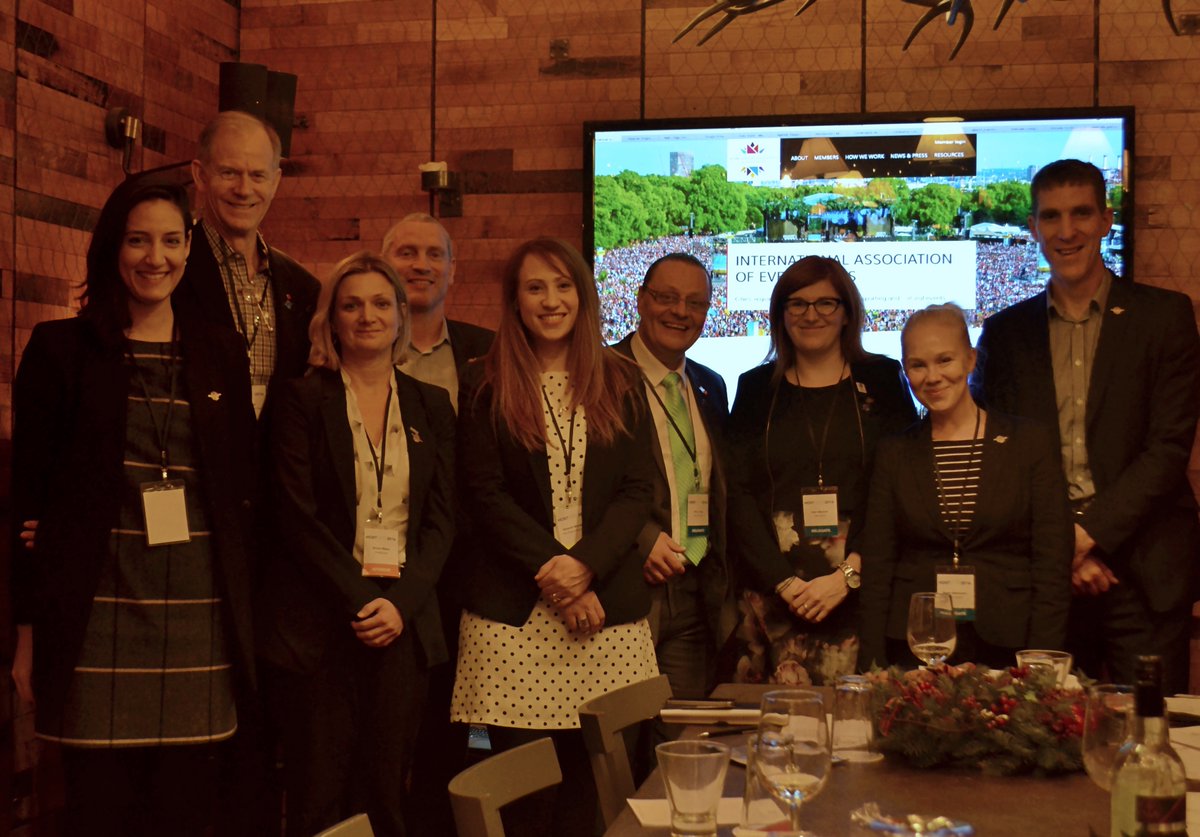
IAEH (International Association of Event Hosts) meet at Host City in Glasgow
On the evening of the 21st of November 2016 IAEH (International Association of Event Hosts) members met in Glasgow after a day of activities at the Host City Conference. The closed meeting happened at a private room at the Corinthian Club in the city.
Steering Group members from six of the founding organisations were represented at the meeting: London & Partners, New Zealand Major Events, Fáilte Ireland, Visit Tampere, Canadian Tourism Sport Alliance and EventScotland. Iain Edmondson, from London, chaired the meeting, which also included other invitees from Finland and Ireland.
The IAEH members attending were: Iain Edmondson, London & Partners; Devorah Blumberg, New Zealand Major Events; Rick Traer, Canadian Sports Tourism Alliance; Perttu Pesa, Visit Tampere; Edel Mitchell, Fáilte Ireland; Stuart Turner, EventScotland; Emma Wilson, EventScotland; Saara Saarteinen, Visit Tampere; Saila Machere, City of Helsinki Sport Department; and Azeta Seery, Fáilte Ireland.
Updates on membership, content sharing and partnerships were the main points on the agenda. Future meetings and further actions were also discussed. IAEH is actively signing up new members and establishing partnerships to share expertise via its network and online portal (www.eventhosts.org).
Since the last formal meeting of IAEH, in August 2016 at Rio de Janeiro during the Olympic Games, the number of IAEH members has doubled. The Association now has 20 members representing cities, regions and countries across the world. Glasgow Life, represented by Ian Hooper, joined the Association during the Host City Conference and further members, including representatives in Asia and Africa, are expected to be confirmed in the near future.
Members will next be attending the International Sports Convention in Geneva, Switzerland on the 7th of December 2016, and the next formal meeting of the Association will be the Annual Forum scheduled to be held on 3rd & 4th April 2017 in Aarhus, Denmark. -
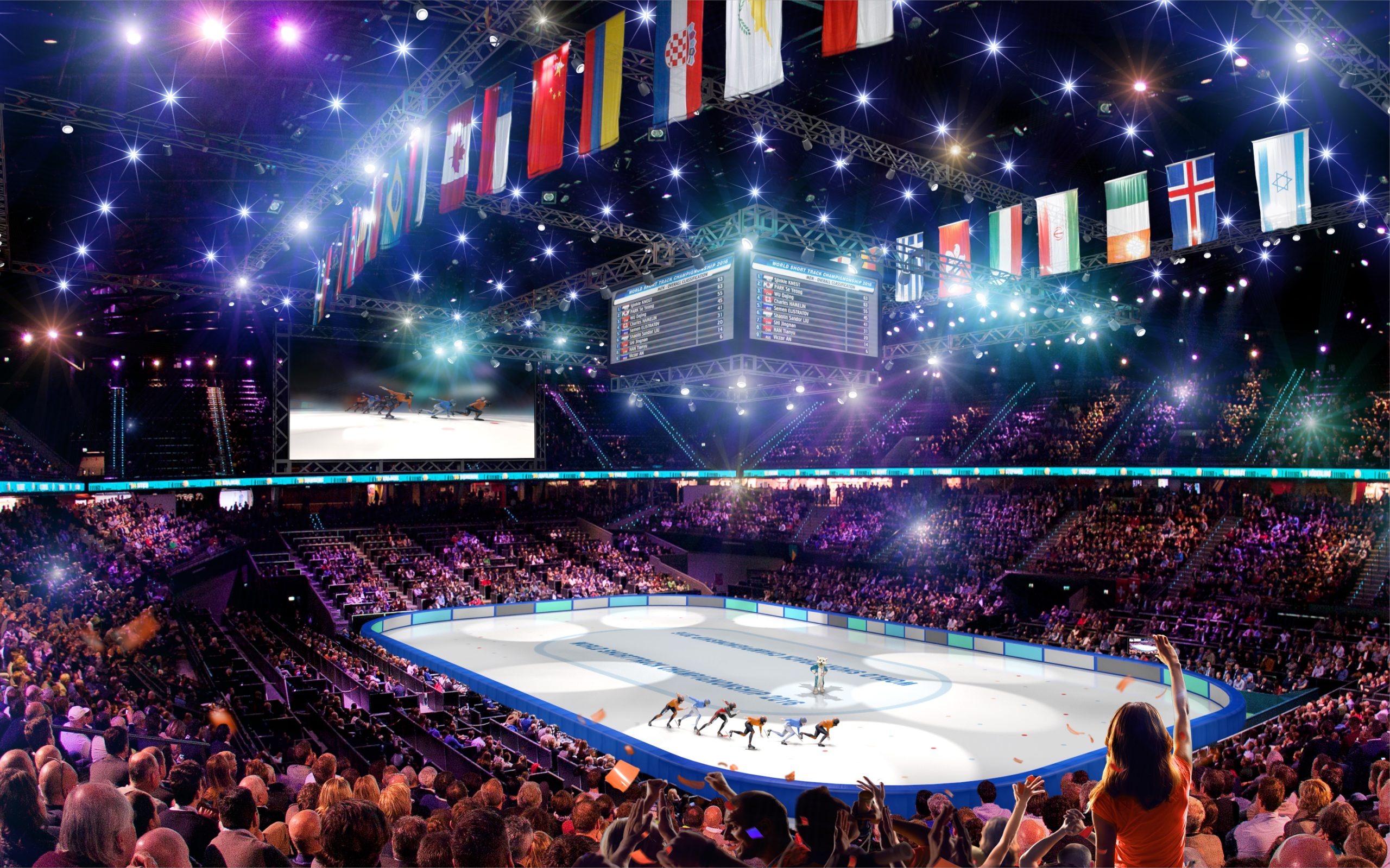
Rotterdam: the young sports city with ambition
Over the course of last year, over 1.5 million people visited the forty different elite sports events happening in the city. These numbers say a lot about the attractive force sports have in Rotterdam, a sports city with ambition. This has not gone unnoticed: Rotterdam is ranked eleventh in the world ranking for sports cities.
A pier in the middle of the Port of Rotterdam was once the location of a prestigious Davis Cup tennis court; and on the gangways in front of the monumental SS Rotterdam cruise ship rose a beach volleyball stadium. Both were unexpected spots to experience sports, but the locations were enthusiastically received by both athletes and visitors alike.
Out of the stadium and into the city has been Rotterdam’s philosophy for years. This tradition of placing the sports arenas in the city centre and involving the public with the event has been wildly successful in the city on the banks of the Meuse. These events come with great practical challenges, but those challenges are faced head-on in Rotterdam.
Take the Rotterdam Marathon for example: the center is locked-down for an entire day, but every single person in the city sees it not as a disruption, but as cause for celebration. On such days every resident is inspired by sports.
It should be clear: Rotterdam and sports go hand in hand. This is a city where three clubs play in the Dutch premier league: Feyenoord, Sparta, and Excelsior. A city with three football stadiums, a hockey stadium, an internationally acclaimed rowing course, a baseball stadium and a large indoor events arena (Ahoy Rotterdam), Rotterdam offers elite athletes a world-class stage.
A full calendar
Every year the city aims to attract one or two European or World Championships, but for the following two years we have already added a third to the agenda. Next year Rotterdam is the backdrop for the World Short Track Championships in Ahoy, EURO2017 for Women in Sparta Stadium, and the World Triathlon Grand Final. Rotterdam is exceptionally happy with such a packed agenda, with events that yield benefits for both the city and its residents.
These positive benefits resonate through the results of the impact research done after each major event. Who visited? How much was spent? The city uses these results to learn, grow, and become better with each event.
Participate!
Engaging events do not stand alone. In the months leading up to the “main event” the city gets a taste of what is to come through various side-events. This way, everyone is abuzz when the next event hits the city. Posters, flags, even massive billboards brighten up the streets and bring attention to the event: city dressing is key.
Elite sports inspire the city to get up and be active. With different activities in each neighborhood the local residents are inspired to exercise. Recreational sports teams flourish, as do the professional ones; special attention is paid to young talents with great potential.
Rotterdam is a very young city, and the sports on offer highlight that. Next to more conventional sports such as football, basketball and hockey, increasing attention is being paid to urban sports like skateboarding and BMX. These spectacular sports can always count on much attention from the public. Behind the scenes the city is already planning for urban sport’s inevitable rise.
But first: 2017. With two World Championships and one European Championships the city has an incredible year to look forward to.
For more information, please contact Rotterdam Topsport info@rotterdamtopsport.nl tel. +31 10 497 1212 -
The sky’s the limit for Red Bull Air Race hosts
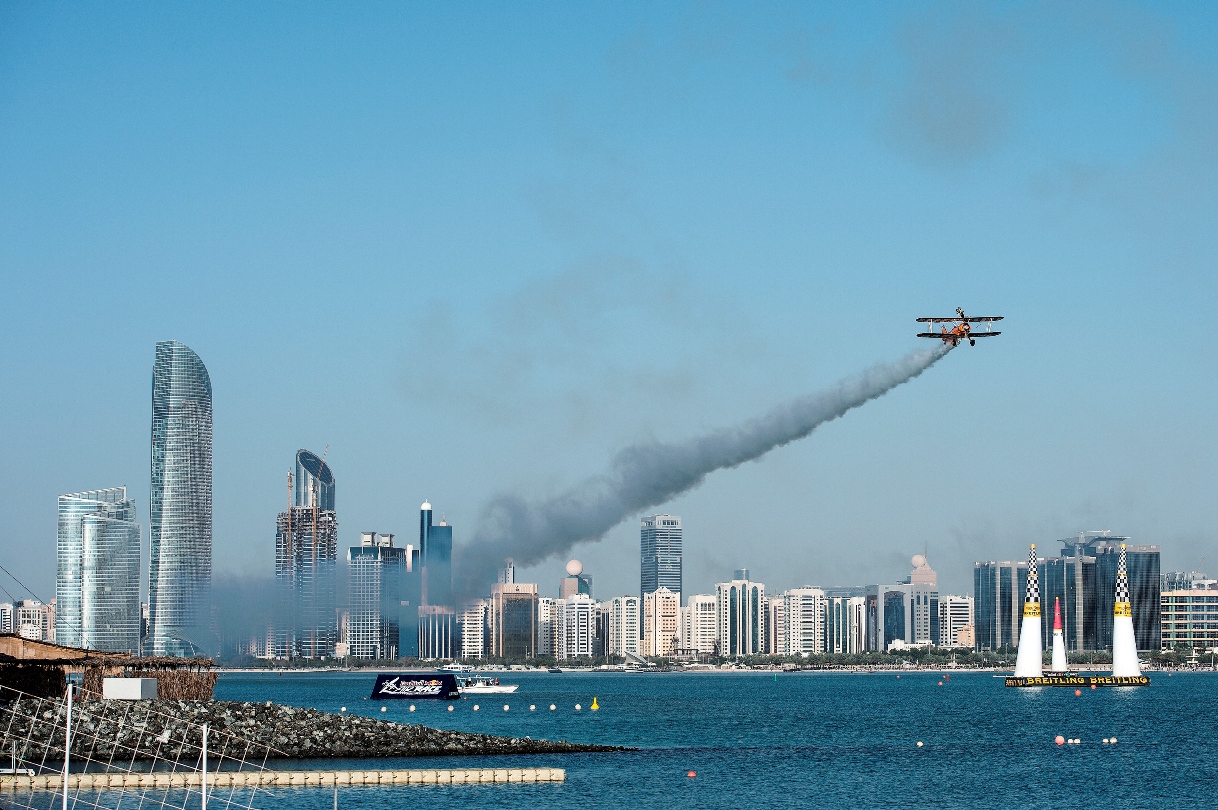
Created in 2003 but officially a World Championship in 2005, the Red Bull Air Race will mark its 75th race in 2017 and is watched by millions of fans. The official world championship sanctioned by the FAI (Fédération Aéronautique Internationale) is a visual spectacle unlike any other. Using fast, agile, lightweight racing planes, pilots reach speeds of 370kmh while enduring forces of up to 10G as they navigate the 25-meter-high, air-filled pylons of a low-level slalom track – the ultimate motorsport series in the sky.
From windswept Tokyo Bay to the heart of Budapest, and from America’s dramatic desert to Europe’s towering Alps, Red Bull Air Race puts the global spotlight (over 2,000 media from 37 countries in 2016) on an exclusive number of destinations each season. Eight stops are planned next year. The ultimate goal for Red Bull Air Race is 15 races per calendar year.
“For our partners, we bring a wealth of experience in what works, but it’s not a cookie-cutter approach. We actively collaborate with the host cities and business partners so that entertainment and revenue opportunities can be tailored specifically to each location,” says Red Bull Air Race Commercial Director Pavel Turek. “Families often spend a full weekend or more in the host region because there’s so much to see and do.”
Venues like the UK’s Ascot Racecourse, the city of Budapest, Indianapolis Motor Speedway and the waterside facilities in Chiba, Japan have seen their grandstands completely sell out. At the 2014 race in Gdynia, Poland, officials closed access to viewing from one of Europe’s longest beaches upon reaching the mandated civic limit of 130,000 people.
Abu Dhabi has hosted the season opener nine times so far, and a 2015 study found that visitors spent an average of three days in the city, with 76% citing the Red Bull Air Race as the main reason they came and asserting that they would recommend the event to acquaintances, and a full 91% declaring that the race enhanced their positive image of the location.
In Croatia, the Ministry of Tourism awarded “Best Tourist Event” to the Red Bull Air Race Rovinj in a nationally broadcast ceremony attended by the country’s Prime Minister.
“This event is exceptional,” said Darko Lorencin, Croatia’s Tourism Minister. “This is one of the best examples how to create motives for attracting tourists to come.”
Just as the race teams never stop looking for ways to improve the performance of their raceplanes, the race organizers are always striving to heighten the experience and the outcomes at new locations.
“The Red Bull Air Race delivers top-level motorsport in a way that people have never seen. One moment they’re touring the hangars and getting autographs from their heroes, and the next they’re watching those beautiful raceplanes speeding past – not as little dots in the air, but right in front of them,” explains Red Bull Air Race General Manager Erich Wolf. “And always – always – safety is paramount. Our race rules and procedures are the result of years of careful study, and we’re proud of our safety record.”
When the legendary Indianapolis Motor Speedway hosted the Red Bull Air Race for the first time in October 2016, the event drew hundreds of media contacts and saw crowds of 62,000.
“Our intent is that this is going to be an annual event,” stated Indianapolis Motor Speedway president Doug Boles. “It’s spectacular.”
Looking ahead, 2017 marks the 10th season where Red Bull Air Race will continue to expand and grow through their strong partnerships with prestigious brands, spectacular stops to the calendar and advancement in aviation and air racing. -
Glasgow, Gothenburg, Malaysia and Skåne join International Association of Event Hosts
Destination marketing organisations from Sweden, Scotland and Malaysia have joined International Association of Event Hosts (IAEH).
Malaysia Major Events and Event in Skåne joined in the first week of January 2017, with Göteborg & Co and Glasgow Life having joined in November 2016.
The organisation now has 23 members since its formal launch in April 2016.
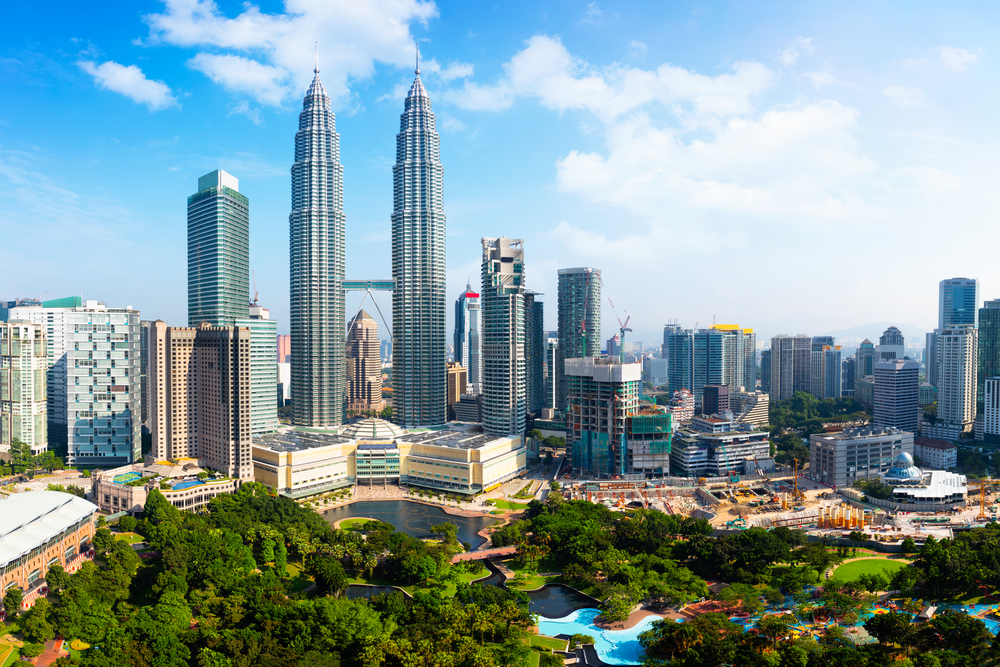
Malaysia Major Events was established to identify, promote, facilitate as well as support viable international events to be staged in Malaysia, the organisation is a division of Malaysia Convention & Exhibition Bureau and it is based in Kuala Lumpur.
Malaysia has a packed programme of sports, business and entertainment events. Events scheduled for the first three months of 2017 include the Viper Challenge Series, the Wonderful World of Disney on Ice (100 year celebration), Powerman Duathlon Asia Championships, WTA – Malaysia Open, Miri Country Music Fest and Bryan Adams Get Up Tour.
Skåne is the southernmost county in Sweden. Based in the city of Malmö, Event in Skåne works to make Skåne a leading venue for top Swedish and international events.
The New York Times ranked Skåne as one of the top ten places in the world to visit in 2016. The region regularly hosts world and European championships and several other major events.
Gothenburg is Sweden’s second largest city, with 540,000 inhabitants, located on the west coast. Despite its small size, it hosts an impressive list of international events, a success it puts down to close collaboration within the city’s event industry, infrastructure for hosting events and bold, creative and professional organisers.
Glasgow Life, represented by Ian Hooper, joined the Association during Host City 2016 in November. Glasgow Life’s vision is to inspire citizens and visitors to lead richer and more active lives through culture, sport and learning.
Glasgow’s track record in staging major events is enviable, from multi-sports events like the 2014 Commonwealth Games and 2018 European Championships and individual sports events like such as 2015 World Gymnastics, to important major conferences such as Host City.
The IAEH is a worldwide organisation for representatives of international destinations to collaborate together to generate the best possible value from hosting major sporting and cultural events, and provide a voice for ‘not for profit’ hosts of events.
IAEH provides a platform for members to learn from the successes and challenges of major events, share knowledge and generate greater long term social and economic benefits from hosting events.
IAEH meets at the most important meetings of the major events sector including Host City and SportAccord Global Convention.
Host City, the largest meeting of cities and sports, business and cultural events, will take place again in Glasgow in November 2017. -
Killy, Felli and Chernyshenko pass on experience to RIOU students in Sochi
Masters students at the Russian International Olympic University (RIOU) in Sochi have quizzed three of the key sports administrators behind the Sochi 2014 Olympic Winter Games.
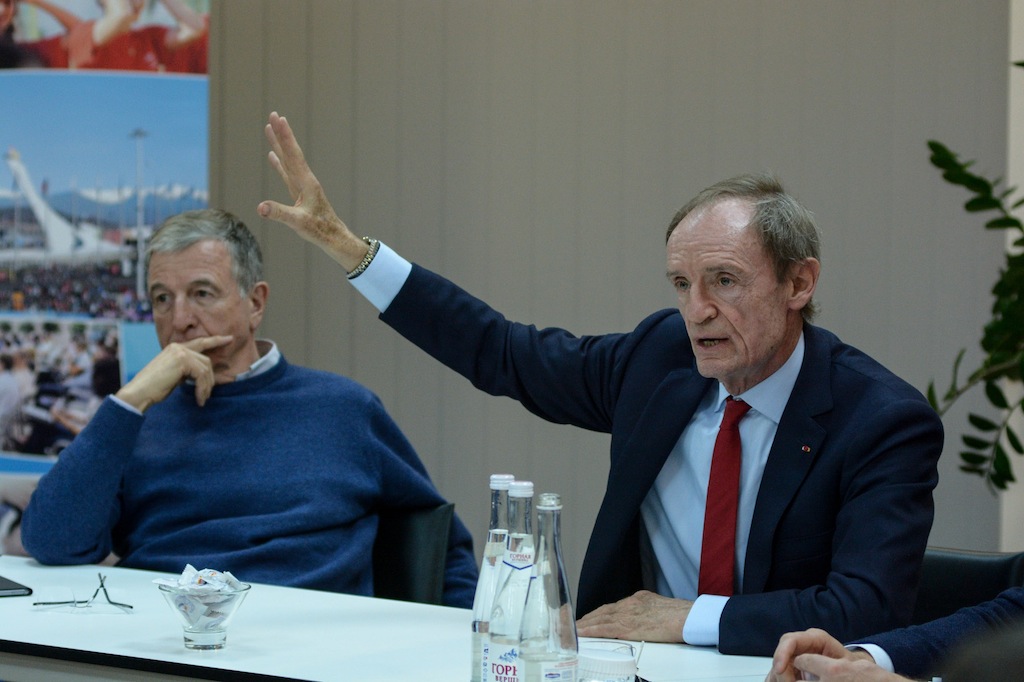
Jean-Claude Killy, the IOC coordination commission chairman for Sochi 2014; Gilbert Felli, IOC senior advisor and former Olympic Games executive director; and Dmitry Chernyshenko, CEO of Gazprom-Media Holding and former president and CEO of the Sochi 2014 Organising Committee, made a visit to RIOU’s state-of-the-art campus in Sochi city centre to meet students.
The three senior administrators visited Sochi to mark the anniversary of the 2014 Olympic Winter Games Opening Ceremony on February 7. The RIOU is one of the key legacy projects of the 2014 Olympic Winter Games.
During their meetings with RIOU’s current intake of Master of Sport Administration (MSA) students, the trio talked about various organisational aspects of Sochi 2014, including finances and budgeting, sponsorship, recruitment and leadership.
After meeting with the MSA students, Killy, a triple Olympic champion in Alpine skiing and an IOC Honorary Member, said: “RIOU is a direct legacy of the 2014 Olympic Winter Games. I was delighted to talk to the students and share my experiences with them. We are completing our careers as they are just embarking on theirs. This is how continuity in the Olympic Movement works.
“The students were very keen to have as much information as possible so we gave them a lot of advice because they are young and are at the beginning of their careers.”
RIOU offers its MSA students a unique experience: a one-year immersion in Olympic culture and best-practice, in an Olympic Games host city, with access to expert professors from all over the world, as well as high-profile guests from the Olympic Movement.
Chernyshenko, who is also the president of the Kontinental Hockey League, described how Sochi’s status as a centre of Olympic learning was established during the preparations for Sochi 2014.
He said: “The preparations for the Sochi 2014 Winter Games involved thousands of specialists, who accumulated invaluable experience. Now they are working all over Russia, applying and disseminating their knowledge, and thus helping to raise the quality of standards in different areas of the sports industry.”
The core modules on RIOU’s MSA include: Economics of Sports and the Olympics; Governance, Policy and the Olympic Movement; Research Paradigms in Sports Management; Business of Sports and the Olympic Games; and Sport Marketing and Communications. -
MTV EMAs set to rock the SSE Arena in London
Music’s biggest stars will head to London in November when the UK capital hosts the MTV European Music Awards (EMAs) for the first time in 21 years.
The 24th annual awards show will take over the city’s SSE Arena, Wembley on November 12 and will feature performances from some of the biggest acts on the planet.
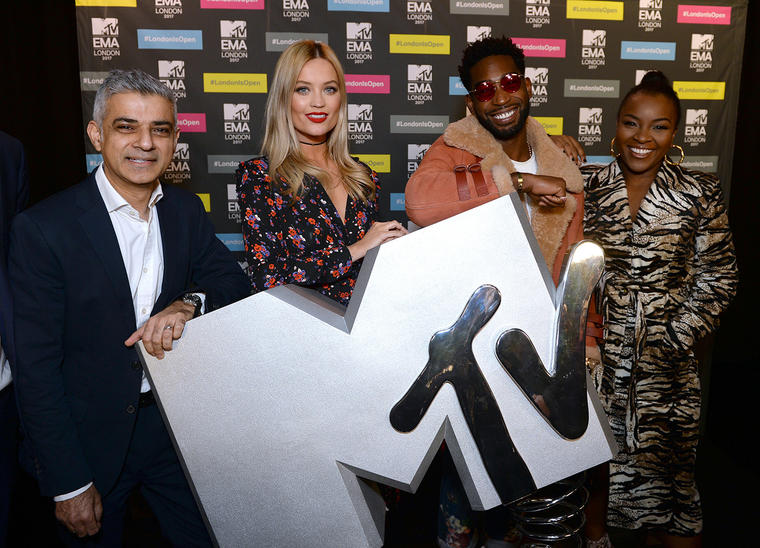
Mayor of London Sadiq Khan was delighted to announce the news. He said: “After two decades away, the MTV EMAs are returning to electrify the greatest city in the world once again. It promises to be an absolutely incredible evening, featuring some of the globe’s top artists and watched by millions.
“London is the natural city to host one of the greatest musical shows on earth – with our exceptional musical history, wealth of creative talent and outstanding venues – we’re the entertainment capital of the world.”
The EMAs were first held in Berlin in 1994 and last year Rotterdam hosted with Lady Gaga and Justin Bieber picking up gongs. London first held the event in 1996 and other British host cities include Edinburgh, Liverpool, Belfast and Glasgow.
“I think we are the entertainment capital of the world,” Khan added. “There was a view after Brexit that we were going to stop being outward-looking, a concern we would be insular and no longer the city we are known for. The announcement shows we are open for creativity, talent and entertainment.
“I was shocked that it has been two decades since the MTV EMAs was here. We are going to have a great year, and this November we will prove that London is the capital of the universe.”
David Lynn, chief executive of Viacom International Media Networks, MTV’s parent company, said: “London is arguably the world’s musical epicentre and it’s both a huge privilege and opportunity to bring the MTV EMAs 2017 to the UK’s capital city.”