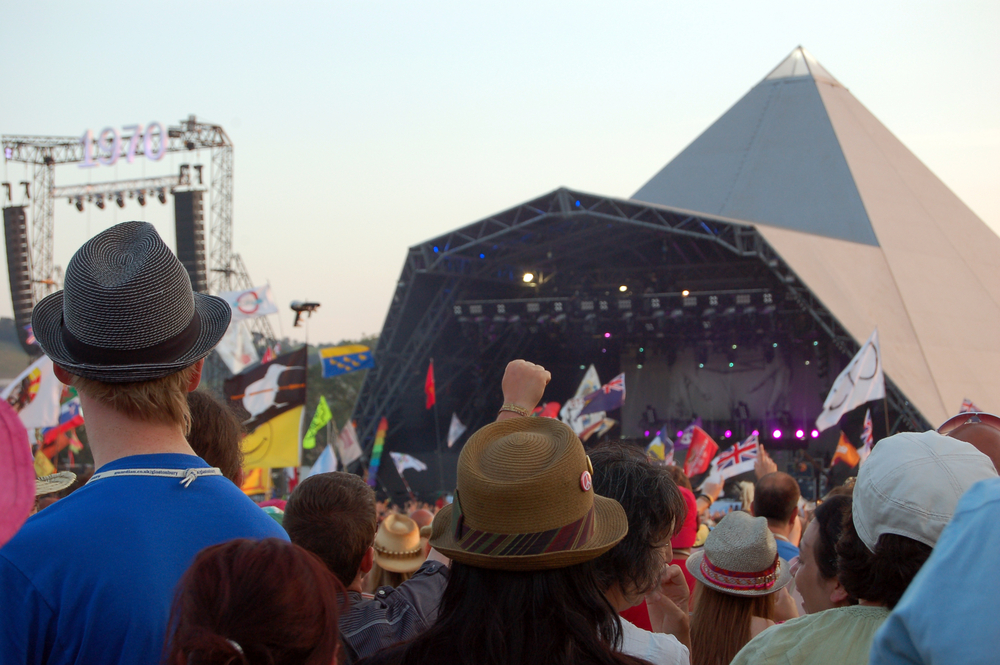
The Glastonbury Festival has secured a new premises licence that will enable it to continue to hold the event at Worthy Farm, Pilton, Somerset, until 2024.
The new application received only a few representations, of which all concerns were satisfied by the deadline. In the past, Glastonbury Festival’s licences have been subject to scrutiny in a public hearing because of objections from the public or concerns from those with an interest in the safety of the event such as the police, fire or ambulance services.
As one of the world’s largest cultural events without any permanent infrastructure, Glastonbury Festival requires large amounts of temporary event infrastructure and seasonal operational expertise.
Ensuring safety at the music festival will fall under the watch of Nigel Hunt, building control manager at Mendip District Council and interim head of the proposed Somerset Building Control Partnership.
“This is an enormous festival and no one can afford to be complacent – we will continue to work with the organisers to ensure this remains one of the safest events anywhere, and if we have any doubts about this we will take action,” said Mr Hunt.
“Thankfully, this year everything went without a hitch and my team did a superb job as ever.”
His structures monitoring team, which already has many years of Glastonbury Festival experience, is responsible for all temporary structures including the Avalon Inn, the Irish Piano Bar and the new BBC studio in The Park, as well as all the stages and platforms.
Building control teams are involved as part of the licensing team at sporting and cultural events.
“This is my second year working at Glastonbury and I still can’t believe the size and scale of the festival, the amount of work that goes on behind the scenes and the number of miles the building control team have to walk every day on their shifts,” said local authority building control (LABC) director of training Anna Thompson, who attended this year’s festival as part of the structures monitoring team for Mendip District Council.
Category: Event Management
-
Glastonbury Festival secures 10-year hosting license
-
Tradition prevents women from fulfilling potential
HOST CITY: How has the influence of women on sports administration developed throughout your career?
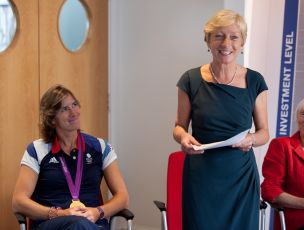
Liz Nicholl: I have held positions at national level in sport for over 30 years, and when I started out the industry was male-dominated and the voice of women in sport was rarely heard.
My breakthrough came as a young CEO of England Netball in the 1980s; my national leadership role placed me in an environment where I was able to see that I was just as good as the majority of individuals in similar, significant roles. I gained confidence from colleagues and I now say to others “Don’t hold yourself back. If someone you respect thinks you can do it, you can!”
Over the years I have seen some progress but it’s been slow. The need for diversity in leadership is now much more widely accepted in business. Change is happening in sport but it is slower and held back by tradition.
At a government level, ministers are more outspoken on equality matters and more people are listening. This national profile and debate is ensuring that the momentum is increasing but there is still a long way to go.
There are now more role models and more signs of change. Baroness Sue Campbell was Chair of UK Sport for over 10 years and now across the five UK, England, Scotland, Wales and Northern Ireland government agencies for sport, four or the five CEOs are women.
HOST CITY: How successful is the sports sector at boosting women’s representation at executive / senior management level?
Liz Nicholl: When I look across the cohort of CEOs and chairs of National Federations of sport, there are a relatively small number of women – but we are seeing a shift at board level.
There is an expectation placed on funded sports by UK Sport and Sport England that all sport boards should be made up of at least 25 per cent women by 2017. Currently over 90 per cent of the sports we fund have women Board members and the UK Sport Board is made up of 40 per cent women.
HOST CITY: What still needs to be done to make further progress?
Liz Nicholl: We need more women in coaching generally and especially at a high performance level. We are looking into what some of the barriers might be while at the same time providing and a programme to support athletes, with an emphasis on women athletes, transitioning into coaching.
The biggest challenge is the limited media coverage of women’s sport. Better, balanced media coverage would unlock enormous potential and sponsorship and could massively increase the momentum for positive change. We will be hosting the Women’s Hockey World Cup in 2018 and have ambitions for other events to shine the media light more specifically on women in sport.
Personally, as a woman working in an influential role within British sport, I know there is more I could be doing to keep this issue visible and to challenge where I see inappropriate inequalities and I am determined to do so.
Liz Nicholl OBE is the Chief Executive of UK Sport. To read the full interview, register to receive the next issue of HOST CITY magazine -
Global survey shows growing appeal of Olympic Games
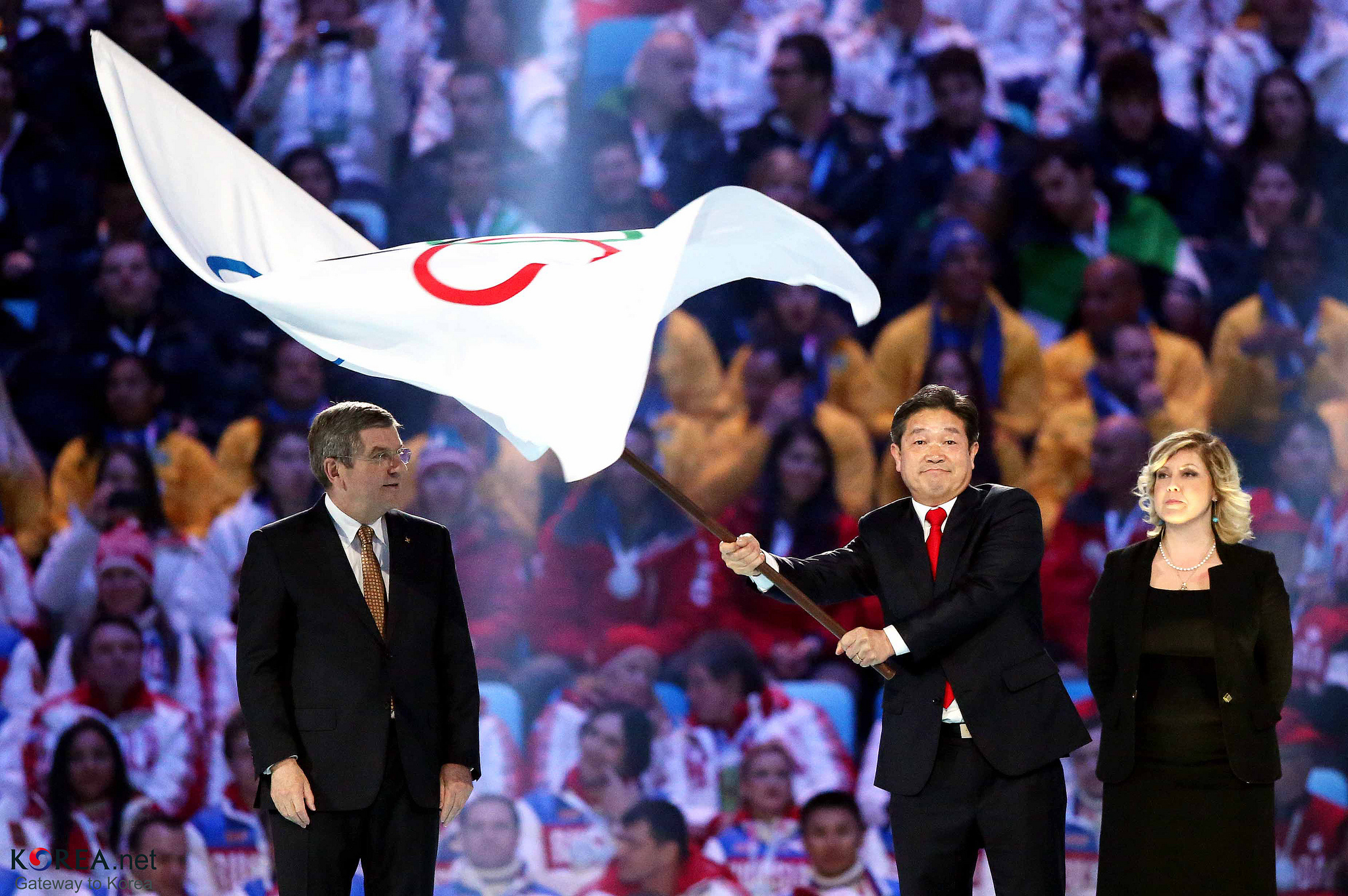
A survey commissioned by the IOC has found that the awareness and appeal of the Olympic Games and the Olympic Winter Games was higher than any other sports or entertainment events surveyed.
The research, conducted by Kantar Media after Sochi 2014, took on board the views of 36,000 people in 16 countries.
Announcing the results, the IOC said in a statement that Sochi 2014 reached a broadcast audience of 2.1 billion people, up 13 per cent since Vancouver 2010. The individual broadcasters at Sochi totalled 250, more than twice as many than at Vancouver.
The proliferation of digital media has boosted the reach of the Winter Games, with the number of broadcasting hours doubling to 114,000 at 2014 as compared to 2010. Digital video views reached 1.4 billion, up 334 per cent from 2010.
Athletes and spectators surveyed at the Games in Sochi rated their enjoyment of the Games very highly, citing the standard of the sports competition, the quality of the venues and the atmosphere as factors contributing to their enjoyment.
The Olympic symbol remains the most widely recognised of brands surveyed, with 93 per cent of respondents showing awareness. This brand recognition showed little variation across regions, gender and age.
The values that people surveyed associated with the Olympic rings included global, inspirational, friendship, diversity, peace and excellence. In a further boost to brand integrity, the IOC was seen to be strong and strict on doping.
The survey also showed “widespread recognition that hosting an Olympic Games brings benefits to the host country” – a welcome finding as the IOC conducts its Agenda 2020 review into the appeal of the Olympic Games.
-
Respect cultural differences, Qatar 2022 implores
Qatar is looking forward to welcoming in the world in 2022 but international football fans must return this hospitality by respecting the culture of the host nation, a senior organiser told HOST CITY magazine.
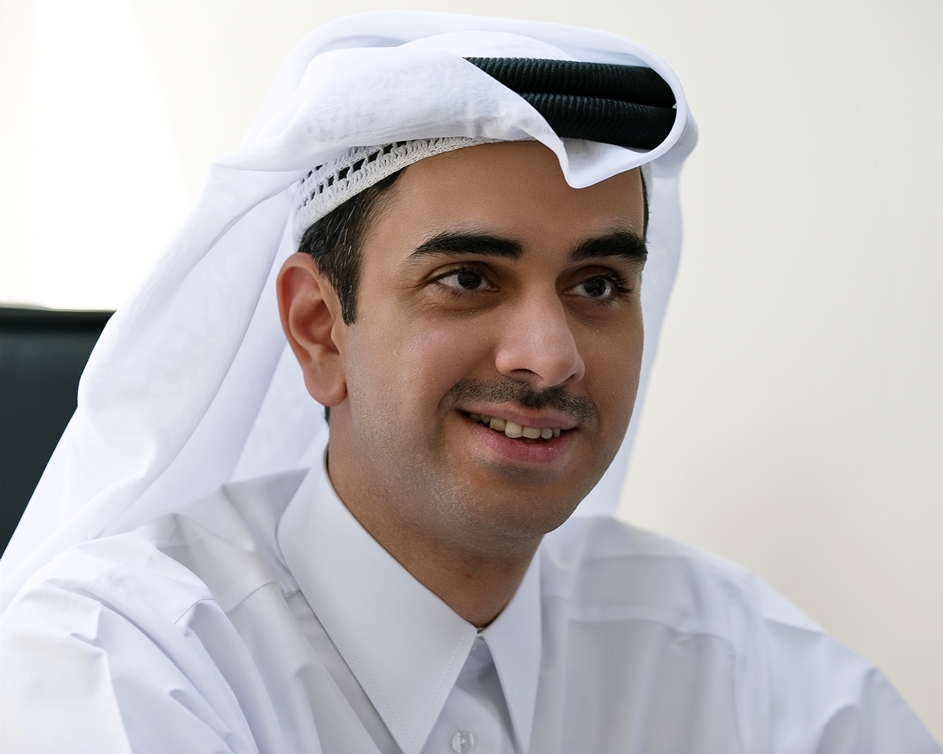
“2022 will be about bringing people together and if people give us a chance, we will prove this will be the World Cup that will change their hearts and minds,” said Yasir Al-Jamal, deputy general secretary of the Qatar 2022 Supreme Committee for Delivery and Legacy.
“Part of our culture has always been about showing people our hospitality. As a country we will be proud to do that and as a region with so much to offer, we will be proud to welcome the world.”
Drinking alcohol will be permitted during the World Cup but public displays of affection will be deemed inappropriate.
“Alcohol or public displays of affection are not part of our culture; however, hospitality most certainly is. In recognizing that, alcohol is available in Qatar and fans will be able to have a drink at the 2022 FIFA World Cup,” said Al-Jamal.
“Everyone has their beliefs and cultures. We welcome and respect that. All we ask is that other people do the same for us.”
In the exclusive interview, Al-Jamal points out that one of Qatar’s primary motivations in hosting the World Cup is to break down preconceptions about the Middle East.
“We always saw the tournament as the opportunity to build bridges between East and West,” he said.
“So often this part of the world is misunderstood. To utilise the power of football to alter people’s perceptions of the Middle East is something to be proud of.”
In the interview, Al-Jamal also discussed the issues of venue sustainability and temperature control.
To read the full interview with Al-Jamal and much more unique, exclusive content, register to receive the next issue of HOST CITY magazine.
-
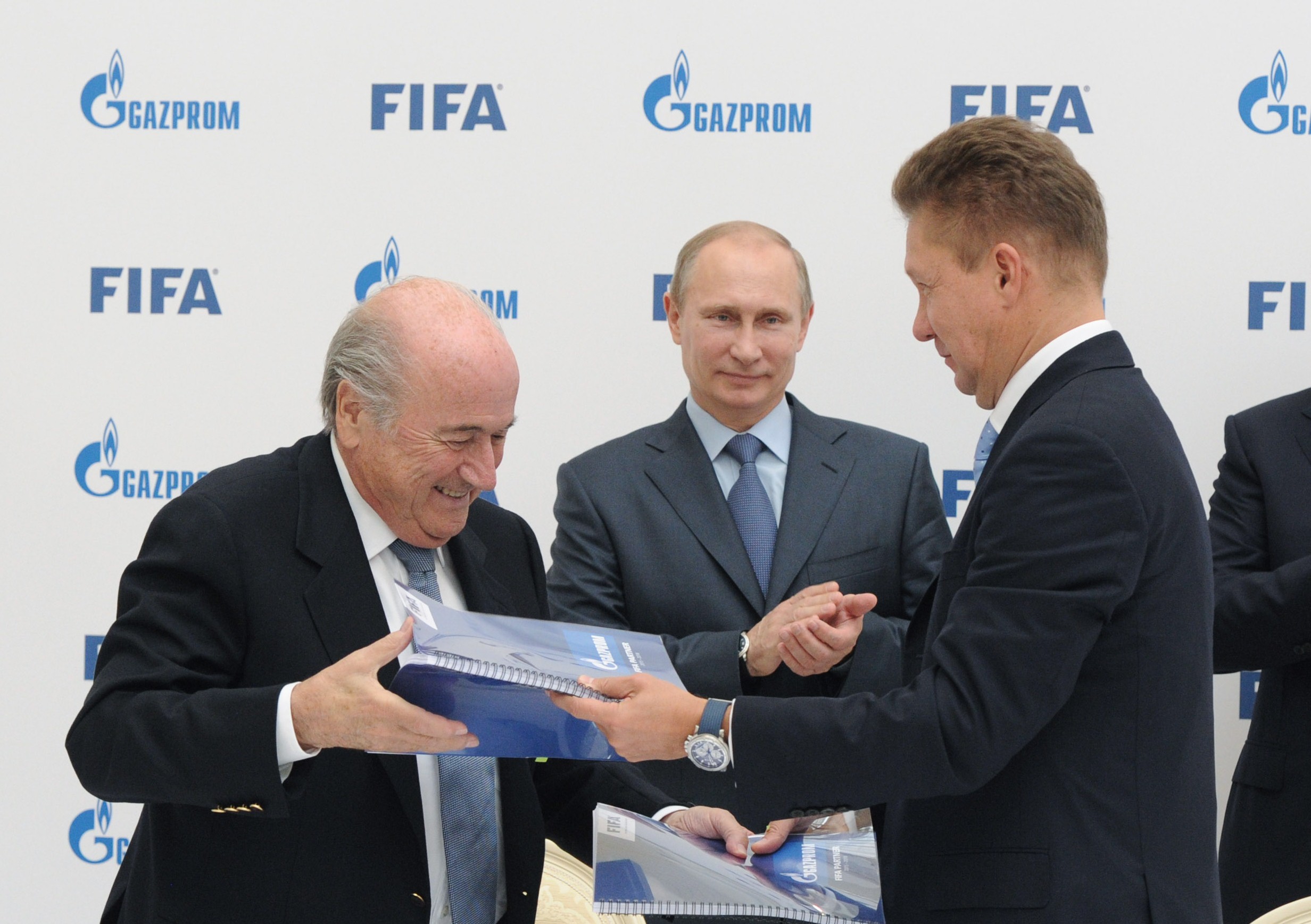
Blatter warns against discrimination at Russia handover
The 2014 FIFA World Cup in Brazil was successful on many fronts, but president Sepp Blatter chose to highlight a “message of togetherness” after handing the tournament over to the next hosts, while president Vladimir Putin of Russia chose to praise the social impact of the World Cup.
“FIFA’s World Cup in Brazil had a very special message to give – a message of togetherness and of connecting people, a message of peace and of anti-discrimination,” said Blatter after the ceremony at the Maracana Stadium on Sunday.
“We have enjoyed a successful World Cup and we will have a legacy in this country. At the same time there is a responsibility for the next host country and I’m confident that Russia will take on this responsibility and also give us a wonderful World Cup to remember in 2018.”
During the ceremony inside the Maracana Stadium Putin said, “I want to congratulate President Rousseff on how the World Cup was organised. Football helps to solve social problems.”
Putin’s decision to focus on the social benefits of hosting the World Cup is notable, given the major protests within Brazilian society that dogged the country as it prepared to host the tournament. Whether hosting the World Cup will act as a catalyst for change in attitudes towards sexuality in Russia remains to be seen.
“Our task is to create the best possible conditions for the coaches, players, experts and fans,” said Putin.
“I am grateful to President Blatter and his colleagues from FIFA for the honour to organise the World Cup. We will do all we can to organise the event on the highest level”.
Russia has its work cut out over the next four years. Seven new venues need to be built but construction is being held up by an auditing process, according to the Moscow Times.
Over the course of 2014 around US$ 23bn is supposed to be spent on large scale infrastructure projects, including the World Cup venues, but only 6 per cent of this had been spent by the start of June.
Russia will be able to take heart from Brazil’s broad hosting successes, despite the scramble to finish venues on time.
”Brazil is very proud for once again having staged the biggest football celebration in the world,” said Brazilian president Dilma Rousseff.
“In the last 30 days the world has been connected to Brazil, celebrating goals with a lot of emotion in the 12 host cities and making this the World Cup of World Cups. I am sure that everyone who came to Brazil, like tourists and delegations, will take back memories of our hospitality and joy, and we Brazilians also have unforgettable memories.
“I wish the Russian people great success in the organisation of the 2018 FIFA World Cup.”
The first major milestone event for Russia 2018 will take place in July 2015 in Saint Petersburg when the qualifying pathway for FIFA’s member associations will be defined at the Preliminary Draw, FIFA said in a statment. -
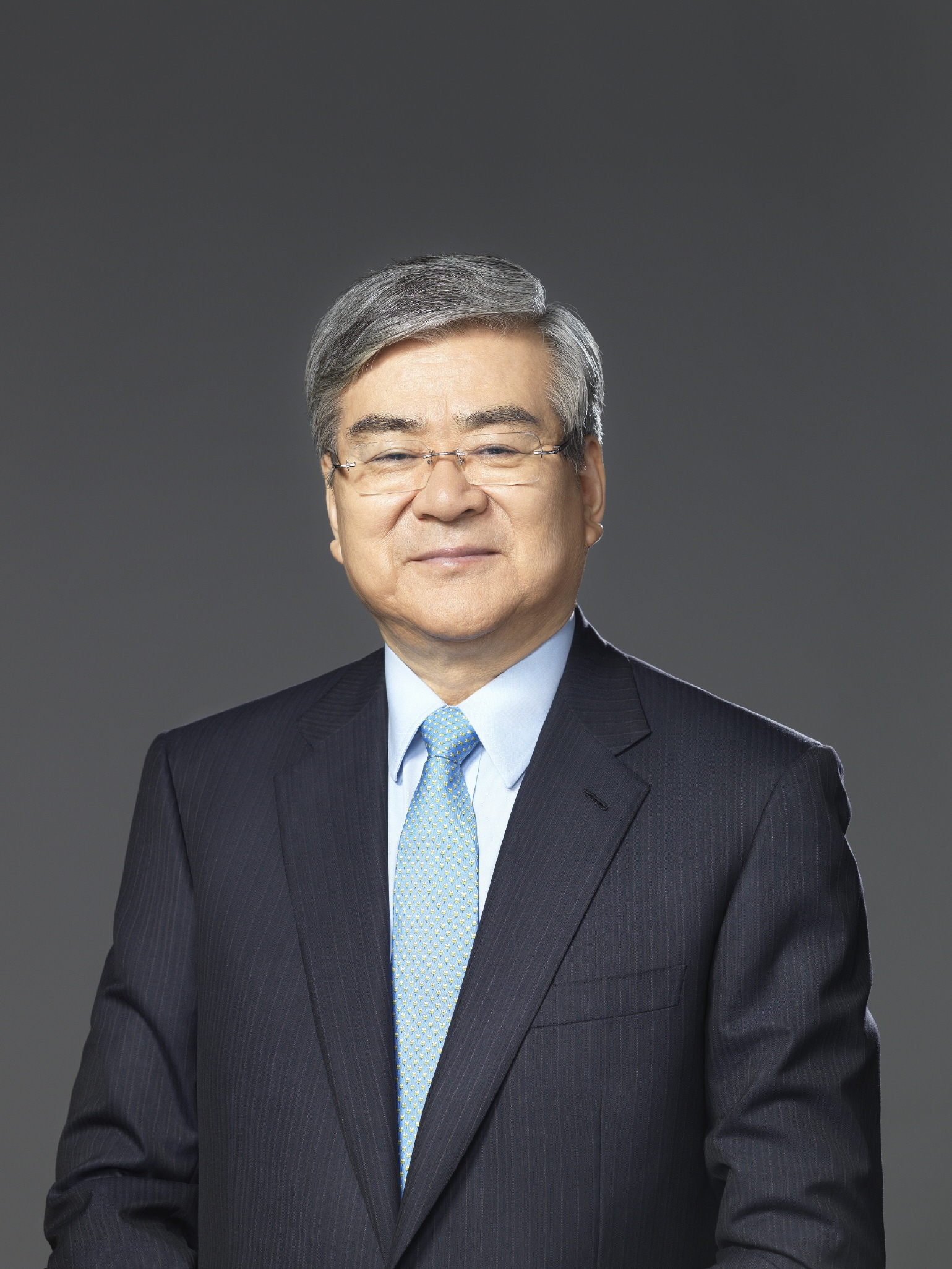
PyeongChang 2018 appoint former bid leader as permanent chief
Cho Yang-ho, chairman and CEO of South Korean conglomerate Hanjin Group and airline Korean Air, led PyeongChang’s bid for the 2018 Games and will be appointed as chief organiser at a general congress of the organising committee in the coming days.
POCOG appointed their vice-president Kim Jung-haeng as an interim leader following Jin-sun’s unexpected departure but have quickly found a new successor.
Yang-ho is the current president of the Korea Table Tennis Association and vice president of the Asian Table Tennis Union but his appointment has been criticised by some because of his lack of experience in sports administration.
Yang-ho said in a statement: “Now that I’ve agreed to take on the job as the chief organizer, I will dedicate myself to ensure a successful Winter Olympics in PyeongChang, relying on my experience as the top bid official.”
“Many people in and outside Korea recommended that I take this position and I also wanted to keep the promise I’d made with the International Olympic Committee to work for a successful Olympics here.”
Yang-ho will come into the job at a troubled point for the Games with results from an investigation by the South Korean Board of Audit and Inspection into the financing and management of the Games still pending. -
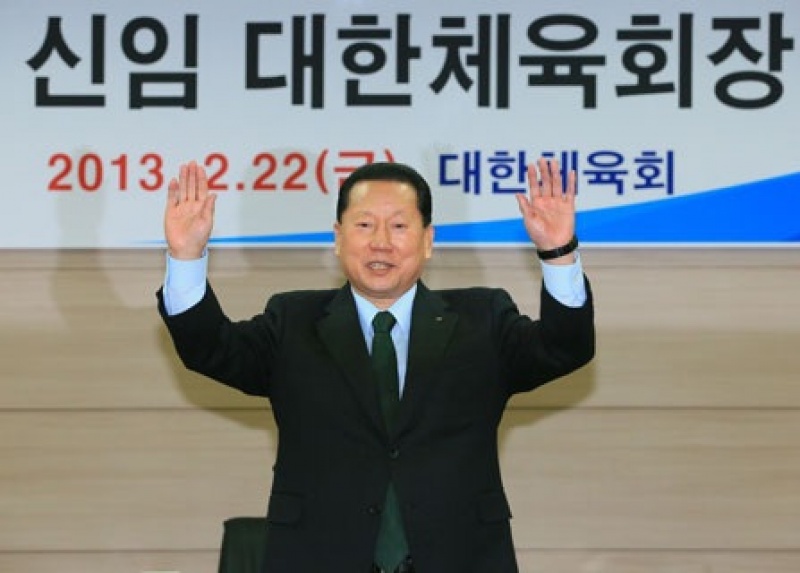
PyeongChang 2018 appoint chief following abrupt resignation
Following the unexpected resignation of PyeongChang 2018 Winter Olympic Organising Committee chief Jin-sun, the committee have appointed one of their six vice-presidents, Jung-haeng, to take charge in the interim. Jung-haeng will be briefed on the progress of the Games preparations on Thursday and will head the organisation until a permanent replacement can be found.
Kim Jin-sun left his post on Monday citing the need for new leadership. It was revealed yesterday that this had followed an investigation by the South Korean Board of Audit and Inspection into the financing and management of the Games, leading to speculation in the South Korean media that Jim-sun’s departure was not voluntary.
Jin-sun resigned in a speech to POCOG, saying: “PyeongChang 2018 is at a turning point for the latter half of its Games preparation, which requires more detailed planning and execution. At this critical juncture, I believe that PyeongChang 2018 needs new leadership and a stronger system that will effectively carry out various Games-related projects. And this is why I decided to resign as President of POCOG.”
Jin-sun was head of PyeongChang’s bidding committee on two failed bids for the 2010 and 2014 Winter Olympics and his position as chief of the 2018 Games was not meant to expire until October 2015
This all follows a troubled few months for the PyeongChang Games which have faced a slew of construction and sponsorship problems as well as the resignation of vice president and secretary general of the organising committee, Moon Dong-hoo, due to health concerns.
In May the IOC urged PyeongChang to focus on venue construction, test events, marketing and Games services due to tight timeframes. Gunilla Lindberg, chair of the IOC coordination commission, said: “The 2018 Games are on the right track but it is clear that much work remains.”
Following the resignation of Kim Jin-sun the IOC released a statement saying: “We have full confidence that these activities will be delivered by the POCOG team in a timely manner and using their existing processes. We continue to work closely with them on their preparations for the Games.”
-
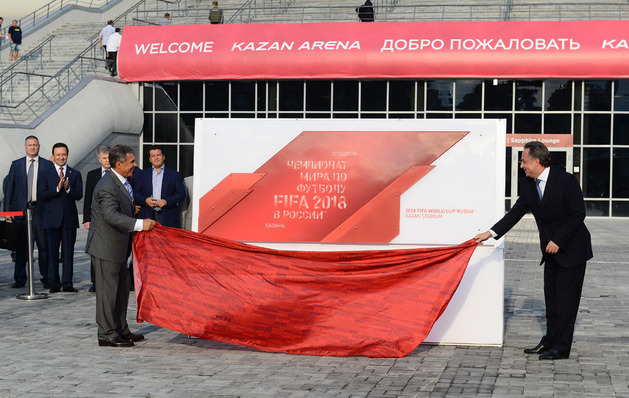
FIFA asks Russia to drop two World Cup cities
FIFA President Sepp Blatter recently visited Russia and met with President Vladimir Putin as well as Vitaly Mutko and Alexet Sorokin, the Chairman and the CEO of the 2018 FIFA World Cup Local Organising Committee respectively, to discuss the plans.
The Interfax news agency quoted Mutko as saying: “The existing conception of the 2018 World Cup provides the staging of the event at 12 stadiums in 11 cities. FIFA recommended staging the World Cup at 10 venues in nine cities.”
“We will once again tour the 11 cities, and then a decision will most likely be made. Everything will depend on how things move along and how the cities view the post-tournament program.”
“We’ll finalise our decision taking into consideration the progress of the host cities in their World Cup preparations.”
Blatter first revealed the reduction plans at the final press conference of the 2014 Brazil World Cup in July. He said: “We are not going to be in a situation, as is the case of one, two or even three stadiums in South Africa, where it is a problem of what you do with these stadiums.”
Issues with stadium construction and underdeveloped infrastructure have also been cited as the reasoning behind FIFA’s demands, with several sites facing huge delays. Russian daily newspaper Kommersant recently suggested the cities of Volgograd, Kaliningrad and Yekaterinburg were the most likely to be excluded from the World Cup.
However, other cities also face uncertainty. The construction of the 45,000 seated Rostov-on-Don Stadium is still yet to commence whilst in Saint Petersburg, the $1.1 billion New Zenit Stadium has faced massive delays. Construction work on the new home of Zenit Saint Petersburg began in 2006 but by 2012 was only half built and facing a complete redesign of the stands. The stadium may now not open until 2017, nine years past the original deadline.
On the other hand, some Russian cities have fared much better with their World Cup developments. For example, the new Kazan Arena recently hosted its first football match after being completed in record breaking time last year.
-
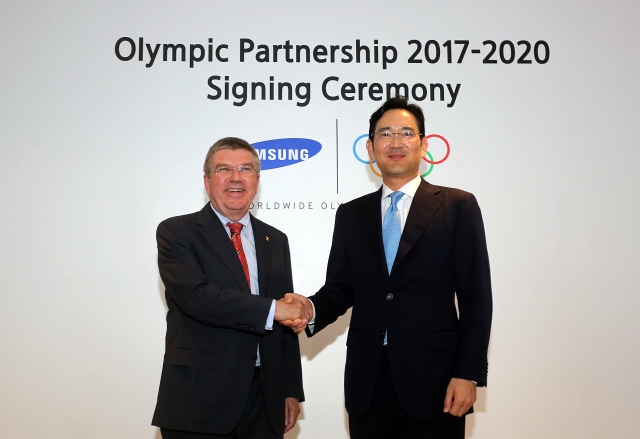
Samsung extends Olympic partnership to 2020
Samsung has been a part of IOC Worldwide TOP Programme since the 1998 Nagano Winter Games and the extension means the South Korean firm will now feature as a supporter of the Rio de Janeiro, PyeongChang and Tokyo Games as well as the Youth Olympic Games through to 2020.
IOC President Thomas Bach said: “We are delighted to be able to continue our partnership with Samsung. The funding generated by the TOP Programme directly supports the staging of every Olympic Games, as well as every one of the National Olympic Committees, enabling athletes from all over the world to prepare for and compete at each Games.
Samsung will be the official Worldwide Olympic Partner in the Wireless Communication Equipment and Computing Equipment category and has previously provided the Olympic Games with its wireless communications platform and mobile phones, most recently at the Sochi 2014 Winter Games.
The expanded product category includes smartphones, tablets, laptops, personal computers and other computing equipment as well as desktop printers.
“Samsung also supports the operations of each Games by providing leading wireless telecommunications and technology equipment,” said Bach. “In addition, Samsung’s technologies and global marketing reach will engage fans around the world with the Olympic values and the Olympic Movement.”
Samsung said in a statement: “As mobile technologies have become an inseparable part of our daily lives, Samsung believes its continued support will play a significant role in bringing further innovation to the staging of the Olympic Games.”
The new deal means all of the existing Olympic TOP partners have committed to the programme through to 2020. Other companies to sign up to the IOC’s Worldwide TOP Programme include Coca-Cola, Atos and Panasonic who have similar deals, with each covering their own area of expertise.
-
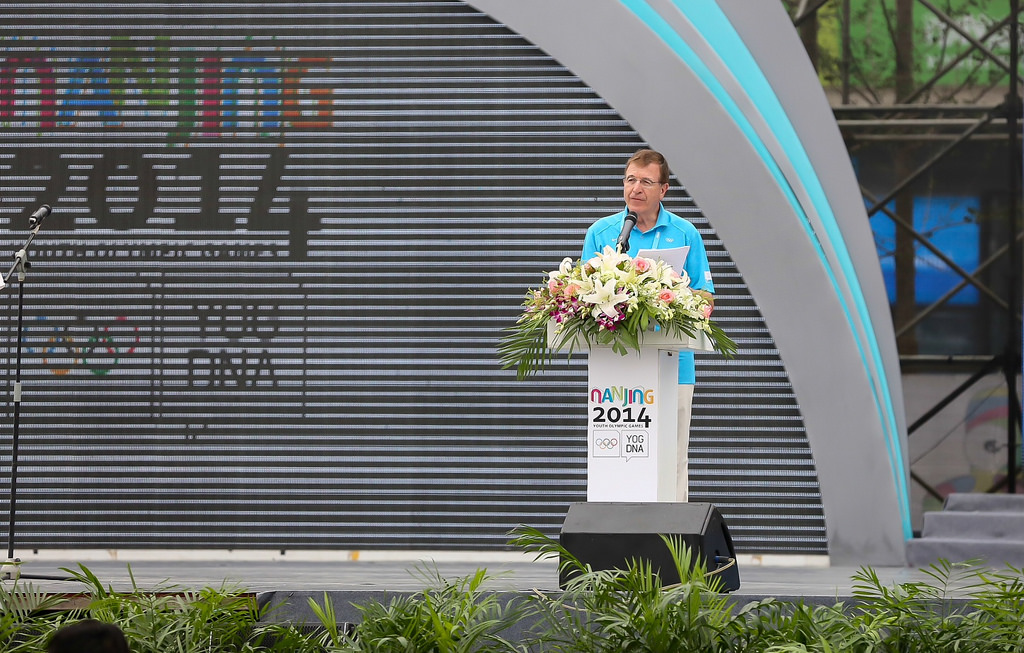
Nanjing 2014 excludes 3 athletes over Ebola fears
Three more young athletes from West Africa will not be able to compete in the Nanjing Youth Olympic Games due to the perceived risk of transmission of Ebola, it emerged on Friday.
Nigeria and Sierra Leone have already pulled out of the Games, citing discrimination and warnings from Chinese authorities.
“Based on health authority guidelines it has been decided that athletes from affected areas will not compete in combat sports,” the IOC said in a “joint communique” with the organising committee.
It was also decided that no athletes from the region would compete in aquatics, based on “the inability to completely exclude the risk of potential infection”.
According to the joint communique, two athletes in combat sports and one swimmer will be unable to compete. According to the Nanjing 2014 website, Liberia’s Momodu Sombai was due to compete in swimming, alongside Alhoussene Sylla of Guinea. Mamadama Bangoura, also of Guinea, was set to compete in Judo.
The remaining West African athletes will be “subject to regular temperature and physical assessment throughout the period.”
On Wednesday it emerged that Nigeria and Sierra Leone were withdrawing their entire teams from the Youth Olympic Games.
“Nigerian athletes were quarantined, isolated and barred from training alongside athletes from other countries since they arrived the competition venue over news of Ebola virus in Nigeria. Following this discrimination, we have resolved to pull out from the Games,” said Gbenga Elegbeleye, director general of the National Sports Commission.
According to Patrick Coker, the president of the National Olympic Committee of Sierra Leone, their Chinese Embassy had warned them that they “might find themselves in a troubled and awkward situation once they get to China’s port of entry.”
But according to the IOC, no teams have been excluded from the Games. “The organizing committee has made it clear that all delegations are welcome to the Games and each country is free to take their own decision on attendance,” the joint communique said.
“We regret that due to this issue some young athletes may have suffered twice, both from the anguish caused by the outbreak in their home countries and by not being able to compete in the Youth Olympic Games.”
The IOC and organising committee will invite the athletes to compete at a future event in Nanjing “to experience the welcoming atmosphere and spirit of the city and Jiangsu province.”
They have also offered to include the national flags of the affected countries in the opening ceremony, which takes place on Saturday 16th December and promises to be as spectacular as Beijing’s in 2008.