Sport brings benefits to physical and mental health, building a sense of community and purpose. But reconciling these with the business of sport can create a quandary – particularly when people are increasingly inclined to spend time looking at devices than participating in sport.
“Kids in America don’t play anymore; they sit in front of their screens,” says Richard Brisius, Race Chairman of The Ocean Race. “What’s their perception of sport and how do we attract them to it? Do I chase eyeballs and clicks, or produce something that’s relevant and educating?
“It’s quite easy for sports to think we don’t have much effect, but we do. Sports has for a long time has been about a healthy mind and a healthy body. Sport shouldn’t go too far away from its ideals. If we do that, if we just chase views at any cost, we will lose credibility. Business and sponsors are looking for sports that take the responsibility to do something for purpose, and that is sustainable.”
Microplastics everywhere
Concerns over sustainability are at the forefront of all sports today, and sailing is right on the front line of environmental change. Anyone who has watched Blue Planet will be aware of the beauty and fragility of the ocean.
“The ocean has always been our playground, our stadium. 70 per cent of the world is covered in ocean – very few people go out there, but we do, and we see it change.”
Ocean health has been at the core of the race since its launch of the event in 1973. “Conservation comes naturally to sailors,” says Brisius, citing the example of Peter Burling and Blair Tuke, Olympic gold medallists who came second and third in the last Ocean Race and set up the Live Ocean charitable trust.
The Ocean Race runs an ocean science programme, where the racing boats are fitted with advanced equipment to test water all over the world for salinity, CO2, temperature, microplastics and other indicators. The data is sent to the National Oceanic and Atmospheric Administration (NOAA), UNESCO and other science databases.
“We go to places where no one else goes. It’s sad to say that we found microplastics everywhere across the world, even between Cape Horn and New Zealand, at Point Nemo – the furthest away from land you can be.”
They also have an education programme in 29 countries and run a series of 12 Ocean Race summits around the world to raise awareness of ocean health.
Hosting for a purpose
The Ocean Race goes to great cities all over the world. The next race, in 2021-2022, takes in ten host cities, starting from Alicante, going on to Cape Verde, Cape Town, Shenzhen, Auckland, Itajai, the US city of Newport, Aarhus, the Hague, then into the Mediterranean with the grand finale in Genoa, where Christopher Columbus first started sailing.
Because the event is hosted in the city for one to two weeks, it attracts a good number of visitors, creating good visibility and economic impact, says Brisius. It also brings ticket-free activities for citizens in race villages.
The next opportunity to host The Ocean Race is in 2025, and some cities are already committed and others in talks. Unsurprisingly, sustainability comes top of the list of evaluation criteria. “That’s important in the way cities bid for us. We want them to say how hosting the Ocean Race will change how they work around sustainability.
“The Ocean Race is about racing for a purpose. Sport should not underestimate its role in society.”
This interview was conducted at Global Sports Week Paris in February 2020
Category: Event Management
-
Racing for a purpose
-
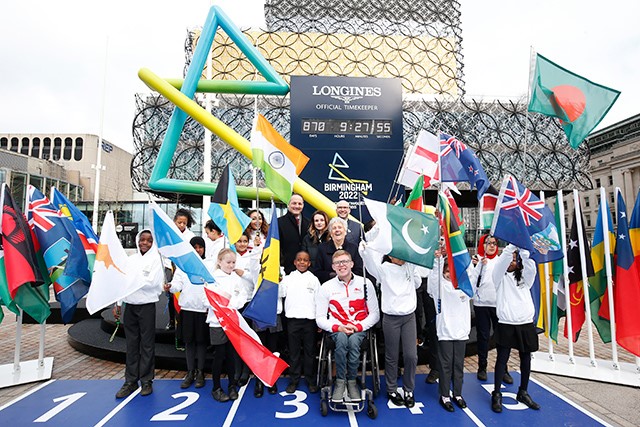
Longines and CGF agree historic multi-Commonwealth Games partnership, as Birmingham 2022 Countdown Clock is revealed
[Source: CGF/Birmingham 2022] The Commonwealth Games Federation (CGF) has signed a partnership agreement with Longines for the next three editions of the Commonwealth Games, starting with Birmingham 2022. The announcement comes on Commonwealth Day today (9 March), where Birmingham 2022 unveiled a Longines Countdown Clock in the heart of Birmingham’s iconic Centenary Square.
The agreement represents the first ever multi-Commonwealth Games partnership in history with Longines receiving exclusive status as the “Inaugural Partner of the Commonwealth Sport Movement”. Known worldwide for excellence in precision timing, Swiss watchmaker Longines will be the Official Partner and Timekeeper for Birmingham 2022 as well as the 2026 and 2030 Commonwealth Games. This new partnership sees Longines provide all timing and scoring equipment for every single event within the next three Commonwealth Games.
An additional aspect of the partnership means that Longines is also named as ‘Presenting Partner’ of rugby sevens, table tennis, gymnastics and athletics. The historic agreement reinforces the strong ties between Longines and the Commonwealth Games. Longines was originally a partner of the Perth 1962 Commonwealth Games and renewed its partnership for Glasgow 2014 and Gold Coast 2018.
The announcement comes on Commonwealth Day today (9 March), where the CGF, in partnership with Longines and Birmingham 2022, unveiled a Countdown Clock in Birmingham’s Centenary Square. The striking clock has begun counting down the days, hours, minutes and seconds to the start of the opening ceremony of the Birmingham Commonwealth Games, on 27 July 2022.
The Longines Countdown Clock features a fully accessible ramped approach to allow both wheelchair users and non-wheelchair users to move freely under the structure. Manufactured in England, its structure forms the shape of the iconic ‘B’ logo of the Birmingham 2022 Games. This distinctive shape was created by connecting 12 towns and cities across the region, joining together key Games locations, where for the 11 days of the Commonwealth Games, 19 sports, including eight fully integrated para-sports, will take place.
CGF CEO David Grevemberg CBE said: “I am absolutely delighted and privileged to have Longines join with us as the Inaugural Partner of the Commonwealth Sport Movement. It marks an exciting new chapter in the longstanding friendship we have had with Longines that dates back to the Perth 1962 Commonwealth Games.”
“This is a truly historic agreement and having this multi-Commonwealth Games partnership in place showcases real confidence in the future direction of the Commonwealth Sport Movement. The partnership has been made possible because of the new Games delivery model, coordinated by CGF Partnerships, which looks at multi-Games opportunities and efficiencies.”
“It is particularly special to be announcing this on Commonwealth Day, a day of celebration across the Commonwealth, where we are unveiling the Longines Countdown Clock to the Birmingham 2022 Opening Ceremony. With this striking yet elegant structure now taking pride of place in the iconic Centenary Square, the countdown to Birmingham 2022 has really begun.”
Longines Vice President Marketing, Matthieu Baumgartner commented: “On this special day, Longines is very excited to announce its participation in the XXIInd Commonwealth Games, considered as one of the world’s most important sporting events.”
“With 870 days to go until the start of this great event, our brand is delighted to reveal a historic multi-Commonwealth Games partnership with CGF, covering the 2022, 2026 and 2030 editions.”
“We are extremely proud of our partnership with the Commonwealth Games, which extends all the way back to the 1962 Perth Commonwealth Games and more recently the 2014 Glasgow and 2018 Gold Coast Commonwealth Games.”
“Timing is crucial when it comes to winning a gold, silver or bronze medal. In this regard, Longines is looking forward to providing its timekeeping expertise in various disciplines, including Athletics (Track & Field), Gymnastics, Rugby Sevens and Table Tennis, the sports we are partnering with during the Commonwealth Games.”
“Our brand has a long history of innovation and precision in sports timekeeping, dating back to the late 19th century already. For the three next Commonwealth Games, starting with Birmingham 2022, Longines is perpetuating this history, together with athletes and sports fans from all over the world.”
John Crabtree, Chair of Birmingham 2022, said: “This marks a hugely significant day for the Birmingham Commonwealth Games, as we build momentum and edge ever closer to July 2022.
“Longines has a prestigious history in sports, and great heritage when it comes to Commonwealth Games. To have their continued support for Birmingham in 2022 is very much welcomed and we are proud to have them as a partner.
“The countdown clock will become a key attraction and focal point and will ensure the people of Birmingham have a visual reminder that their city has been chosen to host one of the biggest sports and cultural events in the world. It will count down to an important moment when the eyes of the world will be on Birmingham and the West Midland region.”
Cllr Ian Ward, Leader of Birmingham City Council, said: “The Countdown Clock is an exciting contemporary addition to our diverse range of public art in the city.
Set in the recently revamped Centenary Square and in front of the world-renowned Library of Birmingham, it creates a fantastic Games-related city centre destination for citizens and visitors in the years to come as the excitement builds for everything we do as a council and with our partners on the road to Birmingham 2022.” -

Global campaign to support events through coronavirus outbreak
[Source: UFI] Paris based UFI, the Global Association of the Exhibition Industry, and Atlanta based SISO, The Society of Independent Show Organizers, today launch a new campaign, called “This Show Is Open”
– “This Show is open” / “This Expo is open” campaign made available to exhibition organisers around the world
– Campaign highlights the critical role exhibitions and events play in times of crisis
– Both associations pledge to make campaign available to meeting industry associations serving other types of events
It supports exhibition and event organisers around the world as they put the industry’s full experience to the task of keeping events going wherever possible, in line with the guidance of health authorities and the interests of their customers.
The campaign launches as the global outbreak of the Novel Coronavirus is challenging societies around the world. As health systems and governments deal with the outbreak, exhibitions and events around the world are being postponed or cancelled where deemed necessary.
At the same time, exhibitions and events are one of the core elements to both keep industries and economies going – they are both among the most responsive and resilient economical tools.
“Exhibitions and events are essential to millions of businesses around the world. They exist to provide platforms for people and industries to meet, to trade, and to collaborate. Small and medium businesses in all industries in particular depend on exhibitions. And, like all types of events, they support the economy worldwide“, says Mary Larkin, UFI President.
“Exhibitions and events are especially important in times of disruption. We stand to fulfil our obligation to maintain opportunities for people to meet wherever possible. As part of the exhibitions industry, we are committed to keep our exhibitions and events going around the world wherever we can do so“, says Greg Topalian, SISO Chair.
The “This Show is Open” campaign consists of material that UFI and SISO are making available to their respective memberships – covering all the global leading companies in exhibition management as well as regional and national heavyweights. They can add the visuals and text material to their ongoing communications around upcoming exhibitions – highlighting the fact that, while numerous exhibitions around the world are being postponed or cancelled due to COVID19, many shows are taking place successfully around the world.
“We have one simple message here”, say Kai Hattendorf, UFI CEO and David Audrain, SISO ED. “As an industry, we strive to make it possible for every company to come to the show floor, to seek to meet with industry peers, to drive the exchange about how and to what degree their respective industries are impacted by COVID-19, and to secure the successful future for their business.“
Industry leaders are welcoming the campaign:
“I have been a strong supporter of this campaign ever since I heard of it. At Tarsus Group, we will use the material provided to help get the word out loud and clear that our industry is open and resilient”, says Douglas Emslie, CEO of London based global organizer Tarsus Group.
Both UFI and SISO are as well inviting other associations serving the wider meetings industry to join the campaign, to help to grow awareness.
“As the current president of the Joint Meetings Industry Council, I will invite all the member associations of this global framework to join this campaign. We will also be happy to offer other networks like the ‘Events Industry Council’ to share the campaign – this issue is one that calls for the whole meetings industry to come together and collaborate”, says Kai Hattendorf.
The campaign materials are available for download here: www.supportingevents.org -
SportAccord 2020 cancelled amid COVID-19 outbreak
[Source: SportAccord] On 28 February, the Swiss Federal Government imposed a ban on large-scale events involving more than 1000 people. The ban came into immediate effect and was set to apply until at least 15 March 2020. On 11 March 2020, the World Health Organization (WHO) moved to declare the COVID-19 outbreak as an official Pandemic. On 14 March at 14:30 CET in a press conference, the Canton of Vaud under emergency measures imposed a ban on events involving more than 50 people until 30 April 2020. SportAccord, which brings together nearly 2,000 delegates, has taken the necessary step of cancelling SportAccord 2020 to give International Sport Federations, stakeholders, partners and attendees as much time as possible to make arrangements in light of the cancellation.
“Our priority is the health and welfare of our International Federations and delegates attending our event, so this decision has been taken with the utmost consideration for those who were planning to attend SportAccord 2020 in Lausanne.” SportAccord President Raffaele Chiulli said.
“This is obviously an extremely unfortunate situation and we are saddened that our community will not be able to attend our annual gathering, but we wanted to announce this decision at the earliest opportunity to enable plans to be adapted accordingly for all concerned.”
SportAccord Managing Director Nis Hatt said: “Following the COVID-19 outbreak, SportAccord has made every effort to find a viable solution for the staging of the SportAccord World Sport & Business Summit 2020.“
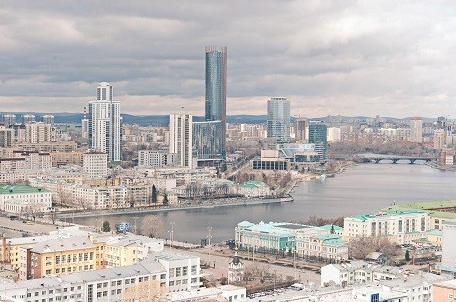
“We apologise for any inconvenience caused, but in taking the decision to cancel the event at this stage, we have endeavoured to minimise the potential disruption to our delegates’ plans. SportAccord is very grateful for the support of the City of Lausanne, Canton of Vaud, International Olympic Committee, partners, exhibitors, and delegates in recent weeks. We are now focusing on the delivery of what promises to be a superb SportAccord World Sport & Business Summit 2021 in Ekaterinburg and we look forward to welcoming our friends from around the world to Russia from 23-28 May 2021.”
Partners, exhibitors and delegates who had registered to attend SportAccord 2020 in Lausanne will be contacted shortly with further information.
Follow developments and updates via Twitter @sportaccord or keep up to date via LinkedIn and Facebook. For enquiries, email info@sportaccord.sport. -

BIE expresses confidence in Expo 2020 Dubai despite coronavirus outbreak
There is still work to do in the most challenging of times, but Expo 2020 Dubai is on schedule to open in October thanks to measures taken by the host nation.
“Putting on a World Expo, against the backdrop of the COVID-19 pandemic requires a global effort from the 192 countries taking part in Expo 2020 Dubai,” BIE Secretary General Dimitri Kerkentzes was reported as saying in Egyptian newspaper al-Ahram on 19 March.
“We continue working with the organisers and are confident in the steps that the UAE has taken to manage the spread of the virus and protect all those involved in the Expo. Expo 2020 Dubai’s pragmatic approach offers both reassurance and assistance to those who need it, and will, I believe, contribute to the successful delivery of this mega event.”
A steering committee of representatives of countries taking part in Expo 2020 Dubai met virtually on 19 March to discuss the impact of the coronavirus outbreak on preparations.
“As hosts of the next World Expo, due to open in seven months’ time, we always knew that 2020 was going to be demanding. What we could not predict is that we would be doing so in the midst of the biggest global health crisis in generations,” UAE Minister of State for International Cooperation and Director General of Expo 2020 Dubai Reem Al Hashimy is reported as saying in al-Ahram.
“These are difficult, uncertain times, which makes it even more heartening to see communities around the world facing this challenge together and to witness the incredible resilience of the human spirit against a menace that does not recognise international borders or timelines.
“Our immediate priority is the health and well-being of everyone involved in Expo 2020 Dubai, and this will not be compromised. Our monitoring of ongoing developments means we will take all sensible precautions to manage and mitigate risk to all those involved.”
The UAE has taken a range of measures to control the spread of COVID-19. Sheikh Mohamed bin Zayed, the Crown Prince of Abu Dhabi and Deputy Supreme Commander of the Armed Forces told government news agency Wam: “In the UAE, we have adopted rational and early advanced precautionary measures before other countries around us to stand up to the challenge… Therefore, the infection tally in the UAE is less thanks to our early response to contain the virus at its onset”
Construction by the organising committee is complete, with International Participant Pavilions being completed.
The value of World Expos cannot be understated. “For almost 170 years they have brought countries and people together to celebrate the best of humanity, and the fruits of our innovation and collaboration, around a theme addressing global challenges,” said Kerkentzes. -

Glastonbury 2020 cancelled with “severe financial implications”
The organisers of Glastonbury 2020 have announced the cancellation of the 2020 edition of the festival.
“This will be an enforced fallow year for the Festival,” Michael and Emily Eavis said in a statement published on their website and shared on social media.
“Clearly this was not a course of action we hoped to take for our 50th anniversary event, but following the new government measures announced this week – and in times of such unprecedented uncertainty – this is now our only viable option.
“We very much hope that the situation in the UK will have improved enormously by the end of June. But even if it has, we are no longer able to spend the next three months with thousands of crew here on the farm, helping us with the enormous job of building the infrastructure and attractions needed to welcome more than 200,000 people to a temporary city in these fields.”
Ticket holders will have the opportunity to roll their £50 deposit over to next year, and be guaranteed the opportunity to buy a ticket for Glastonbury 2021.
The organisers added: “The cancellation of this year’s Festival will no doubt come as a terrible blow to our incredible crew and volunteers who work so hard to make this event happen. There will also inevitably be severe financial implications as a result of this cancellation – not just for us, but also the Festival’s charity partners, suppliers, traders, local landowners and our community.
“We were so looking forward to welcoming you all for our 50th anniversary with a line-up full of fantastic artists and performers that we were incredibly proud to have booked. Again, we’re so sorry that this decision has been made. It was not through choice. But we look forward to welcoming you back to these fields next year and until then, we send our love and support to all of you.” -
Ten truths for the sports industry during the COVID-19 pandemic
The coronavirus pandemic is the defining crisis in the modern sports event industry.
Like me, you will have had the conversations with colleagues, clients and assorted sector experts, where you go in search of precedents. We want to gauge how bad this is, to put some sort of order on the chaos as it unfolds.
That list probably that starts at the 2007 banking crisis, then 9/11, and on through a catalogue of natural, human and economic disasters until you get to the Second World War.
So, make no mistake, this is a massive moment, the implications of which we’ll be living with for years, probably decades.
We are all waiting for the heroes of the medical and science community to do their work and report back. So anyone trying to offer solutions or predict the new normal for the sports market is not to be trusted.
But here are some things that are true:
1. Sport is important
Economically, culturally, socially. Sometimes we take it for granted or argue over attempts to quantify its importance. But even the anti-sport brigade can see and feel the impact of its absence. Its roots in communities are broad and deep.
2. Host cities are under appreciated
Most of the early industry conversation has been about the second level impacts on sports rights holders’ relationship with broadcasters and sponsors. Do not forget that government money drives the sports economy.
The sector’s biggest financial investor is not the media, corporate sponsorship nor the fans who buy the tickets. The single biggest contributor to the sports economy is the public sector, which pays out tens of billions of dollars every year globally, mainly via city and national governments which pay hosting fees and associated costs to put on major events.
3. The sports event market is oversupplied
An uncomfortable truth, but there will be a shakeout in the event sector. The calendar will be different. The market will look anew at which events really matter and which are ‘nice to have’.
4. There will be huge losses
Across the sports event sector, small and medium sized supply businesses will cease to exist. People will suffer real hardship at every level. We must act as a community to help in any way we can. We are interconnected.
5. Economics is not fair
Events that do not deserve to go under will vanish. Others will get lucky and survive, even thrive. Success and failure will be allocated in an inefficient way. We are conditioned to think in narrative stories that suggest a logical chain of cause and effect. But the reality is closer to messy chaos. It always is.
6. There will be those who suffer more and those who suffer less
The next few months are an opportunity. That is how capitalism works, it is brutal and simple. As businesses fail their assets will be feasted upon by others. There will be people whose careers will be made over the next few months. Amid the debris there will be some very undervalued events, relationships, rights and brands going for a song.
7. Radical ideas will become mainstream
Virtual sports events, esports, remote fans. Some of the stuff we have been talking about as ‘future gazing’ will make commercial sense for the first time.
8. Governments will make expensive mistakes
Government money is the engine of the event sector. Those in charge of the public purse will allocate funds to try to help. This process is inexact and unreliable and it will make some of us angry. Who will they choose to bail out, who will they leave alone?
9. Trust takes time
Some rights holders enjoy long-term relationships with their host cities, broadcasters and commercial partners that have reaped broad and real mutual benefit for years, even decades. Others are short-term, transactional relationships of convenience.
10. Number one cannot be repeated enough – sport is important
In our 14 years as an active player in the sports industry, The Sports Consultancy and TSC Legal have worked throughout some of the biggest shifts the industry has seen, some of which have been seismic in scale. It is true that we’re in new territory and there are few precedents to compare to where we are today.
Yet our experience has taught us that global sport is a resilient, endlessly creative and supportive community, and we’ll come out of this stronger. -

How isolation can make us even better connected
As sponsorship professionals, we put relationships, be they brand-to-brand or with our audiences, at the heart of everything we do. Central to these relationships is humanity: knowing what people need, why they need it and how to fulfil that need in a genuine way.
With mass sport and entertainment event cancellations and businesses across Europe moving to work from home, now more than ever, we need to find ways to stay connected and do what human beings do best: adapt.
Over the last week, we’ve seen wholesale changes from automotive manufacturers working with the government to repurpose factories and tool up to produce ventilators to LVMH’s perfume arm using their skills to make hand sanitisers.
We’ve seen sports brands changing to fit the new needs of their customers, as Peloton and the Nike Training Club extend free trials and add at-home workouts to their apps or Borussia Dortmund livestreamed ‘digital fan viewing party’ allowing them and their partners to keep in touch with fans.
We’ve also seen media tastemakers like The Drum, shifting with impressive agility, as their usual SXSW commentary from the Soho-based Drum Arms shifted to a web-based festival on the apposite topic of digital transformation. In true Drum style, they also managed to recreate their intimate, almost conspiratorial, heard-it-here-first vibe, despite only being connected to their audience through a screen: https://www.thedrum.com/digital-transformation-festival
In times like these, in work as in life, relationships come first, so influencers not brands are the likely first port of call for consumers (also known as people, including me) to seek advice, find solace and relatability, so to survive we, as organisations, more than ever need to humanise the way we communicate.
My particular interest this week has been how small, medium and even large multinational organisations are changing the way they communicate with one another, starting with LinkedIn. There’s a big shift from me to we, which, to my mind, is good news exactly when we need it!
My bet is that those who cooperate with, support and talk to one another will thrive. Now is a time for community building and collaboration, not putting your arm round your homework or selling on toilet rolls to the elderly at a mind-blowing mark up (shame on you!)
Below are some examples I enjoyed over the course of last week.
1. Make confident moves, your way. Independent Record label Defected Records, known for bringing people together through music in their own unique way, stayed true to form and didn’t wait for government mandates. They regrouped, worked out what was best for their long-term business, culture and staff and took positive action postponing all events and sending their team to work from home. Not only did they take this bold move, they proudly announced their decision and reasons to shut up shop in a public statement: https://www.linkedin.com/posts/jameskirkham_defected-have-called-it-early-were-taking-activity-6644201765761888256-pM4x
They even showed their team set up and ready for business as usual in their new settings (https://www.linkedin.com/posts/jameskirkham_the-defected-records-insta-stories-right-activity-6644321106369097728-6yQe) before launching their Defected Virtual Festival: https://www.nme.com/news/music/defected-records-announces-virtual-music-festival-in-wake-of-coronavirus-outbreak-2627828
2. Support and inspire through new communities. Start-up skincare brand By Sarah whose purpose is “to empower conscious living” were straight out of the starting blocks sharing a link to a WhatsApp community that anyone could join that would provide constant company, tips for your new home-based lifestyle and stability at this time of change: https://www.linkedin.com/posts/lauren-murrell_covid19-community-helpeachother-activity-6645285039691182080-9UEY
3. Embrace the blank slate. With no live football taking place, League Two football club Leyton Orient FC seized the chance to be on a level playing field with the largest clubs in the land and kicked off a global call to join an inter-club, inter-league FIFA tournament: https://www.linkedin.com/posts/josh-stephens-b940855a_leyton-orient-on-twitter-activity-6645294744324845568-qHMm
With well over 100 teams signing up, 3.9k retweets and 17.7k likes on Twitter (when they regularly get only one or two) they even used the popularity to call for new partners on LinkedIn and in the last week have announced both a renewal and a new deal! Go the Os.
4. Put a human face on it. Energy giant BP isn’t known for being the most accessible organisation and takes its share of flak (not always fairly), but their new CEO (who is also active on Instagram @bernardlooney_bp) has put his head above the parapet and not only to highlight the good deeds BP is doing.
He’s been discussing the current situation in the first-person, showing his personal set up, casual work gear and even used an emoji! A shout-out to both the BP workers who can’t decamp home and the wider everyday heroes in society – doctors, nurses, police, teachers shows a human quality and awareness that we should all keep front of mind: https://www.linkedin.com/posts/bernardlooneybp_last-week-i-explained-that-everyone-at-bp-activity-6645634611365982209-KgQc
5. Help us understand. A personal favourite when it comes to comms thought leadership for their Trust Barometer, Earned Brands report and crystal ball amongst others, is always global PR leader Edelman. Finger on the pulse, they started releasing easily digestible blogs week ago to handle crisis comms, specifically relating to the COVID-19 situation.
However, they surpassed themselves in my eyes two days ago when they released their 10-country Trust Barometer Special Report, acknowledging that the annual thought leadership piece they release at the start of each calendar year and dine out on for the next twelve months may no longer be accurate in these unprecedented times, yet now more than ever we need to know how to build trust among uncertainty:
https://www.linkedin.com/posts/edelman_edelman-trust-barometer-special-report-on-activity-6646049798766108672-S04z
As the global situation continues to evolve, it’ll be interesting to see how they stay on top of the crisis, but I’ve no doubt that with their insight and experience they’ll help us all to make better informed choices as it unfolds.
Needless to say, WeAreFearless are doing everything we can to ensure business as (or better than) usual, as well as cultural and commercial continuity, all of which can be followed here: https://www.linkedin.com/company/wearefearless/. If you have other examples, share them in the comments section, or with katie@wearefearless.com
European Sponsorship Association is a Strategic Partner of Host City -
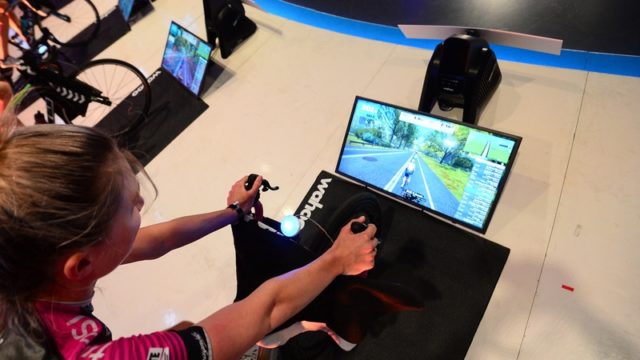
Virtual British Cycling Race Series launched on Zwift
[Source: British Cycling] The British Cycling Race Series – an eight-week series of races and workouts on popular online training platform Zwift – has been designed for people to have fun and stay active during the global uncertainty around the coronavirus pandemic.
Those wanting to pit their form against the best of British won’t have long to wait as group rides led by the Great Britain Cycling Team, including with women’s academy squad Team Breeze, are set to be introduced.
Great Britain Cycling Team women’s endurance academy coach, Emma Trott, said: “We’re in an entirely unique situation that means there’ll be no racing for a while, but it’s important that we try to find some sense of normality in all this. For us, that’s training and staying connected not just with each other, but the cycling community.
“Moving things online is a really fun way of keeping that connection and we’re all looking forward to people joining us over the next few weeks.”
All races are 30 minutes long and will be hosted on different courses, running from 24 March to 14 May.
To join a British Cycling Race Series virtual road race or time trial on Zwift, click here. Follow this link to join a workout. Visit the Zwift website to sign up for a seven-day trial. After your trial period ends Zwift costs £12.99 per month and is free for under-16s -
Tokyo Olympics likely to be postponed to 2021
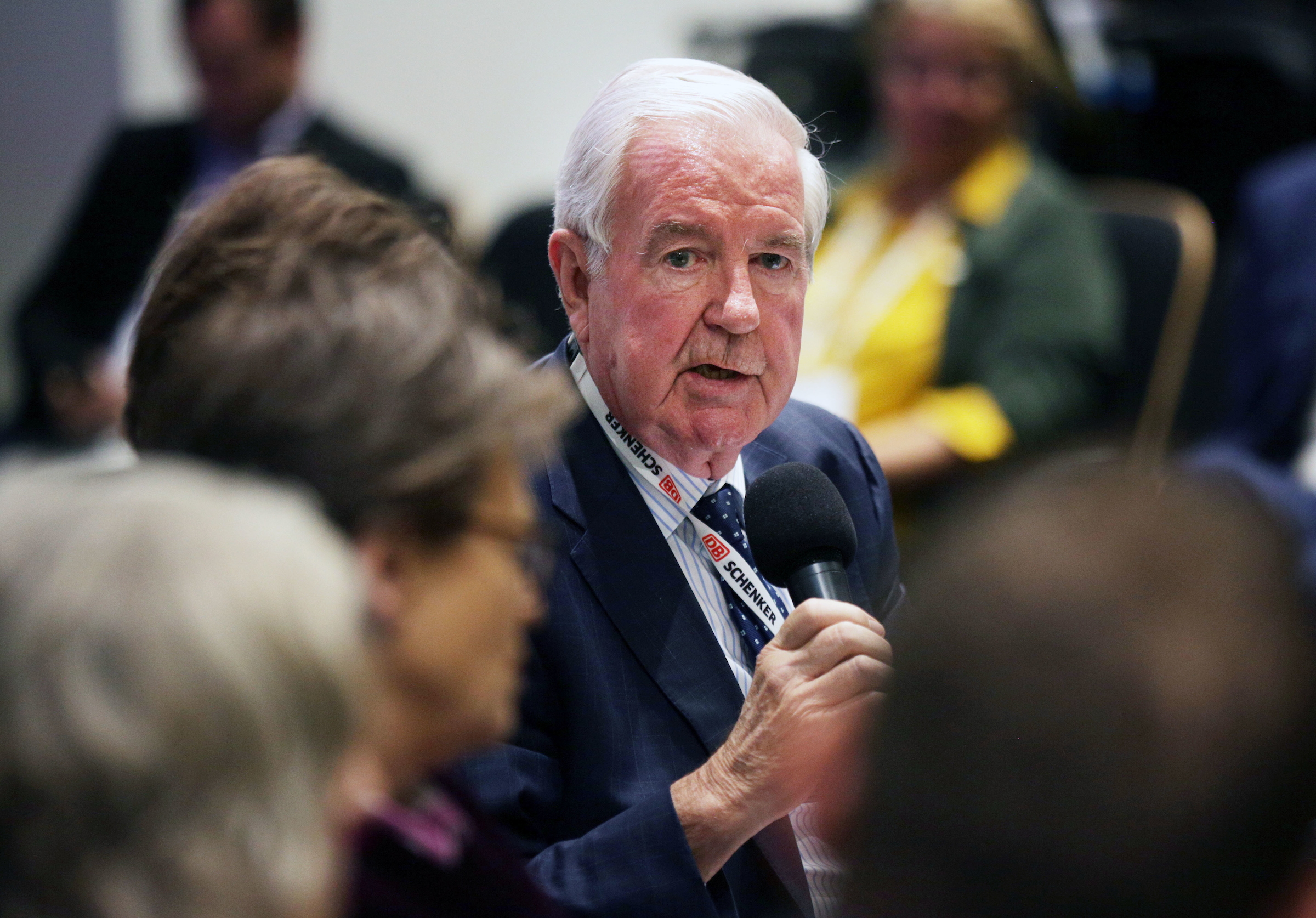
Following the International Olympic Committee’s announcement over the weekend that it is scenario planning for postponing the Games, the IOC’s former head of marketing said that the mostly likely outcome is to move by a year to summer 2021, while IOC member Sir Craig Reedie warns that this could take up to four weeks to confirm.
The comments were made on BBC Radio 4’s Today programme.
“Everyone clearly wants clarity as soon as possible. The IOC would like to announce a definitive new date as soon as they can. But they can’t do that until they’ve worked through some of the mind-boggling complexity with the Japanese,” said Michael Payne, who as IOC head of marketing launched the TOP sponsor programme that transformed the fortunes of the Games.
“I think until recently the Japanese were desperately hoping the Games would still be taking place this July. Only now are the Japanese seriously looking at plan B. The main issue is looking at all the logistics within Japan, of the venues, as to how can they effectively mothball them for whatever period of time necessary.
“And the international sporting calendar – I think it’s becoming increasingly clear that a short delay wouldn’t solve the problem. You have to look at a one-year delay, and I think that will come sooner rather than later.”
“The IOC President Thomas Bach and the Japanese Prime Minister have said cancellation is off the table. Japan has invested billions of dollars and they obviously still want to proceed, albeit with a different date.
“For the IOC they want to do everything possible to avoid disenfranchising the 10,000 athletes. Postponement is clearly where this is now going, and most likely for one year.”
Sir Craig Reedie has served as vice president of the IOC and Executive Board member. Asked what advice he would give to Japanese President Abe and IOC president Bach now, he said: “I’d be saying to them, is it possible that the contractual situation that you will have with a whole range of suppliers – it’s venues, particularly it’s accommodation, it’s with various people – can these contracts be amended to a postpone the Games to a later date? I suspect that’s why a suggested period of four weeks is required, to see if that is possible.”
“Thereafter the issue seems to be clearly twofold. Firstly, will Japan be sufficiently clear of the virus? And secondly will the rest of the world have moved on to such a stage that athletes will no longer be afraid of travelling and taking part?
“The whole region has been massively infected by the spread of the virus. Everybody is saying athletes cannot prepare properly, there is danger in asking them to do so.
“So the balance of probability is that Japan have to be asked if they can change their logistical arrangements, particularly I think in the area of accommodation.
“And if that can be done then the IOC, I think, will look at postponing the Games.”
National Olympic Committees are beginning to prepare their teams for a 2021 event, with Canada having already pulled out of 2020.