DSV is a global leader headquartered in Denmark, operating in more than 150 countries and offering end-to-end supply chain solutions backed by advanced technology and a commitment to reaching net-zero emissions by 2050. Our Fairs & Events division specializes in managing complex, time-critical logistics for exhibitions and live events of any scale. From customs clearance and on-site support to global transport and storage, we ensure your event materials arrive safely, on time, and ready for showtime.
Case Study: “Sustainable Logistics in Action: DSV’s Role at the London Marathon”
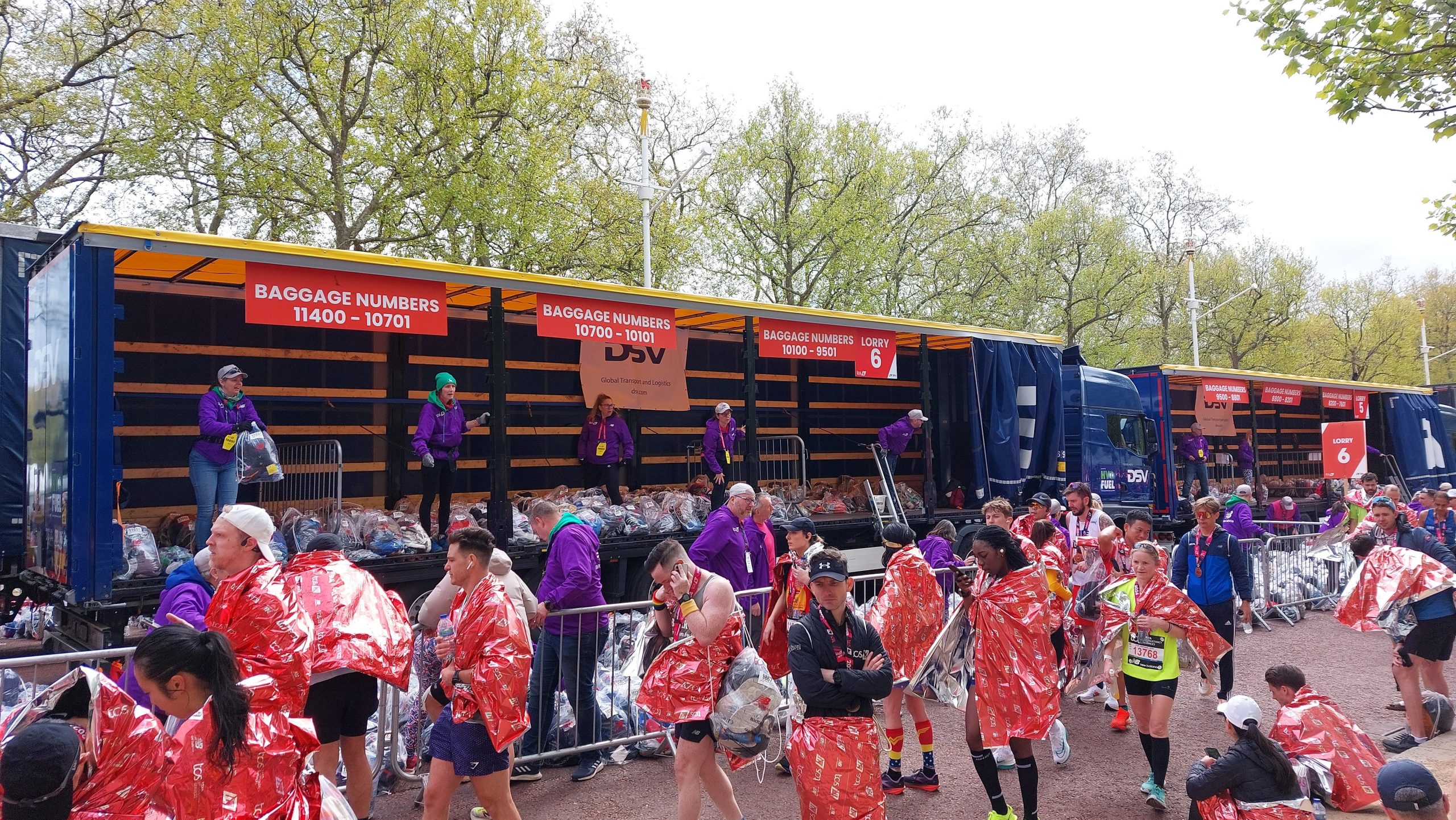
At the 2025 TCS London Marathon, DSV Fairs & Events supported the event with a logistics fleet powered entirely by HVO fuel. A total of 34 arctic trucks and 32 smaller vans were deployed, resulting in an estimated reduction of 2.7 tonnes of CO2 emissions, up to 90% less compared to conventional diesel vehicles. All vehicles were strategically positioned the evening before the event to avoid unnecessary movement and fuel consumption. This approach helped ensure that logistics operations were both efficient and environmentally conscious. The project illustrates that sustainable transport solutions can be implemented successfully at large-scale events without compromising operational performance.
Supporting Access, Inclusion, and Community
The London Marathon is known for its focus on community and inclusion. DSV’s logistics support contributed to a smooth experience for thousands of participants. Trained staff and account managers were present at logistics points to ensure reliable and accessible baggage transport, tailored to the needs of a diverse participant base. Volunteers worked closely with DSV teams, helping to facilitate the handover process with professionalism and care. This collaboration reflected the cooperative spirit of the event. Strong coordination between DSV and London Marathon Events (LME) helped create an inclusive environment where all stakeholders,from logistics teams to volunteers, worked together toward a shared goal.
Structures for Long-Term Impact
The logistics concept was based on strategic partnership and sustainable principles. In close cooperation with LME, DSV developed a system that combined environmental responsibility, operational precision, and community engagement. The use of HVO-fueled vehicles was part of a broader commitment to sustainable event logistics. The collaboration with LME also serves as a model for future projects, where shared values and proactive planning lead to meaningful outcomes. This initiative demonstrates how logistics providers can integrate environmental and social considerations into their operations, creating value that extends beyond the event itself.
Case Study: “Enabling Performance: Schenker’s Logistics Support at the World Para Athletics Championships 2025”
The IndianOil New Delhi 2025 World Para Athletics Championships marked a milestone for India as host of the 12th edition of this global event. Held for the first time in South Asia, the competition welcomed 1,182 athletes from 100 nations to the Jawaharlal Nehru Stadium in New Delhi between 27 September and 5 October 2025. As the Sole Official Logistics Partner, Schenker supported the event with a comprehensive logistics setup tailored to the needs of a high-profile international competition. The scope included eight dedicated trucks, ten forklifts, and a team of 40 skilled workers operating across the stadium and Delhi airports. Two container offices and two storage units were installed on-site to facilitate coordination and equipment handling. Operations ran around the clock during the move-in and move-out phases, managed by specialized teams and onsite supervisors. The logistics setup ensured that all sporting equipment, regardless of size, was delivered reliably and on time, allowing athletes to focus fully on their performance.
Operational Excellence in a Complex Environment
The logistics execution was designed to meet the demands of a large-scale event with precision and minimal disruption. Schenker’s approach enabled smooth inbound and outbound flows, contributing to a seamless experience for organizers and participants alike. The project demonstrated Schenker India’s capability to manage complex sporting events through structured planning, responsive coordination, and dedicated personnel. The Paralympic Committee of India acknowledged the team’s commitment and efficiency, highlighting the value of professional logistics in the success of international competitions.
A Foundation for Future Sporting Events
The successful delivery of logistics services at the 2025 World Para Athletics Championships reflects the growing role of specialized logistics in global sports. It also supports India’s broader ambition to host future events. By combining operational expertise with a focus on athlete needs, Schenker contributed to an inclusive and high-performing environment, reinforcing the importance of logistics as a strategic enabler in international sport.
Category: Event Management
-
DSV: Providing Leading Event Logistics
-
12th Host City conference drives change in global event hosting
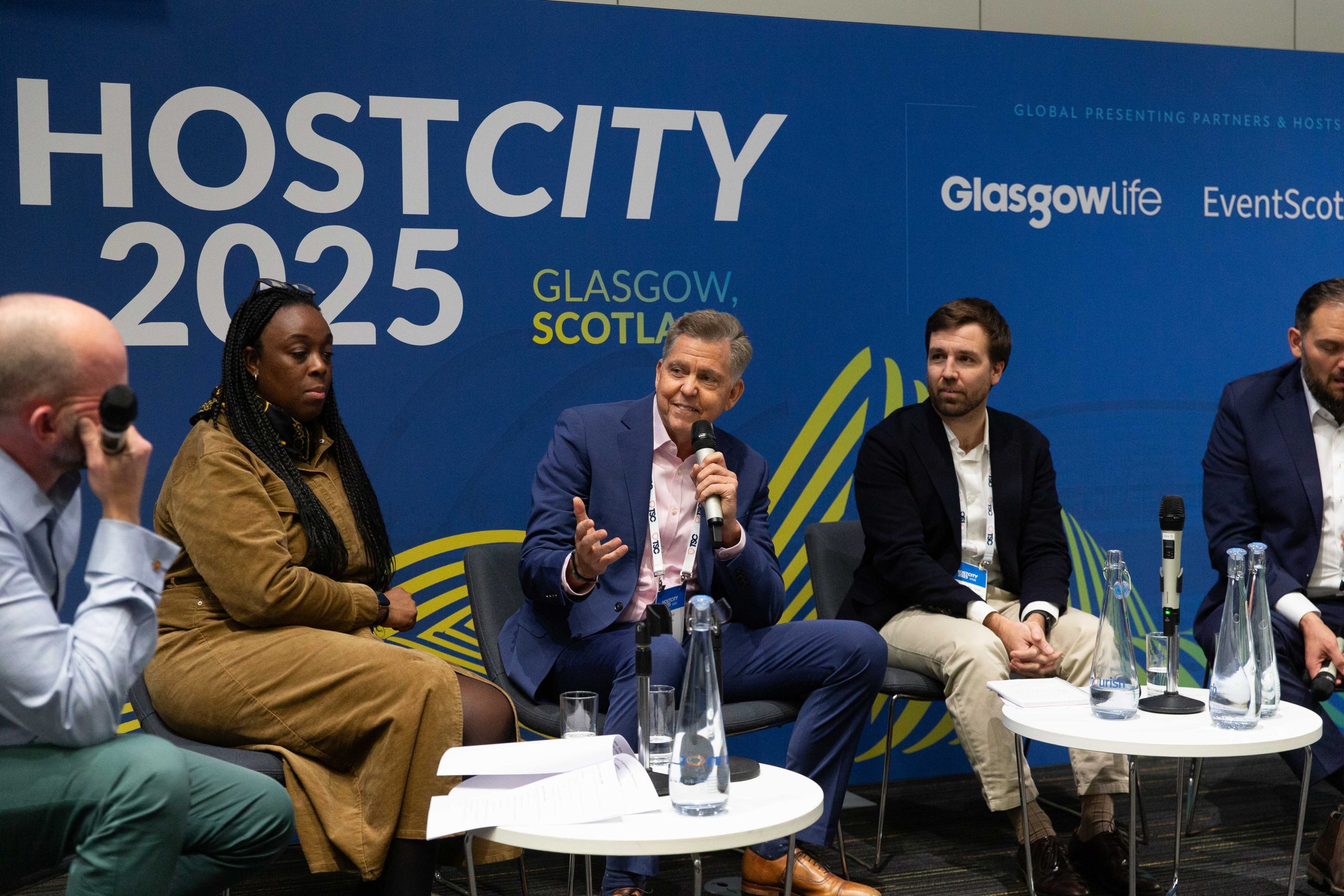
[Glasgow, Scotland] – Host City 2025, the leading international meeting for major event hosts, owners and organisers, took place in Glasgow on 1-3 December with the support of Global Presenting Partners and Hosts: Glasgow Life and EventScotland.
The 12th edition of the annual conference welcomed rights holders, city officials, organising committees and global brands to explore the theme “Getting on with the Business of Events.”
Across three days, delegates examined how major events can evolve to deliver more meaningful impact – from sustainable operations and new hosting models to technological change, job security and community benefit.
Key TakeawaysCollaboration between host cities, organising committees and rights holders should replace outdated demand-led models.
Event restructuring that prioritises meaningful impact can reduce operating costs by using existing infrastructure.
Sustainability and community-focused social impact must sit at the heart of host city strategies.
Knowledge-sharing and operational-readiness programmes can improve job security across the events workforce.
Shifting socio-political landscapes in the Middle East are enabling greater progress.
AI can support organisers but should not replace human interaction or live experience.
Evolving host–client relationships
A shift toward genuine collaboration was a clear theme.
Kay Morrison, Chief Executive of Glasgow Life, said: “We’ve learned that a proactive integrated partnership approach is absolutely key, not only to staging successful events but also to creating the environment and conditions needed for long-term economic, social and environmental impact.”
Darren Hall, Director of Games and Assurance at Commonwealth Sport, said: “The day of the dictator to a city or country who wishes to host an event, are gone… it’s now called the host collaboration agreement.”
James King, CEO of AEG Presents UK and European Festivals, noted: “We’re the guests who are coming in and we want to be invited back… that helps us deliver a shared outcome framework.”
Dominic McKay, CEO, SEC and Chair of European Professional Club Rugby (EPCR), stressed the importance of executing events with athletes and supporters in mind. “If you do that, they’ll leave happy and want to come back and experience the city and the culture.”
John David, President and CEO of the Sports Events & Tourism Association, added: “It’s a completely different customer experience and you need to nail it, and you need to know your audience.”
Driving change in event delivery
Speakers repeatedly emphasised that meaningful change is essential – whether through budget-conscious delivery or deeper community engagement.
Max Cobb, Secretary General of the International Biathlon Union, highlighted the success of the Loop One Festival in Munich’s Olympiapark, which brought a traditionally cross-country sport into the heart of the city. “You really have to have a vision and a strong stomach. And yes, people are going to tell you you’re crazy, but you have to keep going.”
Jakob Kjeldgaard Fuglsang, Manager of Copenhagen Legacy Lab at Wonderful Copenhagen, highlighted the importance of strategy. “Do we want to host stand up paddle to attract more water sport tourists? Do we want gaming events to help bring companies to our city? What is it we want to achieve?”
Rob Stull, President of the UIPM, highlighted modern pentathlon’s transformation. “When I competed, it was five days; now in LA it’s a 90-minute format… It’s all about capturing the imaginations and people’s attention.”
Harvey Goldsmith CBE, Promoter, Artiste Management Productions Ltd said the public opinion is far stronger than some organisers realise in event delivery: “The most important thing is take the view of the audience of what their experience is going to be and then follow the pathway through because the event takes care of itself.”
With just over 200 days until the Glasgow 2026 Commonwealth Games, organisers highlighted the radically different approach shaped by new structures at Commonwealth Sport and Glasgow 2026.
Phil Batty OBE, CEO of Glasgow 2026, said setting the bar high is essential. “There are very few things that are actually impossible… You do need a level of courage and a level of just sheer relentless ambition to make something brilliant.”
Chief Operating Officer Jade Gallagher added, “Without thinking differently for this iteration, there would be no Commonwealth Games… It’s a balance and we challenge ourselves every day.”
Growth markets: women’s sport, the US and the Middle East
Sarah Massey, Managing Director of the Women’s Rugby World Cup 2025 gave a keynote interview highlighting the factors that led to the tournament’s runaway success. “We started out with a really, really bold ambition,” she said. “The stats are incredible; they surpass all expectations of our KPIs and metrics, and that’s just down to a huge number of people that works on the event and the organisations that came together.”
With the 2026 FIFA World Cup and the nation’s 250th anniversary approaching – alongside LA28 and the 2034 Olympic and Paralympic Winter Games – the United States is preparing for an unprecedented period of sport and celebration.
Lynn Young, Commissioner of the US Semiquincentennial Commission said “There will be a lot of activities going on… we’ll have plenty of opportunities.”
Brett Gosper, Head of Europe & Asia NFL, and former CEO of World Rugby, highlighted why international sports were attracted to US. “The draw, whether it be for rugby or football, is you take a bigger slice of by far the biggest sports market in the world.”
The conference also explored the Middle East’s rapid development as a hosting region, from Saudi Arabia’s 2034 FIFA World Cup to Iraq’s Expo 2029 Garden.
Basim K. Ibrahim, Sport Sector Director at the Ministry of Investment, Saudi Arabia, said:
“We went from zero to 100 in almost seven to eight years… What really matters for us is the social and community impact.”
Sustainability and legacy
Discussions highlighted cost-effective sustainability and the need to retain talent in an industry often reliant on freelance expertise.
Rob Dickson, Director of Industry and Events at VisitScotland, said: “Events are much more than moments in time. They are catalysts for positive change, they drive our sustainable growth and they shape our destination rooted in the purpose to be a better, economic and socially vibrant country.”
John Langford, Executive Vice President of Venues International of AEG stressed the importance of using major names to drive change. “The most powerful influencer in the artists. If Billie Eilish says this entire event is going to be vegan and focused on sustainability, it’s the easiest way to get it into fans’ heads.”
Bonnie May, CEO of Global Infusion Group, added: “We now put vegetarian and vegan options at the top of the menu and it changes those habits.”
Chris Thompson, CEO of You.Smart.Thing. said gamifying sustainability can change people’s behaviour. “Convenience is a massive influencer. If we feel something is inconvenient, we’re turned off. Incentives are key.”
Bev Ward, COO of UK Events Limited highlighted the importance of skills legacies. “When it’s just one-off events, what strategies should you still implement to retain critical skills and knowledge between those events and how does it benefit future hosts? That is the key thing that we’re trying to challenge.”
Culture and authenticity
Speakers also stressed that culture remains central to the emotional impact of events.
Professor Gayle McPherson, Director of the Research Centre for Culture, Sports and Events at UWS, said: “The cross-over between culture and sport has existed for centuries… and what we learn is a mutual understanding and respect for each other.”
Rebecca Edser, Head of EventScotland, added: “Cultural events play a hugely influential role in stimulating connection, creativity, and identity. They create opportunities for communities to come together to share experiences and traditions, and are intrinsically linked with an authentic sense of place.”
Host City Award Winners
The second annual Host City Awards were presented at Glasgow City Chambers, recognising excellence across global event delivery.Best Event Engagement & Fan Growth: Women’s Rugby World Cup 2025
Excellence in Infrastructure & Delivery: GL Events for Paris 2024
Most Sustainable Event: Sport Event Denmark for the 2025 IIHF Ice Hockey World Championship
Outstanding Economic Impact: Thailand Convention & Exhibition Bureau (TCEB) for the Phuket Vegetarian FestivalNotable guests included Scotland’s Minister for Business and Employment, Richard Lochhead, and Olympic silver medallists and two-time world curling champions Bruce Mouat, Grant Hardie, Bobby Lammie and Hammy McMillan Jr.
Notes to Editors
About Host CityHost City is the event and media brand that connects the owners, hosts and organisers of major events.
Through its conference, exhibition, awards and online publishing platforms, Host City shares best practice within the international community of international sports, business and cultural events.
Host City events are renowned for the highest level of speakers, content and networking.
About Glasgow Life
Glasgow Life is a charity working for the benefit of the people of Glasgow. We believe everyone deserves a great Glasgow life and we find innovative ways to make this happen across the city’s diverse communities.
Our programmes, experiences and events range from grassroots community activities to large-scale cultural, artistic and sporting events which present Glasgow on an international stage.
Our work is designed to promote inclusion, happiness and health, as well as support the city’s visitor economy, in order to enhance Glasgow’s mental, physical and economic wellbeing.
About EventScotland
EventScotland, part of VisitScotland – the national tourism and events organisation for Scotland, works to make the destination the perfect stage for events by securing and supporting an exciting portfolio of sporting and cultural events.
It provides funding opportunities and access to resources and information to develop the industry. By raising Scotland’s profile as a leading events destination, we hope to attract more visitors to our shores.
It supports the delivery of Scotland’s National Events Strategy 2024-2035 which aims to build on the events industry’s many achievements to date.
The strategy refresh has been shaped by, Scottish Government, VisitScotland’s Industry and Events Directorate, Scotland’s Events Industry Advisory Group (EIAG), Local Authorities, COSLA, Trade Union representatives, and those who responded to the consultation process.
Find out more about Scotland’s National Events Strategy 2024-2035.
For further information about funding programmes and latest event news:visit visitscotland.org/events
follow @EventScotNews on x.com
follow EventScotland on linkedin.com
-
IFSC rebrands as World Climbing
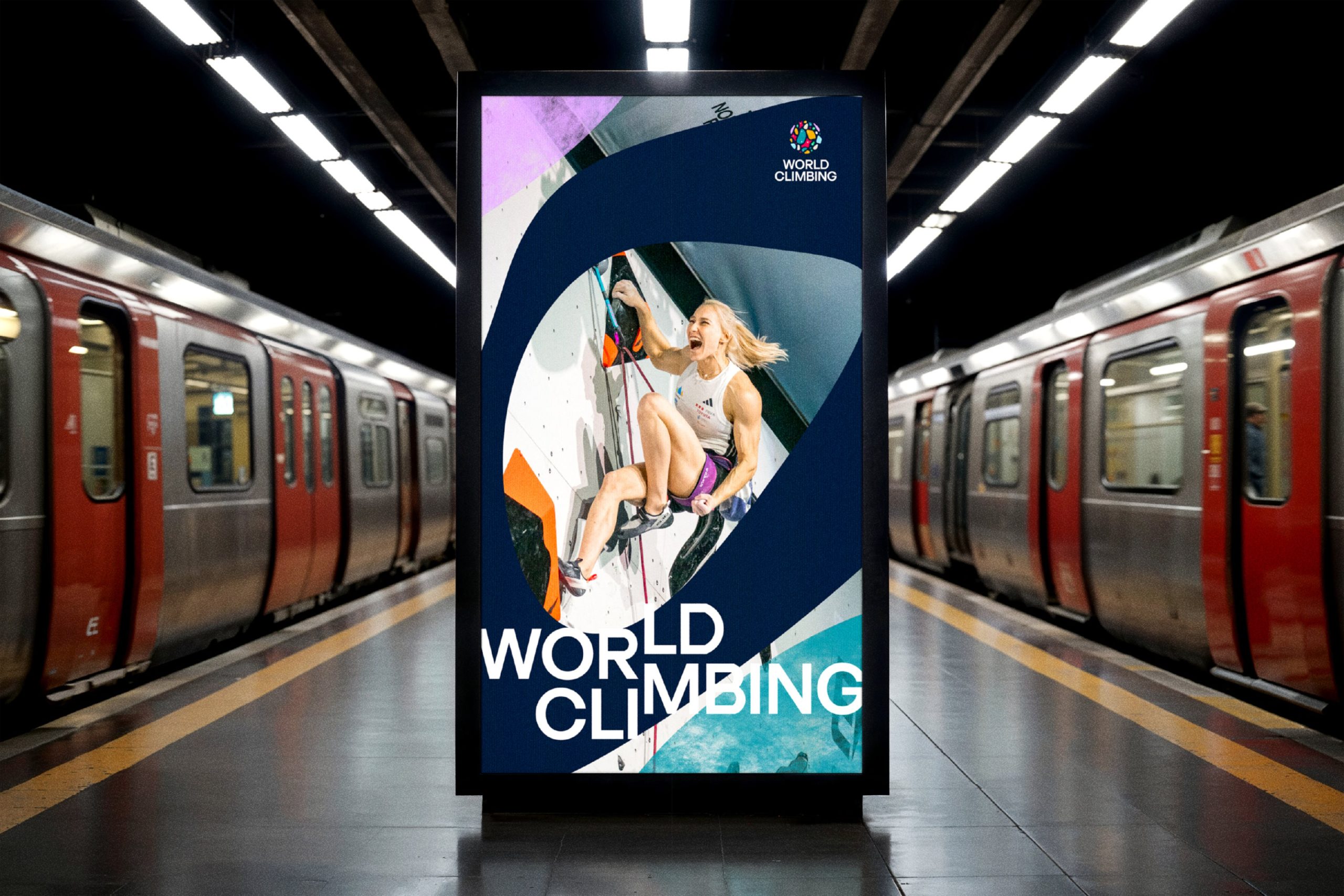
The International Federation of Sport Climbing (IFSC) has officially become World Climbing, unveiling a refreshed global identity that reflects the sport’s rapid rise and its diverse global community. The rebrand highlights the evolution of climbing, nearly 19 years after the organisation’s founding.
Built around the guiding philosophy “We get the World Climbing,” the new identity reinforces the federation’s values and commitment to openness, inclusivity, culture, and inspiration.
“Since climbing began its Olympic and Paralympic journey in 2007, our community has evolved rapidly,” said World Climbing President Marco Scolaris. “This transformation into World Climbing is another important step in the journey. It reflects our heritage while embracing the future. This new brand represents every part of our sport, from Athletes to National Federations, to global partners and more.”
As climbing continues to grow in mainstream society, particularly with younger, digitally connected audiences, the new visual identity aims to strengthen the sport’s visibility and accessibility worldwide. World Climbing’s modernised brand will help connect new participants with the sport’s history, culture and values, while also enabling a more cohesive presence across events and digital platforms.
At the heart of the rebrand is a distinctive new logo: a ‘world’ formed from climbing holds, with interwoven routes symbolising global climbing. Each colour in the new palette represents one of the sport’s three disciplines, Lead, Boulder and Speed, all in harmony with a written font that will be seen to be ascending in selected visuals.
“Climbing started from humble beginnings and has developed into the sport we always believed it could be,” Scolaris added. “With World Climbing, we are not simply adopting a new name, we are promoting a global identity that reflects our principles of inclusivity, adaptability, responsibility and adventure. We are becoming a bigger part of many more people’s lives, and this brand is built for that future.”
The transition to the name World Climbing was formally approved by national federations in October 2023 and written into the federation’s statutes, after which work began on developing the new identity.
The visual identity will be rolled out throughout the 2026 season, anchored by the launch of the new World Climbing Series, which will succeed the IFSC World Cup. The federation’s five continental bodies, World Climbing Africa, World Climbing Asia, World Climbing Europe, World Climbing Oceania, and World Climbing Pan America, will adopt the updated identity as part of the global implementation. A phased digital transition will accompany the rollout, including new broadcast graphics, event branding and online platforms designed to bring the sport to life for audiences across the world.
“We’re setting the holds on the wall of life, building the routes that we will climb together, into the future. Higher, stronger, faster; Together”, president Scolaris concluded. -
New OCA President calls for unity as Saudi 2029 Asian Winter Games postponed
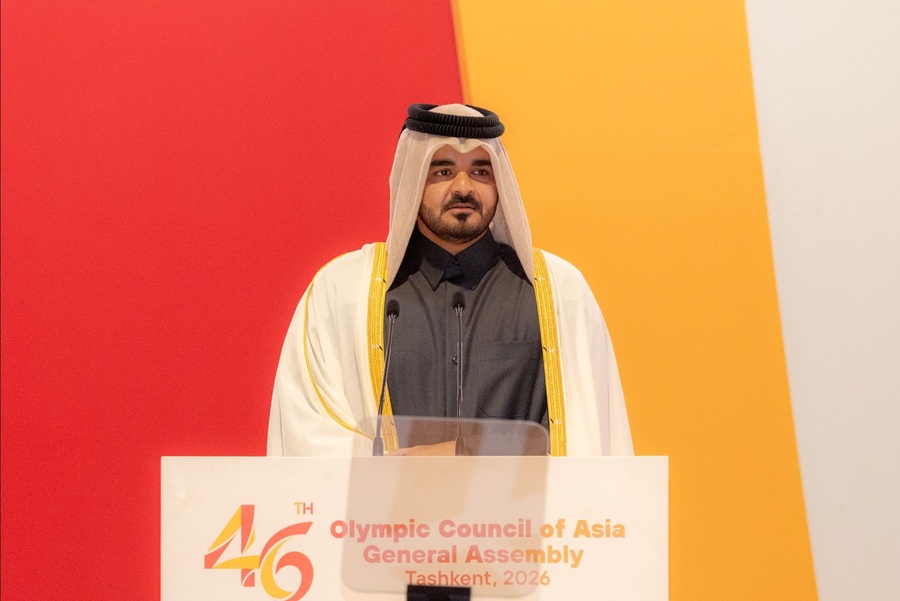
Newly elected Olympic Council of Asia (OCA) President H.E. Sheikh Joaan Bin Hamad Al Thani has underlined the importance of unity across Asia, as Saudi Arabia’s hosting of the 2029 Asian Winter Games was postponed.
Speaking following his election on 26 January, Sheikh Joaan described Asia’s diversity as a strength that must be guided by shared values.
“Asia is the largest and most diverse continent within the Olympic family… This diversity is our greatest strength,” he said, adding that unity would allow the OCA to empower National Olympic Committees and provide opportunities for young athletes.
“Together, let’s work towards a more united, stronger, and successful OCA. Together for Asia.”
The comments came soon after the OCA confirmed that Saudi Arabia’s planned hosting of the 2029 Asian Winter Games has been postponed indefinitely.
In a joint statement on 24 January, the Saudi Olympic and Paralympic Committee and the OCA said they had agreed on “an updated framework for future hosting of the Asian Winter Games, confirming the postponement of the 2029 edition to a later date to be announced in due course.”
The statement said the decision followed “extensive consultations” and reflected “a shared strategic commitment to the long-term and sustainable development of winter sports in Saudi Arabia and across the West Asia region.”
Under the revised framework, Saudi Arabia will instead host a series of standalone winter sports events in the coming years, designed to promote participation, develop athletes and officials, and support wider regional representation at future Asian Winter Games.
The OCA said it “commended Saudi Arabia’s ongoing efforts to establish comprehensive and sustainable winter sports programs,” while Saudi Arabia reaffirmed its commitment to winter sports development through continued investment in athletes, infrastructure and international-standard competitions.
The OCA had previously held discussions with South Korea about the possibility of stepping in to host the 2029 Games.
Sheikh Joaan was elected unopposed at the 46th OCA General Assembly in Tashkent, Uzbekistan, attended by representatives of all 45 Asian National Olympic Committees, as well as Uzbekistan President H.E. Shavkat Mirziyoyev.
Also serving as ANOC Senior Vice President and President of the Qatar Olympic Committee, Sheikh Joaan outlined his “Together for Asia” vision, committing to “strengthen solidarity and development throughout Asia… promote good governance… ensure OCA events and programmes are sustainable, inclusive, and credible.”
He becomes the 22nd President of the Olympic Movement in Asia since the continent’s first multisport Games in 1913 and will serve the remainder of the term following the resignation of former OCA President Randhir Singh due to health reasons.
Sheikh Joaan praised Singh’s contribution, saying, “I wish to express my sincere appreciation to my dear friend His Excellency Mr. Raja Randhir Singh for his leadership, vision, and tireless efforts during challenging times.” -
Major events heading for greater heights, says IMG President
The sports industry is entering a period of sustained growth, fuelled by rising demand for major events and live experiences, Kelly said in a wide-ranging interview with Financial Times journalist Josh Noble.
“I think we’re in a golden age for sport,” Kelly said. “Sport will fuel the experience economy to even greater heights. Live is a premium product: an intangible, beautiful element that excites people in a way nothing else does.”
Demand for tickets is expected to continue rising, particularly for global mega-events. “The Super Bowl and the FIFA World Cup this year will be huge catalysts for further growth,” he said. “There are few predictable things in today’s world, but we know there will be a packed stadium and a live audience of billions watching the FIFA World Cup final on July 19.”
He also pointed to increasing demand and attendance across TKO and IMG events.
Kelly highlighted the unique community power of live sport, citing a fan video from the 2022 World Cup final showing scenes across Buenos Aires as Argentina won. “You don’t just hear a few fans; you hear the entire city cheering. Only sport and a live experience can deliver that. It’s a cultural phenomenon you can’t replicate elsewhere.”
Hospitality, venues and live experiences are also becoming increasingly important drivers of economic growth for host cities. “There are more major stadium and arena developments, and governments and host cities recognise the importance not just for ‘soft power’, but for tourism and infrastructure, so investment in this space is increasing.”
The interview also explored the rising value of sports rights in an increasingly fragmented media landscape. “Sport uniquely plays in both the attention economy and the experience economy at the same time,” he said. “It drives additional value through scarcity, but the underlying factors are deeper: it taps into community and passion, and it requires an extra commitment from audiences to make a positive decision to engage.”
As AI-generated material floods the media landscape, authentic human-led content will become even more sought-after, he said. “If there’s a ‘human premium’, if community and loyalty are reinforced because sport cuts through a saturation of AI-generated material, then sport becomes even more valuable.”
Kelly pointed to a future combining live attendance and digital engagement. “It’s the hybrid model: live attendance and digital engagement packaged together, driving long-term growth and value. IMG and TKO sit at the centre of a lot of this through our events, operations, hospitality and global media distribution.
“Getting people together at concerts and sporting events is something special. It’s worth continuing to invest time and energy in.” -
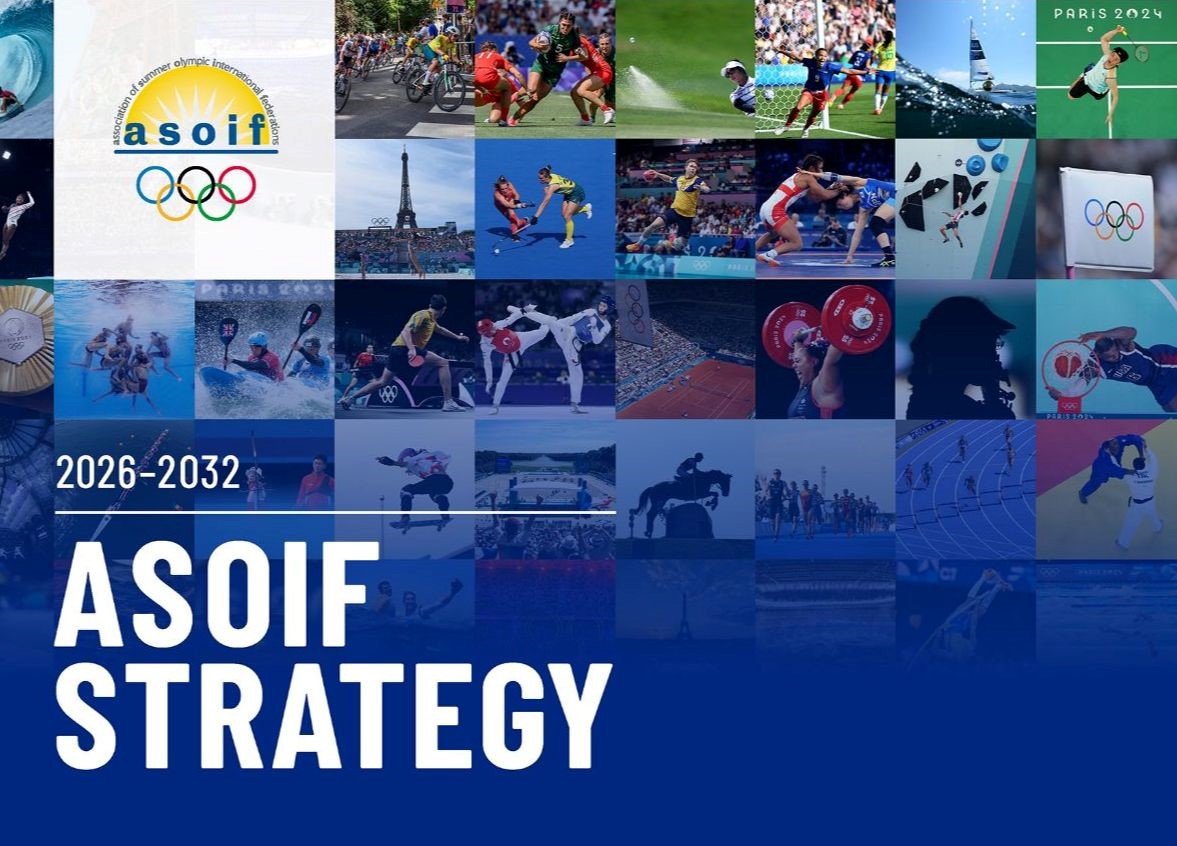
ASOIF raises voices of IFs in new strategy
The Association of Summer Olympic International Federations (ASOIF) has outlined a new long-term strategy aimed at strengthening the collective voice and influence of International Federations (IFs) within the Olympic and wider sports movement.
Unveiled at the start of 2026, the ASOIF Strategy 2026–2032 follows a year of consultation with member federations under the leadership of ASOIF’s new President, Ingmar De Vos. The strategy sets out a shared mission “to represent, strengthen and grow the collective influence of the Summer Olympic International Federations within the Olympic and Sports Movement”.
Developed through a comprehensive membership survey and consultation process, the six-year framework is designed to guide ASOIF’s priorities through the next two Olympic cycles, up to and including Brisbane 2032.
Three strategic pillars
The strategy is built around three core pillars intended to support IFs during a period of significant change for the Olympic Movement.
The first pillar, Advocacy, Influence and Representation, focuses on advancing the collective voice and autonomy of IFs, promoting high governance standards and strengthening their standing within sport and society.
The second, Olympic Games Excellence, seeks to secure more meaningful and structured involvement of IFs in International Olympic Committee (IOC) and Olympic Games Organising Committee (OCOG) decision-making, while maintaining a constructive and aligned partnership with the IOC.
The third pillar, Collaboration and Knowledge Sharing, aims to coordinate collective responses to shared challenges, encouraging structured cooperation, information exchange and member-driven initiatives.
According to De Vos, the strategy is designed to move beyond high-level principles and deliver practical outcomes.
“Our new Strategy translates three clear strategic pillars into actionable, achievable and measurable initiatives,” he said. “With a roadmap extending to 2032, aligned with the Olympic cycle, we are anticipating an evolving governance and operational landscape while remaining firmly guided by our core principles of member focus, collective value, clarity, transparency and future readiness.”
Implementation and governance focus
As ASOIF moves into the implementation phase, the role of its Olympic Games Committee has been elevated and more closely aligned with the Olympic Games Excellence pillar. The intention is to strengthen support for IFs across Games planning, delivery and operational coordination.
Good governance remains a central theme. The Sixth Review of IF Governance has already been launched, continuing ASOIF’s benchmarking work in this area, with results due to be published in summer 2026.
Progress on the new strategy will be reviewed by the ASOIF Council at its next meeting on 3 March 2026, with a more extensive discussion planned for the organisation’s 50th General Assembly, scheduled for 25 May 2026 in Baku, Azerbaijan.
Key milestones in 2026
Beyond internal governance, ASOIF and its members will be closely involved in several major Olympic milestones during the year ahead.
These include continued support for the Dakar 2026 Youth Olympic Games in October, which will mark the first Olympic event hosted on the African continent. Preparations for the Los Angeles 2028 Olympic Games are also expected to intensify, while confirmation of the sport programme for the Brisbane 2032 Olympic Games is anticipated.
Throughout 2026, ASOIF plans to maintain structured dialogue with the IOC, positioning its new strategy as a foundation for closer collaboration and a more coordinated, future-focused Olympic Movement. -

Report highlights million-dollar opportunity of reaching “anonymous fans”
A new industry report suggests that a growing proportion of fans remain “commercially invisible” to sports organisations, with implications for how major events and commercial rights are valued.
According to the Anonymous Fan Index – based on insights from senior executives across 50 leagues, clubs and rights holders – roughly one in three rights holders estimates they lose between $1 million and $5 million annually because they cannot identify and monetise much of their audience.
Across the sample, 62% believe they forgo more than $100,000 annually due to limited ability to reach or convert fans, and organisations say they only know about a quarter of their total fanbase by name or contact.
The findings arrive in a broader industry context where sports bodies increasingly prioritise direct fan engagement and data-driven revenue streams amid slowing media rights growth. Major global events such as the FIFA World Cup and the Olympics are pushing digital fan engagement strategies as part of rights and sponsorship negotiations, but the new research underscores a persistent gap between visibility and commercial capture.
The research notes that some smaller and challenger organisations may be moving faster to adapt. Over a third of respondents said that more than half of their sponsorship renewals are now directly linked to fan engagement and data, reflecting the need to maximise commercial returns from smaller audiences.
Ed Abis, CEO of Dizplai, who produced the report, says the findings should be a wake-up call. “This isn’t a data issue. It’s a commercial one. Rights holders aren’t losing fans – they’re losing the ability to know them. And if you don’t know them, you can’t grow them.”
Not all stakeholders view fan anonymity solely as a missed revenue opportunity. Privacy advocates warn that data collection – especially at scale and during major events – raises legitimate concerns.
Surveillance technologies in stadiums and digital platforms in particular can create uncomfortable environments for fans who value privacy, and European and US frameworks like GDPR and CCPA require explicit consent and transparency in data use. For some spectators, remaining anonymous is not just preference, but protection against intrusive tracking and potential misuse of personal data. -
How brave Scotland safeguarded the future of the Commonwealth Games
When the Australian state of Victoria pulled out of hosting the 2026 Commonwealth Games in 2023, citing cost concerns, the future of the mega multisport event was thrown into jeopardy – until Scotland and Glasgow intervened to keep it alive.
“The reason there was no host, frankly, was because the Games had become unaffordable,” said Ian Reid, Chair of Commonwealth Sport Scotland.
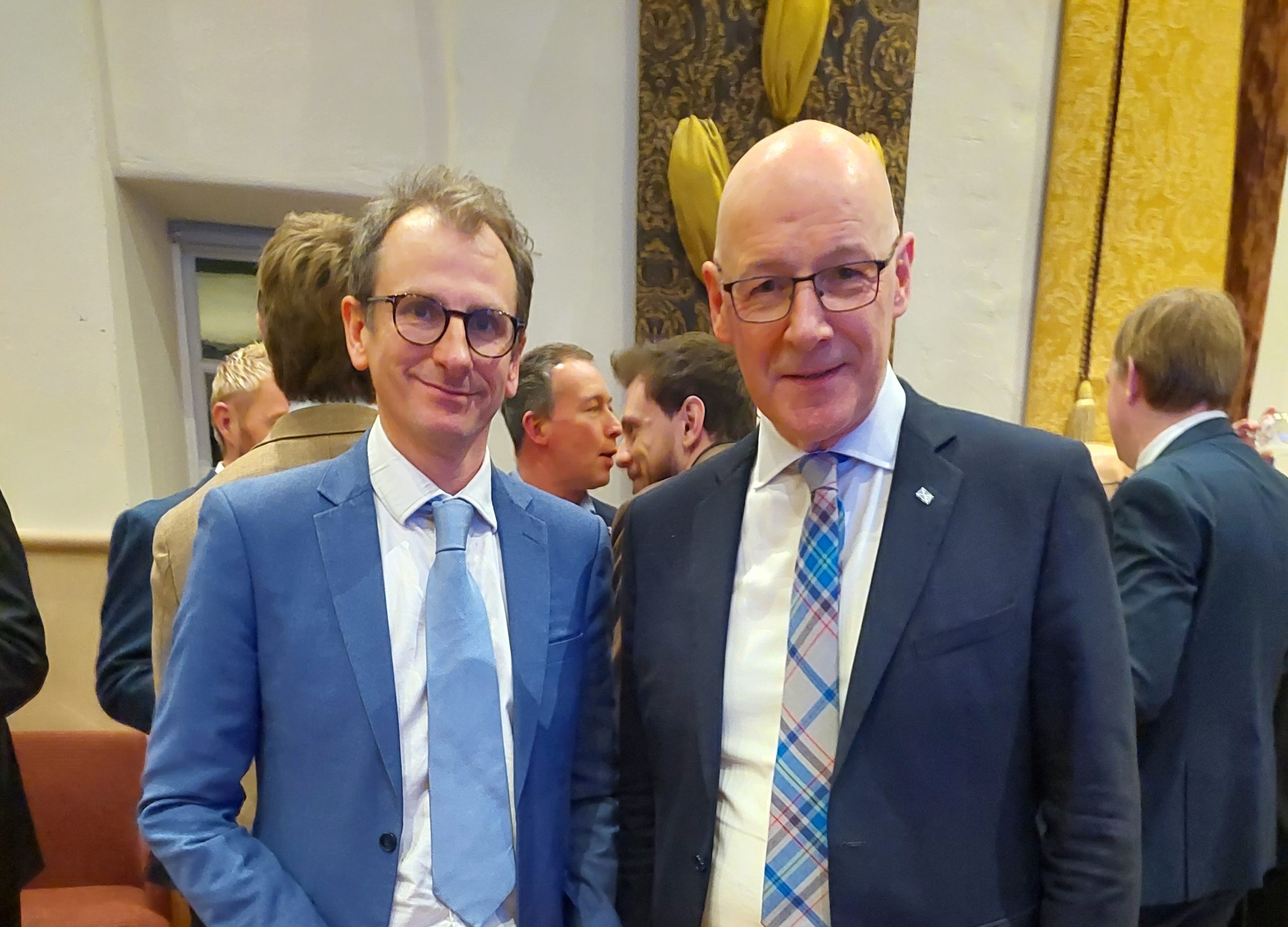
When considering stepping in to host the Games, the challenge – and opportunity – was to create a feasible model of delivery, he said, speaking at an exclusive event at Edinburgh Castle on 29 January 2026 to celebrate Scotland’s hosting of the Games.
“We thought not just about bring the Games to Scotland, but can we leave a legacy for Commonwealth Sport in terms of how the Games are delivered.”
“The world needs more partnership”
The Commonwealth Games in 2026 will feature an electrifying, but reduced, programme of sports events with participants from 74 nations and territories.
“Glasgow 2026 will be a different Games in terms of what we experienced in 2014, a revised and a developed model to make it sustainable for the future,” said John Swinney, First Minister of Scotland.
“It is about respecting what has come before and embracing the excitement of what lies ahead… but above all else, cherishing what is strong about the Commonwealth, which is friendship, partnership and shared ambition.
“The world needs an awful lot more partnership and cooperation at this moment, so let Glasgow be the focal point for so much of that in the course of this summer.”
For Commonwealth Sport, the rightsholder of the event, Scotland has not just saved the day but the future of the movement.
“We’re deeply grateful because what Glasgow is delivering is not simply a plan for 2026; it’s a signal for the Commonwealth, a signal that the Games can be reimagined, more flexible, more sustainable and more inclusive, without losing the ambition and meaning of the Games,” said Helen Phillips MBE, Vice President of Commonwealth Sport.
“And thanks to everybody’s efforts, we now have a real momentum across the Commonwealth Sport movement, with Malta hosting the 2027 Youth Games, the city of Ahmedabad in India hosting our Centenary Games in 2030. And beyond that, there’s an incredible strong interest emerging for 2034 and 2038 and other Youth Games.”
“On track to deliver”
Despite having to organise the Games in such a compressed timeframe – less than two years – the project remains on schedule.
“I am pleased to say we remain on track to deliver these Games on time and within the overall budget,” said George Black, Chair of the Glasgow 2026 Commonwealth Games Organising Company.
“But we’re now 175 days to go, and the pace has picked up, and it needs to. We need to ensure the athlete and spectator experience are positive and be reassured that transport plans are robust and that C3 contingency arrangements proportionate.”
The success of the event delivery is very much a team effort, and there are still opportunities to play a part in making it a success.
“We are open arms to anyone who wants to help us make this event altogether brilliant,” said Phil Batty, CEO of the Glasgow 2026 Commonwealth Games Organising Company.
“Major events have a magical power to bring people together,” he said. “And the idea that we’re going to have over the course of 11 days, one of those moments where you see smiles, you see joy, you see energy and you see electricity created by the act that one single athlete can do on the field of play is just phenomenal. It’s exactly what we need right now.”
“We want to be trailblazers”
“The most important thing is that we have an event for our athletes,” said Reid. “The main reason we did this at Commonwealth Games Scotland is because we know how much it means to them.”
“Glasgow standing up and being brave matches the Scottish culture and how we play as athletes: we want to be trailblazers,” said netballer Emily Nichol.
Glasgow 2026 will have the largest parasport programme in the history of the Commonwealth Games.
“Growing up I was very inspired through Ellie Simmonds,” said Para powerlifter Finlay Davidson. “To feel like I’m slowly reaching that level, and now inspiring another generation, is just amazing.” -
Irish and Norwegian events among big winners at European Sponsorship Awards 2026
Europe’s most innovative and impactful event partnerships took centre stage last night at the 2026 European Sponsorship Awards (ESA), where festivals, races, cultural spectacles, and sports events were among the winners celebrated for their ground-breaking collaborations. In front of a packed audience of 600 at London’s The Brewery, the awards recognised the power of partnerships – from music festivals and charity races to marathons, cultural celebrations, and sports spectacles.
Winning event partnerships The 2026 ESA Awards shone a spotlight on events of all kinds, proving that sponsorship can elevate experiences across every sector: Vhi Women’s Mini Marathon 2025 (Ireland) was crowned Event of the Year, proving that mass-participation events can drive both community engagement and commercial success. Gjensidige’s The Breathing Space (Norway) claimed the Festival Sponsorship award, demonstrating how brands can turn festivals into immersive, socially impactful experiences. The Pfizer Cycle 2025 (Ireland), co-organised by Titan Sports, won Best Employee Engagement, showcasing how a charity cycling event can drive internal engagement while supporting a global cause.
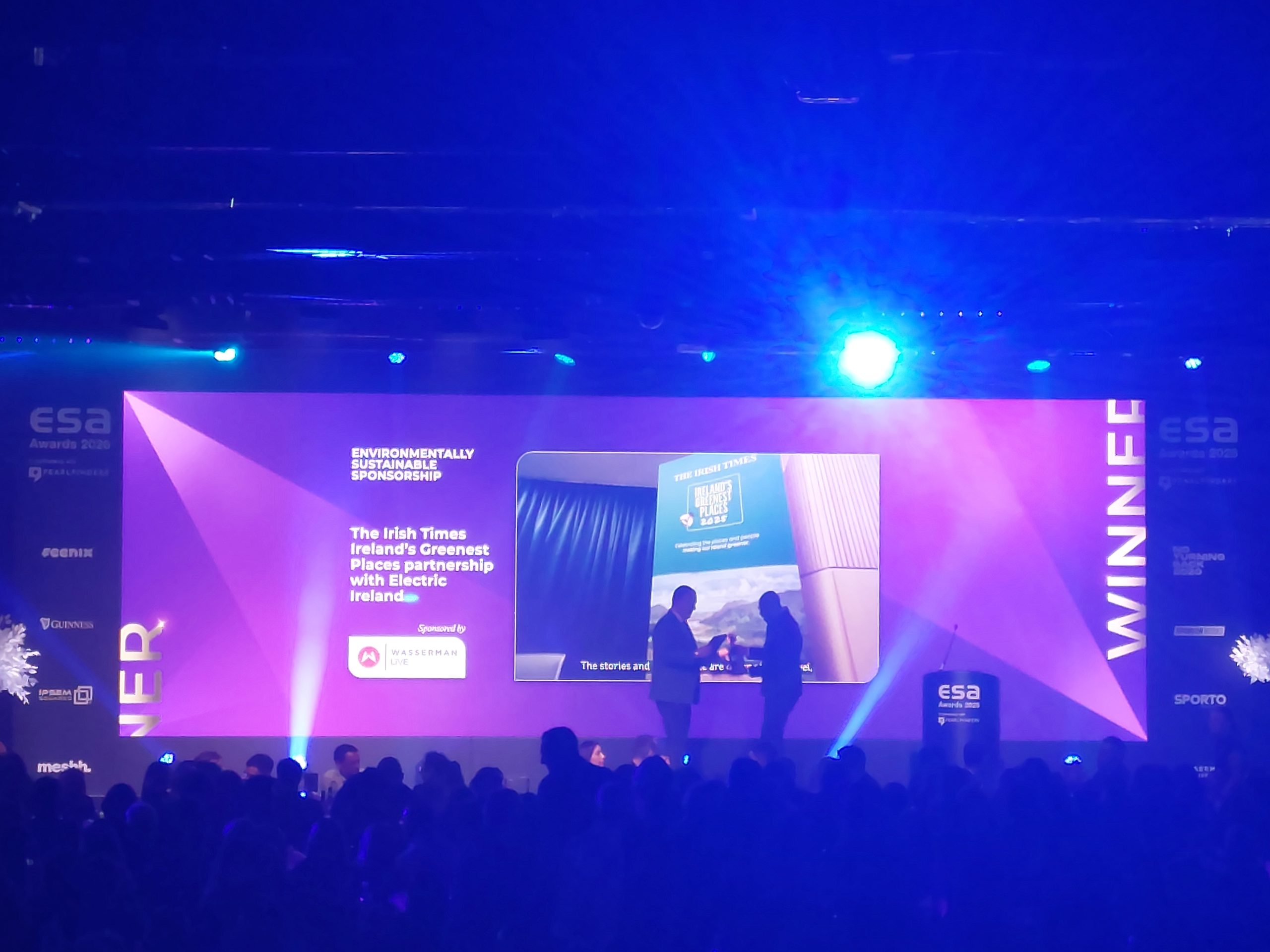
Sustainability and social purpose take centre stage The awards particularly celebrated partnerships that prioritise purpose and sustainability. The Irish Times Ireland’s Greenest Places, in partnership with Electric Ireland, won Environmentally Sustainable Sponsorship, setting a benchmark for eco-conscious events. This award was presented by Andrew Hodson of Wasserman Live. Sparebank 1 Østlandet and Retail Factory’s The Entry Room claimed Sponsorship with a Social Purpose, proving that events can drive meaningful change in their communities. Cairn Community Games won the Equality, Diversity & Inclusion in Sponsorship award, showing how local events can champion inclusivity. Canon & RNIB’s World Unseen took home ESA Sponsorship of the Year and Arts & Culture Sponsorship, making photography accessible to blind people and proving that event sponsorships can drive both business and social impact. Culture and entertainment shines RTÉ’s The Traitors dominated the TV and entertainment space, with sponsors Centra and Very winning awards for their creative activations, proving how TV events can become cultural phenomena through smart partnerships.
Tommy Hilfiger and F1: The Movie received the Chair’s Award for “disruptive brilliance”, blending fashion, film, and motorsport in a way that redefined cross-sector collaboration. Guinness secured a triple win, including ESA Best of Europe for Lovely Summer for a Guinness, showing how beer brands can own both sports and cultural moments. “Heartfelt, spirited debate” Hosted by England rugby legend and diversity advocate Ugo Monye, the 18th annual ESA Awards celebrated 26 categories of sponsorship excellence. MSQ Sport + Entertainment was named Agency of the Year, while Oak View Group won Rights Holder of the Year for the first time. “The standard was higher than ever,” said ESA Awards Chair of Judges, Matthew Leopold. “More than a few categories came down to the sort of margin that made the judges re-check their notes and engage in heartfelt, spirited debate.” -
Trivandi Wins King’s Award for Enterprise in International Trade
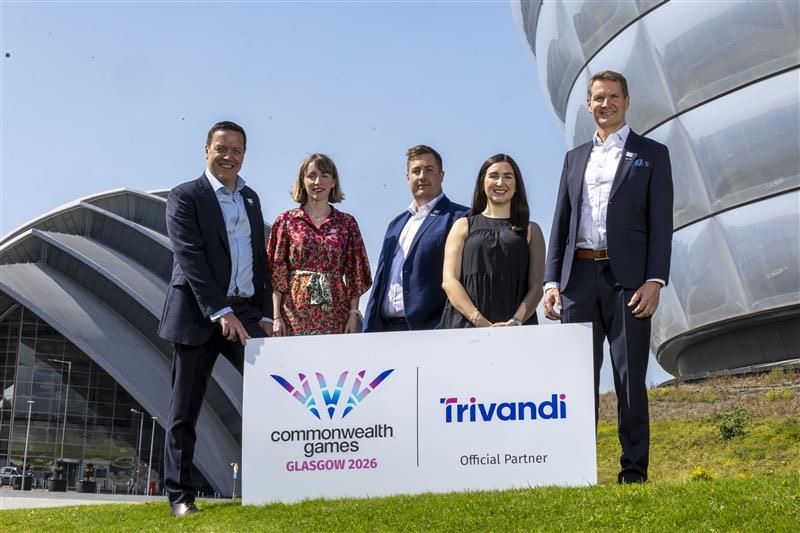
[Source: Trivandi] Trivandi has been awarded a King’s Award for Enterprise in International Trade, the UK’s highest official recognition for business excellence. Personally approved by His Majesty The King, the Award recognises Trivandi’s outstanding international growth and its role in taking British major-event expertise from London to clients in 30 countries.
Trivandi was founded in 2013 by the senior leadership team that planned, delivered and operated the 120+ venues and infrastructure of the London 2012 Olympic and Paralympic Games. Determined to put that hard-won expertise to work for clients around the world, the founders built a business with a clear ambition: to create experiences, better by sharing what they had learned, improving how complex projects are delivered, and helping host communities benefit long after the event itself.
What began with a handful of specialists in London has since grown, steadily and rapidly into a trusted partner for world leaders in sport, government and business delivering complex mega-events, venues and infrastructure globally. Trivandi today employs more than 100 permanent specialists across five global offices in London, Dubai, Riyadh, Brisbane and Los Angeles, supported by an Associate Network of more than 4,000 subject-matter experts.
In the years since London 2012, the team has worked on every Summer Olympic Games, multiple FIFA World Cups, Commonwealth Games and World Expos, alongside some of the world’s most iconic stadia, airports, government summits and visitor destinations.
James Bulley OBE, CEO and Co-Founder of Trivandi, said: “Receiving a King’s Award for Enterprise is a proud milestone for everyone at Trivandi. We founded this business in 2013 to share our knowledge and learnings from London 2012, in order to continually improve how complex projects are delivered, and help clients around the world create stronger, more lasting legacies. Today, our work spans sport, major events, venues and destinations across 30 countries. To have that effort recognised by His Majesty The King is a true honour, and one that belongs to every person who has helped build Trivandi into what it is today.”
Paul May, Co-Founder and Chairman of Trivandi, said: “Britain has a remarkable record in delivering the world’s most demanding events on time, on budget and to a standard that endures. I’m enormously proud that Trivandi has been able to take that experience into international markets – not simply to advise from the outside, but to work alongside clients, partners and local teams to strengthen how major projects are delivered. Through our projects and through Trivandi Academy, we are helping host communities build the skills, confidence and capability to benefit from the transformational projects shaping their own countries. I am grateful to every member of the team who has helped earn this honour.”
Trivandi has grown consistently in international markets, year after year, by helping clients navigate the pressure, complexity and public scrutiny that come with globally significant events, venues and infrastructure. Its integrated One Team model synchronises strategy, design and operations, bringing the right expertise at the right time to help clients move from vision to delivery. The team is embedded across Saudi Arabia’s Vision 2030 portfolio, from Diriyah and Qiddiya to the transformation of Jeddah Airport. In Egypt, Trivandi has helped reimagine the visitor experience at the Pyramids of Giza. Last year, the company delivered operations for the UAE and Australia Pavilions at Expo 2025 Osaka. This summer, Trivandi serves as Official Event Delivery Partner for the Glasgow 2026 Commonwealth Games, with specialists embedded across the organising company to plan, deliver and operate the
venues that will host more than 3,000 athletes.
The latest chapter is the United States, where Trivandi’s new Los Angeles office is supporting a growing portfolio of major projects. The team has helped Inter Miami CF open Nu Stadium in April, is Founding Advisory and Delivery Partner for Expo 2031 Minnesota and will deliver operations for the Global Esports Games in Los Angeles this December.
For 60 years, the King’s Award for Enterprise has stood as the most prestigious honour a British business can receive. Established by Royal Warrant in 1965 and personally approved each year by His Majesty The King, the Awards celebrate outstanding achievement in international trade, innovation, sustainable development and promoting opportunity. Recipients are entitled to display the King’s Awards Emblem for five years, a globally recognised mark of British excellence.