Billed as a new era in world sport, this summer’s multi-sport European Championships will elevate the profiles of host cities Glasgow and Berlin during an 11-day sporting extravaganza. The inaugural event will bring together the existing European Championships for athletics, aquatics, cycling, gymnastics, rowing and triathlon, while a new golf team championships will be held.
Around 4,500 athletes from 52 nations will take part in the championships, which are set to be held every four years after August’s event. And the UK’s biggest multi-sports event since the Glasgow 2014 Commonwealth Games is showcasing novel features in two of its venues.
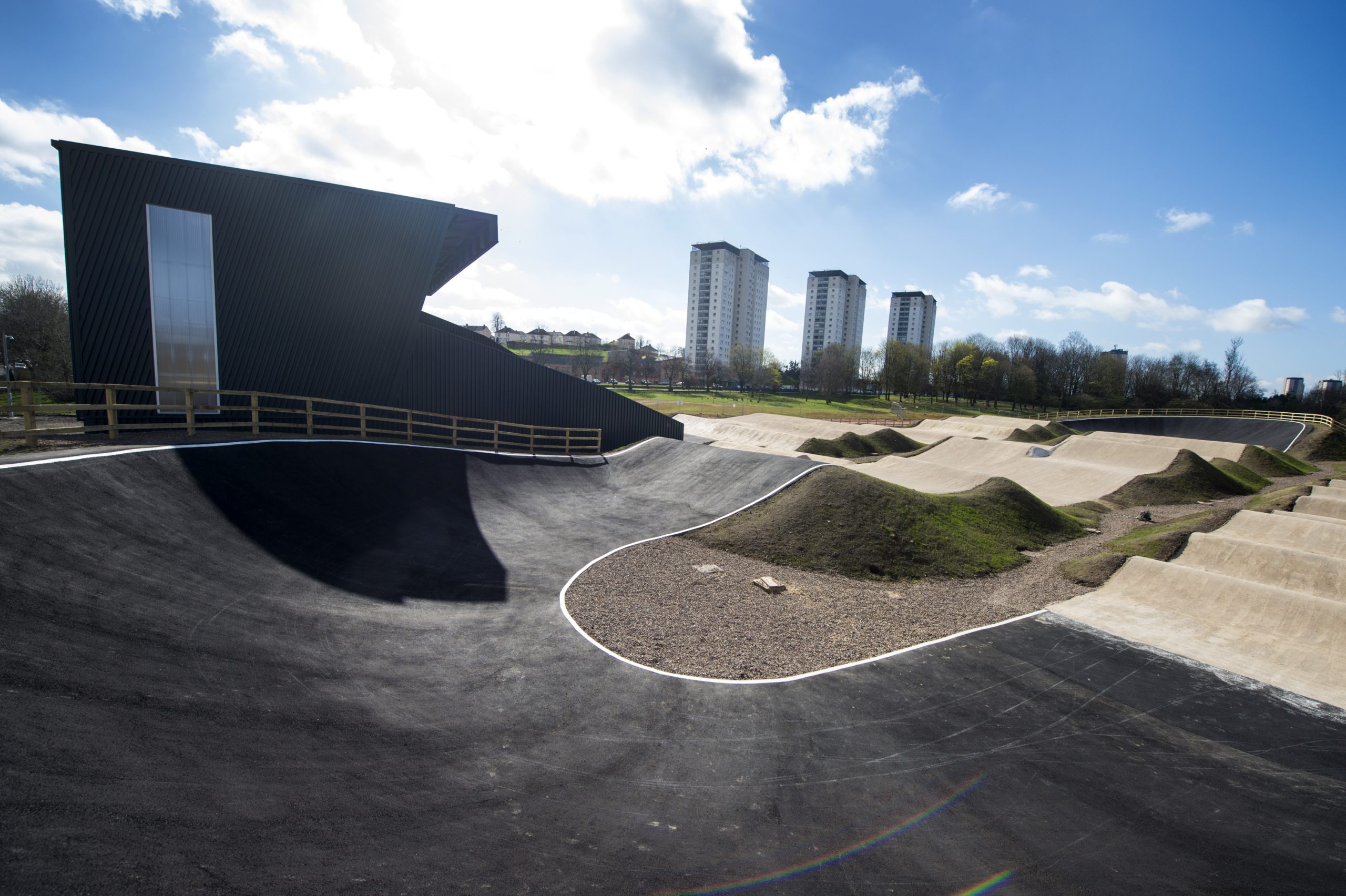
The Glasgow BMX Centre in Knightswood is the only permanent new venue constructed for the event. The first ever world and Olympic-standard BMX track for Scotland, built at a cost of £3.7 million, makes Glasgow the only city in the world with venues capable of hosting all four Olympic cycling discipline events (BMX, mountain biking, road and track) within its city boundary. All four disciplines are being staged as part of the European Cycling Championships.
The facility, completed in May 2018, features the only outdoor 8-metre ramp in the UK as well as a 5-metre starting ramp. Funded by Glasgow City Council, SportScotland, Glasgow 2018 and British Cycling, the venue is already open for use by the local community. After the championships, it will also be utilised for training by Western Titans BMX Club.
Colin Hartley, Glasgow 2018 championships director, said: “The exhilarating thrill ride that BMX will take us on in August is set to be spectacular, and we’ve got a fantastic venue for it.
“We commissioned the innovative Glasgow BMX Centre to be built especially for the championships and, in doing so, we brought Scotland its first and only world and Olympic-standard BMX track, with a legacy that will last for years to come.
“Witnessing the BMXers take to the track this August will definitely be a moment to remember.”
Swimming Pool Innovation
Home to the Glasgow 2018 Synchro Swimming European Championships, Scotstoun Sports Campus, located in the west end of Glasgow, is one of the busiest sport and leisure facilities in the city.
The campus accommodates both Scotstoun Stadium, home of the Glasgow Warriors, and Scotstoun Sports Centre. The centre is a Glasgow City Council-owned facility, featuring a 25m x 25m pool, gym, six squash courts, multipurpose sports hall, eight indoor tennis courts and the National Badminton Academy of Scotland. There are several outdoor football pitches and tennis courts.
In the wake of its successful hosting of the table tennis and squash events at the 2014 Commonwealth Games, Scotstoun Sports Campus was chosen to deliver the Glasgow 2018 European Synchronised Swimming Championships. It became an interesting and unique project.
The sport required a venue with a 20m x 25m x 3m competition pool as well as a training pool. Glasgow 2018 organisers thought outside the box and a decision was made to utilise Scotstoun by building an international standard synchronised swimming competition pool – in the indoor tennis centre.
The design team ensured all technical requirements were incorporated into the build, including the installation of a heating, ventilation and cooling system to regulate the temperature of the hall to 27 degrees.
The overlay included: excavation to create a level platform for pool filtration equipment and associated power overlay; construction of a platform to hold an HVAC unit that was craned into position over the building; and complete strip of all internal lighting to install temporary broadcast lighting, a competition PA system and screen rigging truss.
The work also involved construction of a 20m x 25m x 3m competition pool, installation of a 3.1m pool deck platform and two grandstands to accommodate spectators, athletes, sponsors and European federations’ guests, as well as installation of media and broadcast tribunes.
“We’ve got an excellent facility in Scotstoun, so it made perfect sense to build upon this in order to deliver a venue fit for our world-class synchronised swimmers,” said Glasgow 2018 director Hartley.
“Making the venue ready for the events was quite an interesting undertaking, and one we’ve really thrown ourselves into in order to make it as perfect as possible for both our athletes and attendees.
“Our grandstands will ensure everyone is able to see the show-stopping performances in this not-to-be-missed spectacular.”
For the first ever European Championships, a total of 12 venues across Scotland will be used. Glasgow hosts six sports – aquatics, cycling, golf, gymnastics, rowing and triathlon – while Berlin stages athletics at its Olympic Stadium, with the road races and race walking events held throughout the city.
More than 3,000 athletes will travel to Scotland as part of a total delegation of around 8,500 including officials, media and others. A further 1,500 athletes will compete in Berlin.
Festival 2018, an arts and culture programme, will complement the sporting competition in Glasgow and Scotland. “There is something on offer for everyone at Glasgow 2018, with elite sporting action and a unique cultural programme, and we want to see as many people as possible get out to enjoy the events whether that’s in George Square, Go Live at the Green or the sports venues,” said Scotland’s culture secretary Fiona Hyslop.
Organisers of the championships say it has a potential European TV audience of up to 1.03 billion. In a deal with the European Broadcast Union, its free-to-air members, including the BBC, will screen the event across the continent.
Category: Sporting Venues
-
2018 European Championships venues lead the way
-
Bayern talent factory with sports surfaces from Polytan
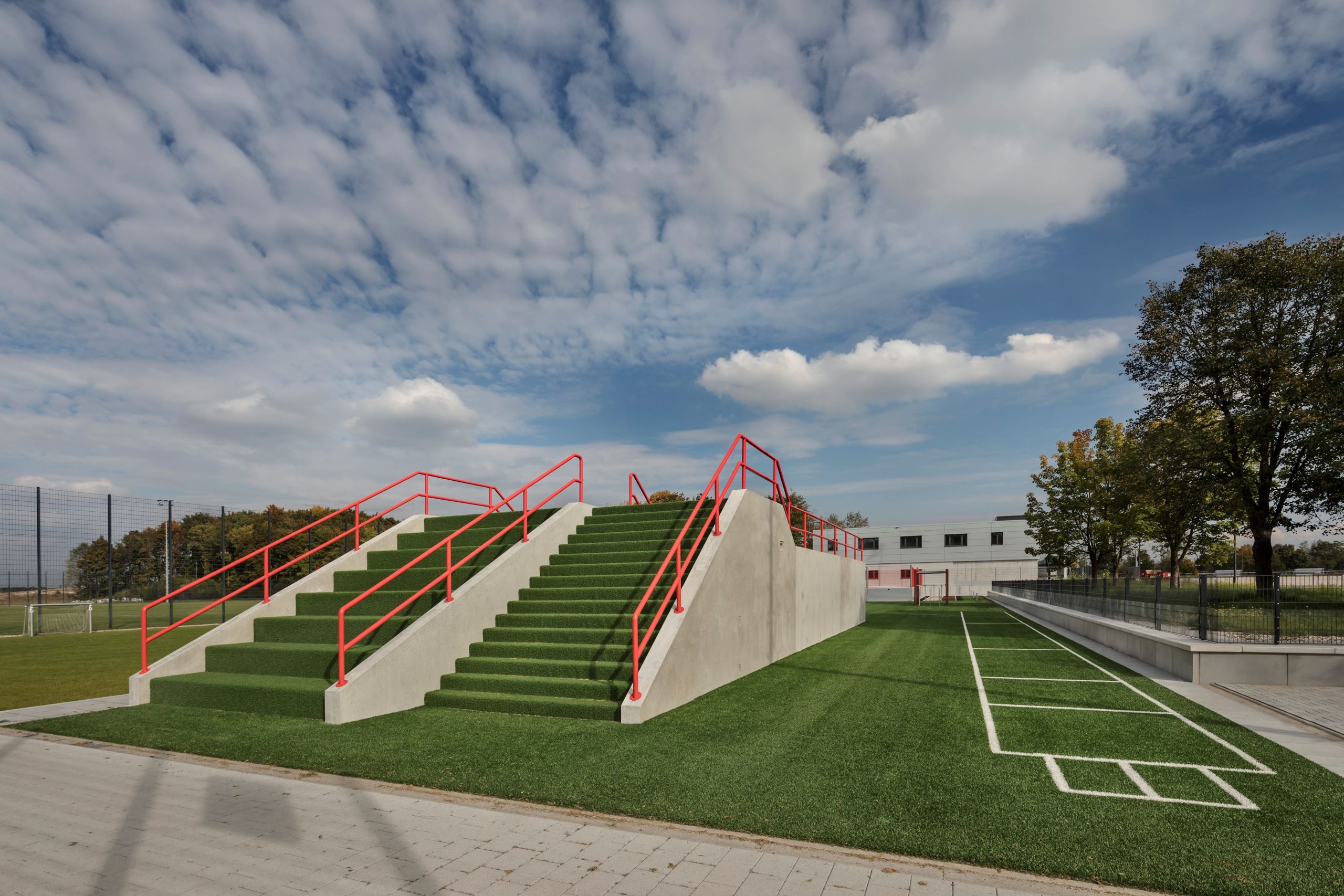
A 70 million euro state-of-the-art football academy has been built on the site of a former barracks within sight of the Allianz Arena in the north of Munich. Polytan was in on the action as the fitter of choice: the Burgheim-based sports surface specialist laid around 22,000 square metres of synthetic turf and synthetic surfaces outside – with 20,000 square metres consisting of the LigaTurf RS Pro II CoolPlus premium synthetic turf system with top quality Infill Bionic Fibre infill granules.
Great importance is attached to the development of young talent in Munich: the ultra-modern sports facilities on the club’s 30-hectare site include a sports hall, a ground with three stands for 2,500 spectators, a basketball court, a beach soccer pitch, fitness/technique/coordination areas, mini pitches, a circular track and seven full-size pitches. This unique offering is rounded off by the academy for 35 talented junior players, the club house, a cafeteria, a medical practice and much more besides.
At the request of the German record-holders, sports surface systems from Polytan were installed over an area of around 22,000 square metres on the open-air site, with synthetic turf from Polytan being laid on two full-size pitches, two mini pitches and the fitness/technique/coordination area. In addition, Polytan synthetic surfaces were the ideal choice for the basketball court and the circular track: the basketball court was fitted out with the hard-wearing PolyPlay S all-round surface, while the Rekortan M professional sports surfacing system ensures that the running track is suitable for competitions. Both areas have been laid in classic brick red, the usual colour of choice in professional facilities used for competitive events.
When it came to the synthetic turf, FC Bayern Munich opted for the LigaTurf RS Pro II CoolPlus system with Infill Bionic Fibre infill granules, which currently represents state-of-the-art technology in professional football.
Polytan had already been awarded the contract for the synthetic pitches at the training ground on Säbener Strasse by the German record-holders back in 2009 and 2011. Thomas Hanke, the Sales Director for Germany at Poly- tan, attributes the fact that the club has again opted for premium products by the Burgheim-based sports surface specialist to the continuous advances in its systems.
“In combination with the elastic base layer, which provides for long-lasting, optimum force reduction, the LigaTurf RS Pro II CoolPlus synthetic turf system is ideal for the high demands placed on it by FC Bayern Munich. The highly resilient smooth filaments are similar to real blades of grass and yet they provide consistently good playing qualities, even when the weather is cold and wet. There is no need to close the pitches, and the turf heating system means that training sessions can run continuously, even if temperatures fall below freezing or there is a bit of snow.”
The state-of-the-art Infill Bionic Fibre granules contribute to even better playing qualities and help to reduce the risk of injury to players. The EPDM granules are of an irregular shape, in contrast to the angular, smooth-cut form of conventional infill. The result is a softer and naturally springy surface.
Thomas Hanke emphasises yet another advantage: “The organic structure of the infill granules reduces what is known as ‘splash’, when material sprays up in other words, and duelling and tackling are possible to almost the same extent as on real grass.”
Furthermore, stalks of grass in two shades of green and the green infill granules give the turf a fresh, natural look which lasts all year round. The playing field is prevented from heating up excessively on hot summer days by Polytan’s patented CoolPlus technology, which incorporates UV-reflective pigments into the filaments.
This article first appeared in the Summer 2018 Issue of Host City magazine -

A strategic and practical view of safety for host cities
The success of any major tournament, and the reputation of the host city, is intrinsically linked to the safety of the venues. The UK is rightly seen as a beacon of excellence in sports grounds safety but it is true to say that this excellence has come at a heavy price: tragedies such as Hillsborough highlight how poor our sporting infrastructure and levels of safety management were.
Watching live sport is a thrilling experience and cities that are hosting major tournaments will want to be assured that the safety of all people within a venue is taken seriously. In this article we outline a strategic approach to safety and provide some detail on forthcoming guidance that will enable host cities to manage safety challenges in today’s world.
Strategic issues
Host cities should ensure, early in the development process, that they adopt an integrated approach to safety, security and service. What does this mean? It means that safety, security and customer services are recognised as interdependent and cannot be treated in isolation. Safety and security must never come at the cost of customer service.
Host cities will know that security and safety are critical factors; the attacks at the Stade de France in Paris, in November 2015 showed that major sporting venues and infrastructure are a target for terrorist activity. Furthermore, the 2017 attack at the Ariana Grande concert in Manchester, in which twenty-two were killed, demonstrated that whilst there is often vigilance and attention given to crowds entering a venue, there is often less attention paid on exit.
But what does customer service mean? It means ensuring that the experience of the visitor is also a priority and that safety and security do not come at the cost of a poor experience. Communicating effectively with spectators, for example on search regimes, will assist host cities to avoid crowd agitation.
One of the reasons that the London 2012 Olympics were so successful off the field was the presence of the volunteer ‘Games makers’ who were there to signpost and guide spectators around the Olympic Park and venue: a great example of an integrated approach.
Practical advice
The principles of an integrated approach are firmly embedded within the newly released 6th edition of the Guide to Safety at Sports Grounds. The Guide is used across the world by architects, stadium owners, host cities and venue managers to help design and refurbish stadium and operate major events in line with international best practice.
The Guide reflects today’s challenges. As examples of what is new compared to the previous 5th edition published in 2008, is guidance not only on evacuation in the event of an issue within the stadium, but also the principle of “exceptional egress” which may arise as a consequence of an external stimulus and may indeed involve internal movement or “invacuation” The full impact on the psychology of a large crowd in response to being held within a stadium is not yet known but we provide practical steps to take as this area continues to develop.
It also addresses the external factors that create interactions between the stadium, the spectators and the immediate environment, including local transport hubs (‘Zone Ex’). These external factors will be important for stadium owners and operators to consider as part of their overall event management strategy and integrated approach to safety.
In our work across the world advising on strategic safety challenges we often see stadiums that are built to a good standard, but deaths and serious injuries occur due to failings in safety management. It is hard to overestimate just what a positive impact a more strategic approach to safety management can have.
In summary, the safest venue is an empty venue, but nobody wants to see that. Adopting an integrated approach means not just recognising the skills and expertise from different parties in managing an event safely and being clear on the roles and responsibilities of each party, but in ensuring that each agency dovetails to provide a strategic approach to safety.
Further details on an integrated approach can be obtained via the Council of Europe. The Sports Grounds Safety Authority (SGSA), as the world’s leading authority on sports grounds safety, are standing members of the committee. We advise governments, host cities, tournament committees and venues on best practice in venue safety management. -

The futureproof venue is an innovation hub
The futureproof venue is a place that delivers total fan engagement and leverages technology to achieve this goal. Teams and properties need to think creatively about how to make their venues exciting today and relevant to their communities tomorrow.
To do this, questions around designing an experience that entices fans off the couch, keeps them safe, and engages them in a meaningful way should be considered early and often. Entertainment districts are rising to the challenge by creating spaces designed for multiple sports and events. Venues further strengthen their durability by enmeshing themselves in the city around them through mobility and connectivity initiatives.
If the fan is going to spend the time, money, and effort to get to the venue, they want to experience something they can’t be missed. They want to feel like they are part of something larger than themselves. Venues can deliver this by embracing their role as innovation hubs for emerging technology.
Acceleration of new technologies increases opportunity and risk
As a member of the PyeongChang Olympic Coordination Commission, our project began in 2011. In the 7-year span from kick-off to completion the world around us changed dramatically. Globally, internet access grew from 2 billion people in 2011 to 4 billion today.
This change was reflected in the 670 million people who watched the Games online, a 120 per cent increase from Sochi 2014. As applications on the Google Play store increased from 30,000 in 2010 to 3.5 million in 2018, mobile applications became the new way to access services such as ticketing and mobile ordering.
Behind the scenes, the evolution of cloud computing started to provide an easy to manage, scalable infrastructure resource which allowed companies to process large amounts of data. At the Sports Innovation Lab, we saw this change reflected in the proliferation of technology solutions. For the venues themselves, all of this change adds significant complexity but also provides opportunity to create differentiated and compelling technology-powered experiences that can wow fans.The rate of technology evolution presented challenges for the Organizing Committee of the Olympic Games (OCOG), as technology decisions are made three to five years before the first event begins. As available solutions changed between 2011 and 2018, so too did fan expectations: mobile ordering, contactless payments and high-speed connectivity became the norm (for social media and instant replays).
Despite these challenges, the 2018 Olympics was a presentation of today’s most exciting technologies, from 8K broadcasts and 5G connectivity to virtual reality. Staying abreast and ahead of the rapidly evolving technologies and fan expectations will be essential to the success of the Games in Tokyo, Beijing, Paris, and LA.
Smart venues rise to the challenge
To match pace with the rate of technology evolution, the futureproof venue must be an innovation hub where technology providers test their solutions. The pressure and opportunity for what we at the Sports Innovation Lab call a ‘Smart Venue’ continues to build. A Smart Venue removes hassle, creates memories and builds a technology platform for further innovation. We see a host of new solutions adding to the fan experience.
Technologies that remove hassle and create memories were on full display in PyeongChang. Many of the The Olympic Partners (TOPs) used the Games to demonstrate their technology capabilities on a global platform. I was able to see and hear about the future of 5G with Samsung, facial recognition with Alibaba, VR with Intel, self-driving cars with Toyota, robot assistants with Genie Talk, live athlete data used for performance and fan engagement from Omega, and contactless payments with Visa. Korea Telecom also developed a high-speed, low latency network to support mass video streaming and deliver Wi-Fi to 250,000 devices simultaneously. The Games provide one of the most visible platforms for global technology vendors, yet we also see new technologies being tested across venues on a daily basis.
Raising the innovation bar
In my final duties as a member of the International Olympic Committee, I awarded the 2018 USA Women’s Hockey Team their gold medals. Standing in the centre of the Gangneung Hockey Centre, the feeling was electric.
That energy traveled halfway around the world, where at 3 AM USA Hockey fans were watching via a 4K high-definition stream. This year’s Olympics demonstrated the opportunities and challenges live sports face in creating futureproof venues:The live experience is incomparable. No substitute will ever match the in-person live experience at a venue.
The remote experience is drastically improving. For those who cannot experience an event live, there are a growing number of digital alternatives.These two forces put an extreme amount of pressure on venues to make it easy and appealing for fans to attend live events, but it also creates a huge opportunity to improve access and engagement with sport. Venue operators will need to expand their innovation strategy for attracting foot-traffic and community value.
Some properties are rising to this challenge by adopting their identity as an innovation hub. The San Francisco 49ers have created an innovation centre to teach local school children about Science, Technology, Engineering, Art and Math at 49ersEDU. FC Barcelona has an Innovation lab to examine the future applications of athlete data. The Green Bay Packers partnered with Microsoft to create the TitletownTech where digital solutions are developed for new market challenges.
Building innovation hubs inside venues for future events, Local Organizing Committees and venue owners/operators must look beyond blueprints and budgets to create innovation centres that increase the technology IQ of the local community, and ultimately, future fan engagement. -

Safe and joyful future fan zones
Fan zones are a very attractive and important feature of major sporting events. There are several reasons for this, including:
unrestricted access;
enjoying the atmosphere of the event with other fans, feeling like you are part of it;
watching the action on a giant screen with great pictures;
without having to pay for a ticket (often very expensive) for entry to the stadium.But unrestricted access is a real problem in terms of security, since it is impossible to track who is inside the fan zone. In the event of a terrorist act committed inside, it would be a real nightmare finding victims and attackers.
Some fan zones hold more than 70,000 people. In these zones, the cost of proper security is almost unsustainable. Cities and towns that host these zones are unlikely to be assisted by the organisers, who demand many things but rarely finance them.
Let us remember that the attack in Atlanta 1996, with two deaths and a large number seriously injured, took place in a fan zone – even if it was not called that at the time.
People who attend fan zones are rarely rich people. But maintaining free and unhindered access to the fan villages is to continue running a particularly high risk, putting the life of fans in danger.
While there is no such thing as zero risk, it is possible to considerably reduce risk simply and without great expense by:
– making screening devices mandatory;
– controlling entry and exit with human security, as well as patrols inside the zone;
– charging a very low admission fee for entry badges with a credit card requiring registration on the internet, to show who is inside the zone.
Even though this will remove some of the spontaneity that makes these zones so attractive, it will significantly reduce the risk and allow fans and families to go to these joyful places that are so motivating for local authorities and their image.
For the Youth Olympic Games Buenos Aires 2018, the organisers decided that entry for spectators would be completely free of charge, but they required registration on the internet. Though this did not shorten queues at the stadium entrance, it enabled a good level of security to be achieved for an enormous crowd – and this is vital today. -

ESPN builds and dedicates multifunctional sports space in Sydney, Australia
[Source: ESPN] Community leaders, local residents, and youth gathered in Mount Druitt, Sydney on February 28 to participate in the opening of a new, multifunctional sports space dedicated to the local community and its residents. Built to Play is a global project, led by ESPN. This is the first Built to Play project undertaken by ESPN in Sydney and the eighth globally.
The courts and surrounding area, refurbished with the help of community residents and ESPN and Disney employees, will provide a safe place to play for the surrounding community, as well as offer ongoing programming using the power of sports to educate young people on key local issues. Sport for development organizations, Coaches Across Continents and Police Citizens Youth Clubs (PCYC) NSW will deliver programs on the new space.
Hosted by ESPN sports reporter and commentator, Stephanie Brantz, the event was attended by Haydn Arndt, General Manager, ESPN ANZ and Disney Media Distribution, along with ESPN and Disney employees and community volunteers who helped build the space, as well as local residents and their families. The celebration was comprised of cultural performances, special recognition of community leaders who volunteered their time, as well as sports matches open to the community.
“At ESPN, we believe that sport has the ability to transform lives, and we are committed to providing resources to enable kids in Sydney to play sports,” said Haydn Arndt. “We’re pleased to bring this global project to Mt. Druitt and to collaborate with love.fútbol, PCYC NSW, and Coaches Across Continents, to create this space in a community where there is a need, as it can truly make a difference.”
love.fútbol, which is known for building community sports facilities all over the world, played a key role in selecting Mount Druitt, Sydney, for the new space based on need, population served and socio-economic status. The unemployment rate is over 13% higher than the Greater Sydney average, alongside a number of social challenges in the area including drugs and alcohol abuse, high crime levels, insufficient transportation and limited services for youth.
“We are fortunate to have such significant support from ESPN, Disney, love.fútbol and Coaches Across Continents who share our vision of empowering young people,” said Dominic Teakle, CEO, PCYC NSW. “Participation in sport is a powerful tool for change. It allows young people to feel part of a team and that sense of belonging gives them the support to face their challenges both physical and mental. PCYC sits at the heart of most NSW communities and this facility will enable us to better serve the community of Mount Druitt.” -
CSM Live contracted to make 2019 Pan & Parapan American Games look and feel great
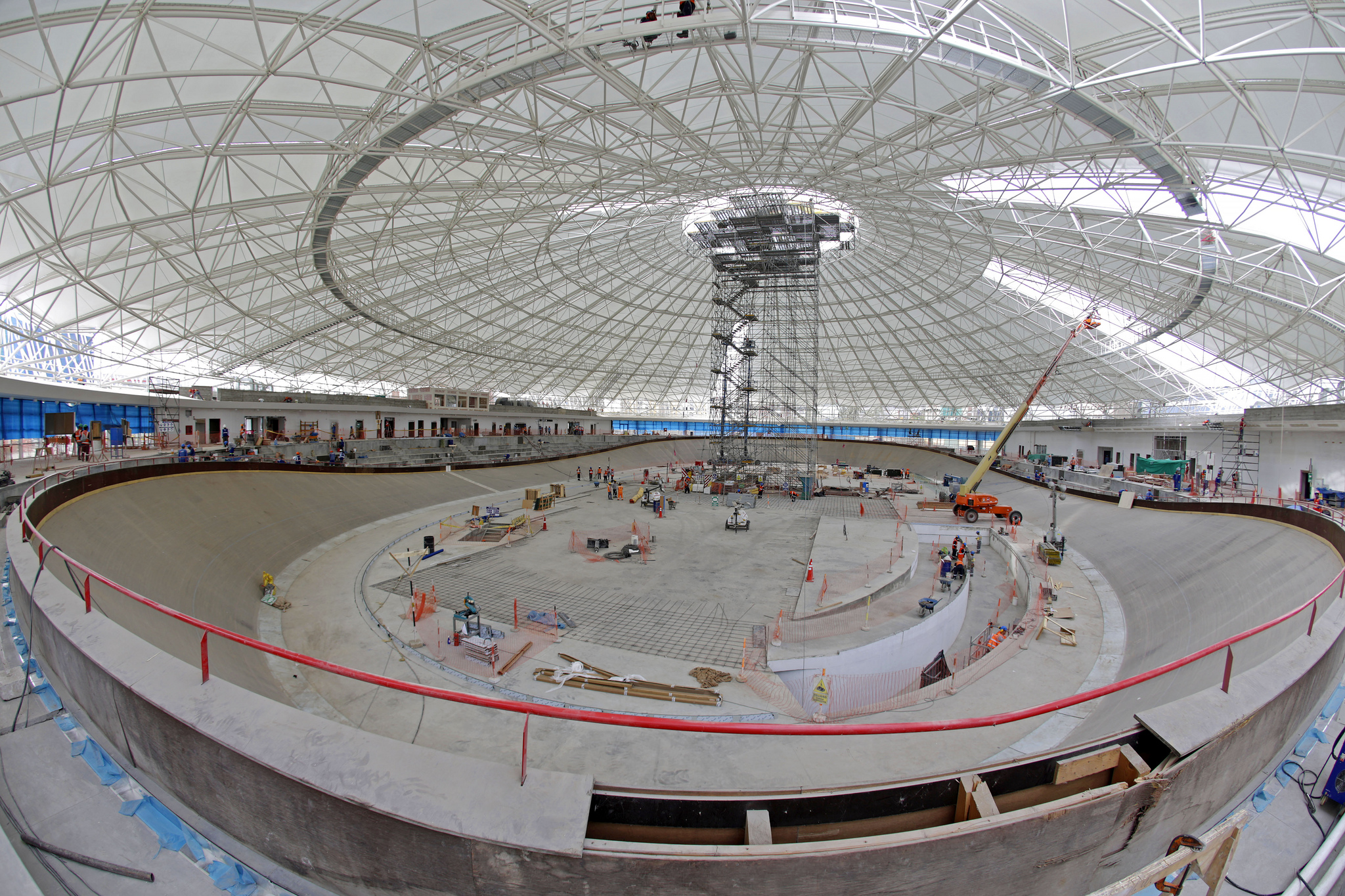
[Source: CSM Live] Following a competitive tender process, conducted according to strict Peruvian procurement laws, CSM Live will perform a number of duties to bring the Games to life. These include scoping all participating venues, both competition and non-competition, for which the agency will then devise a Look and Feel concept as well as a Wayfinding concept, followed by preparation of artwork for all elements, which will be distributed to appointed local suppliers for production. CSM Live will then manage all production and installation of the Look elements, to ensure a world-class Look and Feel for these prestigious championships.
On-site in Lima, CSM Live will be working predominantly with local companies who have been selected through a tender process by the Organising Committee. This collaboration and sharing of expertise will help to leave a positive legacy for the businesses and communities involved.
The Pan American and Parapan American Games are a major sporting event in the Americas featuring summer sports in which thousands of athletes and Para athletes participate in a variety of competitions. For the Pan American Games, Lima is set to host 6680 athletes from 41 different nations of the Americas, competing in 39 different sports from July 26 to August 11. For the 2019 Parapan American Games there will be 1890 Para athletes competing across 17 Para sports in 18 disciplines from August 23 to September 01.
Prior to the tender process CSM Live attended two Department of International Trade missions in Lima, along with two independently organised visits to Peru to help forge relationships and enable them to build knowledge and confidence ahead of formally pitching for the work. These visits were carried out in 2017 and 2018.
UK Minister of State for Trade and Export Promotion, Baroness Fairhead said: “I am delighted to see that CSM Live is joining so many UK companies by growing their business through exporting – and offer congratulations to them for winning this contract to support the 2019 Pan American Games and Parapan American Games in Lima.
“The Department for International Trade stands ready to help businesses like CSM Live through our Export Strategy, which includes encouraging businesses to export, providing practical information, connecting UK businesses to overseas buyers and providing support through our award-winning export credit agency, UK Export Finance.”
On their upcoming work for the Pan-Am Games and Parapan American Games, Giles Stanford, Director of Global Events at CSM Live, stated “It’s an honour to be involved in the largest sporting event ever held in Peru. We’re already set up and working in this amazing country, using our expertise to ensure that Lima looks amazing. It’s going to be a fantastic event and we’re excited to be helping give the competitors, fans and all involved an engaging and truly unforgettable experience.”
-
The Association of Global Event Suppliers (AGES) launches its Practice Guide
[Source: AGES] With the increasing demands on infrastructure, the limited lead-time and the ever louder call from an increasingly sceptical public for cost effective and sustainable solutions, temporary event infrastructure – often described as event overlays – becomes an indispensable factor for event organisers and city authorities.
And yet, the event suppliers’ industry has been challenged by respected commentators suggesting that “organisers often do not understand your business”. AGES now steps forward to take up that challenge and provides an inclusive, encyclopaedic reference for event organisers, building authorities and governmental bodies and all those involved in event infrastructure:
• Disseminating information to illustrate the potential of event overlays;
• Highlighting and educating on key issues; and
• Facilitating timely and productive engagements between organisers and the industry.
Written by recognised industry experts and supported by governmental bodies like the IOC and the UEFA, this 200-page document provides a sequential narrative explaining the activities and procedures in chronological order, to facilitate a general understanding about overlays for large events. The writers describe and illustrate the relevant strategies, principles, methods, procedures and other information to guide the reader step by step through the delivery process; i.e. from Planning, through Procurement to Delivery of the event overlay works.
The “Practice Guide for the Planning, Procurement and Delivery of Temporary Infrastructure for Major Events”, Part I General Information is now available, and offered in two formats, at https://www.ages.international/shop/ which also offers an informative preview of the publication.
“We are proud to present this Guide – Part I. It’s the first ever document explaining the specifics of our business from the initial conception phase to the reinstatement works, says Daniel Cordey, Chairman of AGES at the Annual Event 2019 in Dubai. And next year, we will publish Part II Technical Information providing an overview about all works categories”. -
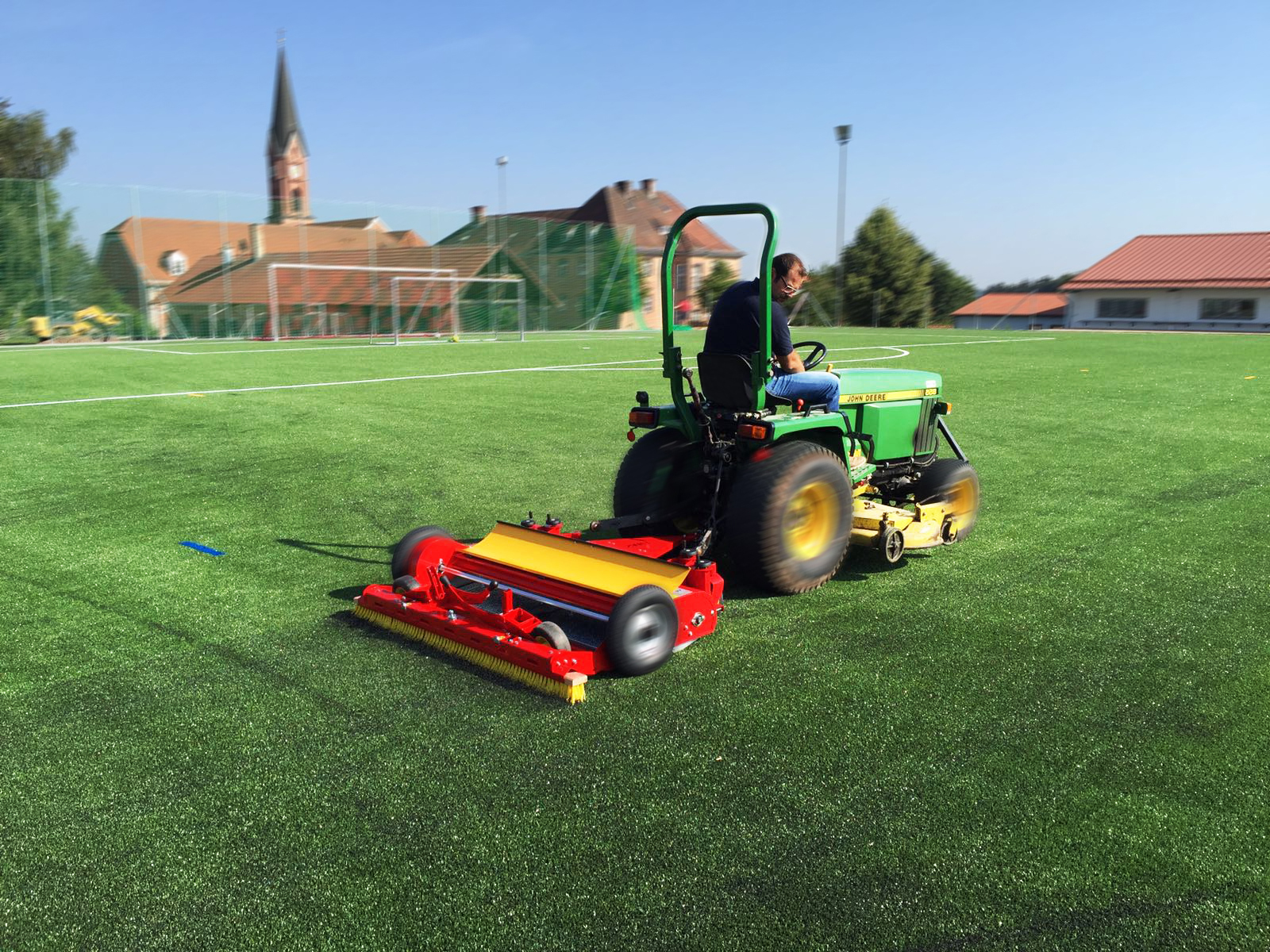
Plastic tactics: how to keep infill out of the environment
As awareness of plastic pollution grows, it is more important than ever to handle machines that install, maintain and care for synthetic turf correctly to avoid discharge of filling granules into the environment.
Installation
Exact and precise installation is crucial, using machines with orbital oscillating brush systems that erect the artificial turf fibre while incorporating filling material, which can be dosed via outlet systems in the required kg/m2.
This procedure ensures the infill material is filled to an even level, to support and stabilise artificial turf fibre while preventing any incorrectly applied filling material being discharged by environmental influences or during play.
When installed correctly, there is no need to refill the system later, with the risk of overfilling that brings.
Regular Maintenance
SMG recommends a weekly and demand-based removal of coarse dirt, such as stones and leaves. This should be done using a rotary brush with an adjustable vibrating screen to receive overlying coarse dirt and the top layer of the filling material. Simultaneously, dirt and filling material should be separated, followed by metered return of the filling material on the artificial turf.
A constant amount of infill material in the sieve is a decisive factor for returning it to areas that have become depleted by game activity.
Regularly following our guidelines and the corresponding driving tactics ensures artificial turf fibre is supported at a uniform height by filling material, lengthens the service life of the artificial turf system and prevents discharge of filling granules into the environment.
Advanced Maintenance: Decompaction
Filling material should be loosened and levelled monthly using tow-behind devices with flexible and adjustable prongs to stabilise artificial turf fibres, keep them upright and prevent infill from being discharged into the environment. This also prevents compaction and drastically reduces or eliminates the amount of material for refilling.
SMG guarantees a care process that ensures eroded polymer filling granules can be extracted and properly disposed of. Annual deep cleaning is carried out by with a rotary brush with a sieve function to clean even deeper layers of the filling material.
The collected litter material is spread evenly after being separated from fine dust, microparticles, worn fibres and other contaminants using a filter element with a separation efficiency of more than 98 per cent at 4 micrometres.
Repatriation
Filling material can reach the side of the pitch through play operation, incorrect care or adverse weather. To prevent it from being carried into the environment, the filling material must be returned to the pitch using rotary brushes with a sieve function.
A constant amount of infill material in the sieve insert is the deciding factor in returning infill material into the areas “unfilled” by the game activity. The sieve insert acts as a material reservoir during this care process. Alternatively, sweeping brushes can be used, but only if they are adjustable in their working width.
For more information on our guidelines please contact SMG – we are looking forward to assisting you with details
https://www.smg-gmbh.de/en/ -

Venue leaders share insights ahead of Host City 2019
John Langford, COO, AEG Europe
“I’m delighted to be joining the Host City conference in Glasgow this year. This is a great opportunity to share my thoughts on the industry and meet fellow representatives of sports, business and cultural events from across the globe. I look forward to discussing the challenges of hosting major event at our venues as well as discovering new opportunities and learning from industry leaders.
“There are a number of important considerations venue planners should bear in mind to maximise commercial opportunities around entertainment facilities.
“Firstly: know your market. Understanding consumer needs allows venues to match their capabilities with the expectations of customers. Providing a product and service that customers want is the foundation upon which volume and margins can be maximised.
“Secondly: flexibility. Entertainment venues cater for multiple different audiences. Every night, our arenas see a different crowd from the night before. Facilities need to be able to flex from champagne at Andrea Bocelli to burgers and beer at ZZ Top – and everything else you can imagine in between.
“Thirdly: adaptability. Customer expectations change over time, particularly as new generations spend more in the entertainment sector. Flexibility in spaces, premium experiences, food and beverage options, access and add-ons all mean that venues need to adapt quickly to market changes.”
David Tunnicliffe, Commercial Director, GL events UK
“Host City will bring together excellent people for open, frank discussions that will allow us to share experience and best practice. The event combines a formal daytime structure with a more relaxed evening format, meaning there will be plenty of opportunity to network with new and existing contacts.
“Are venue owners fully informed of the opportunities available to them in terms of temporary infrastructure? Yes and no – this really depends on the venue, as well as the culture and approach of its team. General awareness can be an issue; while some venues can be so focused on their permanent USPs, or under so much pressure to deliver prices-per-head, that they overlook the many exciting creative possibilities presented to them by temporary infrastructure.
“Other venues – Hampton Court Palace is an excellent example, frequently innovate; enhancing and adapting their offering with temporary infrastructure and overlay.
“At GL events we’re no stranger to all kinds of requests and the possibilities for venues are endless. We’ve created entire temporary venues to support refurbishment works, as well as creating everything from additional kitchens to ballrooms, reception spaces and exhibitions on behalf of all kinds of venue. Temporary swimming pools, ice-rinks, cinemas… working with venues is a great opportunity for event infrastructure suppliers to showcase their creativity.”
Ken Scott, Head of Inspectorate, Sports Ground Safety Authority
“A pressing concern for organisers is what we call ‘Zone Ex’ – the area outside the stadium that spectators must pass through when arriving or leaving an event. Stadium and event operators can no longer think about the stadium in isolation. When considering safety, the sum of all parts is critical to creating as safe an environment as possible for everyone at the ground.
“We’re looking forward to attending Host City 2019 to discuss this and other safety issues with colleagues from across Europe.”
Cyril De Greve Managing Director, European Stadium & Safety Management Association (ESSMA)
“We’re expecting more and more from stadium management today. Besides a range of new threats (terror, drones, cyberattacks, etc.), it is not only delivering a safe and secure event; people are looking for unforgettable experiences. Training staff to deliver these experiences is definitely a challenge, as well as the demand for a more multifunctional use of the venues.
“Our aim at Host City 2019 is to share knowledge, expertise and exchange best practice with all delegates linked to the stadium industry.”
Host City 2019 takes place in Glasgow on 26-27 November, organised with support from EventScotland. For more information visit www.hostcity.com