The bidding process for the 2023 Rugby World Cup has yet to be announced but several countries have already expressed an interest, with key figures in Ireland and Argentina speaking out on the subject over the course of the week.
Leo Varadkar, Minister for Transport, Tourism and Sport said in an interview with Newstalk that hosting the World Cup would be an achievable target for Ireland, with “at least 50/50” chance of winning a bid.
“It’s probably the biggest thing that Ireland can do, as a small country. You could never really have the Olympics in Dublin; we wouldn’t be able to do the Euros, but we could do the Rugby World Cup.
“New Zealand, which has inferior infrastructure, fewer people and is further away from the big rugby markets did really well.”
Varadkar also stressed that an Irish Rugby World Cup would be a profitable one. “There is a cost of upgrading some of the stadiums… and you do have to pay the IRB a big fee to host it – somewhere in the region of EUR 120m. If we can get more people than came to New Zealand then we can bring in the region of EUR 200m in tax revenues.”
The International Rugby Board (IRB) has not yet set its fees and the bid process is not expected to be launched until later in the year. Nonetheless, countries are positioning themselves early to bid for the event.
Argentina’s IRB Council Representative Agustin Pichot confirmed in December 2013 that his country would bid for the 2023 event. England player Paul Tait is another longstanding proponent of an Argentinian Rugby World Cup as a way of internationalising the sport.
“With growth comes progress and for international rugby this has seen an increased awareness outside of the traditional strongholds,” Tait wrote on his blog this week. “The landscape will continue to evolve and having Argentina host Rugby World Cup 2023 would contribute to this by directly rewarding excellence and encouraging progress.”
Recent editions of the Rugby World Cup have loosely alternated between Southern and Northern hemispheres. The 2023 edition will follow two northern editions: England 2015 and Japan 2019.
Whether the IRB will consider a FIFA-style continental rotation policy remains to be seen. The Rugby World Cup is the IRB’s main breadwinner, accounting for more than 90 per cent of revenues.
And with the IRB investing more than £330m worldwide between 2009 and 2016, a solid financial return from the World Cup will be seen as a major priority to enable the development of the sport internationally – wherever the event is hosted.
Other nations interested in hosting the 2023 World Cup include South Africa, France, Australia and Italy.
“Enormous prestige”
Speaking to HOST CITY from the IRB’s Dublin headquarters, head of communications Dominic Rumbles said “We are delighted that there is such a strong level of initial interest in hosting Rugby World Cup 2023.”
“To see such interest before the tender process has been launched further underscores the enormous prestige of the Rugby World Cup brand in the global marketplace.”
Explaining why there is such interest, he said: “Increasingly, governments and local agencies are seeing the event as a strong economic, trade, tourism, profile and feel-good platform and a means to inspire young people to get active, which is great.”
This view is backed up by Varadkar. “The most important thing from a government point of view is participation,” he said.
“More people are participating in sport than in the past – it’s around 47 per cent now, which is a big improvement. There are health benefits, psychological benefits and there are social benefits, and that’s why governments get involved in sports.”
Speaking to delegates at a Bandon Rugby Football Club event on Thursday, MEP Sean Kelly said a Rugby World Cup bid is “an opportunity for Ireland and we should do all we can to seize it.
“It could be a hugely historical all-island event, with massive economic and tourism benefits.”
The former president of the Gaelic Athletic Association emphasised the strength of the country’s infrastructure – a key consideration in evaluating bids for major sports events.
“Ireland has excellent sporting facilities and proven ability to successfully host major sporting events, such as the Special Olympics,” said Kelly.
“Ireland could easily accommodate the 377,000 or more visitors that the Rugby World Cup would bring to the country.”
Blog
-
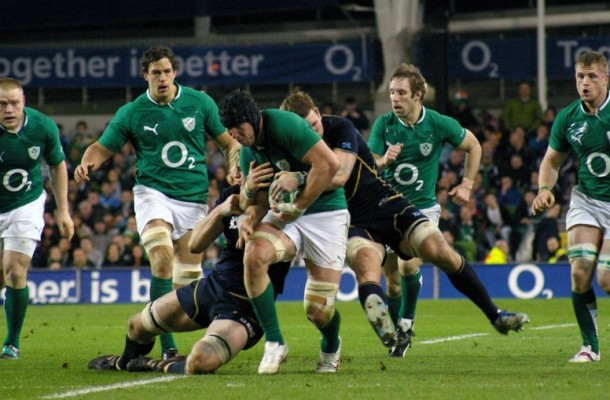
IRB delighted by interest in 2023 Rugby World Cup
-
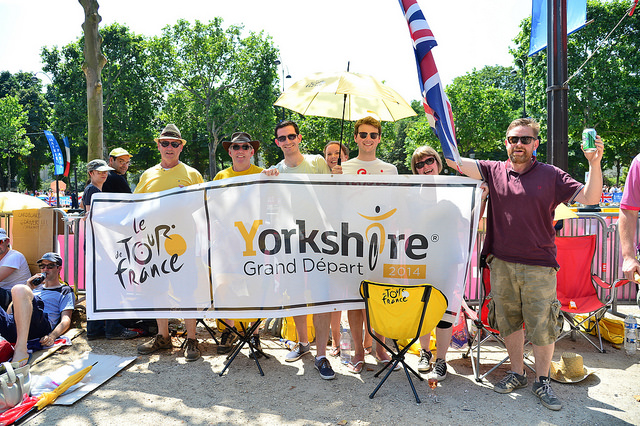
12,000 volunteers selected for Grand Départ
The first ever Tour Makers for the Tour de France in the UK have been selected, with 12,000 volunteers making it through the application process.
The Tour Makers will be the volunteer force that will welcome millions of visitors when the Tour de France Grand Départ begins in and races around Yorkshire for two days and a third stage from Cambridge to London.
Official applications have been now completed and almost 12,000 people have been named as successful applicants and will become a Tour Maker.
The Tour Maker project is a first in the history of the Tour de France’s Grand Départs.
Gary Verity, Chief Executive of Welcome to Yorkshire, the agency who led the winning bid to bring the Tour de France to Yorkshire and devised the Tour Maker idea, said: “The response since day one to the Tour Maker project has been unbelievable, with so many people wanting to be directly involved with this historic event.”
Volunteers will be allocated roles by the TDFHub2014Ltd, who are delivering the Tour Maker programme.
Nicky Roche, chief executive of TdFHUB2014 Ltd, which is managing the Tour Makers, said: “I’m delighted that we now have our 12,000 Tour Makers for Stages 1, 2 and 3. The team look forward to working with them and getting to know them over the next few months as they go through the training process.
“The standard of applications was incredibly high, and I know that come July we will have a team of incredible, talented Tour Makers ready to welcome the world to the Tour de France in the UK.” -
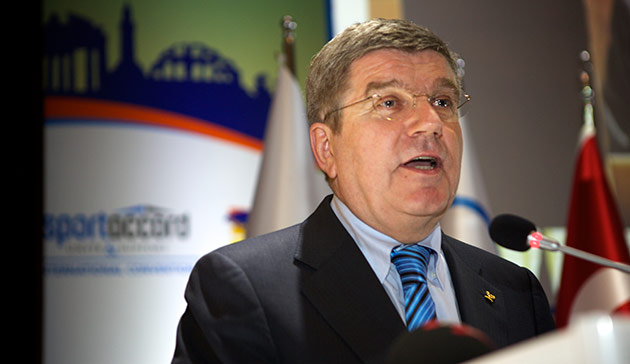
IOC puts all energy into averting Rio2016 failure
The President of the IOC, Dr Thomas Bach, confirmed at SportAccord Convention on Thursday that a series of measures have immediately been put in place to safeguard the success of the Rio 2016 Olympic Games.
The IOC has asked leaders in Brazil to form a high-level decision making body to coordinate the delivery of the Games. The IOC is also going to appoint a local project manager, with task forces focusing on specific areas.
Gilbert Felli, Director of Olympic Games at the IOC will head up a more frequent schedule of visits, starting on Monday. International federations have also been asked to play a more hands-on role in monitoring progress.
“We know about these concerns because of the excellent work of our coordination commission, which had a visit to Rio not too long ago,” President Bach said at the SportAccord Convention in Belek. “We believe Rio can and will deliver excellent Olympic Games if the appropriate actions are taken.”
Leaders from within the IOC met with the Rio 2016 organising committee on Wednesday at SportAccord Convention. “We had a very constructive atmosphere with our partners in Rio,” said Bach. “We then decided some measures – how we can accelerate the works in Rio, how we can work even closer with the organising committee and the different levels of government.”
The organising committee has been asked to put in place a high-level decision making body representing different levels of government, communication between which is a particular area of concern.
“We will use our experience in organising Games to show how different levels of government can work better together; how seamless cooperation can be done; how can you then benefit from experience of previous organisers or experts.”
Bach cited Sochi as a good example. “We would enhance the collaboration with international federations and other key stakeholders in the way we had also done for Sochi, where we had dedicated project teams from different international federations going to Sochi on a regular basis.”
The three task forces to be established will focus on construction, operations and engaging population behind the Games. Mindful of recent protests directed towards the FIFA World Cup, Bach stressed that the benefits of hosting the Games would be communicated to the local population. “We have a very good message to send to the Cariocas because these Games will leave a great legacy for the city.”
Bach was keen to emphasise that the supervisory measures have not been enforced onto the Brazilian organisers. “We have informed the organisers and the major of Rio. The measures were very much welcomed. The strong commitment by the IOC to the success of these Games is very well appreciated by our Brazilian partners.
Gilbert Felli is due to meet with Mayor Eduardo Paes and the organising committee on Monday 14th April. “A couple of days later he will have his first assessment,” said Bach. “This is not a measure being imposed by the IOC; this measure has been appreciated by the Organising Committee and the mayor.”
Unwilling to apportion blame at this stage, Bach said: “This is about 2016 and we have to look to the future, and not start a blame game for the past. We need all our energy; we share their concerns to make the games a success.
“After the closing ceremony of the Olympic Games we can come back to this question of responsibility. But now we would not act in a responsible way if we were to look too much into the past.” -
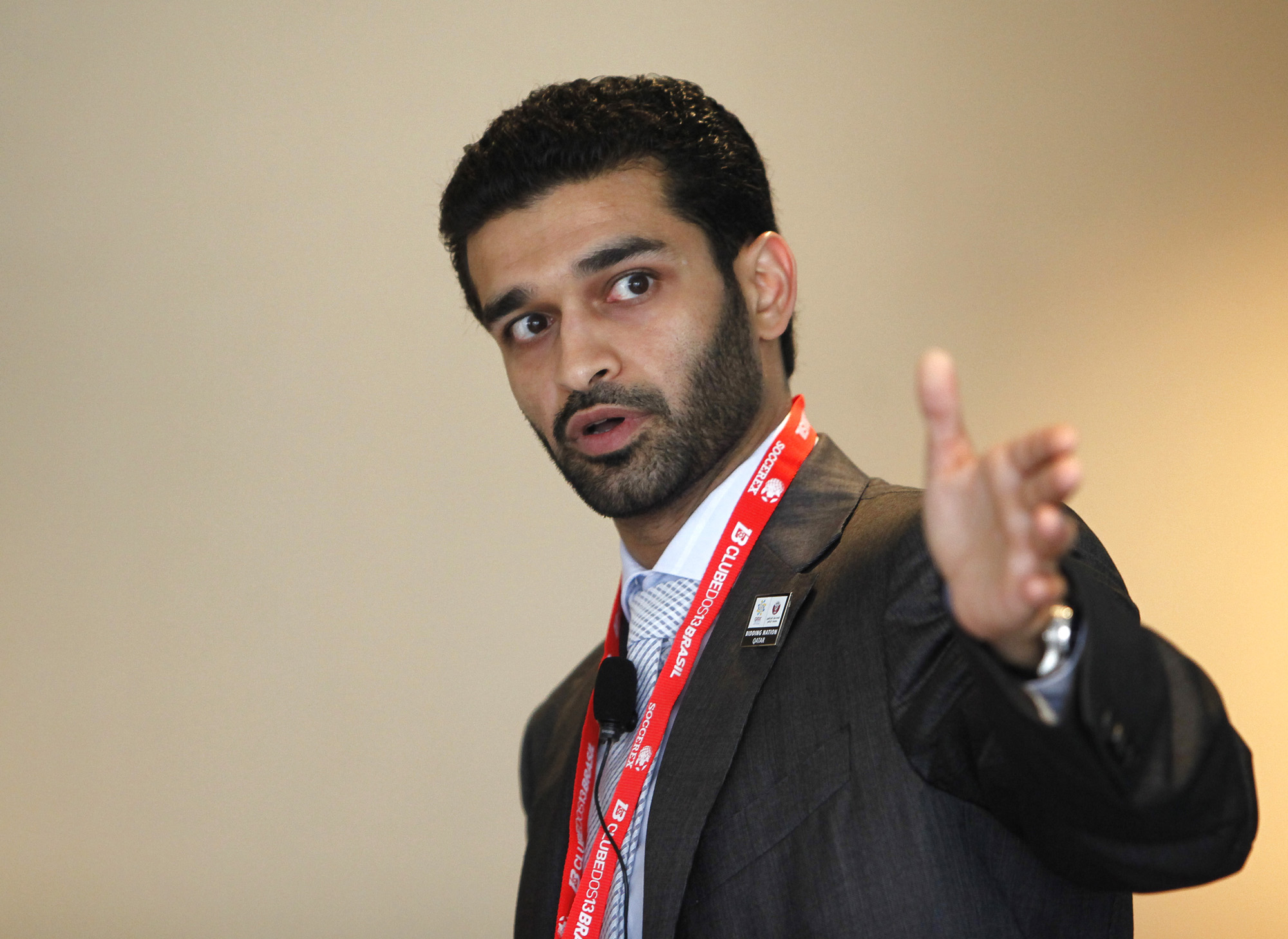
Qatar 2022 confirms attendance at Soccerex
The Qatar 2022 Supreme Committee for Delivery and Legacy has confirmed that it will send a delegation to the Soccerex Asian Forum, which takes place on 13 -14 May in Jordan.
Secretary general Hassan Al Thawadi is to speak on the “Major Events Panel” and deliver an exclusive presentation on Qatar’s plans to host football’s biggest event. The 2022 FIFA World Cup hosts will also welcome delegates to the VIP Lounge and an exhibition stand that will highlight the various projects that Qatar is undertaking over the next eight years.
“It is a huge honour to welcome back Mr. Al Thawadi and the Supreme Committee for Delivery and Legacy to another Soccerex event,” said Soccerex Chairman Tony Martin.
“The positive investment being made by Qatar for the World Cup represents the commitment and passion shown for football within this thriving continent.”
With an unprecedented number of stadiums and infrastructure projects to be built, training facilities to be supplied and sponsorships to be agreed on, the Qatar 2022 World Cup represents a unique opportunity for the international major events industry. The Soccerex Asian Forum is a rare occasion for the industry to meet decision makers from the Supreme Committee for Delivery and Legacy.
A record number of senior industry figures from FIFA and the AFC are set to attend this year’s Soccerex Asian Forum. Leading dignitaries will also attend from La Liga, Real Madrid, Liverpool, the United States Soccer Federation, Manchester United, the Australia Football Federation, the Qatar Football Association, Barcelona, the Japan Football Association, the All India Football Federation and Galatasaray.
The Forum, held in partnership with the AFDP founded and chaired by HRH Prince Ali Bin Al Hussein, will bring together the leading figures from the world of Asian football as well as other international football experts to discuss the development of the game across Asia. The conference agenda will include a review of the opportunities for growth and the challenges facing Asian football.
For more details about the Soccerex Asian Forum please contact Soccerex on +44 208 987 5522 or visit www.soccerex.com/events/asia/
-
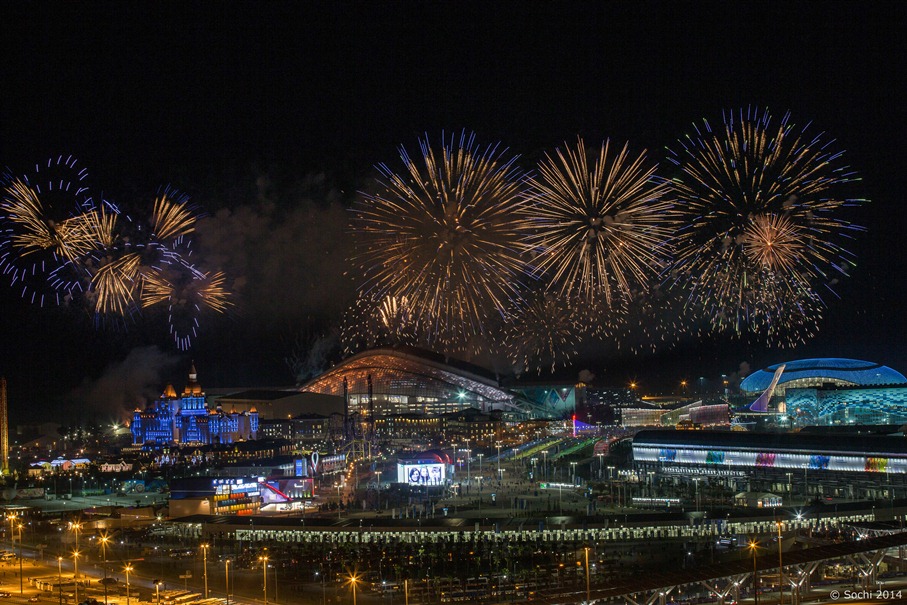
Back to the future: designing for the main event and beyond
At the recent Olympic Winter Games in Sochi, the opening and closing ceremonies dazzled audiences around the world. Spectacular, theatrical and hugely sophisticated, they exemplified the fact that, although a competition may have several venues, the main stadium remains the focal point of every major event. But how can a stadium meet the huge technical demands of these events, and their capacity criteria, while still being able to adapt for a long-term legacy once the main event has finished?
The solution lies in the integration of the permanent and temporary. It’s only by including temporary structures and seating in the initial design that buildings gain the flexibility they need to adapt to a changing set of needs. In Sochi, for example, we incorporated temporary seating that will allow the Olympic Stadium to expand to accommodate the 45,000 seats required for the 2018 FIFA World Cup, before reducing to a final legacy capacity of 25,000 for the local football team.
Similarly, the Incheon Stadium, which will host the 2014 Asian Games, is a 70,000 seat stadium that will reduce to 30,000 seats, thanks to our design that has one permanent seating stand and three temporary ones, destined to become park landscaping for the city’s residents and visitors to enjoy once the temporary structures are removed.
This flexible approach has its roots in Populous’ design for Sydney’s Olympic Stadium, now the ANZ stadium, where an initial capacity of 110,000 seats was reduced to 83,000 after the Games by removing the end stands and reconfiguring the roof. By the London Olympics in 2012, our thinking had evolved to focus on design as a whole, rather than construction. We broke the Stadium down into its constituent parts to explore how a building could be planned from the outset to transform itself and be fit for a long-term legacy – and the result is a multi-purpose Stadium of 60,000 seats (reduced from an Olympic capacity of 80,000) that is capable of hosting IRB World Cup Rugby and Premier League football as well as concerts and other events.
Designing in this way has inherent challenges: namely, ensuring that at each stage of its evolution the building has architectural merit – during the event itself, when the focus of the world’s media is on the stadium; and afterwards, when visitors and residents must appreciate and use it as part of the city’s fabric. In addition, although the end goal of the design is the same – to reduce in scale after the main event – this can’t be achieved by a ‘one size fits all’ approach. Each stadium has unique requirements and these must be reflected in innovative design solutions.
At Populous, our understanding of a stadium’s cultural significance means that we’re constantly devising innovative ways to balance the cultural and technical needs of the main event with the social responsibility of designing buildings that have a long-term legacy. It’s a journey that, for us, began in Sydney in 2000 and will, we are sure, continue to challenge and fascinate far into this century and beyond.
This article was written by Populous principals Ben Vickery and Tom Jones -
Australia 2015 confirms for Soccerex Asian Forum
The local organising committee (LOC) of the 2015 AFC Asian Cup Australia has confirmed that it will contribute to the Soccerex Asian Forum, which takes place in Jordan on 13 to 14 May 2014.
Speaking at the conference, the LOC’s chief operating officer Mark Falvo will update the industry on Australia’s preparations to host Asia’s biggest football tournament. The organising committee will also exhibit at the event through a joint partnership with the Austrade, the Australian Trade Commission.
“With major events very much a focal point for the world of football, we’re looking forward to sharing our successful pre-event activities, as well as the remaining challenges to putting on a major international event with our counterparts from across the world. There is no better event to do that at than Soccerex,” Mr Falvo said.
Austrade will promote “Match Australia”, the International Sports Business Program for the 2015 AFC Asian Cup, showcasing the best of Australian business in delivering major sporting events with the aim of fostering relationships within the Asian market.
Australia will join an array of international delegations at the Forum, including Jordan, Spain, England, Brazil, Qatar, United States of America, Turkey, Argentina, India, Singapore, Egypt, the United Arab Emirates, Norway, Palestine, Bangladesh, Sri Lanka, Oman, Kyrgyzstan and Lebanon.
“The Forum is going from strength to strength and with the addition of the AFC Asian Cup Australia 2015 LOC, it will undoubtedly encompass the entire Asian and Oceania football industry,” says Duncan Revie, CEO of Soccerex.
“The ‘Major Events Panel’ will provide delegates with a true insight on what it takes to host and plan a major event, guaranteeing a few eye openers from those at the top level.”
The Forum, held in partnership with the Asian Football Development Project founded and chaired by HRH Prince Ali Bin Al Hussein, will bring together the leading figures from Asian football and other international experts to discuss the development of the game across Asia.
The conference agenda will include a review of the opportunities for growth and the challenges facing Asian football.
For further details about the Soccerex Asian Forum please contact Soccerex on +44 208 987 5522 or visit www.soccerex.com/events/asia/ -
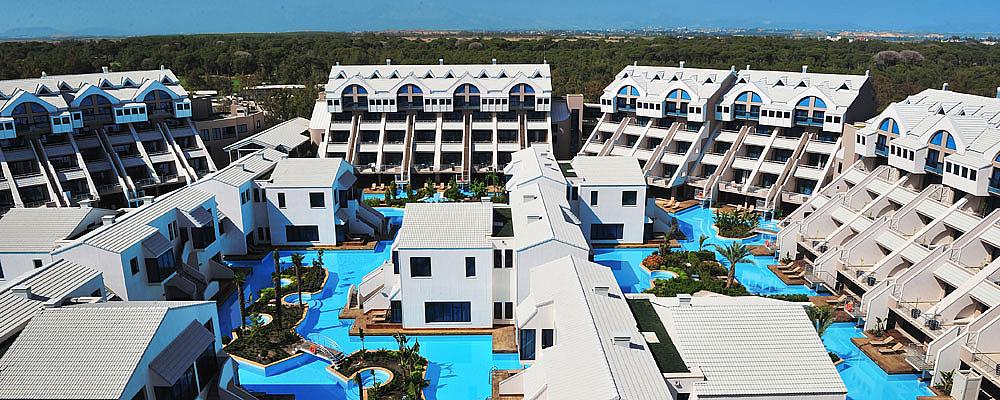
SportAccord Convention to boost host’s economy
At the opening of SportAccord Convention on Monday, professional services firm PwC have revealed research that shows that the event will bring a major increase in the economy of the host city, Belek / Antalya.
PwC, a Gold Partner of the event, estimates that the local economy will benefit to the tune of US$3.85 million from hosting the sports industry gathering, which will also help Antalya and Turkey to achieve longer-term development goals.
The organisers anticipate that the 12th annual edition of the Convention will bring more than 1,500 delegates, most of whom will stay in the city for the entire week.
Non-resident participants in the event are expected to spend around US$2.25m, much of which will benefit local companies. The biggest proportion of this direct spending – 83.6 per cent – will go to hotels and restaurants.
The transport, retail, social and cultural services industries are also expected to benefit from the direct impacts of SportAccord Convention. Indirect economic impacts throughout the value chain are estimated at US$1.59 million.
“SportAccord Convention has become an important vehicle for popularizing sport and healthy lifestyles worldwide,” said Bob Gruman, Managing Partner of PwC’s Global Sports Mega-Events Centre of Excellence.
“Hosting 1500 delegates from global sports associations and media for a full week also provides an excellent opportunity to promote Antalya’s beautiful landscape and rich cultural heritage, while encouraging delegates and guests to visit the city again for personal or business reasons.”
According to PwC, SportAccord Convention will support the Turkish government’s 2023 Strategic Plan and the region of Antalya’s development plan by encouraging business activity in areas related to the event through the development of social and intercultural networks. Demonstrating the region’s ability to host such events will attract further major events to Antalya.
Hosting a significant number of delegates from all over the world and publicizing the event through global media will promote Antalya as an important global destination for sporting and cultural activities. Promoting sports and the hosting of sports events will also inspiring healthy lifestyles, the PwC reports states.
SportAccord Convention’s managing director Nis Hatt said “We are extremely pleased to know that our event will deliver real economic benefit to Belek and Antalya. To be validated by PwC’s authoritative research means a great deal to our organisation and to our stakeholders.” -
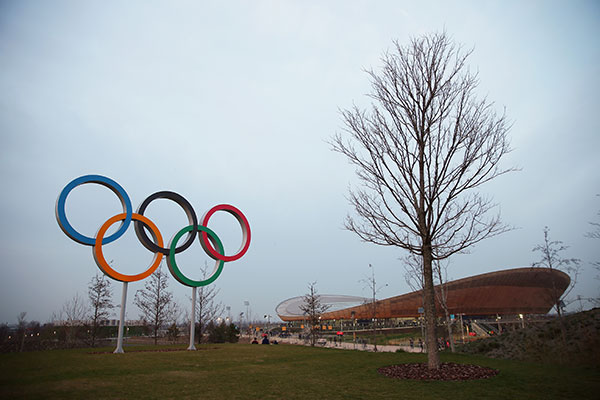
London Olympic Park opens to the public
The redevelopment of the south section of the Queen Elizabeth Olympic Park is now complete, enabling the park to fully open to the public for the first time since the London 2012 Olympic Games.
“In the 18 months since the end of the Games, we have created a magnificent new park for London with beautiful parklands and waterways and world-class sporting facilities,” said Dennis Hone, Chief Executive of the London Legacy Development Corporation, which led the post-Games transformation of the park.
“We want people to come and enjoy this new destination, whether they are reliving the memories of the golden summer of 2012 or experiencing it for the first time.”
At 560 acres, or 2.2sq km, the park is the largest to open in London for more than 100 years. Newly landscaped parklands, waterways and an action-packed adventure playground featuring swings, a rope bridge and activity zones have transformed the site.
Sir John Armitt, chairman of the Olympic Delivery Authority said: “The Olympic Park was a huge hit with spectators in 2012, but now countless thousands more will get a chance to see how it has been transformed for generations to come to use and enjoy – walking, relaxing, seeing the sights, or having a picnic, as well as playing and watching sport in four world-class venues.
“This, and the work we are doing to complete 2,818 new homes in East Village, is proof that the legacy we all talked so much about is very real.”
The park also features a new tree-lined promenade with a unique globe lighting system, interactive water fountains, four themed walking trails and miniature gardens that represent different climatic regions including South Africa, the Americas and the Mediterranean.
The northern section of the park, which began to reopen in July 2013 with concerts and other major events, has already attracted more than a million visitors. The Copper Box Arena, the first former Olympic venue to open to the public, has already had more than 100,000 visitors. The Aquatics Centre, which reopened on 1 March 2014, has already received over 55,000 visitors.
The Lee Valley VeloPark opened its doors for public use for the first time on 31 March 2014, while the Lee Valley Hockey and Tennis Centre will open in June 2014.
Meanwhile, the Olympic Stadium is being transformed into a multi-use venue. A major new arts and cultural centre is also set to be built within the park.
Planning permission has also been granted for up to 10,000 new homes, including more than 2,800 in the former Olympic Village, which has now been renamed East Village.
“The opening of Queen Elizabeth Olympic Park is not the end of the transformation story,” said Hone. “We are building a new heart of east London creating jobs, building new homes, and bringing in investment, culture and education with partners like the Victoria and Albert Museum and University College London. It is a truly exciting time for all Londoners and we encourage people to come and see Queen Elizabeth Olympic Park for themselves.”
-
Glasgow 2014’s new running track revealed
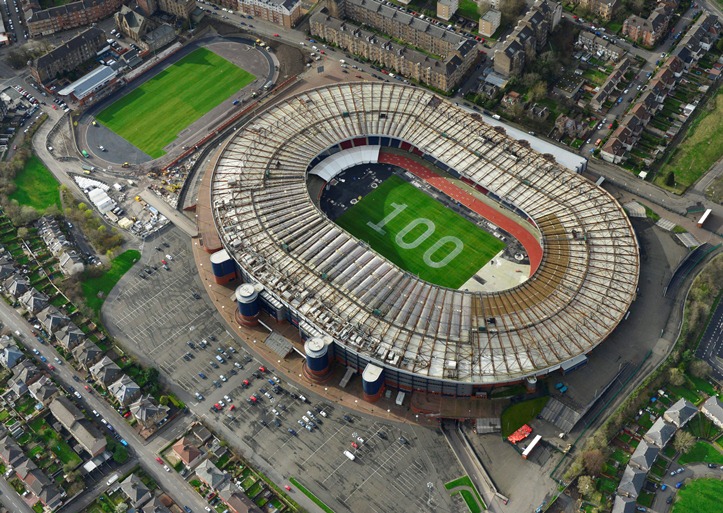
Glasgow 2014 has marked the milestone of 100 days to go until the start of the Commonwealth Games by painting a giant “100” on the pitch of Hampden Park stadium.
Scotland’s national football stadium is in the process of being transformed into an athletics venue for the duration of the Games. Arial footage released today shows that the venue’s transformation is virtually complete.
To attain the width required for the track and field events, as specified by IAAF standards, the ground had to be raised by almost 1.9m using a revolutionary technique. A deck weighing over 1,000 tonnes was made using 6,000 steel posts and 1,200 panels. A further 16,000 tonnes of stone, tar and rubber are now being placed on top of the deck.
Hampden will be the centrepiece of the Games, with more than a thousand athletes competing in more than 48 events in seven days of competition. The venue will also host the closing ceremony, when Glasgow 2014 will hand the Commonwealth flag over to the Gold Coast, hosts of the 2018 Commonwealth Games.
The new aerial shot also shows Lesser Hampden, which has had a new pavilion built to provide athletes with warm-up facilities.
“It is now just 100 days to go until the start of the Glasgow 2014 Commonwealth Games, the biggest sporting and cultural festival Scotland has ever hosted and the UK’s next big sporting occasion,” said Lord Smith of Kelvin, KT, Chairman of Glasgow 2014.
“We are entering the home straight now and these last 100 days are our opportunity to do the final work necessary to ensure that we deliver an outstanding Games for Glasgow, Scotland and the Commonwealth.”
Glasgow 2014, the XX Commonwealth Games, takes place from 23 July to 3 August when 4500 athletes will compete in 17 sports, with 1,000,000 tickets on sale. To find out more, read the exclusive interview with Chief Executive David Grevemberg in the next issue of HOST CITY magazine.
-
Glasgow 2014 excludes Red Road demolition from ceremony
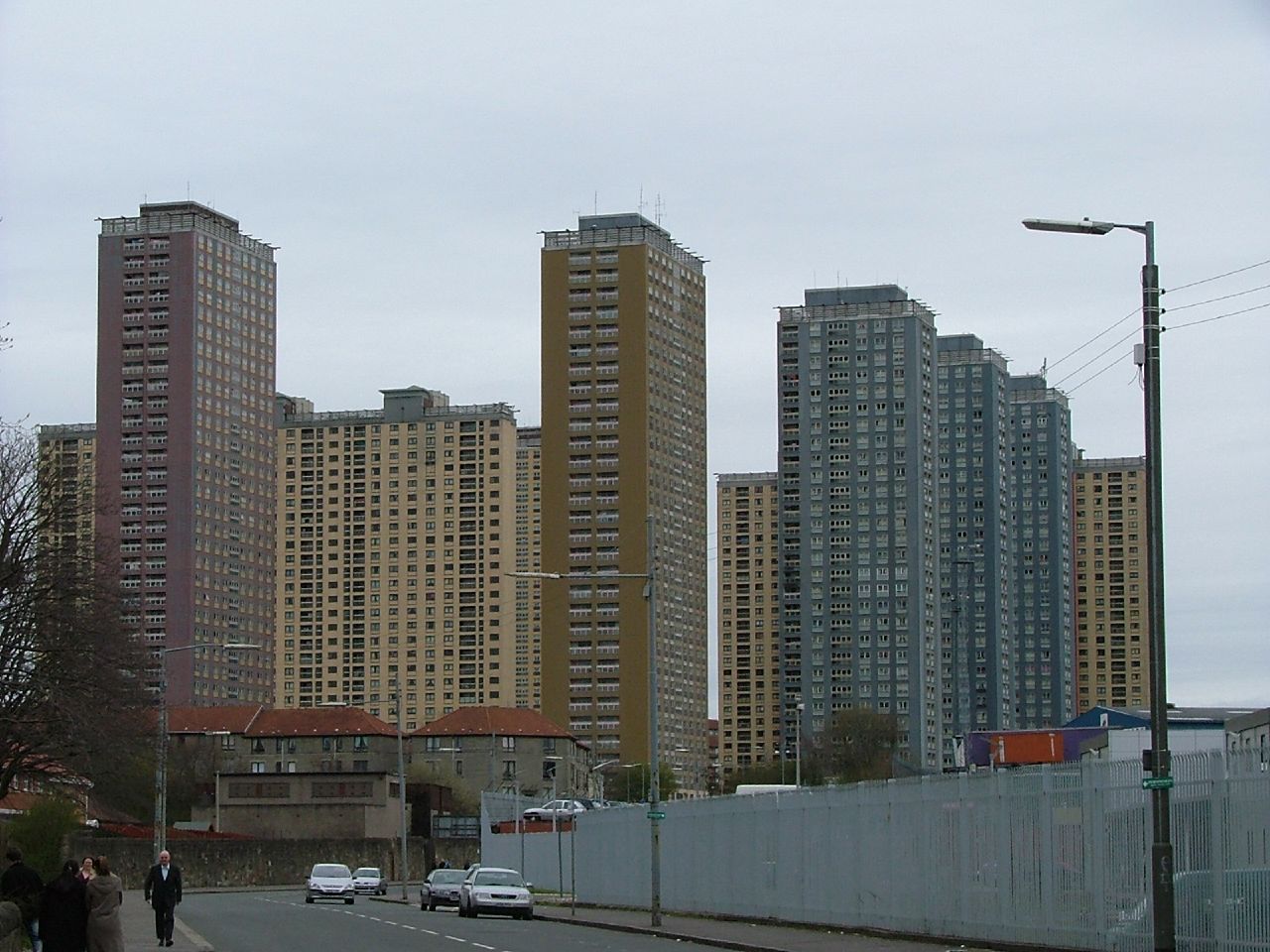
Glasgow 2014 has taken the decision to exclude the demolition of Red Road flats from the opening ceremony, concerned that public opposition might spark security incidents.
Having announced less than two weeks ago that Red Road flats would be demolished as part of the opening ceremony of the Commonwealth Games, Glasgow 2014 has abandoned the plans in the face of widespread strong feelings of opposition.
Opposition to the proposal was led by former parliamentarian Carolyn Leckie, whose online petition gathered 17,240 signatures. On hearing the news, she tweeted “huge respect to decision makers prepared to change their mind. That’s the kind of democracy I want to live in.”
The organising committee was due to meet with Leckie early this week to discuss the proposals, with the intention of standing by its bold plan. On Wednesday, a spokesperson for Glasgow 2014 told Host City: “Glasgow 2014 and Games Partners remain committed to ensuring the important story of Red Road is part of the opening ceremony of the Commonwealth Games.
“We want the story of Glasgow and Scotland to be real and authentic and reflecting the lives and history of communities such as Red Road, especially at such an important point in their regeneration.”
“We recognise the passion people feel for Glasgow and respect the wide range of views being expressed on how the city is represented in the Opening and Closing Ceremonies of the Commonwealth Games.”
On Thursday, David Grevemberg wrote to Host City readers confirming his support for the plans. “Bringing the Red Road story into the opening ceremony was opportunity to commemorate an important part of Glasgow’s social history in a unique and powerful way,” he wrote.
“There is no doubt the decision to include it in the opening ceremony is new territory. It is reflective of an opening ceremony designed to celebrate Glasgow’s authenticity, passion and ambition.”
However, in the interests of public safety, the organising committee decided to back down over the weekend. In a statement, David Grevemberg, Chief Executive of Glasgow 2014 said: “We made it clear from the outset the absolute priority was safety and that this event would only happen during the opening ceremony if it was safe to do so.
“Over the past few days it has become clear that opinions have been expressed which change the safety and security context. Glasgow 2014, Games Partners and key stakeholders, including Police Scotland and Glasgow Housing Association, are not prepared to allow what was proposed to be a positive act of commemoration to create risk for all concerned, including the communities of north east Glasgow.”
The opening ceremony will still reflect the regeneration of Glasgow, with a renewed emaphasis on public engagement. A spokesperson for Glasgow 2014 told Host City: “We are working to ensure plans for the ceremonies are properly represented and we are reviewing how we can best engage with people on this issue.
“The ceremonies create a once-in-a-lifetime opportunity to share positive aspects of city and national life with a global audience. Over coming weeks we look forward to sharing further details of the variety of different stories our Ceremonies will tell.”