By the time the time the athletes on the track hear the starting pistol, the team from DB SCHENKERsportsevents has already completed most of its work. The logistics experts are organisation specialists for major sports events. They begin their preparations long in advance, developing logistics plans for management committees, associations, hospitality firms, sponsors, and service providers.
DB Schenker is the leading name in international sports and events logistics. Its partners come from every sporting discipline – football, winter games, sailing, athletics, motorsport and a lot more besides. Around the globe, DB SCHENKERsportsevents employs some 150 people who put their expertise at their customers’ disposal, combining precision logistics with a passion for sporting pursuits of all stripes.
Always on the ball
In sports terms, 2016 was a superlative year. DB SCHENKERsportsevents toured the planet as it delivered logistics services at the Olympics and Paralympics in Rio, the UEFA EURO tournament in France, and a host of big-name tracks for the Formula One season.
These major events required months of preparations, which covered everything from long-distance planning to on-site services, and which were then followed up by the necessary activities following the events’ conclusion.
An Olympian task
From delivering canoes for the competition itself to champagne for the party afterwards, the German team at DB SCHENKERsportsevents dispatched over 1,030 shipping containers of material to Rio. They contained essential provisions for the Olympic Village, the German national team, the house that served as their residence during the Games, as well as for the opening and closing celebrations and the VIP catering service organised for every stadium.
“As long ago as September 2015, i.e. almost a full year before the Games, one of our team was already in Rio to coordinate and oversee our planning activities on-site,” Christian Schultze, SVP at DB SCHENKERsportsevents.
“The most intense period for us was just before the Games, and then the whole team was involved. The Olympics and Paralympics represent a challenge, but it’s one that we enjoy taking on time and again.”
The Olympic Village has accommodated some 17,000 athletes during the course of the Olympic and Paralympic Games. DB Schenker sent some 940 containers of material to Rio to equip the village, which is often described as the “heart” of the Games. At no other sporting event do so many world-class athletes live in such close proximity, and the village is designed to provide every possible service from accommodation and catering to training facilities and platforms for meetings and events.
Similarly, the German house served as a place where athletes and figures from the worlds of sport, politics, business and the media could congregate. DB SCHENKERsportsevents had 100 per cent responsibility for all logistics activities at the site. As the exclusive logistics partner for the German house at Rio 2016, DB SCHENKERsportsevents planned and performed everything connected with the logistics pertaining to this traditional hub for meetings and mingling at the event.
As the official logistics partner of the Olympic teams from Austria, Norway, Portugal and Switzerland, DB Schenker made use of its respective national offices to make sure that the athletes’ equipment made it to Rio on time. Similarly, DB Schenker staff in China, Japan and South Korea played a role in transporting television equipment from these countries, while employees in Singapore organised the transportation of the Singaporean sailing team’s boats and other equipment.
Following the end of the Rio Olympic and Paralympic Games, the work of DB SCHENKERsportsevents continues. Once the television broadcasts stopped and after the last athletes embarked on their homeward journeys, the logistics specialists spent about two months working on returning and forwarding the items sent to Brazil for the Games.
A race between racing events
DB SCHENKERsportsevents is also responsible for the pan-European logistics needs of the MERCEDES AMG PETRONAS Formula One™ Team, which relies on the experts for support between Formula One races. Whenever an event is held somewhere in Europe, DB SCHENKERsportsevents is in the thick of things.
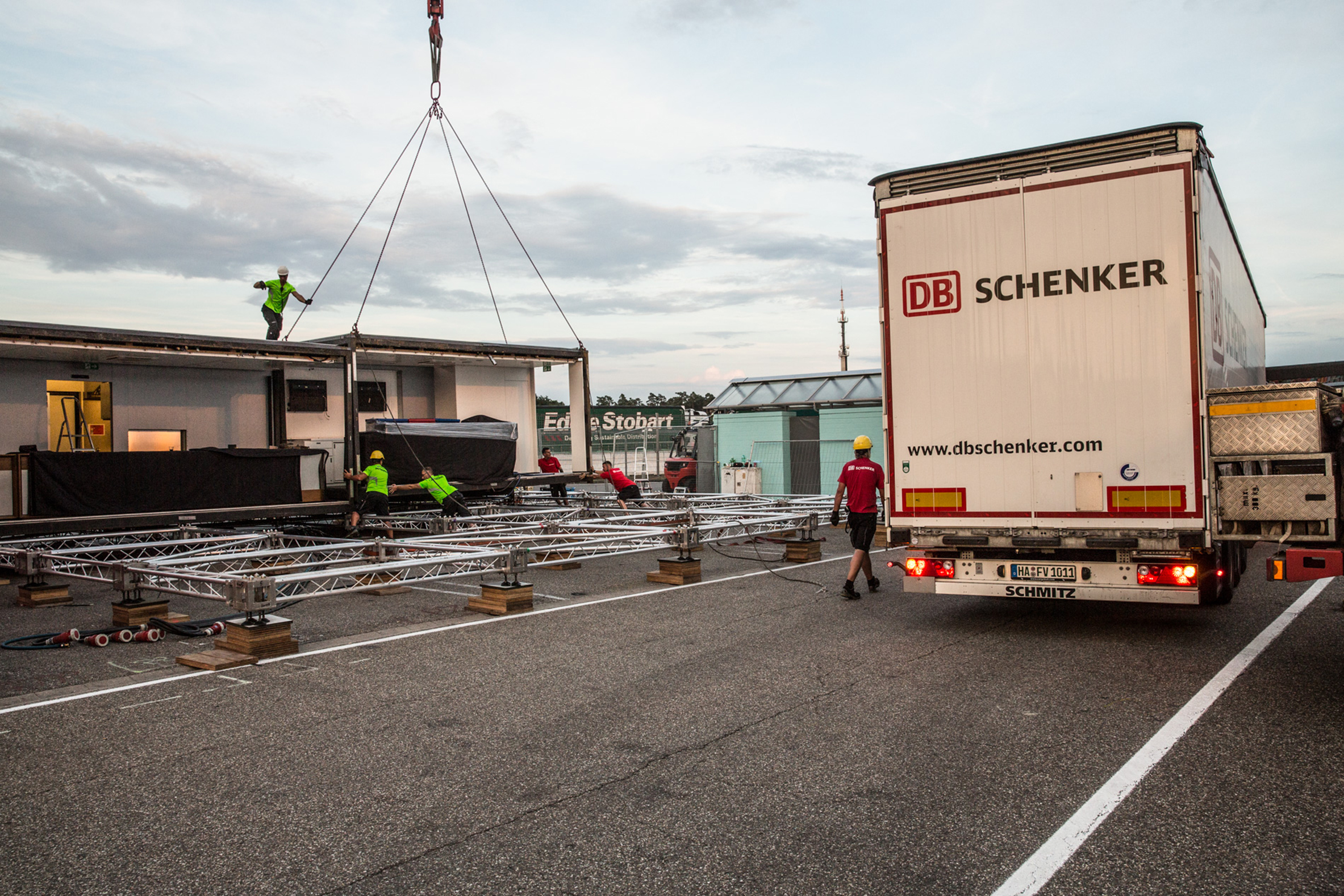
Sometimes, races are just one week apart, a week during which the racing team needs to have a new home built for them at their next destination. When the MERCEDES AMG PETRONAS drivers, cars, mechanics and other team members arrive for the new racing challenge, their motorhome needs to be ready and waiting for them.
In other words, everything has to be dismantled, loaded and transported to the next destination in the shortest time possible. It’s the logistics provider’s very own race between races. The moment the equipment arrives, 18 experts set to work in several shifts to complete the motorhome’s construction in around 36 hours. Every step of this process has to run completely according to plan so that the construction team can hand over the keys on time.
Blog
-
Logistics for winners
-
The sky’s the limit for Red Bull Air Race hosts
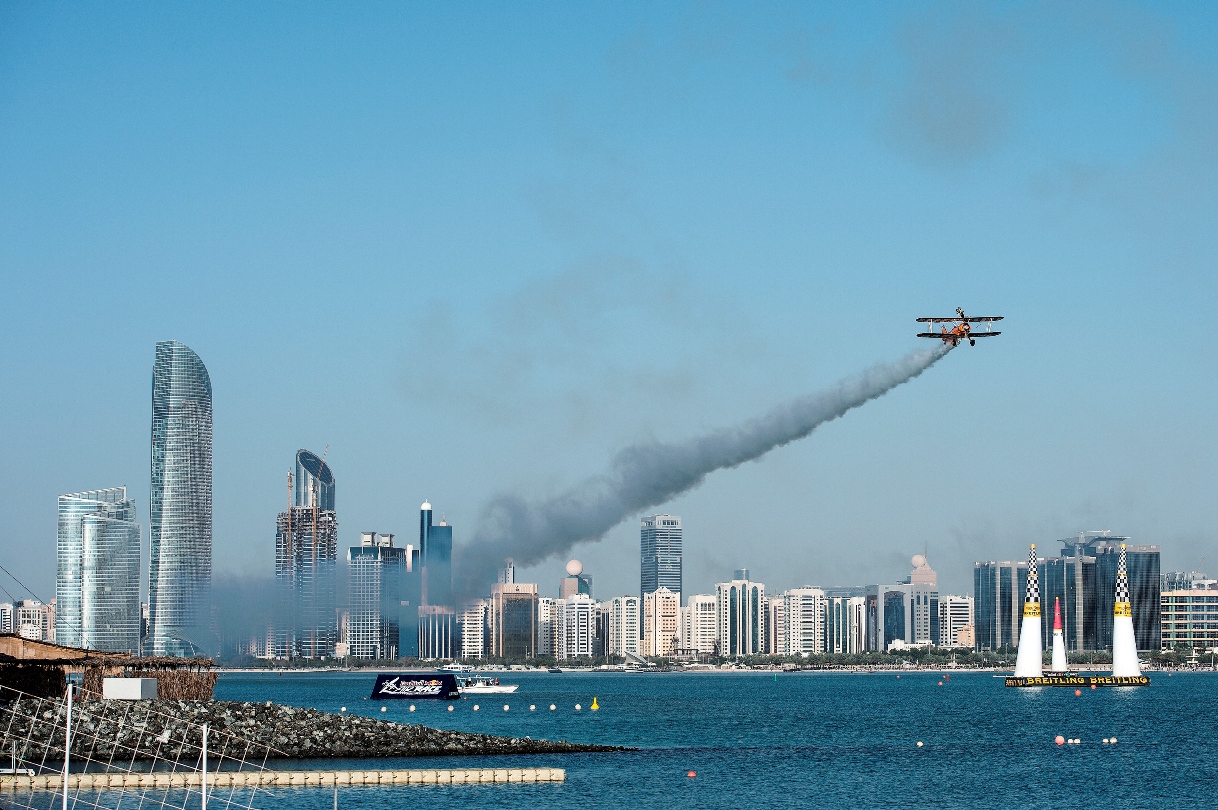
Created in 2003 but officially a World Championship in 2005, the Red Bull Air Race will mark its 75th race in 2017 and is watched by millions of fans. The official world championship sanctioned by the FAI (Fédération Aéronautique Internationale) is a visual spectacle unlike any other. Using fast, agile, lightweight racing planes, pilots reach speeds of 370kmh while enduring forces of up to 10G as they navigate the 25-meter-high, air-filled pylons of a low-level slalom track – the ultimate motorsport series in the sky.
From windswept Tokyo Bay to the heart of Budapest, and from America’s dramatic desert to Europe’s towering Alps, Red Bull Air Race puts the global spotlight (over 2,000 media from 37 countries in 2016) on an exclusive number of destinations each season. Eight stops are planned next year. The ultimate goal for Red Bull Air Race is 15 races per calendar year.
“For our partners, we bring a wealth of experience in what works, but it’s not a cookie-cutter approach. We actively collaborate with the host cities and business partners so that entertainment and revenue opportunities can be tailored specifically to each location,” says Red Bull Air Race Commercial Director Pavel Turek. “Families often spend a full weekend or more in the host region because there’s so much to see and do.”
Venues like the UK’s Ascot Racecourse, the city of Budapest, Indianapolis Motor Speedway and the waterside facilities in Chiba, Japan have seen their grandstands completely sell out. At the 2014 race in Gdynia, Poland, officials closed access to viewing from one of Europe’s longest beaches upon reaching the mandated civic limit of 130,000 people.
Abu Dhabi has hosted the season opener nine times so far, and a 2015 study found that visitors spent an average of three days in the city, with 76% citing the Red Bull Air Race as the main reason they came and asserting that they would recommend the event to acquaintances, and a full 91% declaring that the race enhanced their positive image of the location.
In Croatia, the Ministry of Tourism awarded “Best Tourist Event” to the Red Bull Air Race Rovinj in a nationally broadcast ceremony attended by the country’s Prime Minister.
“This event is exceptional,” said Darko Lorencin, Croatia’s Tourism Minister. “This is one of the best examples how to create motives for attracting tourists to come.”
Just as the race teams never stop looking for ways to improve the performance of their raceplanes, the race organizers are always striving to heighten the experience and the outcomes at new locations.
“The Red Bull Air Race delivers top-level motorsport in a way that people have never seen. One moment they’re touring the hangars and getting autographs from their heroes, and the next they’re watching those beautiful raceplanes speeding past – not as little dots in the air, but right in front of them,” explains Red Bull Air Race General Manager Erich Wolf. “And always – always – safety is paramount. Our race rules and procedures are the result of years of careful study, and we’re proud of our safety record.”
When the legendary Indianapolis Motor Speedway hosted the Red Bull Air Race for the first time in October 2016, the event drew hundreds of media contacts and saw crowds of 62,000.
“Our intent is that this is going to be an annual event,” stated Indianapolis Motor Speedway president Doug Boles. “It’s spectacular.”
Looking ahead, 2017 marks the 10th season where Red Bull Air Race will continue to expand and grow through their strong partnerships with prestigious brands, spectacular stops to the calendar and advancement in aviation and air racing. -
Major events: overcoming common challenges and meeting criteria
With millions of global spectators, and thousands on location, organisers and hosts of major sporting events are under constant pressure to deliver a successful event on time, on budget and to the highest possible quality.
There is also usually common ground shared between events – from health and safety requirements to energy supply, media management and coordinating local infrastructure. Inevitably, however, the diversity of modern major events means there are always specific challenges to overcome.
In those circumstances, suppliers have to be at their most innovative to satisfy an event’s needs.
Aggreko has been supplying power to major event organisers and hosts for decades and we have encountered our fair share of complexities along the way.
Two of our most consistent strategic requirements are to plan ahead in order to meet high capacity demand (for example during opening ceremonies or at peak viewing times); and being prepared for unexpected power disruptions, particularly if we are working closely with a local electricity grid.
Two increasingly frequent criteria are managing space constraints and reducing noise pollution – these are particular concerns for events in city locations.
Noise levels are now addressed in the very early stages of planning a major event, typically because of the risk of disrupting athletes or performers. In multi-venue events, each location could come with local issues, requiring an organiser to prevent disruption to residents nearby. Every event is different; each requires detailed planning from layout and installation to maintenance and project management.
Some events even promote their community spirit – the city of Glasgow adopted the slogan “people make Glasgow” in the lead up to and during the XX Commonwealth Games, which made it imperative for suppliers like us to ensure the Games worked for residents. No doubt the same will be true when we supply our power solutions for the Gold Coast Games in 2018. Yes, it’s important that the actual events are a success, but it is equally important that our equipment does not interfere with the sound and quality of the production, which includes the customer experience in and around venues.
There are several proven strategies for minimising noise emissions linked to power generation at events. Driving them all has to be a focus on energy efficiency, as an efficient use of power allows us to reduce the actual number and size of generators in situ. When space is limited or your equipment is likely to be close to the action, being efficient can really help to reduce noise emissions.
Noise barriers are another great way to minimise disruption for city centre events, reducing noise levels in areas overlooked by residents and businesses. Under typical installation conditions, our Generator Set Enclosure Barrier, for example, can reduce noise levels by 90% (10dB) for residents on the 6th floor of an overlooking building and by 84% (8dB) on the ground floor.
Golf events like The Ryder Cup are a particular challenge. Not only are they typically set on courses some distance from mainstream infrastructure, but also they require a discreet audience and an even quieter built environment, even at the most critical moments of excitement. As a result, we take further steps to reduce noise during Ryder Cups, as doing so is critical to the event’s integrity and success. At Hazeltine earlier this year we provided 24MW of power to the event using our innovative “Super Silent” generators that produce very low noise emissions (48-55dBA at 50 feet).
Athletes, spectators and local people’s demands must be front of mind at all time, both for organisers and suppliers, in order to protect an event’s reputation. With future investment at stake, a smooth (and quiet) operation is crucial.
-
Aggreko wins PyeongChang 2018 power contract
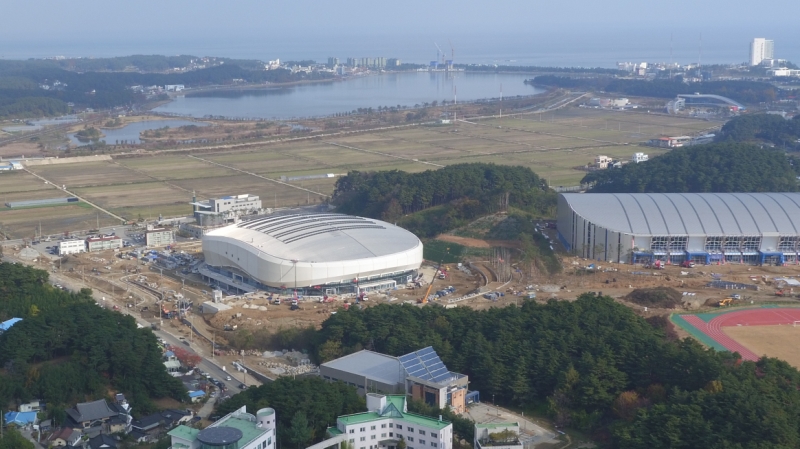
Temporary power provider Aggreko has been awarded the contract to deliver electricity to the 2018 Winter Olympic Games in PyeongChang.
The deal is valued at approximately US$40m and Aggreko will also have sponsorship of the Games.
The company will generate electricity for all 15 competition venues in the mountainous resort county of PyeongChang.
Aggreko will also power three competition venues in the coastal city of Gangneung, where figure skating, curling, ice hockey, speed and short-track skating events will take place.
The International Broadcast Centre in PyeongChang will also be powered by Aggreko.
“I am delighted that Aggreko has been appointed the official power provider for the Olympic Winter Games PyeongChang 2018,” said Chris Weston, chief executive officer of Aggreko.
“We look forward to helping the organising committee deliver another successful Games.”
A major part of the company’s business is providing power and temperature control solutions for sports events, such as the Olympic Games, cricket, football and rugby world cups, Pan American/Parapan American Games, PGA Tour, Tour de France, Ryder Cup,Red Bull Air Race and Formula One.
In August 2016 Aggreko announced that it had won the contract to provide power for the 2018 Commonwealth Games in Gold Coast, Australia, having powered the 2014 Commonwealth Games in Glasgow, where the company has its headquarters.
Aggreko also has a long track record of providing power to entertainment shows, such as I’m a Celebrity, Cirque du Soleil and music festivals including Glastonbury, as well as high profile events like the US Presidential Inauguration. -
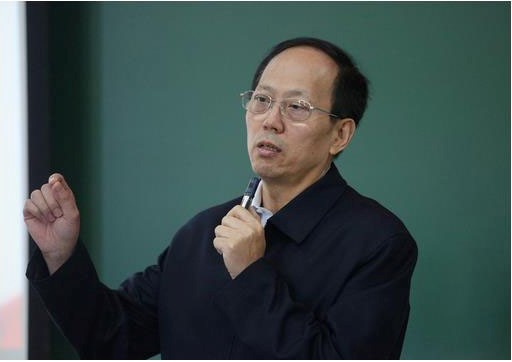
Chinese Olympic Committee appoints new president
Gou Zhongwen, director of China’s General Administration of Sport, has been named president of the Chinese Olympic Committee (COC).
He succeeds Liu Peng, who has served as president of the COC since 2005 and is now honorary chairman.
The appointments were made at the COC session in Beijing at the end of 2016 and announced by state media agency Xinhua.
In November 2016, the 59-year-old Guo was appointed director of China’s General Administration of Sport following Liu’s retirement from this position at the age of 65. In April 2016 he was appointed deputy secretary of the Communist Party of China’s Beijing municipal committee.
In 2008, Guo was appointed vice-mayor of Beijing in 2008 responsible for education and technology. He also ran the leading group for Beijing’s campus soccer development.
He was deputy head of the Ministry of Industry and Information Technology from 2002.
Under Liu Peng’s leadership, China rose to prominence in several Olympic sports, including table tennis, badminton and diving, at three summer and three winter Olympic Games, topping the medal table at Beijing 2008.
Liu also played a lead role in Beijing’s successful bid to host the 2022 Winter Olympic and Paralympic Games. -
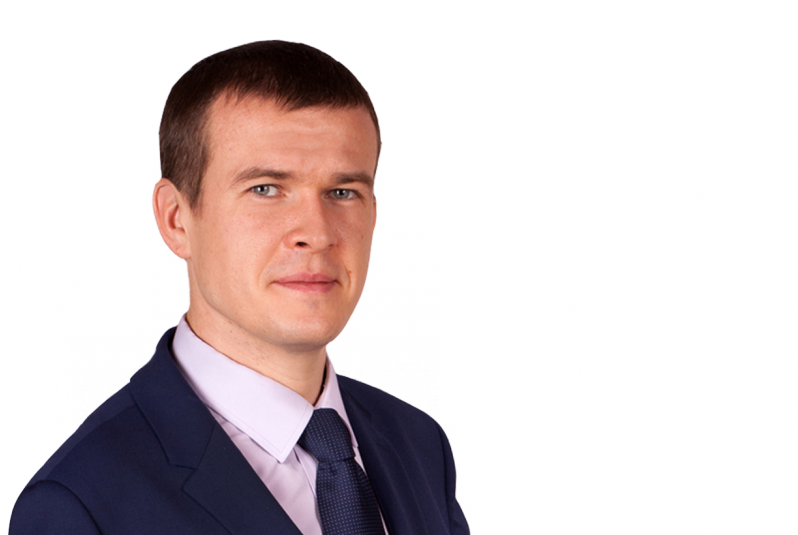
Krakow to host International Congress on Ethics and Tourism
The Polish city of Krakow has been confirmed as the host city of the third International Congress on Ethics and Tourism on 27-28 April 2017.
The event is being organised by the World Tourism Organization (UNWTO) in collaboration with the European Commission (EC) and the Government of Poland, focussing on promoting a more sustainable tourism sector.
The 2nd International Congress on Ethics and Tourism took place in the Ecuadorian capital of Quito in 2012, following the first edition in Madrid in 2011.
The revival of the event in 2017 has particular significance as it coincides with the International Year of Sustainable Tourism for Development to be celebrated throughout the year.
“I have gladly accepted the decision of the World Tourism Organization to choose Poland as a host for the third edition of the International Congress on Ethics and Tourism” said Witold Ba?ka, Minister of Sport and Tourism.
“Poland is actively channelling efforts to implement ethical standards among the tourism organisations in their everyday business. I am confident that the great atmosphere of Krakow, one of the most beautiful sites in Europe, will foster thoughtful discussions and yield positive results of the Congress.”
Issues of governance and corporate social responsibility, responsible consumption patterns and universal accessibility will be discussed, as well as effective management models for natural and cultural resources, UNWTO said in a statement.
Also on the agenda are inclusive tourism practices that spread the benefits of tourism development by empowering local communities and individuals – particularly women, youth, indigenous people and persons with disabilities. The congress will also highlight the competitive advantages of investing in a more inclusive and diverse tourism sector.
“With more than 1.2 billion international tourists crossing international borders in one single year and the prospects of continuous growth, it is crucial that we manage growth in an ethical and responsible manner” said UNWTO Secretary-General Taleb Rifai.
“The tourism sector needs to build equitable partnerships and adopt effective national policies and sustainable business strategies in all areas of development.”
The 3rd International Congress on Ethics and Tourism will be held within the framework of the UNWTO Global Code of Ethics for Tourism and the Sustainable Development Goals (SDGs), and in the framework of the cooperation between UNWTO and the Directorate-General for Internal Market, Industry, Entrepreneurship and SMEs of the European Commission (DG GROW), with the support of the EC and the Government of Poland.
A group of prominent companies and trade associations with sound CSR policies and strategies will sign a “Private Sector Commitment to the UNWTO Global Code of Ethics for Tourism” at the event. -
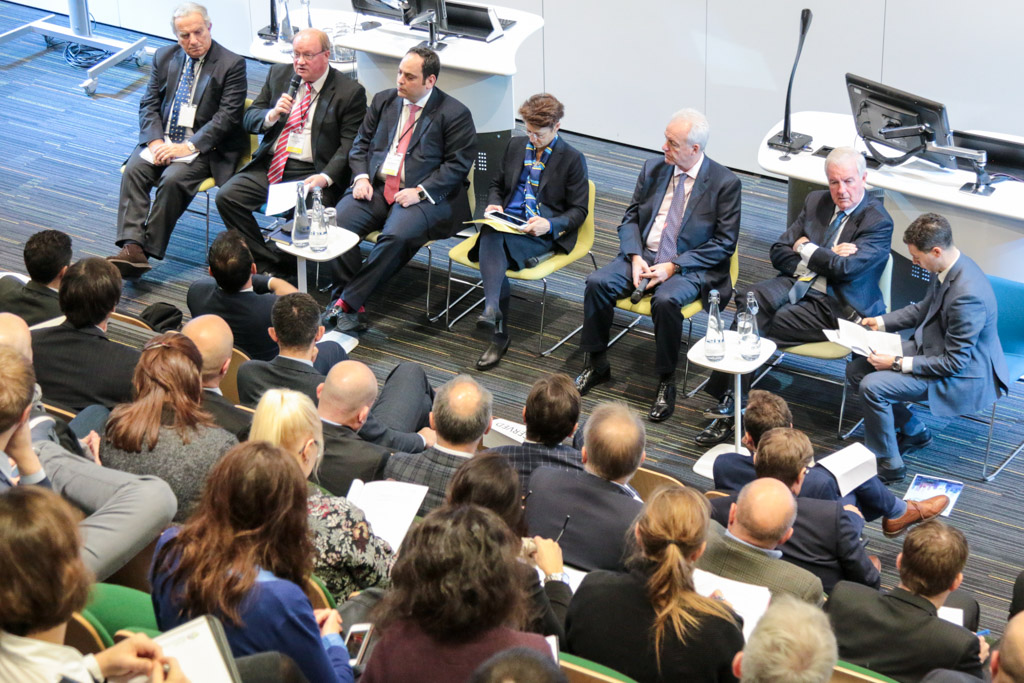
Host City returns to Glasgow in 2017 for another year of growth
Host City, the largest and fastest growing meeting of sports, business and cultural events, will return to Glasgow on 28 and 29 November 2017.
With a highly regarded conference programme, Host City attracts hundreds of international delegates and a large and growing number of exhibitors from the world’s event hosting sector.
Host City is now firmly established as the annual one-stop shop for hosts, organisers and owners of sporting, cultural and business events.
Attendees at Host City include host destinations from all continents, major exhibitions, organising and bid committees, venues, sports federations and entertainment and cultural events.
Paul Bush OBE, Director of Events said: “We are delighted to be welcoming Host City back to Glasgow in 2017. EventScotland has a strong heritage with this conference and we are pleased to be once again supporting them to bring leading events professionals together.
“With a packed programme of cultural and sporting events already taking place in the coming years, including the 70th anniversary of the Edinburgh Festivals in 2017, the Glasgow 2018 European Championships and the Solheim Cup in 2019, Scotland continues to demonstrate that it is truly the Perfect Stage for events. It will therefore be fitting to have many of the world’s foremost event practitioners meeting in Glasgow at Host City.”
Aileen Crawford, Head of Conventions at Glasgow City Marketing Bureau, said: “As one of the largest gatherings of event professionals in the world, we are delighted that Host City is once again making its home in Glasgow in 2017. Business Tourism and Major Events are key to growing Glasgow and Scotland’s competitive advantage as a vibrant, world-class meetings and events destination.”
Councillor Archie Graham OBE, Depute Leader of Glasgow City Council and Chair of Glasgow Life, said: “Recently named as one of the top five sporting cities in the world, Glasgow really is the perfect place to host such a prestigious and world class conference as Host City.
“We’re looking forward to hosting this fantastic event for the third time, and also to welcoming the hundreds of attendees and events professionals from across the world.”
Colin Hartley, Glasgow 2018 European Championships Director said: “We are delighted that Host City is once again taking place during a golden era of sport in Glasgow. We will take the next step on that proud sporting journey in the summer of 2018 when we host the European Championships – an exciting new multi-sport event that brings together some of the continent’s leading sports.”
Ben Avison, Host City Conference Director said: “The quality and scale of Host City continues to grow in Glasgow and we look forward continuing our journey together in 2017.” -
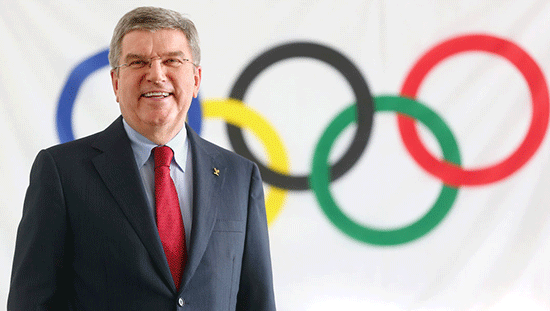
Thomas Bach: sport is an anchor of stability in a fragile world
As this Olympic Year 2016 comes to a close, we see that sport is one of the few things with the power to unite all people in an increasingly fragile world. Sport is an anchor of stability for so many people, regardless of background, nationality or belief. For me, this is the underlying reason that explains the success of the Olympic Games Rio 2016. Like no other event in 2016, it brought the entire international community together in celebration, with athletes from all 206 National Olympic Committees as well as the first-ever Refugee Olympic Team. It was a rare moment of unity and solidarity for all humankind. We saw new records, great emotions, fair-play and sportsmanship. The participation of the Refugee Olympic Team sent a strong signal of hope to the millions of refugees in the world. The world’s best athletes set a powerful example that it is possible to engage in peaceful competition. For all these reasons, the Olympic Games Rio 2016 will be remembered as the marvellous Games in the Marvellous City.
This unique power of sport to unite all of humanity is one of the most important things that the Olympic Games can give us in our troubled times. In a world where mistrust and uncertainty are on the rise, sport is a source of joy and inspiration for so many people, giving us hope that our shared humanity is stronger than the forces that want to divide us.
Half the world’s population tuned into Games coverage, making Rio 2016 the most-consumed Olympic Games in history, when one takes into account broadcast and social media. The explosion of social media platforms in recent years meant that more people than ever followed these Olympic Games via social media, with 7.2 billion views of official video content. An international survey has found that these Olympic Games are strongly associated with positive attributes such as “excellence”, “friendship” and “respect”, among many others.
With this global visibility comes responsibility for the world of sport. Because of the unifying power of sport, there are high hopes and even higher expectations for sports organisations from the general public – and rightly so. The role of sport in society is more relevant today than ever before. Consequently, sports organisations everywhere, need to justify the trust that people have placed in sport.
Outside of Rio 2016, we saw the growing relevance of sport in society in a number of different areas during this landmark Olympic year. It began with the very successful Winter Youth Olympic Games Lillehammer 2016, where the spirit and energy of the next generation of young athletes set the tone for the rest of the year. There was unanimous support for the Refugee Olympic Team from the UN Secretary-General, the UN General Assembly and from many heads of state and government. In a further expression of the close cooperation between the IOC and the UN, a resolution with consensus from all the Member States reaffirmed the UN’s recognition of the autonomy of the IOC and the role of sport as an important enabler of sustainable development. The first global conference on faith and sport held at the Vatican at the initiative of Pope Francis brought together the UN Secretary-General and the IOC with faith leaders to discuss the promotion of common values. The launch of the Olympic Channel gave the sports movement a digital platform to spread our messages and values to young people everywhere. Making the magic of the Olympic Games available 365 days a year, 24 hours a day, we already have more than 382 million video views of Olympic Channel content across all of its social media pages.
So as 2016 comes to an end, we have many reasons to celebrate a successful Olympic Year. At the same time, there are no reasons to be complacent.
In sport, the success of today means nothing for tomorrow. As an athlete, I learned that your performance will ultimately be judged by how you rise to the occasion. The success of today only gives you the strength to address the challenges of tomorrow.
This is the same approach that the Olympic Movement will take to tackle the challenges that lie ahead in 2017. There are many challenges on our agenda, so we cannot afford to stand still. We need to rise to the occasion in the New Year.
The most immediate challenge is the shocking findings of the recent McLaren report on doping and manipulation in Russia that have caused damage to the credibility and integrity of sport. Two IOC commissions have been set up to coordinate our response. They will respect the due process and give all sides a fair chance to be heard. Following this, the IOC will take all appropriate measures and sanctions.
We will continue and extend the work of Professor McLaren. Since his mandate did not include a full re-analysis of all samples, we will re-examine all 254 urine samples collected from Russian athletes at the Olympic Winter Games Sochi 2014. We will do the same with all the Russian athletes’ samples from the Olympic Games London 2012. It is only fair for the credibility of the Olympic Games and for peace of mind of the athletes that we take these extra measures.
The latest developments underscore the urgent need for a strengthened, centralised anti-doping system under the leadership of the World Anti-Doping Agency (WADA) that is independent of sports organisations and governments alike. This is why the IOC will continue to call for a more efficient, more transparent and more robust anti-doping system, as unanimously supported by all stakeholders at the most recent Olympic Summit.
Another priority on our agenda is the preparation for the Olympic Winter Games PyeongChang 2018, which will be the first of three consecutive Olympic Games to be held in Asia. The many test events in PyeongChang this winter will be an important milestone on the road to what will be exceptional Olympic Winter Games in 2018.
The implementation of Olympic Agenda 2020 remains an ongoing priority, with more than 90 per cent of the expected deliverables completed or ongoing. The IOC has already implemented all good governance measures that were called for under Olympic Agenda 2020 and we expect other sport organisations to follow this lead. Another major step towards the realisation of Olympic Agenda 2020 will come in 2017 at our Olympism in Action Forum in Lima, Peru, where the role of sport in society will be addressed under the key themes of credibility, sustainability and youth.
Even though Tokyo was selected as Host City for the Olympic Games 2020 before the adoption of Olympic Agenda 2020, it is one of the first organisers to benefit from the new focus on flexibility, feasibility and sustainability. Following these principles has already helped Tokyo 2020 to realise significant overall savings, which we will continue to pursue with the local partners. In fact, the budget of the Organising Committee is privately funded, which means zero cost to the public purse.
With the excellent candidatures of Los Angeles, Budapest and Paris, we can already say with confidence that the world can look forward to outstanding Olympic Games 2024, whichever city is chosen as host. All three cities submitted projects fully in line with Olympic Agenda 2020 of how the Olympic Games can best fit into the long-term vision for the sustainable development of their cities. It is also clear that without the new flexibility under Olympic Agenda 2020, there would be no Candidates Cities at all for the Olympic Games 2024.
On a more long-term perspective, we need to recognise that the current candidature process produces too many losers. Therefore, we need to study ways to reform the candidature process beyond 2024, to ensure that the best host city is selected for the Olympic Games while minimising the losers.
Following the successful launch of the Olympic Channel, our focus must now lie on growing the audience and our reach. In 2017, efforts will concentrate on developing localised versions of the Olympic Channel, offering region- and language-specific content on linear and digital platforms. A significant milestone in this process was just recently announced with the new linear Olympic Channel in the US, set to launch during the second half of 2017.
The success of the Olympic Games Rio 2016 has shown us what it is possible when the world comes together in peace and solidarity as it did at the Olympic Games. So it is with this firmly in mind that we look towards 2017 with a renewed sense of purpose.
Wishing everyone a very happy and prosperous New Year,
Thomas Bach
IOC President
[Source: IOC] -
De Boer: It’s time to #GetInspired
If the Rio Olympics has shown us anything, it’s that visitors, guests and delegates are looking for fully immersive and inspiring ‘experiences’ – they’re no longer just interested in attending ‘events’. The London 2012 Games, where we had the honour of building the Athletes’ Dining Hall and the Olympic Hospitality Centre, inspired a generation of event professionals to deliver globally renowned experiences. The most recent games in Rio have only added to that desire.
Our job is to deliver thrilling event spaces, which give visitors a truly memorable experience that will stay with them for a very long time. This is certainly something we have enjoyed working on with our partners at some of the UK’s and Europe’s major events, ranging from the RHS Chelsea Flower Show, the Ryder Cup, Mobile World Congress, Barcelona Open Tennis and the opening of the APM Terminal Maasvlakte 2 in the Port of Rotterdam.
Awe-inspiring venues
The RHS Chelsea Flower Show is a major international event in the horticultural calendar, drawing 165,000 visitors over the course of the show. Every year 100 exhibitors from around the world create show-stopping displays in the Great Pavilion, the Show’s centrepiece built by De Boer – creating an unforgettable yet completely functional exhibition facility.
In 2000, we were tasked with creating a horticultural palace to replace the much-loved Great Marquee, which had been used at RHS Chelsea Flower Show since the 1950s and likely to be the biggest visual change in the Show’s history. In 2016, we celebrated our 16th consecutive year supplying the Great Pavilion, which uses our iconic Delta structure to provide more space and light.
At its tallest, the Great Pavilion reaches 13 m high spanning the Royal Hospital’s obelisk. . The structure also uses state-of-the-art technology to ensure that floral exhibits stay at peak condition including 205 mesh roof panels and 5m ‘butcher’ doors to control air circulation and regulate inside humidity.
After winning the contract earlier in 2016, De Boer also created the Ranelagh Restaurant at RHS Chelsea Flower Show, providing 2,800 sq m of hospitality space using its signature Premier and Anova Vista structures. The Ranelagh Restaurant tapped into the traditional garden party experience and featured a decked terrace, allowing guests some respite from the Show whilst listening to music from the specially created bandstand in the Ranelagh Gardens.
Every element of the RHS Chelsea Flower Show from airy first impressions of the Great Pavilion; to the magnificent exhibits; and the garden party-inspired Ranelagh Restaurant, have all been designed to create an awe-inspiring experience for exhibitors and visitors.
At the heart of the action
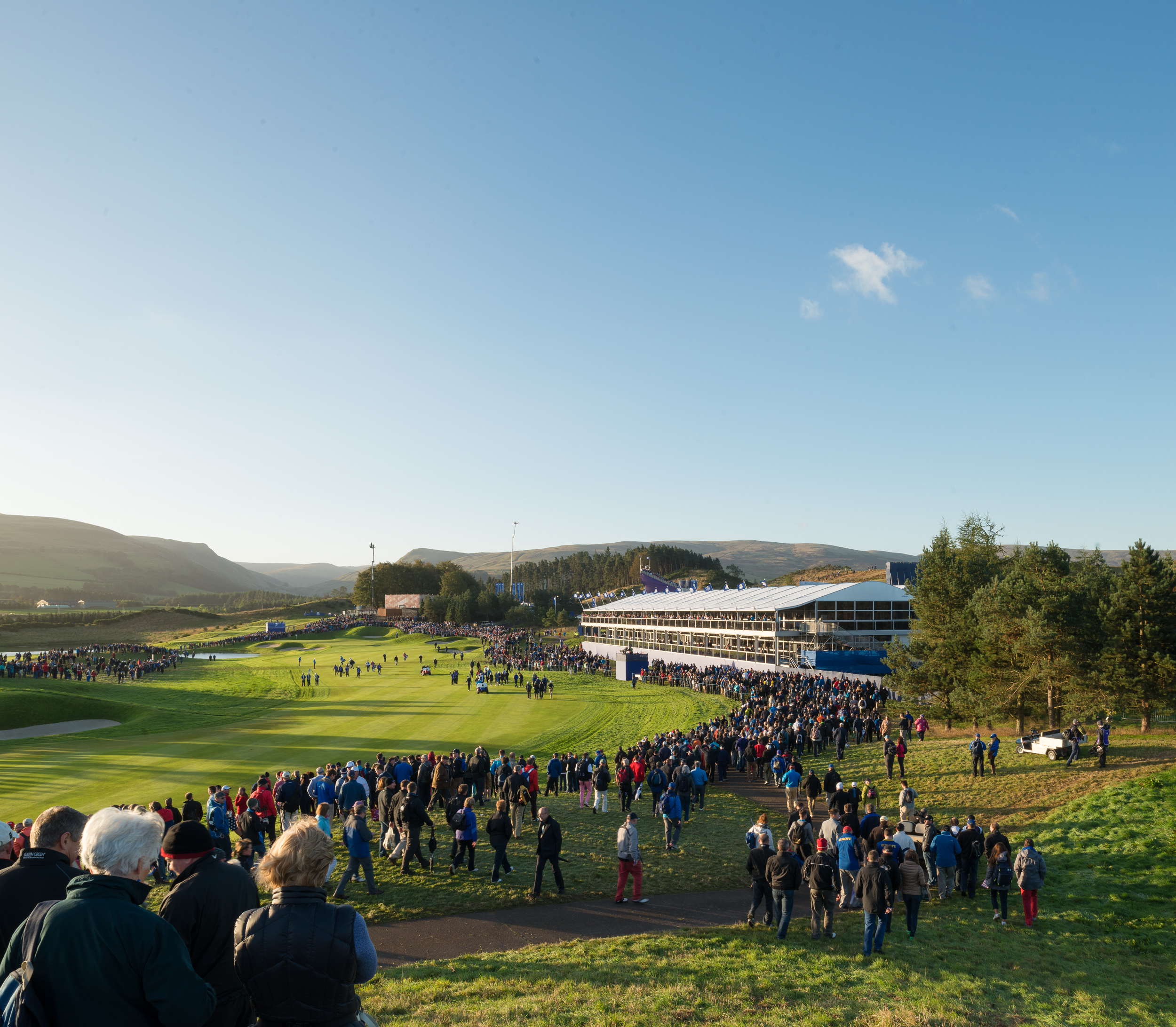
The Ryder Cup, is one of the world’s largest sporting events and organised by PGA of America and Ryder Cup Europe, is described as ‘the greatest golf show on earth.’ In 2014, it was held at the Gleneagles resort in Perth and Kinross, Scotland. Organisers worked tirelessly alongside their suppliers, including De Boer, to ensure that participants and spectators enjoyed the ‘best ever staging of a Ryder Cup by media, public and organisers alike.’
De Boer supplied approximately 20,000 sq m of temporary accommodation including the Ryder Cup Tented Village, which housed retailers and food service outlets including the Champagne and Seafood Restaurant, the enormous Ryder Cup Striding Man Bar and various interactive facilities for visitors to get involved with. The Village was also divided into three distinct areas; the Public Catering Pavilion, Tay Club Hospitality Pavilion and the Merchandise Pavilion. All of the these structures were shoehorned into a space normally occupied by the Driving Range, so there was a very tight build schedule to adhere to in order to minimise the lost practice facility for golfers.
On the second hole, De Boer built a new structure especially for the event: the curved roof Anova Vista Double Decker, to house the Tweed Club hospitality pavilion. By using innovative curved roof technology, we created a 5m integrated canopy, which spanned the terrace overlooking the 2nd hole from tee to green. Combining this with our ground floor structure, the Premier, this produced the ideal space for spectator sport. It doubled the usual capacity of the structure whilst ensuring unrestricted views, and catapulting guests into the heart of the action.
As a result of the impeccable planning from Ryder Cup organisers and their strong supplier bonds, a report from Sheffield Hallam University’s Sport Industry Research Centre (SIRC) has since backed up claims of Scotland hosting the “best ever” Ryder Cup. The report found high levels of spectator satisfaction with their Ryder Cup experiences (92 per cent), with 71 per cent of those attending reporting their experiences as excellent.
Inspiring innovation
It is my belief that innovation lies at the heart of internationally acclaimed events and exhibitions and it is our responsibility, as suppliers, to constantly deliver creative and innovative solutions to enhance the user experience.
At the 2016 Mobile World Congress in Barcelona, one of the largest conventions in the world, we teamed up with the Congress organisers to provide absolutely perfect acoustics and mobile communications – an absolute expectation from exhibitors and guests. In addition, with seven different auditoria, each offering simultaneous presentations, it was essential that each one was soundproof.
Developed by De Boer’s Research and Development division alongside French specialists, we used an ‘Acoustic Barrier Mat’ system throughout the Congress to absorb sound. The Barrier Mat system prevents sound bouncing between hard surfaces and reduces sound reflection meaning that all our structures benefited from improved sound quality. Noise between interiors and exteriors was also heavily reduced, meaning that the seven auditoria benefited from more comfortable sound levels.
Exhilarating Experiences
Ultimately, it is the exhilarating experiences that guests will remember, like the spectacular automated show that launched the opening of the new APM Terminal Maasvlakte 2 in the Port of Rotterdam – the most advanced shipping terminal in the world.
Working alongside BIND, our team based in the Netherlands built a floating theatre for the opening. The robotic terminal was opened by King Willem-Alexandar and international guests were treated to an extraordinary show watched from the floating theatre that featured 16 large lit up video screens mounted on containers that moved through the terminal.
Similarly our Spanish team built a glamorous two storey structure to house the hospitality pavilion at the Real Club de Tennis Barcelona, Spain’s oldest tennis club, for the Barcelona Open Banc Sadadell championships. The ATP World Tour 500 clay-court tournament is one of the most important events in Spanish tennis and on the Barcelona social calendar.
De Boer designed the hospitality pavilion and splendid interiors for the upscale restaurant on the first floor and the village lounge on the ground floor, both with a sophisticated atmosphere that reflected the overall tone of the championships. Tennis fans enjoyed varied cuisine, glittering parties and concerts that lasted until dawn.
In today’s competitive events industry, only the very best events will stand out from the crowd and leave a lasting impression on visitors, organisers and exhibitors. It is our responsibility, as suppliers, to develop new innovative solutions that continue to enhance events and deliver world class experiences – it’s time to #getinspired. -
Populous: Design that makes a difference
Temporary event and infrastructure design is increasingly becoming recognised as the most cost effective and sustainable solution for organising committees and venue managers planning to host major international sporting events.
As temporary systems become increasingly sophisticated and trusted to provide world-class competition standards, the methods of integration and appropriate use are continuously evolving to match the complexity of the design ambition. The flexibility capacity added to a venue, and the embodied efficiency of a tailored business solution, can lead to year-round use and increased profitability. As a result, the potential for temporary works should be considered in the first stages of any event bid planning process.
Legacy strategy
From the outset of the design process, we consider the way in which the venue will be used in future phases at the very heart of the project. Event design in this way can be considered the first stage of construction.
The legacy strategy guides how the temporary venue begins to take its place on site. Certain services such as technology spaces and broadcast facilities can be embedded entirely into the permanent infrastructure, while other components such as seating bowls and ground works can be partially retained to maintain future expansion capabilities. Other areas are configured using components such as tents, canopies, cabins and fences that can be removed in their entirety, packed up and used at another event.
Enhancing character
The first step in creating an appropriate design that perfectly suits the event is to consider all aspects of the character and spirit of the occasion, and to react to it with built forms that frame and enhance that character rather than imposing a design upon it. The result is designs which respond to the way in which the event is watched and experienced, and can help to enhance that feeling amongst the spectators.
At London 2012, loud music and constant cheering played a huge part in creating the atmosphere for a number of sports; in these venues we worked hard to bring the spectators as close to the action as possible so as to spur the athletes on. By contrast, in other arenas silence was requested during the competition and applause came only on the completion of a performance. The explosive eruption of applause, within enclosed and intimate seating bowls following a tense silence, had a drama of its very own.
Of course, some sports had a completely unique character, such as the party nature of the beach volleyball tournament. At London 2012 and at Baku 2015, dancers would emerge between matches in cheerleader style and energise the audience. Though an elite sport was being played, putting on a spectacular show was also a key part of this event.
Invisible by design
The careful layout of each constituent element of the functional areas, their juxtapositions and arrangements, enables efficient venue operations and easy orientation.
A critical aspect of operational design is knowing and understanding how to separate the public-facing areas from the back of house facilities. Security systems, crowd management planning and all-accessible integration are crucial to the staging of any event, but each must be designed to integrate as seamlessly as possible, to have the smallest visual impact.
The most challenging, yet rewarding piece of our work, is to understand and choreograph all the thousands of moving elements into one organised celebration of sport, without anyone noticing all of the work behind the scenes.
Spectator experience
Naturally, different sports encourage different behaviors in spectator movement. From the arrival profile of fans, the frequency and method of occupying the spectator plazas, all the way through to the way they time their departure, successful temporary overlay design is all dependent on the nature of the event. In designing for and predicting spectator movements, we can collaborate with transport consultants early on in the process in order to use existing transport systems to their optimum level, and design to support it.
Although the same quality of experience is required in whichever location an event is being held, the way in which it is designed and operates can take on the flavour of its host country. In London 2012 the design of the Olympic Park areas were inspired by the theme of the English garden and street parties, with these iconic British community celebration motifs enlivening the spectator plazas. And as we saw recently in Rio, a carnival atmosphere influenced the entire Olympic and Paralympic event, informing all elements of the design and the event identity.
With the makeup and traditions of fans varying greatly across different sports, cultures and parts of the world, there is a fantastic opportunity for the host country to inject its own local flare, showcasing and making the most of local products, industry and youth programs.
Lasting influence
With the unanimous approval of Olympic Agenda 2020 in 2014, it is clear that the Olympic Movement is fully behind the considered use of existing and temporary venues wherever possible, with the goal of reducing costs, improving sustainability and allowing the hosting of global events to become accessible to a greater number of nations and communities.
This design approach is becoming increasingly desired for events at all levels, and the opportunities that event and overlay design affords for regeneration, activation and innovative design can have a lasting influence on everyone who is drawn together around these spectacular occasions.
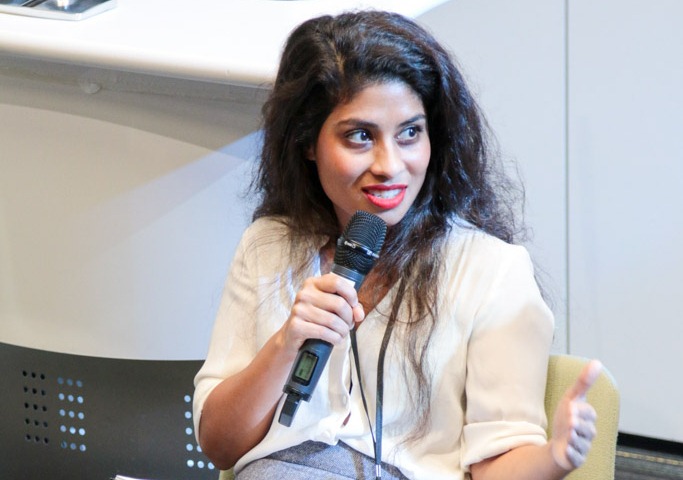
Sooad Islam spoke at Host City 2016 on the panel “Making Event Infrastructure More Sustainable”. Listen on audioBoom