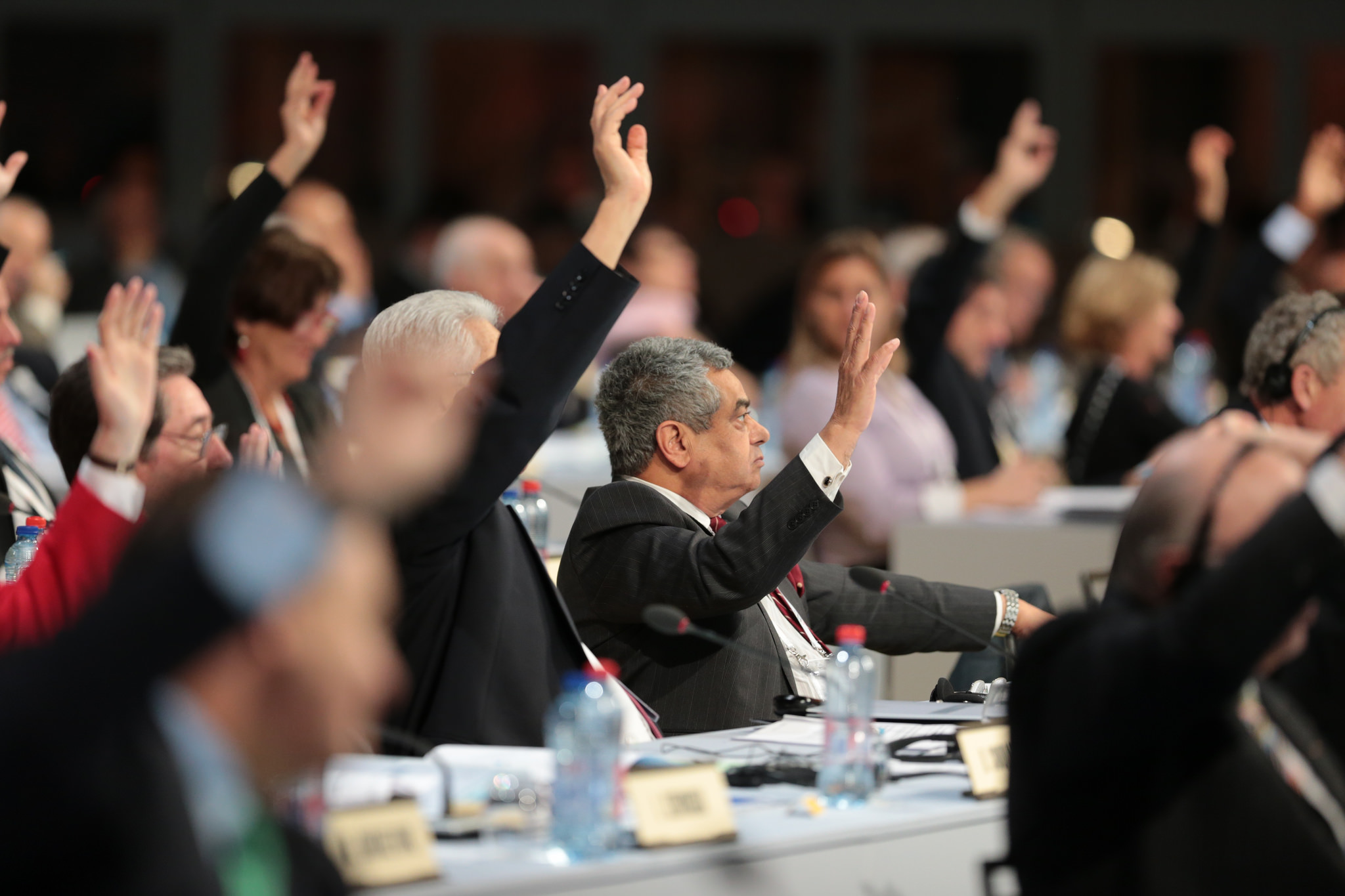
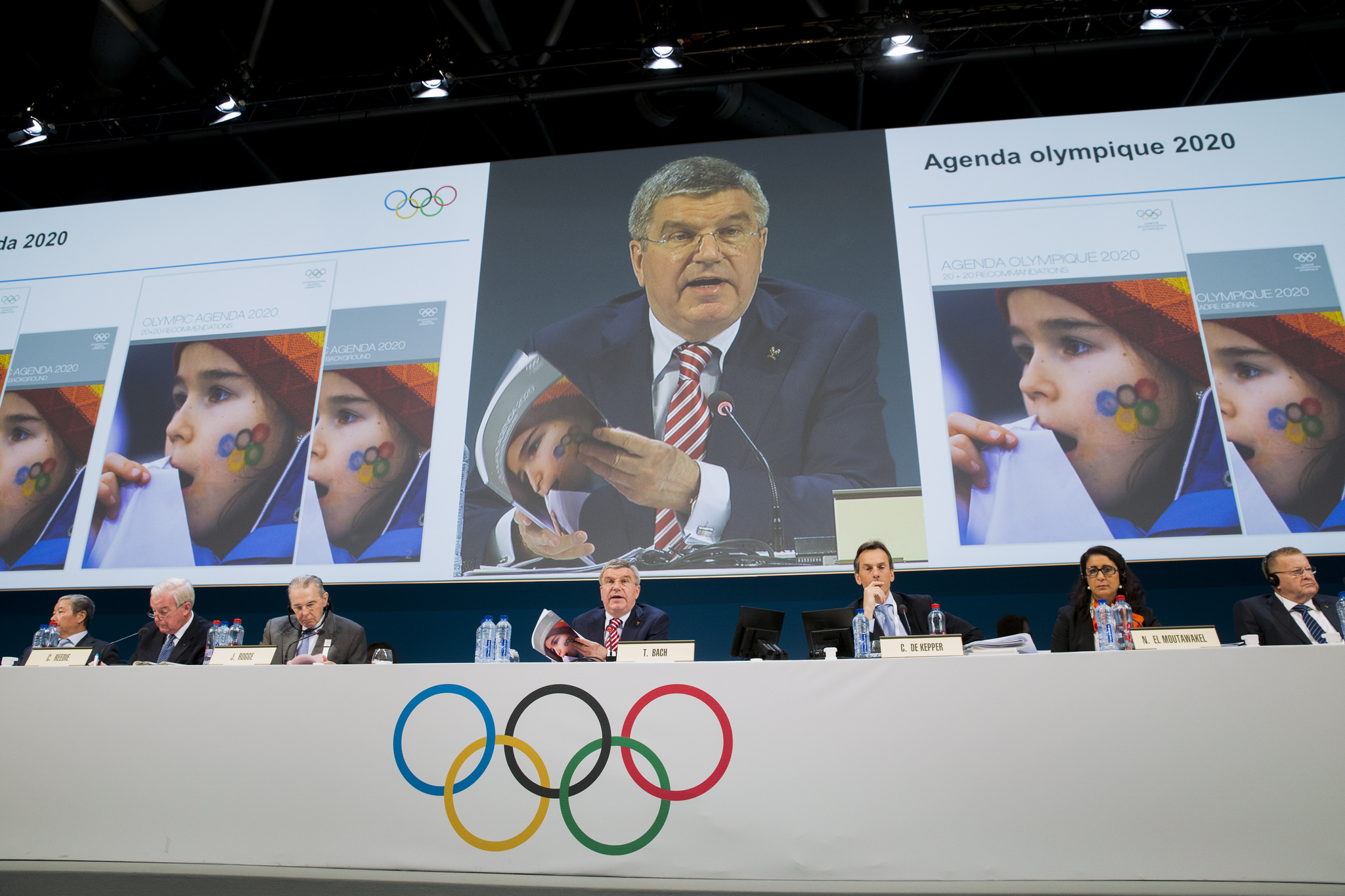
A day ahead of schedule, members of the International Olympic Committee approved all 40 Olympic Agenda 2020 recommendations at the 127th IOC Session in Monaco on Monday.
96 of the IOC’s full membership of 104 were in attendance to vote on the recommendations. IOC president Bach, who instigated Olympic Agenda 2020 shortly after taking to the helm in 2013, praised the members in approving this “strategic roadmap for the Olympic movement”.
Two days had been allowed for the approval process, but all recommendations were approved on Monday, with no votes against and no abstentions. At the close of Monday’s meeting, members gave their unanimous support for the entire set of recommendations in an “en bloc” vote.
“The speed at which Olympic Agenda 2020 was approved showed the great support and determination of the members to make it happen”, president Bach said at a press conference. “It was a very, very positive surprise. But it followed over a year of constructive discussions.”
The changes that will now be put into action include allowing multi-host Games, lowering the cost of bidding for the Games, an age limit on IOC membership and the launch of an Olympic TV channel. Host City contracts will also be made public and will now include clauses on worker’s rights, environmental protection and discrimination on sexuality.
Limiting the age of IOC membership to 70 will have an impact on a number of IOC members. FIFA president Sepp Blatter, for instance, will now have to relinquish his IOC membership in two years’ time.
“Some of the recommendations were not easy for certain members to swallow. Some may have hoped for no recommendation or a different recommendation on a specific issue,” said Bach.
“So it was encouraging that regardless of their individual interests or positions, they were determined to make Olympic Agenda 2020 a success. Speaking of the members, I have a great deal of respect for them to do this.”
The first recommendation approved relates to reducing the cost and boosting the appeal of bidding. Future bids will now be able to incorporate venues in more than one city and potentially than one country.
This would enable countries with suitable venues in more than one city to avoid investing heavily in new sports infrastructure, which is often met with large-scale public opposition.
The changes were also greeted with approval from a contender for the 2022 Olympic Games.
“Since the start of the 2022 Bid process, the Beijing 2022 Bid Committee has been paying close attention to all developments related to the Olympic Agenda 2020 and strongly supports all its recommendations,” said Madame Wang Hui, spokesperson for Beijing’s bid for the 2022 Winter Olympic Games.
“We highly appreciate the IOC’s approach and will work to implement these reforms.”
Tag: Agenda 2020
-
Multi-host Olympics allowed as Agenda 2020 approved early
-
High hopes for Olympic reforms create tough situation for IOC
The unanimous adoption of Olympic Agenda 2020 reforms may have had a galvanising effect internally on the IOC, but influential figures close to the IOC say the project has created high expectations that may prove difficult to fulfil in good time.
“I am very impressed. It’s a true sign of strength, both for the president and for the capability of change,” Sweden’s National Olympic Committee president Stefan Lindeberg said in an exclusive interview with HOST CITY. “But it’s also creating huge expectation for true change.”
The president of Slovenia’s National Olympic Committee and vice president of the International Skiing Federation, Janez Kocijan?i? was at the IOC session on Monday when Agenda 2020 was adopted.
“The main idea, under the very robust pressure of the president, Dr Thomas Bach, was to start the changes. The process of reform is open and I hope it will continue,” he said, speaking to HOST CITY exclusively.
But he also warned that implementing all 40 recommendations of Agenda 2020 will not be easy. “If somebody is too ambitious, it might be that the reforms stop before they really get started.
“I hope it will go further and I believe in the courage of the president and certain people around him that they will continue like that. But there is a lot of work that needs to be done.”
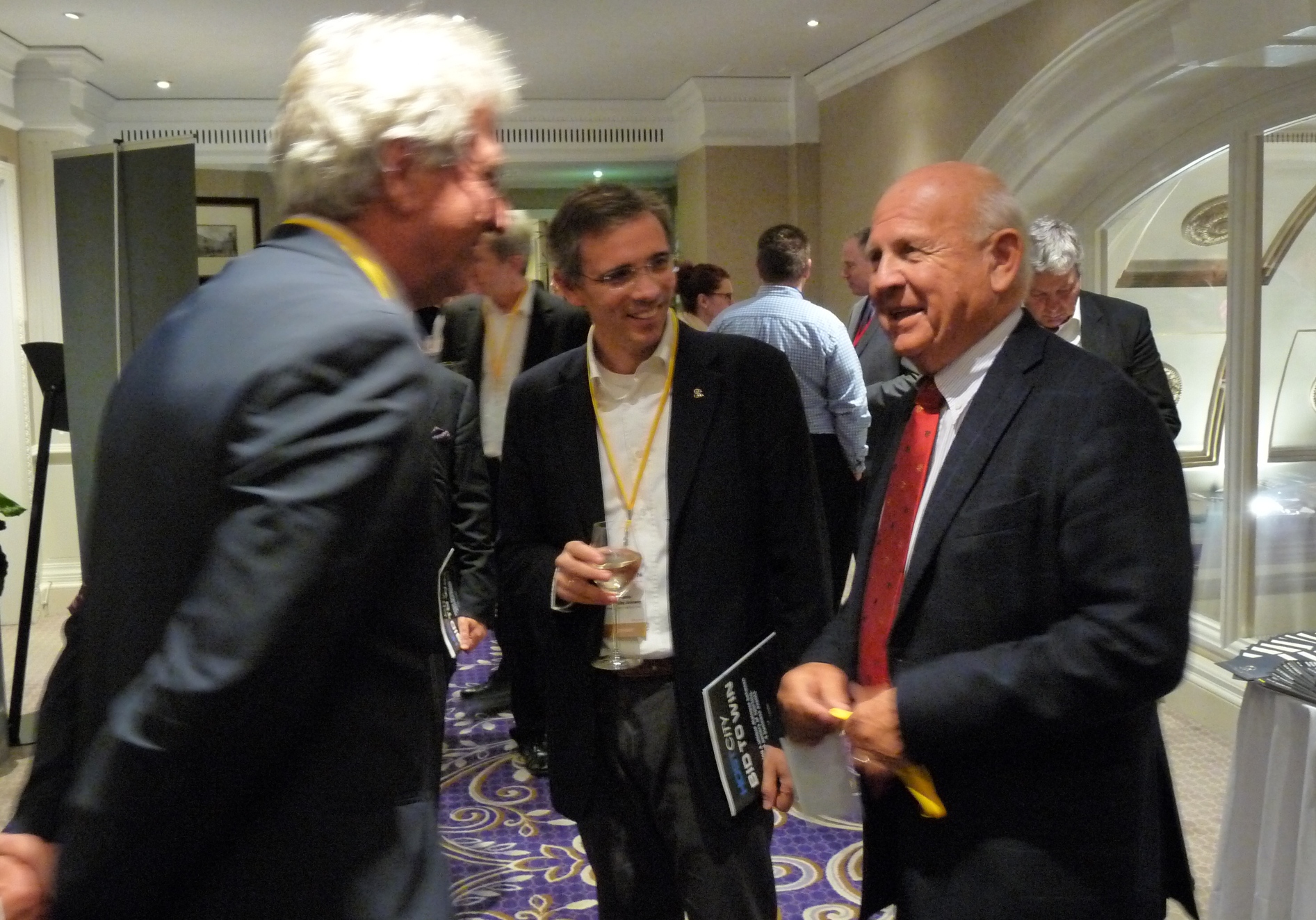
Kocijan?i? and Lindeberg both made valuable contributions as speakers at HOST CITY Bid to Win conference in London in October, where Agenda 2020 proposals were debated in great detail.
Lindeberg was the leader of Sweden’s bid to host the 2022 Olympic Games, which was abandoned due to a lack of political support for the project as the infrastructure costs for hosting Sochi 2014 were perceived to be spiralling out of control.
“The fear among politicians was so massive of taking this perceived risk,” he told HOST CITY.
An important goal of Agenda 2020 is to reduce the cost of hosting the Games and guarantee the sustainability of Games infrastructure – but this will take a decade to achieve, Lindeberg said.
“This is a really tough situation to face for the IOC, because it’s not until 2024 that we can see the full implementation of the new decisions regarding the buildings for the Games.
“They will do what they can to make as much change as possible for 2022 and even for the host city contracts for 2018. Expectations will be very high, so it’s really tough.”
Even aspects of Agenda 2020 that do not relate to physical infrastructure will take time to implement, Lindeberg warned.
“It’s been very positive when you look at the values parts of the Agenda 2020, with inclusion of sexual non-discrimination and workers’ rights. But we need to see results coming up quick so these values will be really shown in upcoming Games, and that’s the tough part.
“Now that the Host City contract is being made public, it’s very important the IOC carry these changes into the contract for 2022. Because if they don’t they will have a problem with credibility.
Neither Lindeberg nor Kocijan?i? were eligible to vote on Agenda 2020 but both stated their full support for the reforms.
“I would have voted for the recommendations, because I believe every process of reform has to be started,” Kocijan?i? told HOST CITY. “Agenda 2020 is a very positive approach because it means the very beginning of reforms. For the time being, I am satisfied with developments.”
HOST CITY contacted the IOC press office for a response to these reactions and a press release was promptly issued, in which president Thomas Bach said: “Following the success of the IOC Session in Monaco and the unanimous endorsement of my fellow IOC members for the Olympic Agenda 2020 recommendations, it is critical that we utilise the momentum and energy we have created throughout the Olympic Movement and start implementing straight away.”
-

NOC leaders call for equal rights in IOC
The unanimous support for the IOC’s Agenda 2020 programme of reform was remarkable, signalling a new era for the modern Olympic Games.
But according to Janez Kocijan?i?, President of Slovenia’s NOC and Vice President of the International Skiing Federation, who was at the IOC Session when Agenda 2020 was adopted a week ago, there was one important stone unturned.
“It is an agenda full of reforms, although in many respects the IOC remains as it was – not only the highest authority of world sport but also a self-electing body,” Kocijan?i? told HOST CITY.
“What some people expected, a greater role of NOCs and sport federations, didn’t happen. Out of 205 recognised NOCs, only one third of them are represented, and that’s not enough.”
The number of International Federations (IFs) represented in IOC membership is also limited, said Kocijan?i?. “There are many representatives of Olympic sports who are not there and who feel a certain discrimination.
“One of the strongest ideas of the international Olympic movement was the fight against discrimination. This should also bring the idea that all sports and all countries should be equal.”
All NOCs are members of the Association of National Olympic Committees (ANOC), which already works closely with the IOC.
“This ANOC structure, which is similar to all other international organisations – the UN, UNESCO, the World Health Organisation and the International Labour Organisation – should step by step be implemented in the IOC, so all countries would be represented. And all the Olympic sports presidents or representatives should be there as well,” said Kocijan?i?.
Rule 16 of the Olympic Charter states that the NOCs and IFs can each have up to 15 IOC members. But Sweden’s National Olympic Committee (NOC) President Stefan Lindeberg says these limits were set a number of years ago and could now be increased.
“This is not a big problem, as I see it now, to move forward in broadening the IOC. ANOC is getting stronger. Together with the IOC, we shape the future.”
Lindeberg led Sweden’s bid to host the 2022 Olympic Games until it was abandoned due to a lack of political support. He then teamed up with the leaders of three other NOCs to publish a paper that exerted a powerful influence on the IOC’s Agenda 2020 discussions.
“The NOCs had a strong voice on Agenda 2020. When we were working with Germany and Switzerland and Austria, we really felt that that had an impact on it, or at least came to the same conclusion that Agenda 2020 did.
“We are big winter nations – if we can’t take the Games, that’s a really big warning bell.”
These interviews were conducted the day after the IOC members voted unanimously to implement Agenda 2020. Kocijan?i? and Lindeberg were also speakers at HOST CITY Bid to Win conference
-
IOC opens new invitation phase for 2024 Games bids
The International Olympic Committee has launched its reformed bidding procedure with a new invitation phase, during which National Olympic Committees can discuss their plans “at their earliest convenience” before the application deadline of 15 September.
This new consultative approach, launched four weeks after the adoption of Agenda 2020, will help NOCs to ascertain the viability of bidding for the Games before committing in full.
These early discussions with the IOC have the potential to reducing the cost of bidding and organising the Games for cities – one of the key aims of Agenda 2020.
The concept of “shaping the bid process as an invitation” has been central to the Agenda 2020 review right from its inception.
Another key aim of Agenda 2020 with regard to bidding process is to strengthen the evaluation of bid cities to more clearly highlight key opportunities and risks.
Until now, the bidding process for the Olympic Games has been split into two phases – the “applicant” and “candidature” phases, which will now follow the invitation phase.
In the applicant phase, cities send in an application file which is studied by an IOC working group, who assess the bid for the IOC executive board. If approved by the board, the bid then progresses to the candidature phase, which requires much more detailed plans in the form of a candidature file and site visits.
Interested NOCs and cities will now be able to receive “various levels of assistance and feedback” between now and the 15 September deadline for officially committing to a bid.
“Bidding for the Games is not a tender for a franchise, and there is no one-size-fits-all solution,” the IOC said in a statement.
“The bid process is about making proposals and offering solutions that will deliver excellent Games, with no compromise on the field of play for the athletes while also meeting the needs of the city and region to ensure the Games leave a positive, long-term, sustainable legacy.”
Cities considering bidding for the Games are encouraged to place greater emphasis on the use of existing, temporary and demountable venues.
During the invitation phase, the IOC will inform interested parties of the “core requirements” necessary to organise the Games in order “to assist interested cities and their NOCs to develop a project that best meets each city’s unique long-term development needs.”
The IOC also expressed its satisfaction with the “strong interest” in hosting the 2024 Olympic Games, with the NOCs of Germany, Italy and the United States already indicating their intention to bid. -
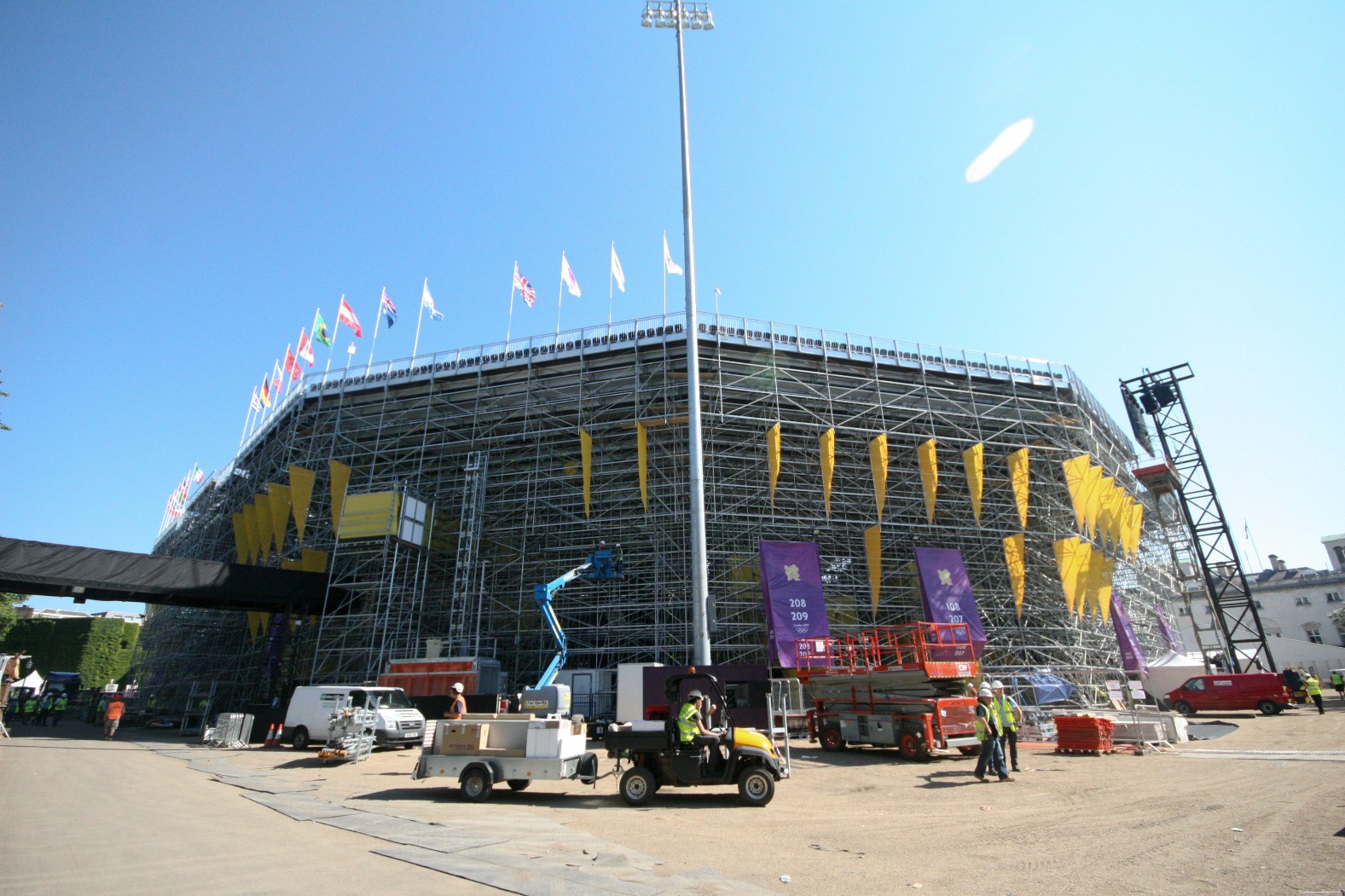
Temporary venues must innovate to meet demand, say IOC and UEFA
With growth in demand for temporary infrastructure set to continue to grow from one event to the next, innovation will be crucial to keep pace with this demand, according to senior officials at the International Olympic Committee (IOC) and the Union of European Football Associations (UEFA) speaking at the first conference of the Association of Global Event Suppliers (AGES).
“Temporary infrastructure is crucial for the operation of large events. The demand for such venue infrastructure for media, security, logistics, hospitality and fan zones is increasing from event to event,” said Martin Kallen, director of UEFA operations division and CEO of EURO 2016 SAS – the organisation responsible for all operational aspects of Europe’s biggest football tournament.
There are major business opportunities for suppliers of temporary infrastructure at the upcoming UEFA EURO 2016 in France, Kallen said.
The recently adopted Olympic Agenda 2020 will drive demand for temporary infrastructure, said Xavier Becker, Head of Venues, Infrastructure & Services at the IOC.
“The IOC wants to actively promote the use of existing and temporary infrastructure to contribute to more sustainable and cost effective solutions,” he said.
“Furthermore the IOC wishes to develop the awareness regarding temporary infrastructure and to promote an earlier engagement with the suppliers market.
“I would also encourage the industry to develop innovative solutions, and to think about new reusable large facilities to provide more flexibility for organizers.”
The need for innovation was also stressed by Kallen, who said “Suppliers need to fulfil high selection criteria. Quality, reliability and the capacity to innovate are key.”
The conference, which took place in Derbyshire, UK on 2 and 3 March, was the first gathering of members and associate members of AGES who, along with other industry experts, discussed the challenges and opportunities for temporary infrastructures and demountable venues for large events.
The event was organized by AGES and hosted by Eve Trakway.
“We want AGES to become the platform for the industry and establish a framework and forums to become an integrated part of the delivery solution for all key stake holders,” said Daniel Cordey, chairman of AGES.
“AGES will approach governmental bodies and organisers, who face the challenge of finding appropriate solutions, to explain the huge possibilities of the industry and to help develop true legacy plans for their events.”
Since being founded by 18 members in June 2014, AGES has almost doubled in size.
“Looking down the growing list of members it is very encouraging to see the incredible level of event expertise assembled around one table,” said Guy Lodge, an honorary member of AGES who has been involved in three major events in Russia, Scotland and Brazil.
“It drives home the challenges that the industry faces, around budget pressures, varying procurement practices and regulatory compliance”.
AGES is a not-for-profit-making organisation based in Switzerland formed to become the label for quality and reliability for temporary infrastructure works for major events.
Its members are market leaders in the international event suppliers industry and front runners in the development of new products and services. Together they annually deliver services and works for close to 1.5 Billion EUR.
AGES seeks to present the capabilities of the industry to governmental bodies, key stakeholders and organisers of large sports events, to develop standards and procedures, to facilitate interaction and to obtain cost-effective infrastructure solutions for future events.
For more information, please visit www.ages.international or contact Daniel Cordey, Chairman of AGES at info@ages.international or by telephone +41 79 407 06 06 -
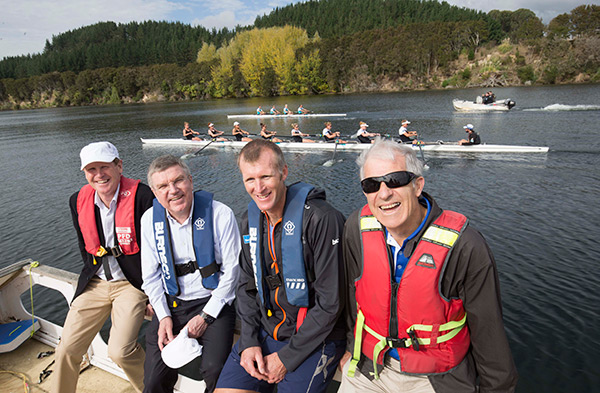
IOC president encourages New Zealand Olympic bid
On his first visit to New Zealand on Tuesday, president Thomas Bach said the IOC is ready to look into a wider range of potential host nations – including New Zealand.
“You cannot restrict the right to host the Olympics to just 20 countries”, he said at a press conference.
“The Olympic Games are universal and we should open doors and windows. If New Zealand is ready to look into it, we are ready.”
He also said the changes brought about by Olympic Agenda 2020 encouraged countries to think about how the Olympic Games could fit into the social, economic, environmental and sporting needs of a country.
Bach was visiting to open the new National Olympic Committee headquarters in Auckland, where he was welcomed with a traditional “powhiri” welcome ceremony.
“Like the Olympic Movement, the welcome ceremony signifies peace, friendship and equality, and it shows how New Zealanders embrace the same values we do of tolerance and understanding through sport”, he said.
He was greeted by IOC Members Barry Maister – who is also tourism director at Destination Marlborough, and Barbara Kendall, who is also vice president of the International Surfing Association.
He also met with Minister for Sport and Health, Dr Jonathan Coleman, as well as members of the National Olympic Committee and national sports federations.
On Wednesday, Bach visited athletes at the Rowing New Zealand High Performance Centre in Cambridge, and after a visit to the local school he went on to the Avantidrome home of New Zealand Cycling, where he met a number of New Zealand Olympic medallists and hopefuls for next year’s Games in Rio de Janeiro.
President Bach discussed discussed Rio 2016, changes to the sports programme and the Olympic Agenda 2020 reforms with a group of 20 New Zealand athletes at the Avantidrome.
-
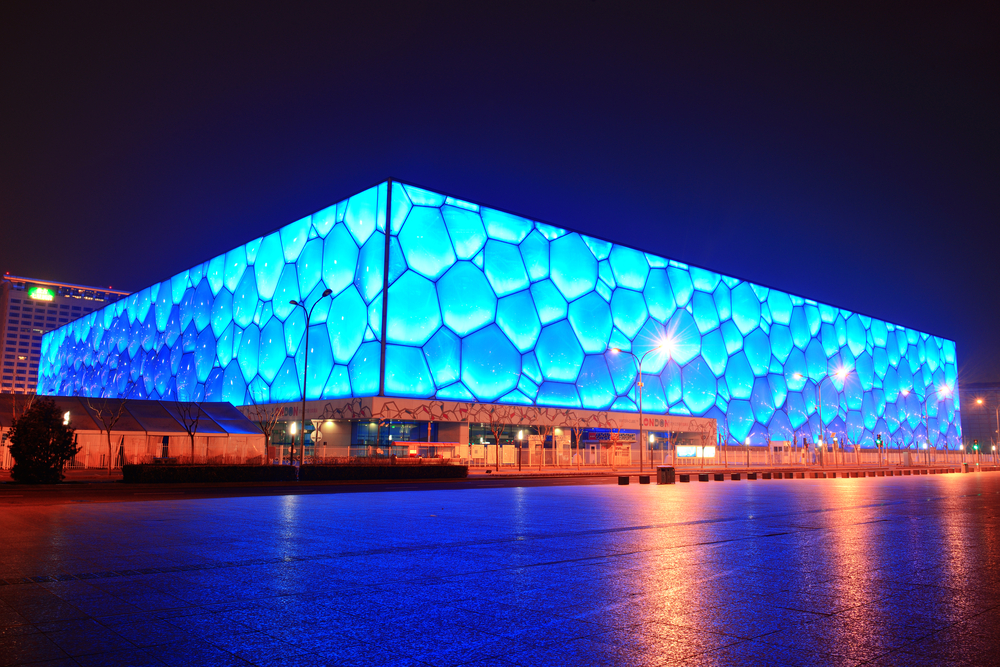
Beijing promises economical 2022 Games
The Beijing 2022 bid committee has promised to keep costs down on being elected as the host city of the 2022 Winter Olympic and Paralympic Games at the 128th IOC session in Kuala Lumpur on Friday, with the International Olympic Committee citing manageable infrastructure costs as a key factor in the success of the bid.
“Just as with the Beijing 2008 Summer Games, the Olympic Family has put its faith in Beijing again to deliver the athlete-centred, sustainable and economical Games we have promised,” the newly elected host of the 2022 Olympic Games said in a statement issued to the press.
Existing venues, such as the iconic Bird’s Nest stadium built for the Games in 2008, will feature in the Games. US$1.5bn will be spent on Olympic villages, sports venues and other infrastructure, a sum that is “significantly less than for Olympic Games in the past”, according to the IOC.
“Olympic Agenda 2020 calls for a stronger focus on sustainability, legacy, and transparency, while making it easier for host cities to tailor Games that meet their needs rather than trying to fit a template,” the IOC said in a statement issued after the election.
“Beijing took advantage of the flexibility provided by Olympic Agenda 2020 to improve its plans for the Games and reduce costs.”
Despite being widely viewed as the runaway favourite, Beijing won the vote narrowly with just 44 to Almaty’s 40. Only 84 of the 100 International Olympic Committee members participated in a vote that had to be recast after technical difficulties.
The Beijing 2022 Winter Games will immediately follow the 2018 edition in PyeongChang, South Korea. Developing winter sports further in the Asian market promises to be a valuable effect of hosting the Games in Beijing.
“Beijing aims to use the Games to accelerate the development of a new sport, culture and tourism area, and to encourage interest in winter sports in a region that is home to more than 300 million people in northern China,” the IOC said.
The Beijing 2022 bid committee said “This will be a memorable event at the foot of the Great Wall for the whole Olympic Family, the athletes and the spectators that will further enhance the tremendous potential to grow winter sports in our country, in Asia and around the world.”
Beijing will be the first city to host both a summer and winter edition of the Olympic Games – facilitated in part by hosting many skiing events at Zhangjiakou, 220km away from Beijing. Artificial snow is also likely to play a role in enabling the competitions to take place.
The host city contract signed by Beijing representatives and IOC president Thomas Bach has been made public for the first time.
Meanwhile, the “Olympic capital” city of Lausanne was elected as the host of the 2020 Winter Youth Olympic Games at the IOC Session, garnering 71 votes to Brasov’s 10.
The IOC Evaluation Commission singled out Lausanne for its good use of existing, temporary and demountable venues, which is in line with Olympic Agenda 2020 sustainability reforms.
-
IOC draws five strong candidates for 2024 Olympic Games
The International Olympic Committee has welcomed an “outstanding” pool of candidate cities bidding for the 2024 Games.
Budapest, Hamburg, Los Angeles, Paris and Rome all submitted applications to host the 2024 Olympic Games before the IOC’s deadline of midnight on Tuesday.
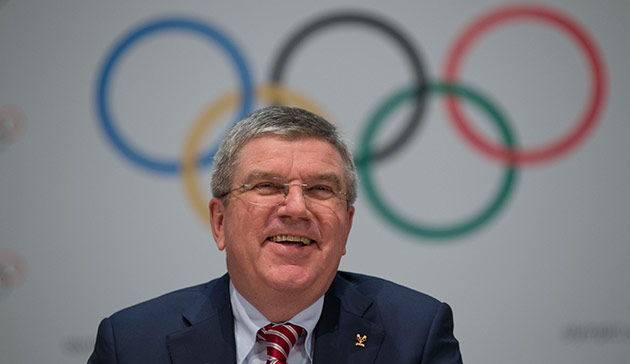
“We are welcoming five outstanding and highly qualified Candidate Cities,” said IOC President Thomas Bach.
With four major European cities and the biggest city in North America in the running, the profile of the cities is a marked change from recent Olympic Games bidding, which has been dominated by, and awarded to, cities from outside these regions.
The most recent IOC bidding process, for the 2022 Winter Olympic Games, began with six applicant cities but only Beijing and Almaty proceeded to the candidature stage.
Since then, the bidding procedure has been changed with the implementation of Olympic Agenda 2020, the programme of reform introduced by IOC president Thomas Bach.
One of the changes brought in is the removal of the “applicant phase” – so the five cities that have applied to host the Games are immediately considered to be candidates, after an “invitation phase” that has been taking place in recent months.
“Olympic Agenda 2020 has shaped the Candidature Process more as an invitation and the cities have responded by engaging with the IOC through dialogue and cooperation,” said Bach.
The removal of the applicant phase means that the five bidding cities will remain in the race until the host city election until 2017.
The central focus of Agenda 2020 is reducing the financial burden of hosting the Olympic Games and making sure that hosting the event fits with the city development plans.
“In the new invitation process the IOC learnt that all the candidates are embracing Olympic Agenda 2020 from their respective vision for the future of their city,” said Bach.
“Sustainability and legacy are the cornerstones of each candidature.”
A number of other cities and regions had been discussing the possibility of bidding for the 2024 Games.
A possible bid from Toronto, which hosted a successful Pan American Games earlier this year, was said to be on the cards but ruled out at the last minute.
Speaking at a press conference on Tuesday, Toronto mayor John Tory said that an Olympic bid would form part of the city’s future plans.
“I can’t look people in the eye at this point in our city’s development and tell them that an Olympic bid is the best use of our time, our energy or our investment,” he said.
“But now I can look in the eyes of my colleagues at other levels of government and say this, together we should be making the investment talked about in the context of the Olympics.”
Commitments to good governance, transparency and ethics were also key features of Agenda 2020 and the IOC has published all the documents related to the candidature, including online for the first time at this stage in the process.
Changes to the host city contract include: reference to sexual orientation in the non-discrimination clause; the freedom of media to report on the Games; and a stipulation for organisers to comply with applicable local, regional and national legislation and international agreements “with regard to planning, construction, protection of the environment, health and safety, labour and anti-corruption laws”.
The IOC has also reduced the cost of bidding, with candidate cities expected to make just three presentations instead of nine, with the travel cost for these presentations and the cost of visiting IOC evaluation commissions to be covered by the IOC.
The IOC has also committed to contributing USD 1.7 billion in cash and services to the organising committee for the 2024 Olympic Games.
The host city of the 2024 Olympic Games will be elected by all IOC members at the 130th IOC Session in Lima, Peru in 2017.
-
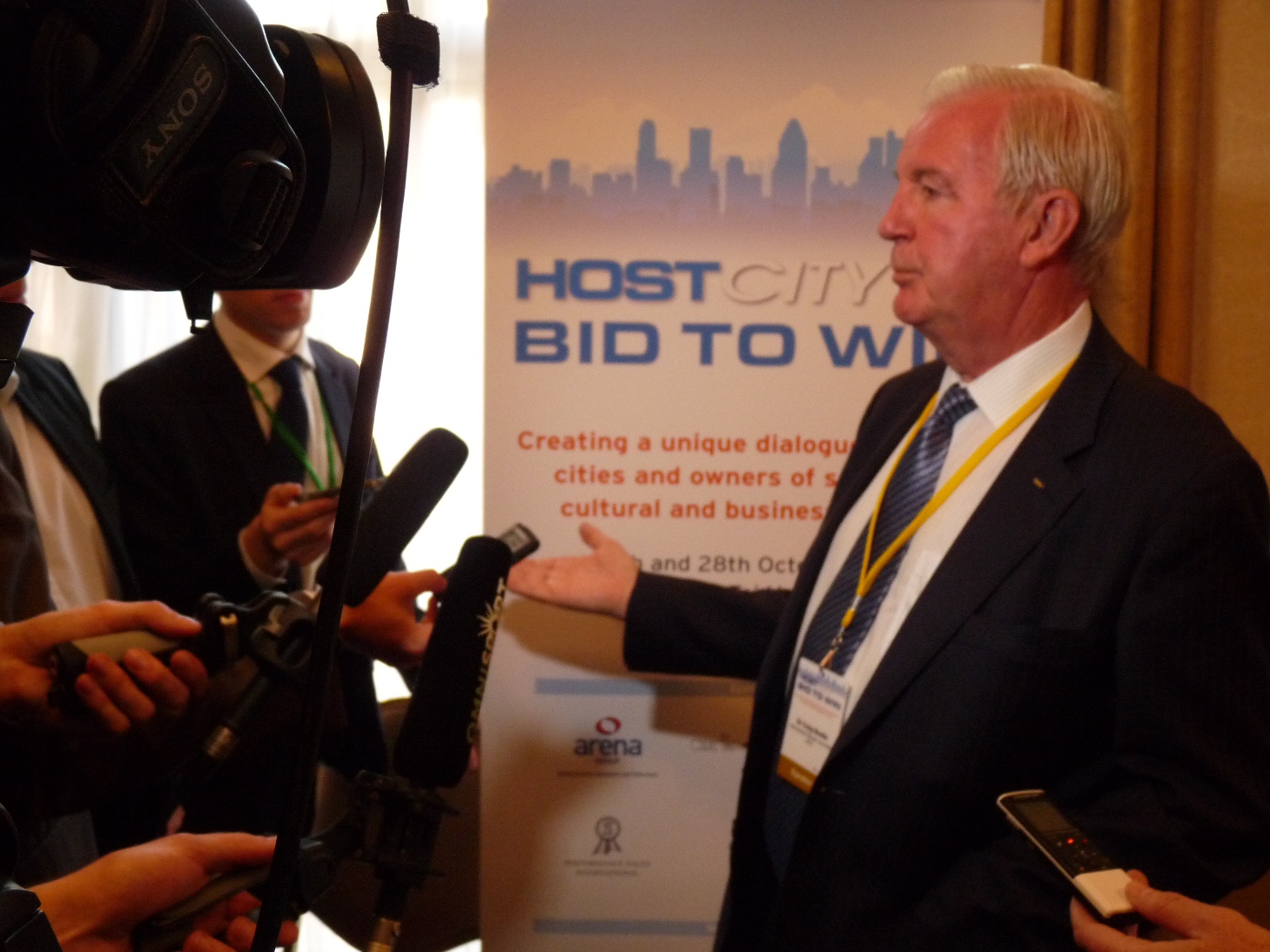
HOST CITY 2015 will help cities get ahead – Sir Craig Reedie
Attending HOST CITY 2015 in Glasgow on 9th and 10th of November is an attractive opportunity for cities to get ahead in the competitive international market of hosting major events, according to keynote speaker Sir Craig Reedie, IOC Vice President.
“From my point of view of being involved in HOST CITY 2015, I am delighted that the event is coming to Glasgow, because Glasgow has shown that it is a sporting city with the way it has developed its facilities, the way it ran a major multi-sport event, the Commonwealth Games in 2014, and what it’s been doing since then – not least a couple of hugely successful Davis Cup tennis ties,” said Sir Craig Reedie.
“So if you look at the excitement that generates locally, and the promotion that it gives the city on a worldwide basis, then I think this indicates that the market out there is a buoyant one.
“Cities should be very well prepared to become involved and therefore they should be thinking ahead; they should be innovative – and with a bit of luck they will reap the benefits that Glasgow has.”
Under the theme of “Creative Innovation Connecting Cities with Sports, Business and Culture Events”, HOST CITY 2015 is an opportunity to meet, influence and network with a unique collection of city leaders and cross-sector rights holders and gain intelligence on the challenges and benefits of event bidding and hosting.
Sir Craig Reedie was deeply engaged in the IOC’s own “Olympic Agenda 2020” process of creative innovation, one of the primary aims of which was to make bidding for the Olympic Games more appealing to cities.
“We came up with a coordinated and sensible view of how we wanted to run the Games but also to promote the Olympic movement for the future.
“There were some fairly dramatic discussions on the bidding process of the Games. We wanted to make it more inclusive, we wanted to make it more cooperative, we wanted to make it cheaper, we wanted to make it encouraging to more cities to become involved.
“In the process of bidding for sporting events, it’s a competitive field. The Olympic Games are the greatest show on earth; it’s important that they maintain this status. It’s important that the athletes regard them as the greatest show on earth and something they really want to take part in.
“So therefore a process of change is a perfectly reasonable thing to undertake.”
More than 200 delegates have already confirmed their attendance at Host City 2015. Read the agenda and Register at www.bidtowin-hostcity.net to get involved and get ahead.