Changes to the IOC’s bidding procedure have attracted a “very considerable field” of five candidate cities, all of which are expected to stay the course until the host city election in September 2017, IOC Vice President Sir Craig Reedie CBE told HOST CITY in an exclusive interview.
“The change in the candidature rules, which came out of the whole reform process called Agenda 2020, seems to have attracted a very considerable field of really good cities,” he said.
“The big addition has been the invitation phase before a National Olympic Committee decides finally to put a city into the candidature role.”
This new invitation phase ended on 15 September. “For several months before that, cities that were thinking of bidding for the Games, and the National Olympic Committees, came to meet the relevant people in the Olympic Games department and the candidate cities department of the IOC to sit down and work out exactly how the Games would fit into their city; how it would provide legacy; how it would be sustainable; how it would fit into city plans.
“That’s a complete change from the previous process, where the IOC had a very detailed list of requirements and cities bid against that list.
“So there is a major change there and I understand that it has been welcomed by the cities,” said Sir Craig Reedie, who is delivering a keynote speech at HOST CITY 2015, which takes place in Glasgow on 9th and 10th November under the theme of “Creative Innovation Connecting Cities with Sports, Business and Culture Events.”
The five bidding cities – Budapest, Hamburg, Los Angeles, Paris and Rome – have all progressed to the candidature phase, rather than going through the previous applicant city phase, and will now submit their candidature files in three sections.
“So rather than one huge bid book being required at a set date, it’s divided into three sections. There are workshops planned; there are assistances planned to the cities throughout.”
In the previous round of bids for the 2022 Winter Olympic Games, three cities pulled out of bidding during the applicant phase while Olso withdrew in the candidature phase.
The IOC’s new and more consultative adopted now means that such a fallout is unlikely to happen, Sir Craig Reedie said.
“It is not beyond the bounds of possibility that a city could come back and say we’re not taking it any further – I think that’s unlikely in the sense that a lot of work will have gone into this, a lot of discussions have gone on through the invitation phase. And since it’s going on through a stage by stage basis I think it’s highly unlikely that people will withdraw.
“The end result of that is that we will have five cities presenting to the Session on the ultimate decision to be taken in Lima in Peru in 2017.”
Asked if it was a relief when Los Angeles stepped forward to take the place of Boston’s abandoned bid, Sir Craig Reedie said: “Yes, I think the USOC have all but admitted that their process might not have worked in the selection of Boston.
“But, with Boston’s withdrawal, they were fortunate in many ways that the Los Angeles people were so able to come to the party very quickly and in a relatively tight timeframe.
“Los Angeles has an Olympic record – if they win they will be like London, hosting the third time. The city has changed dramatically over the last few years and I am sure they will come forward with a very good bid.”
The IOC is very pleased to have five cities bidding, Reedie said. “It’s an interesting mix. Paris is looking to celebrate the 100th anniversary of the 1924 Games in Paris and has clear bidding experience.
“Rome hosted outstanding Games in 1960 and there seems to be considerable enthusiasm in Italy and in Rome behind the Rome bid, so they are impressive.
“Budapest has come quite late to the party but again a splendid city and Hungary has a terrific Olympic record.
“It’s interesting that when the German Olympic Committee decided to choose Hamburg as opposed to Berlin, who I suppose before that decision would have been seen to be favourite, immediately there was strong support from Berlin for the Hamburg choice. So again there seems to be a great deal of unity there.
“So it’s a really good field.”
Tag: Agenda 2020
-
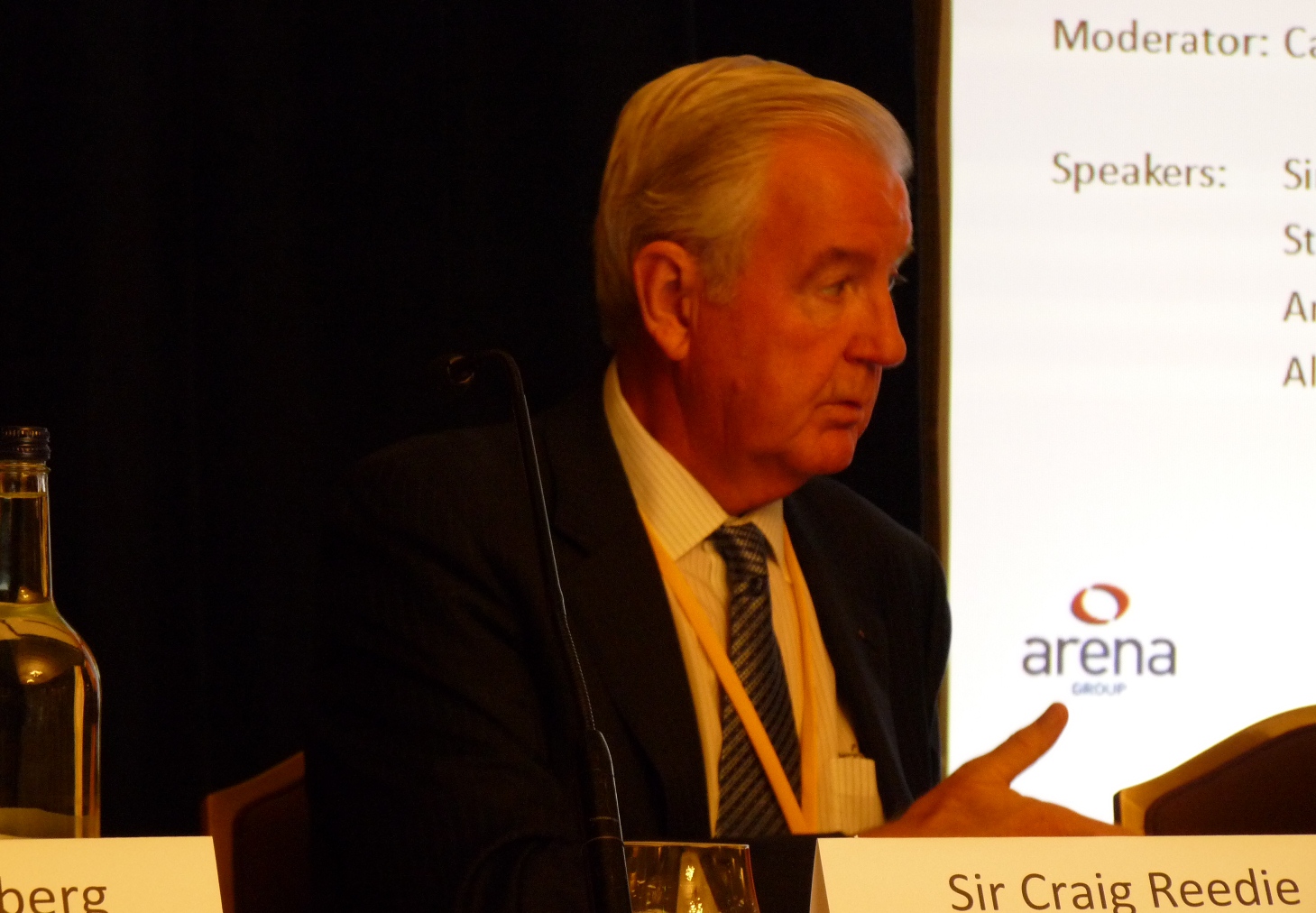
2024 bid cities “highly unlikely” to withdraw – Sir Craig Reedie
-
2024 Olympic bids and the changing Games
HOST CITY: The IOC must be very pleased with the pool of cities bidding for the 2024 Olympic Games?
Sir Craig Reedie: Yes I think we are. It’s quite interesting that the change in the candidature rules, which came out of the whole reform process called Agenda 2020, seems to have attracted a very considerable field of really good cities.
We are now waiting for further information from Paris, from Hamburg, from Rome, from Budapest and from a North American city – eventually, Los Angeles.
HOST CITY: It must have been a relief when Los Angeles stepped forward – was that anticipated?
Sir Craig Reedie: Yes, I think the USOC have all but admitted that their process might not have worked in the selection of Boston. But, with Boston’s withdrawal, they were fortunate in many ways that the Los Angeles people were so able to come to the party very quickly and in a relatively tight timeframe, because they had a number of things to agree with Los Angeles city before the necessity of putting in a formal bid on the 15th of September.
Los Angeles has an Olympic record – if they win they will be like London, hosting the third time. The city has changed dramatically over the last few years and I am sure they will come forward with a very good bid.
HOST CITY: And the other cities represent a different spread to what we’ve seen in recent bidding procedures.
Sir Craig Reedie: Yes, it’s an interesting mix. Paris is looking to celebrate the 100th anniversary of the 1924 Games in Paris and has clear bidding experience.
Rome hosted outstanding Games in 1960 and there seems to be considerable enthusiasm in Italy and in Rome behind the Rome bid, so they are impressive.
Budapest has come quite late to the party but again a splendid city and Hungary has a terrific Olympic record.
It’s interesting that when the German Olympic Committee decided to choose Hamburg as opposed to Berlin, who I suppose before that decision would have been seen to be favourite, immediately there was strong support from Berlin for the Hamburg choice. So again there seems to be a great deal of unity there.
So it’s a really good field.
HOST CITY: The Olympic bidding process has changed, hasn’t it – after the new invitation phase, we are now straight into the candidature phase.
Sir Craig Reedie: You have to go back a few years to when the system changed from one bidding system into a two phase system – applicant and then candidate. That has now been refined and the big addition has been the invitation phase before a National Olympic Committee decides finally to put a city into the candidature role.
The closing date was 15 September. So for several months before that, cities that were thinking of bidding for the Games, and the National Olympic Committees, came to meet the relevant people in the Olympic Games department and the candidate cities department of the IOC to sit down and work out exactly how the Games would fit into their city; how it would provide legacy; how it would be sustainable; how it would fit into city plans. And the cities were given a great deal of information from the IOC, as it does have a great deal of information from previous bidding processes.
That’s a complete change from the previous process, where the IOC had a very detailed list of requirements and cities bid against that list.
So there is a major change there and I understand that it has been welcomed by the cities, all of whom have been to see the IOC in the invitation phase, and by other cities who went and subsequently decided not to bid but learned a great deal from the exercise and may do so in the future.
And then we come to the candidature phase, which is divided into three parts.
The first part, which runs until June 2016, is the Vision, Games Concept and Strategy and the candidate city’s “bid book” will be submitted electronically. There will be consultation with the IOC throughout and at the end of that first phase the Executive Board will decide whether the cities will move to the second phase, which runs from June to December 2016 and deals with governments, legal matters and venue funding.
Again, the presentations will be made through the IOC with a great deal of assistance and the Executive Board will again make a decision on moving people forward to the third phase, which is Games Delivery, Experience and Venue Legacy and runs from December 2016 through to the selection in September 2017.
So rather than one huge bid book being required at a set date, it’s divided into three sections. There are workshops planned; there are assistances planned to the cities throughout.
HOST CITY: is there any possibility that any of the cities might not proceed beyond each of these particular stages?
Sir Craig Reedie: The whole point of the exercise with the IOC is to help them to get presentations and plans submitted that actually fit not only what the IOC wants for good Games but also what the cities want themselves. There’s an element of skill and discretion needed in doing that; the IOC have to deal with information from one city on a confidential basis and they have to be fair with all five cities. And if they do that, the system will work.
It is not beyond the bounds of possibility that a city could come back and say we’re not taking it any further – I think that’s unlikely in the sense that a lot of work will have gone into this, a lot of discussions have gone on through the invitation phase. And since it’s going on through a stage by stage basis I think it’s highly unlikely that people will withdraw.
The end result of that is that we will have five cities presenting to the Session on the ultimate decision to be taken in Lima in Peru in 2017.
HOST CITY: Five is a very good number of cities.
Sir Craig Reedie: It’s a very good number. I have very warm memories of five cities presenting in 2005 in Singapore.
HOST CITY: And this is all the result of a process of change initiated by IOC President Thomas Bach, which is reflected by the broad theme of the HOST CITY 2015 conference, “Creative Innovation”. Why the need for change in the IOC?
Sir Craig Reedie: I think the principle that Thomas Bach enunciated, to change or change will be forced upon you, is a good one.
People forget that the previous bidding process was certainly the gold standard in sport the world over. If you find that there is a reluctance to bid – and clearly there was an element of that in the 2022 Winter Games situation – then perhaps you should be prepared to do a little bit of out of the box thinking.
And the whole Agenda 2020 process started with two long four or five day meetings of the Executive Board which were effectively a think tank. We ranged all over the place and at the end of the day came up with a coordinated and sensible view of how we wanted to run the Games but also to promote the Olympic movement for the future.
There were some fairly dramatic discussions on the bidding process of the Games. We wanted to make it more inclusive, we wanted to make it more cooperative, we wanted to make it cheaper, we wanted to make it encouraging to more cities to become involved.
In the process of bidding for sporting events, it’s a competitive field. The Olympic Games are the greatest show on earth; it’s important that they maintain this status. It’s important that the athletes regard them as the greatest show on earth and something they really want to take part in.
So therefore a process of change is a perfectly reasonable thing to undertake.
HOST CITY: What are your expectations of HOST CITY 2015 in Glasgow?
Sir Craig Reedie: From my point of view of being involved in HOST CITY 2015, I am delighted that the event is coming to Glasgow, because Glasgow has shown that it is a sporting city with the way it has developed its facilities, the way it ran a major multi-sport event, the Commonwealth Games in 2014, and what it’s been doing since then – not least a couple of hugely successful Davis Cup tennis ties.
So if you look at the excitement that generates locally, and the promotion that it gives the city on a worldwide basis, then I think this indicates that the market out there is a buoyant one.
Cities should be very well prepared to become involved and therefore they should be thinking ahead; they should be innovative – and with a bit of luck they will reap the benefits that Glasgow has.
-
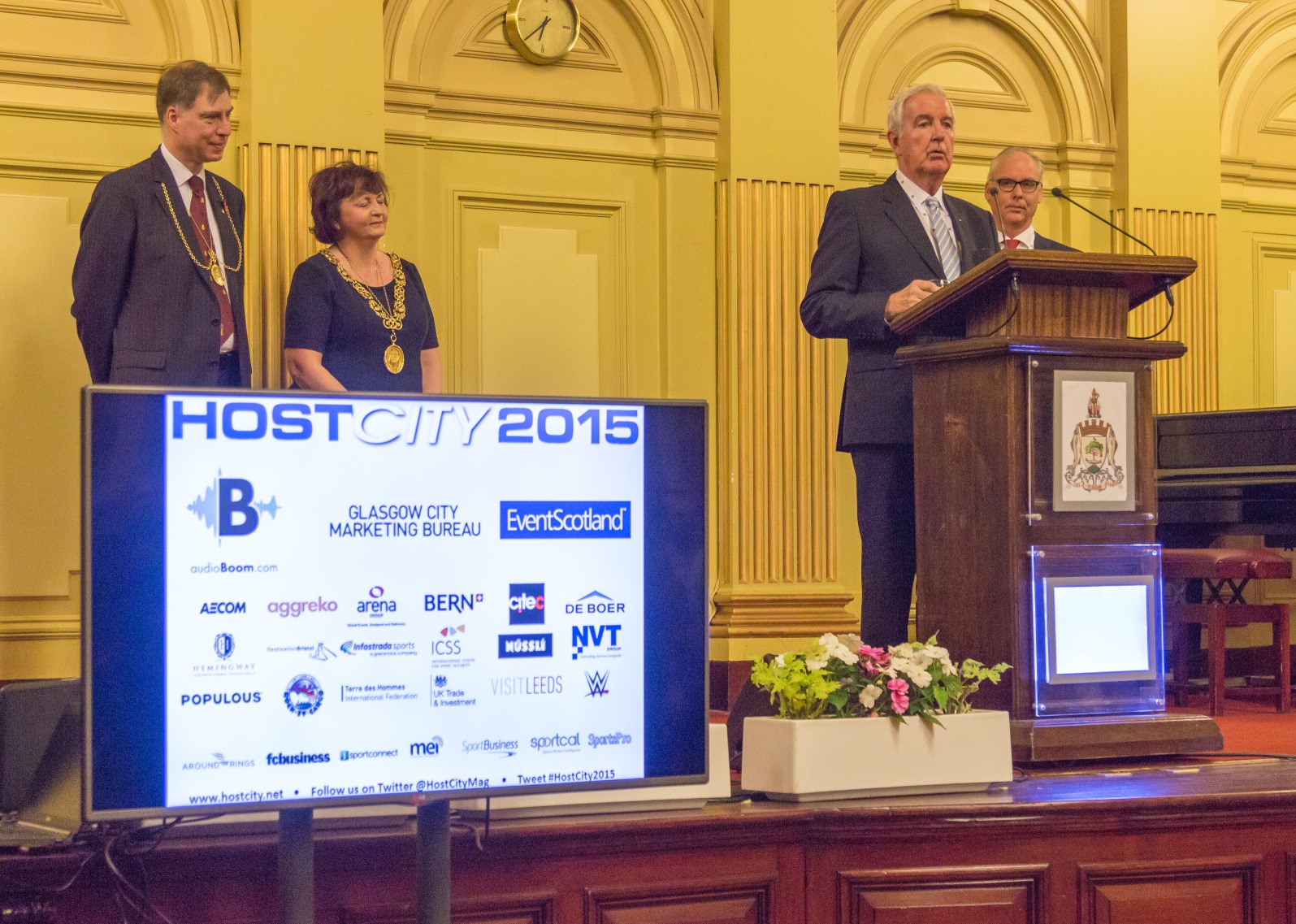
Exclusive: IOC VP Sir Craig Reedie on realising Agenda 2020 and clean sport
When the International Olympic Committee (IOC) approved Agenda 2020, its “strategic roadmap for the Olympic Movement” in 2014, the most evidently urgent issue was to boost the appeal of hosting the Olympic Games. Four European cities had pulled out of bidding for the 2022 Winter Olympic Games, leaving Almaty and Beijing as candidates.
The first three of Agenda 2020’s “20+20” recommendations focussed on reforming the bidding process. These changes have been quickly implemented and the results are evident in the strong field of cities bidding for the 2024 Olympic Games.
But Agenda 2020 is about much more than this, focusing on areas such as sustainability, blending sport and culture, launching an Olympic TV channel, engaging with communities – and an issue that has become extremely pressing for the Olympic Movement in recent months: the protection of clean athletes.
Sir Craig Reedie, in his dual roles as Vice President of the International Olympic Committee and President of the World Anti-Doping Agency, spoke exclusively to Host City about the challenges and opportunities ahead for the Olympic Movement and how the IOC is implementing Agenda 2020.
HOST CITY: How is the IOC encouraging organising committees to boost sustainability and reduce the cost of event delivery?
Sir Craig Reedie: Sustainability covers a wide range of operations. It effectively started under Agenda 2020 with the first two or three proposals, which were to shape the bidding process as an invitation; and then evaluating the cities, assessing key opportunities and risks; reduce the cost of bidding; and then to include sustainability in all aspects of the Olympic Games and the Olympic movement.
By framing the Games bidding process under the invitation, we get the opportunity to speak to a National Olympic Committee which wants to submit a city, and the city itself, right at the start of the programme. We can set out quite clearly that we wish them to consider a sustainability strategy, to develop a plan and to integrate and implement sustainability measures that cover the economic side, the social side and the environmental sphere in all stages of the project. And so far I have to say that seems to be working.
The Winter Games are sometimes a bit more complicated than Summer Games, because by the very nature of Winter Games there are some indoor facilities that are very sports specific – for example long track speed skating. A lot of work needs to be done by organising committees and candidate cities to make sure that what they build is sustainable after the Games.
For a summer Games it’s probably a little bit easier, because the facilities that have been built can frequently be used for more than one sport or more than one purpose. It’s certainly an integral part of the Agenda 2020 process and it’s underway.
We certainly wish to reduce the cost of bidding and that is clearly underway at the moment for the 2024 bidding process. The cities have far fewer presentations to make and they work very closely with the IOC. There are three specific stages and we are just at the beginning of stage one.
We want what is built to be sustainable; we don’t want any white elephants and we want cities to plan all that carefully all the way through.
HOST CITY: Looking ahead to Tokyo 2020 do you have confidence that their stadium will be a sustainable solution?
Sir Craig Reedie: Yes, they looked hard at the original plans for the main stadium primarily on the basis of cost and they have come back, as far as I can see, with a revised and more cost effective plan.
It’s more sustainable and it will be finished earlier, which is a good thing so you can fit that stadium with all the bits and pieces that are necessary for an Olympic Games; you’ve got not just sport taking part there but you’ve got major ceremonies.
Most recently there was a report from Tokyo on the whole sustainability structure and that gives me some confidence that what we wanted to happen is actually happening.
HOST CITY: A USD 20m fund was set aside to protect clean athletes through Agenda 2020. In the light of recent revelations in athletics, is this enough or are further measures necessary?
Sir Craig Reedie: The US$20m fund is clearly working. It was split into two parts. The first was US$10m for advanced anti-doping research; it was made available to WADA provided we got governments to match the US$10m. We managed to collect about US$6.5m, so we have received or are in the process of receiving US$6.5m of the original ten. So there is a new fund of about US$13m which WADA is dealing with.
The remaining US$3.5m, which was not matched by governments, is being invested by the IOC itself; and we clearly cooperate on the applications we get for that scientific research to make sure we don’t do the same thing. That process is working extremely well.
The second US$10m under the heading “protecting clean athletes” wasn’t anti-doping – it was for any forms of manipulation and corruption. Clearly that’s been in the media recently with accusations about wrongdoing in tennis several years ago, and the tennis authorities are clearly looking at that.
The IOC have invested some of that US$10m in an intelligence gathering system to which almost all the International Federations have signed up. So that process is underway as well.
HOST CITY: It must be very costly looking into and investigating the integrity of all the Olympic Sports combined. Is working with the International Federations (IFs) a way forward there?
Sir Craig Reedie: They are an integral part of the Olympic movement. The IOC itself, the IFs and the NOCs are the three pillars of the movement, so we are structured to deal with the IFs. Certainly in the anti-doping field, from WADA’s point of view, we work closely with all the IFs.
There is a debate at the moment about the creation of a new independent testing agency to take away the perceived conflict that IFs might have, who are supposed to develop and organise their sport, and at the same time to police their sport. The more we speak to people the more the feeling there is that this is a good idea and it might well happen.
So this is a major project, the whole anti-doping effort is a major effort and quite clearly there are major problems in sport of manipulation and corruption and the IOC are well aware of that and effectively putting their money where their mouth is.
HOST CITY: What’s the outlook for Russia’s involvement in Rio?
Sir Craig Reedie: Well, from the WADA perspective our job is, having removed the accreditation of the Moscow laboratory because it was criticised in the independent commission report, and having declared the Russian anti-doping agency to be non-compliant, our job is to deal with both of these situations so that the accreditation of the laboratory can be renewed and above all that the Russian anti-doping agency becomes compliant again.
Our job is not to do this so that people can take part in the Rio Games; our job is to assist Russia in becoming compliant again. It’s other people who decide whether they go to Rio. The one national federation at the moment that is suspended is the Russian athletics federation; it’s the responsibility of the IAAF to make sure that that particular national federation is compliant with all aspects of the world anti-doping code – plus other conditions that it has applied – these will all have to purified before they can be declared compliant and by definition then available to come to the Rio Games. There is a lot of work to be done.
HOST CITY: How will the IOC itself continue to show leadership in the good governance of its own affairs?
Sir Craig Reedie: As leaders of the Olympic movement, we start with ourselves. We now produce a very comprehensive and detailed annual report which is very transparent; it tells everybody everything we are doing, it tells what people are paid, and tells everybody that we produce the accounts under the international financial reporting system – even though that’s not a legal obligation on us.
We have imposed time limits on membership, time limits on periods that you can stay on committees. So we’ve looked very hard at our own governance.
We also speak regularly to the associations of international federations and encourage them to do the same – and many of them do.
As far as National Olympic Committees are concerned, they again are given guidelines – there are basic standard of good governance with which we expect them to comply. At the moment they self-monitor, but we try to ensure that across the whole movement high standards of good governance will apply.
HOST CITY: How will the Olympic movement engage with society and communities in the future?
In many cases the reform process was a serious think-tank. We did look very carefully at, and have a recommendation on, how we deal with communities.
The first one that is being worked on is to create a virtual hub for our athletes and we are quite a long way down the line in doing that.
We’re looking at doing the same for volunteers; we’re looking at ways we can engage the general public. Much of this is social media and how we can improve our website and how we can encourage people to keep in touch with us. We need to have a very clear policy ourselves on how we engage with young people – all of that work is underway.
We’re also going to develop, at no little expense, a television programme called the Olympic Channel, which is going to be a digital programme in its initial form that can then spread into being a full television programme if needs be at a later date, and if countries want it. That will allow us to inform, educate, hopefully excite, entertain and amuse millions and millions of people. All of that is quite an exciting prospect as we move forward.
HOST CITY: It’s interesting that it’s going digital first, because the majority of young people are now watching more on the internet than on traditional television.
Sir Craig Reedie: Yes, I suspect that that piece of statistical information was warmly welcomed in the offices of the digital channel in Madrid.
HOST CITY: Why is it so important to further strengthen the blending of sport and culture at the Olympic Games and in-between?
Sir Craig Reedie: At the end of the day it’s one of the absolutely defining characteristics of the Olympic movement and the Olympic Games – that there is this clear mix, this blend of sport and culture.
We’re trying to develop that; we’re looking at creating an Olympic Laurel award to celebrate any outstanding contribution to Olympism through culture, education, development and peace. We are looking to develop an Olympic House, to welcome the general public to engage in a dialogue with the Olympic movement.
There’s a programme called artists in residence which is being examined; that’s a very specific cultural connection. We’re looking at a curators committee composed of various global cultural players.
We also try as best we can to take the Olympic Museum out on the road: for example, specific Olympic Museums created in host cities at times of the Games. I think that’s quite an exciting project; it’s one of the projects I’m trying to develop, as I think it’s part of our heritage and it’s something we should celebrate.
HOST CITY: How is Agenda 2020 being implemented within the IOC?
Sir Craig Reedie: The whole Agenda 2020 process appears to have been warmly welcomed and we now work on it regularly at the Executive Board meetings. We look at the implementation plan to see what else we have to do; so it’s not just been a question of thinking through what we want to do, putting it down on paper and then hoping that it happens. There is a specific and detailed implementation plan that we look at on a very regular basis.
A lot of this will fall, in several years’ time, into our new headquarters in Lausanne, so everybody working for the IOC in Lausanne works under one roof. It’s a huge investment in the Olympic movement, it’s a huge investment in sport and it’s also a huge investment in Lausanne – particularly when you look at the way we’ve made a similar investment in the complete remodelling of the Olympic Museum. So we hope to be good citizens.
The IOC Executive Board will meet in Lausanne on 1 to 3 March 2016 to discuss the implementation of Olympic Agenda 2020
-
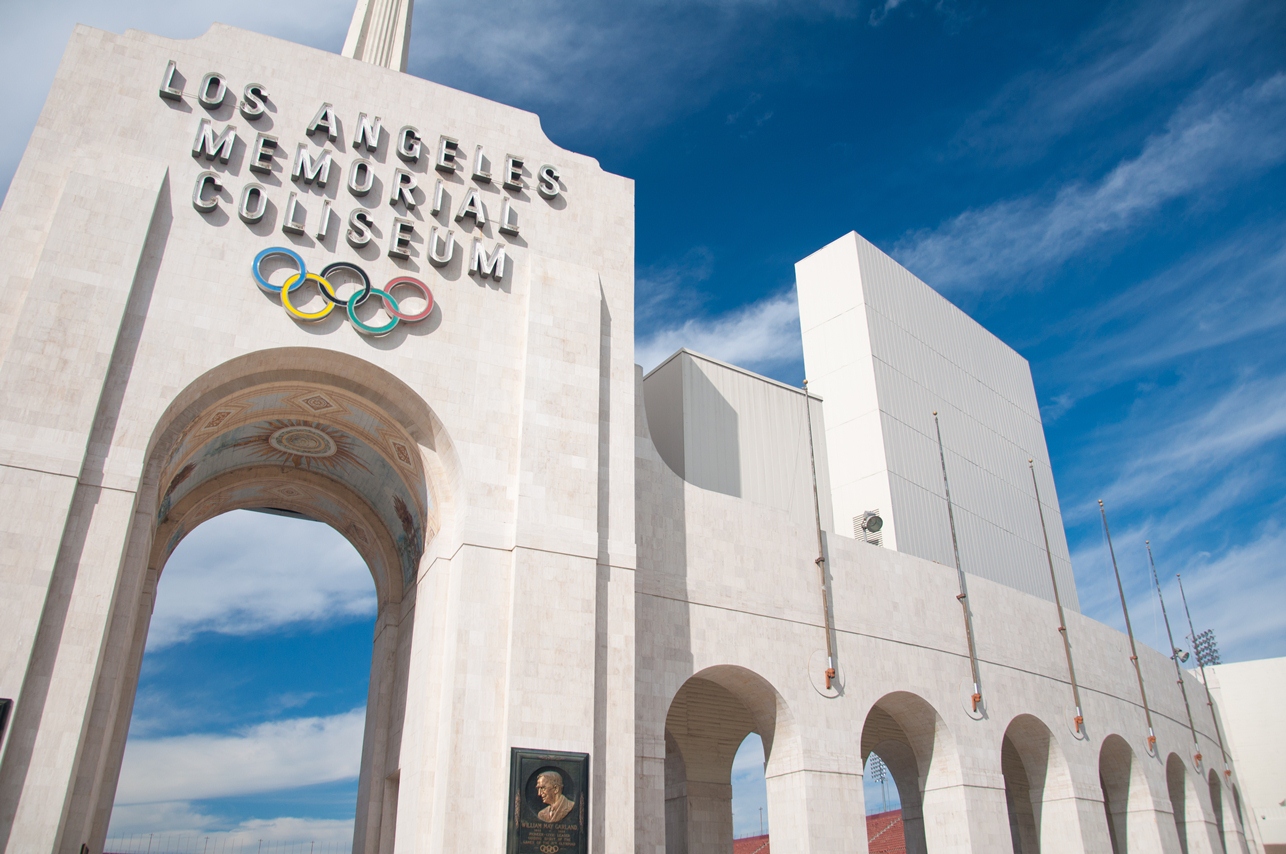
A strategic roadmap for LA’s Olympic bid
As a distance swimmer, Janet Evans broke seven world records and won five Olympic medals. But she is in a different kind of race now, as vice chair and director of athlete relations at LA24 – the bid committee for Los Angeles.
Los Angeles is one of four cities bidding for the 2024 Olympic Games, along with Budapest, Paris and Rome. How these cities interpret Olympic Agenda 2020, the IOC’s “strategic roadmap for the Olympic movement”, will be crucial to their success.
Evans spoke with Host City at SportAccord Convention about how her city’s ambitions are aligned with those of the International Olympic Committee (IOC).
Use what you already have
A primary challenge for cities bidding for and hosting the Olympic Games is to have venues that are used an on-going basis in the city, while also being optimised for Games time.
This is not only a logistical issue but also a financial and reputational one – so much so that the IOC, which holds the rights to the Olympic Games and brand, has placed venue sustainability at the heart of its strategy.
The first of the 40 recommendations of Olympic Agenda 2020 states “The IOC to actively promote the maximum use of existing facilities and the use of temporary and demountable venues.”
Evans says, “It’s interesting that 97 per cent of our venues will be built before 2024 irrespective of our bid. A lot of new venues are already going up for various sporting events within southern California. The only permanent venue we’d have to build would be a new kayak venue.”
The iconic Los Angeles Memorial Coliseum served as the Olympic Stadium in 1932 and 1984 and would take centre stage again in 2024. Over the years the venue has hosted NFL, Major League Baseball, soccer and entertainment events in addition to regular sporting events staged by its owner, the University of Southern California (USC).
USC Athletics is funding a US$270m renovation of the Coliseum that is planned, Evans says, “irrespective of our bid”. These works are scheduled to take place between 2017 and 2019.
Another big conundrum for host cities is how to accommodate athletes during the Games. As with sports venues, possible solutions include building for legacy use, or using temporary or existing facilities. LA24 has opted for the latter, arranging for USC and the city’s other big university, UCLA, to accommodate athletes on its campus during the Games.
“It’s a great place for athletes as there are a lot of training facilities,” says Evans. “A lot of our athletes in the US come through the university training system so we are very pleased with our choice of UCLA.”
Listen to the IFs
Another challenge faced by Olympic bidding and organising committees is to make sure their venue plans are in line with the priorities of the international federations (IFs) that govern Olympic sports. Many IFs have expressed frustration with the Organising Committee of the Olympic Games (OCOG) for Rio 2016, with construction running behind schedule.
Olympic Agenda 2020 sets out to avoid this happening in future by determining to “enhance the role of the IFs in the planning and delivery of the Olympic competitions, including the study of transferring technical responsibilities from the OCOGs to the IFs.”
Evans says having most of the venues already built enables LA24 to focus on engaging with IFs during the bidding phase; and events like Host City and SportAccord Convention give bidding cities the opportunity to do so.
“It’s wonderful to be here to listen and learn and understand what federations would like to see in a bid and help bring that into our bid and understand things,” says Evans.
Between January and April 2016, Evans and LA24’s sports director Doug Arnot met with all 28 Olympic IFs to ask them about their priorities for their sports. “It was a real listening and learning exercise, so we could go home and take that back to our team and say, here’s what this IF would really like to see.
“And another thing we feel is that if and when we win the Games, since our venues are built, we can spend seven years working not only on venues and upgrades but also on making the athlete experience great. So I think the sustainability of LA and the fact that our venues are built is really powerful.”
Athletes at the heart
Another key aim of Agenda 2020 is to “put the athletes’ experience at the heart of the Olympic Games”. This is the Evans’ main area of focus now – “I know that’s what President Bach wants to see,” she says.
To achieve this, she is tapping into the US’s enviable network of Olympians and Paralympians – not just US natives but also Olympic alumni who have competed for other countries in the Games and now live in the US.
LA24 is running a road show of “Athlete Town Hall” meetings. “We want to ask for the input and advice of athletes. We felt there was no better way to receive that input than to speak to them in person.
“We are looking for opinions and advice and things that we can make better and things that were loved by the athletes.”
The first Athlete Town Hall meeting was in the Miami and Fort Lauderdale area of south Florida in early April. LA24 is to conduct between 12 and 15 of these meetings over the course of 2016 in cities throughout the US.
“We see this as a national bid, not just a bid for the state of California or the city of Los Angeles. It’s a bid from our entire country to bring the summer Games back to the US for the first time since 1996.”
Culture and creativity
Another aim of Agenda 2020 is to achieve a “further blending of sports and culture”. Los Angeles is famed for its entertainment industry, but Evans says this is just one part of the mix.
“I think Los Angeles is in a true renaissance. We have US$88bn of infrastructure going into our new transport system, in our airport; our city is changing everything – it’s vibrant and hip. We have this great accumulation of the entertainment world as well as technology and creativity.
“I believe if we have the honour of hosting the Games there are so many interesting things we could do to help promote sport and bring youth into the Games. Los Angeles is a mecca of creativity, of innovation, of change and I think that’s evident when you come to our city.”
Recent allegations and revelations of doping and bribery in some Olympic sports are a reputational threat to the Games. Asked what LA24 can do to safeguard against these threats, Evans says “I think there’s a lot of joy and positive things that are in this movement. That’s what we all believe in – I believe in the Olympic movement and what it does for future generations and in what athletics can portray to the world.
“We want to bring the positive – I want to find out what the athletes can bring to other people. I want everyone to experience the Olympics for what they really are, which is what I see as the Olympics, which is this great celebration of humanity, peace and friendship and continuity.
“So I think that’s what we need to remember: the Olympics are an incredible movement and I’m just proud to be a small part of it.”
-
Arup’s three agendas of event feasibility
Agenda One: Event Delivery
The first agenda is to deliver the Games; that is non-discretionary and something you have to do. The cost is given and it’s mandatory, because it’s the IOC requirements and there’s national pride involved and a number of other considerations.
The cost of this has been remarkably constant over the last 15 years – around US$2.5bn to US$3bn. But that’s covered by income from IOC contributions, local sponsorship, ticket sales and merchandise so there is no net cost.
Agenda Two: Sporting Legacy
The second agenda is leaving a sporting legacy. That is partly mandated by the IOC requirement, but you have some leeway on how you do that. So you have a choice of whether your stadiums and arenas are permanent structures, which always runs the risk of being white elephants, or temporary or demountable structures – or even, according to Agenda 2020, you can move it to another city.
For example, if you don’t have a velodrome you have to deliver one somehow. And if you do it correctly, that can be a legacy – but there are lots of examples of not being a legacy: The Athens 2004 Games is the prime example of white elephants and a complete horror story.
The main issue with this second agenda is that venues should be designed for legacy and enabled for Games. Most people do it the other way round and then there’s a rush to modify it for legacy.
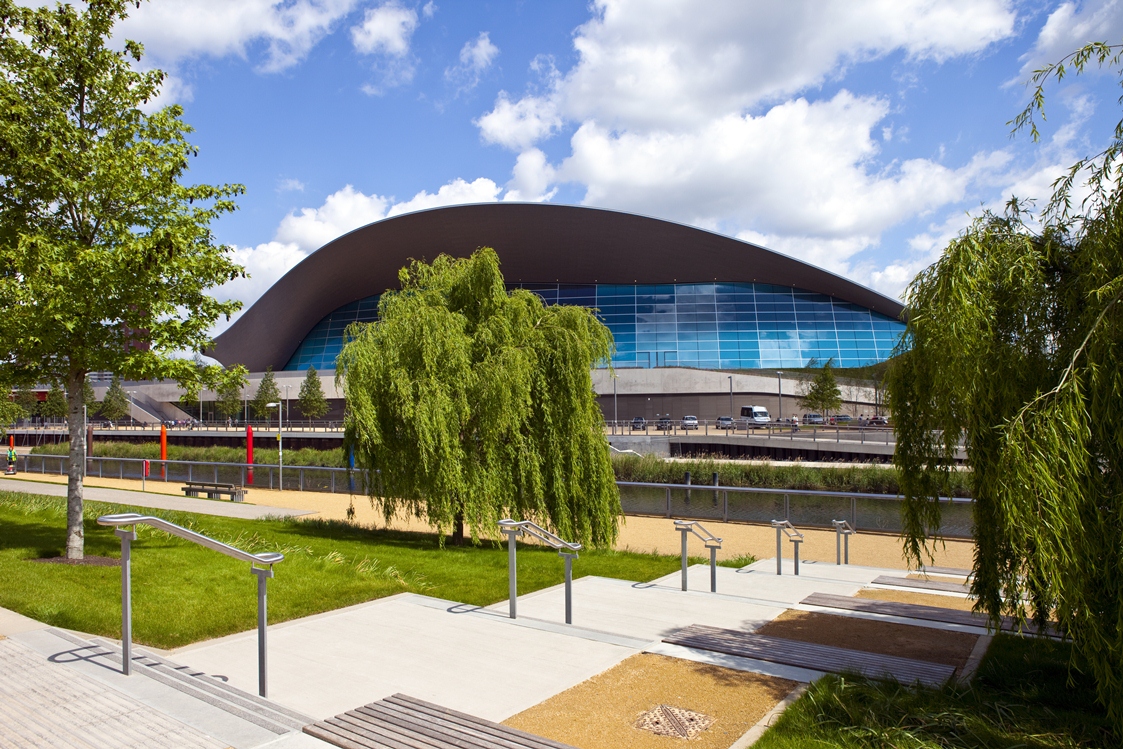
A positive example is the aquatics centre in London; we worked very closely with Zaha Hadid on that. It was designed to be a community swimming pool with 2,500 seats. Temporarily, those wings were built – they looked absolutely awful, but they were functional and it ended up being an Olympic-compliant aquatics centre of 17,500 seats. It was designed for legacy and enabled for the Games temporarily.
Agenda Three: City Legacy
The third agenda is what you want to use the Olympics for and our advice to any city or region that wants to host the Games is that you first have to decide what you are going to use the Olympics for. And if you don’t get that right, you run into a lot of problems about public acceptance of the Olympics as a project.
This is where discretion comes into play. It cost London GB£1.8bn just to make the Olympic park into a building site. London made that call because it wanted to use the Olympics to regenerate part of East London. The city didn’t have to do it; they chose to do it because otherwise it would never happen; it would still be a dump with remnants from the blitz, asbestos, oil and corpses.
A bad example is Sochi. A lot of what happened in Sochi had nothing to do with the Olympics. It cost US$55bn, but only a fraction of that was Olympic costs. They wanted Sochi to be a tourist destination and they also wanted to be able to build for the football World Cup in 2018. So they wanted to use it for something completely different from the Winter Olympics. That was their choice and that has poisoned the bidding process for a number of other cities, including my home town of Oslo where the population got a backlash going against bidding for the 2022 Winter Games.
Our advice to cities or regions who want to stage Olympic Games is to first of all to get the third agenda right, because that is what you need to sell it to the population, to get a yes vote on a possible referendum. It has to be something more tangible than a velodrome.
What we like to do very early in the process is to make the city or region able to make an informed decision whether to bid or not. To do that they need to cost out all the three agendas. What we usually recommend is to do a number of technical and financial feasibility studies, cost-benefit analyses over 20 to 30 years.
One city we have recently worked with is Amsterdam, who will probably not bid for the 2028 Olympic Games. And way back in 2002-2003 we wrote the original feasibility study that made a business case for London to bid for the Games.
Beyond the Bid – Tokyo and Qatar
We also see our role to be the trusted technical advisor for a host city. We like to work in tandem with the communications agencies, because if you give them a free rein you need a lot of engineers and technical consultants to clean things up in the back room.
We have been working for two and half years on Tokyo 2020 for Tokyo Metropolitan Government; we are currently negotiating for a third year. When we started work on Tokyo, we looked at some of the things that they proposed and advised that they weren’t going to work. The stadium was one of those things, and some of the temporary venues they wanted to put on the island out in the bay.
And we have been working for about five years on the 2022 World Cup in Qatar. From our side it’s going well; we have been working on technical assurance of the stadiums: sitting client-side and advising the design consultants based on FIFA compliance and other criteria.
The thing I am a little bit concerned about is that I don’t think they’d gone far enough on planning what they wanted. I think they sold it on the basis of demountable stadiums, so they basically said we are going to build a number of 40,000 seater stadiums and send 20,000 seats off to Africa. It is feasible, but it hasn’t been designed yet. Somebody calculated that you need 178 containers to dispatch the 20,000 seats. Apart from that, everything is deliverable, no doubt about that.
This article is based on a Host City interview with Erik G Andersen, Special Advisor of Arup’s Host Cities Advisory Service. Andersen has worked on 10 Olympic Games over 25 years
-
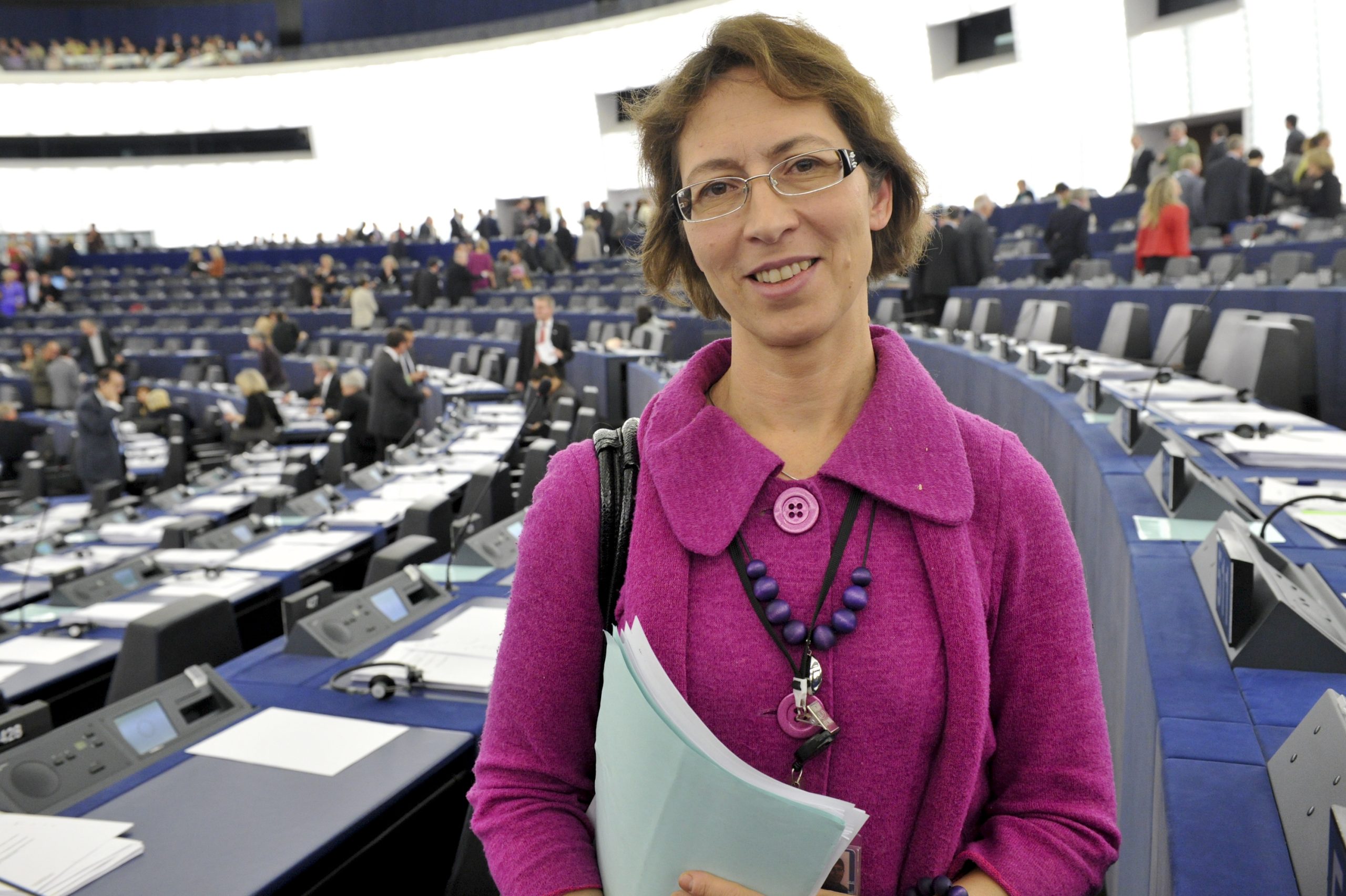
IOC votes in eight new members
At the 129th IOC Session on the eve of the 2016 Olympic Games, eight new members were elected to the International Olympic Committee by its current membership.
The new members, recommended by the IOC Executive Board on the advice of the IOC Members Election Commission, are highly diverse, representing business, politics and sports administration.
Nita Ambani, chair of the Reliance Foundation and owner of the Mumbai Indians cricket team, became the first Indian woman IOC member.
Finland also gained its first woman IOC member in the politician and former race walking champion Sari Essayah.
South African film producer Anant Singh and Colombia’s former ambassador to the U.S Luis Moreno were also elected to the IOC.
Three National Olympic Committee (NOC) leaders were elected, with Austria Olympic committee chief Karl Stoss, Canadian Olympic committee president Tricia Smith and Secretary General of the Papua New Guinea Olympic Committee Auvita Rapilla all taking up membership.
Ivo Ferriani, the Italian president of the International Bobsleigh & Skeleton Federation, was the only representative of an International Federation (IF) elected as a new member. Up to 15 NOCs and 15 IFs can be represented within the IOC membership.
The election brings the total membership to 98. IOC members vote on host cities of future Olympic Games and sports to be included in the Games, as well as providing direction for the Olympic Movement.
As part of the “Agenda 2020” programme of reform of the Olympic Movement initiated by Thomas Bach and approved by IOC members in 2014, the IOC is taking a fresh approach to bringing new members on board, to “move from an application to a targeted recruitment process”.
The IOC Members Election Commission is taking a more proactive role in identifying the right candidates to filling vacancies in order to best fulfil the mission of the IOC.
Under the new procedure, the profile of candidates must now comply with a set of criteria submitted by the Commission to the IOC Executive Board for approval.
These criteria relate to the IOC’s needs, which it identifies as including: “skills and knowledge (e.g. medical expertise, sociological expertise, cultural expertise, political expertise, business expertise, legal expertise, sports management expertise, etc.); geographic balance, as well as a maximum number of representatives from the same country” and “gender balance”.
Agenda 2020 also highlights “the existence of an athletes’ commission within the organisation for representatives of IFs/NOCs.”
The IOC Members Election Commission is chaired by Princess Anne of Great Britain, herself an IOC member. According to Reuters, she identified Moreno, Singh and Ambani as “candidates outside the Olympic and sport community who could usher in a fresh approach and new skills to the organisation”.
-
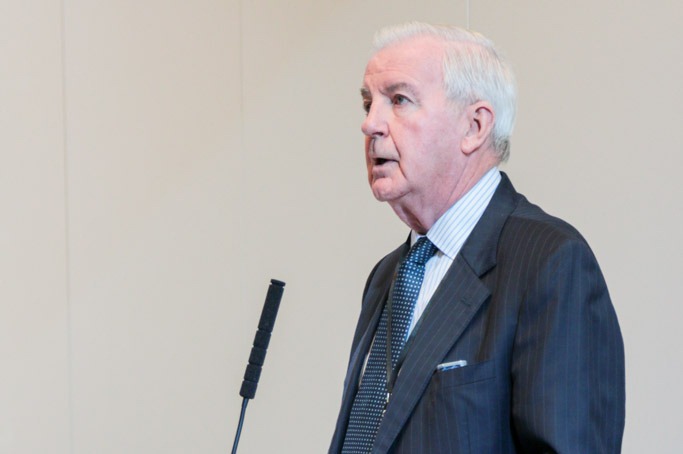
“The rich and varied opportunities for cities”
Ladies and gentlemen: happily, welcome back to Glasgow. Clearly the city is very happy to host this important conference as it grows in reach and importance each year. And the rich and varied opportunities for cities which host events can be seen from the whole range of topics that you will discuss.
From a purely sports point of view, the Glasgow experiences make pretty interesting reading. This city has roughly 800,000 people, although the Clyde valley conurbation is around two million, many in close proximity. This is a relatively small population, but the city in the eight years from 2012 to 2020 has hosted, or will host, major events in football, cycling, netball, swimming, athletics, tennis, gymnastics, judo, curling, badminton, golf, rugby, rowing and triathlon – with Paralympic swimming to be added to the list.
Some other numbers can also be added to the list of credits: a contribution to the economy of the city of £370m; an investment in sports facilities since 2009 which totals around £200m; attendance figures in 2015 at sports facilities in Glasgow of 6.4m people, with 800,000 at the World Gymnastics Championships in the new Hydro Arena – an event which produced the best presentation of indoor sports that I have ever seen.
And outside the events themselves, a list of plusses which might be described as the softer legacies: 20,900 junior members of sports clubs, an increase of 367 since 2009; 4,580 coaches engaged with sports clubs, up 95 per cent since 2009; and 4490 volunteers engaged with sports clubs, up 110 per cent since 2009.
Now the reason for this boom in sports activities is not too difficult to find. The 2014 Commonwealth Games were a triumph for the city. Following the success of the 2012 London Olympic Games they showed just what can be achieved with some good planning of facilities, their legacy, then promotion, enthusiasm and organisation – to say nothing of the overall benefits to the city to be garnered from worldwide television coverage and exposure, and a huge growth in digital media conversation and interest.
But not all cities are lucky enough to have the opportunity organise one of the big multi-sport events and use this as a catalyst for facility development and public interest – although the 2018 European Sports Championships is an interesting development along the same lines, but with a more modest footprint.
Hosting events – and in particular sports events – is an ever more competitive business, although there is clearly a mismatch between enthusiasm for what I might call individual events as opposed to major multi-sport events.
The IOC have struggled to attract anything like the number of cities for Olympic Games compared to those years ago when many more put their names forward. And the new bidding rules under Agenda 2020 are hoped to be the antidote required. With the loss of Rome for 2024, the jury is on this is still out.
The Commonwealth Games Federation are not exactly awash with applicants for future Commonwealth Games, and the Olympic Winter Games bidding process was reduced to two final candidates.
The Asian Games appeared to be less affected, with the number of large – 10m people – cities in China providing enthusiasm for the bidding process, which rather replaces the efforts made over the years by Korea with almost 30 years of experience.
But for individual sporting events, the world is a very very active place. Auckland in New Zealand is more than active with rugby, cricket, hockey and sailing.
Smaller countries – Danish cities all pulled together by the splendid Sport Event Denmark organisation – are keen hosts for handball, sailing, ice hockey, swimming, badminton, cycling and equestrian events.
If you head south, Sydney and Melbourne offer attractive options for sailing, for surfing, for rugby, tennis, Formula 1 and many others. Australia will also host the 2018 Commonwealth Games in the Gold Coast, with mutterings of a possible future Brisbane Olympic bid.
In golf there is much enhanced interest in continental Europe with future Ryder Cups in France and Italy and the new developments in Antalya in Turkey offering a whole range of new and impressive sports facilities will inevitably lead to hosting opportunities.
The agenda for Host City throws up a whole series of issues which will apply to almost any event held by and promoted by a host city…. But returning to the sports theme, it would be wrong of me not to refer to the challenges you will discuss on the integrity of sport.
Sport has gone through and still goes through a difficult period due to clear abuses of the standards on doping matters. These have brought extreme challenges to sport, to its major events, its federations and have encouraged huge media comment, very little of it favourable.
Issues of governance of sport and criticism of how it selects its host cities have added fuel to the fire. However, I was recently in Tokyo, host city for the 2020 Olympic Games and I am encouraged by the enthusiasm and excitement in both city and country at the prospect of hosting the Games in 2020.
Despite the inevitable arguments about possible venue changes and money – subjects that are endemic in any Olympic city and its organising committee – the Japanese ability to seek long term legacies that are relevant to their society and provide opportunities to showcase their own innovative technologies offers the Olympic movement a real opportunity to change the scepticism which appears to exist and which elicits much comment.
And this I find to be really exciting and may well be a force for greatly increased enthusiasm for Olympic and other multi-sport events. And if the Tokyo experience is proved to work, there must be a chance of a distinct on-going effect in many other similar events.
So with this rather enthusiastic view of the future I leave you to your debates; to the new ideas that will be generated; to the new experiences and friendships that are the mark of a good conference; and to a really happy visit to Glasgow, which is the whole point of being a welcoming host city.
This article is an edited transcript of Sir Craig Reedie’s keynote address at Host City 2016. To listen to the full address and other sessions, visit www.hostcity.com/hc2016/audio -
IOC President singles out ITU President for good governance
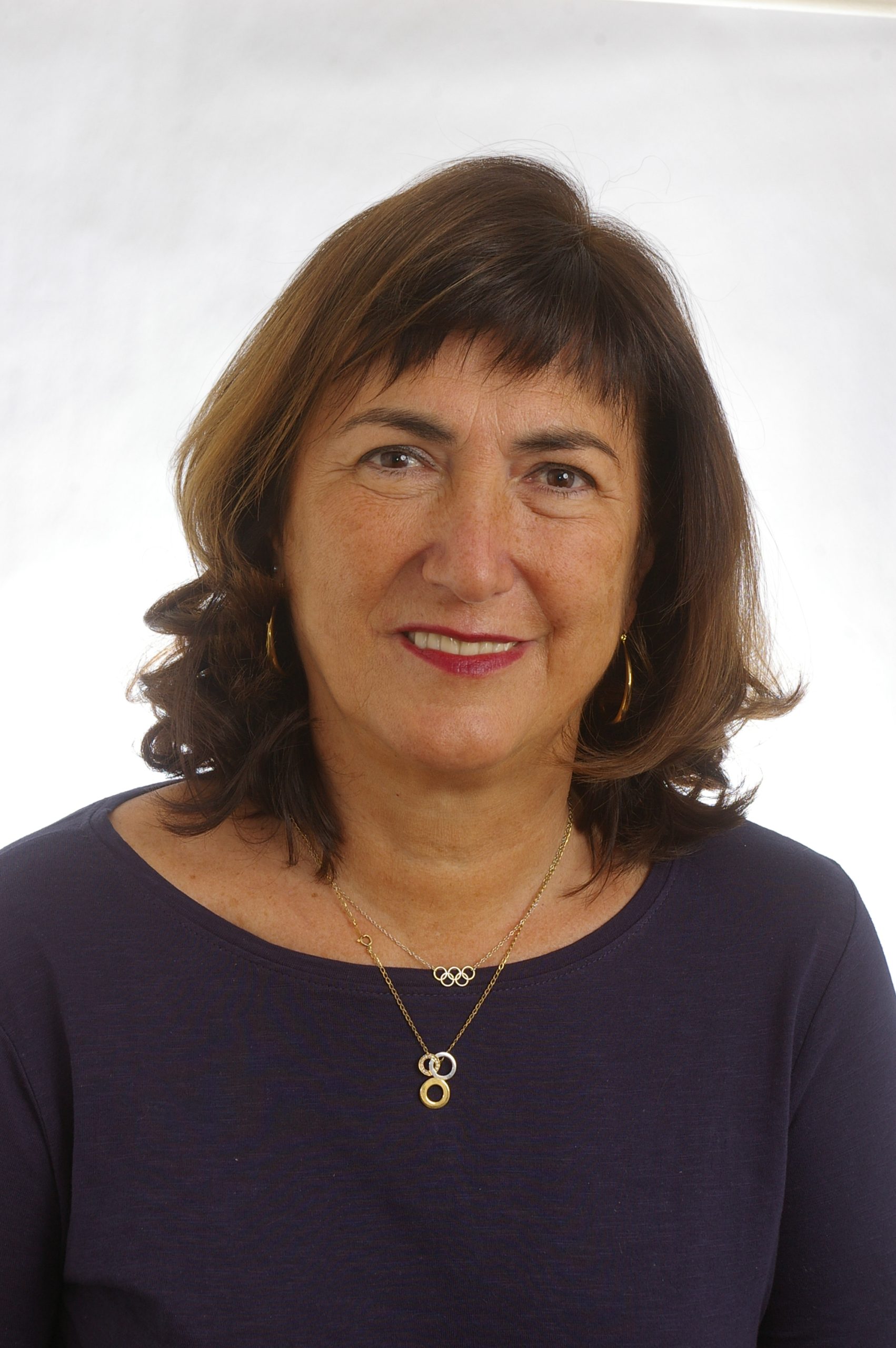
At the International Triathlon Union (ITU) Congress in Lausanne, Switzerland on 29th August, International Olympic Committee (IOC) President Thomas Bach showed his admiration for the modern, values-based direction of ITU under the leadership of Marisol Casado.
“ITU is maybe the International Federation that has most embraced the Olympic Agenda 2020,” said Thomas Bach in his address to the Congress.
“The IOC is proud of the close cooperation it has with the ITU in respect of good governance as well as gender equality, which is in the interests of every organisation. So, I thank Marisol Casado for all she is doing with ITU.”
The ITU President thanked Bach for his commitment and guidance, and for his admiration for the sport of triathlon and its athletes.
“The athletes are at the heart of every decision we make as an organisation and their commitment to the sport is incredible, so I am very proud of the support Thomas Bach has shown to ITU,” she said.
The 2019 ITU Congress brought together 73 member Federations and other stakeholders including the IOC.
Julie Duffus, Sustainability Manager at the IOC gave a presentation on sustainability in sport, while IOC Sports Director Kit McConnell also followed Thomas Bach onto the stage to reflect on the success of the Tokyo Test Event and look ahead to next year’s Olympic Games.
Other activities at the Congress included the announcement of the new World Cup and Paratriathlon calendars for 2020, in-depth reports from the 2019 Tokyo Test Events, a new mentorship programme and the approval of American Samoa as the 172nd member of the International Triathlon Union.
Brook Sport Consulting – led by Norman Brook, who has worked with Olympic coaches and received an MBE for his services to social development through sport – was chosen at the Congress to deliver the ITU mentorship programme across all areas of the sport, from coaches to Technical Officials, including a specific focus on women in the sport.
The organising committee of the Edmonton 2020 ITU World Triathlon Grand Final also gave a preview of their plans for next year, before the ITU Grand Final took place in Lausanne on 30 August – 1 September 2019.
Marisol Casado is speaking at Host City 2019, the largest meeting of cities and sports, business and cultural events, on 26-27 November in Glasgow.