Tag: IOC

  • IOC welcomes “most sustainable ever” bids for 2024 Games

    IOC welcomes “most sustainable ever” bids for 2024 Games

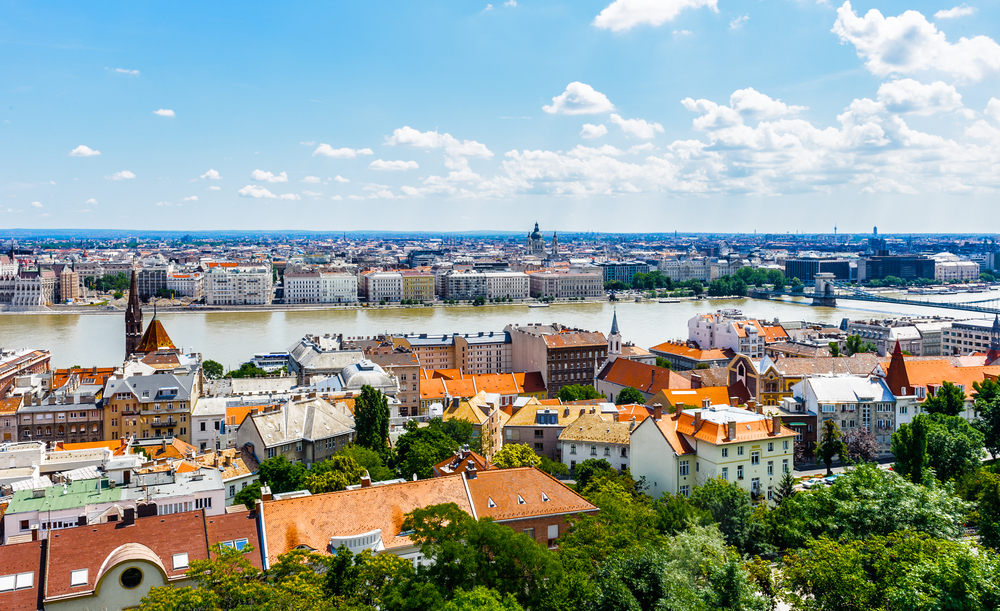
    The International Olympic Committee (IOC) has received candidature files from Los Angeles (USA), Rome (Italy), Budapest (Hungary) and Paris (France) for hosting the Olympic Games 2024 by the Wednesday deadline.
    The IOC has hailed the plans, which were submitted in digital-only format for the first time, as showing the potential for unprecedented venue sustainability. 
    “Following Olympic Agenda 2020, the Candidate Cities are making use of an extremely high percentage of existing and temporary venues, possibly the most ever,” said Jacqueline Barrett, Associate Director Olympic Games/Olympic Candidatures.
    Olympic Agenda 2020 is the IOC’s strategic roadmap for the future of the Olympic Movement and the candidature process for the 2024 Games is the first to be launched following its adoption. 
    The new process encourages cities to present Olympic projects that best match their sports, economic, social and environmental long-term planning needs. It calls for the use of existing facilities where possible, and provides flexibility for the venue concept to meet local sustainability and legacy needs and ambitions.
    “Los Angeles, Rome, Budapest and Paris are all submitting projects fully in line with Olympic Agenda 2020,” said IOC President Thomas Bach.
     “It is impressive to see how they have incorporated the Olympic project into the long-term development plans of their city, region and country. Coming from different starting points, for all four there is a clear focus on sustainable development, legacy and in particular how the facilities are going to be used after the Olympic Games,” said Bach. 
    “We are delighted to have four extremely strong candidatures and look forward to a fascinating competition.”
    The submission of the Candidature Files on “Vision, Games Concept and Strategy” marks the end of the first part of the bidding process. 
    “The plans received indicate very thoughtful consideration of what the Cities and their people need for the future,” said Barrett.
    “The IOC has significantly simplified the Candidature Process, symbolised by the fact that the submissions arrived for the very first time on a USB key only, instead of thousands of pages of paper documents.”
    An IOC-appointed working group will now study the files and report to the IOC Executive Board (EB) in June 2016. 
    The next stage of the Candidature Process will focus on Governance, Legal and Venue Funding, to be submitted by 7 October 2016, followed by a final “Games Delivery, Experience and Venue Legacy” stage due on 3 February 2017.
    During Stage 3, an IOC Evaluation Commission will make working visits to each City to study their projects in detail and issue a final report. 
    The host city of the 2024 Olympic Games will be elected in September 2017 at the IOC Session in Lima, Peru.
     

  • Exclusive: IOC VP Sir Craig Reedie on realising Agenda 2020 and clean sport

    Exclusive: IOC VP Sir Craig Reedie on realising Agenda 2020 and clean sport

    When the International Olympic Committee (IOC) approved Agenda 2020, its “strategic roadmap for the Olympic Movement” in 2014, the most evidently urgent issue was to boost the appeal of hosting the Olympic Games. Four European cities had pulled out of bidding for the 2022 Winter Olympic Games, leaving Almaty and Beijing as candidates.
    The first three of Agenda 2020’s “20+20” recommendations focussed on reforming the bidding process. These changes have been quickly implemented and the results are evident in the strong field of cities bidding for the 2024 Olympic Games. 
    But Agenda 2020 is about much more than this, focusing on areas such as sustainability, blending sport and culture, launching an Olympic TV channel, engaging with communities – and an issue that has become extremely pressing for the Olympic Movement in recent months: the protection of clean athletes. 
    Sir Craig Reedie, in his dual roles as Vice President of the International Olympic Committee and President of the World Anti-Doping Agency, spoke exclusively to Host City about the challenges and opportunities ahead for the Olympic Movement and how the IOC is implementing Agenda 2020.
     
    HOST CITY: How is the IOC encouraging organising committees to boost sustainability and reduce the cost of event delivery?
    Sir Craig Reedie: Sustainability covers a wide range of operations. It effectively started under Agenda 2020 with the first two or three proposals, which were to shape the bidding process as an invitation; and then evaluating the cities, assessing key opportunities and risks; reduce the cost of bidding; and then to include sustainability in all aspects of the Olympic Games and the Olympic movement. 
    By framing the Games bidding process under the invitation, we get the opportunity to speak to a National Olympic Committee which wants to submit a city, and the city itself, right at the start of the programme. We can set out quite clearly that we wish them to consider a sustainability strategy, to develop a plan and to integrate and implement sustainability measures that cover the economic side, the social side and the environmental sphere in all stages of the project. And so far I have to say that seems to be working. 
    The Winter Games are sometimes a bit more complicated than Summer Games, because by the very nature of Winter Games there are some indoor facilities that are very sports specific – for example long track speed skating. A lot of work needs to be done by organising committees and candidate cities to make sure that what they build is sustainable after the Games. 
    For a summer Games it’s probably a little bit easier, because the facilities that have been built can frequently be used for more than one sport or more than one purpose. It’s certainly an integral part of the Agenda 2020 process and it’s underway. 
    We certainly wish to reduce the cost of bidding and that is clearly underway at the moment for the 2024 bidding process. The cities have far fewer presentations to make and they work very closely with the IOC. There are three specific stages and we are just at the beginning of stage one. 
    We want what is built to be sustainable; we don’t want any white elephants and we want cities to plan all that carefully all the way through.
     
    HOST CITY: Looking ahead to Tokyo 2020 do you have confidence that their stadium will be a sustainable solution?
    Sir Craig Reedie: Yes, they looked hard at the original plans for the main stadium primarily on the basis of cost and they have come back, as far as I can see, with a revised and more cost effective plan. 
    It’s more sustainable and it will be finished earlier, which is a good thing so you can fit that stadium with all the bits and pieces that are necessary for an Olympic Games; you’ve got not just sport taking part there but you’ve got major ceremonies. 
    Most recently there was a report from Tokyo on the whole sustainability structure and that gives me some confidence that what we wanted to happen is actually happening. 
     
    HOST CITY: A USD 20m fund was set aside to protect clean athletes through Agenda 2020. In the light of recent revelations in athletics, is this enough or are further measures necessary?
    Sir Craig Reedie: The US$20m fund is clearly working. It was split into two parts. The first was US$10m for advanced anti-doping research; it was made available to WADA provided we got governments to match the US$10m. We managed to collect about US$6.5m, so we have received or are in the process of receiving US$6.5m of the original ten. So there is a new fund of about US$13m which WADA is dealing with. 
    The remaining US$3.5m, which was not matched by governments, is being invested by the IOC itself; and we clearly cooperate on the applications we get for that scientific research to make sure we don’t do the same thing. That process is working extremely well. 
    The second US$10m under the heading “protecting clean athletes” wasn’t anti-doping – it was for any forms of manipulation and corruption. Clearly that’s been in the media recently with accusations about wrongdoing in tennis several years ago, and the tennis authorities are clearly looking at that. 
    The IOC have invested some of that US$10m in an intelligence gathering system to which almost all the International Federations have signed up. So that process is underway as well. 
     
    HOST CITY: It must be very costly looking into and investigating the integrity of all the Olympic Sports combined. Is working with the International Federations (IFs) a way forward there?
    Sir Craig Reedie: They are an integral part of the Olympic movement. The IOC itself, the IFs and the NOCs are the three pillars of the movement, so we are structured to deal with the IFs. Certainly in the anti-doping field, from WADA’s point of view, we work closely with all the IFs. 
    There is a debate at the moment about the creation of a new independent testing agency to take away the perceived conflict that IFs might have, who are supposed to develop and organise their sport, and at the same time to police their sport. The more we speak to people the more the feeling there is that this is a good idea and it might well happen. 
    So this is a major project, the whole anti-doping effort is a major effort and quite clearly there are major problems in sport of manipulation and corruption and the IOC are well aware of that and effectively putting their money where their mouth is. 
     
    HOST CITY: What’s the outlook for Russia’s involvement in Rio?
    Sir Craig Reedie: Well, from the WADA perspective our job is, having removed the accreditation of the Moscow laboratory because it was criticised in the independent commission report, and having declared the Russian anti-doping agency to be non-compliant, our job is to deal with both of these situations so that the accreditation of the laboratory can be renewed and above all that the Russian anti-doping agency becomes compliant again. 
    Our job is not to do this so that people can take part in the Rio Games; our job is to assist Russia in becoming compliant again. It’s other people who decide whether they go to Rio. The one national federation at the moment that is suspended is the Russian athletics federation; it’s the responsibility of the IAAF to make sure that that particular national federation is compliant with all aspects of the world anti-doping code – plus other conditions that it has applied – these will all have to purified before they can be declared compliant and by definition then available to come to the Rio Games. There is a lot of work to be done.
     
    HOST CITY: How will the IOC itself continue to show leadership in the good governance of its own affairs?
    Sir Craig Reedie: As leaders of the Olympic movement, we start with ourselves. We now produce a very comprehensive and detailed annual report which is very transparent; it tells everybody everything we are doing, it tells what people are paid, and tells everybody that we produce the accounts under the international financial reporting system – even though that’s not a legal obligation on us. 
    We have imposed time limits on membership, time limits on periods that you can stay on committees. So we’ve looked very hard at our own governance. 
    We also speak regularly to the associations of international federations and encourage them to do the same – and many of them do. 
    As far as National Olympic Committees are concerned, they again are given guidelines – there are basic standard of good governance with which we expect them to comply. At the moment they self-monitor, but we try to ensure that across the whole movement high standards of good governance will apply.
     
    HOST CITY: How will the Olympic movement engage with society and communities in the future?
    In many cases the reform process was a serious think-tank. We did look very carefully at, and have a recommendation on, how we deal with communities. 
    The first one that is being worked on is to create a virtual hub for our athletes and we are quite a long way down the line in doing that. 
    We’re looking at doing the same for volunteers; we’re looking at ways we can engage the general public. Much of this is social media and how we can improve our website and how we can encourage people to keep in touch with us. We need to have a very clear policy ourselves on how we engage with young people – all of that work is underway. 
    We’re also going to develop, at no little expense, a television programme called the Olympic Channel, which is going to be a digital programme in its initial form that can then spread into being a full television programme if needs be at a later date, and if countries want it. That will allow us to inform, educate, hopefully excite, entertain and amuse millions and millions of people. All of that is quite an exciting prospect as we move forward.
     
    HOST CITY: It’s interesting that it’s going digital first, because the majority of young people are now watching more on the internet than on traditional television. 
    Sir Craig Reedie: Yes, I suspect that that piece of statistical information was warmly welcomed in the offices of the digital channel in Madrid.
     
    HOST CITY: Why is it so important to further strengthen the blending of sport and culture at the Olympic Games and in-between?
    Sir Craig Reedie: At the end of the day it’s one of the absolutely defining characteristics of the Olympic movement and the Olympic Games – that there is this clear mix, this blend of sport and culture.
    We’re trying to develop that; we’re looking at creating an Olympic Laurel award to celebrate any outstanding contribution to Olympism through culture, education, development and peace. We are looking to develop an Olympic House, to welcome the general public to engage in a dialogue with the Olympic movement. 
    There’s a programme called artists in residence which is being examined; that’s a very specific cultural connection. We’re looking at a curators committee composed of various global cultural players.
    We also try as best we can to take the Olympic Museum out on the road: for example, specific Olympic Museums created in host cities at times of the Games. I think that’s quite an exciting project; it’s one of the projects I’m trying to develop, as I think it’s part of our heritage and it’s something we should celebrate. 
     
    HOST CITY: How is Agenda 2020 being implemented within the IOC?
    Sir Craig Reedie: The whole Agenda 2020 process appears to have been warmly welcomed and we now work on it regularly at the Executive Board meetings. We look at the implementation plan to see what else we have to do; so it’s not just been a question of thinking through what we want to do, putting it down on paper and then hoping that it happens. There is a specific and detailed implementation plan that we look at on a very regular basis. 
    A lot of this will fall, in several years’ time, into our new headquarters in Lausanne, so everybody working for the IOC in Lausanne works under one roof. It’s a huge investment in the Olympic movement, it’s a huge investment in sport and it’s also a huge investment in Lausanne – particularly when you look at the way we’ve made a similar investment in the complete remodelling of the Olympic Museum. So we hope to be good citizens.
     
    The IOC Executive Board will meet in Lausanne on 1 to 3 March 2016 to discuss the implementation of Olympic Agenda 2020
     

  • Anti-Corruption Summit welcomes International Sports Integrity Partnership

    Anti-Corruption Summit welcomes International Sports Integrity Partnership

    The International Anti-Corruption Summit, hosted by UK Prime Minister Cameron on Thursday in London, welcomed the efforts of sports organisations in the fight against corruption.
    The conference issued a communiqué that said: “We welcome the work of the international sports organisations to strengthen openness and improve governance so that they meet global best practice. We urge them to achieve the highest global standards and regain public trust through a culture of good governance. We recognise the autonomy of international sports organisations conferred under national laws. We believe this must be exercised responsibly and be earned by continually demonstrating good governance in a spirit of openness.” 
    The conference specifically welcomed the initiative of the IOC to launch “an International Sport Integrity Partnership in the margins of a meeting of the International Forum for Sport Integrity in Lausanne in early 2017.” 
    IOC President Thomas Bach said: “We appreciate that this summit has acknowledged the efforts of the IOC and sports organisations. The IOC has all the instruments in place and the resolution to fight effectively against corruption. But like any other organisation we are not immune to wrongdoing. In such cases we have a proven record of swift action. The reforms of Olympic Agenda 2020 have strengthened our position to implement our zero tolerance policy in this respect. As welcomed by the Summit, we will take the fight against corruption further by launching the International Sports Integrity Partnership.”
    The Summit coincided with confirmation from French financial prosecutors that they are investigating allegations that payments exceeding $2m connected to the Tokyo 2020 Olympic bid were made to a bank account linked to the son of former IOC member and IAAF President Lamine Diack.
    IOC Chief Ethics and Compliance Officer Paquerette Girard-Zappelli spoke at the conference. In an IOC-issued statement she said: “We used this opportunity to present all the measures undertaken by the IOC in the fight against corruption. 
    “Through Olympic Agenda 2020 the position of the IOC Ethics Commission has been strengthened and transparency has been increased. This includes a Consultants Register for the Olympic Games Bid Process and many other measures. 
    “We have proven that we are actively fighting against corruption. For instance, the IOC took immediate action against Lamine Diack already in November 2015 when the first allegation arose against him. As a result of our action he no longer has any position in the IOC. Nevertheless, we continue to actively look into the matter and have become a civil party to the French investigation.”
    IOC Member and President of the International Paralympic Committee Sir Philip Craven chaired a panel on sport at the summit. Girard-Zappelli was joined on the panel by Angel Gurria, Secretary-General of the OECD, Jaimie Fuller of Australian sportwear brand SKINS, and Isha Johansen, president of the Sierra Leone Football Association and FIFA board member.
    “I have a mission and a vision, to force good governance into football. Because I believe it can help with the growth and prosperity of that nation,” said Johansen.
    “Corruption is a deadly killer disease. Having lived in Sierra Leone through the ebola crisis, I know the destruction a disease can cause in a society, it can rip through it, it can kill a society.”
    After the summit, Sir Philip Craven said: “Sport is under greater scrutiny than ever before and rightly so; sport is a multi-billion Euro industry that reaches and impacts billions of people around the world on a daily basis.
    “There are absolutely no doubts that recent scandals involving some international sport federations have greatly tarnished the image and reputation of sport. This has led sport to quickly realise that it is not immune from being accountable for its actions, just like any other industry.
    “It should not take a high profile scandal however to act as the catalyst to organisational reform. Sport organisations must be proactive in improving their athlete centred governance. They must seek out corruption and deal with it swiftly and effectively. It cannot be brushed under the carpet in the hope it will go undiscovered.
    “Eliminating corruption in sport needs to be a real team effort. That is why the IPC fully supports the work of the IOC, the reforms of Olympic Agenda 2020, the launching of International Sports Integrity Partnership in early 2017 and the recommendations of the Association of Summer Olympic International Federations (ASOIF) Governance Task Force.”
    The conference also dealt with issues such as corporate secrecy, government transparency, the enforcement of international anti-corruption laws, and the strengthening of international institutions. 
    The summit adopted a “Global Declaration Against Corruption”, which reads: “Corruption is at the heart of so many of the world’s problems. We must overcome it if our efforts to end poverty, promote prosperity and defeat terrorism and extremism are to succeed. 
    “Today’s Summit has demonstrated the deep commitment of a significant number of countries, businesses and members of civil society to work together to tackle this scourge.”
     

  • Ten refugees to compete at Rio 2016 under Olympic flag

    Ten refugees to compete at Rio 2016 under Olympic flag

    Ten refugee athletes will take part in the Olympic Games Rio 2016 this summer in the first ever Refugee Olympic Team (ROT), the International Olympic Committee announced on 3 June. 
    Rami Anis, Yiech Pur Biel, James Chiengjiek, Yonas Kinde, Anjelina Lohalith, Rose Lokonyen, Paulo Lokoro, Yolande Mabika, Yusra Mardini and Popole Misenga will march with the Olympic flag immediately before host nation Brazil during the Opening Ceremony. 
    “These refugees have no home, no team, no flag, no national anthem. We will offer them a home in the Olympic Village together with all the athletes of the word. The Olympic anthem will be played in their honour and the Olympic flag will lead them into the Olympic Stadium,” said IOC President Thomas Bach.
    ”This will be a symbol of hope for all the refugees in our world, and will make the world better aware of the magnitude of this crisis. It is also a signal to the international community that refugees are our fellow human beings and are an enrichment to society. These refugee athletes will show the world that despite the unimaginable tragedies that they have faced, anyone can contribute to society through their talent, skills and strength of the human spirit.”
    As part of the IOC’s pledge to aid potential elite athletes affected by the worldwide refugee crisis, NOCs around the world were asked to identify any refugee athlete with the potential to qualify for the Olympic Games Rio 2016. Such candidates could then receive funding from Olympic Solidarity to assist with their preparations and qualification efforts.
    Forty-three promising candidates were initially identified. Selection of the ten athletes was based on consultation with their host National Olympic Committees (NOCs), International Federations, the UNHCR and the NOCs of their countries of origin. Nomination criteria included sporting level, official refugee status verified by the United Nations, and personal situation and background. 
    Five of the athletes originate from South Sudan, two from Syria, two from the Democratic Republic of the Congo and one from Ethiopia. Five are hosted by the National Olympic Committee of Kenya, two by Brazil, one by Germany, one by Luxembourg and one by Belgium. 
    Six of the athletes will compete in athletics running events, two in swimming and two in judo.
    Like all teams at the Olympic Games, the ROT will have its own entourage to meet all the required technical needs of the athletes. Olympian and former marathon world record-holder Tegla Loroupe (Kenya) was named the team’s Chef de Mission, while Isabela Mazão (Brazil), who was proposed by the UNHCR, will act as the Deputy Chef de Mission. They will lead a crew of five coaches and five other team officials.
    The team will be housed in the Olympic Village like all the other teams and will get its own welcome ceremony at the Olympic Village, like all other teams. Team uniforms will be provided by the IOC.
    For all official representations of the team (including possible medal ceremonies), the Olympic flag will be raised and the Olympic Anthem will be played. 
    A proper doping control process will be introduced through the World Anti-Doping Agency (WADA). Olympic Solidarity will cover preparation, travel and other participation expenses for the team and will continue to support the athletes of the team after the Olympic Games.
    The IOC will also continue to support the refugee athletes after the Games.
    Through Olympic Solidarity and its Olympic Scholarships for Athletes programme, the IOC aims to help smaller NOCs prepare and qualify their athletes for the Olympic Games. The IOC’s priority is to focus primarily on athletes who need the assistance the most and to place them on an equal footing with their competitors from more developed regions of the world. In the lead-up to London 2012, for example, 1,264 Olympic scholarships were allocated to athletes from 171 NOCs in 21 sports. 657 ‘scholars’ eventually took part in the Games. They won a total of 72 medals.
    Following the approval of Olympic Agenda 2020, the IOC’s strategic roadmap for the future of the Olympic Movement, and in light of the current global refugee crisis, the IOC also created a special fund of USD 2 million to develop relief projects through sport in collaboration with NOCs around the world. Over 15 NOCs have already made use of this fund.
    The IOC already works with a number of United Nations agencies to help refugees around the world. For the last 20 years, the IOC and UNHCR in particular have been using sport to support healing and development among young refugees in many camps and settlements around the world. They have consequently seen thousands of refugees benefit from sports programmes and equipment donated by the IOC.
    The biographies of all athletes and their entourage are available here.
     

  • Modern Pentathlon and de Courbertin’s enduring vision

    Modern Pentathlon and de Courbertin’s enduring vision

    HOST CITY: Pierre De Coubertin said Modern Pentathlon “tested a man’s moral qualities as much as his physical resources and skills”. How does Modern Pentathlon achieve this and why is this still important today?
    Dr. Klaus Schormann: Modern Pentathlon first appeared on the Olympic programme in Stockholm in 1912 when De Coubertin’s wish was to devise a test suitable only for the “complete athlete”. In pursuit of this aim he created the ultimate test of an athlete’s fitness, courage and skill – a sporting challenge like no other. Modern Pentathlon combines five traditional disciplines in a one-day format and is unique in sport as a complex mental and physical examination.
    Today it remains as important as ever in the Olympic Movement. Pierre de Coubertin’s vision has its roots in the Ancient Games of 708 where Lampis of Sparta was the first winner of Pentathlon and received the prestigious status of “Victor Ludorum”. In this time, Pentathlon consisted of discus, long jump, javelin, stadium run and wrestling. The format has changed beyond recognition but the principle remains the same: it is the complete sporting challenge.
    HOST CITY: Competition for inclusion in the Olympic programme is strong. What are the key factors that have enabled Modern Pentathlon to retain its place in the programme?
    Dr. Klaus Schormann: Modern Pentathlon has been a core sport of the Olympic Games ever since 1912. Although it has had to justify its inclusion in the Olympic programme several times, it has retained a constant presence and this is because of two things: strong Olympic heritage and modern innovation. First we had to shorten the Modern Pentathlon from five days in duration to one day, because it was not compatible with the demands of the mass media, viewers and spectators.
    To make it a more compelling spectacle, we introduced several changes and developments. We introduced Laser Pistols at the Youth Olympic Games in Singapore in 2010. We created a running/shooting Combined Event (like winter biathlon) that made the sport safer for athletes and spectators, allowing them to get closer to the action than ever before. Most recently, in addition to the fencing round robin, pentathletes have the opportunity to win extra points in a new bonus round. In less than an hour, all of the athletes compete on one piste in front of the spectators to win bonus seconds for the Combined Event.
    To make our sport more compact and exciting, we had to adapt our format as we are living in a fast changing world with a modern, diverse and digital society. You can inspire others to change, only if you are ready to change yourself. Our new format is compact, media and spectator friendly with entertainment in between. It is not only a competition anymore – it is five sports brought together to create one big event. As De Coubertin wrote in 1918, “the individual who truly deserves that name ‘Olympian’ is the competitor in the modern pentathlon”. We are certain that he would have approved of Modern Pentathlon’s proven ability to move with the times and stay fresh.
     
    HOST CITY: As a member of the IOC Commission on Culture and Olympic Heritage, do you think modern pentathlon can play a role in helping the IOC to realise its Agenda 2020 aim of further blending sport and culture?
    Dr. Klaus Schormann: UIPM can, like all of the International Federations in the Olympic Movement, play a role in helping the IOC to realise this goal. Only together can we implement another of Pierre de Coubertin’s visions: to “blend sport with culture and education” as in the Ancient Games.
    Due to the concentration on sport, the influence of the Olympic Movement’s cultural activities has been limited even though many committed institutions and communities like museums, academies, historians, collectors or artists for instance have been established. However, our mission as members of the IOC Commission on Culture and Olympic Heritage is to develop concepts and programmes to further blend sport and culture at each Olympic Games and in the years between. This only goes hand in hand with the whole Olympic Family to create values with culture.
     
    HOST CITY: And how can the values of UIPM and Olympism help with the education and personal development of young people worldwide?
    Dr. Klaus Schormann: In our fast changing world, education has an important role in society. As Nelson Mandela said “Sport has the power to change the world” and currently we need to change and act against crime, hate and discrimination more than ever before.
    Modern Pentathlon is not only a big event but it has remained through 100 years of history very traditional and unique in the Olympic Movement. The Olympic Agenda 2020 clearly demonstrates our decision to live up to our values and principles. The values of “excellence, respect, friendship, dialogue, diversity, non-discrimination, tolerance, fair play, solidarity, development and peace” should be demonstrated through our sport around the world. Our Unity in Diversity is important to make those values and principles remain relevant in society.
    Through Modern Pentathlon with the five different skills you have a platform for education, integration of all religions and cultural societies with the message for a more friendly, humanitarian and peaceful world. 
    HOST CITY: How do the UIPM’s other events, such as the new Laser Run format, help to engage new athletes and audiences? 
    Dr. Klaus Schormann: The Laser-Run is the latest original creation of UIPM, derived from the Combined Event and launched in 2015 as a non-Olympic sub-sport. The simple format of running/shooting helps introduce and engage new athletes and new audiences as athletes of all ages from 8 to 80 can participate and the event can be staged on beaches, in cities and in the countryside. 
    The Laser Run is the basis of the UIPM Pyramid and for many is the first step on the way to participating in Modern Pentathlon. The bigger the basis, the more athletes will find their way to the top. Modern Pentathlon keeps the legacy of Pierre de Coubertin as a strong heritage. 

  • U?ur Erdener and Juan Antonio Samaranch elected IOC Vice Presidents

    U?ur Erdener and Juan Antonio Samaranch elected IOC Vice Presidents

    The International Olympic Committee has elected to change the composition of its Executive Board, promoting Prof. U?ur Erdener and Juan Antonio Samaranch to Vice Presidents.
    Three new Executive Board members have been elected in  Gian Franco Kasper (SUI), Angela Ruggiero (USA) and Ser Miang Ng (SIN).
    The new Vice Presidents U?ur Erdener and Juan Antonio Samaranch now replace Sir Craig Reedie CBE and Nawal El Moutawakel who have served their terms, having made immense contributions to Olympism.
    Sir Craig Reedie and U?ur Erdener are both set to speak at Host City 2016 alongside several other key figures from the Olympic Movement and the wider event hosting world. 
    A Professor of Ophthalmology, U?ur Erdener is the President of the Turkish National Olympic Committee, President of World Archery and Chair of the IOC Medical and Scientific Commission.  
    “I am honoured to have been elected to the position of IOC Vice President,” said Prof Dr Erdener.
    “The principles of Olympism are ever-more relevant in the modern world, and I am committed to supporting the goal of the IOC in building a peaceful and better world through sport.”
    Prof Dr Erdener is the second World Archery President to have become an IOC Vice President. Jim Easton served in the role from 2002 to 2006.
    Juan Antonio Samaranch is Vice President of the UIPM and Chair of the Board of directors of Olympic Channel Services. His father, of the same name, was IOC President from 1980 to 2001.
    The changes to the Executive Board see the departure of René Fasel, Claudia Bokel, Anita Defrantz and Gunilla Lindberg.
    Ching-Kuo Wu and Patrick Hickey are resuming their seats as representatives of the Association of Summer Olympic International Federations (ASOIF) and the Association of National Olympic Committees (ANOC) respectively. Also remaining on the Executive Board are Sergey Bubka and Willi Kaltschmitt.
    The US ice hockey player Angela Ruggiero replaces outgoing German fencer Claudia Bokel on both the Executive Board and the IOC Athletes’ Commission. She joins the Executive Board at the same time René Fasel, IIHF president, leaves.
    “René’s leadership has been inspiring, and I hope I can represent hockey with the same pride now that he is leaving,” she said.
    These changes, as well as the election of eight new IOC members, were confirmed at the IOC Executive Board meeting at the outset of the Rio 2016 Olympic Games. The newly composed Executive Board will begin its work after the Games.
     

  • IOC votes in eight new members

    IOC votes in eight new members

    At the 129th IOC Session on the eve of the 2016 Olympic Games, eight new members were elected to the International Olympic Committee by its current membership. 
    The new members, recommended by the IOC Executive Board on the advice of the IOC Members Election Commission, are highly diverse, representing business, politics and sports administration. 
    Nita Ambani, chair of the Reliance Foundation and owner of the Mumbai Indians cricket team, became the first Indian woman IOC member. 
    Finland also gained its first woman IOC member in the politician and former race walking champion Sari Essayah.
    South African film producer Anant Singh and Colombia’s former ambassador to the U.S Luis Moreno were also elected to the IOC. 
    Three National Olympic Committee (NOC) leaders were elected, with Austria Olympic committee chief Karl Stoss, Canadian Olympic committee president Tricia Smith and Secretary General of the Papua New Guinea Olympic Committee Auvita Rapilla all taking up membership. 
    Ivo Ferriani, the Italian president of the International Bobsleigh & Skeleton Federation, was the only representative of an International Federation (IF) elected as a new member. Up to 15 NOCs and 15 IFs can be represented within the IOC membership.
    The election brings the total membership to 98. IOC members vote on host cities of future Olympic Games and sports to be included in the Games, as well as providing direction for the Olympic Movement. 
    As part of the “Agenda 2020” programme of reform of the Olympic Movement initiated by Thomas Bach and approved by IOC members in 2014, the IOC is taking a fresh approach to bringing new members on board, to “move from an application to a targeted recruitment process”.
    The IOC Members Election Commission is taking a more proactive role in identifying the right candidates to filling vacancies in order to best fulfil the mission of the IOC.
    Under the new procedure, the profile of candidates must now comply with a set of criteria submitted by the Commission to the IOC Executive Board for approval. 
    These criteria relate to the IOC’s needs, which it identifies as including: “skills and knowledge (e.g. medical expertise, sociological expertise, cultural expertise, political expertise, business expertise, legal expertise, sports management expertise, etc.); geographic balance, as well as a maximum number of representatives from the same country” and “gender balance”. 
    Agenda 2020 also highlights “the existence of an athletes’ commission within the organisation for representatives of IFs/NOCs.”
    The IOC Members Election Commission is chaired by Princess Anne of Great Britain, herself an IOC member. According to Reuters, she identified Moreno, Singh and Ambani as “candidates outside the Olympic and sport community who could usher in a fresh approach and new skills to the organisation”.
     

  • Olympic Channel launches with Toyota and Bridgestone as Founding Partners

    Olympic Channel launches with Toyota and Bridgestone as Founding Partners

    Worldwide Olympic Partner Toyota Motor Corporation and Bridgestone Corporation have this week become the first Founding Partners of the Olympic Channel – the IOC’s a new digital platform that launches on Sunday 21 August following the Closing Ceremony of the Olympic Games Rio 2016.
    The Founding Partner agreements have a four-year term extending through to the end of 2020.
    Bridgestone, the world’s largest tyre and rubber company, became the first Founding Partner of the Olympic Channel on Monday, having been a Worldwide TOP Partner since 2014.
    “Bridgestone has demonstrated its support for the Olympic Movement and belief in the Olympic values through its long-term commitment as a Worldwide TOP Partner, and through this new agreement we look forward to working closely with them to bring the Olympic Channel to fans around the world,” said IOC President Thomas Bach.
    Toyota signed as a Worldwide TOP Partner in 2015 and the IOC announced company as a Founding Partner of the Olympic Channel on Friday.
    “We are delighted that Toyota, our newest Worldwide TOP Partner, will also support the Olympic Channel as a Founding Partner,” said Bach. “We look forward to strengthening our partnership through the Olympic Channel.”
    The Founding Partners will support the development of the Olympic Channel to put content into the hands of fans anytime, anywhere, and on any device, according the IOC.
    Through the relationship, Toyota will receive exclusive advertising opportunities and will work with the Olympic Channel team to co-develop inspiring and exciting content, the IOC said.
    Bridgestone will serve as the presenting partner of the Olympic Channel’s “Against All Odds”, an eight-episode documentary series that demonstrates the very embodiment of the Olympic spirit and follows eight athletes. Each half-hour episode will focus on one athlete, offering a first-person account of a key turning point, and how personal will and determination helped them to overcome adversity and reach their goals. The first episode in the series will premiere on 21 August, when the Olympic Channel launches.
    “This is a very exciting time for Bridgestone as our Worldwide Olympic Partnership marks the first truly global marketing platform in our company’s history, and the Olympic Games Rio 2016 – the first ever in South America – are our first as a Worldwide TOP Partner. It is fitting that we also are the first Founding Partner of the Olympic Channel,” said Masaaki Tsuya, CEO and Representative Executive Officer, Bridgestone Corporation.
    “The Olympic Movement is universal and we continue to reaffirm Bridgestone’s longstanding support for sport and our belief that the core principles of Olympism – and the world’s greatest athletes – should be celebrated every day of the year.”
    As a TOP Partner, Bridgestone is strengthening its commitment to the Olympic Movement and the Olympic Channel mission, outlined in Olympic Agenda 2020, to reach audiences around the world, beyond the Olympic Games period, 365 days a year.
    TOP Partner Toyota will support the organisers of future Olympic Games, the IOC and National Olympic Committees and their Olympic teams around the world. In line with Olympic Agenda 2020, with sustainability as one of its key pillars, Toyota will work with the Organising Committees through to 2024 to provide sustainable mobility solutions for the Games to help with safer, more efficient mobility, including intelligent transport systems, urban traffic systems and vehicle-to-vehicle communications systems.
    The partnership will help deliver a mobility legacy in the host cities and countries, the IOC said.
     
    About the Olympic Channel
    The Olympic Channel is a digital-first, multiplatform global Olympic media entity, which aims to broadcast the Olympic Movement and its inherent values all year round, especially in the periods between the Olympic Games.  The primary objectives of the Olympic Channel are to provide a platform for the continuous exposure of Olympic sports and athletes beyond the Olympic Games period and to help create anticipation while providing opportunities to “re-live the experience” after the Games; continuously highlight the relevance of the Olympic Movement’s ideals to the challenges of today’s world; provide a platform for sharing the IOC’s very rich patrimonial assets and archives with the world and create additional value and content for the IOC archives; and engage the young generations around the world using methods that are relevant to them, building understanding, entertainment and education. At launch, the Olympic Channel will be a digital platform, with on-demand content available across the web, mobile, tablet and other connected devices where fans can experience the power of sport and Olympism 24 hours per day, 365 days a year. Audiences will also be able to access content and engage through a variety of social media platforms as part of the Olympic Channel network. For more info, please visit olympicchannel.com.

  • Ten sports join Olympic Channel

    Ten sports join Olympic Channel

    Ten international sports federations (IFs) have agreed to broadcast their events on the IOC’s new Olympic Channel. 35 events hosted in all regions of the world will be broadcast in 2016, ranging from Olympic qualifiers, world championships, world cups, grand prix and more.
    Racket sports feature prominently on the schedule, which includes 18 badminton and six table tennis events. The other eight sports represented are basketball, fencing, canoe, ice hockey, shooting, triathlon, wrestling and archery.
    “We have received excellent feedback from broadcasters on archery’s coverage at Rio 2016,” said Tom Dielen, Secretary General of World Archery.
    “The Olympic Channel gives an opportunity to build on the wide exposure Rio offered, even though the Olympics are over.”
    According to the International Sports Press Association, such collaborations aim to complement the IFs’ current broadcast and distribution arrangements.
    The Odense 2016 Hyundai Archery World Cup Final, for example, will also be broadcast on World Archery’s YouTube Channel and via selected broadcasters worldwide.
    The Olympic Channel is working with the IFs to create innovative partnerships including event coverage, highlights, magazine shows, news coverage and original programming, with further announcements expected in the autumn.
    “We look forward to working with our IF partners to help distribute their events and extend their reach to fans around the world. Placing a spotlight on Olympic sports and athletes outside of the Games themselves is one of the key priorities of the Olympic Channel,” said Mark Parkman, General Manager of the Olympic Channel.
    “Launching the Olympic Channel with this event programming already in place ensures that fans will be able to continue their excitement of Rio and the Olympic Games all year long.”
    The Olympic Channel is a new digital platform where fans can engage with Olympic sports all year round via mobile apps for Android and iOS devices and at olympicchannel.com. The channel launched on 21 August following the Closing Ceremony of the Rio 2016 Olympic Games.

  • China’s foreign minister visits IOC president, strengthening cooperation

    China’s foreign minister visits IOC president, strengthening cooperation

    The Foreign Minister of China, Wang Yi, met with International Olympic Committee (IOC) president Thomas Bach in Lausanne on December 11 to discuss how China can strengthen its cooperation with the global sports organisation.
    On his visit to Switzerland Wang also met with the director-generals of the United Nations (UN) and the World Health Organisation (WHO), as well as the president of Switzerland.
    According to China Daily, Wang told Bach, “China is willing to strengthen cooperation with the IOC while upholding the Olympic spirit.”
    Wang also expressed his confidence in the Beijing and Zhangjiakou’s ability to stage the Winter Olympic Games in 2022, highlighting the success of the Beijing 2008 Olympic Games and the Nanjing 2014 Youth Olympic Games.
    “With the all-out efforts of the Chinese people and the substantial help of the IOC, I am confident that the 2022 Winter Olympics will be another huge success,” he said.
    According to Yutang Sports Marketing, Wang stressed the importance of sports in human and national development, recognising the great contributions the IOC has made to promoting global sports development and strengthening the friendship among people from different countries.
    Bach reportedly said China’s plans for sports development are at one with the IOC’s, noting the tremendous contributions China has made to the IOC and expressing gratitude to China for its cooperation with the IOC.
    The IOC also looks set to strengthen this cooperation beyond the hosting of the Winter Games. “The IOC will be a full helping hand in delivering a fruitful 2022 Winter Olympics, while expecting to team up on further cooperation with China,” Bach said.
    In the meeting with UN Director General Michael Moller, Wang said “Against the backdrop that the global situation is continuously becoming more complicated, the role of the United Nations can only be strengthened instead of weakened.”
    Margaret Chan, director-general of the World Health Organization, told Wang “China has set an excellent example in poverty alleviation and health undertakings, and I believe it will contribute more to improving global public health and sustainable development.”