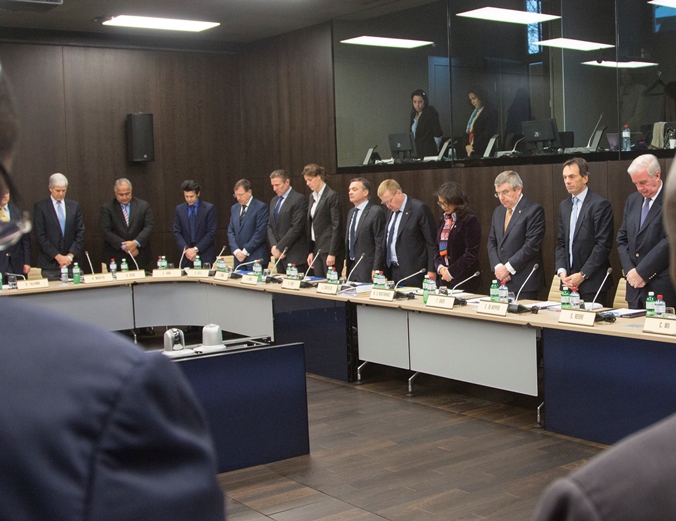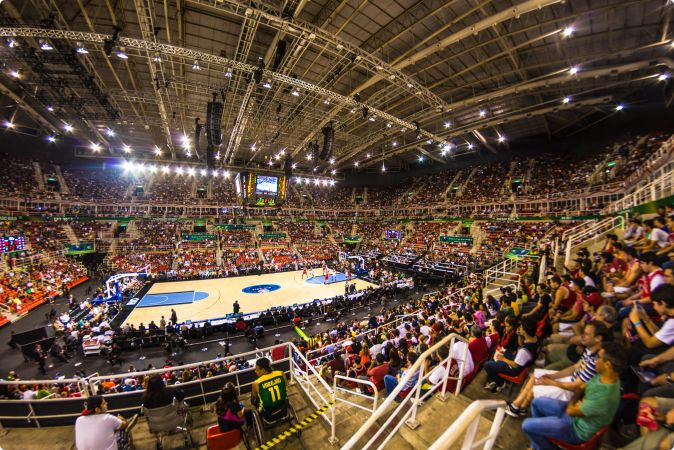
The International Olympic Committee has welcomed an “outstanding” pool of candidate cities bidding for the 2024 Games.
Budapest, Hamburg, Los Angeles, Paris and Rome all submitted applications to host the 2024 Olympic Games before the IOC’s deadline of midnight on Tuesday.
“We are welcoming five outstanding and highly qualified Candidate Cities,” said IOC President Thomas Bach.
With four major European cities and the biggest city in North America in the running, the profile of the cities is a marked change from recent Olympic Games bidding, which has been dominated by, and awarded to, cities from outside these regions.
The most recent IOC bidding process, for the 2022 Winter Olympic Games, began with six applicant cities but only Beijing and Almaty proceeded to the candidature stage.
Since then, the bidding procedure has been changed with the implementation of Olympic Agenda 2020, the programme of reform introduced by IOC president Thomas Bach.
One of the changes brought in is the removal of the “applicant phase” – so the five cities that have applied to host the Games are immediately considered to be candidates, after an “invitation phase” that has been taking place in recent months.
“Olympic Agenda 2020 has shaped the Candidature Process more as an invitation and the cities have responded by engaging with the IOC through dialogue and cooperation,” said Bach.
The removal of the applicant phase means that the five bidding cities will remain in the race until the host city election until 2017.
The central focus of Agenda 2020 is reducing the financial burden of hosting the Olympic Games and making sure that hosting the event fits with the city development plans.
“In the new invitation process the IOC learnt that all the candidates are embracing Olympic Agenda 2020 from their respective vision for the future of their city,” said Bach.
“Sustainability and legacy are the cornerstones of each candidature.”
A number of other cities and regions had been discussing the possibility of bidding for the 2024 Games.
A possible bid from Toronto, which hosted a successful Pan American Games earlier this year, was said to be on the cards but ruled out at the last minute.
Speaking at a press conference on Tuesday, Toronto mayor John Tory said that an Olympic bid would form part of the city’s future plans.
“I can’t look people in the eye at this point in our city’s development and tell them that an Olympic bid is the best use of our time, our energy or our investment,” he said.
“But now I can look in the eyes of my colleagues at other levels of government and say this, together we should be making the investment talked about in the context of the Olympics.”
Commitments to good governance, transparency and ethics were also key features of Agenda 2020 and the IOC has published all the documents related to the candidature, including online for the first time at this stage in the process.
Changes to the host city contract include: reference to sexual orientation in the non-discrimination clause; the freedom of media to report on the Games; and a stipulation for organisers to comply with applicable local, regional and national legislation and international agreements “with regard to planning, construction, protection of the environment, health and safety, labour and anti-corruption laws”.
The IOC has also reduced the cost of bidding, with candidate cities expected to make just three presentations instead of nine, with the travel cost for these presentations and the cost of visiting IOC evaluation commissions to be covered by the IOC.
The IOC has also committed to contributing USD 1.7 billion in cash and services to the organising committee for the 2024 Olympic Games.
The host city of the 2024 Olympic Games will be elected by all IOC members at the 130th IOC Session in Lima, Peru in 2017.
Tag: Olympic Games
-

IOC draws five strong candidates for 2024 Olympic Games
-

2024 bid cities “highly unlikely” to withdraw – Sir Craig Reedie
Changes to the IOC’s bidding procedure have attracted a “very considerable field” of five candidate cities, all of which are expected to stay the course until the host city election in September 2017, IOC Vice President Sir Craig Reedie CBE told HOST CITY in an exclusive interview.
“The change in the candidature rules, which came out of the whole reform process called Agenda 2020, seems to have attracted a very considerable field of really good cities,” he said.
“The big addition has been the invitation phase before a National Olympic Committee decides finally to put a city into the candidature role.”
This new invitation phase ended on 15 September. “For several months before that, cities that were thinking of bidding for the Games, and the National Olympic Committees, came to meet the relevant people in the Olympic Games department and the candidate cities department of the IOC to sit down and work out exactly how the Games would fit into their city; how it would provide legacy; how it would be sustainable; how it would fit into city plans.
“That’s a complete change from the previous process, where the IOC had a very detailed list of requirements and cities bid against that list.
“So there is a major change there and I understand that it has been welcomed by the cities,” said Sir Craig Reedie, who is delivering a keynote speech at HOST CITY 2015, which takes place in Glasgow on 9th and 10th November under the theme of “Creative Innovation Connecting Cities with Sports, Business and Culture Events.”
The five bidding cities – Budapest, Hamburg, Los Angeles, Paris and Rome – have all progressed to the candidature phase, rather than going through the previous applicant city phase, and will now submit their candidature files in three sections.
“So rather than one huge bid book being required at a set date, it’s divided into three sections. There are workshops planned; there are assistances planned to the cities throughout.”
In the previous round of bids for the 2022 Winter Olympic Games, three cities pulled out of bidding during the applicant phase while Olso withdrew in the candidature phase.
The IOC’s new and more consultative adopted now means that such a fallout is unlikely to happen, Sir Craig Reedie said.
“It is not beyond the bounds of possibility that a city could come back and say we’re not taking it any further – I think that’s unlikely in the sense that a lot of work will have gone into this, a lot of discussions have gone on through the invitation phase. And since it’s going on through a stage by stage basis I think it’s highly unlikely that people will withdraw.
“The end result of that is that we will have five cities presenting to the Session on the ultimate decision to be taken in Lima in Peru in 2017.”
Asked if it was a relief when Los Angeles stepped forward to take the place of Boston’s abandoned bid, Sir Craig Reedie said: “Yes, I think the USOC have all but admitted that their process might not have worked in the selection of Boston.
“But, with Boston’s withdrawal, they were fortunate in many ways that the Los Angeles people were so able to come to the party very quickly and in a relatively tight timeframe.
“Los Angeles has an Olympic record – if they win they will be like London, hosting the third time. The city has changed dramatically over the last few years and I am sure they will come forward with a very good bid.”
The IOC is very pleased to have five cities bidding, Reedie said. “It’s an interesting mix. Paris is looking to celebrate the 100th anniversary of the 1924 Games in Paris and has clear bidding experience.
“Rome hosted outstanding Games in 1960 and there seems to be considerable enthusiasm in Italy and in Rome behind the Rome bid, so they are impressive.
“Budapest has come quite late to the party but again a splendid city and Hungary has a terrific Olympic record.
“It’s interesting that when the German Olympic Committee decided to choose Hamburg as opposed to Berlin, who I suppose before that decision would have been seen to be favourite, immediately there was strong support from Berlin for the Hamburg choice. So again there seems to be a great deal of unity there.
“So it’s a really good field.”
-

2024 Olympic bids and the changing Games
HOST CITY: The IOC must be very pleased with the pool of cities bidding for the 2024 Olympic Games?
Sir Craig Reedie: Yes I think we are. It’s quite interesting that the change in the candidature rules, which came out of the whole reform process called Agenda 2020, seems to have attracted a very considerable field of really good cities.
We are now waiting for further information from Paris, from Hamburg, from Rome, from Budapest and from a North American city – eventually, Los Angeles.
HOST CITY: It must have been a relief when Los Angeles stepped forward – was that anticipated?
Sir Craig Reedie: Yes, I think the USOC have all but admitted that their process might not have worked in the selection of Boston. But, with Boston’s withdrawal, they were fortunate in many ways that the Los Angeles people were so able to come to the party very quickly and in a relatively tight timeframe, because they had a number of things to agree with Los Angeles city before the necessity of putting in a formal bid on the 15th of September.
Los Angeles has an Olympic record – if they win they will be like London, hosting the third time. The city has changed dramatically over the last few years and I am sure they will come forward with a very good bid.
HOST CITY: And the other cities represent a different spread to what we’ve seen in recent bidding procedures.
Sir Craig Reedie: Yes, it’s an interesting mix. Paris is looking to celebrate the 100th anniversary of the 1924 Games in Paris and has clear bidding experience.
Rome hosted outstanding Games in 1960 and there seems to be considerable enthusiasm in Italy and in Rome behind the Rome bid, so they are impressive.
Budapest has come quite late to the party but again a splendid city and Hungary has a terrific Olympic record.
It’s interesting that when the German Olympic Committee decided to choose Hamburg as opposed to Berlin, who I suppose before that decision would have been seen to be favourite, immediately there was strong support from Berlin for the Hamburg choice. So again there seems to be a great deal of unity there.
So it’s a really good field.
HOST CITY: The Olympic bidding process has changed, hasn’t it – after the new invitation phase, we are now straight into the candidature phase.
Sir Craig Reedie: You have to go back a few years to when the system changed from one bidding system into a two phase system – applicant and then candidate. That has now been refined and the big addition has been the invitation phase before a National Olympic Committee decides finally to put a city into the candidature role.
The closing date was 15 September. So for several months before that, cities that were thinking of bidding for the Games, and the National Olympic Committees, came to meet the relevant people in the Olympic Games department and the candidate cities department of the IOC to sit down and work out exactly how the Games would fit into their city; how it would provide legacy; how it would be sustainable; how it would fit into city plans. And the cities were given a great deal of information from the IOC, as it does have a great deal of information from previous bidding processes.
That’s a complete change from the previous process, where the IOC had a very detailed list of requirements and cities bid against that list.
So there is a major change there and I understand that it has been welcomed by the cities, all of whom have been to see the IOC in the invitation phase, and by other cities who went and subsequently decided not to bid but learned a great deal from the exercise and may do so in the future.
And then we come to the candidature phase, which is divided into three parts.
The first part, which runs until June 2016, is the Vision, Games Concept and Strategy and the candidate city’s “bid book” will be submitted electronically. There will be consultation with the IOC throughout and at the end of that first phase the Executive Board will decide whether the cities will move to the second phase, which runs from June to December 2016 and deals with governments, legal matters and venue funding.
Again, the presentations will be made through the IOC with a great deal of assistance and the Executive Board will again make a decision on moving people forward to the third phase, which is Games Delivery, Experience and Venue Legacy and runs from December 2016 through to the selection in September 2017.
So rather than one huge bid book being required at a set date, it’s divided into three sections. There are workshops planned; there are assistances planned to the cities throughout.
HOST CITY: is there any possibility that any of the cities might not proceed beyond each of these particular stages?
Sir Craig Reedie: The whole point of the exercise with the IOC is to help them to get presentations and plans submitted that actually fit not only what the IOC wants for good Games but also what the cities want themselves. There’s an element of skill and discretion needed in doing that; the IOC have to deal with information from one city on a confidential basis and they have to be fair with all five cities. And if they do that, the system will work.
It is not beyond the bounds of possibility that a city could come back and say we’re not taking it any further – I think that’s unlikely in the sense that a lot of work will have gone into this, a lot of discussions have gone on through the invitation phase. And since it’s going on through a stage by stage basis I think it’s highly unlikely that people will withdraw.
The end result of that is that we will have five cities presenting to the Session on the ultimate decision to be taken in Lima in Peru in 2017.
HOST CITY: Five is a very good number of cities.
Sir Craig Reedie: It’s a very good number. I have very warm memories of five cities presenting in 2005 in Singapore.
HOST CITY: And this is all the result of a process of change initiated by IOC President Thomas Bach, which is reflected by the broad theme of the HOST CITY 2015 conference, “Creative Innovation”. Why the need for change in the IOC?
Sir Craig Reedie: I think the principle that Thomas Bach enunciated, to change or change will be forced upon you, is a good one.
People forget that the previous bidding process was certainly the gold standard in sport the world over. If you find that there is a reluctance to bid – and clearly there was an element of that in the 2022 Winter Games situation – then perhaps you should be prepared to do a little bit of out of the box thinking.
And the whole Agenda 2020 process started with two long four or five day meetings of the Executive Board which were effectively a think tank. We ranged all over the place and at the end of the day came up with a coordinated and sensible view of how we wanted to run the Games but also to promote the Olympic movement for the future.
There were some fairly dramatic discussions on the bidding process of the Games. We wanted to make it more inclusive, we wanted to make it more cooperative, we wanted to make it cheaper, we wanted to make it encouraging to more cities to become involved.
In the process of bidding for sporting events, it’s a competitive field. The Olympic Games are the greatest show on earth; it’s important that they maintain this status. It’s important that the athletes regard them as the greatest show on earth and something they really want to take part in.
So therefore a process of change is a perfectly reasonable thing to undertake.
HOST CITY: What are your expectations of HOST CITY 2015 in Glasgow?
Sir Craig Reedie: From my point of view of being involved in HOST CITY 2015, I am delighted that the event is coming to Glasgow, because Glasgow has shown that it is a sporting city with the way it has developed its facilities, the way it ran a major multi-sport event, the Commonwealth Games in 2014, and what it’s been doing since then – not least a couple of hugely successful Davis Cup tennis ties.
So if you look at the excitement that generates locally, and the promotion that it gives the city on a worldwide basis, then I think this indicates that the market out there is a buoyant one.
Cities should be very well prepared to become involved and therefore they should be thinking ahead; they should be innovative – and with a bit of luck they will reap the benefits that Glasgow has.
-

LA 2024 delighted with Host City 2015 attendance
LA 2024 Vice Chair and four-time Olympic swimming champion Janet Evans attended Host City 2015 conference in Glasgow this week, marking the start of a busy period for the LA 2024 Candidature Committee which includes attending the IOC 2024 Candidate City workshops in Lausanne (November 19-20) and the European Olympic Committees (EOC) General Assembly in Prague (November 20-21).
The Host City 2015 conference, which took place in Glasgow on November 9-10, offered Evans, who is also LA 2024 Director of Athlete Relations, the chance to learn from the experiences of a range of leaders from across the Olympic Movement.
LA 2024 Chairman Casey Wasserman said: “We are delighted that Janet is attending the Host City conference in Glasgow with so many Olympic experts present. We are very much in our ‘looking, listening and learning’ phase and these types of events are an invaluable part of this process.
“We will also send a significant LA 2024 delegation to Lausanne for the IOC 2024 Candidate City workshops; which will provide the ideal opportunity to engage and interact with the IOC on the path ahead.
“The EOC General Assembly in Prague represents a further opportunity, after the ANOC General Assembly in Washington, D.C., to consult with the NOC family. Their athletes are at the very heart of the Olympic Movement and IOC President Thomas Bach’s visionary Olympic Agenda 2020. The NOCs have a critical role in preparing and supporting athletes, so it is vital that we consult with them whenever possible.” -

“Brazil is prepared,” promises Rio 2016 security chief
The challenges for guaranteeing safety at the Rio 2016 Olympic and Paralympic Games, the biggest sporting event on the planet, are plentiful, with around 15,000 athletes representing 206 countries and the majority of action concentrated in just one city.
However, certain aspects receive special attention from the Brazilian Federal Government, as revealed by Andrei Rodrigues, special safety secretary at the Ministry for Justice for major events.
“We have implemented the Integrated Anti-Terrorism Centre, a specific body of police, law enforcement and intelligence, to increase the exchange of information, training and knowledge,” he told rio2016.com. “Police from several countries are working with us, mutual cooperation between countries is vital.”
In 2015, Brazil sent around 100 police officers abroad to learn about the best practices at large international events, including the Boston and Berlin marathons, the IAAF World Athletics Championships in Beijing, the Baku 2015 European Games, the Tour de France and the UN General Assembly.
“We’re going to bring 10,000 officers from the National Force to Rio. And we’ll have almost 5,000 federal police officers from other parts of Brazil,” he said.
Rodrigues is in charge of a body of over 47,000 Brazilian security professionals who will work intensely during August and September. Added to this will be 38,000 members of the armed services, meaning the security operations around the Rio 2016 Games will be the largest in Brazilian history. Thus, Rodrigues maintains full confidence in Rio de Janeiro remaining free from terrorist attacks.
“Brazil is prepared. We have hosted a series of events which have not taken place in any other place, which has allowed us to advance and progress with each step taken”
The vision of the Brazilian Government also involves efforts to make Rio de Janeiro safer as a whole, not only the areas surrounding the Olympic venues. “We cannot think about staging the Games if the city as a whole isn’t safe,” said Rodrigues. “A very large effort is underway to maintain safety on a daily basis.”
With attention focused on Rio de Janeiro, the government promises to be attentive to security in other cities and regions (and not only the football co-host cities).
“There will probably be an increase in tourism in other places. The Games will signify reinforcement in security, wherever that may be,” Rodrigues said.
Source: rio2016.com
-

LA2024 selects UCLA for sustainable Olympic Village
Los Angeles’ bid committee for the 2024 Olympic Games has selected UCLA (University of California, Los Angeles) halls of residence as the proposed site of the Olympic Village.
The Media Village would be housed at the University of Southern California (USC), in the event of Los Angeles winning the bid to host the 2024 Olympic Games.
“LA 2024 is first and foremost focused on the athletes and when we looked across the city at possible accommodations options, it became clear that we can offer the best personalized experience for athletes and other participants through existing facilities at UCLA and USC,” said Gene Sykes, CEO of LA 2024.
“With these excellent residences at USC and UCLA, LA 2024 has developed an innovative Games Plan that aligns closely with Olympic Agenda 2020’s sustainability and fiscal discipline goals.”
Building and finding suitable legacy use for athletes’ villages is a challenge for the organisers of mega sports events.
LA 2024 had previously planned to build a new village for the Games, but with projected costs rising in excess of US$1bn the bid committee has proposed a more sustainable solution.
“We have carefully chosen facilities that are sustainable, fiscally responsible and athlete-friendly,” said Los Angeles Mayor Eric Garcetti.
UCLA will house all eligible athletes and team officials at its residential facilities. All of these facilities are either newly built or recently renovated and incorporate modern design, spacious layouts, social gathering places, and the latest technology and conveniences.
The Olympic Village offers world-class training centres on site, allowing athletes the convenience of training for their events without having to travel outside the Village. The Village already includes the Drake Stadium, a 400-meter track and field venue. Other facilities will include an Olympic-size swimming and diving pools, gym, tennis, basketball, beach volleyball and other recreation and training facilities.
“UCLA’s played a special and unforgettable part in my sporting career. It has always provided me with an environment in which to excel, and now I’m training for Rio 2016 at UCLA’s facilities,” said Dawn Harper-Nelson, Beijing 2008 Olympic gold and London 2012 Olympic silver medalist hurdler and UCLA graduate.
“I have experienced both UCLA’s residences and two Olympic Villages, and UCLA measures up perfectly. I am delighted that athletes from across the world will have the opportunity to experience the university’s best-in-class facilities if LA is selected as host city.”
Members of the media, officials and other stakeholders will be housed at USC, which offers newly renovated accommodations located around its Collegiate Gothic-style campus. USC is constructing a new 15-acre residential and retail village, which will house 2,700, and offers a grocery, drugstore, fitness centre, restaurants and retail stores.
USC’s campus and the new USC Media Village are located in the heart of the Downtown Games Cluster, within walking distance to events held at the Los Angeles Memorial Coliseum, USC Galen Center, Staples Center, Microsoft Theater and the renovated Convention Center.
“As a USC alum, I’m proud that the media, officials and other supporters of the athletes will have the opportunity to call USC’s world-class campus home during the Games,” said Janet Evans, LA 2024 Vice Chair and Director of Athlete Relations.
“USC is already home to thousands of international students and offers housing of the highest possible quality. The proximity of this housing to LA’s sporting venues will transform the media’s Games-time experience, ensuring optimum living and working conditions.” -

IOC welcomes “most sustainable ever” bids for 2024 Games
The International Olympic Committee (IOC) has received candidature files from Los Angeles (USA), Rome (Italy), Budapest (Hungary) and Paris (France) for hosting the Olympic Games 2024 by the Wednesday deadline.
The IOC has hailed the plans, which were submitted in digital-only format for the first time, as showing the potential for unprecedented venue sustainability.
“Following Olympic Agenda 2020, the Candidate Cities are making use of an extremely high percentage of existing and temporary venues, possibly the most ever,” said Jacqueline Barrett, Associate Director Olympic Games/Olympic Candidatures.
Olympic Agenda 2020 is the IOC’s strategic roadmap for the future of the Olympic Movement and the candidature process for the 2024 Games is the first to be launched following its adoption.
The new process encourages cities to present Olympic projects that best match their sports, economic, social and environmental long-term planning needs. It calls for the use of existing facilities where possible, and provides flexibility for the venue concept to meet local sustainability and legacy needs and ambitions.
“Los Angeles, Rome, Budapest and Paris are all submitting projects fully in line with Olympic Agenda 2020,” said IOC President Thomas Bach.
“It is impressive to see how they have incorporated the Olympic project into the long-term development plans of their city, region and country. Coming from different starting points, for all four there is a clear focus on sustainable development, legacy and in particular how the facilities are going to be used after the Olympic Games,” said Bach.
“We are delighted to have four extremely strong candidatures and look forward to a fascinating competition.”
The submission of the Candidature Files on “Vision, Games Concept and Strategy” marks the end of the first part of the bidding process.
“The plans received indicate very thoughtful consideration of what the Cities and their people need for the future,” said Barrett.
“The IOC has significantly simplified the Candidature Process, symbolised by the fact that the submissions arrived for the very first time on a USB key only, instead of thousands of pages of paper documents.”
An IOC-appointed working group will now study the files and report to the IOC Executive Board (EB) in June 2016.
The next stage of the Candidature Process will focus on Governance, Legal and Venue Funding, to be submitted by 7 October 2016, followed by a final “Games Delivery, Experience and Venue Legacy” stage due on 3 February 2017.
During Stage 3, an IOC Evaluation Commission will make working visits to each City to study their projects in detail and issue a final report.
The host city of the 2024 Olympic Games will be elected in September 2017 at the IOC Session in Lima, Peru.
-

Rio can deliver great Games, with hard work – IOC
The International Olympic Committee (IOC) has backed Rio de Janeiro to deliver a successful Olympic Games in August.
At the close of its final Coordination Commission visit to the host city, the IOC said the Rio 2016 organising committee is set to resolve “thousands of details” to produce a “great Games”.
“As we enter the final 114 days until the opening of the Olympic Games Rio 2016, and despite the complex political and economic context, we are confident that Brazil and the Brazilians are on track to deliver successful Olympic Games with an outstanding legacy,” said IOC Coordination Commission Chair Nawal El Moutawakel.
“The last stretch is always the hardest. During the operational phase that we are entering now, there are thousands of details still to manage, and their timely resolution will make the difference between average Games and great Games. The Rio 2016 team is ready to rise to this challenge and deliver Olympic and Paralympic Games that will reflect Brazilians’ warmth, hospitality and passion for sports. We believe that Rio 2016 will make the host nation proud.”
Preparations for the Rio 2016 Olympic Games, which begin on 5 August 2016, have been beset by organisational problems that have threatened to derail the massive project.
But in a statement, the IOC said many of the venues are now finished, with the venues 98% complete overall; that 33 test events had been successfully completed with positive feedback from the competing athletes; and that popular backing for the Games remains strong, with over 70% support in Rio de Janeiro – demonstrating that the majority of local citizens see the Games as a positive element in the development of their city and country.
Brazil’s economy was booming when Rio was awarded the Games, but the country is now in the grip of recession.
“Thanks to the solidarity and support from the IOC, International Federations, and National Olympic Committees during this difficult time for Brazil, we will be ready,” said Rio 2016 President Carlos Arthur Nuzman.
“We will not be complacent in the last mile. We know that we still have important elements to finalise before the Opening Ceremony on 5 August. We are working hard with all of our partners on each of these points and we are more confident than ever that Brazilians will deliver great Games.”
The IOC cited a number of lasting benefits that will result from Rio hosting the Games, such as improved public transport, better waste management, better city operations, job training, state-of-the-art sports facilities and new schools.
“The strong support from the local authorities, as well as the partnership and solidarity shown by the IOC, International Federations, National Olympic Committees, and other Olympic partners, in line with Olympic Agenda 2020, has been invaluable to the Rio organisers, as they finalise their preparations. I’d like to thank all of those involved for their hard work and dedication to this project,” said El Moutawakel.
-

No regrets over hosting Games in Rio despite problems, says IOC President
The light the Olympic Games casts on the host city can be harsh. Anyone who wasn’t already familiar with Rio’s issues with security, economics and the environment now has a much clearer picture. But such global attention is a good thing for the city in the long run, according to the International Olympic Committee.
“These Games did not take place in a bubble. We chose a city that has its problems, which has a reality with many challenges,” IOC President Thomas Bach told a press conference on 20 August, the penultimate day of the Games.
“The Rio 2016 Games took place within this context, which was positive as it allowed us to show that sport can help to address problems and bring people together. There are no regrets whatsoever,” he said.
Bach cited advances in sports, education and urban mobility as great benefits for the future of the city. Rio has a rejuvenated Port Area, a new Olympic Training Centre, a new leisure area in Deodoro, new BRT lines, a subway, a VLT, new roads, more hotels, and a City Operations Centre.
In recognition of these advances, he awarded the Olympic Order, the highest honour of the Olympic Movement, to Rio Mayor Eduardo Paes on 22 August.
The tourism industry could also continue to benefit from the Games. An estimated 500,000 overseas visitors came to Rio during the Olympic Games, 88 per cent of whom intend to come back to Brazil, according to a survey carried out by the ministry of tourism. To accommodate this influx, the number of hotel rooms has increased from 20,000 to 50,000, according to the Brazilian Hotel Industry Association.
Speaking at the closing ceremony on 21 August, Bach said: “These Olympic Games are leaving a unique legacy for generations to come. History will talk about a Rio de Janeiro before and a much better Rio de Janeiro after the Olympic Games.”
However, preparations for the Games took place amid a backdrop of economic and political crisis and the city during Games-time presented a tough environment. The impact of Rio 2016’s budgetary issues is now being felt by the International Paralympic Committee, which is facing the scenario of several national teams not being able participate as a result.
“Clearly Brazil is in a far different position now to the one that it was in October 2009 when it won the right to stage the Games,” IPC President Sir Philip Craven said on 19 August.
“The current economic and political climate has made preparations extremely challenging, especially for the Rio 2016 Organising Committee who we have partnered with for the last seven years.
“This situation is difficult for everyone involved and, on top of bringing in extra revenues and making cuts, we need to sell more tickets.”
But at the press conference, Bach was optimistic about attendance at the Paralympic Games. “At London 2012, ticket sales began slowly, but later picked up a lot. I hope the same will happen here.” -

Chinese Olympic Committee appoints new president
Gou Zhongwen, director of China’s General Administration of Sport, has been named president of the Chinese Olympic Committee (COC).
He succeeds Liu Peng, who has served as president of the COC since 2005 and is now honorary chairman.
The appointments were made at the COC session in Beijing at the end of 2016 and announced by state media agency Xinhua.
In November 2016, the 59-year-old Guo was appointed director of China’s General Administration of Sport following Liu’s retirement from this position at the age of 65. In April 2016 he was appointed deputy secretary of the Communist Party of China’s Beijing municipal committee.
In 2008, Guo was appointed vice-mayor of Beijing in 2008 responsible for education and technology. He also ran the leading group for Beijing’s campus soccer development.
He was deputy head of the Ministry of Industry and Information Technology from 2002.
Under Liu Peng’s leadership, China rose to prominence in several Olympic sports, including table tennis, badminton and diving, at three summer and three winter Olympic Games, topping the medal table at Beijing 2008.
Liu also played a lead role in Beijing’s successful bid to host the 2022 Winter Olympic and Paralympic Games.