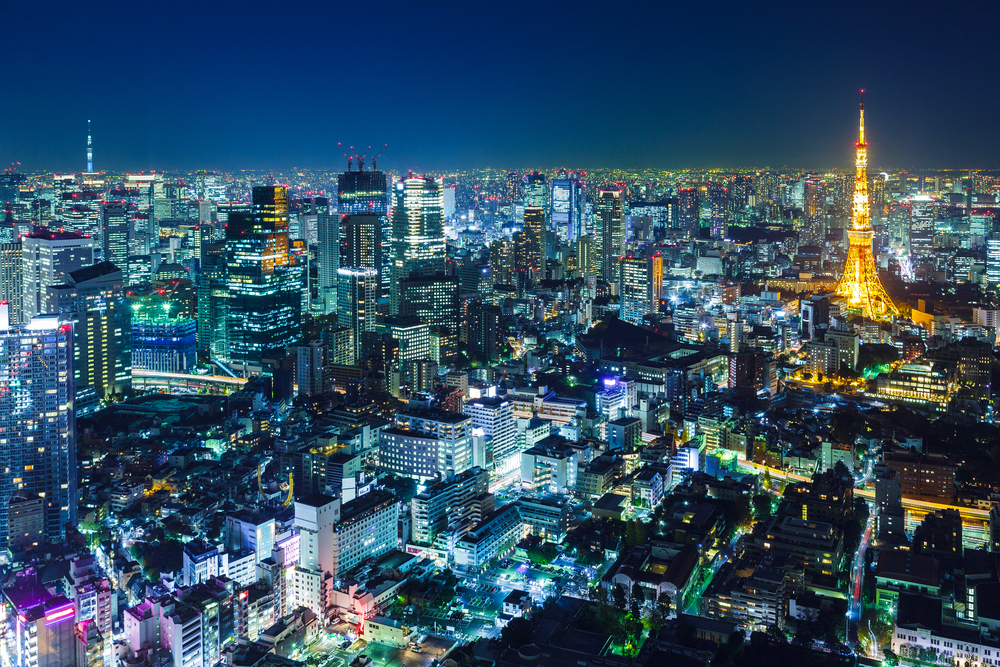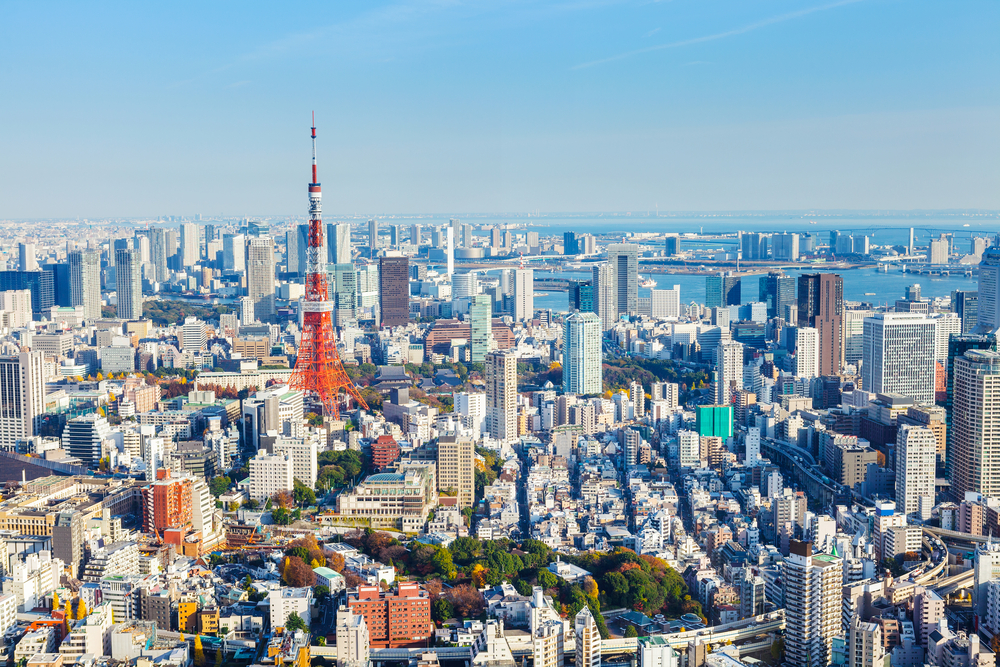
Tokyo 2020 has signed Nomura Holdings as a Gold Partner in the category “Securities”.
“I am delighted that today Tokyo 2020 has concluded a Gold Partner agreement with Nomura Holdings, Inc,” said Tokyo 2020 President Yoshiro Mori.
“Naturally, I look forward to the support that Nomura will provide as a Tokyo 2020 Gold Partner, but I also hope that the company will continue the vital role it is playing in the securities market, which forms the foundation of the Japanese economy.”
Nomura provides services to individuals, institutions, corporates and governments through its three business divisions: Retail, Asset Management, and Wholesale (Global Markets and Investment Banking).
“We are proud to support athletes on their journey to the Tokyo 2020 Games,” said Nomura Group CEO Koji Nagai.
“The Olympic and Paralympic Games provide significant economic benefits to host countries and we see the Tokyo 2020 Games as the perfect opportunity to revitalize the Japanese economy.
“By supporting athletes aiming for their personal best and companies adapting to a changing environment, we hope to contribute to the success of the Tokyo 2020 Games while fostering economic growth and social development in Japan.”
As well as helping to fund the delivery of the Games, domestic sponsors are a core component of Tokyo 2020’s marketing programme. They are accorded the rights to use Olympic and Paralympic designations and imagery including emblems, mascots and slogans.
As Gold Partners, the top tier domestic sponsors, Nomura joins Asahi, Canon, Eneos, Tokio Marine & Nichido Fire Insurance, Nissay, NEC, NTT and Fujitsu.
In addition to domestic sponsors, the IOC’s Worldwide Olympic (TOP) Partners – Coca-Cola, Atos, Bridgestone, Dow, GE, McDonald’s, Omega, Panasonic, Procter and Gamble, Samsung, Toyota and Visa – also contribute to the financing and delivery of the Games.
Tag: Olympic Games
-

Nomura sponsors Tokyo 2020 as securities Gold Partner
-

Paris city council approves 2024 Olympic bid
A bid from Paris for the 2024 Olympic Games overcame a significant hurdle today as the city’s councillors voted in its favour.
The next step will be a public consultation before a final decision on the bid will be made in June.
A recent national opinion poll found that 61 per cent of the French public would be in favour of Paris hosting the Games.
“Now we are off on an Olympic adventure,” said Anne Hidalgo, Mayor of Paris.
According to local sources, 163 city councillors voted overwhelmingly in favour of bidding for the 2024 Olympic Games, with support coming from the majority of political parties.
President Francois Hollande, who publically backed the bid in November, is due to meet with IOC president Thomas Bach on in Lausanne on Thursday to discuss Paris’s potential candidacy.
Paris last hosted the Olympic Games in 1924, which would make 2024 a centenary event for the city.
It last bid for the Olympic Games in 2012, which went to London despite Paris being the early favourite.
Bernard Lapasset, vice president of the French National Olympic Committee, presented a report to Hildago and the government on Thursday.
“France has the qualities to win,” he said.
If the public consultation works out in favour of the bid, Paris would join Rome, Hamburg and Boston in a competitive race.
The Indian Olympic Committee is also said to be considering a bid for the 2024 Olympic Games.
Once a city has announced a bid, it can work with the IOC through its new “invitation phase” of the Olympic bidding procedure. The deadline for applying to bid for the Games is September 15th 2015.
-

Connecting the Olympic rings to a host city’s culture
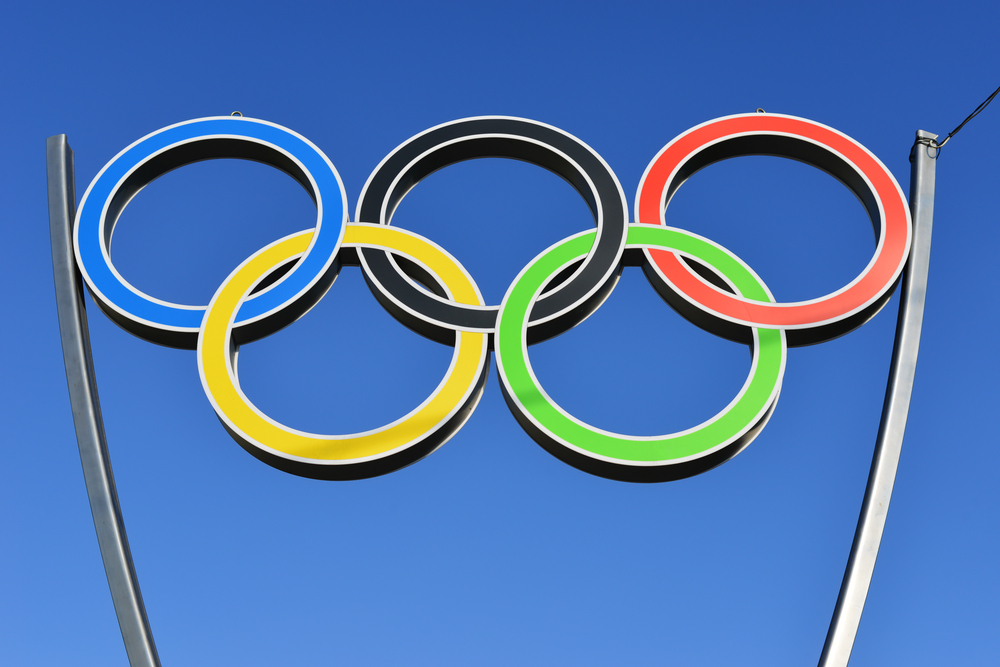
The Olympic rings have been a constant presence at each Games since 1920. But while they provide a symbolic continuity from one Games to the next, each edition also features its own distinctive identity – from the modern and youthful vibe of London 2012 to the patchwork quilt of Sochi 2014 – which provides an eye-catching backdrop to the sporting action and adds to the visual spectacle of the Games.
The task of creating this unique Look of the Games – which is seen everywhere from signposts and souvenirs to venues and volunteers’ uniforms – falls to the Organising Committees of the Olympic Games (OCOGs), which seek to produce a visual identity that is built upon the foundation of the Olympic rings, while also incorporating designs and colours that reflect the culture and history of the host city.
For Alison Gardiner, who was the Vice President of Brand and Creative Services at the Vancouver 2010Organising Committee, it was important to have the rings as a strong starting point for this huge task.
“The Vancouver 2010 brand strategy drew from the Olympic brand as well as Canada’s, and this combination provided the foundation for everything we did,” she explains. “Our goal was to ensure there was one integrated, powerful experience that was unique to our country and our time, and could also engage and inspire as many people as possible.”
However, building a visual identity around a globally recognised symbol, which already has so many values and meanings attached to it, can also present challenges for OCOGs.
“We couldn’t get away from the fact that as soon as we put the rings on something, there was immediately an association with something great and powerful and a standard of Olympic excellence that we had to live up to,” says Gardiner.
“But the Olympic brand is also incredibly inspiring to work with because of what it stands for – just the symbol on its own, everyone on the planet recognises it and associates it with excellence and bringing people together in celebration.”
According to Beth Lula, Branding Director at the Rio 2016 Organising Committee, another of the challenges for Games organisers is building a visual identity that is representative of the host city and nation, as well as the values inherent within the rings.
“It’s important for engagement,” Lula says. “If you have something that people can recognise and understand, they can feel that it represents them and their nation and they can feel proud of it. When we were developing our brand, we were looking for universal symbols – that’s why we have people embracing as our Games emblem. It’s a global symbol. We want people throughout the country to recognise themselves and feel proud of our designs.”
While the Olympic rings provide a globally recognised symbol for OCOGs to draw on, Lula also believes that each edition of the Games adds something special to the Olympic brand as a whole.
“Every time that the Olympic Games go to another culture, they absorb some aspects of that culture and that’s what really makes the Olympic brand global,” she says.
“The Games have never been to South America, so we said throughout our bid process that we would be new territory for the Olympic Games. We have a unique way of celebrating things, we love sport and we are a passionate people with a lot of energy. I think that is going to be something very special that we are going to add to the Olympic brand.”
Lula hopes that what her team is creating for Rio 2016 will live on long after the Games through the rings themselves. “When we return the Olympic rings to the IOC after the Games, they have to be even more valuable than they were before,” she says. “That’s our mission.”
This article was written by and reproduced with kind permission from the International Olympic Committee. For more information visit www.olympic.org -

2024 Olympic bid consultants register welcomed
The International Committee on Thursday launched a Register of Consultants representing cities bidding for the 2024 Olympic Games.
The register was one of the recommendations of Olympic Agenda 2020, the “strategic roadmap for the Olympic Movement” initiated by IOC president Thomas Bach and unanimously approved by IOC members last year.
The news was welcomed by Mike Lee OBE, chairman of Vero Communications, who has been involved in a number of successful Olympic bids including London 2012, Rio 2016, PyeongChang 2018 and Buenos Aires 2018.
“I think the idea of a register and codes of ethics and conduct are a very good way forward; we are very pleased to see that.” he told HOST CITY.
“Like others, we will be making an application to be on that register and I think it’s a healthy development and it’s something which the business in sport in general should embrace.
“Certainly you see it in other walks of life – it’s been around in the public affairs industry in many countries, so it’s a good thing and all part of increasing the opening and transparency of the bidding process.”
According to the IOC, all consultants wishing to participate in or support a candidature for the Olympic Games must be entered in the IOC’s Register of Consultants list for the city concerned.
Entry in the Register is a prerequisite for providing any service and/or signing any service contract by the National Olympic Committee (NOC) and/or the city.
The Register and Rules of Conduct form part of Olympic Agenda 2020’s Recommendation 3, which aims to reduce the cost of bidding for the Olympic Games, stating: “The IOC to create and monitor a register of consultants/lobbyists eligible to work for a bid city. Formal acceptance of the IOC Code of Ethics and Code of Conduct by such consultants/lobbyists as a prerequisite for listing in the register.”
The IOC considers a consultant to be any individual or company not linked by an employment contract to the NOC, the city or the bidding committee, and which/who participates in or supports a candidature by providing consultancy or similar services in any way and at any time.
The register will be published on www.olympic.org
-

IOC president encourages New Zealand Olympic bid
On his first visit to New Zealand on Tuesday, president Thomas Bach said the IOC is ready to look into a wider range of potential host nations – including New Zealand.
“You cannot restrict the right to host the Olympics to just 20 countries”, he said at a press conference.
“The Olympic Games are universal and we should open doors and windows. If New Zealand is ready to look into it, we are ready.”
He also said the changes brought about by Olympic Agenda 2020 encouraged countries to think about how the Olympic Games could fit into the social, economic, environmental and sporting needs of a country.
Bach was visiting to open the new National Olympic Committee headquarters in Auckland, where he was welcomed with a traditional “powhiri” welcome ceremony.
“Like the Olympic Movement, the welcome ceremony signifies peace, friendship and equality, and it shows how New Zealanders embrace the same values we do of tolerance and understanding through sport”, he said.
He was greeted by IOC Members Barry Maister – who is also tourism director at Destination Marlborough, and Barbara Kendall, who is also vice president of the International Surfing Association.
He also met with Minister for Sport and Health, Dr Jonathan Coleman, as well as members of the National Olympic Committee and national sports federations.
On Wednesday, Bach visited athletes at the Rowing New Zealand High Performance Centre in Cambridge, and after a visit to the local school he went on to the Avantidrome home of New Zealand Cycling, where he met a number of New Zealand Olympic medallists and hopefuls for next year’s Games in Rio de Janeiro.
President Bach discussed discussed Rio 2016, changes to the sports programme and the Olympic Agenda 2020 reforms with a group of 20 New Zealand athletes at the Avantidrome.
-

Eurosport wins all rights to screen Olympics in Europe
In a historic deal valued at EUR 1.3bn, Discovery, the owner of Eurosport, has been awarded the rights to broadcast the Olympic Games from 2018 to 2024 across all media platforms in all European countries, excluding Russia.
The rights, which were issued after a competitive tender process, extend to the development of the IOC’s planned Olympic TV Channel.
“This is a historic partnership, innovative and ground-breaking on a number of fronts,” David Zaslav, president and CEO of Discovery Communications told journalists in a press conference.
“We can reach more than 700m people across Europe. This agreement will bring the Olympic Games to more viewers on more screens than ever before.”
According to IOC President Thomas Bach, a major deal-breaker was the broadcaster’s ability to reach young people via digital platforms.
“It is the first time one single media company has acquired all the rights across Europe,” said president Bach.
“This agreement concerns all the different platforms, so Discovery is the real gatekeeper for all these rights.
“This agreement allows us, in a very special and particular way, to address youth on the platforms they use. We can reach out to them directly through these platforms.
“It will go from the telephones, over digital channels and many more. This is what made it very attractive for the IOC.”
Discovery is confident it will recoup the heavy price tag over time.
“This investment is consistent with our prudent approach to investing in content,” said Zaslav.
“The EUR 1.3bn purchase price, to be phased in over time, will include the rights to four Olympic Games across all platforms, including the Olympic archives, and aligns with our strategy of acquiring world class IP to the Discovery Company.
“And over the term of the contract, we expect the Olympic Games to be cash flow positive.”
The deal gives Discovery the exclusive rights to broadcast the most popular entertainment property in the world.
“There is no more exciting property than the Olympic Games,” said Zaslav.
“The live, must-have and universal appeal of the Olympic Games make it unique and singular as a programming event.
“The global reach, the fan engagement, the thrilling stories, the volume of content, the integrity of the brand – there is no rival in sheer global or mass appeal.
“Our ability to develop and follow the same characters and athletes all year, combined with access and rights to the Olympic archives, makes possible for the first time a programming strategy that can burn the Olympic flame with stories and content 365 days a year.”
The agreement includes cooperation on the IOC’s Olympic Channel, which is planned as part of the IOC’s “Olympic Agenda 2020” process of reform.
“We are very happy that as part of the agreement we will cooperate with regard to the Olympic channel, which will be another tool to reach out to youth and to keep the awareness about Olympic sport and the Olympic values high throughout the year,” said Bach.
A launch date has not yet been set for the Olympic Channel. Timo Lumme, Managing Director, IOC Television and Marketing Services said, “This is not about speed, it is about quality and therefore we have not given a deadline for the start of the Olympic Channel.
“But today, this another milestone in the development of the Olympic channel, because with this agreement we can look forward to having the Olympic channel extended to other platforms and having a roll-out to ensure the whole continent.”
Eurosport already has agreements in place with many Olympic sports federations.
“As we look at the assets that we have, we have a real advantage as we sit down with the IOC to build the Olympic Channel,” said Zaslav.
“Almost half of what’s on Eurosport are Olympic sports that we have rights to for the next several years already.”
The agreement requires Discovery to broadcasting a minimum of 200 hours of the Olympic Games and 100 hours of the Olympic Winter Games on free-to-air television during the Games period, but it will sub-license a portion of the rights in many markets across Europe.
“The flexibility to sublicense rights across territories will open up strategic partnership opportunities with a wide range of broadcasters and distributors on how best to exploit these and bring more coverage to more people on more platforms throughout the European continent,” said Zaslav.
This aspect of the deal is somewhat controversial as it introduces a middleman between the IOC and domestic broadcasters, who are seen to have played a crucial role in extending the reach of the Olympic Games.
“Of course they [European national broadcasters] have played a significant role in spreading and broadcasting the Games,” said Bach.
“But Eurosport has also contributed to this in the past, so it is not the public broadcasters alone.”
The domestic broadcasters in Great Britain and France will retain the rights they have already been allocated to broadcast the 2018 and 2020 Games.
“In Great Britain, you have the situation that the BBC has the rights for 2020 so there is ample time before 2022 and 2024 to have discussions with Discovery about their cooperation,” said Bach.
“So this is not excluding anybody, but it is showing a new and broader approach to Olympic broadcasting by incorporating the Olympic Channel in a very intelligent and effective way and by offering the great experience of Discovery and Eurosport to work on their multiple platforms.”
Juan Antonio Samaranch, IOC Executive Board Member and delegate IOC Member for European broadcast rights said: “Discovery and Eurosport will ensure the exposure of the Olympic Games through their own TV channels and media platforms, and, where relevant, by reaching sublicensing partnerships with other broadcasters in the various territories.”
-

Paris aims for unanimous support for Olympic bid
Paris officially launched its long anticipated bid for the 2024 Games on Tuesday, with a message of strong backing from the state and the public.
The leaders of the bid also said a referendum was unlikely to be required.
In its bid to host the Games, Paris is competing against Boston and Hamburg, which both face public referendums in order to progress their bids, as well as Rome and a likely bid from Budapest and other potential contenders including Baku and Doha.
“We are all very much motivated and enthusiastic to be able to achieve unanimity in this ambition to make Paris an Olympic and Paralympic city in 2024,” said bid committee chairman Bernard Lapasset.
“Bidding for the Games is a unique and exciting project for a country. This is an ambitious project that goes beyond sport, as its reach is global and significant impact at all levels and for the whole country.
“As we move forward with our bid, it is very pleasing to see today that we already have the full support of the city, regional and national governments as well as the CNOSF and the French sports movement – it is wonderful to also receive significant public support and real backing from our athletes.”
Lapasset added that the bid would “excite, unite and enthuse the people of Paris, our entire nation and lovers of Olympic and Paralympic sport all over the world.”
Asked by Le Monde after the launch if there would be a referendum on the bid, Lapasset said “I don’t think there will be one.”
This position was backed up by Etienne Thobois, chief executive of Paris 2024 bid committee who told media: “As of today there is no plan for a referendum at this stage.”
Lapasset and Thobois reportedly both stressed that public consultation will be crucial as the bid progresses.
The bid committee drew attention to France’s current form in hosting major sports events, which includes the World Rowing Championships and the Basketball European Championships in 2015, EURO 2016, the World Handball Championships in 2017 and the Ryder Cup in 2018.
2024 marks the centenary of the last and only time Paris has hosted the Olympic Games, in 1924. The city unsuccessfully bid for the Games in 1992, 2008 and 2012.
But Thobois said “We are looking forward, we are not looking backwards… we are into Agenda 2020, not Agenda 1920.”
The mayor of Paris, Anne Hidalgo, said Paris was “looking forward to an exciting and bold future whilst remaining true to its rich sporting and cultural traditions.
“We aim to highlight the unity and the solidarity of a cosmopolitan city, which I am sure will be one of the key strengths to win.”
The host city of the 2024 Olympic and Paralympic Games will be elected by IOC members in a secret ballot at the body’s 130th Session in the Peruvian capital of Lima in September 2017.
-

Free-to-air Olympic broadcasting being minimised, says EBU
The IOC’s new approach to issuing broadcasting rights in Europe will reduce free-to-air obligations to a minimum, according to the European Broadcasting Union (EBU).
The IOC on Tuesday sold the broadcasting rights for the Olympic Games from 2018 to 2024 to Eurosport, through a competitive tendering process in which the EBU also bid.
“The EBU submitted a serious bid for the European television rights for the Olympic Games on behalf of its Members which reflected the free-to-air value of future events taking place mainly in the Asia Pacific region and thus in less attractive time zones,” the EBU said in a statement sent to HOST CITY.
“We understand that Discovery, together with Eurosport submitted a successful proposal to the IOC shaped by their strategic objective to newly position themselves in Europe.
“This development illustrates the shift in the IOC’s previous positioning of the Olympic Games as a free-to-air event that reached all of the European television audience – to a pay and other platforms event with minimum free-to-air obligations.
“Nevertheless, we congratulate Discovery/Eurosport on its successful bid – particularly as Eurosport was initially established within the membership of the EBU.”
Under the agreement, Eurosport is committed to providing 200 hours of the Summer Olympic Games and 100 hours of Winter Olympic Games to free-to-air broadcasters.
“We are indeed concerned for audiences in our Members’ countries not getting full access to all the Olympic sports at the Games, but we understand the 200 hours that must be free-to-air is the minimum set by the IOC,” an EBU spokesperson told HOST CITY.
National broadcasters will have to buy additional broadcasting rights to the Olympic Games from Eurosport.
The EBU, with 73 members in 56 countries, describes itself as the world’s most influential broadcasting union that negotiates on behalf of and advocates for the interests of public broadcasters across Europe and beyond.
-

Boston faces same issues as any US bid – OC advisor
The US Olympic Committee is due to speak with Boston’s bid team today to re-evaluate whether they should remain the US city of choice to bid for the 2024 Olympics Games – but comments made to Host City earlier this month by the USOC’s lead advisor indicate that the choice of city is not the critical issue.
“I think the biggest challenge that any US city faces has to do with the host city agreements and being able to provide the appropriate guarantees to the IOC. It’s no secret that that’s a challenge for any US city.” USOC advisor Doug Arnot told Host City in early July.
“Being able to put together a programme that is risk-averse, that minimises and mitigates risk to the extent that it can be acceptable to fitting in state government is always going to be a challenge for any US city, not only Boston.
“Boston has responded very well to what I would call democratic pressures. They have had to take a look at their plan and make sure that it made sense from a financial perspective, from a legacy perspective – they’ve had to examine it much more carefully than a lot of bids would at this time.
“They’ve been under the gun, it’s definitely been a challenge but they’re responding very well to the challenge.”
Asked whether the USOC chose the right city in Boston, Arnot said: “We had four great cities to choose from. There were some very good reasons to pick Boston and there were some very good reasons that we could have gone with the other cities. We have all put our energy behind Boston and are trying to help them to continue to advance the plans.”
National Olympic Committees interested in bidding for the 2024 Olympic Games must present a city to the IOC by 15 September.
Budapest, Hamburg, Paris and Rome have so far been announced as bidding cities, with Toronto said to be considering applying. The Russian city of Kazan has also recently been linked to a possible bid.
-

Dentsu acquires Asian Olympic broadcasting rights to 2024
Japanese media giant Dentsu has been awarded the exclusive broadcasting rights for the Olympic Games from 2018 to and 2024 in 22 Asian countries.
World leading advertising agency Dentsu was the Asian broadcast partner for the Sochi 2014 Winter Olympic Games and is the broadcast partner in the region for the Olympic Games Rio 2016.
The agreement means Dentsu will continue to distribute broadcast rights in Afghanistan Brunei, Cambodia, Chinese Taipei, East Timor, Hong Kong, Indonesia, Iran, Kazakhstan, Kyrgyzstan, Laos, Malaysia, Mongolia, Myanmar, Papua New Guinea, Philippines, Singapore, Tajikistan, Thailand, Turkmenistan, Uzbekistan and Vietnam.
In a statement, the International Olympic Committee (IOC) described Dentsu as the “exclusive gatekeeper for broadcast rights” in all languages and all media platforms, including television, radio and the Internet.
IOC President Thomas Bach said: “This agreement ensures Olympic broadcast coverage for fans across the region, including on free-to-air television. Having begun our broadcast relationship with Dentsu at the Olympic Winter Games Sochi 2014, I am pleased we will continue through to 2024.”
The deal also encompasses Youth Olympic Games.
Kiyoshi Nakamura, Executive Officer of Dentsu said: “Following the acquisition of the broadcast rights for the 2014 and 2016 Olympic Games and Youth Olympic Games in Nanjing, we are delighted to strengthen the ongoing relationship between the IOC and Dentsu through the distribution of the broadcast and exhibition rights for all the Olympic Games until 2024. We are dedicated to contributing to the long-term development of the Olympic Movement and to deliver the excitement of the Olympics to the fans in these Asian countries and territories.”
IOC Vice-President Zaiqing Yu, Delegate IOC Member for Broadcast Rights in Asia, said: “Dentsu has a good understanding of the region’s commercial and broadcast environment, and their expertise and insight will help the Olympic Movement develop its presence and ensure excellent Olympic broadcast coverage of future Games.”
The agreement follows the IOC’s recent awarding of 2018-2024 broadcast rights to Eurosport in Europe and beIN in the Middle East.