Tag: Olympic Games

  • Japan’s double mega-event challenge

    Japan’s double mega-event challenge

    It seems fitting that Japan, which hosted Asia’s first Olympic Games in 1964, will host the continent’s first Rugby World Cup in 2019, a year before the Olympics return.
    Few countries could expect to host two of the world’s biggest sporting events in consecutive years but the Land of the Rising Sun has few equals in getting things done.
    When 20 nations begin competing for the Rugby World Cup in September 2019, Japan will have had a decade to prepare since winning the right to host it.
    The Tokyo Olympic Games, involving more than 200 countries and 28 sports, will begin on July 24 2020 – just seven years after the host city was announced.
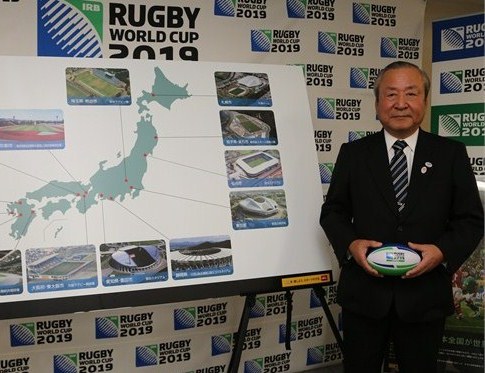
    Fujio Mitarai, President of Japan Rugby 2019, expressed delight when his country was awarded the Olympic Games, saying “the two events will work very well together”.
    Excitement about the Olympics could encourage more Japanese to watch rugby, while the earlier tournament will provide valuable logistical and security experience.
    Such benefits may largely be limited to the Olympic Stadium and surrounding area, however, given the lack of shared venues and difference in scale between the two events. 
     
    Rebuilding the Olympic Stadium
    The focal point for the World Cup and the Olympic and Paralympic Games will be the new 80,000-seater Olympic Stadium in Tokyo’s Shinjuku district. 
    It will be built on the site of the 57,000 capacity Kasumigaoka National Stadium, which hosted the opening and closing ceremonies and track and field at Tokyo 1964, but is due to be demolished in the near future.
    British architect Zaha Hadid’s original design has been revised but the Olympic Stadium will still be twice the size of London 2012’s stadium following an estimated $1bn of works. It will feature a retractable, arching 70-metre high roof.
    It will host the World Cup’s opening match and final, as well as the opening and closing Olympic ceremonies, athletics, football and rugby sevens.
    Both rugby semi-finals in 2019 and the third-place playoff are also likely to be played in it after Yokohama chose not to put forward its International Stadium – venue of the 2002 football World Cup final.
    Japan Sport Council will own the stadium, which will be used for international football, national track and field championships, concerts and other cultural events post-2020.
     
    Where will the rugby matches happen?
    Most of the other matches at the 2019 tournament will be played in grounds with capacities between 20,000 and 45,000 used by teams in the J.League, Japan’s top football division. 
    Japan’s World Cup bid said Hong Kong and Singapore would each host some matches, but both cities later withdrew in a blow to the goal of raising rugby’s profile across Asia.
    Organisers insist they will still select host cities that can create excitement about the sport from 14 that have applied, ranging from Sapporo in the north to Nagasaki in the south. 
    The final 10 to 12 confirmed venues will be announced in the first half of 2015.
    Other than the Olympic Stadium, the biggest bidding venue is the 50,889 Shizuoka Stadium, home to Jubilo Iwata and Shimizu S-Pulse football clubs.
    The smallest, with a proposed capacity of 15,000, is the Kamaishi Unosumai Reconstruction Stadium in an area devastated by the 2011 tsunami.
    In addition to Yokohama not bidding, another surprise was authorities in Osaka putting forward the Hanazono Rugby Stadium, Japan’s oldest dedicated rugby ground.
    The 30,000-seat venue opened in 1929 and the World Cup could offer an ideal opportunity to refurbish it and raise the capacity.
     
    Games Foundation Plan
    In February 2015 the Tokyo 2020 Organising Committee will submit its Games Foundation Plan to the International Olympic Committee (IOC), setting out a detailed vision.
    There are 37 proposed competition venues, of which 22 need to be built and 15 already exist (including two needing major refurbishments).
    Exactly half those to be built are due to become permanent legacies for the city, while the other 11 are either temporary or can be relocated.
    The 1964 Games acted as a catalyst for Japan to make an extraordinarily rapid rise, from a country recovering from the devastation of World War Two to a beacon for development in Asia.
    Projects included the T?kaid? Shinkansen bullet train railway line between Osaka and Tokyo, 22 new highways, eight expressways and two subway lines.
    Japan’s outstanding transport infrastructure was an important part of its 2020 bid at a time when the IOC may have wanted a ‘safe bet’ amid global economic uncertainty.
    While Japan’s economy has its own difficulties, the nation’s developed status and pledge to host an “athlete-focused and compact” Olympics helped it defeat Istanbul in the final round vote.
    The successful bid said 28 of Tokyo’s 33 competition venues would be within eight kilometres (5 miles) of the Olympic Village with many situated around Tokyo Bay.
    But this pledge was thrown into doubt when the IOC recently urged Tokyo to consider more existing venues outside the capital due to rising labour and construction costs.
    Impressively, three of the 1964 venues will once again host some of the world’s leading athletes.
    Yoyogi National Stadium, which hosted swimming and basketball in 1964 and sport, concerts and conferences since, will host handball in 2020.
    Masato Mizuno, CEO of Tokyo 2020’s bid, described it as “a fabulous venue combining traditional Japanese design with visionary innovation”.
    Nippon Budokan, described by organisers as being to Judo “what Wimbledon is to tennis”, will again host Olympic Judo 56 years after it first did.
    The Tokyo Metropolitan Gymnasium, situated next to the Olympic Stadium, will see table tennis action in 2020, having staged gymnastics and water polo in 1964.
     
    Beyond the Games
    Legacy planning has taken into account the social, developmental and sustainability agenda in the city’s long-term urban plan ‘Tokyo Vision 2020’. 
    The Olympic Stadium lies in one of four large sports areas being developed under the vision, as does Musashino Forest Sport Centre in western Tokyo.
    Due for completion in 2016, its gymnasium will host Modern Pentathlon and after the Games it will stage concerts, cultural events and local sports competitions.
    Tokyo residents will also be able to enjoy facilities at the Olympic Aquatics Centre after the Games.
    The centre will be remodeled and the number of seats reduced from 20,000 to 5,000 before it is opened to the public. It will still be used for national and international swimming events. 
    Tokyo Metropolitan Government will own a number of venues, including the Aquatics Centre and Musashino Forest Sport Centre.
    While the number of countries, competitors and venues in the Olympics dwarfs any other sporting event, it lags behind the Rugby World Cup in one respect – lasting 17 days, compared to 45 days for the latter.
    This article first appeared in the Winter 2014/15 issue of HOST CITY magazine

  • IOC visits Rio to check progress on 2016 Games

    IOC visits Rio to check progress on 2016 Games

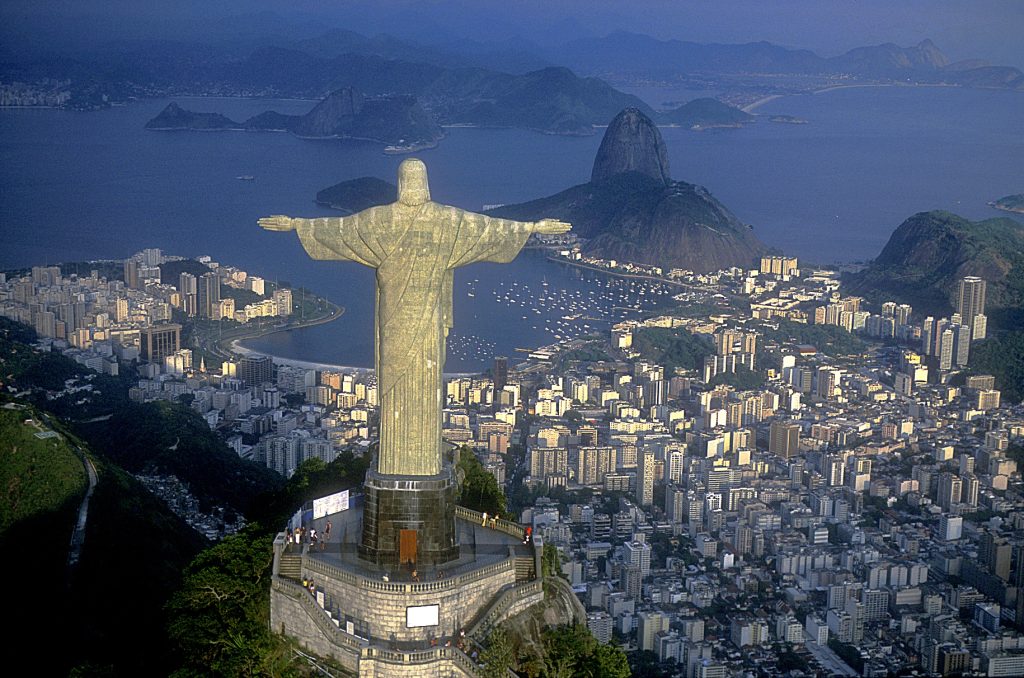
    The International Olympic Committee (IOC)’s Coordination Commission’s eighth visit to the “Marvellous City” of Rio de Janeiro gets underway on Monday, ahead of the IOC Executive Board meeting in the Olympic host city later in the week. 
    The Coordination Commission, chaired by IOC vice president Nawal El Moutawakel, is working with the local Organising Committee and its government partners over the next three days, the IOC said, “to see how Rio’s preparations are advancing ahead of the 2016 Olympic Games”.
    The inspection comes shortly after the vice president of the International Golf Federation (IGF) said construction on the golf venue is almost complete – a marked turnaround from the situation last year when concerns over venue infrastructure reached crisis point.
    The IOC noted that, with the Games now just over a year-and-a-half away, Rio 2016 now has a number of Games-time initiatives underway, such as its ticketing programme, volunteer training programme and the Olympic Torch Relay. 
    As well as hearing about these initiatives on the visit to Rio, the Coordination Commission will visit some of the Games venues and listen to reports on a number of key operational areas such as athletes’ services, sport, venues, National Olympic Committee services, International Federation services, accommodation, transport, marketing, media services and preparations for the Paralympic Games.
    The progress of Rio 2016 came under intense scrutiny last year, reaching its nadir in April when IOC vice president John Coates described the Games preparations as “the worst I have experienced”. 
    In less than a year, Rio 2016 appears to have turned the ship around – at least with respect to the golf course, which has received a vote of confidence from IGF vice president Ty Votaw.
    “The construction aspect of it is virtually complete,” he told Reuters on Friday. “There are a few items that need to be completed, some infrastructure things, but as far as the golf course itself and the design elements and the grassing of the golf course, that is virtually done.
    “We just need to continue to impress upon everybody in Rio, the 2016 organisers and the land owners, that all resources need to be brought to bear to get the golf course in the condition that it needs to be to host a competition of this nature.”
    The course was originally scheduled for a test event in November 2015 but questions have been raised about whether the grass would be ready. Votaw said a test event would take place before Rio 2016 but did not confirm the timeframe.
    “We want to get a sense of how the grow-in season goes over the next 60 to 90 days to determine what the chances are of a late ’15 or early ’16 test event.
    The IOC Coordination Commission runs from 23 to 25 February and is followed by the Executive Board meeting, which takes place from 26 to 28 February.
     

  • Rio 2016 at its most intense phase of preparation – IOC

    Rio 2016 at its most intense phase of preparation – IOC

    The International Olympic Committee’s coordination commission has concluded that Rio de Janeiro is making solid progress on preparing to host the Games, but there is an “intense year ahead” with operational activities coinciding with a series of test events that pose “very aggressive timelines” for some venues.
    IOC president Thomas Bach led a delegation to meet Brazilian President Dilma Rousseff, who pledged full support for the Games from “every level and ministry of [her] government as well as from State and City authorities.”
    Bach also met with Rio State Governor Luiz Fernando Pezão, Rio de Janeiro Mayor Eduardo Paes and Brazilian Minister of Sports George Hilton, and joined the commission on a tour of the Barra Olympic Park.
    Speaking at the end of the visit, commission chair Nawal El Moutawakel said: “We were pleased to be able to show President Bach that good progress has been made on the Rio 2016 Games. The advancements made on both the Barra and Deodoro Olympic Parks were very encouraging, with both areas on track to leave fantastic legacies to the people of Rio and the athletes of Brazil.
    “However, the Rio team is now entering the most intense phase in the preparation for the Games, as they reach a new level of detail while planning numerous test events.”
    Rio de Janeiro’s Games venues are set to host 21 test events in 2015.
    “Rio 2016 will have a lot to deliver while still preparing for the Games,” said El Moutawakel.
    “We were pleased to see that Rio and its government partners have put in place structures that will allow them to deal with what will be an intense year ahead, filled with thousands of details that will need to be dealt with before the Games. They will also need to ensure that the venues are delivered in time to host the test events.
    “The golf course, velodrome and equestrian cross-country venues all have very aggressive timelines that will need to be met over the coming months.”
    Carlos Nuzman, president of the Rio 2016 Organising Committee, said “As we move at high speed from the planning to the execution phase of the project, we are dedicated to delivering on our vision for the Games.
    “In a project of this magnitude, some obstacles will always exist, but with the help of our partners at the IOC and the three levels of government, we will overcome them. Our joint commitment to deliver excellent Games with memorable celebrations is stronger now than ever.”
    The IOC coordination commission was pleased with the level of unity shown by government partners with the Rio 2016 Organising Committee, “which emphasised the importance of having an integrated approach to the delivery of the Games, especially during a period which is as intense as the coming 17 months.”
    Accommodation and transport were also highlighted as areas that the organisers need to focus on.
    “A significant amount of work needs to be completed this year to ensure that the Games experience is delivered at the highest level for the athletes, participants and spectators,” the IOC said.
    The commission was pleased to see that a number of engagement initiatives have been launched in Brazil since its last visit, such as ticket sign-up, volunteer recruitment, mascots and the Olympic Torch Relay.
    Ticket sales are set to begin in late March. Volunteer training, torchbearer applications, and the cultural programme are due to get underway later in the year.


  • Magical ideas to capture the public imagination

    Magical ideas to capture the public imagination

    HOST CITY: Does culture have a prominent enough role within the Olympic Games now?
    Helen Marriage: I think it’s great that there should be a cultural aspect to the Olympic Games, but competitive art is not how the world is these days. There’s a sense in which art does different things from sport, and that whole thing about winners and losers isn’t really how most artists would think. 
    What you’re dealing with in terms of the Olympics is a very big machine, which is very dedicated to the concept of winning and losing. I think a rebalancing of the significance of art and sport would be really interesting, though whether that can be achieved easily I have some doubt. 
    The thing about art that differentiates it from sport is the uncertainty. If you are running a sport event, you don’t know who’s going to win but you know what the format is – there are rules and regulations. 
    I think that London went as far as it is possible to have gone currently in terms of getting culture to be taken seriously as part of the Olympic effort.
     
    HOST CITY: What was the cultural highlight of the Olympic Games for you?
    Helen Marriage: I would of course say the project that we did for London 2012, by the director Deborah Warner and actor Fiona Shaw called Peace Camp. It was described by the New York Times as a “refugee camp from heaven” epitomising the story of the Olympics. It was a series of nine installations around the coast of the UK that welcomed visitors through the great poetry of our land. It was a beautiful, quiet, contemplative piece that showcased Britain as an island nation and it was really lovely.
    There were really lovely things in London like Piccadilly Circus Circus, which was the opposite, with thousands of people and lots of energy. But the thing I loved about what we did was that it was the opposite of competition – it was really far away from London and you had to make an effort to get there. 
     
    HOST CITY: What’s your opinion of public art projects like the Arcelor-Mittal Orbit?
    Helen Marriage: I completely understand the motivation for doing it, to build something that was there during the Games and would be there for legacy. It’s not necessarily to everyone’s taste, but those monumental sculptures are always interesting and provoking debate is part of the function of art anyway. 
    The thing about art is that it’s non-competitive – it’s about how an extraordinary, surprising, magical, unlikely idea can be conjured out of nothing. 
    Money spent is money spent, but all these things – sport, art, music and religion are all manifestations of our culture and it’s always great to do so as a public voice.
     
    HOST CITY: What are the benefits of artistic events and installations for the people that live in cities? 
    Helen Marriage: There’s always the thing about looking at your city differently; and they can attract inward investment. 
    If you look at something like poppies at the Tower of London for Remembrance Day that’s an artwork; it started very quietly. It’s a really simple idea, it’s made millions of pounds for charity, five million people have been to see it, it’s created a real buzz and sense of destination, it was moving to people. Whether you think it is great art or not is not the point – it’s that it captures public imagination.
     

  • South Africa not “playing lotto” with Games bids

    South Africa not “playing lotto” with Games bids

    South Africa is certain to bid for the Olympic Games but will not rush into it now Durban is the only bidder for the 2022 Commonwealth Games. 
    Instead, the government and sports authorities are about to start a process of deciding whether it is feasible to bid for the 2024 Olympic Games so soon after Durban 2022.
    “The Olympic Games will be the next thing. When? 2024? I don’t know,” said Fikile Mbalula, South Africa’s minister of sport and recreation.
    “We now have the Commonwealth Games, but the fact that we will host [the Olympics] in the future and we will have an appetite is not off the radar,” he told HOST CITY at the launch of Durban’s Commonwealth Games bid in London last week.
    With Edmonton pulling out of the race to host the 2022 Commonwealth Games, Durban is in pole position to be awarded the hosting rights on 2 September, subject to the Commonwealth Games Federation’s rigorous evaluation process. 
    The deadline for submitting a bid for the 2024 Olympic Games is less than four weeks later.
    Asked if there is a timeframe for announcing whether South Africa will put in a bid for the 2024 Olympic Games, Mbalula said “Not at all. Look, the question is not like thinking on our toes. 
    “We know for a fact that we are here now for the Commonwealth Games and we are not like playing lotto, trying to catch everything at any time and going for the bigger prize.”
    An important part of South Africa’s decision-making will be evaluating whether it would be able to provide the financial guarantees necessary to bid for the Olympic Games two years after the Commonwealth Games. 
    “It might not be the case,” Mbalula said, “like we were not in the position to back Olympics three years ago and we backed off because of the challenges we faced and the fact that we hosted the World Cup. We needed a breather.”
    “We don’t want to do things that we will not be in a position to handle. We can handle the Commonwealth Games now – and if we look in the next two, three, six years to come, if we can handle the Olympics then we will look at that and make a proper evaluation about it.
    “But it’s not like just a knee jerk reaction, because the world wants us to host and therefore we can – it’s not about that.
    “We will do it – it might not be me, there will be somebody in this government that will have that challenge of hosting the Olympics in the future. 
    “And that will be most welcome. It’s a very important mega event that all nations aspire to host, globally.
    “Our bigger prize now is the Commonwealth Games and we are embracing that with both hands.
    “It’s now or never, and this is what we must embrace as a nation and move forward, and give opportunities to young people and those who grew up when South Africa was in total isolation.”
    Any Olympic bid would be launched by the South African Sports Confederation and Olympic Committee (SASCOC). 
    “We as SASCOC and the government have not had any discussions in relation to a possible bid to host the Olympic Games. We would have to first sit down with government and look at what is feasible for the country. As yet these initial discussions have not taken place,” Mark Alexander, CEO of Durban 2022 and SASCOC board member told HOST CITY.
    “Our objective at the moment is to focus on the Commonwealth Games and we totally committed to ensuring that we meet our obligations that we presented to the Commonwealth Games Federation in London.”
     

  • International sport community in mourning

    International sport community in mourning

    It was with profound sorrow that I learnt of the tragic helicopter crash yesterday which claimed the lives of three of France’s sport icons, swimmer Camille Muffat, 25, sailor Florence Arthaud, 57, and boxer Alexis Vastine, 28. 
    Two of them were Olympians. All three of them, just like all athletes around the world, embodied the values of peace. Each of them has moved us, thrilled us and made us proud. They have filled our hearts with emotion. Beyond their sporting performances, they were committed to giving back to society what sport had given them.
    We will never forget the youthful vitality of Camille Muffat, 400m freestyle Champion at the London Olympics, the accomplishments of Florence Arthaud, winner of the 1990 Route du Rhum transatlantic race, and the passion of Alexis Vastine, Beijing Bronze Medallist who was looking to win Gold in Rio.
    The entire sports community mourns this great loss. Along with the teams of the World Olympians Association and Peace and Sport, our thoughts are with the families and loved ones of the victims.
    Joël Bouzou
    President of World Olympians Association
    President and founder of Peace and Sport

  • The city is the centre of the world’s biggest story – Filmmaster Events

    The city is the centre of the world’s biggest story – Filmmaster Events

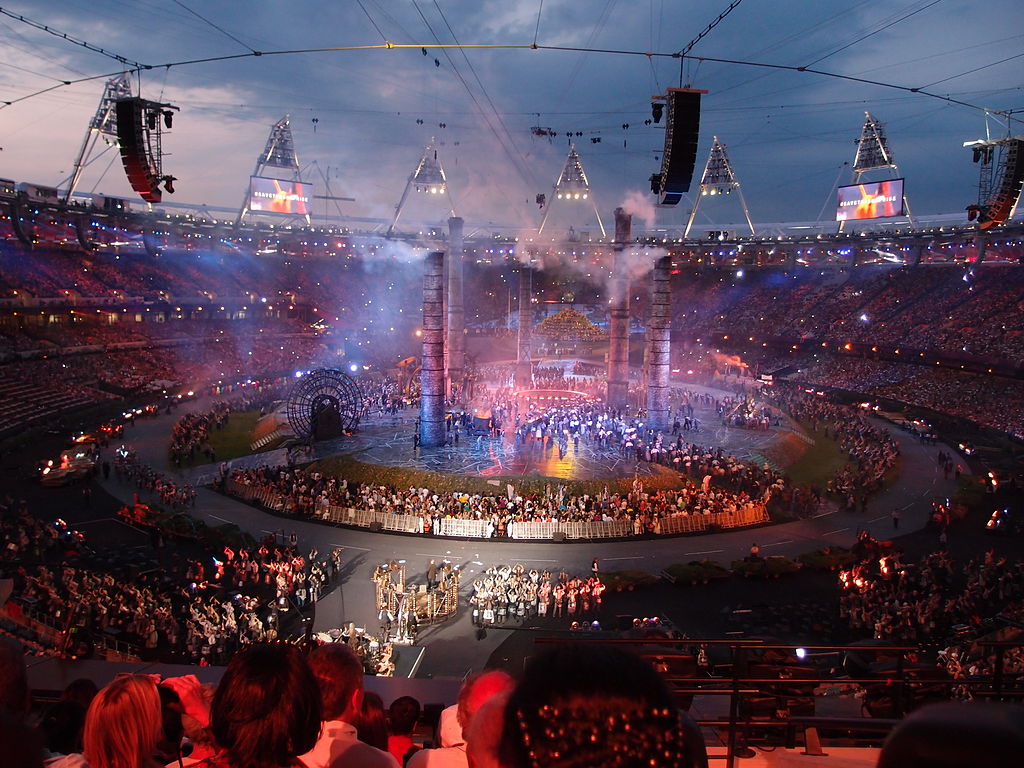
    HOST CITY: Rights holders, hosts and organizers of mega sports events have a number of requirements and expectations about the structure and content of opening and closing ceremonies. How do you balance these requirements, and how do you avoid ceremonies becoming formulaic?
    Antonio Abete: Producing a sports event requires commitment, experience, creativity and managing skills. This is why the best companies in the world take the field when it’s time to organise these important ceremonies. Expectations are always high: sports ceremonies are among the most watched television events in the world. 
    On average, more than 4 billion people watch Olympic ceremonies. These events are in charge of telling the story of the country, showing its traditions, celebrating its future. They must meet technical demands as well as the emotional needs of the television audience and live viewers. Finding the right balance it is not simple; for this reason, long experiences together with the will to experiment with creativity are essential. 
    It is difficult to work in a stadium: there are a lot of limits, such as the field of play, which is untouchable. You need to be creative if you want to avoid banality and keep the viewers attention high. You have to think outside the box and interchange charged-up moments with poetic ones. The viewers will be able to feel a wide range of emotions thanks to the successions of performances. 
     
    HOST CITY: How important for the host city are the opportunities that mega sports events present for hosting other concurrent events, such as cultural festivals and business events, and how can a host city maximise these opportunities? 
    Antonio Abete: The host city has got a great opportunity to highlight and promote its heritage through the world. It is essential that the city works as the leader of the event and creates an appropriate structure for all the accessory events. The city should be the protagonist in order to allow the public to discover the resources of its land. During these events, sport is linked with social issues, politics, culture and the future of the society that it is representing. Host cities must be able to handle all these different aspects and adopt a long-term strategy to make the shows more successful. 
     
    HOST CITY: How do you see event production changing in 2015 and beyond?
    Antonio Abete: There are no specific trends or determined directions. We are a leading player in event history, and we are aware of what we offer and what we can produce. 
    The events industry is influenced by trends, like every industry, mostly because of new technologies, which are now essential while creating and producing every kind of event. We have been the first one to try new strategies, find innovative instruments and changing the rules. We are one of the few companies in the world, and the only Italian company, to be licensed to organise Olympic Ceremonies. This makes us proud and encourages us in improving our services and our skills more and more. 
     

  • Olympics immune to Petrobras crisis says Rio 2016

    Olympics immune to Petrobras crisis says Rio 2016

    The 2016 Olympic Games will not be affected by the economic slump or the scandal engulfing Brazil’s government and its national oil company, according to organising committee’s communications director Mario Andrada.
    Construction projects for the Games, which takes place in Rio de Janeiro in August 2016, are back on track and will not be held up, despite the worrying prospect that some contractors may be linked to the scandal, Andrada said in an exclusive interview with HOST CITY.
    He also said the state government needs to be mobilised to clean up the sailing venue in Guanabara Bay in time.
    Brazil’s economy was booming when Rio de Janeiro was awarded the hosting rights in 2009 but the economy failed to grow in 2014 and remains depressed.
    The country’s problems are compounded by the fact that several politicians and companies have been implicated in bribery issues relating to national oil producer, Petrobras.
    “Brazil is going through a political and an economic crisis,” Andrada said. 
    “Petrobras has very complicated issues to manage. Some of the top Brazilian companies have been affected by this because they have been involved in corruption scandal.
    “That’s worrying on our side because of the construction work on the Olympic Games.”
    While the organising committee is not itself implicated in the scandal – “We are not connected to these allegations in any way, shape or form” – any contractors found to be connected to the Petrobras scandal will be taken off Olympic projects. 
    The organisers of the Games have prepared for this by ensuring that venue construction projects are contracted to more than one company.
    “Each of the venues is being delivered by two or more construction companies. So if one of them is facing trouble through the Petrobras scandal due to lack of finance, the other companies are able to carry on.
    “So far we have been able to be immune to this situation because the construction system guarantees that one of the companies hired for the job will do the job.”
    Rio 2016 came under fire last year for a seriously delayed start to venue construction work but it is now on track. 
    “It’s not easy to sail through stormy waters, but we have been able to keep the pace,” said Andrada. 
    The International Olympic Committee’s coordination commission visited Rio de Janeiro in February and gave an overall positive assessment but identified areas of concern, such as the sailing venue. 
    “It was a very favourable visit but we have an issue in Guanabara Bay where the sailing competitions will take place,” said Andrada.
    “We need to be more effective in cleaning the bay and helping the government to clean the bay. 
    “It’s a matter of mobilising the government. It’s a huge project that involves 12 counties around the bay, so it can only be carried out by the state government.
    “The point is to help them to get technicians and experts to work together.”
    The test event for sailing starts on 15th August 2015. 
    “We still have time to clean it up and to make sure the field of play will be totally clean. Everybody needs to push in the right direction.” 
    Construction work on the Olympic Park in Barra has made huge strides since the IOC voiced concerns a year ago, Andrada said, with the work clearly visible above ground. 
    “There is a huge amount of things to do but everything is moving in the way we want it to. We are cautiously optimistic but confident.”
    Despite the economic slowdown, the organising committee is managing to operate with completely private finance. 
    “We are still running the organising committee with private money. This will probably be the first Olympic Games in history where the organising committee did all its work without public funding.
    “I believe the Games are the good news for Brazil in the middle of the Petrobras scandal and all the political issues.” 
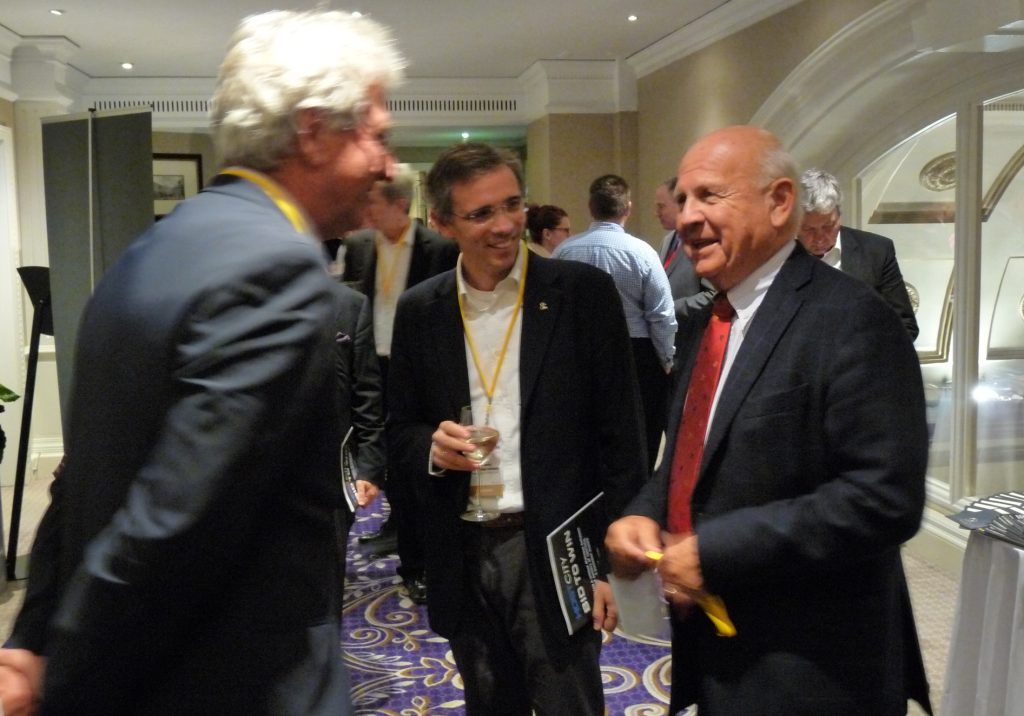
    Mario Andrada was a VIP speaker at HOST CITY Bid to Win and is set to speak again at HOST CITY 2015: The Largest Meeting of Cities, Sports, Business and Cultural Events. Book your place now by contacting adam.soroka@cavendishgroup.co.uk

  • Governments pledge US$6.45m to anti-doping fund

    Governments pledge US$6.45m to anti-doping fund

    Twelve world governments have pledged US$6.45m towards an anti-doping fund set up by the International Olympic Committee (IOC), which is matching funds with the aim of creating a joint fund of US$20m.
    The fund was set in motion by the IOC’s Olympic Agenda 2020 and will be administered by the World Anti-Doping Agency. 
    The world governments that responded to a call to match the IOC funding are China, France, Ivory Coast, Japan, New Zealand, Peru, Qatar, Saudi Arabia, South Korea, Turkey, the US and Sweden.
    The donations mean that the fund will have a starting budget of almost US$13 million. 
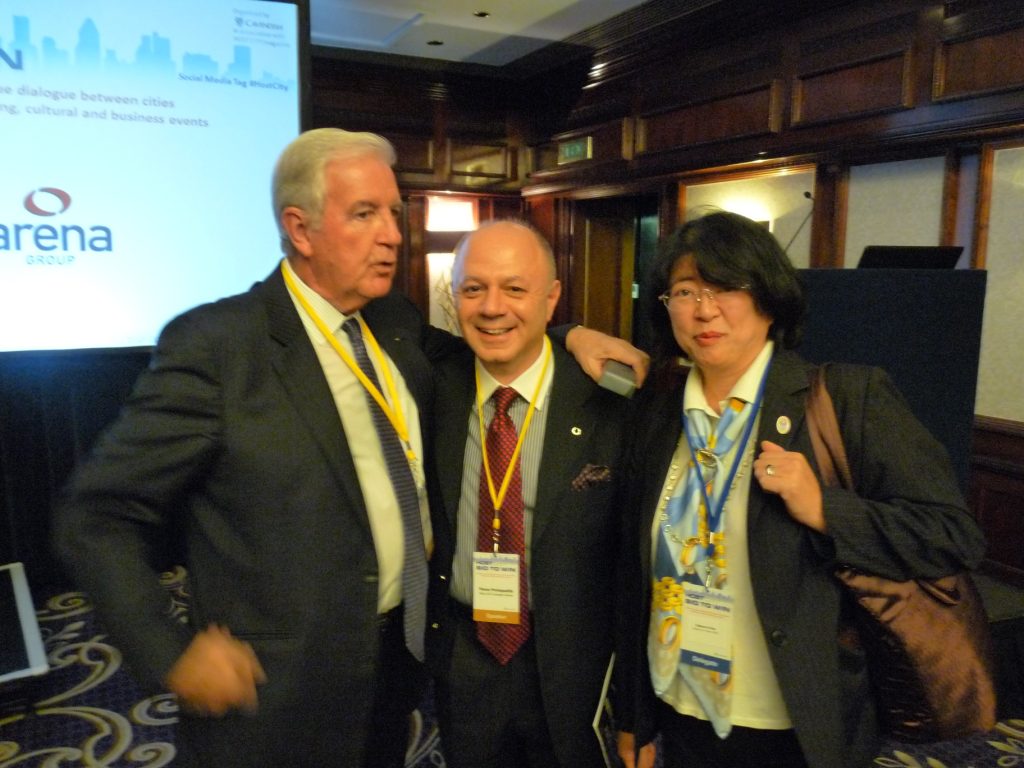
    “WADA is very pleased with the financial commitments that this partnership has generated for the fight against doping in sport”, said WADA president and IOC vice president Sir Craig Reedie.
    “The fund allocated by the IOC has received the commitment of governments of the world to contribute a total of US$ 6,452,296. The funds will provide a tremendous boost to WADA in their efforts to carry out innovative, anti-doping research focussed on protecting the clean athletes.”
    The 12 governments have committed to pay WADA in full by 31 March 2016.  
    As a separate fund for research in the fight against doping, the IOC will also administer the balance of US$3.55m remaining from the full US$10m it approved as part of Olympic Agenda 2020.
    These funds will be allocated to researchers involved in athlete-centred projects in science and society. Four applications from researchers in Spain and Australia have already been selected. 
    “With Olympic Agenda 2020, we are changing the philosophy with regard to the credibility of sports competitions and of athletes,” said IOC president Thomas Bach. 
    “We must consider every cent in the fight against doping as an investment in the future of Olympic sport, not as an expense. This fund clearly shows that we support innovative anti-doping research that will lead to better protection of the clean athletes.”
    Sir Craig Reedie was a keynote speaker at HOST CITY Bid to Win in October 2014, where Agenda 2020 was discussed before its unanimous adoption by the IOC. 
    Integrity in events will be a key theme of HOST CITY 2015. 

  • Hamburg chosen as German contender for 2024 Olympic Games

    Hamburg chosen as German contender for 2024 Olympic Games

    German Olympic Sports Confederation (DOSB) has selected Hamburg instead of Berlin as the city it will take forward to bid for the 2024 Olympic Games, citing public support as the decisive factor. 
    Subject to ratification by the DOSB board on 21 March, the northern port city of Hamburg will join Rome and Boston in the race to host the 2024 Olympic Games.
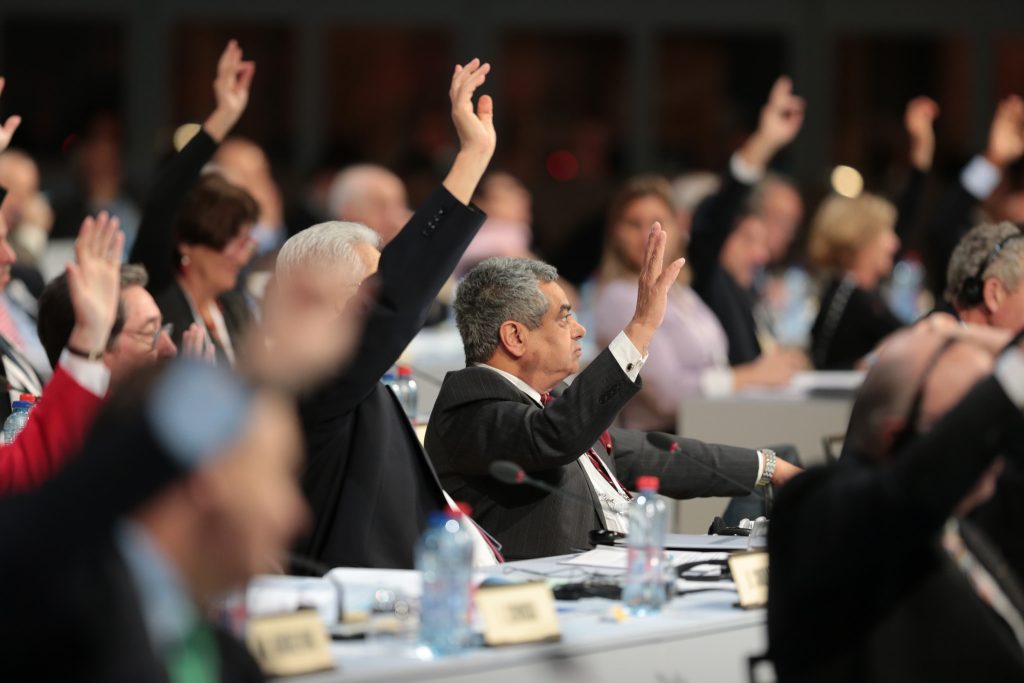
    The vote was cast by the executive board of the DOSB. 
    “We agreed by majority for the city of Hamburg and that is why we are standing here today, united, with this recommendation,” said Alfons Hörmann, the DOSB president, who chose not take part in the vote himself for “reasons of neutrality”.
    Recent opinion polls have demonstrated that public support for a Games bid is significantly higher in Hamburg than in Berlin. 64 per cent of Hamburgers support the bid, compared to just 55 per cent of Berliners.
    “There were various points that helped us make our decision,” Hörmann said. 
    “We had to consider the prevailing support in the cities, and the result of the survey was one of the things that played a role here.”
    Hamburg’s compact venue plan was also cited as an influencing factor. Unlike Berlin, Hamburg has no existing Olympic Stadium and plans to build a new one in an island in the city. 
    Despite this, the DOSB determined Hamburg’s venue plan to be sustainable. 
    “The city fits exactly to the Agenda 2020 reform of the IOC,” said Hörmann.
    The city of Hamburg will hold a referendum on whether to bid for the Games before 15 September, by which time all interested cities must apply to the IOC.
    The German city of Munich pulled out of bidding for the 2022 Winter Games after a residents voted against bidding in a referendum. 
    Munich hosted the Summer Olympic Games in 1972. Berlin hosted the Olympic Games in 1936, while Hamburg has never hosted an Olympic Games.
    The host city of the 2024 Games will be announced in Lima in mid-2017.