Modern cities generate a flood of data, and much of it is public. Transport companies know how their trains, buses and cars are travelling. Payment systems monitor the availability of parking spaces. CCTVs provide real-time video links. Environmental sensors track air and water quality.
There’s even big data on garbage: networked compactor bins use sensors to monitor waste levels and allow collection routes to be optimised.
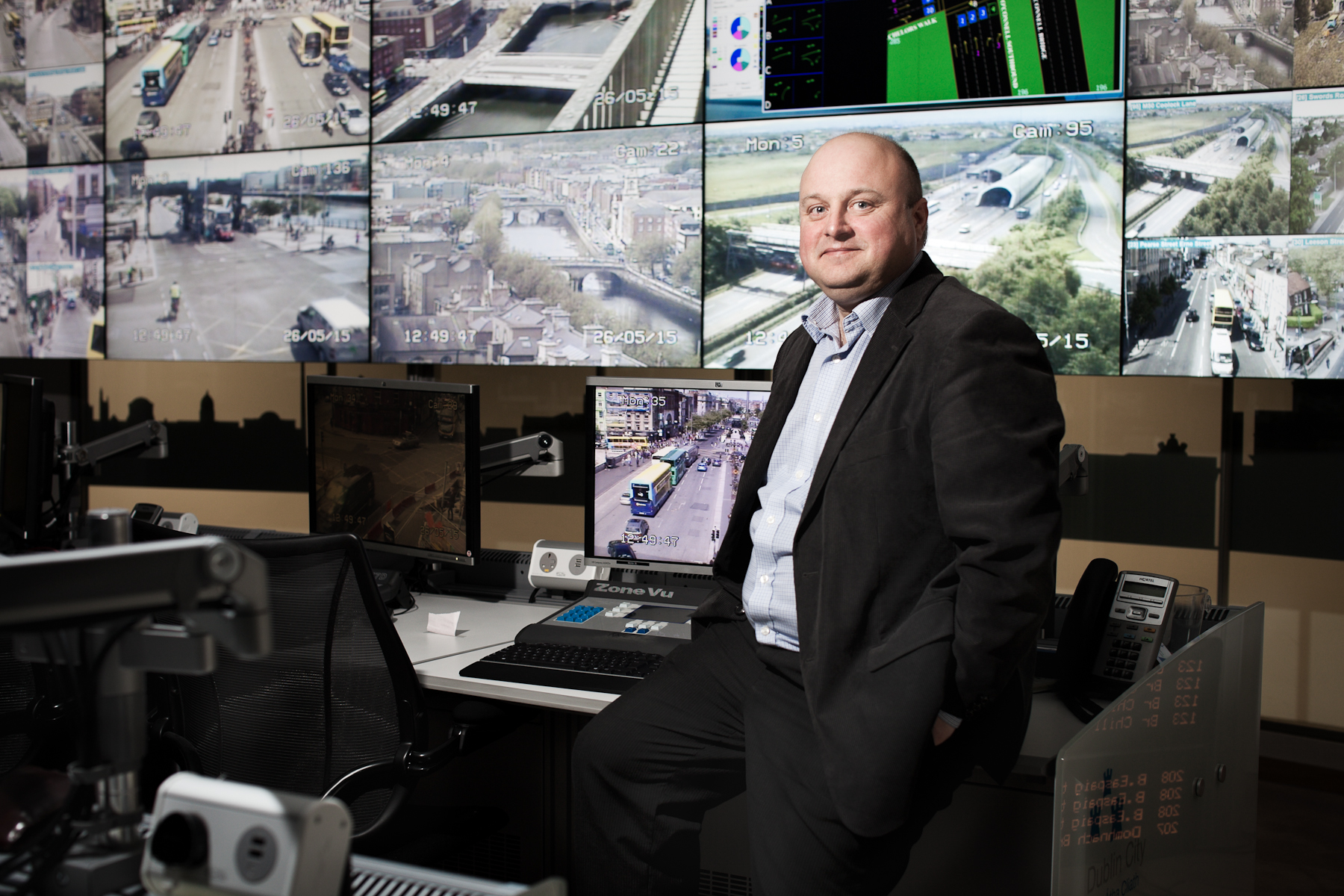
Two years ago, Rob Kitchin, a professor at the National Institute of Regional and Spatial Analysis at Ireland’s Maynooth University launched a novel app, the Dublin Dashboard. This publishes sensor-readings about the city, providing citizens, public sector workers and companies with real-time information, time-series indicator data and interactive maps about all aspects of Ireland’s capital. The data sets are compiled on an ongoing basis by the Irish Central Statistics Office and Eurostat.
Kitchin has built an easy to use interactive website featuring maps, graphs and apps. The data available covers a variety of areas, from transport, housing and planning to the environment, emergency services and health.
With a few clicks, Dubliners can check the tides, temperature, shipping, river levels, oxygen and pollution levels, ambient noise, road traffic, parking spaces – even available bike-shares. Camera feeds yield images. Maps break down city population by topics like gender and density.
“And all the data is open,” Kitchin says. “Everybody can go and build their own apps off this, or they can just look at it.”
Although the Dublin Dashboard obviously useful – and fun – there is a serious side too, translating into what Kitchin calls new forms of governance.
Cities around the world are demonstrating how it works. Atlanta has a purpose-built dashboard room, where city government meets weekly to assess metrics. Rio de Janeiro built an “urban operations centre” with data streams from 30 government agencies, to try to manage the potential chaos of the World Cup in 2014 and the Olympic Games happening there this year.
Many cities have litter bins with sensors to signal when they’re full – meaning the garbage trucks can plot more efficient pick-up routes.
Kitchin’s Big Data even helps with policing. Based on perfectly reasonable evidence – neighbourhood crime statistics, social media connections, for example – a person may seem statistically likely to commit a crime. With that information, the police or social workers can be pro-active and offer help or warnings.
The problem, says Kitchin, is that “you don’t have evidence that this person has committed a crime … but you’re already treating them as a criminal.”
Of course, this information torrent often can turn into a dangerous flood. It can lead managers, distracted by all the data, to focus on the wrong problems – what Kitchin calls “technological solutionism.” For instance, he says, with more data “you might be able to better manage homelessness, but you’re not going to stop people becoming homeless.”
The Big Data flood also poses privacy challenges. In January of this year, Kitchin published a new report on the issue. Entitled “Getting smarter about smart cities: Improving data privacy and data security”, it argues that the “haphazard” approach to the development of networked technologies for so-called “smart cities” cannot be allowed to continue without taking proper account of privacy challenges.
“Never before has so much information about people – their characteristics, their location and movements, and their activities – been generated. These data can be put to many good uses, but they also raise a number of issues with respect to data privacy, data protection, and data security,” the report says.
But the report also cautions against becoming “overly focused” on the negative concerns and harms lest they stifle innovation. While the concerns relating to smart cities are “significant”, we need to remain mindful of their potential benefits in producing “more efficient, productive, sustainable, resilient, transparent, fair and equitable cities”.
Kitchin recommends the establishment of advisory boards and governance and ethics committees to oversee such smart city projects. An emergency response team should also be appointed to tackle cybersecurity incidents, where data was hacked or compromised.
“I advocate a much more systematic approach that aims to gain the benefits smart-city technologies offer, whilst minimising the potential risks,” he says.
In coming years, Kitchin plans to extend the scope of the Dublin Dashboard project to include other data and information such as maps of social media.
This article was written by William Echikson
Category: City Development
-
How Big Data can improve urban life
-
Event hosts – masters of their own destiny
International sports governing bodies are now more than a hundred years old, many having emerged in response to the rise of international sporting events: FIFA was established in 1904 and the IAAF in 1912, for example.
World Expos began in London in 1851 and their international governing body, the BIE, was established in 1928. New governing bodies continue to be established today as event properties emerge – the International Tent Pegging Federation, for example, was founded in 2013.
Sports event rights holders have many opportunities to share experiences, through a number of different membership organisations. But a unifying body for the host cities themselves has been lacking. While many event properties (the Olympic Games and the FIFA World Cup for example) have their own knowledge sharing procedures for organising committees, there has been no publicly recognised organisation in place to support and regulate cities in their perennial quest to benefit from hosting major events.
Some stakeholders involved in attracting and hosting events have their own international networks: the Association of National Olympic Committees (ANOC); the International Congress and Convention Association (ICCA); and European Cities Marketing, for Destination Marketing Organisations (DMOs) – but the city halls themselves are not yet fully connected.
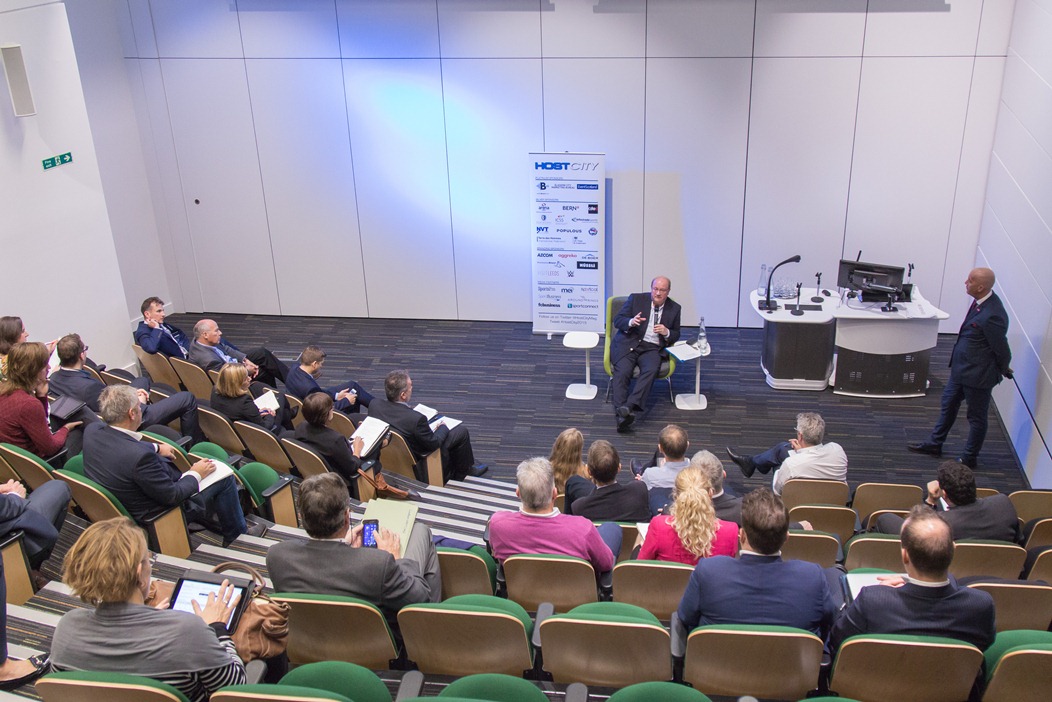
This is in the process of changing. City meetings have started to take place at all the significant sector gatherings. The City Roundtable at Host City 2015, chaired by Paul Bush Direcor of Events for VisitScotland, saw a very large group of city officials sharing experiences. Host City is also pleased to have supported the “City Day” at SportAccord Convention.
Event hosts have now publicly agreed to form a self-determining international association, a process Host City continues to fully support. Host City 2016, taking place in Glasgow on the 16 and 17 November, will be the next important gathering of cities and all types of events – not just sport, but business, culture and entertainment. We look forward to sharing experiences with you in the marketplace.
-
Host City welcomes Sadiq Khan’s green transport plan
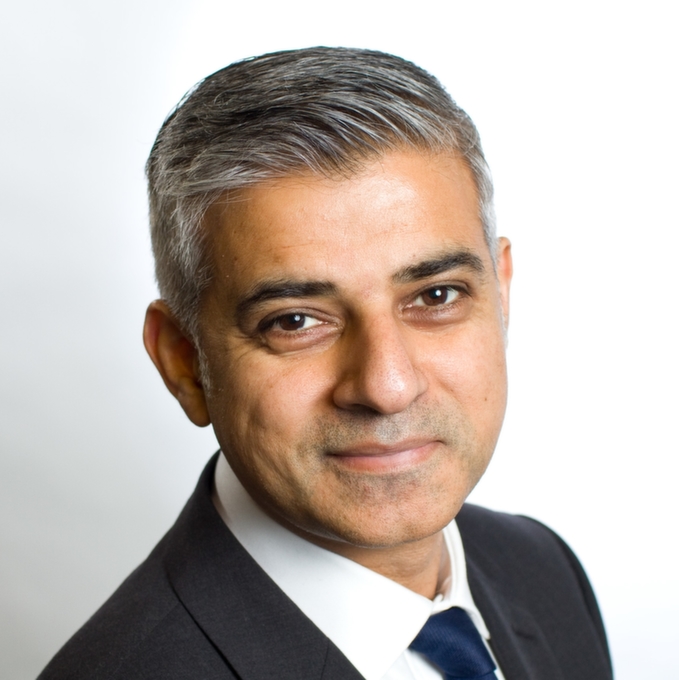
Labour MP Sadiq Khan is set to be the new Mayor of London as counting nears completion following Thursday’s election. Khan stood against four rival candidates including the Conservative candidate Zac Goldsmith.
He is set to succeed Conservative MP Boris Johnson, who led London for two terms which included the delivery of the Olympic Games in 2012. The Host City contract for London 2012 was signed by former Mayor Ken Livingstone.
Shortly before the election Khan outlined his priorities in an editorial in The Guardian newspaper. Affordable housing was top of the agenda, but he also set out his plans to assure that transport affordable.
“Londoners now face the most expensive transport of almost any major city,” he wrote. “I will freeze fares for four years, and introduce ‘Hopper’ bus tickets, so that people can have unlimited changes within one hour.”
With Khan as Mayor, London can hope to see an improvement in air quality.
“As someone who lives with adult-onset asthma I know how bad air quality in the capital has become,” he wrote.
“I want to be the greenest mayor London has ever had – it is not acceptable that 10,000 people die in London every year because our air is so filthy. That’s why I have ambitious plans to make green London’s bus fleet and remove the filthiest vehicles from our roads.
He also pledged to improve security in the capital of the UK.“While the cost of living in London has soared, the number of police officers making our city safe has plummeted. Conservative cuts mean there are 1,500 fewer officers on London’s streets, and violent crime levels are up in every single borough. I will make policing a priority, and work to tackle sexual assaults on public transport and the unacceptable rise in hate crime.”
But the clearest message of Khan’s campaign was on tackling the runaway cost of accommodation. “Our city is living through the worst housing crisis in a generation, rents are sky-high and the average cost of a home in London is more than £500,000,” he wrote.
“If I become mayor of London, my single biggest priority will be to build thousands more homes every year. I will set a target to make half of all the new homes that are built genuinely affordable, with first dibs for Londoners.”
Khan, who is set to be the first Muslim mayor of a major western city, was nominated Labour’s candidate for the mayoral contest ahead of former Olympics Minister Dame Tessa Jowell.
Host City would like to thank Dame Tessa Jowell and former Mayors Boris Johnson and Ken Livingstone for all their contributions to and invaluable support of Host City; and to welcome Sadiq Khan’s plans for London. -
Eventful cities combine culture and technology
The spring EUROCITIES Culture Forum, held on 16-18 March in Eindhoven and ‘s-Hertogenbosch, focussed on “Technologies as a game changer for culture” and the concept of “eventfulness”.
The forum examined the links between art, science and technology, and explored through practical experiments how the “triple helix” concept applies to culture in cities.
Through the discussions and work sessions, city delegates learned about Eindhoven’s transformation through a combination of technology and creativity.
The founding of the Philips company in 1892 positioned Eindhoven as a major technological, industrial and design hub. When Philips closed down in 2000, the 270,000m2 Strijp industrial area, formerly home to the Philips offices, was turned into an art and technology hub dedicated to everything from research and development to cultural production and display.
Strijp-S has become the high-tech creative and cultural centre of Eindhoven. Since 2008 ‘Cultuurfonds Strijp-S’, a public-private fund, has been supporting initiatives, events and programmes in the Strijp-S area and contributes to its national and international reputation.
“Experiments” and “experiences” are key words for culture in Eindhoven. Culture is understood in its broad sense. In Eindhoven there is a focus on living laboratories where creatives, businesses and education work together intensively on innovative products and projects, in which new technological applications are tested.
Using the concept of “Eventfulness”, the city of ‘s-Hertogenbosch deployed an integrated model to set-up world class events.
A team of restoration experts was convened to convince museums around the world to lend their paintings for a unique retrospective celebrating the 500th anniversary of the death of local painter Hieronymus Bosch.
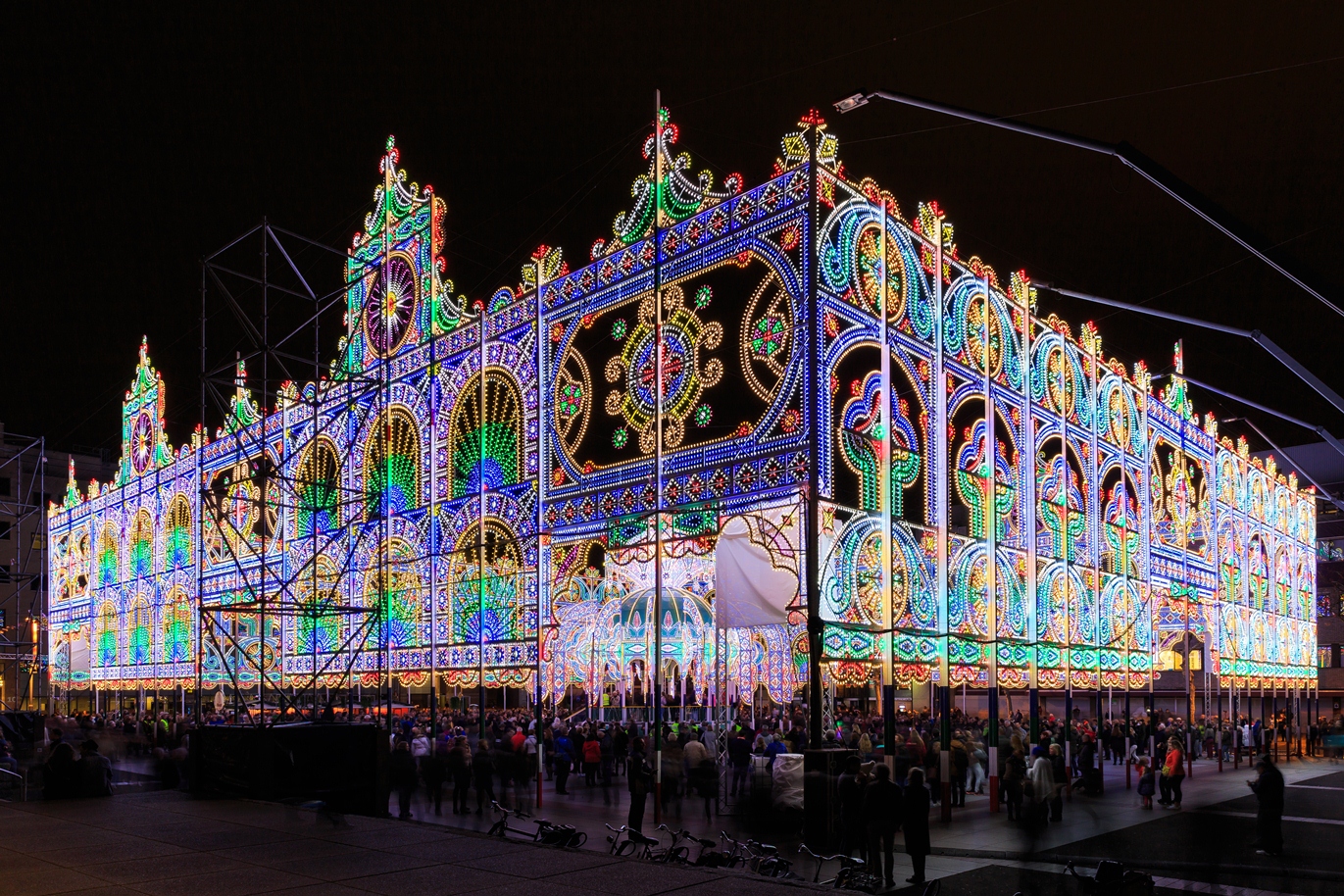
Tickets for the exhibition have all sold out and Bosch’s works are inspiring many other activities throughout 2016 with music festivals, art, dance performances in public space and light projections.
“If you invest €1 in culture you get €5 into the city and €20 into the country” said Anton Rombouts, mayor of ‘s-Hertogenbosch.
Delegates also learned that failed bids for European Capitals of Culture can bring new opportunities.
After an unsuccessful joint bid for European Capital of Culture 2018, the cities of Eindhoven and ‘s-Hertogenbosch, together with other cities from the Brabantstad network of cities and the Brabant province, continued working together, joined forces and created a fund for culture called ‘Brabant C’. The aim is to boost the national and international attraction of the Brabant area by strengthening art and culture.
Culture and the arts also play a key role in the integration process of newcomers in cities. Getting involved in cultural projects activates a sense of community and belonging and cultural projects give migrants and refugees the chance to make a contribution to their host societies.
Delegates learned how cities’ cultural administrations can create situations for mutual learning and intercultural dialogue; develop bottom-up programmes; and train their staff to better address the needs of a diversified society.
The next EUROCITIES culture forum will take place in Oulu, Finland from 5-7 October, and will focus on cultural education and culture for children.
Source: EUROCITIES
-
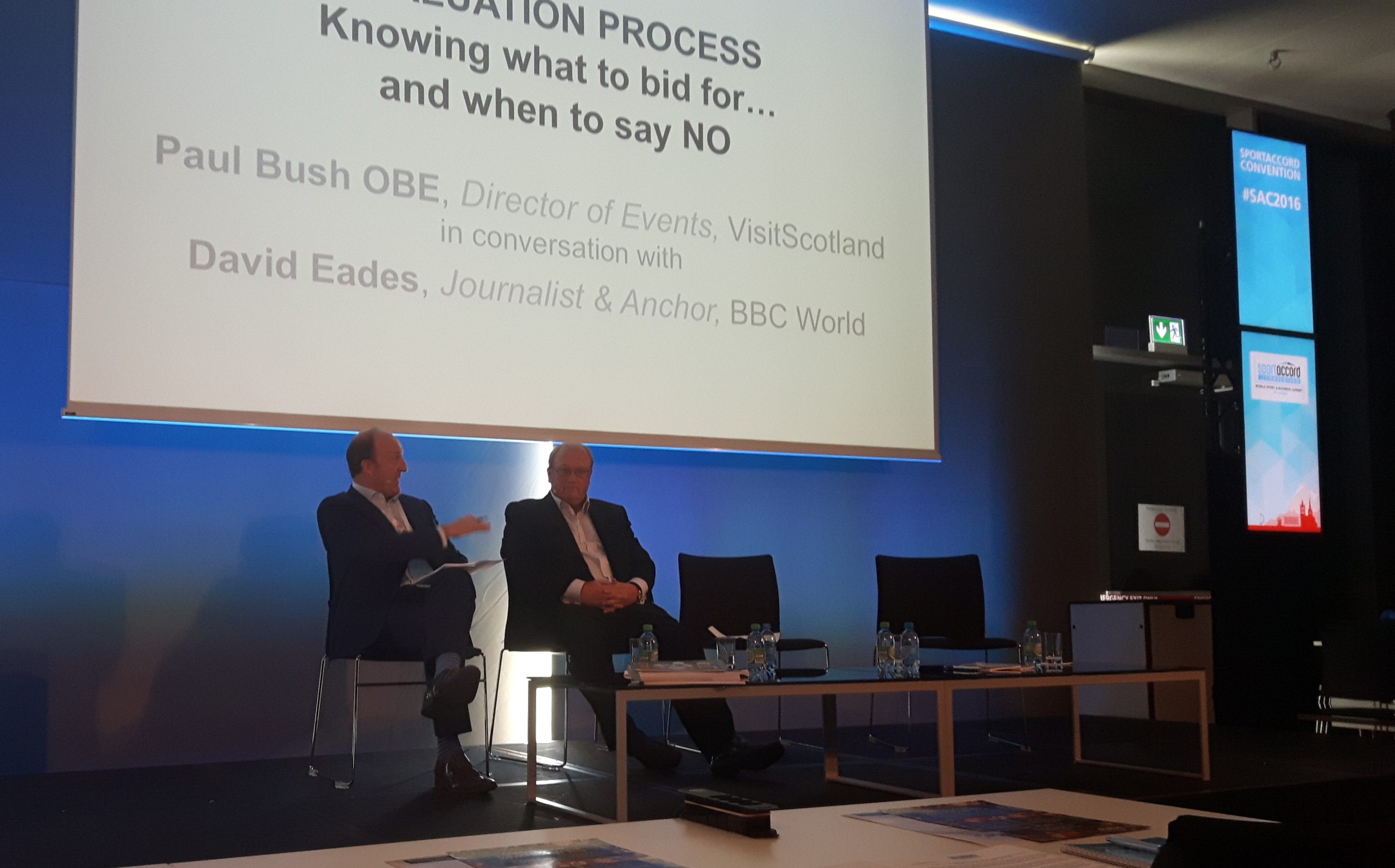
Host cities to form international association
Over 50 representatives of cities, regions and countries attending this year’s SportAccord Convention, have reached an overwhelming consensus to move forward with the formation of an international association of event hosts.
The representatives met at the City to City session facilitated by members of a working group who have been investigating the feasibility of forming an organisation for “not-for-profit” investors to share knowledge of hosting international events.
During the session, representatives learned from the successes and challenges of a number of recent events hosted at destinations across the world.
Representatives also provided feedback on different models of how destinations could share knowledge and generate greater benefits from hosting events. The working group will now take this feedback and develop a plan to formalise cooperation between destinations.
Members of the working group to date include:
•Auckland Tourism, Events and Economic Development
•Canadian Sport Tourism Alliance
•EventScotland
•Fáilte Ireland, National Tourism Development Authority
•London & Partners
•Los Angeles Sports Council
•New Zealand Major Events
•Sport Event Denmark
•USA National Association of Sports Commissions
Iain Edmondson, Head of Major Events at London & Partners said “The very productive session at SportAccord Convention has again demonstrated the benefits of sharing experiences of hosting events. By working together I believe all investors in major events will generate greater long term value, whether they are public bodies, rights-owners or commercial sponsors.”
“Sharing knowledge of hosting events is very important and cooperating with other hosts in a trusted environment will benefit all of us,” said Lars Lundov, CEO of Sport Event Denmark.
Paul Bush OBE, VisitScotland’s Director of Events said: “Events and tourism have a hugely beneficial symbiotic relationship and this initiative can only do good for the industry.”
Rick Traer, CEO, Canadian Sport Tourism Alliance added “We’ve seen the advantages of working together and sharing best practices at a national level. Taking those experiences to the international level and learning from our colleagues around the world will be a very productive partnership. Our cities will reap the benefit of knowledge from other countries, and sport tourism will continue to be a vital and vibrant part of our economy.”
Source: SportAccord Convention
-
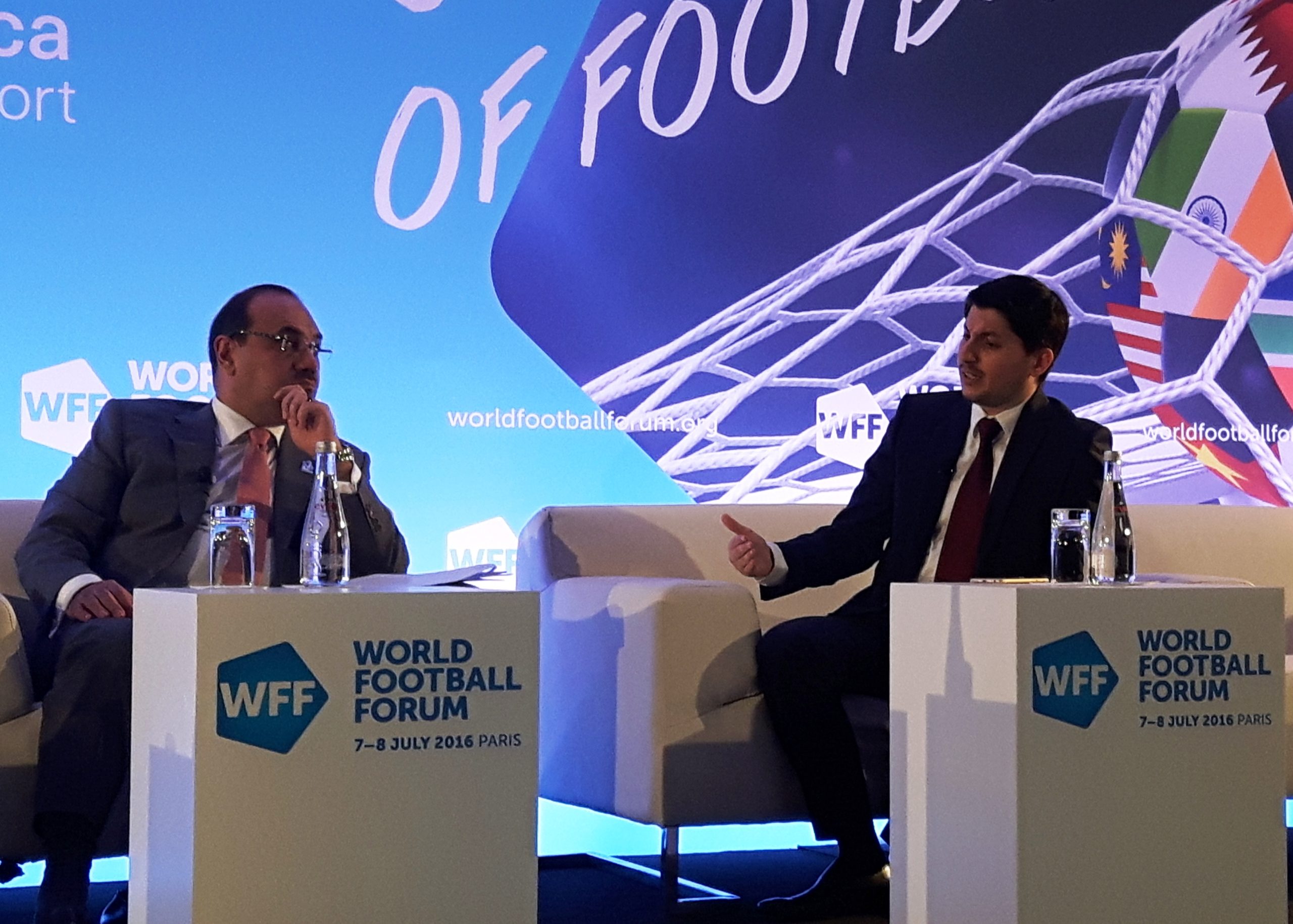
Can Qatar develop through football?
Qatar may be under scrutiny for treatment of workers as it invests US$200bn in infrastructure projects before the FIFA World Cup in 2022, but senior figures in football administration point out that the event is an important part of the country’s process of human development.
“The government of Qatar made a clear vision in 2008 to transform from being dependent on natural resources and they aim to be an economy based on knowledge and people. As a result, well-being becomes the number one priority of the nation,” Mushtaq Al Waeli, Executive Director, Strategic and Institutional Development, Qatar Football Association (QFA) tells delegates at World Football Forum in Paris.
This development plan, National Vision 2030, has four pillars: economic, human, social and environment – and football is a key element of that vision.
“Through sports you ensure people are engaged in physical activity. It’s also a vehicle of social cohesion and integration,” says Al Waeli.
“The social structure of the country is based on people coming into the country from different cultures. Integration is key. Sports – football in particular – has that magic and charm of bringing people together.”
Bidding for the FIFA World Cup was a statement of intent to put the Middle East on the world stage – not just for the nation but for the region. “When we started the bid process in 2009, the message to the world was clear: this is not just a tournament for Qatar,” says Al Waeli.
“We are united with the region – the Middle East and western Asia. The message is to say we have the right for this major event to come to our land and it will be an amazing tournament – from the visitor experience to the field of play.
“We are also delivering legacy: a physical legacy of venues, and also contributing to how to prepare for any event that comes beyond or before the World Cup. We are creating a new process of developing sports and events.”
But the World Cup is about much more than sports events for the host nation. “I think Qatar has made all that effort and bid for the 2022 tournament – not only showing the great passion that the nation has for football and to bring the tournament to the region – but also to drive the progression towards realising National Vision 2030. It’s a catalyst, a key milestone,” says Al Waeli.
However, the value of the 2022 World Cup in Qatar in is rarely presented in such a positive light in the media. Few people feel this more acutely than Alexander Koch, FIFA’s Head of Corporate Communications.
“We are working very hard in order to leave a positive legacy of the events,” he points out. “Looking at Russia in 2018 and Qatar in 2022, I could talk for an hour about all the efforts that are being done and all the progress being achieved with this new focus. We hope that these positive elements will find their way into the media,” he says.
“When it comes to Qatar, we are being criticised for worker’s rights situation, for environmental aspects: how can you play in a desert country; what is the legacy; why are you going where there is no football tradition; and so on.
“But you can turn this all around and see what the legacy will be in an event like Qatar, and what the actual effect is for the people and the foreign workers in a country like Qatar.
“Do you really believe that this is negative, with all the media attention and for the first time ever people have a contract signed by the international trade union and Amnesty International and so on?”
A “Workers’ Cup” has been set up for people working on World Cup venue construction projects. Attendance has been high, with around16,000 people having attended matches so far.
Khalifa Al Haroon, Executive Director, Marketing and Communications, Qatar Stars League says: “We aim to be as inclusive as possible. That’s why we are organising the Workers’ Cup. Any company that wanted to compete had to sign up to the Workers’ Charter, to makes sure human rights are upheld – and to give these people the opportunity to become players. This is something we will be continuing as long as possible.”
A ladder to the stars
Qatar is the only country that has a National Sports Day that is a national holiday when everyone takes a day off to take part in sport. The country also stages a number of other different community events, such as the Asian Communities Football tournament.
“We are creating different levels of leagues, from professional to amateur, to encourage people to play the sport and maybe be future superstars,” says Al Haroon.
Crucial to the creation of Qatar’s potential future football stars is the Aspire Academy, which is open to the general public.
“The QFA is focussed on training players on how to invest their income. It’s not just about football; it’s about creating an industry that didn’t exist four years ago.
“We won the AFC U19s in 2014 and hosted the AFC U23 in 2016, which we were told was the best organised. That knowledge is being passed on to the players and the general public.”
Mushtaq Al Waeli says: “I had the honour to be part of the Aspire Academy’s creation. The first youth that joined went on to win the Asian Youth Cup, so the system proved that it’s working.
“The elite from the clubs, we bring them to a different part of the academy so they play with the best teams in the world. We work on creating a holistic player who is ready to compete anywhere in the world. If we qualify for the 2018 World Cup you will see players that came through that system.”
Even if Qatar doesn’t qualify for the 2018 World Cup it will automatically qualify for 2022 as hosts. But is automatic qualification necessarily a good thing for the country? Peter Hutton, CEO of major broadcaster Eurosport is not convinced that Qatar will be ready to compete at that level.
“You have to be realistic – it’s important to play teams that are in the same sort of FIFA team rankings area as you, and to have targets that are just above you and look to achieve target by target.
“What’s not helpful is to go to an international tournament and then be wiped out, because your whole sense of identity with your country as national football pride actually falls apart.
“And that’s the concern for Qatar – how will the Qatar national team play when they get to the World Cup, because if they don’t do well, then that can be negative story.”
The Josoor Institute
Mushtaq Al Waeli is acting director of the Josoor Institute, a centre of excellence for the sports and events Industries.
He says “Josoor is an Arabic word that means bridges. We wanted to connect the knowledge of the present, the past and the future.
“It’s all about knowledge. We are not just a training institute. We aspire to become a centre of excellence. We develop knowledge through research, we embed knowledge through training and education, and we consult on the future.
“We created Josoor when Qatar won the right to host the 2022 tournament. They set up a government vehicle called the Supreme Committee of Delivery and Legacy, to keep our promise that we will deliver an amazing tournament in the best possible time. We also wanted to create excellence in human capital development; that responsibility was given to Josoor.
“Our remit is not for Qatar only. We want to reach everybody who has an interest in working in sport or event industries or wants to move from one academy to another.”
Launched in 2013, the Josoor Institute delivers a set of products, including certificates and diplomas, working with partners in Qatar and overseas, including leading educational institutions.
This article was written by Ben Avison of Host City at the World Football Forum 2016. The comments from Mushtaq Al Waeli and Khalifa Al Haroon were made in conversation with Simon Chadwick, Professor of Sports Enterprise, Salford University -
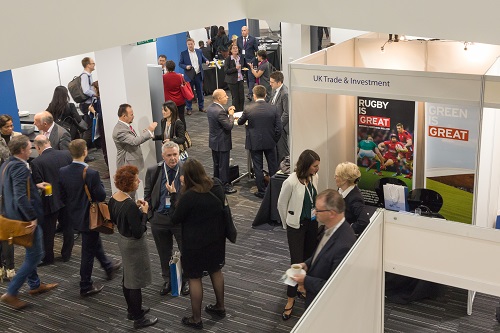
New partners and sponsors signing up for Host City 2016
The organisers of Host City 2016 are delighted to see new partners and sponsors signing up for what is set to be the largest EU-based gathering of event destination markets, international federations, event owners and rights holders, and suppliers.
In addition to Host City 2016’s Supporting Organisers EventScotland and Glasgow City Marketing Bureau, new sponsors that have joined include: audioBoom, Aggreko, Populous, MatchVision, Rio Convention & Visitor Bureau, Hemingway Corporate Finance, 4global, Finnish Olympic Committee, Marsh, DB Schenker, Rotterdam Topsport, Nussli, Arena Group, Terre Des Hommes, Citec, Kanstet and De Boer.
Host City 2016 creates a truly unique opportunity for the world’s leading hosting destinations to exhibit alongside the most attractive and lucrative events in the worlds of sports, business and culture.
The format of the conference and exhibition and the layout of the state-of-the-art Technology and Innovation Centre in Glasgow are optimised to create maximum opportunities for delegates to network with other senior attendees and engage with the event partners and sponsors at the numerous exhibition stands.
Rights holders will meet cities that are looking to host their events and build long term relationships. Hosting and bidding destinations will showcase the capabilities of their cities and venues to an audience of event owners.
The exhibition is built around a world class conference with an outstanding VIP speaker and panel debate programme. Recently confirmed speakers include: Sir Craig Reedie CBE, Vice President, IOC and President, WADA; Paul Bush OBE, Director of Events, Visit Scotland; Sarah Lewis, Secretary General, FIS and AIOWF (Association of Winter Olympic Sports Federations); Dimitri Kerkentzes, Deputy Secretary General, BIE (World Expos); Simon Clegg, Chief Operating Officer, Dubai World Expo 2020; Dr. Reinhard Pfeiffer, Deputy CEO, Messe Munich; Prof Dr Ugur Erdener, President, NOC of Turkey; Executive Board Member, IOC and WADA ; Carine Saloff-Coste, Head of Economic Development, City of Paris; John Langford, Director of Live Entertainment, SSE Hydro & SECC; Michael Nagy, Director, Rio Convention & Visitors Bureau; Kulveer Ranger, Vice-President, Public Affairs and Strategic Communications, Atos UK and many more.
See the latest agenda here.
The large number of sponsors and delegates already signing up shows there is great demand for being part of this unique event for the global market of cities bidding for and hosting multiple types of events.
Book your Exhibition Stand today with Adam Soroka on +44 (0) 203 077 8732 or adam.soroka@bric.com -
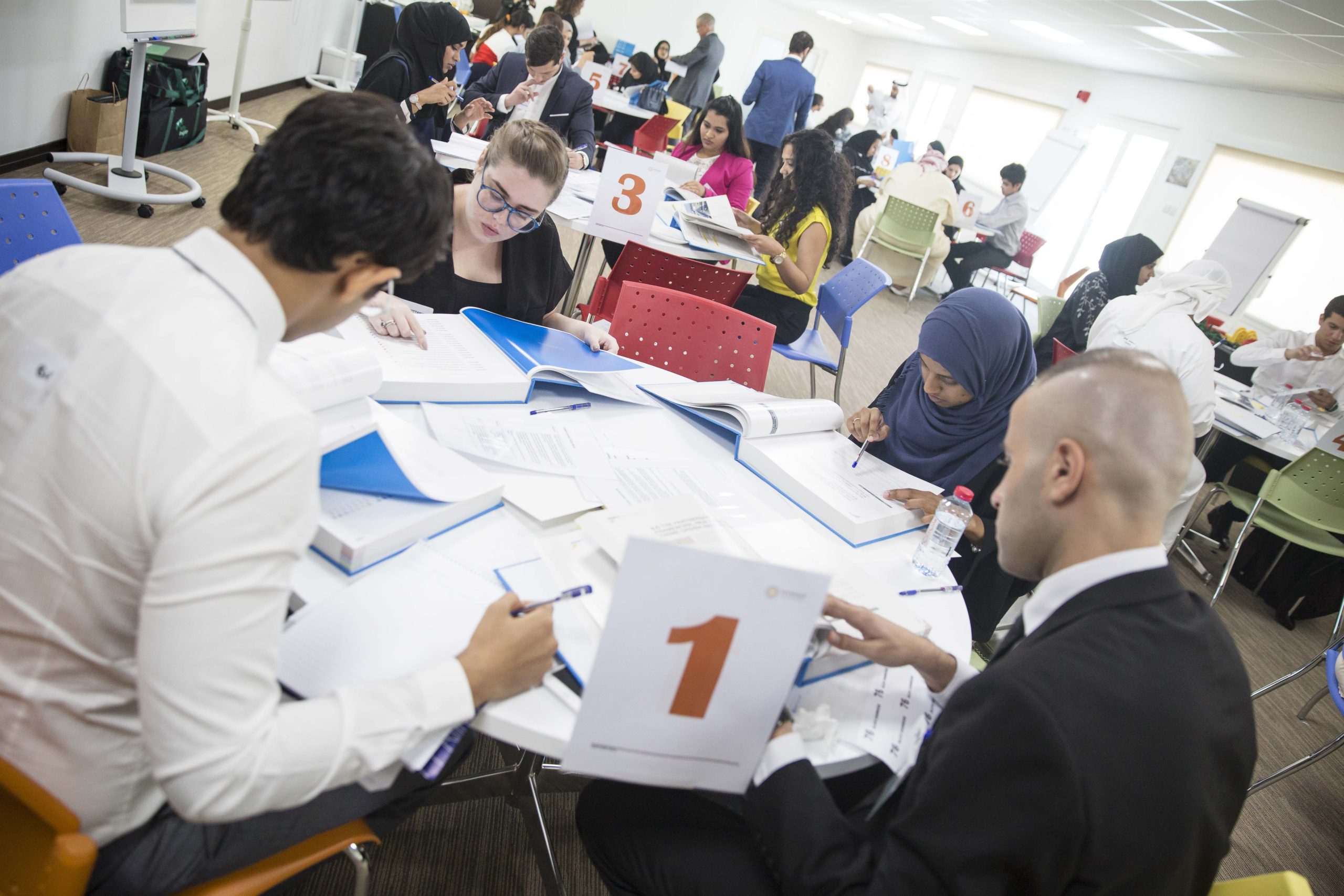
Candidates shortlisted for Expo 2020 Dubai apprenticeship programme
Following its launch in April 2016, the programme attracted in excess of 2,700 applications, reflecting the high level of interest in Expo 2020 amongst the nation’s young people. From these, 150 candidates were invited to assessment days that began last month at the Expo site in Dubai South. Expo 2020 Dubai took an innovative approach to these workshops, using a series of engaging challenges and tasks to evaluate candidates on criteria that included leadership, teamwork and their ability to identify and solve problems under pressure.
Ila Kuntum, an Indonesian engineering student currently completing her Masters of Science at the Masdar Institute of Science and Technology, said, “I really enjoyed the fact that the assessment included group-based activities. It showed us how real-life, quick decision scenarios play out, and highlighted our strengths and weaknesses.”
Emirati Marketing graduate, Ayesha Sharaf, and Farshied Jabarkhyl, who has studied in both the UK and UAE, described the day as “very challenging and unlike any other assessment I have ever taken part in. It taught us the importance of being open minded to other people’s opinions and ideas and was a great chance to meet new people.”
Candidates were then scored on their performance and around 50 were invited to attend a further round of one-to-one interviews with senior members of the Expo 2020 team, including the heads of the 19 departments offering work placements.
Commenting on the programme, Manal AlBayat, Vice President of Engagement, Expo 2020 Dubai, said: “The Apprenticeship Programme is an important part of our commitment to engage and empower young people through our journey leading up to Expo 2020 Dubai. We were heartened to see such a high demand from a diverse group of applicants and particularly impressed by the high quality of applications received.”
“The feedback from candidates that have taken part at the various stages of this process demonstrates the value of this experience. Those that are selected for the programme will develop useful competencies for their future career development, and will be important contributors to Expo 2020 Dubai’s educational and economic legacy. We are all looking forward to welcoming the first cohort later this year.”
The Apprenticeship Programme is aligned with the UAE Government’s Youth Empowerment Strategy. It also reflects Expo 2020 Dubai’s theme, “Connecting Minds, Creating the Future”, and addresses one of the Expo’s subthemes, “Opportunity”, by providing practical opportunities for young people to develop a skillset that positions them for future employment across a range of industries.
Successful candidates will be informed in mid-July with the programme commencing at the end of August.
Source: Expo 2020 Dubai
-
Smart Cities: Tackling traffic congestion at the source
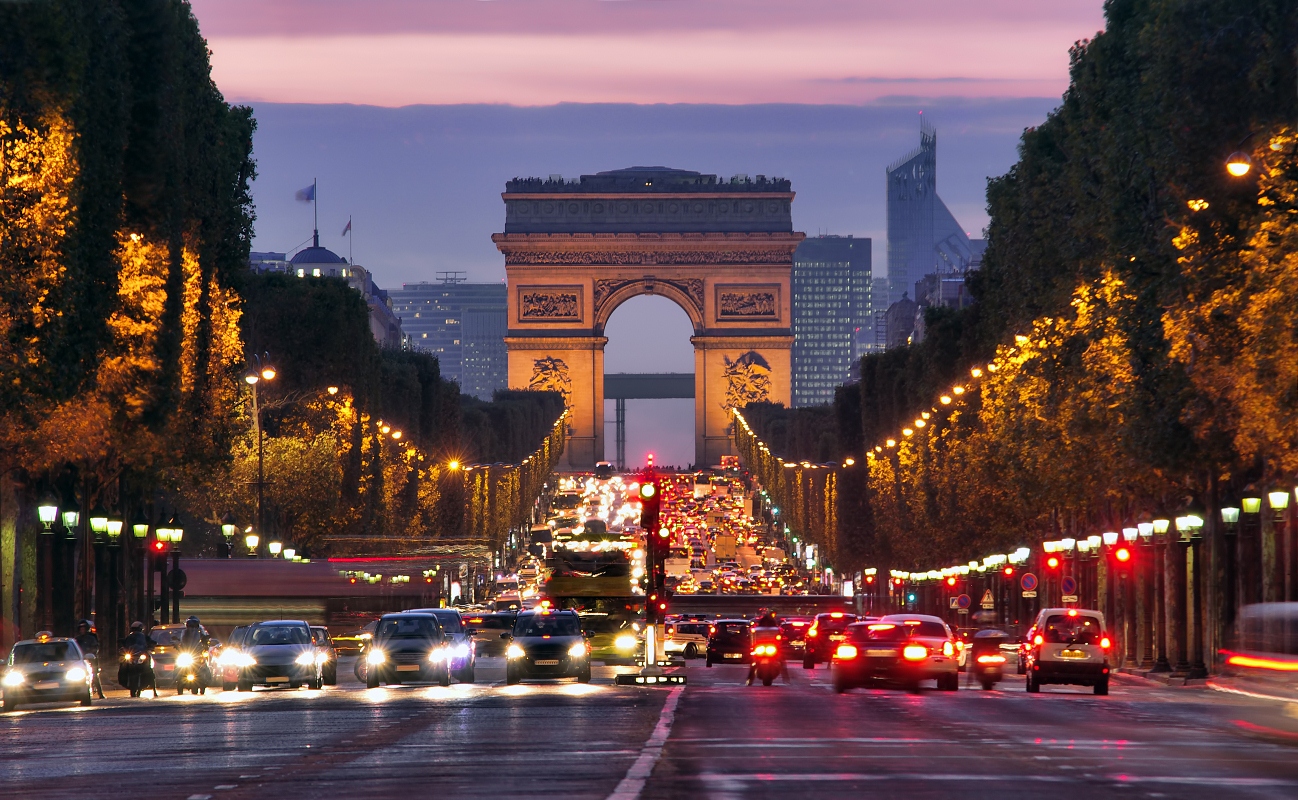
It represents perfect recipe for a traffic jam: bring thousands of cars with tens of thousands of spectators converge on a single site at a specific time. This is what happens during major sports events.
Pure science offers a way to ease the pain. Research funded by the European Research Council will underpin next-generation traffic management systems that anticipate traffic jams, rather than reacting to them
No matter how real-time the data feeding into them, existing traffic management systems are essentially reactive, switching traffic lights, opening motorway hard shoulders, or setting up diversions, after the event.
For ERC grantee Ludovic Leclercq, of the French Institute of Science and Technology for Transport, Planning and Networks (IFSTAR) and professor at the University of Lyon, this is the wrong way to look at the problem. Rather than amass and analyse the huge volumes of data that flow in as a city’s streets become congested, the transport management systems for smart cities of the future should focus on the underlying causes of congestion.
Existing technologies rely too much on a never-ending process of collecting data from cars and road sensors. For example, IBM and Volkswagen are working together to build what they call an ‘Internet of cars’ in which sensors in vehicles generate geospatial data that indicates traffic density and patterns in real time. IBM has also worked with the city of Eindhoven to implement a system that collects data on braking, acceleration and location from sensors placed in cars and on the road.
Meanwhile, Amsterdam has a congestion management system called TrafficLink, which monitors the national road network to help reduce congestion in the capital. The city plans to expand the system and to connect it to satellite navigation systems inside cars as they drive into the Dutch capital and its metro area.
Such traffic management systems may be getting smarter, but they continue to rely on collecting and analysing massive amounts of data, which is then passed onto traffic managers, who then attempt to inform driver behaviour after the event.
Collecting so much data is both “difficult and poses ethical questions,” says Leclercq. Traffic managers use it to assess traffic flow, and to identify and remove bottlenecks from the system. But notes Leclercq, this does provide any insight into what caused the congestion in the first place.
He hypothesises that knowing more about how people choose departure times and routes would make traffic management systems much more effective.
At the heart of his ERC project, MAGNUM (Multiscale and Multimodal Modelling Approach for Green Urban Traffic Management) is the creation of a citizen science simulation game, which will be made available in the first half of 2016. Volunteer users will be able to sign up and input their preferences for traffic routes. Leclerq will combine this information with existing traffic data to determine which journeys cause the most congestion in a system.
Users will also be asked what kinds of incentives would lead them to alter their departure times or routes, or to choose to travel by public transport rather than by car. Factoring driver behaviour (demand) into road network capacity (supply) models, will provide the inputs for efficient and green traffic management.
Based on the information, traffic management systems will become truly smart and traffic managers will be able to adjust their strategy and switch, “from user equilibrium to system equilibrium,” Leclercq says.
This article was written by Florin Zubascu of Science/Business -
Inclusion at work: why Adecco supports the Paralympics
How long has the Adecco Group been involved with the IPC/the Paralympics and in what capacity?
“The Adecco Group has been working with the IPC since 2007 through our co-operation on the IPC Athlete Career Programme (IPC ACP) which helps Paralympic athletes achieve life-long success both on and off the field of play. The main goals of the Programme are to support para-athletes during and post their sport careers with careers advice and training, as well as job placement support. In addition, the Programme aims to make the labour market and companies more inclusive for para-athletes and all people with different abilities. The focus on everyone’s abilities will allow companies to access the best employees. The IPC ACP prepares and exposes talented individuals to the world of work, making them thrive on another field of play.”
Why did the Adecco Group want to become a Partner of the IPC Academy Campus’ Inclusion Summit?
“The Adecco Group chose to be a partner to support the success of the IPC Inclusion Summit and increase awareness on the benefits of an inclusive workforce as an extension of our contribution to the IPC ACP. The event will provide a unique platform for the Adecco Group, business leaders, governments, sports and other organisations including members of the Paralympic Movement to discuss inclusion and accessibility during the Paralympic Games – the world’s largest and most inspiring sporting event. The Paralympic Games have great power to drive societal change as we saw with the London Paralympic Games. The special time and setting of the Summit – allowing main stakeholders to meet in Rio – will provide a learning and sharing experience like no other, looking at government policies, workplace standards, social awareness, inclusive best practices and testimonials from Paralympic athletes about their challenges and ability to contribute to an inclusive society.”
Who is speaking on Adecco Group’s behalf during the Inclusion Summit at the Campus and what will they be speaking about?
“Shanthi Flynn, the Adecco Group’s Chief HR Officer, will attend and speak at the IPC Academy Campus’ Inclusion Summit on the topic ‘Testimony of Change’. She will talk about the importance of workplace inclusion for everyone and how a programme such as the IPC ACP can drive and promote needed societal and mind-set change. She will also touch upon the long-standing experience the Adecco Group has in markets such as France, Italy, Spain, Belgium and the US – when it comes to providing everyone who has the will and passion to work with an opportunity to contribute. Inclusiveness is not about charity but about supporting companies be more innovative, creative, productive and attractive for employees. It is about changing perceptions, understanding unconscious bias and stereotypes that are the main barriers currently with regards to labour market inclusion.”
How important is the subject of inclusivity to the Adecco Group from your internal perspective (i.e. within the context of how you recruit and engage with your own employees?)
“Being an inclusive workplace for all has been an important topic for the Adecco Group for many years. Not only has legislation driven progress in many countries, it often can be a critical parameter for change. Personal experience on what it means to have people from all different backgrounds and abilities has been a very enriching experience for us. Moreover, knowing that 1 billion or 15% of the world’s population have some kind of a physical impairment means that someone in your family, a friend, or a friend of a friend could be looking for a career and would want an equal chance to contribute and to get a job. For companies considering all possible candidates, without prejudice but a focus on skills and abilities is the way to go in finding the best candidate for a position. So for every organisation, it is important to be involved and contribute to an inclusive environment.”
What trends are you seeing globally from a HR perspective regarding inclusivity in the workplace? Do you think employers are getting better at embracing inclusivity generally? Is the sports industry better at being inclusive than other industry sectors in your opinion?
“With generations Y and Z entering the workforce, we know that their experiences have made them more socially tolerant, environmentally aware with a focus on businesses’ commitment to sustainability – core criteria in deciding what to buy, who to buy from and of course whom to work for. Therefore, these generations will definitely help to build a more inclusive labour market for everyone. I don’t think we can say that any sector is doing better in terms of inclusiveness. It rather boils down to companies’ leadership, their focus on reputation and their vision about a long-term versus a short-term business strategy, which adds value to society. It is about the creation of shared value for employees, clients, shareholders and any other stakeholders.”
What would be your advice to organisations in any industry looking to improve their inclusivity policies and procedures?
“First and foremost, workplace inclusion has to be endorsed by senior leadership. They must be role models for the company with regular communication to all employees on the importance of an inclusive workforce. In addition, educational measures on the value of an inclusive workforce are key to drive cultural change. Finally, change does not happen overnight, it takes time and needs a plan with a strategic objective and contributions by all. To achieve this objective, measurements and reward systems should be implemented and tracked in the same way as other corporate metrics are.”
This interview was conducted by the World Academy of Sport (WAoS).
About IPC Academy Campus
The IPC Academy Campus will take place in Rio de Janeiro between 6-17 September 2016, giving stakeholders of major sports events the chance to learn from their peers during the Paralympic Games. Delivered by the IPC Academy – the educational division created in 2009 as a partnership between the International Paralympic Committee (IPC) and the World Academy of Sport (WAoS) – the 2016 IPC Academy Campus is a unique event-based learning initiative that will include an Observers’ Programme, Games Experience Programme, Inclusion Summit and Closing Cocktail Reception.
The IPC Academy Campus will take place in Rio de Janeiro between 6-17 September 2016.
Its Event Partners include the Adecco Group and the UK’s Department for International Trade. Its Media Partners are Sportcal (Intelligence Partner), Major Events International (Digest Partner), Around the Rings (Online Partner), Host City (Magazine Partner) and AXS Chat (Social Media Partner).
Adecco Group is the world’s leading workforce solution provider. With more than 32,000 employees and around 5,100 branches, in over 60 countries and territories around the world, the organisation offers a wide variety of HR services, connecting around 700,000 associates with its clients every day. The services the Adecco Group offers fall into the broad categories of temporary staffing, permanent placement, career transition and talent development, as well as outsourcing and consulting. The Adecco Group is based in Zurich-Glattbrugg, Switzerland and is a Fortune Global 500 company listed on the SIX Swiss Exchange.
For further information about the the IPC Academy Campus, please visit www.ipcacademycampus.com or contact Claire Bennett, Project Coordinator, World Academy of Sport cbennett@worldacademysport.com