Bach wants the often criticised bidding framework to be transformed into an “invitation for discussions and partnership” as opposed to a generic tender process.
Recent struggles with the selection process for the 2022 winter Olympic Games have cast the current method in an unfavourable light.
Only Beijing, China and the Kazakh city of Almaty remain as candidates after Oslo this month became the latest potential host to drop out the running. Norway’s government opted out of providing the necessary financial support to host the multi-sport showpiece amid concern over prohibitive costs.
Oslo followed Lviv in Ukraine, Krakow in Poland and Stockholm in Sweden by pulling out of the race for the 2022 winter Olympics, while public referendums put paid to bids from Munich in Germany and St Moritz in Switzerland.
At its two-day meeting in Montreux, Switzerland, the IOC executive finalised proposals that its full membership will vote on this December in Monaco.
As quoted by the Associated Press news agency, Bach said: “What we did in the past was send out a paper at a certain point in time saying, ‘If you want to bid for the games, here are the conditions you have to fulfil, so you better tick all the boxes in the questionnaire because otherwise you have no chance.
“In the future, we want to invite potential bidding cities to study how Olympic Games would fit best into their social, sports, economic and ecological environments, then present this plan to us. Then we are ready to discuss and give our advice rather than just judge what has been presented to us.”
One measure rejected under Agenda 2020 was the reinstatement of member visits to candidate cities, which were barred in light of the 1999 vote-buying scandal that marred Salt Lake City’s successful bid for the 2002 winter Olympics.
In other news, Israeli company International Security & Defence Systems (ISDS) claims it has secured the contract to plan and coordinate security arrangements at the Rio 2016 Games under a deal worth $2.2bn (€1.7bn).
ISDS vice-president Ron Shafran told IsraelDefense magazine of the firm’s tie-up with the local organising committee. ISDS has previous Olympic experience at Barcelona 1992 and Sydney 2000, while it also worked on the 2010 Fifa World Cup in South Africa.
IOC Vice President Sir Craig Reedie will discuss bidding procedure with other rights holders and cities at HOST CITY: Bid to Win in London on 28th October. Register at www.bidtowin-hostcity.net
Category: Event Bidding
-

IOC seeks more inclusive approach to Olympic bid process
-

Rio Olympics organisers have no fear over venue completion
Rio’s venues will be ready to host the Olympic and Paralympic Games in 2016, despite the slow start to construction, the event’s communications director said at Host City: Bid to Win on Tuesday.
“There is not a chance in the world that Rio will not be ready venue wise,” said Mario Andrada, executive director of communications, Rio 2016 Olympic and Paralympic games.
“The construction of the Barra Olympic park is coming off the ground and the whole Olympic village will be ready around mid-2015,” Andrada said.
The comments were made at Host City’s unique Bid to Win event in London, where event organisers, bidding committees and rights holders were able to discuss issues related to bidding for major sports and cultural events.
Many observers have questioned Rio’s ability to meet its obligations for the 2016 games.
Long-term legacy issues underpin investment plans for Olympic construction projects and Rio intends to transform areas of the city using the Games as a catalyst, by using a mixture of public and private investment.
“This [the Barra Olympic Village] is a private enterprise and after the Games will be sold as condos – and there has been a complete redesign of the transport system in the area.”
Andrada explained the reasons why certain aspects of its Olympic Games preparations have been called into question.
“The Deodoro was a little late but we are now moving ahead and catching up. It is important to know in our case the bar is set really high following London but we have to mindful of our spending and our obligations to the Brazilian people. This is one of the reasons why we started the Deodoro a little late,” Andrada explained. -

CEV assigns host nations for 2017 European Championships
Poland recently hosted the 2014 International Volleyball Federation (FIVB) World Championship to great acclaim and will stage the 2017 men’s tournament across four cities. Six cities – Bydgoszcz, Gdansk, Lodz, Katowice, Krakow and Wroclaw – have been shortlisted.
Poland’s last and only gold medal at the men’s European Championship dates back to the 2009 edition held in Turkey. Polish Volleyball Federation and CEV vice-president Miroslaw Przedpelski said that plans are in place to host the final match at Warsaw’s National Stadium – the same venue that hosted the opening match of this year’s FIVB World Championships in front of a record-breaking crowd of more than 61,000.
For the women’s event, Baku and Guba will host games in Azerbaijan alongside Georgia’s capital, Tblisi. It will be the first time the CEV’s flagship event will travel to the two countries.
The CEV also revealed hosts for other events in 2016 and 2017 at its general assembly in Antalya, Turkey. The 2016 Beach Volleyball European Championship Final will take place in Biel/Bienne in Switzerland, while the 2016 women’s U19 European Championship will be co-hosted by Slovakia and Hungary in the cities of Nitra and Gyor, respectively.
Hungary and Slovakia will also organise the 2017 men’s U19 European Championship, with Puchov in Slovakia joining Gyor in Hungary as a host city.
CEV president André Meyer said that the bidding process for the 2019 and 2021 editions of the European Championships would be opened in the coming weeks. This is a change of strategy aimed at providing the eventual organisers with more time to prepare for hosting the events. -
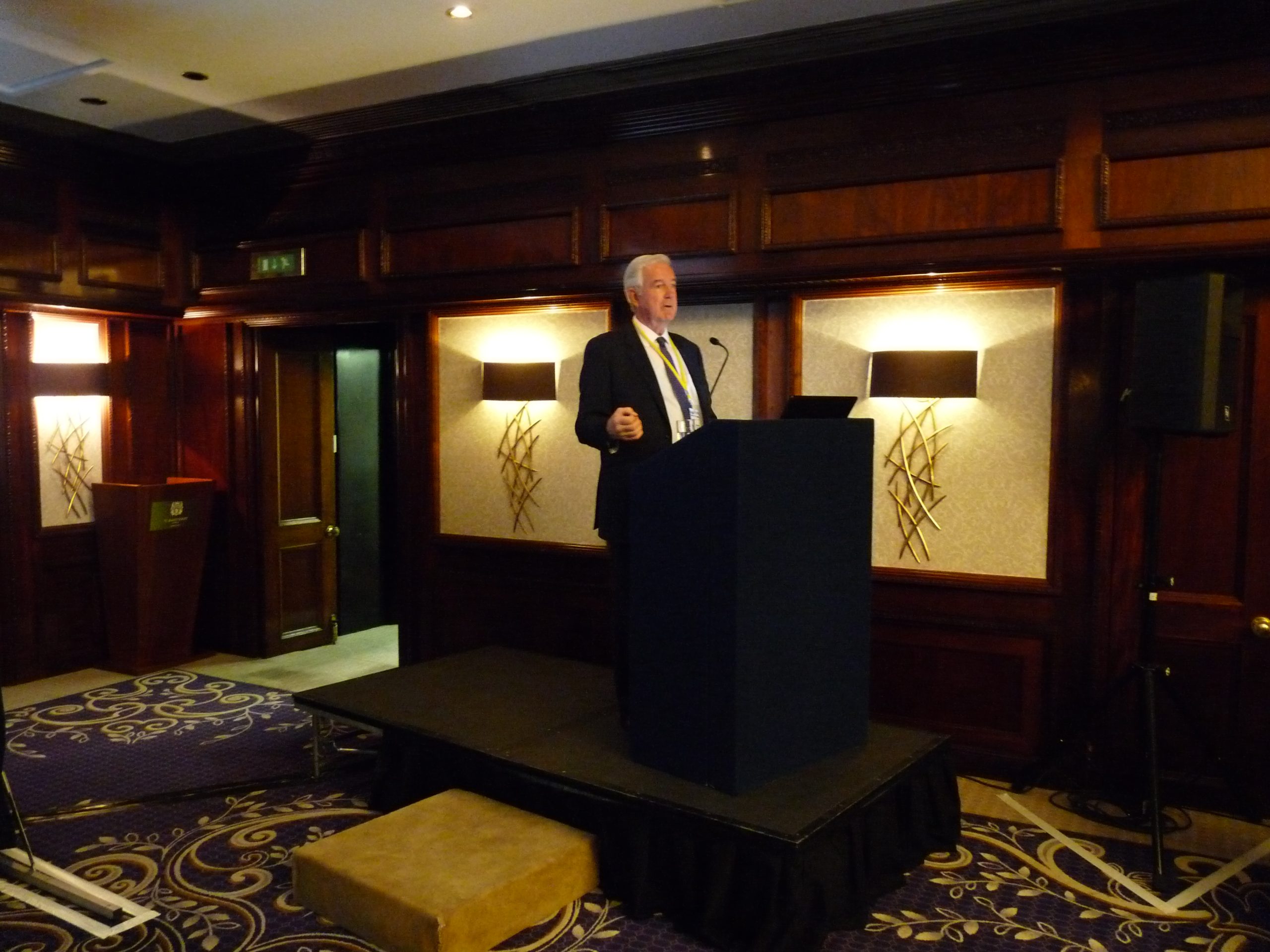
Olympic bidding process is too long, say bid leaders
Members of the panel “Bidding Processes Under Review” at Host City: Bid to Win in London on Tuesday highlighted the first stage of the bidding process for the Olympic Games as being too long and raising expectations and costs at too early a stage.
“It is the first process that needs to be reduced and then six months before the decision the bid should be formally placed,” said Stefan Lindeberg, president of the Swedish Olympic Committee.
Stockholm dropped its bid for the 2022 Winter Olympic in January 2014 when senior politicians and city officials baulked at the rising estimated cost of hosting the games.
“The bid process has become an expensive competition and not because of the IOC requirements but because the bidding process is too long,” said Antonio Fernandez Arimany, director general, International Triathlon Union and former bid leader of Madrid 2016.
“The bidding process is too long and you spend the maximum resources on that bid – this could be reviewed,” he said.
The panel included Sir Craig Reedie, vice president of the International Olympic Committee. “It is possible to revise the bidding process, but is difficult to tell cities what they may and may not do and then enforce this, because if the city is determined to win a prize they will go beyond what the IOC requires,” he said.
“The value of the prize is so enormous.”
Members of the panel identified non-organising committee costs, such as civic infrastructure projects that are often associated with a Games bid, as a source of unwelcome spikes in expenses. These infrastructure projects often bring benefits beyond the Games.
“It seems to me the IOC faces a communication gap,” said Reedie.
“We seem to find it impossible to get anyone to understand that there are two separate budgets; one for the organising committee and one for the non-organising committee.
“The organising committee [of London 2012] made a modest surplus but the non-organising committee cost is the result of the Games being used as a catalyst to develop the host city.”
The cost of hosting the Games has come under unprecedented scrutiny since revelations about Sochi’s expenditure on infrastructure projects associated with hosting the Games.
“At no time did we invite Sochi in Russia to make a USD 51bn contribution,” said Reedie.
The bidding procedure for the Olympic Games is currently under review, through the IOC’s Olympic Agenda 2020 initiative. 40 recommendation have been made to the IOC Executive Board. The recommendations will be presented, discussed and voted upon by IOC members at the 127th IOC session in Monaco on 8 and 9 December.
Host City: Bid to Win was held in London on 28 October 2014 and acted as a unique dialogue platform between cities and rights holders. -
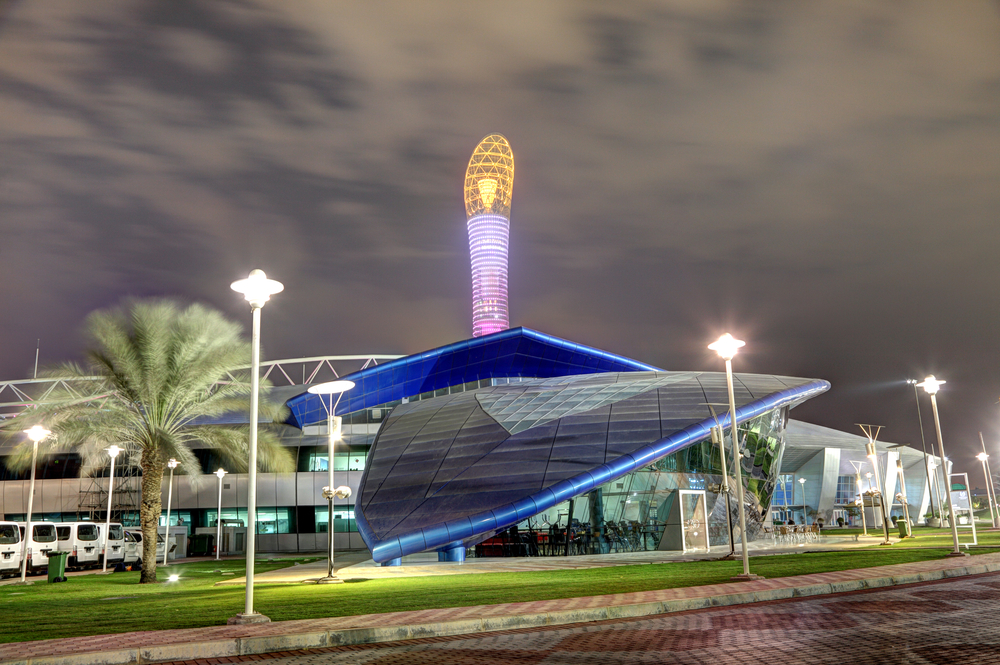
IAAF sees Doha’s plans for Athletics City in 2019
The IAAF evaluation commission left Doha on Friday, having completed their inspections of all three cities bidding to host the 2019 World Athletics Championships, having visited competitors Barcelona and Eugene earlier in October.
The IAAF’s group of experts is producing reports evaluating the bids to host the 2019 IAAF World Championships. The host city of the flagship biennial athletics event will be elected at the IAAF council meeting in Monaco on 18 November.
Qatar’s biggest city officially submitted its candidature file to host the Championships on September 25 and is competing against bids from Barcelona and Eugene in the US state of Oregon.
Sheikh Saoud bin Abdulrahman Al Thani, secretary general of the Qatar Olympic Committee and Dahlan Hamad, the president of the Qatar Athletics Federation, welcomed the evaluation commission, chaired by IAAF Vice-President Sebastian Coe, on Thursday.
The Doha 2019 Bid Committee and its partner, the Aspire Zone presented to the IAAF at Khalifa International Stadium.
“It is an honour to welcome the IAAF Evaluation Commission on their inspection tour of Doha and we hope to demonstrate Doha’s true character as a sporting hub for the region and the world,” said Hamad. “We are committed to continuing our work with the IAAF to develop athletics and ensure a lasting legacy from the World Championships for generations to come.”
Ali Saeid Al Fhaida, acting director of Aspire Logistics, took the Evaluation Commission on a tour of the Aspire Zone’s facilities, which have played host to several international sporting events including the 2006 Asian Games, the 2010 IAAF World Indoor Championships and the 2011 Arab Games.
Doha is also hosting the 2015 Asian Youth Athletics Championships.
The commission also saw the ongoing renovation of the Khalifa International Stadium, where they were greeted by members of the Qatar National Athletics team as well as Russian hurdler and Doha 2019 Ambassador Sergey Shubenkov.
“I am supporting Doha 2019 because I believe that it would inspire a whole new region to participate in athletics,” Shubenkov said.
“The Middle East has never hosted the World Championships before and 60 per cent of this region’s population is under the age of 30. This brings an unrivalled opportunity to showcase athletics and introduce a new generation to track and field.”
Another bid partner, Msheireb Properties, gave a presentation to the commission at its Enrichment Center on Doha’s Corniche waterfront, giving more information about its ambitious plans for an “Athletics City” that would replace the traditional Athletes’ Village concept.
A single, brand-new 35 hectare mixed-use development called Msheireb Downtown Doha, in the heart of the city, will be handed over in its entirety for the dedicated use of the 2019 Championships.
The commission also visited the Qatar National Convention Centre, which would host the IAAF’s Congress in 2019 in the event of Doha overcoming Barcelona and Eugene in its bid to host the World Athletics Championships.
After the Olympic Games and the FIFA World Cup, the IAAF World Championships is the third largest sporting event in the world, with more than 200 participating nations, more than 2,000 athletes and an estimated global TV audience of 6 billion over 200 territories and 9 days of competition.
The next IAAF World Championships will take place in Beijing in 2015 followed by London 2017.
-

Germany commits to pursuing 2024 Olympic Games
The German Olympic Sports Confederation (DOSB) has officially thrown its hat into the ring for the 2024 summer Olympic Games by confirming that either Berlin or Hamburg will bid for the event.
The DOSB had been expected to make a solid decision on its Olympic bid strategy at a meeting on December 6.
However, president Alfons Hörmann told the Frankfurter Allgemeine Zeitung newspaper earlier this month that the organisation had wanted to determine the results of the International Olympic Committee’s (IOC) ‘Agenda 2020’ initiative as well as gain a stronger insight into the strength of local support in the two cities, before proceeding.
This was expected to delay any formal announcement on a German bid for the 2024 Games until next year, but the DOSB has now committed to pursuing the Games with a final decision over its candidate city due on March 21.
The DOSB has added that it is likely to re-enter the bidding for the 2028 Olympics should its attempt at 2024 fail in what is expected to be a strong field.
“Olympic and Paralympic Games are the most important events for German sports,” Hoermann said.
“Sustainable Olympic and Paralympic Games are a chance for the entire country and especially for the city hosting the Games and its region. From Munich 1972 to London 2012 it becomes clear what they can trigger in the economy and society if well conceived and executed.
“We are confident that it will be a big opportunity for one of the cities and a big opportunity for the entire sport. We are also confident that an Olympic project can be – and will be – good for our country. We have two excellent candidates in Berlin and Hamburg.”
Germany last hosted the summer Olympics when Munich staged the 1972 Games, while Berlin was the setting for the 1936 Games. Berlin failed to land the 2000 summer Olympics in Sydney and Leipzig was defeated in the race for the 2012 Games in London.
The latest bid process comes with Munich’s failed effort to land the 2018 winter Olympics still fresh in the memory. The bid was rejected in a local referendum and the DOSB insists it has learned lessons from this experience.
Both Berlin and Hamburg plan referendums once it is known which of the two will be the candidate for the 2024 Games. The DOSB said that its latest polls indicate a narrow majority is against the Games in Berlin, while the project has the support of 53 per cent of the Hamburg population.
“We have to promote the product and convince the citizens,” Hoermann added. -
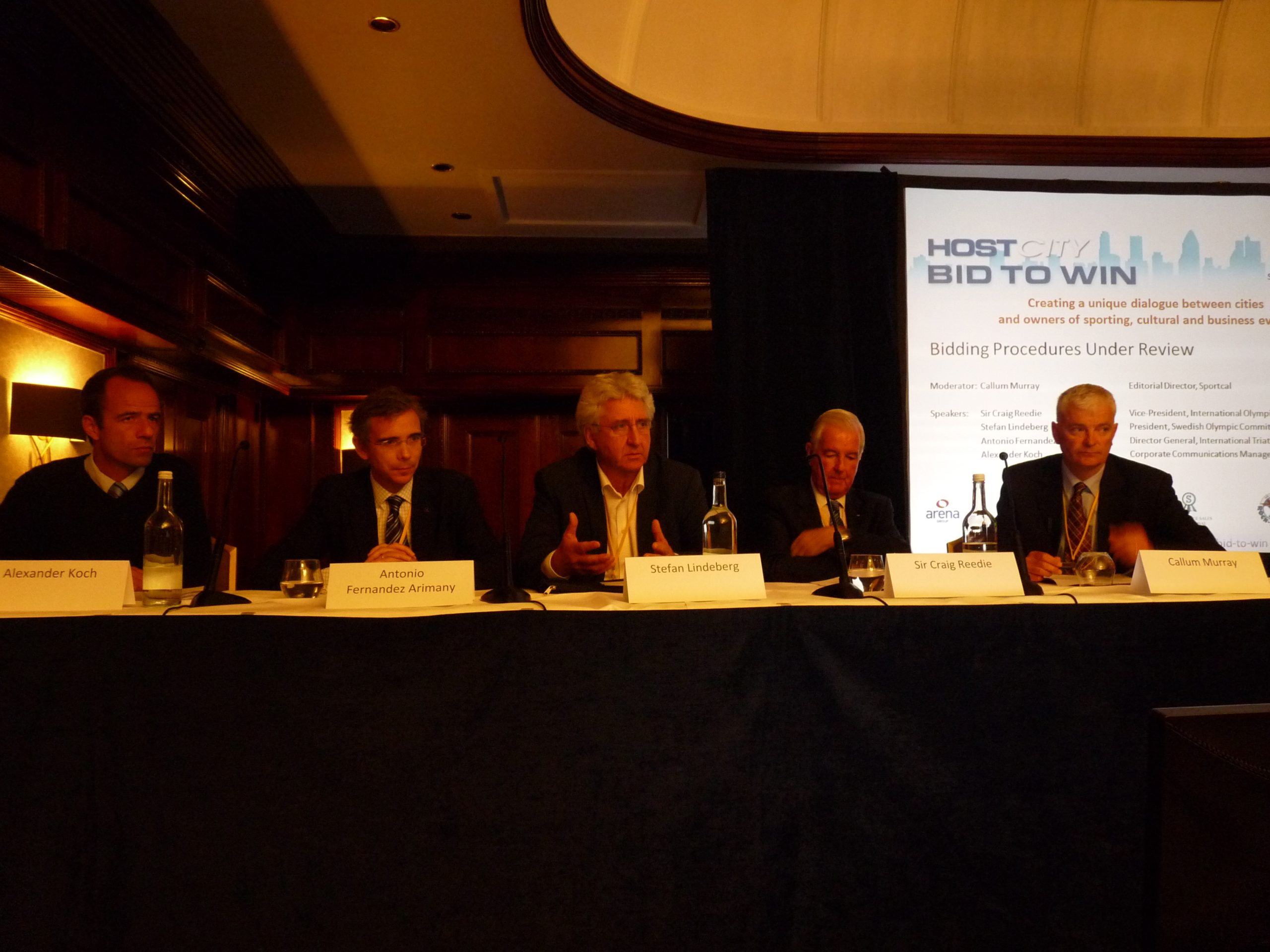
Event bidding comes under the spotlight at Host City conference
The inaugural Host City: Bid to Win conference has provided a thought-provoking and timely debate on bidding procedures for major events.
The conference examined engaging themes central to the debate including the IOC’s proposed Agenda 2020 reforms and emerging trends in the bidding for and hosting of large-scale, multi-sport and cultural events.
Speaking at the one-day conference at the St James’ Court, A Taj Hotel in London, IOC Vice-President, Sir Craig Reedie, said the IOC is determined to change its approach in response to the current bidding climate around major events.
“The evidence of the 2022 winter bids shows us that this is necessary. The IOC is right to look at its processes and try and correct the current situation. It wants to adopt a partnership approach and start a dialogue with bid cities.
Reedie also called for the communications gap to be plugged between the IOC and Host Cities.
“The IOC faces a communications gap. There has been a failure to get Host Cities and members of the public to understand that there are two budgets, an organising committee budget for staging the games, and a non-organising committee budget which looks at infrastructure and legacy for the host city.”
“Sochi was certainly not encouraged by the IOC to make the scale of investment that they did. It was for the future of the city not the two weeks the games were hosted.”
Stefan Lindeberg, President, Swedish Olympic Committee, agreed a breakdown in communication had occurred during Sweden’s recent attempts at bidding for the Winter Olympic Games.
Lindeberg, said: “The public has to understand the costs and the risks. The process needs to be transparent and this needs to be communicated much earlier in the bidding process.
“We want much more cooperation from the IOC. We want a situation where we start with a discussion about our city, our legacy, what we want from the Games then work with the IOC to create a host city contract that we understand not something that is imposed on us.”
On declining to bid for 2022 Winter Games, Lindeberg said: “If we could do it again our answer would be yes. At the time we needed a much clearer statement from the IOC about exactly what it means to bid. If we had had the discussion we are having now in January, our answer would have been yes.”
Speaking on the same panel, Alexander Koch, FIFA Corporate Communications Manager, discussed how rights holders choose host cities:
“We need to be asking the countries why they are bidding. In the media it is quite often reduced to the economic value but if you ask this question to each country you will get vastly different answers. If we take Germany, for example, they had a very clear vision for why they wanted to host the 2006 World Cup – to present a unified Germany to the world. The decision to host has to make sense for that country. That is why 2018 went to Russia and 2022 went to Qatar because their bids made the most sense for their countries.”
In a later panel which looked at evaluating bidding and hosting around the world Mario Andrada, Executive Director of Communications for Rio 2016, said:
“The venues will be ready on time; we are 100% confident of that. Our focus will be on transport, accommodation and getting the people ready so they have confidence in the legacy for Rio.
“We will, of course, learn lessons from London 2012 but Rio 2016 will be a different Games, it will have a Brazilian soul. We have to show it is good for the city, good for the country and good for the population. We want to focus on the self-esteem of our people and to deliver an intelligent and efficient Games with a clear and tangible legacy.”
WPP Chief Executive Sir Martin Sorrell, on the issue of the cost of hosting major events, said:
“The argument has not been as made cogently as it could be, bidding just accelerates the investment which is necessary anyway, be it airports, rapid transport or other city infrastructure. The benefit of the legacy is not being articulated as strongly as it could be by cities.
“Communicating the legacy of hosting these events, the intangible side of it, is critical to engaging the public. In order to achieve success you have to articulate clearly the benefits of staging an Olympics, a World Cup or a Grand Prix.”
Host City: Bid to Win brought together experts and decision makers to explore the challenges and benefits of bidding for major global events. At a time when the bidding process for events is under the spotlight Host City: Bid to Win has engaged expert insight into the heart of the debate including the IOC’s proposed Agenda 2020 reforms and emerging trends in the bidding for and hosting of large-scale, multi-sport and cultural events.
For further information on Host City: Bid to Win please visit: http://www.bidtowin-hostcity.net
-
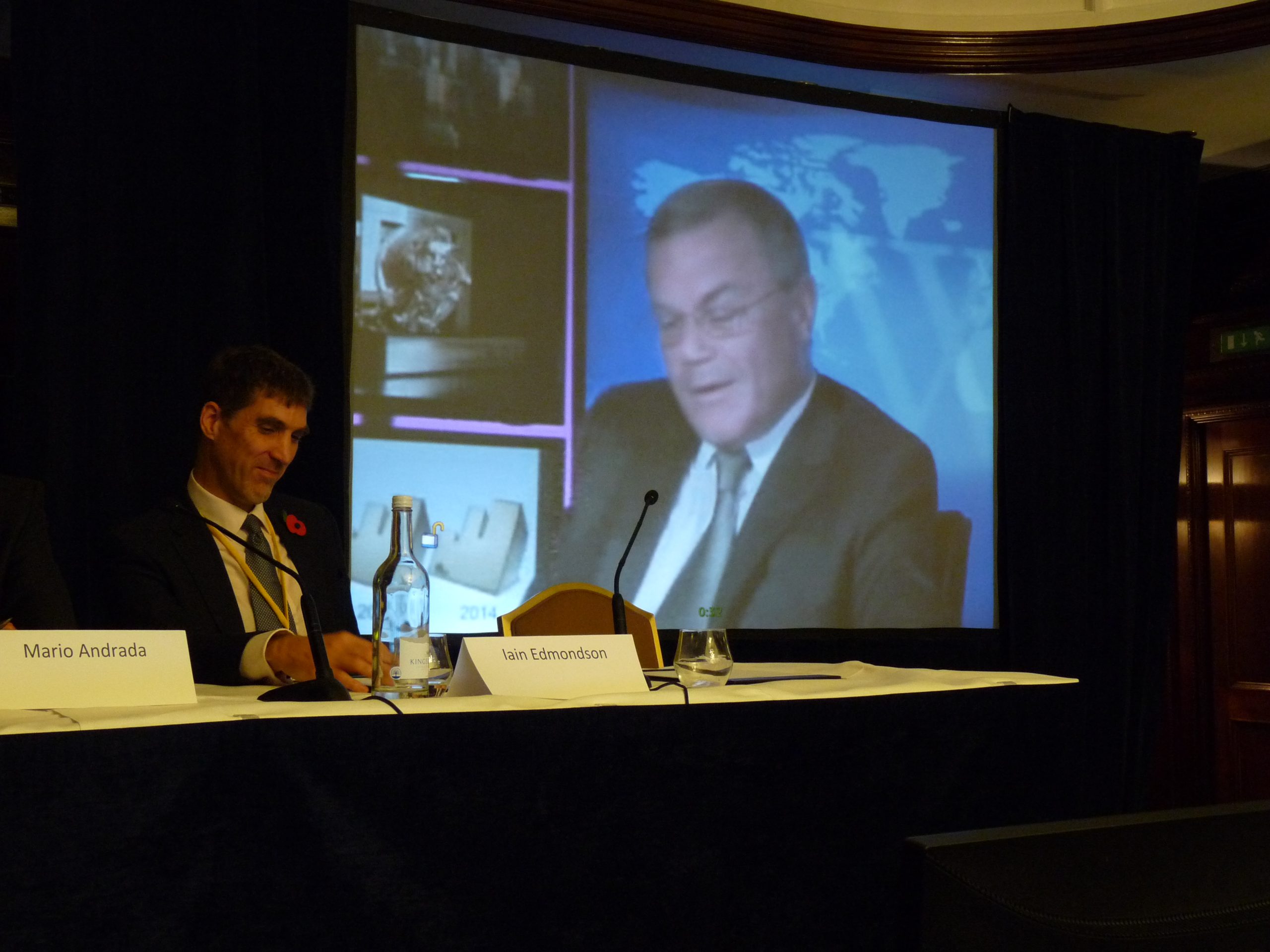
What will London bid for next?
HOST CITY: Having hosted the biggest and best event in the world in 2012, what type and scale of events is London aiming to host over the next 10 years?
Iain Edmondson: We have secured a calendar of championships for Olympic sports, such as European Hockey 2015, World Track Cycling 2016 and the World Athletics 2017 in the permanent Olympic venues.
And there’s the Rugby World Cup next year, which takes place in existing venues and the new assets we have, including the Olympic stadium. Complementing that are events where London provides the opportunity to globalise, like the NFL.
What was once termed a decade of sport has now been rounded off with the announcement that the 2020 European football championships will be finishing here, with the semi-finals and finals.
What we are doing now is to see how we can bring our reputation from sport and major events into the cultural content that we have. People visit London largely because it is a diverse city with great attractions in a number of different ways – not just museums and galleries but the performing arts that appeal to people throughout the year.
You see some great examples of light festivals in cities around the world in the winter. The idea of a London Light Festival is something that we are looking at seriously.
HOST CITY: How seriously are you considering a bid for the 2025 World Expo?
Iain Edmondson: Very seriously. Our experience of delivering major international events over the past decade means we now have the capability to evaluate the practicalities as well as potential benefits of hosting the biggest and the best, like a World Expo.
Ten years or so ago we wouldn’t have had the same degree of understanding and intelligence to look at its potential to deliver our strategy and aims for London. We are better placed to consider whether or not the World Expo is right for the city and whether we want to enter the race.
If you are going to host something of that scale you need certain infrastructure, so we have looked into that as well. We are looking at the assets in the city that we have now, like Queen Elizabeth Olympic Park, what the situation might be for London in ten years’ time and how this might align with an Expo.
The good thing is that the Mayor understands the power of major events and wants to hear recommendations as to whether we should bid or not.
HOST CITY: What do you think the owners of major events are most looking for in a host city?
Iain Edmondson: There are basic factors that you’ve got to be able to demonstrate, such as transport and security, but one the biggest is the ability to reach an audience. Rights holders are interested in the markets where the events are hosted. If you’ve got partners that are proactively investing in engaging with and marketing events, then that is appealing to rights owners.
HOST CITY: How can London compete with emerging markets in this space?
Iain Edmondson: We are one of the best in the world in terms of an event-going public, so there is an appetite to attend and physically spectate. We are also one of the best from a media perspective, to be able reach people who aren’t seeing an event in person, but through media channels and the press.
Our challenge compared to some competitors is the ability to justify large sums of investment up front from public funds, because the business case for investing multi-millions in destination marketing for a city that is already established is different to a new city that needs to make a mark.
But we are working with the Mayor and all the difference agencies in the city to demonstrate that you don’t necessarily need that. We can still work to provide a commercially successful event, without having a large cash downpayment where there isn’t necessarily an audience behind it. However, there are often other grounds for justifying public investment, such as the long term business benefits where London has proven to have invested wisely over the past decade.
HOST CITY: What do rights holders need to do make bidding more attractive to cities?
Iain Edmondson: Transparency is a must-have for public democratic processes where big money is open to scrutiny. We work in an environment where we expect to be asked awkward questions and justify the answers.
If a bid process is open and transparent, you can choose to engage or not. It’s just a minimum requirement that everyone can see up front the basis on which they are making decisions.
Another thing that is important is recognising the ability for rights holders to work in partnership with hosts. The city staffs the event and puts together commercial deals – they often become the people with the most invested in the success of it, so if the rights owner can work closely with the city and understand its aspirations for hosting it, it’s more often going to be a win-win on both sides.
For example, the ASO are very well resourced; they have looked after the Tour de France for a hundred years. We’ve had some good experience of working with them in 2007 and 2014 and they understand what the host brings.
But some smaller federations often don’t have the capacity to do a lot of detailed planning. The more they can work together and align the events with the expectations of host cities, the better.
For more information about London’s event plans visit www.londonandpartners.com/events -
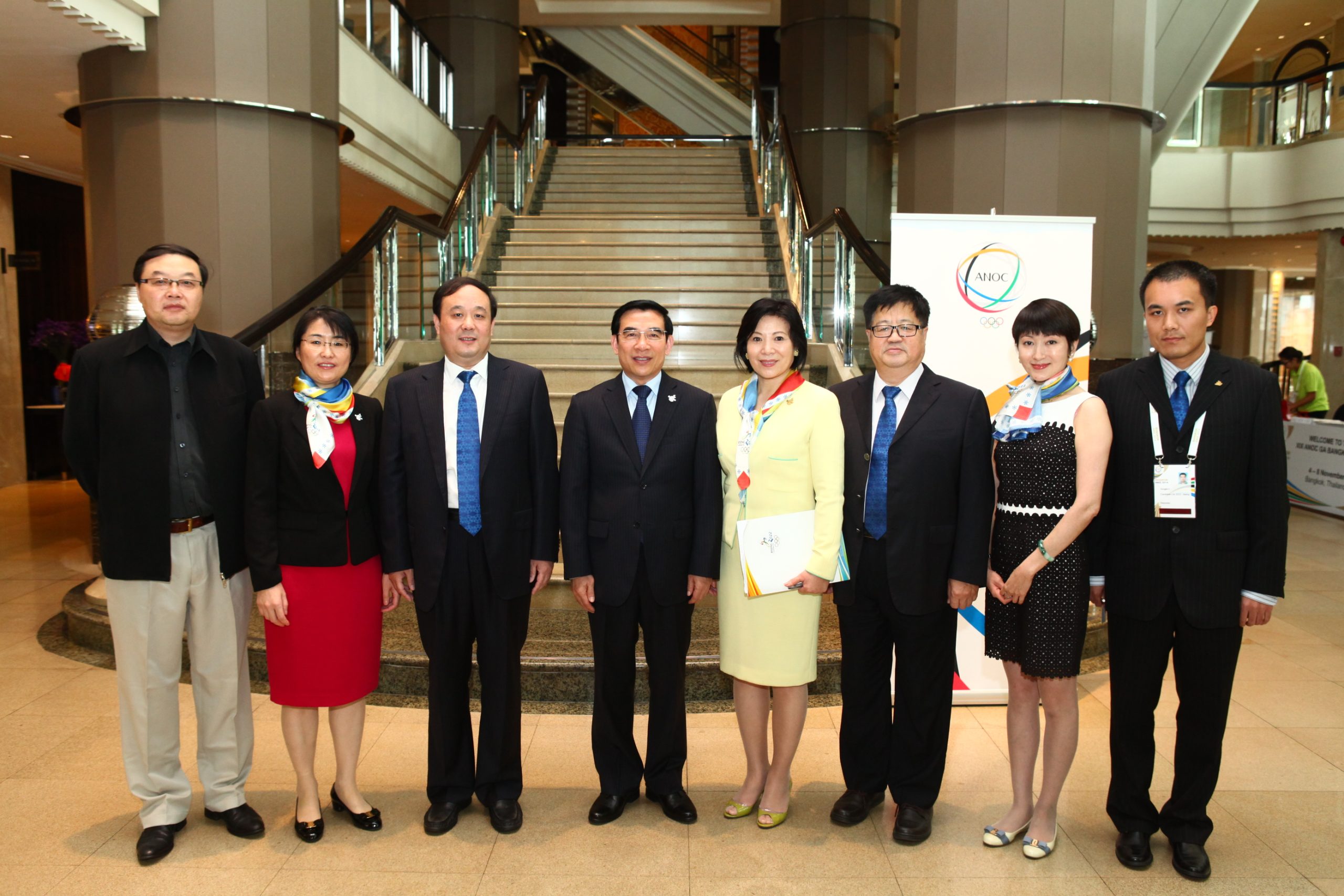
Beijing 2022 delegation arrives in Bangkok for ANOC General Assembly
The Beijing 2022 Bid Committee will do its first official presentation in front of the Olympic family in Bangkok on Friday 7 November.
Building on the legacy of the Beijing 2008 Summer Games, Beijing 2022 aims to deliver an athlete-centred, cost-effective and sustainable Games in order to raise the winter sports culture in China and contribute to the development of the Olympic Movement. -
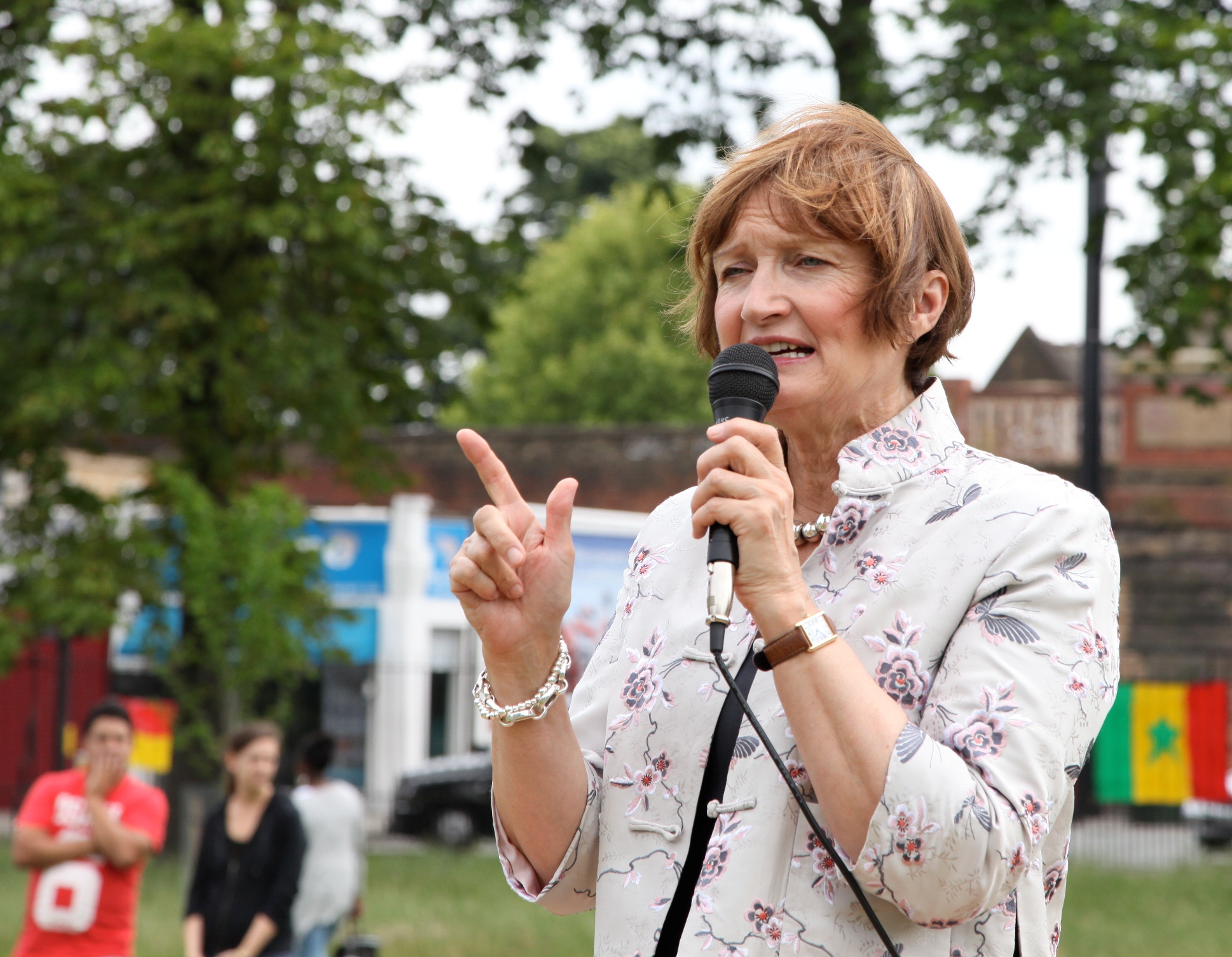
A London Expo must benefit all UK, says Tessa Jowell
As London’s City Hall weighs up whether to go head to head with Paris and bid for the 2025 World Expo, Tessa Jowell told HOST CITY that the benefit to the nation as a whole should be a key consideration of a bid.
The former Olympics minister Jowell was a major driving force behind London’s successful Games bid and is a popular contender to become the next mayor of London.
Asked whether she thought London should bid for the World Expo in 2025, Jowell told HOST CITY “It’s not a simple yes or no, but yes, we should certainly undertake the feasibility and be very clear about what the benefits are for London and the UK, beyond the duration of the Expo as an event in its own right.
“You look at every aspect of the development and you say ‘how can we spread the benefit; how can we make sure that businesses outside London know about the possibility of tendering for the contracts?’
London 2012 could set the template here, Jowell indicated. “We avoided displacement from the regions to London’s benefit by ensuring that nearly 50 per cent of the contracts were let to businesses around the country, and the whole country derived benefit.
“Before bidding for the Expo, London needs to ask ‘What’s the possibility of diffusing, dispersing events outside the host city?’
“The Olympics is very strict about that; you have to have a host city, but we were able to have training camps around the country, which gave a bit of Olympic excitement and Olympic magic right across the UK.
“It was a Games that was so true to the city that London is – the greatest city in the world, open, diverse, tolerant – that’s what the Games captured so beautifully, and I think that’s why not just Londoners but people from all around the UK took the Games to their hearts.”
Jowell played a crucial role in evaluating the feasibility of London’s Olympic bid and driving the bid forward.
“My role was to turn my personal belief that this would be great for the country into a proposition that had credibility and could be sold to the whole cabinet, every department of government, all the key supporting organisation and then the chancellor of the exchequer and the prime minister,” she told HOST CITY.
“I set a number of tests against which the proposition could be judged. Was it affordable? Could we deliver it? Would there be a legacy? And could we win the bid against Paris, who was the other key contender at the time?”
President Francois Hollande announced Paris’s candidacy for the 2025 World Expo on 4th November, saying “France is capable of great events, major projects,” with French Prime minister Manuel Valls in October describing the World Expo as a “magnificent opportunity for the image of Paris and of France in the world.”
Mayoral race to follow general election
Dame Tessa Jowell confirmed to HOST CITY that she is seriously considering standing for the nomination as Labour’s candidate to be mayor of London after stepping down as MP at general election on 7 May.
“Now is not the moment for a formal declaration because we have a general election to fight and I hope to win, and that’s what I am focussed on,” she told HOST CITY.
“I think you’ve got to take these things in their natural sequence. The general election is the biggest challenge facing us at the moment.”
A recent YouGov poll showed that Tessa Jowell would not only be the most popular candidate among Labour supporters, but also enjoy the strongest cross-party support.