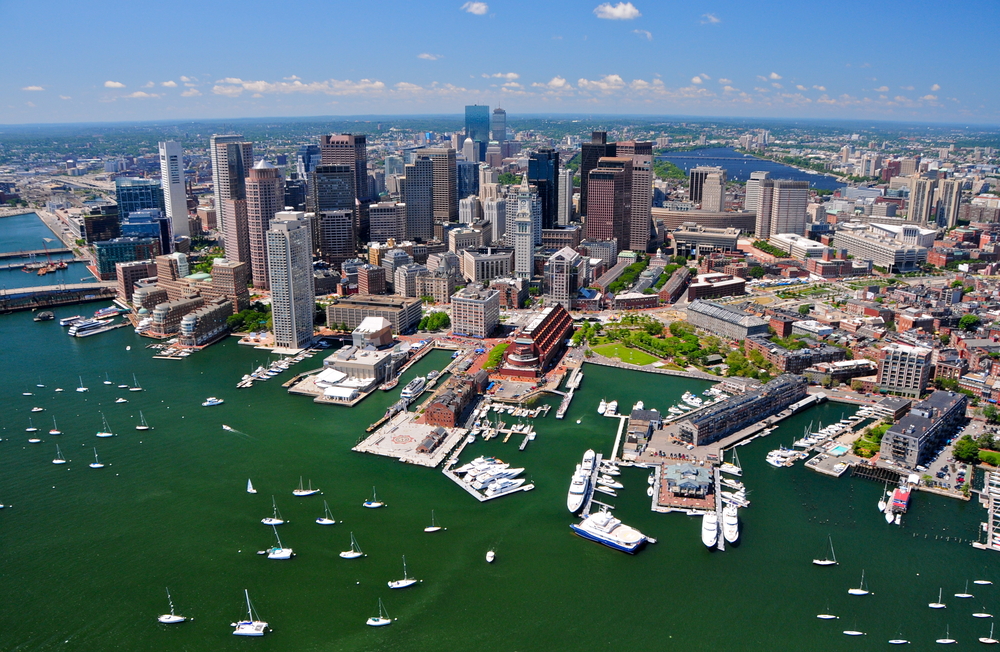
The US Olympic Committee chose Boston on Thursday as the city that will bid for the 2024 Summer Olympic Games, over competing offers from Los Angeles, San Francisco and Washington, D.C.
Boston has proposed a low-cost, regional and sustainable Games in keeping with the ideals of Olympic Agenda 2020, the new framework adopted by the IOC in December within which the bidding procedure for 2024 will operate.
The engagement of public and private stakeholders in Boston’s proposal is said to have outshone its rivals.
“One of the great things about the Boston bid was that the bid leadership and the political leadership were on the same page,” Scott Blackmun, chief executive of the US Olympic Committee told the Boston Globe.
The White House gave a statement of presidential support for Boston, saying “The city has taught all of us what it means to be Boston Strong” – a reference to the slogan adopted by the city in the wake of the 2013 marathon bombings.
The decision was also welcomed by IOC president Thomas Bach, who said “The Boston bid will be a strong one.”
A major driver behind Agenda 2020 is change perceptions about the cost and benefit of hosting the Olympic Games. Boston proposes to spend just USD4.5bn on hosting the Games, which the bid committee says will be generated from broadcasting, sponsorship and ticketing revenues.
This figure does not include publicly funded investments in civic infrastructure, which the bid committee says the city has already committed to regardless of the Games bid.
The cost of hosting the Games would be kept down by using existing facilities, including the multi-purpose TD Garden and a number of venues operated by colleges, such as Harvard Stadium, Boston College’s Conte Forum and Boston University’s Agganis Arena.
In a proposal reminiscent of London 2012, Boston’s Olympic stadium would be temporary, hosting the opening and closing ceremonies as well as track and field events.
The US last hosted the Summer Olympic Games in 1996 at Atlanta. Since then the world’s biggest multisport event has been awarded to Asia/Oceania three times, Europe twice and South America once.
The IOC does not, however, operate a policy of continental rotation and a number of factors will determine which city is selected in 2017 as the host of the 2024 Olympic Games.
While current round of bidding for the 2022 Winter Olympic Games has suffered from a crisis in appetite for hosting the Olympic Games, particulary in Europe, the race for 2024 is shaping up to be extremely competitive.
Rome is the only other city so far to have confirmed it will bid for the 2024 Games, but a long list of other cities and regions are in various stages of evaluating and preparing bids.
Baku, Budapest, Doha, Germany, Hamburg, Istanbul, Paris and South Africa are among the possible contenders.
The selection of Boston will perhaps be something of a surprise to anyone outside the US Olympic Committee. Los Angeles, which has hosted the Olympics twice before, was the highest profile contender. Advisors to the IOC had indicated that Washington, D.C. had the strongest technical infrastructure. San Francisco is already established as one of the world’s most popular destinations for sports, business and leisure.
Yet this is another factor behind Boston’s success: the city is new to Olympism, having never hosted or bid for an Olympic Games before. As such, it is less likely to show complacency in its bid, offering fresh pastures in an old city.
One of Boston’s biggest challenges will be garnering public support for the Games. A public meeting has been planned for Tuesday to gather feedback as the first stage of planning for the bid.
Category: Event Bidding
-
Boston’s modest proposal wins US Olympic 2024 bid race
-
Switzerland targets 2020 Ice Hockey World Championship, not 2019
The Swiss Ice Hockey Federation (SIHF) on Monday submitted its official candidacy for the International Ice Hockey Federation (IIHF)’s 2020 World Championship.
Switzerland had previously announced it would bid for 2019, but is now targeting the 2020 edition.
This leaves Slovakia as the only applicant for the 2019 IIHF Ice Hockey World Championship.
The SIHF is being supported by international sports marketing company Infront Sports & Media during the candidature phase, building upon their previous successful cooperation for the 2009 IIHF Ice Hockey World Championship in Berne and Kloten.
“We are delighted to be entering the candidacy and are confident that we can soon bring the IIHF Ice Hockey World Championship to Switzerland,” said SIHF president Marc Furrer.
“Such an ice hockey festival in our country will further boost our sport. Therefore it is even more important that we can count on Infront for the joint venture.”
If Switzerland’s bid is successful, Infront will manage the organisation and the national marketing of the tournament in a 50/50 joint venture with SIHF.
“We are delighted to support the Swiss Ice Hockey Federation at this early stage already and to jointly lay the foundation for potentially carrying out the event in Switzerland in five years,” said Bruno Marty, executive director winter sports at Infront.
“We will contribute our expertise from many successful consulting assignments and partnerships for past IIHF Ice Hockey World Championships to provide fans, media and sponsors with not only top international sporting events, but also a first-class tournament experience.”
The SIHF’s candidacy documentation, which it has submitted to the IIHF headquarters in Zurich, proposes to use Zurich’s 11,200-seat Hallenstadion as the main venue for the Championship with potential second venues in Lausanne or Zug.
The tournament will take place over three weeks in April/May 2020.
Switzerland, 7th in the World Ranking, has hosted the IIHF Ice Hockey World Championship eight times, four of which were in the Zurich region.
Slovakia, 8th in the World Ranking, hosted its only IIHF Ice Hockey World Championship as an independent country in 2011 in Bratislava and Kosice. Bratislava also co-hosted the 1959 and 1992 World Championships with Prague.
The venues for the 2019 World Championship bid will be named in the upcoming weeks, according to the IIHF. The Slovak Ice Hockey Association announced Bratislava and Kosice as potential candidates in September but has kept its options open.
No other candidate federations have come forward for the 2019 or 2020 World Championships at time of publication.
The host of both the 2019 and 2020 IIHF Ice Hockey World Championships will be announced in May 2015 at the IIHF Congress in Prague, Czech Republic during the 2015 World Championships.
The 2016 World Championships will be hosted in Moscow & St. Petersburg; 2017 in Cologne and Paris; and 2018 in Copenhagen & Herning.
-
South Africa considers nationwide 2024 Olympic bid
The South African Olympic Committee is said to be contemplating a country-wide bid for the 2024 Olympic Games, inspired by the IOC’s recent Olympic Agenda 2020 reforms.
“The country now has taken a different view of it, taking more of a country approach than a provincial,” Ivor Hoff, head of sports at Gauteng Province told HOST CITY exclusively.
“Because of the new IOC bidding and hosting criteria, the country will take this into consideration.”
Gauteng Province had been mentioned as a potential contender for an Olympic bid. Durban and Pretoria have also been mentioned as possible candidates.
But now, the South African Olympic Committee is instead said to be reviewing its bid for the 2024 Olympic Games and putting forward a proposal that links a number of host destinations.
“When Sam Ramsamy came back from [the IOC Session in] Switzerland he reported he is going to make a presentation to the South African parliament.”
As South Africa’s parliament is in recess this week, Hoff expects Ramsamy to make the presentation next week.
“Sam will make the presentation and decisions will be taken from there.”
HOST CITY contacted SASCOC but Sam Ramsamy was unavailable for comment.
Agenda 2020 opened up the Olympic bidding process to allow for bids to be spread across more than one city.
“One city was quite a problematic approach, because it could potentially bankrupt that city,” said Hoff.
“A developmental country like South Africa could look at it more comprehensively with several cities – this would be much better for a developmental country like South Africa.”
South Africa has recent experience of hosting a nationwide mega event.
Ivor Hoff was a key figure in hosting the 2010 FIFA World Cup, with a particular focus on legacy benefits for health, education and housing.
“Based on a really positive 2010 FIFA World Cup, we’ve got a good understanding of how the country can benefit from hosting major events.”
South Africa has until 15 September 2015 to define its applicant for the 2024 Olympic Games.
So far, Rome and Boston have announced their intention to bid. The host city will be elected at the 130th IOC Session in Lima on 15 September 2017.
-
Durban 2022 Commonwealth Games is our sole focus – SASCOC
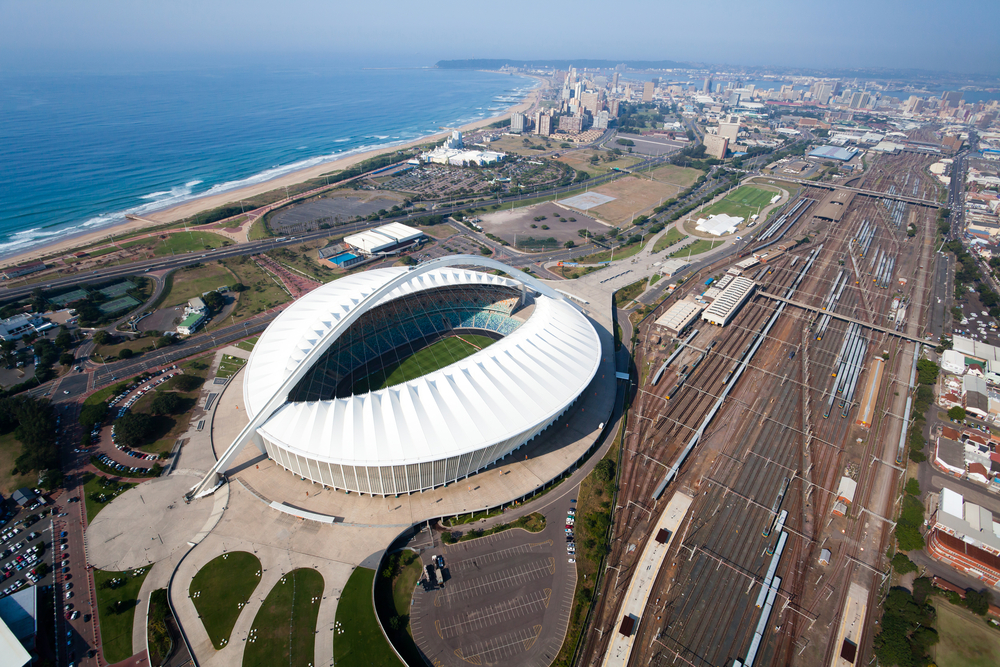
The South African Sports Confederation and Olympic Committee (SASCOC) has confirmed that it is not yet considering a bid for the 2024 Olympic Games as it has committed its resources to winning the bid for Durban 2022 and would require further information from the IOC before considering an Olympic bid.
“The bidding process for the CWG requires enormous time, dedication and resources in order for one to put forward a successful bid,” said SASCOC in a statement on Wednesday.
“With our focus solely on delivering the games to the city of Durban, the Board of SASCOC will not be diverted from this mission.”
HOST CITY reported on Monday that a bid for the Olympic Games incorporating cities all over South Africa was being contemplated. This would be made possible through the IOC’s recent Agenda 2020 changes to bidding procedure.
SASCOC was not able to verify this when contacted by HOST CITY on Monday.
Shortly after the publication of this report, which was picked up on by various other media, SASCOC issued a statement saying that they were being inundated with queries from media on whether SASCOC is intending to bid to host the 2024 Olympic Games.
“An Olympic bid is not currently under consideration,” SASCOC confirmed.
“The Board of SASCOC is at this time fully committed to bidding for the Commonwealth Games in 2022. The first step is to win the bid and then to deliver a successful Games,” said Tubby Reddy, CEO of SASCOC.
“The Board has not received any notification or correspondence from the International Olympic Committee with regard to the bidding process for the 2024 Olympic Games. Therefore, the issue of South Africa bidding for the 2024 Olympic Games does not arise.
“Once this communiqué is received, the SASCOC Board will engage with Honourable Minister Fikile Mbalula and National Government on whether one is going to consider an Olympic Games bid in 2024.”
In support of Durban’s bid for the 2022 Commonwealth Games, SASCOC exhibited at HOST CITY Bid to Win conference in October, which attracted an extremely high level of speakers and delegates including David Grevemberg, CEO of the Commonwealth Games Federation.
Durban faces strong competition from Edmonton in its bid to host the Commonwealth Games.
“Winning the bid for the CWG will be very significant for the City of Durban, especially as the other city is Edmonton, Canada,” said Reddy.
“Canada has already hosted the Games four times. We are seriously focused on the prize of winning the bid and we will not be distracted by other issues that have not been sanctioned by the SASCOC Board.”
The host city of the 2022 Commonwealth Games will be elected on 2 September 2015.
SASCOC has until 15 September 2015 to define its applicant for the 2024 Olympic Games. -

Birmingham USA chosen to host 2021 World Games
The Executive Committee of the International World Games Association has chosen Birmingham, Alabama as the host city of the 2021 World Games.
The decision was announced on Thursday at a press conference in the Mövenpick Hotel in Lausanne,
Birmingham beat off competition from Lima in Peru and the Russian city of Ufa.
The decision was made after the delegations’ final presentations to the IWGA Executive Committee at the International Olympic Committee headquarters.
“All the bids we received were of very high quality, and it was not easy for us to reach a decision,” said José Perurena, President of the International World Games Association.
“We have to deliver nothing less than outstanding World Games. We are convinced that Birmingham will exceed these expectations.
“We are happy to showcase our sports in Birmingham in July 2021, and we are sure that we will be offered optimal conditions for our sportsmen and women there.”
Perurena also hailed Birmingham’s organisational skills and the support of the city administration and the National Olympic Committee.
Birmingham Council President Johnathan Austin said “The city of Birmingham will make the World Games 2021 the best World Games that you all have seen.”
The decision is subject to “successful negotiation of contractual conditions” and the agreement with the host city will not be signed until the close of the Annual General Meeting in April 2015.
Birmingham, the largest city in Alabama, has never hosted an international multi-sports event before.
The Greater Birmingham Convention and Visitors Bureau is anticipating that hosting the 2021 World Games will bring an economic benefit of more than US$250m from visitors to the city.
The cost of hosting the Games has been forecast to be US$75m, which will raised from public and private sources.
The World Games is a quadrennial and multidisciplinary sports event under the patronage of the IOC, showcasing more than 25 sports including Gymnastics, Squash, Tug of War, Sumo and Roller Sports. About 4,500 athletes and officials from approximately 100 countries take part.
The 2021 World Games will the 11th edition, following the 10th World Games in July 2017 in Wroclaw, Poland.
The World Games has not been to the USA since the inaugural edition in 1981 in Santa Clara, California.
The bidding process for the 2021 World Games began in early 2014. The host city selection process is restricted to Executive Committee members, according to Inside the Games. The IWGA is reported to be reviewing the bidding process going forward to engage sports federations in the evaluation and selection processes. -

Boston 2024’s public support depends on private finance
The majority of Massachusetts residents support Boston’s bid for the 2024 Olympic and Paralympic Games, as long as the bid comes at no cost to the taxpayer.
This is the finding of an independent poll conducted by Sage Consulting on just over 1,600 people in the state of Massachusetts.
While the results of the poll showed overall support for the Games bid, at 55 per cent, it also revealed that a more pronounced majority of 61 per cent are opposed to public spending on the project.
The poll also showed that more people were sceptical about the economic legacy of the Games than those who believed it would bring lasting benefit.
Majority support
The most popular response to the question “how strongly do you support or oppose the bid” was “strongly support”, with 35 per cent ticking this box. With 20 per cent saying they “somewhat support” the bid, the poll showed an overall majority of 55 per cent supporting the bid.
Support for the bid would not necessarily translate into ticket sales, however. Just 45 per cent of respondents said they would either “definitely” or “probably” attend the Games in person.
Economic benefit
Slightly more people believed that Games expenditure was “unlikely” to produce lasting benefit for Boston (46 per cent) than those who said this was “likely” (49 per cent).
In answer to the question about “lasting economic benefit for Boston”, the largest group of respondents (29 per cent) said that this was “very unlikely” while 19 per cent thought it “somewhat unlikely”.
This means 48 per cent of people thought economic benefit was unlikely, as compared to 44 per cent that deemed it to be likely.
“Taxpayer dollars”
The strongest opinions revealed by the poll were in response to questions about the financing of bidding for and hosting the Games.
43 per cent of respondents would “strongly oppose” the use of “taxpayer dollars” to fund the bid. Coupled with the 18 per cent who “somewhat oppose” this, the poll reveals that a clear majority of 61 per cent are opposed to public finance of the project.
Boston’s bid is planned to be financed privately and, if successful, the bid committee has pledged that any infrastructure projects relating specifically to the Games will be entirely privately financed, However, the poll indicated that 55 per cent believe that “financial support for the Olympics will come at the expense of other worthwhile causes,” as compared with the 23 per cent who believe “most costs will be carried by business”.
Positive start
Public support for the Olympic Games is an important metric on which the bid will be evaluated and the overall support for the bid at this early stage will be seen as a positive.
A recent gathering of opponents to Boston’s bid, organised by “No Boston Olympics”, attracted little more than a hundred people.
The US Olympic Committee has been quick off the blocks in announcing Boston as its contender for the 2024 Games, with only Rome the only confirmed competitor.
Germany is expected to put forward either Berlin or Hamburg. A number of other cities and countries are said to be contemplating bidding, including Baku, Budapest, Doha, Istanbul, Paris and South Africa.
-
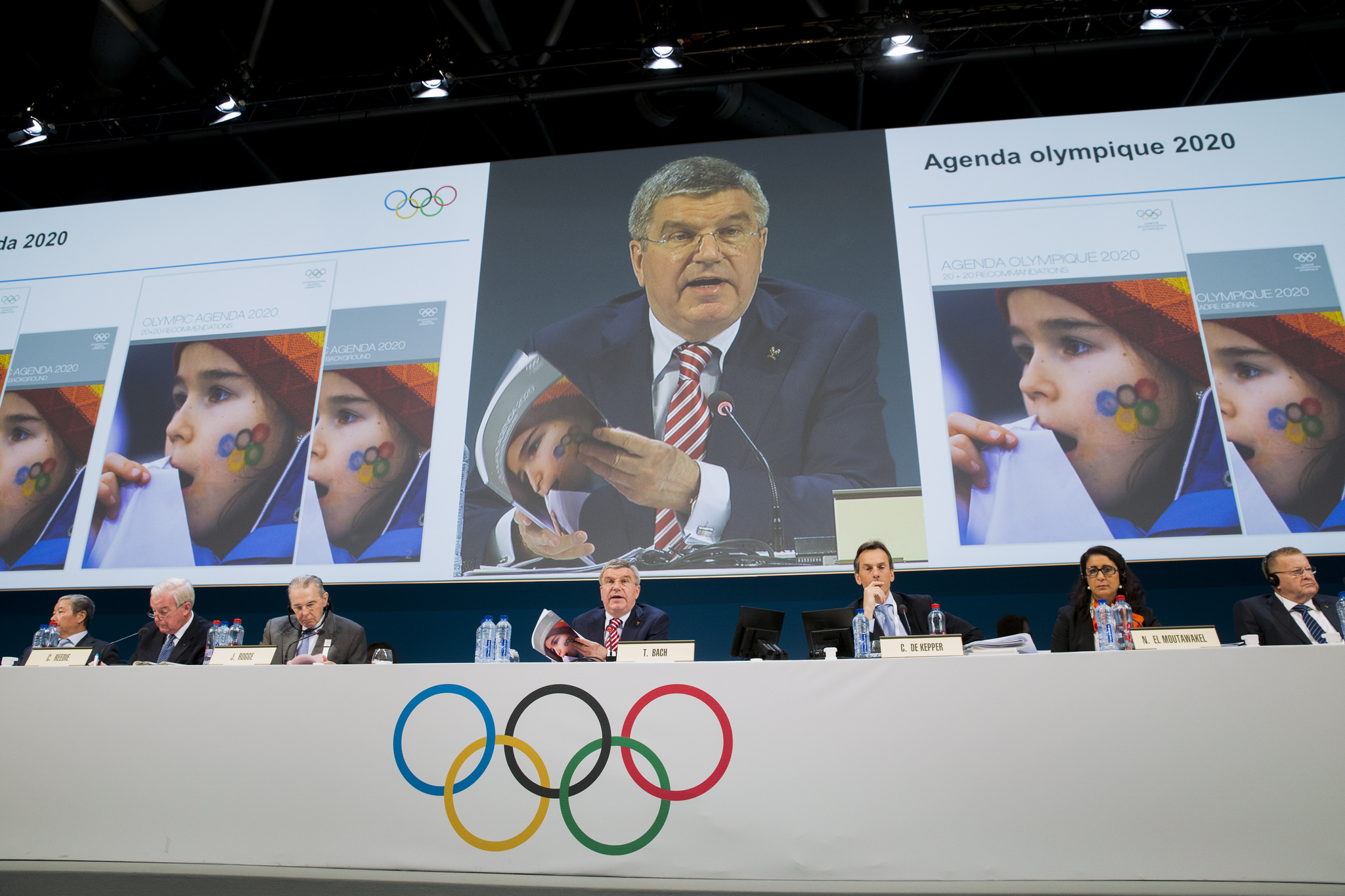
IOC opens new invitation phase for 2024 Games bids
The International Olympic Committee has launched its reformed bidding procedure with a new invitation phase, during which National Olympic Committees can discuss their plans “at their earliest convenience” before the application deadline of 15 September.
This new consultative approach, launched four weeks after the adoption of Agenda 2020, will help NOCs to ascertain the viability of bidding for the Games before committing in full.
These early discussions with the IOC have the potential to reducing the cost of bidding and organising the Games for cities – one of the key aims of Agenda 2020.
The concept of “shaping the bid process as an invitation” has been central to the Agenda 2020 review right from its inception.
Another key aim of Agenda 2020 with regard to bidding process is to strengthen the evaluation of bid cities to more clearly highlight key opportunities and risks.
Until now, the bidding process for the Olympic Games has been split into two phases – the “applicant” and “candidature” phases, which will now follow the invitation phase.
In the applicant phase, cities send in an application file which is studied by an IOC working group, who assess the bid for the IOC executive board. If approved by the board, the bid then progresses to the candidature phase, which requires much more detailed plans in the form of a candidature file and site visits.
Interested NOCs and cities will now be able to receive “various levels of assistance and feedback” between now and the 15 September deadline for officially committing to a bid.
“Bidding for the Games is not a tender for a franchise, and there is no one-size-fits-all solution,” the IOC said in a statement.
“The bid process is about making proposals and offering solutions that will deliver excellent Games, with no compromise on the field of play for the athletes while also meeting the needs of the city and region to ensure the Games leave a positive, long-term, sustainable legacy.”
Cities considering bidding for the Games are encouraged to place greater emphasis on the use of existing, temporary and demountable venues.
During the invitation phase, the IOC will inform interested parties of the “core requirements” necessary to organise the Games in order “to assist interested cities and their NOCs to develop a project that best meets each city’s unique long-term development needs.”
The IOC also expressed its satisfaction with the “strong interest” in hosting the 2024 Olympic Games, with the NOCs of Germany, Italy and the United States already indicating their intention to bid. -
Boston 2024 appoints transport expert as bid CEO
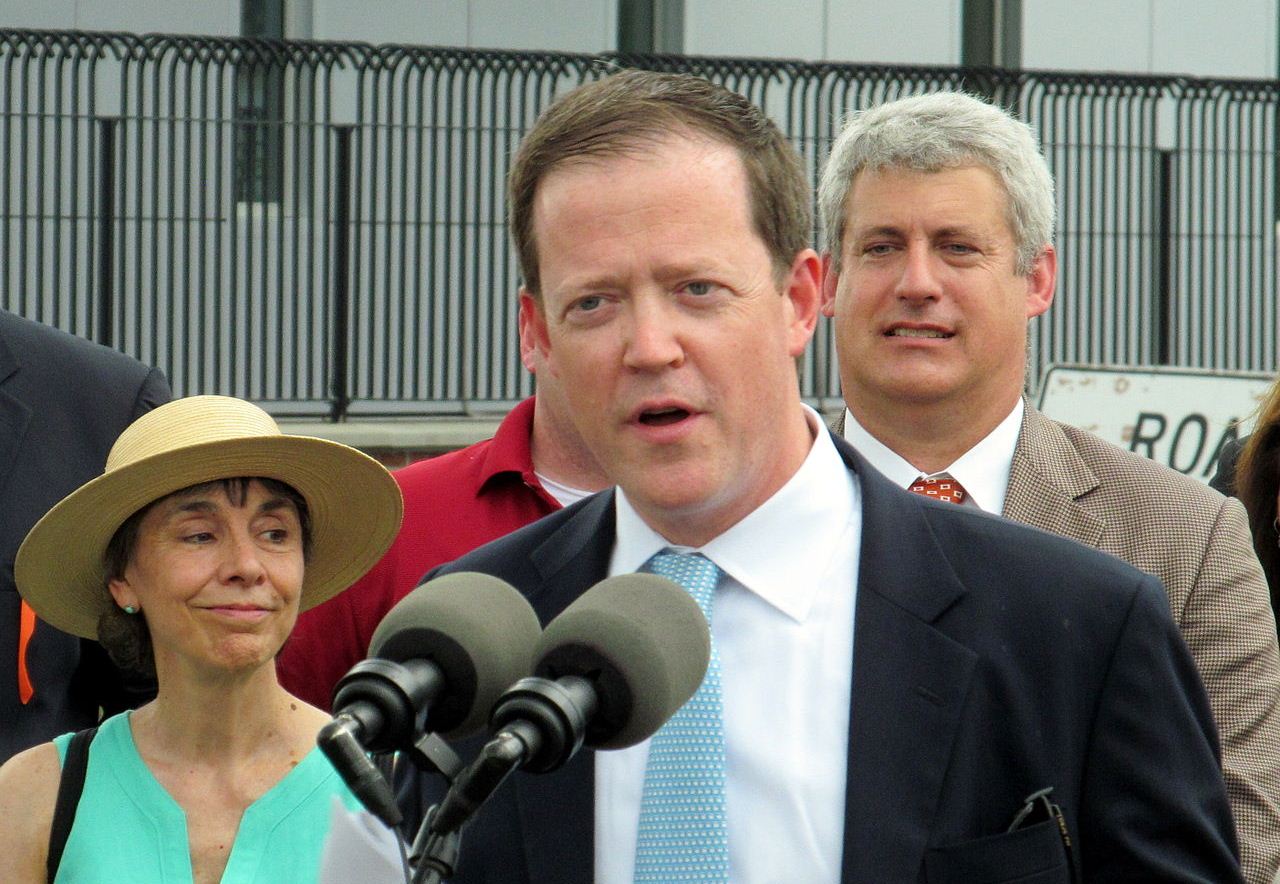
The Boston 2024 bid committee has appointed Richard Davey, former Massachusetts Transportation Secretary, as its new CEO.
He succeeds Dan O’Connell, who successfully led the group that was selected as the US Olympic Committee (USOC)’s contender for the 2024 Olympic Games, against competition from Los Angeles, San Francisco and Washington D.C.
“This is a terrific opportunity to build upon all the great work and planning that has already been done,” Davey said in a statement.
“But in many ways this is just the beginning. Over the next year we will be in every community in Boston —and in every region of the state—to get the thoughts and input of the public on what a 2024 Games would look like and the kind of legacy it could and should leave for Massachusetts.”
Davey was appointed Transportation Secretary of Massachusetts Department of Transport (MassDOT) in 2011, a position he held until stepping down in October 2014.
Before this, he worked for the Massachusetts Bay Commuter Railroad Company, where he rose to the position of general manager and went on to manage the Massachusetts Bay Transportation Authority.
The effectiveness of the city’s transport system was a central component of Boston 2024’s submission to the USOC, which highlighted the fact that most venues are within walking distance of public transport.
Boston’s USOC submission also outlines US$5.2bn of public investment in “existing transport infrastructure” and US$10bn of public investment in “planned transport infrastructure”.
Dan O’Connell, the outgoing leader of Boston 2024 who previously served as Housing and Economic Development Secretary for Massachusetts, will remain on the bid’s executive committee.
“Dan O’Connell was integral in making the case over the last year that Boston could host a Games that was sustainable, cost-effective, and that would leave a lasting legacy for Boston and Massachusetts,” said John Fish, chairman of Boston 2024 in a statement.
-
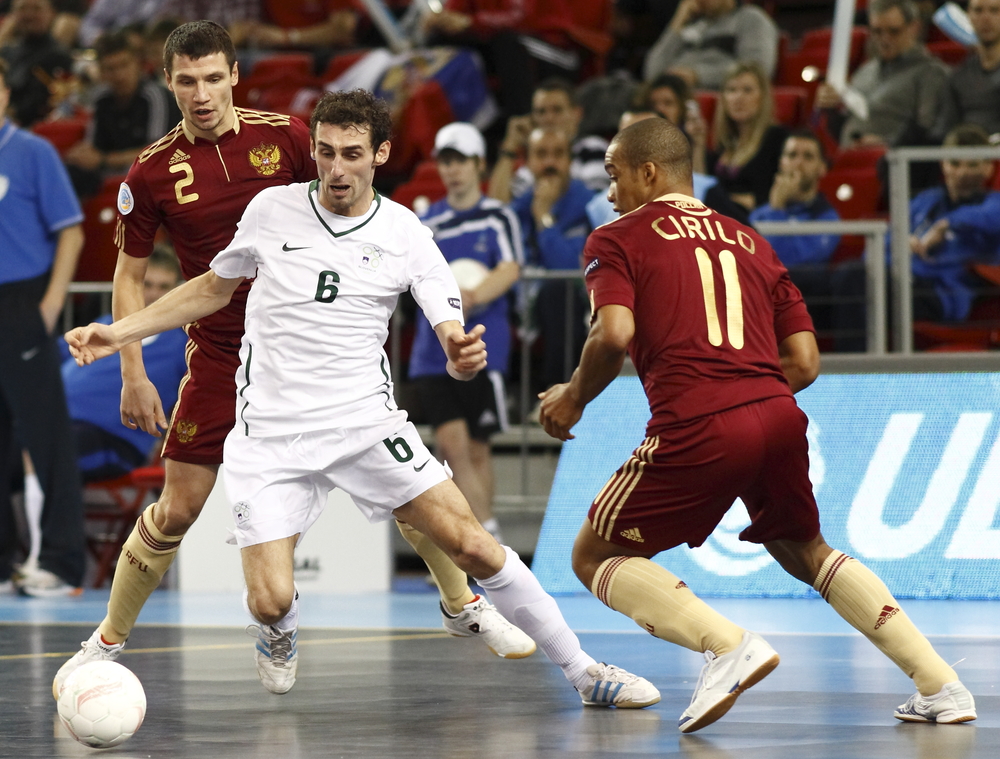
UEFA choses Slovenia to host Futsal EURO 2018
The UEFA Futsal EURO 2018 final tournament will take place in Slovenia, following a decision by the UEFA Executive Committee on Monday in Nyon, Switzerland.
The bid from the Football Association of Slovenia (NZS) was selected ahead of others from FYR Macedonia and Romania.
The venue for the tournament will be the 12,500-capacity Stožice Arena in the Slovenian capital of Ljubljana.
Slovenia hosted the UEFA European Under-17 Championship, but this will be the first time it has hosted the Futsal final tournament organised by Slovenia.
The UEFA Futsal EURO 2016 will take place in Belgrade from 2–13 February next year. Previous hosts of the tournament include Belgium (2014), Croatia (2012), Hungary (2010), Portugal (2007), Czech Republic (2005), Italy (2003), Russia (2001) and Spain (1999).
At the Executive Committee meeting, UEFA also appointed Sporting Clube de Portugal as host of the 2014/15 Futsal Cup finals.
Futsal is a form of five-a-side football played indoors on a hard surface.
Poland was selected to host the 2015–17 UEFA European Under-21 Championship final tournament.
The 2016/17 UEFA European Under-19 Championship final tournament was awarded to Georgia while Finland will host the 2017/18 UEFA European Under-19 Championship final tournament.
Croatia was selected to host the 2016/17 UEFA European Under-17 Championship final tournament, while England will host the 2017/18 UEFA European Under-17 Championship final tournament.
The 2016/17 UEFA European Women’s Under-19 Championship final tournament was awarded to Northern Ireland, while Switzerland will host the 2017/18 UEFA European Women’s Under-19 Championship final tournament.
The Czech Republic was awarded the 2016/17 UEFA European Women’s Under-17 Championship final tournament while the 2017/18 UEFA European Women’s Under-17 Championship final tournament goes to Lithuania.
The UEFA Executive Committee also received what it described as a “positive update” on the preparations for UEFA EURO 2016, which begins 500 days from now.
UEFA EURO 2016 takes place in ten venues across France between 10 June and 10 July 2016. -
FIFA proposes launching Women’s Club World Cup in 2017
FIFA’s Committees for Women’s Football and the Women’s World Cup are proposing to the Executive Committee that the inaugural Women’s Club World Cup should take place in 2017.
Executive Committee member Moya Dodd convened a meeting of the FIFA Task Force for Women’s Football in Zurich on Monday, when the date of 2017 was proposed for the Women’s Club World Cup.
The Task Force noted that the competition is important “to create an annual showcase of elite women’s football and to provide an incentive not only to clubs, but also to confederations and member associations, to strengthen club football and club structures in their respective regions.”
This proposal is being examined by the Committees for Women’s Football and the Women’s World Cup on Tuesday, before a proposal is to be sent to the Executive Committee.
The FIFA Executive Committee, which decides on the introduction of all new competitions, holds its next meeting on 19-20 March.
FIFA President Sepp Blatter announced the creation of the Task Force in October 2013 in order to identify and establish priorities for the development of women’s football.
As well as the Women’s Club World Cup, the Task Force also discussed how to implement the ten key development principles for women’s football, which were first discussed at the group’s first meeting a year ago and approved at the 64th FIFA Congress in São Paulo.
“The approval of the ten key principles by the FIFA Congress last June marked a major milestone for the development of women’s football,” said Moya Dodd.
“These principles have laid a foundation from which to build on, sending a clear message to confederations and member associations on what FIFA expects of them to continue growing the women’s game.
“FIFA is also taking concrete action, for instance the doubling of women’s development funding for the 2015-2018 cycle, and now further progress is being made towards the creation of a FIFA Women’s Club World Cup. All of our efforts need to go in one direction in order to see more women on the football pitch but also involved off the pitch as well.”
Other topics discussed at the Task Force meeting included Futsal, the professionalisation of the women’s game, club licensing, medical issues and strategies to increase female