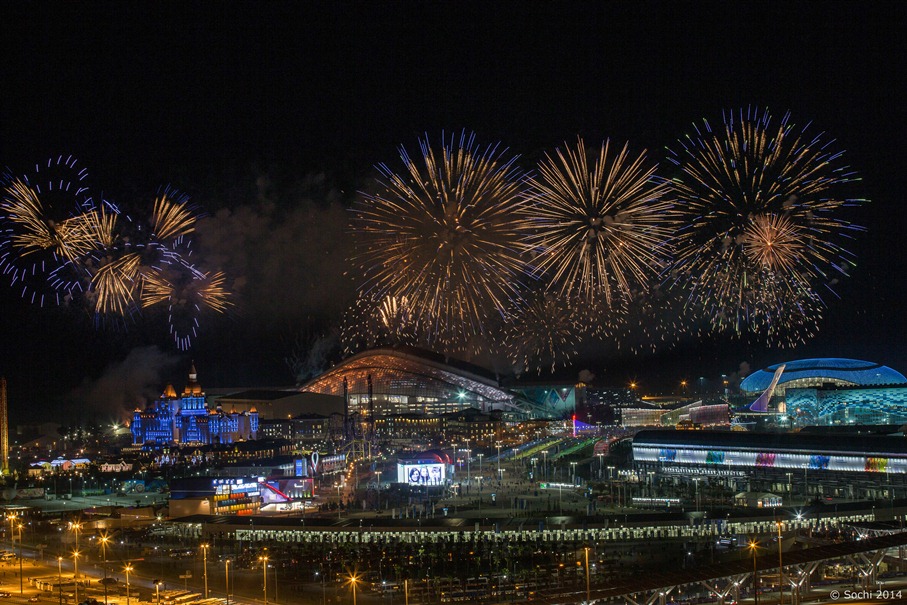
At the recent Olympic Winter Games in Sochi, the opening and closing ceremonies dazzled audiences around the world. Spectacular, theatrical and hugely sophisticated, they exemplified the fact that, although a competition may have several venues, the main stadium remains the focal point of every major event. But how can a stadium meet the huge technical demands of these events, and their capacity criteria, while still being able to adapt for a long-term legacy once the main event has finished?
The solution lies in the integration of the permanent and temporary. It’s only by including temporary structures and seating in the initial design that buildings gain the flexibility they need to adapt to a changing set of needs. In Sochi, for example, we incorporated temporary seating that will allow the Olympic Stadium to expand to accommodate the 45,000 seats required for the 2018 FIFA World Cup, before reducing to a final legacy capacity of 25,000 for the local football team.
Similarly, the Incheon Stadium, which will host the 2014 Asian Games, is a 70,000 seat stadium that will reduce to 30,000 seats, thanks to our design that has one permanent seating stand and three temporary ones, destined to become park landscaping for the city’s residents and visitors to enjoy once the temporary structures are removed.
This flexible approach has its roots in Populous’ design for Sydney’s Olympic Stadium, now the ANZ stadium, where an initial capacity of 110,000 seats was reduced to 83,000 after the Games by removing the end stands and reconfiguring the roof. By the London Olympics in 2012, our thinking had evolved to focus on design as a whole, rather than construction. We broke the Stadium down into its constituent parts to explore how a building could be planned from the outset to transform itself and be fit for a long-term legacy – and the result is a multi-purpose Stadium of 60,000 seats (reduced from an Olympic capacity of 80,000) that is capable of hosting IRB World Cup Rugby and Premier League football as well as concerts and other events.
Designing in this way has inherent challenges: namely, ensuring that at each stage of its evolution the building has architectural merit – during the event itself, when the focus of the world’s media is on the stadium; and afterwards, when visitors and residents must appreciate and use it as part of the city’s fabric. In addition, although the end goal of the design is the same – to reduce in scale after the main event – this can’t be achieved by a ‘one size fits all’ approach. Each stadium has unique requirements and these must be reflected in innovative design solutions.
At Populous, our understanding of a stadium’s cultural significance means that we’re constantly devising innovative ways to balance the cultural and technical needs of the main event with the social responsibility of designing buildings that have a long-term legacy. It’s a journey that, for us, began in Sydney in 2000 and will, we are sure, continue to challenge and fascinate far into this century and beyond.
This article was written by Populous principals Ben Vickery and Tom Jones
Category: Sporting Venues
-
Back to the future: designing for the main event and beyond
-
Glasgow 2014’s new running track revealed
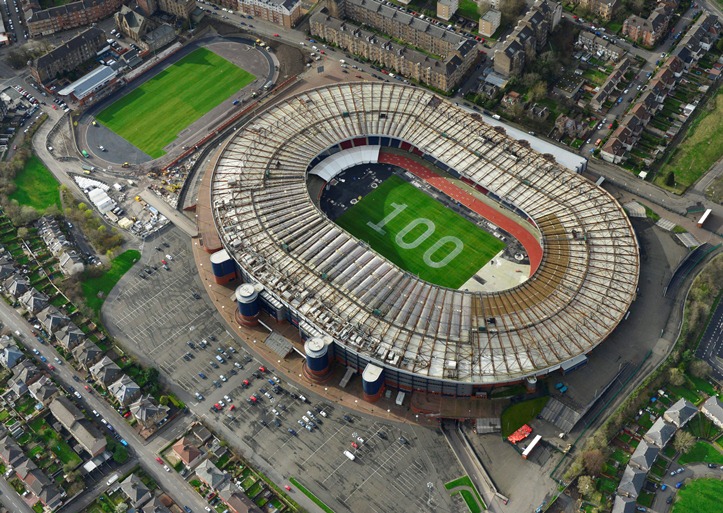
Glasgow 2014 has marked the milestone of 100 days to go until the start of the Commonwealth Games by painting a giant “100” on the pitch of Hampden Park stadium.
Scotland’s national football stadium is in the process of being transformed into an athletics venue for the duration of the Games. Arial footage released today shows that the venue’s transformation is virtually complete.
To attain the width required for the track and field events, as specified by IAAF standards, the ground had to be raised by almost 1.9m using a revolutionary technique. A deck weighing over 1,000 tonnes was made using 6,000 steel posts and 1,200 panels. A further 16,000 tonnes of stone, tar and rubber are now being placed on top of the deck.
Hampden will be the centrepiece of the Games, with more than a thousand athletes competing in more than 48 events in seven days of competition. The venue will also host the closing ceremony, when Glasgow 2014 will hand the Commonwealth flag over to the Gold Coast, hosts of the 2018 Commonwealth Games.
The new aerial shot also shows Lesser Hampden, which has had a new pavilion built to provide athletes with warm-up facilities.
“It is now just 100 days to go until the start of the Glasgow 2014 Commonwealth Games, the biggest sporting and cultural festival Scotland has ever hosted and the UK’s next big sporting occasion,” said Lord Smith of Kelvin, KT, Chairman of Glasgow 2014.
“We are entering the home straight now and these last 100 days are our opportunity to do the final work necessary to ensure that we deliver an outstanding Games for Glasgow, Scotland and the Commonwealth.”
Glasgow 2014, the XX Commonwealth Games, takes place from 23 July to 3 August when 4500 athletes will compete in 17 sports, with 1,000,000 tickets on sale. To find out more, read the exclusive interview with Chief Executive David Grevemberg in the next issue of HOST CITY magazine.
-
São Paulo World Cup stadium faces tight deadlines
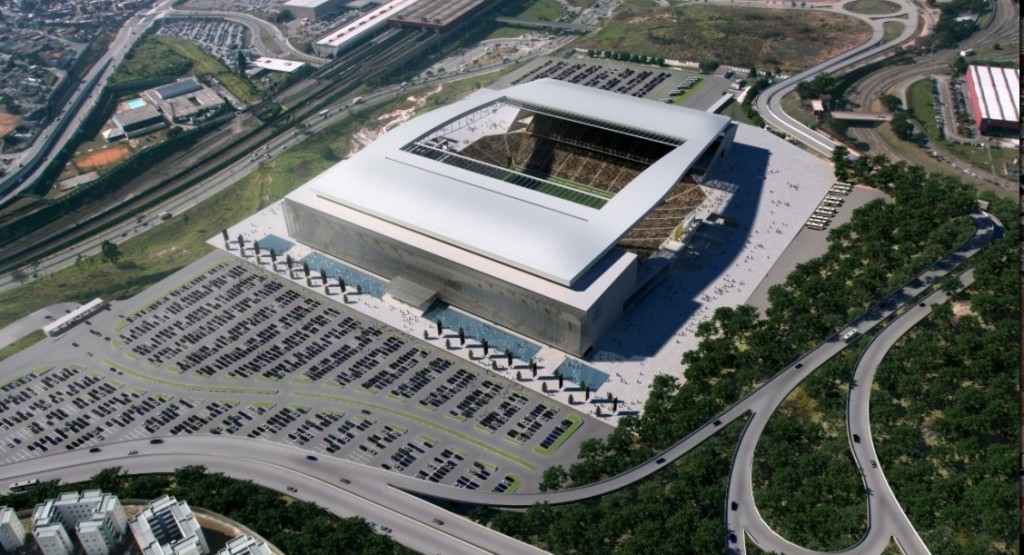
FIFA secretary general Jerome Valcke met with key figures in delivering the World Cup in Brazil on Wednesday to establish a rigorous framework for completing outstanding infrastructure work around Itaquerão stadium.
Construction works surrounding the stadium have to be completed be ready by 28 April, while temporary seating inside the stadium must be installed by 10 May, according to local media attending the meeting. A number of test events, starting on 28 April, will take place to ensure the readiness of the venue, which is also known as Arena Corinthians.
Valcke surveyed Itaquerão on Tuesday with Sports Minister Aldo Rebelo and Ronaldo Nazario, board member of the Local Organising Committee. “There is still much work to do; it’s a race against time, but I can say that the opening match will take place here in the Corinthians stadium,” Valcke is reported to have said.
At a meeting on Wednesday, the deadline for construction work outside the stadium, for which responsibility is shared between the municipal and the state government was set for 28 April. The deadline for completing temporary seating was set for 10 May.
A walkway that connects the subway station to the stadium will also be completed in May, according to Julius Semeghini, state secretary of planning and regional development.
FIFA has also been monitoring road works around the stadium. According to local media, Rebelo said at the meeting “I had the opportunity to move around the vicinity of the stadium before entering to see the urban mobility works underway. I saw some completed, others in an advanced stage.”
Some small events to test the structure of the stadium have been scheduled for the 26 April, 1 May and 10 May, before FIFA’s evaluation. “The important date is the FIFA test game on 17 or 18 May. We will able to find out if everything is working and we will still have a period of three weeks to solve problems,” Valcke is reported to have said.
50,000 people are expected to come to the FIFA test event. According to Semeghini, the event will serve to assess the functioning of the integrated command and control centre, the security strategy established for the World Cup host cities. -

Qatar World Cup could be hosted in three cities
The number of host cities and venues scheduled to host World Cup matches in 2022 is under review and may not be confirmed until September, a spokesperson for the Supreme Committee Delivery and Legacy told HOST CITY.
“In due course, the final proposal for stadia will be submitted to the FIFA Executive Committee for approval. The requirement is a minimum of eight and a maximum of 12 stadia,” the Supreme Committee for Delivery and Legacy said in a statement emailed to HOST CITY.
Qatar’s World Cup bid originally proposed an event with 12 venues encompassing all seven municipalities in Qatar. Four venues were planned for Doha, three for Al Rayyan and five for each of the other municipalities.
One possible outcome of the review would be to only use four venues in Doha, three in Al Rayyan and one in Al Wakrah – where the first new stadium is for the World Cup is already being built. This would mean that just three of Qatar’s seven municipalities could host World Cup matches.
“Once a country is chosen as host, a review of the bid plans is made with the organisers to propose the final host cities and stadia projects, which then need to be approved by the FIFA Executive Committee,” the Committee’s statement said.
“For Qatar, the process of selecting the final proposed line-up of host venues is ongoing.”
Asked when the venue selection would take place, the spokesperson said “It is logical to assume that the decision by the FIFA Executive Committee will occur after the 2014 FIFA World Cup in Brazil. In comparison, Russia’s Host City Selection occurred on 29 September 2012.”
Russia’s bid for the 2018 World Cup originally proposed 16 stadiums in 14 host cities, which was reduced to 12 stadiums in 11 cities.
The spokesperson declined to comment on what factors might influence a decision to reduce the number of host cities. Possible reasons include the time and investment required for venue construction, coupled with the scale of civic infrastructure work scheduled for Qatar over the next decade.
The need to safeguard legacy use for all World Cup stadiums after 2022 is also likely to influence the review. -
Rio Olympic spending rises as race begins
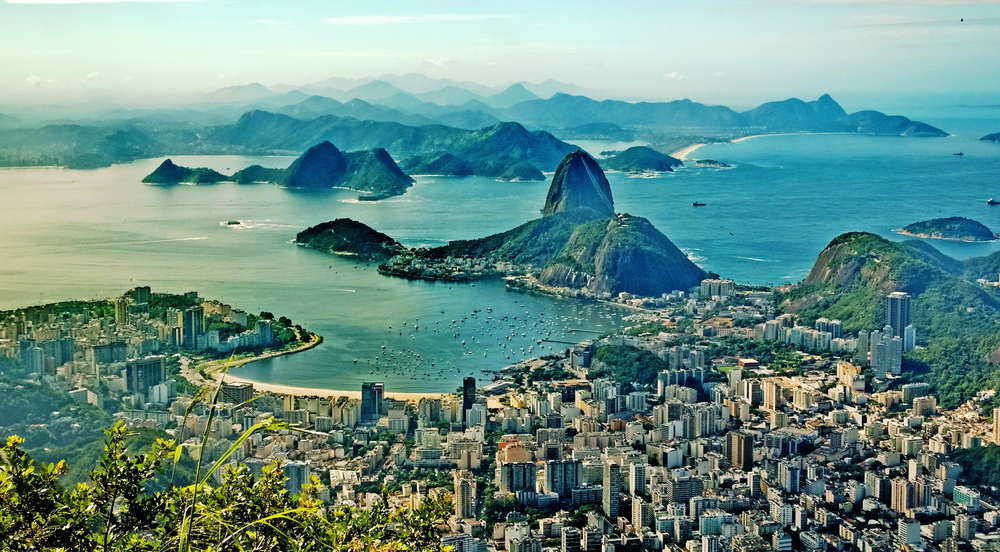
The mayor of Rio de Janeiro on Thursday announced opportunities for construction companies on the Deodoro Sports Complex, admitting there is no time to spare.
Meanwhile, the Brazilian authorities have announced a US$10.8bn budget for civic infrastructure works, amid widespread concerns about the city’s readiness. Gilbert Felli, director of Olympic Games at the IOC, has introduced an unprecedented level of oversight over preparations.
Speaking to Bloomberg News on Wednesday, Paes said “[The IOC’s] presence is very good, because we are going to show them we have no reason for concern.”
Construction work is now moving forwards quickly. The Mais Rio construction consortium announced on Thursday that a two-week-long strike at the Olympic Park was over. Speaking at a press conference, Paes said “The Olympic Park is going so well that even with the strike, we haven’t noticed a deviation [from the timeline].”
The biggest concern is over the Deodoro Sports Complex. “We’re left without any time to lose in Deodoro; we can’t have any errors there,” said Paes.
The government of Rio de Janeiro formally invited companies to bid for construction work on Deodoro on Thursday. The work is being divided into two blocks. Contracts will be awarded to the lowest bidders and are expected to go for a total of US$358m of public funds.
Paes said “We ended up without time to burn, but the equipment is much simpler than at the Olympic Park.”
Rugby sevens
One of the sports to feature at the delayed Deodoro Sports Complex is rugby sevens, which will take place in a 20,000 temporary venue to be built nearer the time.
“Following a constructive meeting with the other sports in the Deodoro Zone and Rio 2016 at SportAccord last week, we believe that the location has the potential to deliver a vibrant festival hub and a great experience for athletes and fans,” a spokesperson for the International Rugby Board (IRB) told HOST CITY on Thursday.
“However, for this to be achieved, it is essential that planning and preparations for the Zone and required infrastructure now move forward rapidly.
“As a new sport on the programme, we do not get a second chance to make a first impression. It is important all involved maintain an on-going and fully collaborative dialogue regarding venue planning, schedule integration, logistics and overall fan experience and we will continue to do all we can to support Rio 2016 and the delivery of a spectacular and memorable debut for Rugby Sevens at the Games.”
The IRB’s statement follows their chief executive Brett Gosper’s comments to the Daily Telegraph on Wednesday that “We’re more worried about actual infrastructure, public transport from other parts of Rio, to get teams and spectators out to that Deodoro Zone area.”
Conscious that civic infrastructure also needs to be upgraded quickly, Brazilian authorities have announced an infrastructure budget for the Games of US$10.8bn. The budget is 25 per cent more than originally planned, accounting for a new fourth metro line and other new projects that have pushed costs up for the host city.
-
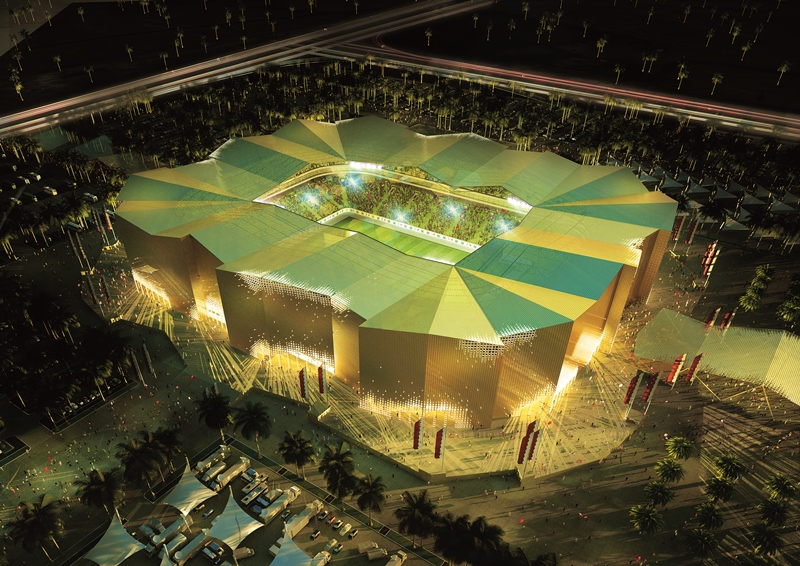
Qatar’s size is a factor in reducing number of venues
The Supreme Committee for Delivery & Legacy for the 2022 FIFA World Cup in Qatar has confirmed that the size of the host nation is a factor in the decision to consider reducing the number of host venues to as few as eight.
“The process of selecting the final proposed line-up of host venues is ongoing in consultation with FIFA,” the Supreme Committee for Delivery & Legacy said in a statement.
“Given the size of our country, FIFA and the Local Organising Committee decided to look into reducing the originally proposed 12 venues to fit the country’s specifications while ensuring best playing conditions for all 64 matches. ”
The statement reiterated the fact that eight is the minimum of number of stadiums generally requested by FIFA for a World Cup.
“The 2022 Local Organising Committee will submit by December 2014 a proposal for an appropriate number of host venues, whilst ensuring a suitable legacy for the country and the national league after the tournament. The approval of the final number of stadiums is envisaged by the FIFA Executive Committee by March 2015.”
-
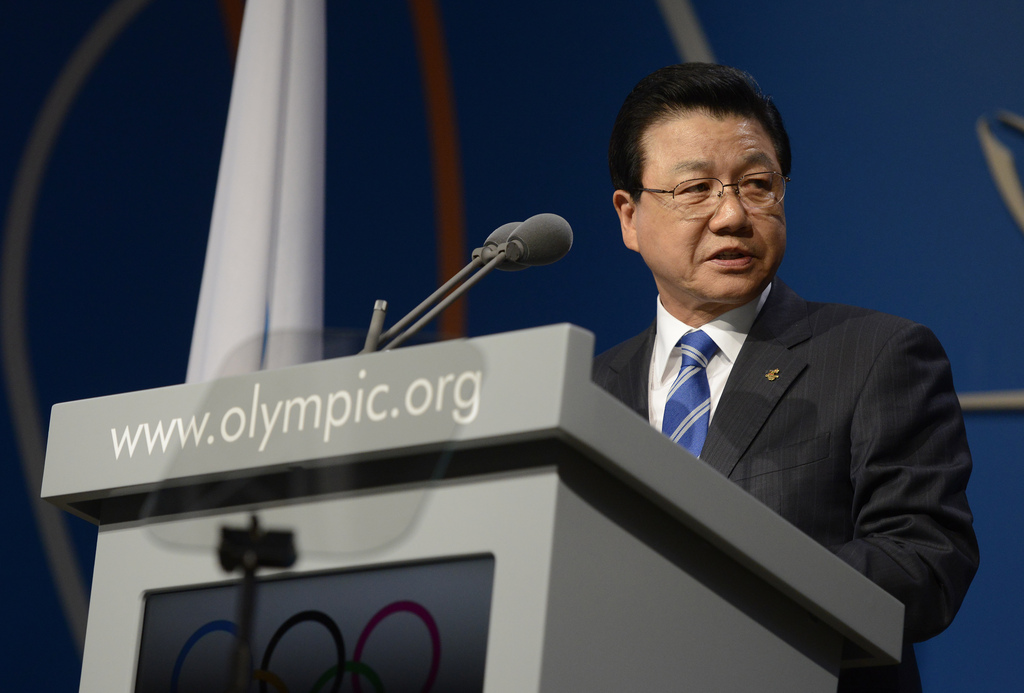
IOC urges PyeongChang to stick to deadlines
The International Olympic Commission (IOC) Coordination Commission on Thursday completed its third inspection visit of PyeongChang, the host city of the 2018 Winter Olympic Games, concluding that progress was good but that work could not be allowed to slip behind schedule.
The Commission highlighted transport management, accommodation contracting and developing the Mountain Olympic Village as areas where timeframes are particularly “tight” for the PyeongChang Organising Committee of the Olympic Games (POCOG).
Venue construction, test events, marketing and Games services have also been identified as “key areas that require POCOG’s focus over the next six months,” the IOC said in a statement.
“We were able to see that a large amount has been accomplished by POCOG and its partners since our last visit in June 2013,” said Gunilla Lindberg, chair of the IOC coordination commission. “The 2018 Games are on the right track but it is clear that much work remains.”
POCOG President and CEO Jin-sun Kim said: “The eyes of the world are now on PyeongChang.
“This year is a big turning point for us. We must establish a solid framework. As I always stress, we have no time to practise and no time for trial and error. We will streamline our Master Schedule and set our priorities straight so that everything runs smoothly according to the timeline.”
The IOC said in a statement: “With timelines tight for the completion of accommodation contracting, the development of the Mountain Olympic Village and the transport management plan, the Coordination Commission encouraged POCOG to ensure that the appropriate focus and resources were dedicated to these important areas.”
Construction companies are being appointed for venues and some construction is underway. The commission “underlined the need for timelines to be carefully defined and adhered to, so as to avoid any impacts on test events.”
The IOC will undoubtedly be keen to avoid a situation like Rio 2016’s, where construction is critically behind schedule.
The commission also highlighted the need to prepare for the non-infrastructural aspects of test events, saying “the hiring and training of staff and volunteers should also begin in the near future”.
In the field of marketing, POCOG is in the process of finalising its first domestic partnership contract to build on progress so far.
“The awareness of the PyeongChang 2018 Olympic Winter Games has been strengthened by the success of PyeongChang House in Sochi, and the very innovative Closing Ceremony segment, which presented the 2018 Games to a worldwide audience of millions,” the IOC said. “The Commission encouraged the local organisers to continue to engage and promote their Games at this high level over the next four years both at home and abroad.”
The meetings in PyeongChang were attended by all levels of government. “The participation of the International Federations, the Korean Olympic and Paralympic Committees, and the Korean national winter sports federations was also very beneficial and allowed POCOG to engage in in-depth discussions on all topics related to the venues and sport,” said Lindberg.
“We are confident that POCOG and Korea will deliver great Games for the athletes in 2018.”
In June, PyeongChang will host the official IOC Debriefing of the Sochi 2014 Winter Games. The fourth Coordination Commission visit to PyeongChang will take place at the end of November 2014. -
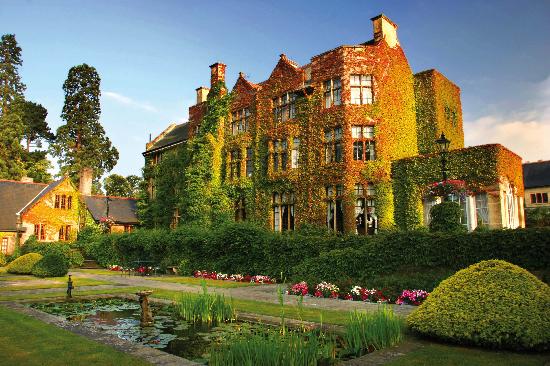
England Rugby facility to be kitted out by SIS Pitches
SIS Pitches has received an order to install a new indoor rugby training pitch for England Rugby Union.
The facility at the prestigious Pennyhill Park Hotel in Surrey, UK is the official training base for the England Rugby Union senior team, who first used the facilities in the run up to the Rugby World Cup in 2003.
Pennyhill Park is located just 40 minutes from the national stadium at Twickenham. The squad is residing and training at the hotel before all international fixtures for the next four years.
The new pitch will use the SIS Rugger surfacing system that SIS Pitches installed at Allianz Park, home of Saracens Rugby Club in 2013. Other installations include Newcastle Falcons and Durham University.
The installation at Pennyhill includes the base layer, shockpad and surface and is due to commence in June 2014.
According to SIS Pitches, SIS Rugger has proven durability and long lasting playing characteristics even after intensive use, and is easier to maintain than traditional fibrillated surfaces.
“The contract was won despite keen interest from other suppliers and we are delighted to have been selected for this prestigious project,” said Steve Spaven, Director of Sales at SIS Pitches.
-
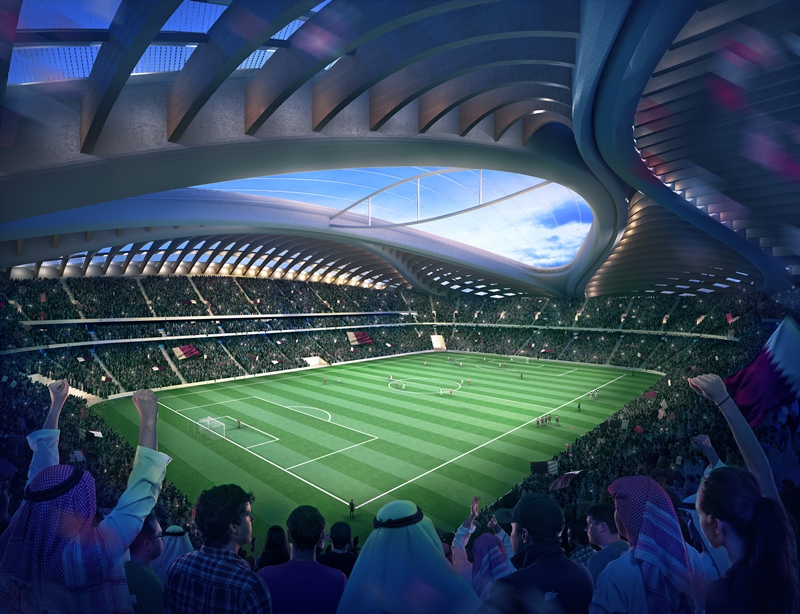
Al Wakrah groundwork contract awarded to local firm HBK
The Supreme Committee for Delivery & Legacy has awarded HBK Contracting Company the enabling works contract for Al Wakrah stadium, the first proposed host venue to be delivered ahead of the 2022 FIFA World Cup.
The contract was awarded through a tender process designed to attract Qatari contractors with local knowledge and proven capability in delivering the required services, as part of the Supreme Committee’s legacy initiative to develop the private sector.
The enabling works phase begins in May and is due for completion by around March 2015. During this period, HBK will deliver bulk earthworks including site clearance, excavation and disposal, fill, as well as underground services and stadium foundations. The foundation works will be marked by a ceremony in September.
The main construction company for the stadium will be announced at the end of 2014. The successful candidate for this tender will partner with a local business, in line with the Supreme Committee’s effort to boost the expansion of the Qatar economy.
“We are excited to announce the next stage of works for Al Wakrah Stadium and look forward to continued progress on the ground this year,” said Hassan Al Thawadi, Secretary General of the Supreme Committee for Delivery & Legacy. “The stadium and surrounding precinct will leave a social legacy in Al Wakrah and by appointing HBK, a Qatari company, we aim to also contribute to the economic legacy of the FIFA World Cup in Qatar.”
H.E. Sheikh Ali Bin Hamad K. Al-Thani, President of HBK, said: “We are honoured and excited to be appointed by the Supreme Committee as the contractor for this critical first phase of works on the road to the FIFA World Cup in 2022, and look forward to working closely with all stakeholders to help build the first World Cup in the Middle East and achieve our country’s ambitions. We thank the Supreme Committee for giving us this opportunity to be involved in this most celebrated journey.”
The 40,000-seat stadium, future home of Al Wakrah Sports Club, was the first of Qatar’s FIFA World Cup proposed venues to be revealed. The stadium will be surrounded by approximately 560,000 m2 (60-hectare) of legacy precinct with a new sports centre and community hub. The precinct will deliver a range of community facilities, including a park, mosque, school, hotel, wedding hall, vocational training centre and retail outlets.
Following the tournament, the stadium’s capacity will be reduced to 20,000 with the extra modular seats removed, re-configured and donated to countries in need of sporting infrastructure, in consultation with FIFA and the continental football confederations.
After an initial inspection during the tendering process of the facility where the HBK workers on the Al Wakrah project will be housed, HBK confirmed their commitment to adhere to the Supreme Committee’s Workers’ Welfare Standards, working closely with representatives of the Workers’ Welfare Committee to ensure that the health, safety and dignity of workers on the project are further protected.
Farah Al-Muftah, Chairwoman of the Workers’ Welfare Committee, said: “We started a dialogue with HBK on our expectation for workers welfare during the tendering process and we are encouraged by the company’s commitment to creating a healthy and safe environment for workers on the Al Wakrah Stadium project.”
-
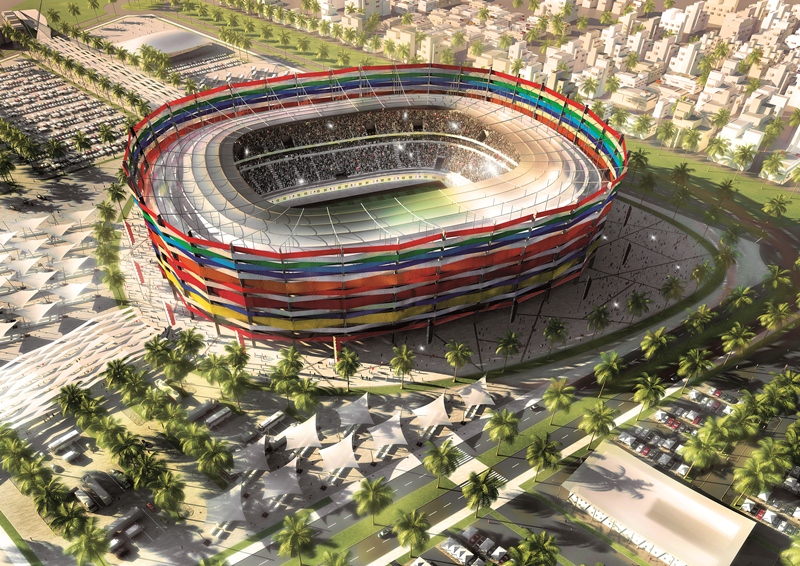
Qatar stadium build steps up with major congress
As Qatar’s preparations for the 2022 FIFA World Cup enter the construction phase, the World Stadium Congress brings architects, solutions providers and stadium operations consultants to Doha on 19th May 2014.
This year’s World Stadium Congress, organised by IQPC, will focus on stadium design, sustainability and construction challenges.
ASTAD Project Management’s H.E. Ali Bin Nasser Al Khalifa and SPOR SANAYI’s Yasar Meral will open the first day of the conference with keynotes on world-class sporting infrastructure.
H.E. Ali Bin Nasser will provide an insight into the highly anticipated FIFA World Cup in Qatar in a session titled “Delivering world-class infrastructure to support Qatar 2022.”
“Exceptional project management will play a critical role in the delivering a memorable mega-event,” said H.E. Ali Bin Nasser.
“We will draw from ASTAD’s significant experience building sports facilities in Qatar, but it is also important for senior stakeholders within the industry to share their expertise and knowledge so that we may identify solutions to common challenges and ensure continuous improvement in design and construction.”
Tariq Al Abudulla, General Manager of the Qatar Olympic Academy and Head of Technical Affairs at the Qatar Olympic Committee, will follow with a keynote address on Day Two, laying out the Qatar Olympic Academy’s unique Sport Venue Management programme.
Other speakers include Jon Sellins, head of business development consultancy at Wembley Stadium, who will draw from the Champions League Final 2013 to convey best practices in hosting and facilitating major sporting events.
Sustainability is the keyword at this year’s conference. “It is important to us that the lasting impact of our stadiums on the community is a positive one,” said Diogo Taddei, architecture manager at AECOM, Brazil.
“In designing the sporting and non-competition facilities for the Olympic and Paralympic Games in Rio de Janeiro, we took Rio’s and Brazil’s sporting ambitions into account and focused on the provision of a cost-efficient design for permanent and temporary venues. The legacy conversion plan cannot be overlooked.”
Dan Meis, global director of sport at Woods Bagot, will also discuss stadium legacy and community integration, showcasing AS Roma’s new €700m stadium as a mixed-use sports and entertainment destination.
“Given the number of stadiums that are being contemplated for the region, it is very important to discuss how we can ensure that these venues continue to benefit the community beyond the tournaments for which they were built,” he said.
The congress will also feature panels, case studies and roundtable discussions. Meis, Taddei, Mark Fenwick of RFA Irribarren Architects, and Markus Pfisterer, director of GMP Architekten, will sit on a panel on trends in stadium design.
J Parrish, Director of Global Sports, AECOM, UK, event chair Paul Hyett of HKS Architects will also feature in roundtable discussions, along with representatives from Honeywell and Grundfos.
This year’s World Stadium Congress will host a financial perspective for the first time. Nermine Nassif Girgis Ishak, Head of Corporate Banking at Al Khaliji Commercial Bank will deliver a talk entitled “Financing growth and capitalising on development opportunities,” an examination of opportunities in the Qatar projects market for local and international players.