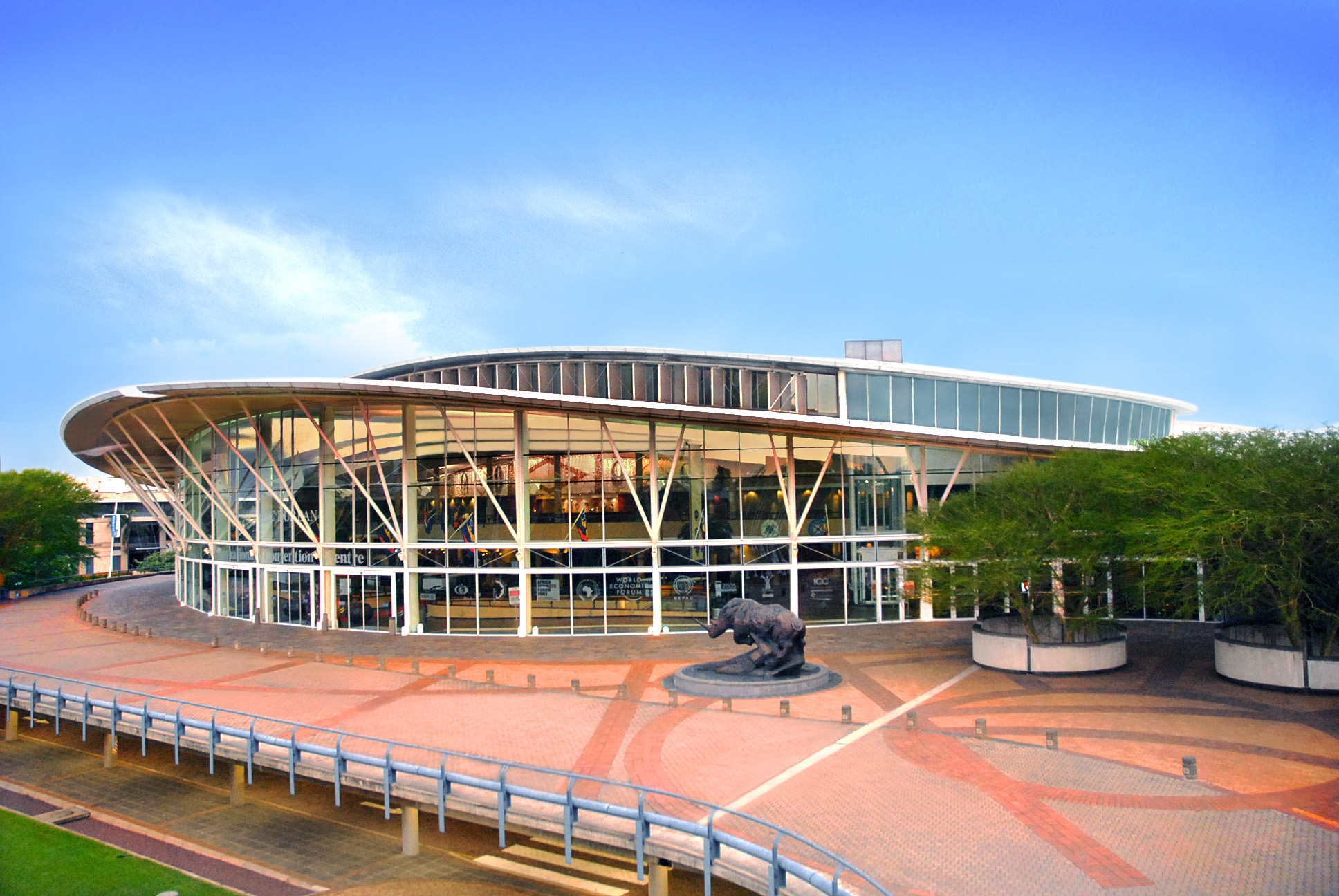
The next decade is set to bring increasingly rapid growth for the meetings, incentives, congresses and exhibitions (MICE) industry in Africa as the continent achieves higher economic growth, according to Derek Hanekom, Minister of Tourism for South Africa.
“The potential of Africa for the MICE industry is exponential,” Hanekom told delegates at ibtm world in Barcelona.
“The tide has turned, we can see that our growth opportunities are now also within the African market. There are 770 registered African Associations on the ICCA database. 178 of these are based in South Africa and 592 on the rest of the continent and 218 regional conferences were registered on the continent in 2014 resulting in 610 events over the last five years. South Africa only hosted 63 of these events in the past 5 years,” said Minister Hanekom.
South Africa hosted 124 international association conferences in 2014, which attracted just below 70,000 industry professionals. Of these 124 conferences, 81% were international rotating events.
Since its inception three years ago, the South Africa National Convention Bureau (SANCB) has successfully bid for 163 business events between 2016 and 2020, which are expected to bring over 150,000 delegates to South Africa and contribute approximately R3.1billion to the economy.
“South Africa offer the business events industry excellent value for money, deliver authentic, memorable and enriching experiences in one of the most captivating, safest and beautiful countries that I am proud to call my home,” said Hanekom.
It was also announced that the European Cities Marketing (ECM) programme has extended its reach to South Africa, hosting an ECM Academy in South Africa just before the 2016 edition of Meetings Africa.
“We are really thrilled to have our first ECM Academy organised in South Africa,” said ECM President Ignasi de Delàs at ibtm world.
“It’s a new landmark in ECM development to host the derived version of our successful ECM Summer School. The ECM Academy is a tailor-made course for partner organisations outside Europe.
“We will do our maximum to guarantee the success of the ECM Academy in Johannesburg by maintaining the highest standard of course content, recruiting the best speakers, and giving the latest examples showcasing the most up-to-date trends in the Meetings Industry.”
Blog
-
Africa anticipates faster growth in business events
-
How can future tournaments remain sustainable? The solution is in the format
Since the original Olympics Games in Ancient Greece, tournament format has remained the same: Round-Robin Groups and Direct Elimination (play-offs). The usage of these formats has caused several issues that organisers have failed to solve.
One major issue is flexibility in the number of participants and matches. Then there is the existence of low-value or “dead” matches, where teams have nothing to play for because they’ve already qualified for the next round or have been eliminated.
Match-fixing is another problem. In London 2012 for instance, eight female badminton players were disqualified from the tournament due to their attempts to lose their matches on purpose to get an “easier” rival in the next round.
Losing or drawing a match on purpose for the benefit of both sides is something that we see in almost every big tournament. In an attempt to address this issue, matches on the last day of group stages are played simultaneously in many big tournaments, such as the UEFA European Championship and FIFA World Cup. This precautionary move, which followed the “Disgrace of Gijon” in the 1982 FIFA World Cup, can be devastating for fans, sponsors and broadcasters and creates further problems.
Having the last two matches of a group played simultaneously means that two stadiums must be used for each group, so teams must travel from one city to another. In a group of four teams the only way to make teams have the same amount of travels, to ensure fairness, is by making all teams travel twice – that is, playing the first match in one stadium, the second in another and a third stadium for the third match. Having all teams travel once is impossible mathematically, and zero travel is not an option when staging matches simultaneously.
Travelling twice during the group stage can involve a large amount of air travel. For instance, In 2014 FIFA World Cup the United States national team had to travel from Natal to Manaus and then to Recife, a total distance of nearly 6,000 miles.
MatchVision, a company based in Chile, has the solution for this and the associated issue of flexibility in the number of participants in a tournament. In 2003, FIFA expressed an interest in raising the number of participants in the World Cup to 36, but declared it impossible as they couldn’t find a fair and simple way to select 16 teams advancing to the Round of 16.
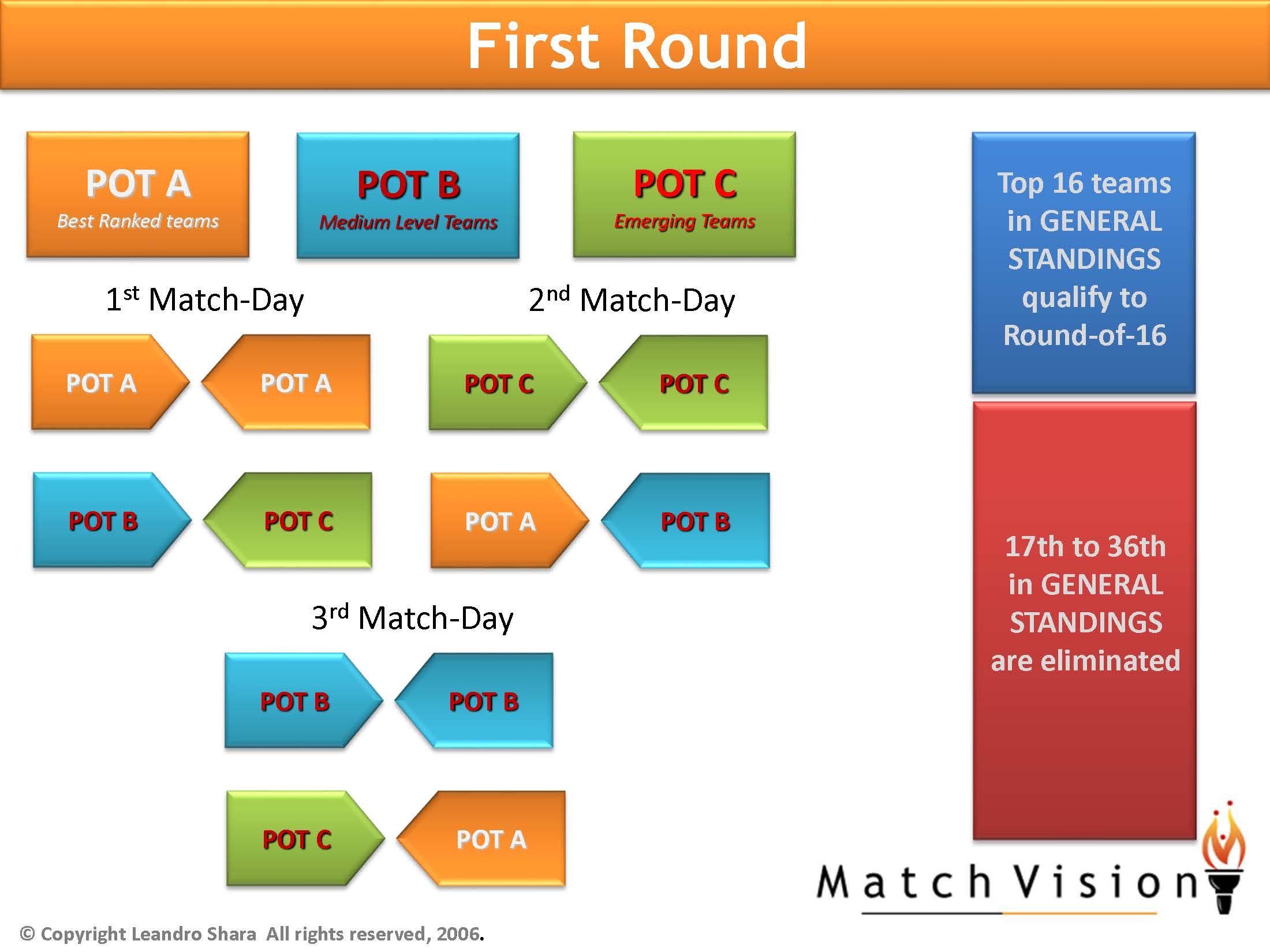
After hearing that declaration, Leandro Shara, MatchVision President and founder, knew he had the solution for it – the POT System ©. Under the POT System © there are no groups; instead, the teams are divided into POTs, depending on the number of matches of the first round.
For instance, a FIFA World Cup with 36 teams would have three POTs, each one containing 12 teams, based on ranking – POT A would have the strongest teams, POT B the medium teams, and POT C the emerging teams. Each team, no matter which POT it is placed in, would play three matches, one against a team from POT A, one against a team from POT B, and one against a team from POT C. For instance, Germany would meet Argentina from POT A, Croatia from POT B and Jordan from POT C. On the other hand, Jordan from POT C would meet Germany (A), as well as Uruguay (B) and Costa-Rica (C).
The POTs are not groups, instead we will have one General Standing of the 36 teams, and after three match days the best 16 would qualify to the next round, fair and simple. Moreover, in the Round of 16 the 1st would face the 16th, the 2nd would face the 15th, etc. That means that teams would want to finish as high as possible to have an “easier” rival in the next match.
This will bring a revolution in the strategy of winning tournaments: the best way would always be, for the first time, to win all matches. It also kills the chances of score manipulations, as teams would not depend just on their match and one additional match (in a four-team group), but on their match and results from the other 17 matches.
Eliminating the possibility of score manipulation would allow all matches in the first round to be played at different times, so spectators around the world could watch all matches live. Additionally, we can ensure that all teams travel exactly once in the first stage and travel the shortest distance from their “home” base. This means that if each host city has another host city within 500 miles or less, than maximum travel for a team would be 500 miles, even if host cities are spread over an entire continent.
The opportunities don’t stop there. MatchVision has developed more than 30 solutions giving flexibility to tournaments. So for instance, the Olympic Volleyball competition could have 10 teams instead of 12, with teams still playing five matches in the first round, or to increase the number of teams in the Badminton tournament from 16 to 18, a 12 per cent increase, instead of the usual 50 per cent or 100 per cent increase caused by the rigidity of Groups and Play-Offs formats.
The inflexibility of the traditional tournament formats has created absurd situations, like the ATP World Tour Finals, which is played by eight players, even though the entire world of tennis, including the ATP website itself, talks always about TOP-10. To have a clearer picture of things, the phrase TOP-10 is googled 25 times more than TOP-8. The only reason just 8 players enter the O2 Arena is due to format restrictions, and thus we adjust the reality to the format.
It is time to turn that upside down and adjust format to reality, using tournament formats developed in the 21st century. The format revolution is coming.
-

Manchester wins Internet of Things bid
A project in Manchester designed to improve services for citizens has won the “Internet of Things Cities” competition.
The CityVerve Project, which optimises services using the Internet of Things (IoT) technology, received the GB£10m award.
The project, led by Greater Manchester Local Enterprise Partnership, was selected out of 22 entries involving 34 cities across the UK and with a shortlist of six finalists.
UK Digital Economy Minister Ed Vaizey said the Manchester project won because of its “ambition, scale, coordination across the public and private sector, and potential for success.
“The Manchester project will help the UK to be a world leader in the adoption of Internet of Things technologies and inspire others around the world to create smarter cities.
“The Project will bring real benefits to people who live and work across Manchester, one of our Northern Powerhouse cities.”
The CityVerve Project includes plans for talkative bus stops, which let bus operators know when commuters are waiting, and a network of sensors in parks and along commuter routes to encourage people to do more physical activity.
IoT adds sensors and data analysis to equipment like streetlamps, vehicles or home heating equipment. These ‘smart’ improvements enable the delivery of more personal, efficient and flexible products and services.
“The pioneering work Manchester is doing on devolution, finding innovative ways to respond to local needs and priorities, makes us the perfect test bed for this work,” Sir Richard Leese, leader of Manchester City Council said on behalf of the CityVerve consortium.
“Our plans are firmly focussed on creating the conditions for economic growth and helping connect people with the opportunities created – whether that’s helping them to monitor their own health to help avoid preventable illness or giving them improving transport information to help them move around the city more easily.”
The CityVerve project will demonstrate applications of IoT technologies and services in four key areas: healthcare; transport; energy and environment; and culture and community. It aims to provide a replicable model for other cities in the UK and beyond.
IoT is a major area of growth that is set to have a transformative effect on society. A recent report by independent consultants Arup estimates that the global value of the IoT sector will exceed £255 billion a year by 2020.
IoT is one of the four components of RAID, which comprises the disruptive technologies of Robotics, Artificial intelligence, Internet of things and big Data.
To harness the potential of these disruptive innovations, city and business leaders are meeting at the large scale RAID Confex in Utrecht on 31st May and 1st June 2016. To find out more visit www.raidconfex.com
-
Renewing the trust in sport
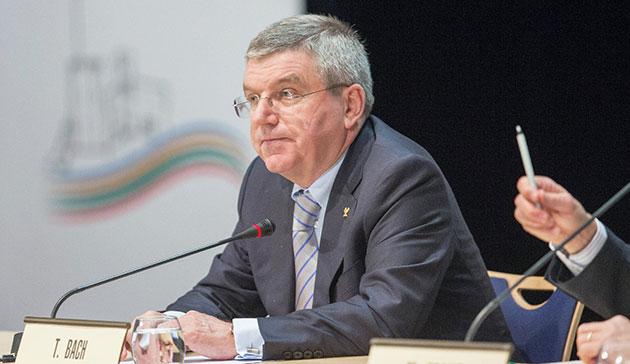
As an Olympic medallist, recent developments in some sports are particularly upsetting. What saddens me most as a former athlete is that they erode the trust in the clean athlete. Clean athletes who push themselves day in day out pursuing their dreams see the finger of suspicion pointing at them. This is the very worst ‘side-effect’ of doping.
We must do everything we can to protect these millions of clean athletes around the world. For their sake and for the credibility of sports competition, they have to be protected from doping and corrupting influences. We also have to protect the credibility of sports competition from match-fixing and manipulation. The IOC has created a specific 20-million US dollar fund for the protection of clean athletes. This comes on top of overall international investments of an estimated 500-million US dollars for around 250,000 anti-doping tests a year, among other initiatives. The IOC has a zero-tolerance policy against doping and any kind of manipulation and corruption.
Doped athletes already face a four-year ban from any kind of sports competition for their first infringement. This means an effective ban from the next edition of the Olympic Games. As a young man, I called for life bans even for the first infringement. Unfortunately, such a sanction would not be upheld by any judicial court. But what we can do is making the anti-doping system more independent from sports organisations. In this respect, the IOC took the initiative to ask the World Anti-Doping Agency (WADA), the international authority in the fight against drugs in sport, to consider taking over testing programmes from the international sports federations. The IOC also proposed that the Court of Arbitration of Sports (CAS), the highest judicial body for the sports world, take over all sanctioning of doped athletes.
Zero-tolerance also means all nations and all sports have to be compliant with WADA’s rules. On this front, sport requires the support of governments. Let us not forget that governments have a 50% stake in WADA. Governments need to make sure that their national anti-doping authorities are WADA-compliant. Governments also have to ensure dealers, corrupt doctors and coaches are punished with the full force of the law.
Protecting the clean athlete goes hand in hand with ensuring that the environment in which the athletes operate is safe from corrupting influences. To fight manipulation in sport and specifically match-fixing and illegal betting, the IOC and the International Sport Federations are already working closely with police, betting operators and regulators around the world. Recognizing the international nature of organized crime, the IOC is also engaged with Interpol to safeguard the integrity of sport.
Fighting corruption also means that good governance for sporting organisations is essential. The IOC has put the necessary measures in place since a long time. More recently, the reforms passed in Olympic Agenda 2020 exactly one year ago, ensure internationally recognized standards of governance. As a result, all our accounts are audited at a higher international financial reporting standard (IFRS) and we are publishing everything in our annual report, as is common practise in the corporate world; we have term and age limits for all IOC Members; we have a chief ethics and compliance officer, an audit committee and an independent ethics commission. We have called on and we expect all sports organisations to follow this route. All these measures and others, which are publically available, allow the IOC to distribute over 90% of our revenue – that is $3.25 million each and every day – back to athletes and world sport.
The recent discussions on these issues show the huge significance sport has in our society. Sport has the power to make the world a better place. If these good governance measures are adopted and the zero-tolerance policies are followed by all sport organisations, there is a very bright future for sport. As Nelson Mandela said: “Sport has the power to change the world.” Yes, these are difficult times for sport. But yes, it is also an opportunity to renew the trust in this power of sport to change the world for the better.
This opinion piece by IOC President Thomas Bach is also published on www.olympic.org
-
Good partnerships win, say global event leaders
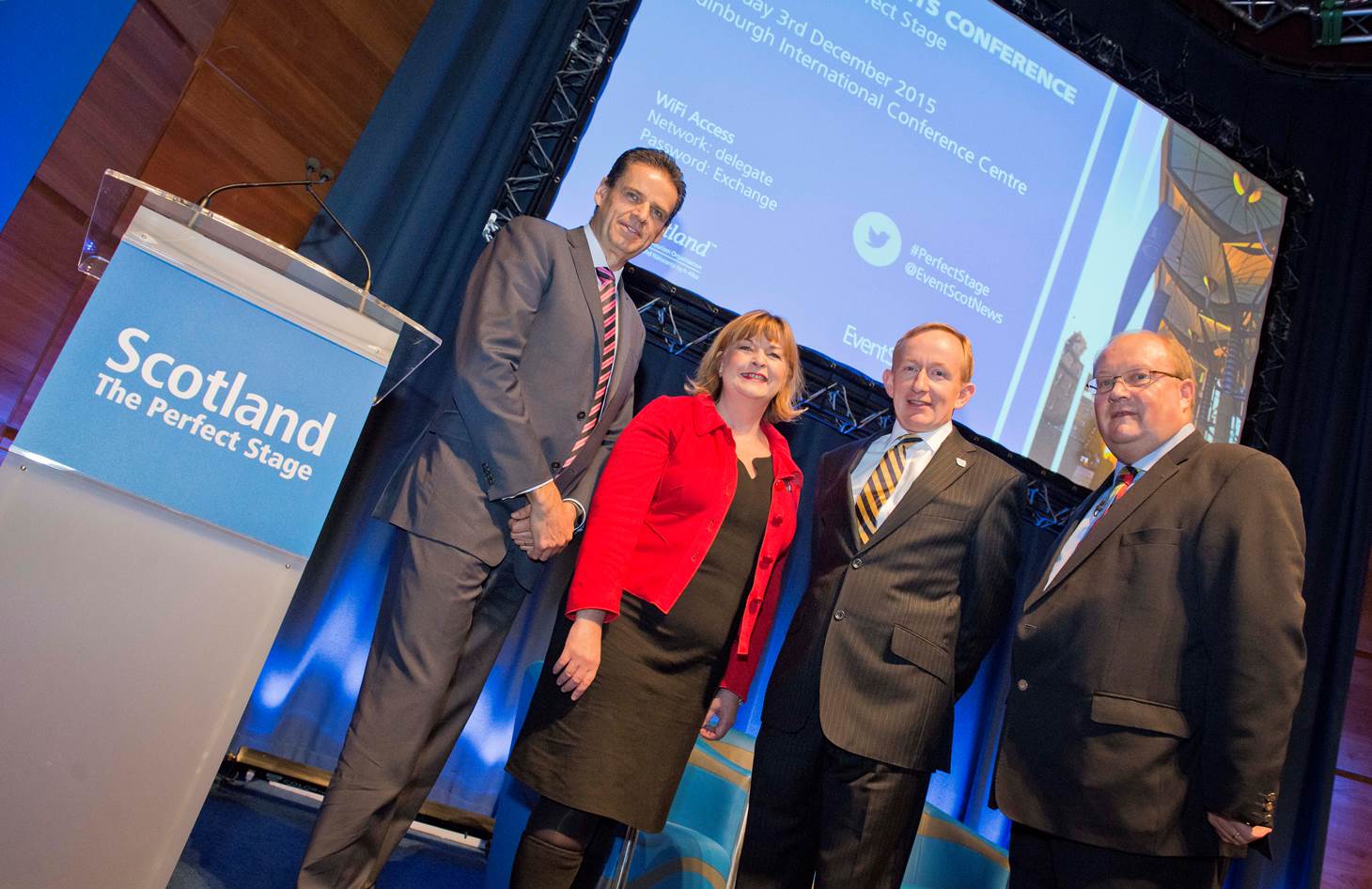
Strong partnerships are the key to delivering a flourishing events and festivals portfolio, according to Brendan McClements, Chief Executive of Australia’s Victorian Major Events Company and Paul Bush OBE, VisitScotland’s Director of Events.
The driving forces of two of the world’s most successful event destinations spoke to Host City at the National Events Conference on 3 December 2015 at the Edinburgh International Conference Centre. The conference focused on “Scotland the Perfect Stage”, the recently refreshed National Events Strategy for 2015-2025.
“You can’t do this by yourself, you need people to help. When I was reading through ‘The Perfect Stage’ strategy it was the first time I’d seen another nation highlight so clearly that we need this as a fundamental component of building success and how to use it to our advantage,” Brendan McClements, Chief Executive of Australia’s Victorian Major Events Company told Host City during the conference.
“Victoria has learned from Scotland’s approach. That’s something that’s helped drive success in Victoria.”
After an unprecedented year for major events in Scotland in 2014, which included the Ryder Cup and Commonwealth Games, the nation is now looking forward to hosting the 2018 European Sports Championships, 2019 Solheim Cup and UEFA EURO 2020.
McClements has been responsible for attracting some of the world’s most prestigious events properties to the state of Victoria, including the 2015 Cricket World Cup, Formula 1 Australian Grand Prix and the incredibly popular artistic and cultural celebration, White Night Melbourne.
In his keynote speech at the conference, McClements emphasised Scotland’s pre-eminent position in encouraging and facilitating the public, private and third sectors to work in unison in the delivery of its events and festivals portfolio, valued at £3.5bn per year to the Scottish economy.
“Major international events, and indeed small-scale events that support local communities, all of which have a number of stakeholders, can only achieve successful outcomes for all parties if everyone buys into the same plan. Sustainable events cannot survive on a command and control model,” he said.
“Events are complicated; you need to build a coalition of people who want to work with you,” he told Host City. “You are talking about governments, councils, local authorities, local services, industry, venues, airports, transport authorities, rights holders and so on,”
Paul Bush OBE, VisitScotland’s Director of Events, explained how partnership working drove one of Scotland’s most recent successful bids, for the 2019 Solheim Cup at Gleneagles.
“We had 23 partners as part of our Solheim Cup bid including local bodies such as Creative Scotland and the Edinburgh International Festival. Bringing these bodies together you really see the value of working together; it’s broken down the silo mentality,” he told Host City.
“It’s brokered by people trusting each other, but ultimately you’ve got to put a system in place that maintains the momentum. It’s really an organic process that needs to become systemic; it needs to maintain its integrity when people leave.”
The Scotland’s First Minister and Victoria’s Premier established a Memorandum of Understanding during the 2014 Commonwealth Games in Glasgow in relation to securing major events.
“We share a lot of things in confidence. They are not a competitor, as they are on the other side of the world, but it’s good to share intelligence about how you work with rights holders and which new cultural products to launch,” Bush told Host City.
Cultural events is a key area where Scotland has inspired Victoria. “The Edinburgh International Festival is outstanding example of what can be achieved in the cultural space. Any city in the world would look at this and think, how can we achieve this,” said McClements.
“It’s certainly informed our thinking of what’s possible. We have an event called White Night that’s drawn on models from all over the world. The Edinburgh experience helped inform what we wanted to do with that event. Edinburgh is the gold standard.”
This strategic, coordinated approach is not exclusive to Scotland and Victoria. Bush cites Copenhagen as a “fantastic example”, and also points to Auckland, London and “pockets in North America”.
Strong international relations can in some cases lead to shared hosting rights. Australia co-hosted the 2015 Cricket World Cup with New Zealand.
“Having multiple hosts is a natural outcome. New Zealand are our siblings, so there is a high level of cooperation.
“Hosting the 2015 Cricket World Cup with New Zealand was no more complicated than any other major event that takes place in two locations. The organising committees made sure there was investment in communications.
“The plan was well coordinated – this was delivered seamlessly, all the way through the public and private sectors. The government piece of the puzzle was well sorted out. Time spent getting that right really paid off for Victoria.”
Victoria hosted a disproportionately large number of big games during the Cricket World Cup, including the opening as well as the final match. 350,000 people attended World Cup matches in Victoria in total, 153,000 of whom were from outside the state and 75,000 from outside the country, resulting in AU$300m of spending in the state.
In 2015 Melbourne also hosted Rugby League State of Origin series, one of Australia’s biggest sporting events. 92,000 people attended, 40,000 of whom were from outside Victoria.
“It’s been an extraordinary fiscal year for Victoria, where you can see and taste the benefits that major events can bring. We’ve set a new benchmark for what major events are capable of,” said McClements.
The National Events Conference was opened by Fiona Hyslop MSP, the Cabinet Secretary for Europe, Culture and External Affairs and Dr Mike Cantlay OBE, Chairman of VisitScotland. Cantlay emphasised the need for continued investments in infrastructure, digital connectivity and air connectivity for Scotland to continue securing and delivering the next generation of events.
The conference also focussed on operating outstanding smaller events, delivering safer events and addressing the opportunities provided to the sector by Scotland’s Year of Innovation, Architecture and Design. Speakers and delegates also discussed potential applications for 3D 360° video displays, gathering and interpreting real-time event insights and the TEDx phenomenon.
The conference followed the hugely successful Host City 2015 in November, which saw global cities, rights holders and experts converge in Glasgow.
-
FIFA acting leaders look to the future
Dear friends of football,
FIFA has faced unprecedented difficulties this year in a crisis that has shaken global football governance to its core. We are now moving through a period of necessary change to protect the future of our organisation.
We maintain that the majority of those working in football governance do so in the right way and for the right reasons, but it has become clear that root-and-branch reform is the only way to deter future wrongdoing and to restore faith in FIFA. For these reasons, this year and the immediate years to come will be among the most important for FIFA since it was founded in 1904.
A new FIFA President will be elected at the Congress in February, offering the opportunity to start a new chapter. It is vital to recognise that this will be only the beginning. We will need to work hard together over the coming years to win back the trust and respect of fans, players, commercial affiliates and all the many millions of participants who make football the world’s most popular sport.
We are confident that the new reform measures approved by the FIFA Executive Committee in December, alongside the separate actions of the Swiss and US authorities, will lay the foundations for a stronger, more transparent and more accountable and more ethical governing body of football.
We call on all of FIFA’s member associations to fully support, implement and abide by the new reforms. The future of FIFA and the global development of football depend on our full commitment to embracing a change in culture from top to bottom, through the following key reform points:
• A clear separation of powers between the political side of global football and the day-to-day financial and business operations of FIFA, such as organising competitions and football development investments, will help to protect our integrity and avoid conflicts of interest. All financial transactions will be monitored by a fully independent body.
• Member associations must mirror the above structure and comply with principles of good governance, such as establishing independent judicial bodies. They will also be accountable for the conduct of their entire team and any third parties that they work with.
• Strict term limits for senior positions within FIFA of three four-year terms will ensure that no single person can wield too much power or influence.
• An explicit commitment in the FIFA Statutes to develop women’s football and to promote the full participation of women at all levels of football governance, including a minimum of one female representative from each region in the new FIFA Council.
• Central integrity checks by an independent body for all appointments to FIFA bodies and senior management.
• Members of the new FIFA Council must be elected by the member associations from each respective region under new FIFA governance regulations and monitored by the new, independent FIFA Review Committee.
• More independent and properly qualified members of key committees such as finance, development, governance and compliance to provide a stronger layer of neutrality and scrutiny.
• More involvement from the football community (players, clubs, leagues, member associations, etc.) in decision making.
• A statutory commitment by FIFA to uphold and protect internationally recognised human rights in all its activities.
There may be further challenges ahead, and it will take time for these reforms to take effect, but our resolve to rebuild FIFA for the better remains steadfast. Our aim is to establish a secure, professional and fully accountable sports organisation by the time of the 2018 FIFA World Cup™ in Russia.
We are confident that this is a realistic target, and we look forward to returning our full focus to FIFA’s primary mission of promoting and developing football everywhere, and for all.
The hundreds of millions of fans, players, coaches and others dedicated to football around the world deserve nothing less from those of us with the incredible responsibility and privilege of governing and guiding global football.
Yours faithfully,
Issa Hayatou Acting FIFA President
Markus Kattner Acting FIFA Secretary General
-
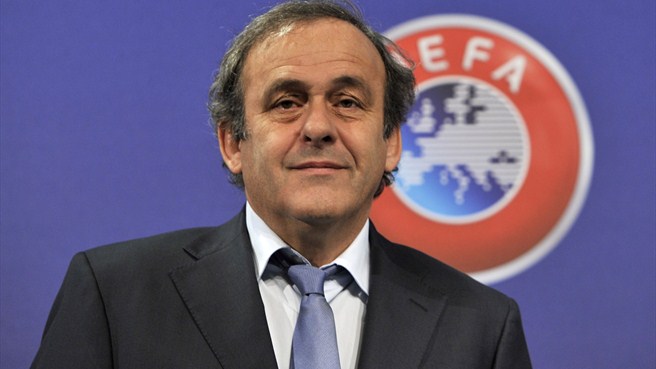
Blatter and Platini banned from football world
The adjudicatory chamber of the Ethics Committee chaired by Mr Hans Joachim Eckert has banned Mr Joseph S. Blatter, President of FIFA, for eight years and Mr Michel Platini, Vice-President and member of the Executive Committee of FIFA and President of UEFA, for eight years from all football-related activities (administrative, sports or any other) on a national and international level. The bans come into force immediately.
The proceedings against Mr Blatter primarily related to a payment of CHF 2,000,000 transferred in February 2011 from FIFA to Mr Platini. Mr Blatter, in his position as President of FIFA, authorised the payment to Mr Platini which had no legal basis in the written agreement signed between both officials on 25 August 1999. Neither in his written statement nor in his personal hearing was Mr Blatter able to demonstrate another legal basis for this payment. His assertion of an oral agreement was determined as not convincing and was rejected by the chamber.
The evidence available to the adjudicatory chamber in the present case was not sufficient to establish, to the extent required, that Mr Blatter sought the execution or omission of an official act from Mr Platini within the meaning of article 21 paragraph 1 of the FIFA Code of Ethics (FCE) (Bribery and corruption). However, the conduct of Mr Blatter towards Mr Platini without a legal basis constituted a breach of article 20 paragraph 1 of the FCE (Offering and accepting gifts and other benefits). Furthermore, Mr Blatter found himself in a situation of conflict of interest, despite which he continued to perform his related duties, failing to disclose said situation and the existence of personal interests linked to his prospective activities, thus violating article 19 paragraphs 1, 2 and 3 of the FCE (Conflicts of interest). By failing to place FIFA’s interests first and abstain from doing anything which could be contrary to FIFA’s interests, Mr Blatter violated his fiduciary duty to FIFA and breached article 15 of the FCE (Loyalty). Mr Blatter’s actions did not show commitment to an ethical attitude, failing to respect all applicable laws and regulations as well as FIFA’s regulatory framework to the extent applicable to him and demonstrating an abusive execution of his position as President of FIFA, hence violating article 13 of the FCE (General rules of conduct).
In consequence, Mr Blatter has been banned for eight years from all football related activities and fined CHF 50,000.
The investigation into the case of Mr Blatter was conducted by Mr Robert Torres, member of the investigatory chamber of the Ethics Committee. The investigation resulted in a final report which was submitted to the adjudicatory chamber on 20 November 2015. The adjudicatory chamber opened formal proceedings on 23 November 2015, and the hearing of Mr Blatter took place in Zurich on 17 December 2015.
The proceedings against Mr Platini primarily related to a payment of CHF 2,000,000 that he received in February 2011 from FIFA. The payment to Mr Platini had no legal basis in the written agreement signed between both officials on 25 August 1999. Mr Platini’s assertion of an oral agreement was determined as not convincing and was rejected by the chamber.
The evidence available to the adjudicatory chamber in the present case was not sufficient to establish, to the extent required, that Mr Platini obtained the payment for the execution or omission of an official act within the meaning of article 21 paragraph 1 of the FCE (Bribery and corruption). Nevertheless, the conduct of Mr Platini without a legal basis constituted a breach of article 20 paragraph 1 of the FCE (Offering and accepting gifts and other benefits). Furthermore, Mr Platini found himself in a situation of conflict of interest, despite which he continued to perform his related duties, failing to disclose said situation and the existence of personal interests linked to his prospective activities in violation of article 19 paragraphs 1, 2 and 3 of the FCE (Conflicts of interest). By failing to place FIFA’s interests first and abstain from doing anything which could be contrary to FIFA’s interests, Mr Platini also violated his fiduciary duty to FIFA and breached article 15 of the FCE (Loyalty). In addition, Mr Platini failed to act with complete credibility and integrity, showing unawareness of the importance of his duties and concomitant obligations and responsibilities. His actions did not show commitment to an ethical attitude, failing to respect all applicable laws and regulations as well as FIFA’s regulatory framework to the extent applicable to him and demonstrating an abusive execution of his position as Vice-President of FIFA and member of the FIFA Executive Committee, hence violating article 13 of the FCE (General rules of conduct).
In consequence, Mr Platini has been banned for eight years from all football related activities and fined CHF 80,000.
The investigation into the case of Mr Platini was conducted by Ms Vanessa Allard, member of the investigatory chamber of the Ethics Committee. The investigation resulted in a final report which was submitted to the adjudicatory chamber on 20 November 2015. The adjudicatory chamber opened formal proceedings on 23 November 2015, and the hearing took place in Zurich on 18 December 2015 in the presence of Mr Platini’s lawyers.
Source: FIFA
-
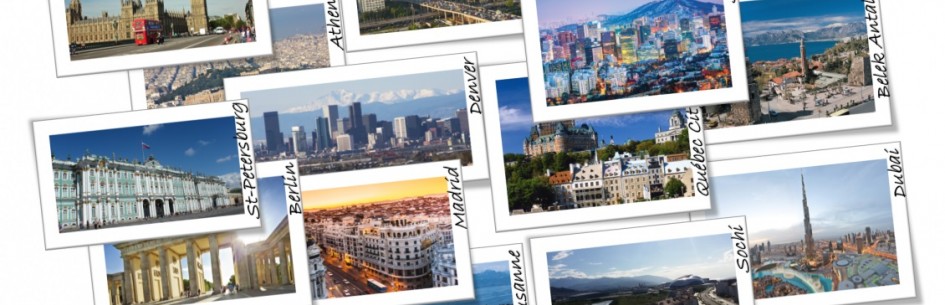
SportAccord Convention opens Host City application process for 2017 and 2018
With Lausanne recently confirmed as the location for the next SportAccord Convention, set to take place 17-22 April 2016, the organisation has now officially opened the application process for future host cities of the Convention in 2017 and 2018.
Held in a different city every year, the annual SportAccord Convention is a unique opportunity for key decision-makers from sport and industry to meet, network, and strategically shape global, regional and national agendas. As the premier event connecting sport and industry, approximately 90% of the participants are high-profile leaders, who seek to further the development of sport in an intimate and exclusive environment. In turn, this garners much attention and places cities firmly in the spotlight.
Speaking about the host city opportunity, Mr. Nis Hatt, Managing Director, SportAccord Convention commented:
“The SportAccord Convention is an important event in the sporting calendar for industry, International Sport Federations and organisations worldwide, so the earlier we start the bid process for the involvement of future cities, the better. The Convention provides an ideal platform to get business done – much is achieved in a short space of time – and for many organisations, the same opportunities may not present themselves as easily throughout the year.” Hatt went on to say:
“We are inviting cities to apply to become a host city in 2017 or 2018, and take advantage of the opportunities gained by being involved in this unique event”.
Further information can be found on the website at https://www.sportaccordconvention.com/about/bid-city-information-2017-an… includes the Bid City Application Information Pack, the Host City Bidding and Selection Process, as well as the Bid City Application Form.
The place Where Sport Meets, the SportAccord Convention is an exclusive 6-day event and attended by 2000 delegates. It is host to annual general meetings, a themed conference including City Forum, LawAccord and MediaAccord, as well as a Plenary Conference. An Exhibition is also held within the Official Programme and is represented by industries, sport organisations, government offices, cities, event services, media, and many more. International Sport Federations also take part in the Sports Demo Zone, and the Convention additionally provides a strong cultural and social programme for all participants.
Cities interested in bidding to host the Convention in 2017 or 2018 should contact Nis Hatt, Managing Director, SportAccord Convention, nis.hatt@sportaccordconvention.com to register their interest by Thursday, 28 January 2016.
For media enquiries, please email Jenny Edmondson, Media Relations Officer:
jenny.edmondson@sportaccordconvention.com
-
Lausanne confirmed as Host City for SportAccord Convention 2016
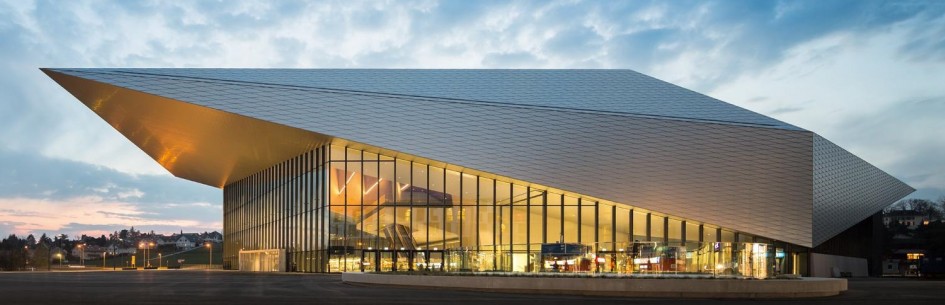
SportAccord Convention is pleased to announce Lausanne as Host City for the 2016 Convention. Returning to the Home of International Sport, the Convention will take place from 17-22 April 2016 at the Swiss Tech Convention Centre which offers state-of-the-art congress facilities.
On becoming Host City to the next SportAccord Convention, Mr. Marc Vuilleumier, Lausanne’s Municipal Councillor in charge of Sport commented: “What a wonderful way to close an exceptional year for the City of Lausanne. 2015 marked the IOC’s Centenary in our city, and last July we became the host of the 2020 Winter Youth Olympic Games. The SportAccord Convention will once again witness the entire world of sport gather here, for the first time since we hosted the second Convention in 2004. Lausanne truly is the “Olympic Capital”, today more than ever!”
With close to 50 sports organisations based in Lausanne and the surrounding region of the Canton of Vaud, including many international sport federations, the city is an idyllic location for this premier event. On hearing the news, Thomas Bach, President, International Olympic Committee (IOC) said: “What better place could SportAccord Convention have chosen to hold its annual event than Lausanne, a city which is made for sport. For a century now, Lausanne has been the IOC’s home. More than thirty international sports federations and sports organisations have also found in Lausanne the ideal setting to develop and strengthen the place of sport in society.”
Held in a different city every year, the annual SportAccord Convention is a unique opportunity for key decision-makers from sport and industry to meet, network, and strategically shape global, regional and national agendas. An exclusive 6-day event comprising 2000 delegates, the Convention is host to annual general meetings of governing bodies, and once again, will welcome a delegation from the International Olympic Committee.
Now in its 14th edition, Francesco Ricci Bitti, President, ASOIF and SportAccord Convention remarked: “We are delighted that Lausanne has taken up the baton once more and will be hosting the next SportAccord Convention. As a major event in the international sporting calendar, Lausanne provides a favourable location for sport and business leaders to meet, given its strong commitment to sport and industry. With the warm hospitality shown to visitors and delegates in 2004, we can expect to deliver a Convention that meets the needs of our Stakeholders, Partners and delegates.”
The Convention comprises: a themed conference including City Forum, LawAccord and MediaAccord, as well as a plenary conference; an exhibition represented by industries, sport organisations, government offices, cities, event services, media, and many more; a Sports Demo Zone; as well as a social and cultural programme.
For further information on the benefits of attending the SportAccord Convention, visit: www.sportaccordconvention.com
For media enquiries, please email Jenny Edmondson, Media Relations Officer: Jenny.edmondson@sportaccordconvention.com -
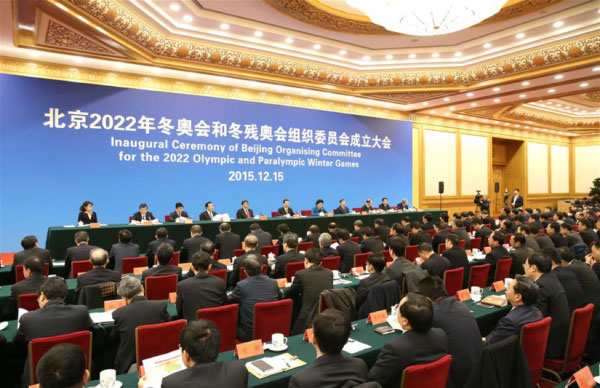
Beijing 2022 organising committee reviews bid pledges
The organising committee for the 2022 Winter Olympic Games has been established five months after the election of Beijing as host city, with Guo Jinlong confirmed as president of the newly formed body.
During the 2008 Olympic Games, Guo was mayor of Beijing and executive chairman of the organising committee.
Guo said the first duty would be to review Beijing’s host city contract in light of the IOC’s Olympic Agenda 2020.
“We will pore over the HCC and the Olympic Agenda 2020, and review our bid commitments before we work out the roadmap and timetable,” Guo was reported as saying by Xinhua News Agency.
“We shall ensure every task is accomplished.”
The organising committee, created by the city and the National Olympic Committee, will be responsible for ensuring the Games are organised successfully. Its establishment follows an Orientation Seminar that was held in early November in Beijing.
Guo’s appointment was welcomed by IOC president Thomas Bach.
“On behalf of the International Olympic Committee, it is my great pleasure to congratulate everyone on the inauguration of the Organising Committee for the Olympic Winter Games Beijing 2022,” he said.
“Allow me to congratulate Mr Guo Jinlong, the President of the Organising Committee.
“Beijing is making history as the first city in the world to host both the Olympic Summer Games and the Olympic Winter Games.”
Reducing the cost and increasing the sustainability of hosting the Games is a key aim of Agenda 2020.
Using infrastructure from the 2008 Olympic Games will help Beijing to keep costs down, with a projected budget of US$1.5bn.
“The formation of the Organising Committee represents the start of an exciting journey for the entire Olympic family,” said Bach.
“This milestone is the first step on our six-year journey together to deliver brilliant Olympic Winter Games in 2022 for Beijing, for China, and for the world.”
Beijing was selected as host of the 2022 ahead of Almaty, the only other city that progressed to the candidature stage.
The host faces challenges in managing air pollution in the city and ensuring there is enough snow in the mountain resort of Zhangjiakou.
According to Xinhua, Chinese President Xi Jinping has asked the organizers to “work harder to host a fantastic, extraordinary and excellent Games”, saying city management, environmental protection, budgetary control and the appeal of winter sports in China will all need to be heightened.
A number of Chinese dignitaries atteneded the launch of the organising committee, including Chinese Vice-Premier Zhang Gaoli, Beijing 2022 President Guo Jinlong, Chinese Olympic Committee President Liu Peng, Chinese Vice-Premier Liu Yandong, Beijing Mayor Wang Anshun and Hebei Governor Zhang Qingwei.