Labour MP Sadiq Khan is set to be the new Mayor of London as counting nears completion following Thursday’s election. Khan stood against four rival candidates including the Conservative candidate Zac Goldsmith.
He is set to succeed Conservative MP Boris Johnson, who led London for two terms which included the delivery of the Olympic Games in 2012. The Host City contract for London 2012 was signed by former Mayor Ken Livingstone.
Shortly before the election Khan outlined his priorities in an editorial in The Guardian newspaper. Affordable housing was top of the agenda, but he also set out his plans to assure that transport affordable.
“Londoners now face the most expensive transport of almost any major city,” he wrote. “I will freeze fares for four years, and introduce ‘Hopper’ bus tickets, so that people can have unlimited changes within one hour.”
With Khan as Mayor, London can hope to see an improvement in air quality.
“As someone who lives with adult-onset asthma I know how bad air quality in the capital has become,” he wrote.
“I want to be the greenest mayor London has ever had – it is not acceptable that 10,000 people die in London every year because our air is so filthy. That’s why I have ambitious plans to make green London’s bus fleet and remove the filthiest vehicles from our roads.
He also pledged to improve security in the capital of the UK.“While the cost of living in London has soared, the number of police officers making our city safe has plummeted. Conservative cuts mean there are 1,500 fewer officers on London’s streets, and violent crime levels are up in every single borough. I will make policing a priority, and work to tackle sexual assaults on public transport and the unacceptable rise in hate crime.”
But the clearest message of Khan’s campaign was on tackling the runaway cost of accommodation. “Our city is living through the worst housing crisis in a generation, rents are sky-high and the average cost of a home in London is more than £500,000,” he wrote.
“If I become mayor of London, my single biggest priority will be to build thousands more homes every year. I will set a target to make half of all the new homes that are built genuinely affordable, with first dibs for Londoners.”
Khan, who is set to be the first Muslim mayor of a major western city, was nominated Labour’s candidate for the mayoral contest ahead of former Olympics Minister Dame Tessa Jowell.
Host City would like to thank Dame Tessa Jowell and former Mayors Boris Johnson and Ken Livingstone for all their contributions to and invaluable support of Host City; and to welcome Sadiq Khan’s plans for London.
Blog
-
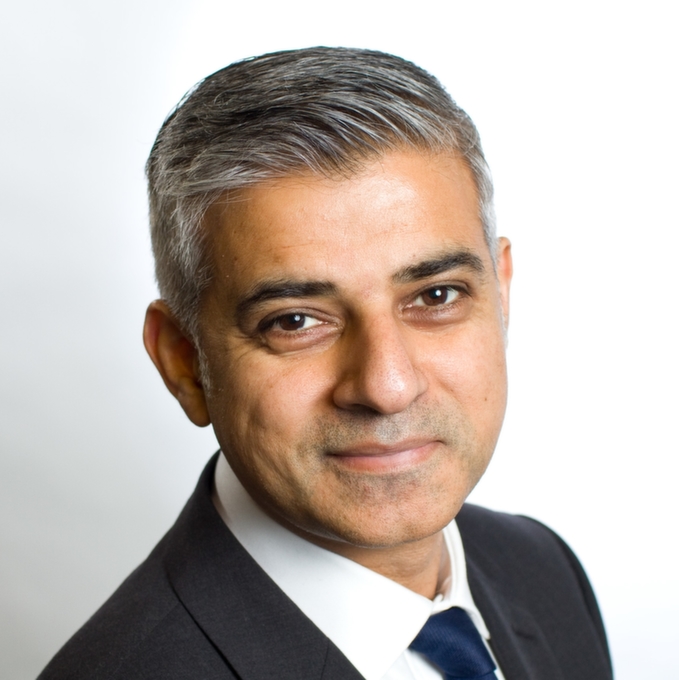
Host City welcomes Sadiq Khan’s green transport plan
-
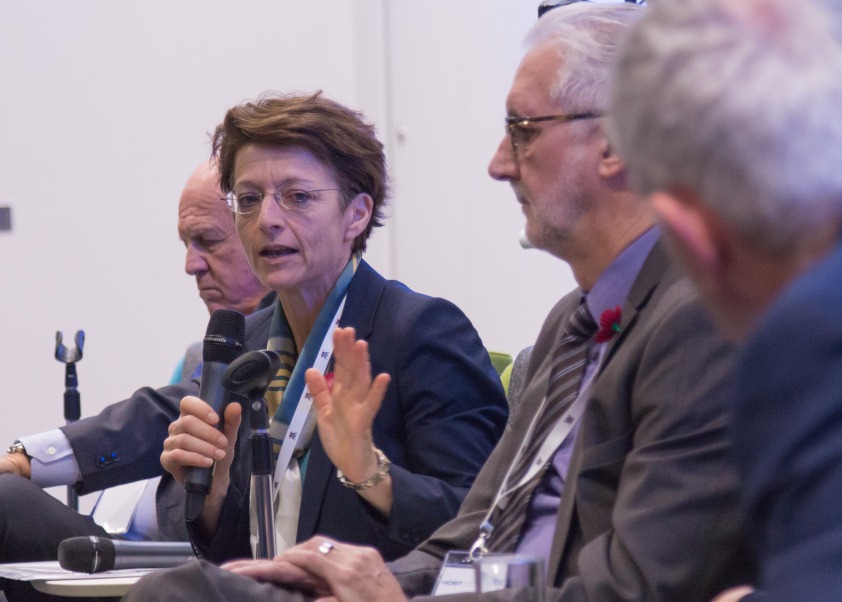
When to mediate or litigate in sports events
“It’s important to draw a distinction where you actually can use mediation or an alternative dispute resolution method other than litigation.
“Competition rules and doping offences are not areas where you can mediate, negotiate and so on; these have clear rules and they have to be respected for the integrity of the sport.
“What you do need, when it comes to competition rules, is a solid internal procedure to have the possibility to appeal to a higher instance than the competition jury – they can make mistakes, so that needs to be verifiable.
“And then you also need the commitment that there will be an appeal possibility to the Centre for Arbitration of Sport (CAS), as the overall instance to check externally that your internal regulatory procedures are working in the correct way.
“From my perspective, as far as anti-doping offences are concerned, it’s a similar situation: an International Federation has to uphold the WADA rules. Then you have to defend those in an internal doping panel procedure and if there is an appeal, again can be appealed externally to CAS; that’s what is given in the code.
“Then the areas where we have a certain experience where there could be room for negotiation concerns disputes – we’ve had dealings in two particular areas. One has been with a couple of serious accidents that have taken place in international competitions, which are organised under the FIS rules, that are overseen by the technical delegate appointed for the assignment by FIS.
“Then there have been out of court discussions and negotiations, of course together with the insurance company who plays an important role there. In the one case we found a very good solution that involved supporting a foundation set up by the family in the athlete’s memory dedicated to supporting youngsters in his sport and improving safety measures.
“The other area has been with non-competition regulations: interpretation of regulations connected to commercial branding and visibility; is a manufacturer a manufacturer or is it a commercial entity; what’s allowed and what isn’t allowed? That is also quite closely connected to Olympic rules.”
This exclusive interview was conducted by HOST CITY at LawAccord during the 2016 SportAccord Convention
-
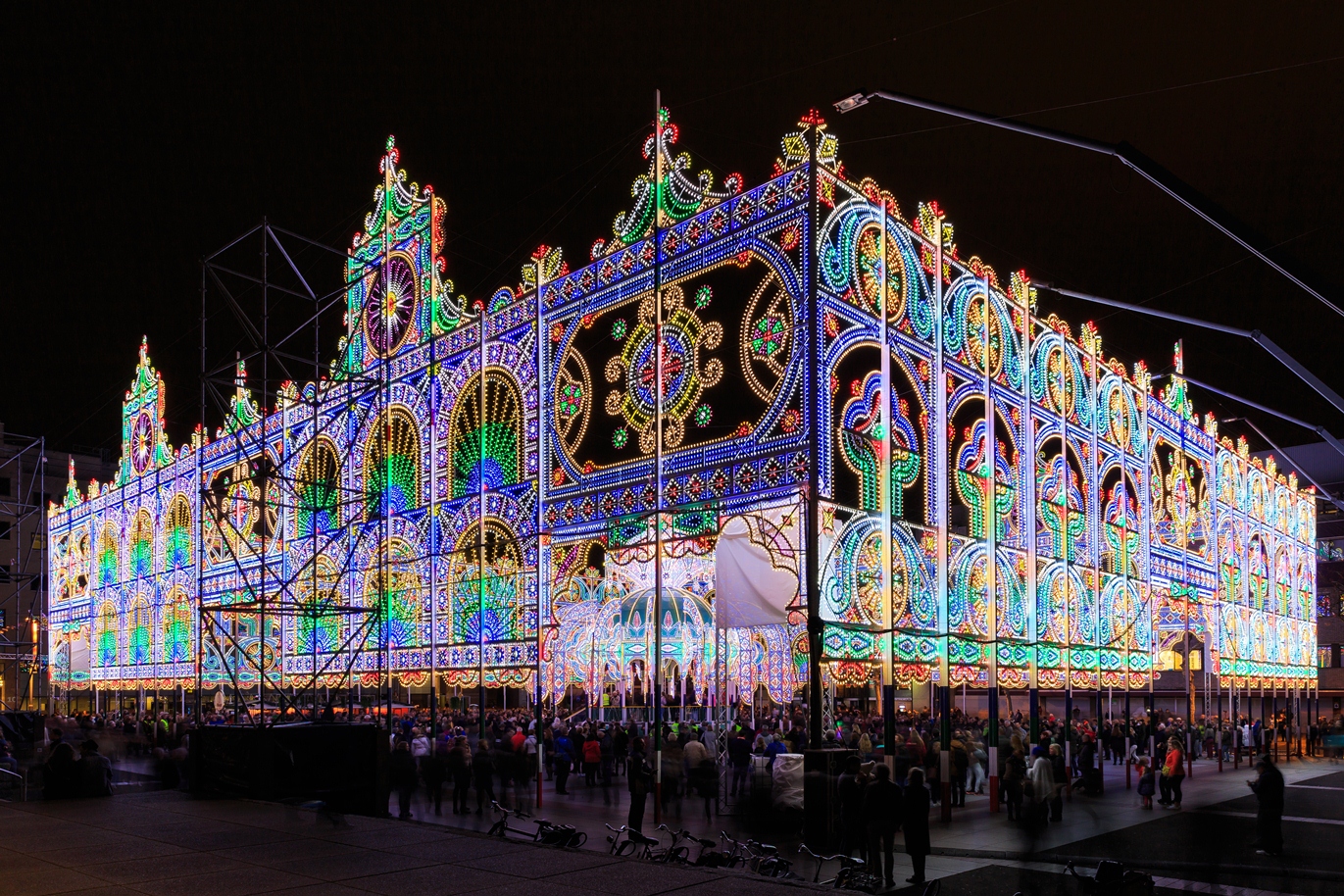
Eventful cities combine culture and technology
The spring EUROCITIES Culture Forum, held on 16-18 March in Eindhoven and ‘s-Hertogenbosch, focussed on “Technologies as a game changer for culture” and the concept of “eventfulness”.
The forum examined the links between art, science and technology, and explored through practical experiments how the “triple helix” concept applies to culture in cities.
Through the discussions and work sessions, city delegates learned about Eindhoven’s transformation through a combination of technology and creativity.
The founding of the Philips company in 1892 positioned Eindhoven as a major technological, industrial and design hub. When Philips closed down in 2000, the 270,000m2 Strijp industrial area, formerly home to the Philips offices, was turned into an art and technology hub dedicated to everything from research and development to cultural production and display.
Strijp-S has become the high-tech creative and cultural centre of Eindhoven. Since 2008 ‘Cultuurfonds Strijp-S’, a public-private fund, has been supporting initiatives, events and programmes in the Strijp-S area and contributes to its national and international reputation.
“Experiments” and “experiences” are key words for culture in Eindhoven. Culture is understood in its broad sense. In Eindhoven there is a focus on living laboratories where creatives, businesses and education work together intensively on innovative products and projects, in which new technological applications are tested.
Using the concept of “Eventfulness”, the city of ‘s-Hertogenbosch deployed an integrated model to set-up world class events.
A team of restoration experts was convened to convince museums around the world to lend their paintings for a unique retrospective celebrating the 500th anniversary of the death of local painter Hieronymus Bosch.
Tickets for the exhibition have all sold out and Bosch’s works are inspiring many other activities throughout 2016 with music festivals, art, dance performances in public space and light projections.
“If you invest €1 in culture you get €5 into the city and €20 into the country” said Anton Rombouts, mayor of ‘s-Hertogenbosch.
Delegates also learned that failed bids for European Capitals of Culture can bring new opportunities.
After an unsuccessful joint bid for European Capital of Culture 2018, the cities of Eindhoven and ‘s-Hertogenbosch, together with other cities from the Brabantstad network of cities and the Brabant province, continued working together, joined forces and created a fund for culture called ‘Brabant C’. The aim is to boost the national and international attraction of the Brabant area by strengthening art and culture.
Culture and the arts also play a key role in the integration process of newcomers in cities. Getting involved in cultural projects activates a sense of community and belonging and cultural projects give migrants and refugees the chance to make a contribution to their host societies.
Delegates learned how cities’ cultural administrations can create situations for mutual learning and intercultural dialogue; develop bottom-up programmes; and train their staff to better address the needs of a diversified society.
The next EUROCITIES culture forum will take place in Oulu, Finland from 5-7 October, and will focus on cultural education and culture for children.
Source: EUROCITIES
-
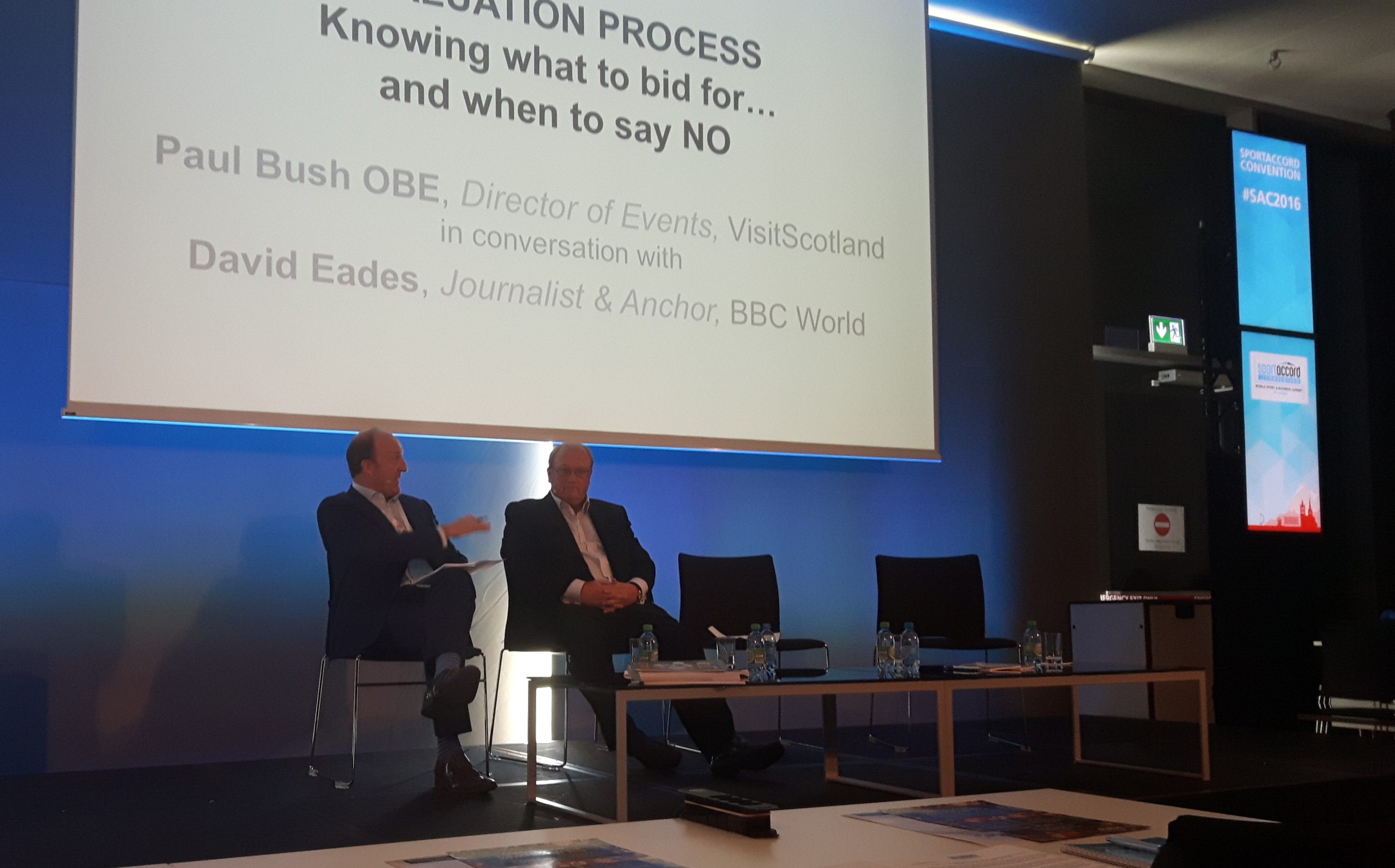
Host cities to form international association
Over 50 representatives of cities, regions and countries attending this year’s SportAccord Convention, have reached an overwhelming consensus to move forward with the formation of an international association of event hosts.
The representatives met at the City to City session facilitated by members of a working group who have been investigating the feasibility of forming an organisation for “not-for-profit” investors to share knowledge of hosting international events.
During the session, representatives learned from the successes and challenges of a number of recent events hosted at destinations across the world.
Representatives also provided feedback on different models of how destinations could share knowledge and generate greater benefits from hosting events. The working group will now take this feedback and develop a plan to formalise cooperation between destinations.
Members of the working group to date include:
•Auckland Tourism, Events and Economic Development
•Canadian Sport Tourism Alliance
•EventScotland
•Fáilte Ireland, National Tourism Development Authority
•London & Partners
•Los Angeles Sports Council
•New Zealand Major Events
•Sport Event Denmark
•USA National Association of Sports Commissions
Iain Edmondson, Head of Major Events at London & Partners said “The very productive session at SportAccord Convention has again demonstrated the benefits of sharing experiences of hosting events. By working together I believe all investors in major events will generate greater long term value, whether they are public bodies, rights-owners or commercial sponsors.”
“Sharing knowledge of hosting events is very important and cooperating with other hosts in a trusted environment will benefit all of us,” said Lars Lundov, CEO of Sport Event Denmark.
Paul Bush OBE, VisitScotland’s Director of Events said: “Events and tourism have a hugely beneficial symbiotic relationship and this initiative can only do good for the industry.”
Rick Traer, CEO, Canadian Sport Tourism Alliance added “We’ve seen the advantages of working together and sharing best practices at a national level. Taking those experiences to the international level and learning from our colleagues around the world will be a very productive partnership. Our cities will reap the benefit of knowledge from other countries, and sport tourism will continue to be a vital and vibrant part of our economy.”
Source: SportAccord Convention
-
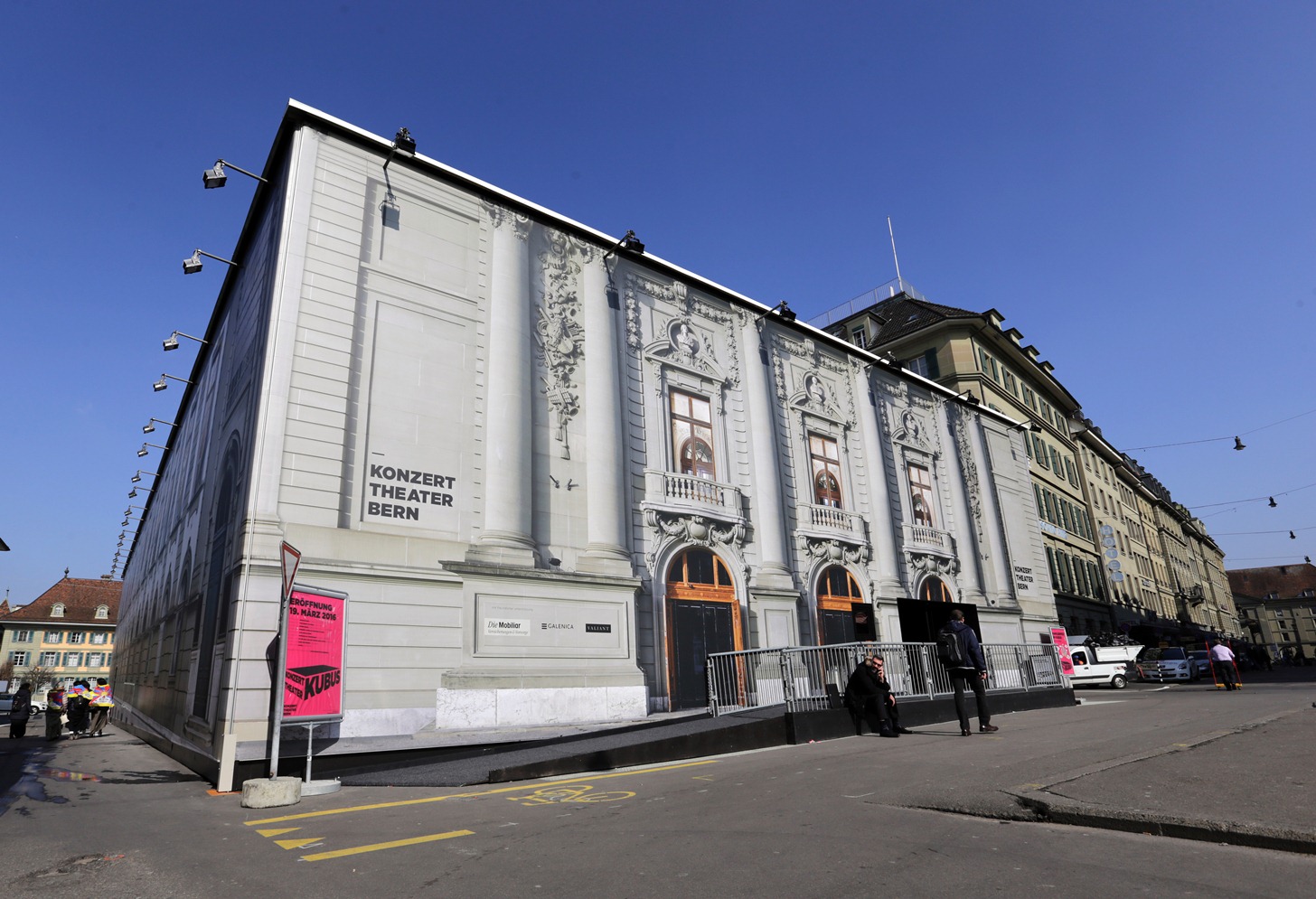
How Nussli created Bern’s temporary theatre
Theatre lovers in Bern are being offered something very special. Performances for the 2016 season take place not in the usual venerable municipal theatre, but in the middle of Bern’s Old Town. NUSSLI has installed a temporary theatre cube, with a historical appearance, in record time on Waisenhausplatz.
The theatre opened on March 19 with a programme of exciting, impassioned and fascinating performances that runs until October 2016.
“If the restoration work at the municipal theatre is delayed again, we can easily leave the cube standing for another season during the winter or even adjust the building to changing needs at a later date,” says NUSSLI Project Manager, Christian Frei.
For a year and a half, Frei and his team worked on the development of the system with which the halls can be constructed within a very short time, even at the most unusual locations, in any size and with column-free spans of up to 40m.
Efficient and Easy to Build
Frei was often on site during construction on Waisenhausplatz and lent a hand time and again, because the assembly of the modular hall system is almost as thrilling as its unlimited applications.
At the very beginning, the assembly crew installs the external structure with the flexible NUSSLI construction system. Then, they completely assemble the roof structure, including the sound and lighting fixtures, on the ground at a comfortable working height within the designated construction area. Finally, the entire roof structure is moved to its final height.
This construction method reduces the required installation space to a minimum and enables installation even on sensitive ground while increasing the safety of the crew. All the streets around the cube on Bern’s Waisenhausplatz were able to remain open to traffic throughout the construction, and the crane-free assembly did not stress the underlying parking garage structure in any way.
Central Location Opens up Possibilities
The idea of bringing the theatre cube to the audience instead of bringing the audience to an existing provisional arrangement opens up new possibilities for the Bern Theatre.
The program was therefore put together with a conscious effort to include events which reflect the central position in the public square and appeal to various interests. So, a tango milonga, a public viewing of the European Football Championship and a James Bond evening are scheduled in addition to ballet, opera and drama.
The modular hall system offers some important advantages, especially for construction projects in public places, on sensitive ground, or with limited access. The construction system requires no foundations, there is significantly less point loading than with construction using conventional steel supports, and the total load is evenly distributed over the entire ground surface.
Because Waisenhausplatz sits directly atop a parking garage which is subject to special static requirements, there were no problems for the theatre cube despite its 1000sq m size and 200-ton weight. No heavy crane equipment is needed, especially for assembly work in modular hall system.
“We could have set the theatre cube up on the Pilatus or on a golf course,” laughs Project Manager Frei. “That would work.”
Plan Today, Build Tomorrow
The planning of the Bern Theatre cube with 480 seats, catering, backstage and technical areas as well as a cloakroom took less than a year.
“A month after the first truck rolled out with its material, the cube was already cladded, equipped, and ready to go,” recounts Christian Frei.
He is looking forward to the reactions after the first performance, but adds quite calmly: “If the theatre organisation still wants modifications, it can be quickly and easily adjusted. The walls of the cube are also made of system material. They have just the exact thickness so that the entire installation can be accommodated in them and still remain easily accessible.”
Plans for the next projects with the modular hall system are already underway. Besides other theatre constructions, NUSSLI is planning a double-decker bridge for the IndyCar race in Boston in September. A bridge that has it all, because it crosses over the racetrack to the South Boston waterfront and will be equipped as a VIP lounge.
The sophisticated structure consists entirely of system material. Therefore, it is possible to start construction one day after approval of the construction concept on the part of the client or the authorities – which is unparalleled.
This article was written by NUSSLI
-
Anti-Corruption Summit welcomes International Sports Integrity Partnership
The International Anti-Corruption Summit, hosted by UK Prime Minister Cameron on Thursday in London, welcomed the efforts of sports organisations in the fight against corruption.
The conference issued a communiqué that said: “We welcome the work of the international sports organisations to strengthen openness and improve governance so that they meet global best practice. We urge them to achieve the highest global standards and regain public trust through a culture of good governance. We recognise the autonomy of international sports organisations conferred under national laws. We believe this must be exercised responsibly and be earned by continually demonstrating good governance in a spirit of openness.”
The conference specifically welcomed the initiative of the IOC to launch “an International Sport Integrity Partnership in the margins of a meeting of the International Forum for Sport Integrity in Lausanne in early 2017.”
IOC President Thomas Bach said: “We appreciate that this summit has acknowledged the efforts of the IOC and sports organisations. The IOC has all the instruments in place and the resolution to fight effectively against corruption. But like any other organisation we are not immune to wrongdoing. In such cases we have a proven record of swift action. The reforms of Olympic Agenda 2020 have strengthened our position to implement our zero tolerance policy in this respect. As welcomed by the Summit, we will take the fight against corruption further by launching the International Sports Integrity Partnership.”
The Summit coincided with confirmation from French financial prosecutors that they are investigating allegations that payments exceeding $2m connected to the Tokyo 2020 Olympic bid were made to a bank account linked to the son of former IOC member and IAAF President Lamine Diack.
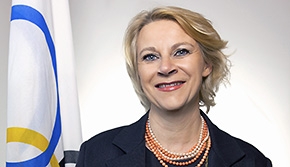
IOC Chief Ethics and Compliance Officer Paquerette Girard-Zappelli spoke at the conference. In an IOC-issued statement she said: “We used this opportunity to present all the measures undertaken by the IOC in the fight against corruption.
“Through Olympic Agenda 2020 the position of the IOC Ethics Commission has been strengthened and transparency has been increased. This includes a Consultants Register for the Olympic Games Bid Process and many other measures.
“We have proven that we are actively fighting against corruption. For instance, the IOC took immediate action against Lamine Diack already in November 2015 when the first allegation arose against him. As a result of our action he no longer has any position in the IOC. Nevertheless, we continue to actively look into the matter and have become a civil party to the French investigation.”
IOC Member and President of the International Paralympic Committee Sir Philip Craven chaired a panel on sport at the summit. Girard-Zappelli was joined on the panel by Angel Gurria, Secretary-General of the OECD, Jaimie Fuller of Australian sportwear brand SKINS, and Isha Johansen, president of the Sierra Leone Football Association and FIFA board member.
“I have a mission and a vision, to force good governance into football. Because I believe it can help with the growth and prosperity of that nation,” said Johansen.
“Corruption is a deadly killer disease. Having lived in Sierra Leone through the ebola crisis, I know the destruction a disease can cause in a society, it can rip through it, it can kill a society.”
After the summit, Sir Philip Craven said: “Sport is under greater scrutiny than ever before and rightly so; sport is a multi-billion Euro industry that reaches and impacts billions of people around the world on a daily basis.
“There are absolutely no doubts that recent scandals involving some international sport federations have greatly tarnished the image and reputation of sport. This has led sport to quickly realise that it is not immune from being accountable for its actions, just like any other industry.
“It should not take a high profile scandal however to act as the catalyst to organisational reform. Sport organisations must be proactive in improving their athlete centred governance. They must seek out corruption and deal with it swiftly and effectively. It cannot be brushed under the carpet in the hope it will go undiscovered.
“Eliminating corruption in sport needs to be a real team effort. That is why the IPC fully supports the work of the IOC, the reforms of Olympic Agenda 2020, the launching of International Sports Integrity Partnership in early 2017 and the recommendations of the Association of Summer Olympic International Federations (ASOIF) Governance Task Force.”
The conference also dealt with issues such as corporate secrecy, government transparency, the enforcement of international anti-corruption laws, and the strengthening of international institutions.
The summit adopted a “Global Declaration Against Corruption”, which reads: “Corruption is at the heart of so many of the world’s problems. We must overcome it if our efforts to end poverty, promote prosperity and defeat terrorism and extremism are to succeed.
“Today’s Summit has demonstrated the deep commitment of a significant number of countries, businesses and members of civil society to work together to tackle this scourge.”
-
UK Sport backs GB to win at Rio with million-hour support
The English Institute of Sport, funded by UK Sport, will have provided 950,000 hours of support to more than 1,100 athletes between the London 2012 and Rio 2016 Olympic and Paralympic Games.
This amounts to more than 4,500 hours of support a week over the four year Olympic cycle, in a bid to help Team GB achieve success at the Olympic and Paralympic Games in Brazil.
The English Institute of Sport (EIS) is UK Sport’s science, medicine and technology arm, with 350 experts helping elite athletes improve performance in more than 30 Olympic and Paralympic sports.
UK Sport provided EIS with GB£59,775,973 of funding after London 2012, where the EIS had worked with 86 per cent of the GB athletes who had won a medal. UK Sport and the EIS have worked together to build a world-leading high performance system in a bid to deliver Team GB’s best ever away performance.
“With less than 100 days to go to the Olympics and 120 to go to the Paralympics, our National Lottery funded sports and athletes are in good shape,” said Liz Nicholl, CEO of UK Sport.
“I have every confidence that they, supported by the EIS, will inspire the nation with their performances in Rio this summer.
“The thousands of hours of world class scientific, medical and technological expertise provided by the EIS each week to our Olympic and Paralympic athletes is key to ensuring they are the best prepared British athletes ever.
“The EIS has been the ‘team behind the team’ since 2002, and our high performance system wouldn’t be where it is today without the impact of their talented team of experts.”
EIS services support both the physical and mental health and wellbeing of athletes and coaches with expertise provided across areas including biomechanics, performance analysis, performance lifestyle, performance pathways, performance nutrition, physiology, psychology, physiotherapy, medicine, research & innovation and strength and conditioning.
This support combines to help athletes and coaches across a number of areas including maximising competition performance, recovering from injury, identifying talent, enhancing physical and mental health and wellbeing and transitioning into new careers following retirement from elite sport.
“It is the vision of the EIS to be the world leading institute for sport and through the funding and support provided by UK Sport, our ambitious goal is within reach,” said Nigel Walker, National Director of the EIS.
“The high performance system we have in our country is the envy of many around the world and that is underpinned by our leading practitioners boasting over 1,100 years collective experience across 11 areas of expertise.
“We remain on track for huge success at Rio 2016 and thanks to ongoing support from UK Sport, the Government and National Lottery, planning for Tokyo 2020 is well advanced as we continue to showcase ‘What It Takes To Win’ on a global stage.”
Olympic diving medallist Tom Daley received support from the EIS Psychology team. “If you can handle the pressure cooker environment of an Olympic final psychologically, you have the power to go all the way and win!” he said. “The support I’ve received from the EIS in sports psychology has made me into the diver I am today.”
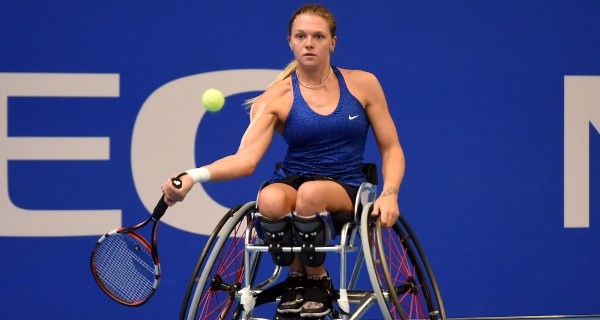
Paralympic wheelchair tennis medallist Jordanne Whiley MBE said: “The EIS leave no stone unturned when it comes to helping athletes prepare for competition. The support they provide both on and off the field of play helps increase confidence and allows me to perform at my very best.”
-
A strategic roadmap for LA’s Olympic bid
As a distance swimmer, Janet Evans broke seven world records and won five Olympic medals. But she is in a different kind of race now, as vice chair and director of athlete relations at LA24 – the bid committee for Los Angeles.
Los Angeles is one of four cities bidding for the 2024 Olympic Games, along with Budapest, Paris and Rome. How these cities interpret Olympic Agenda 2020, the IOC’s “strategic roadmap for the Olympic movement”, will be crucial to their success.
Evans spoke with Host City at SportAccord Convention about how her city’s ambitions are aligned with those of the International Olympic Committee (IOC).
Use what you already have
A primary challenge for cities bidding for and hosting the Olympic Games is to have venues that are used an on-going basis in the city, while also being optimised for Games time.
This is not only a logistical issue but also a financial and reputational one – so much so that the IOC, which holds the rights to the Olympic Games and brand, has placed venue sustainability at the heart of its strategy.
The first of the 40 recommendations of Olympic Agenda 2020 states “The IOC to actively promote the maximum use of existing facilities and the use of temporary and demountable venues.”
Evans says, “It’s interesting that 97 per cent of our venues will be built before 2024 irrespective of our bid. A lot of new venues are already going up for various sporting events within southern California. The only permanent venue we’d have to build would be a new kayak venue.”
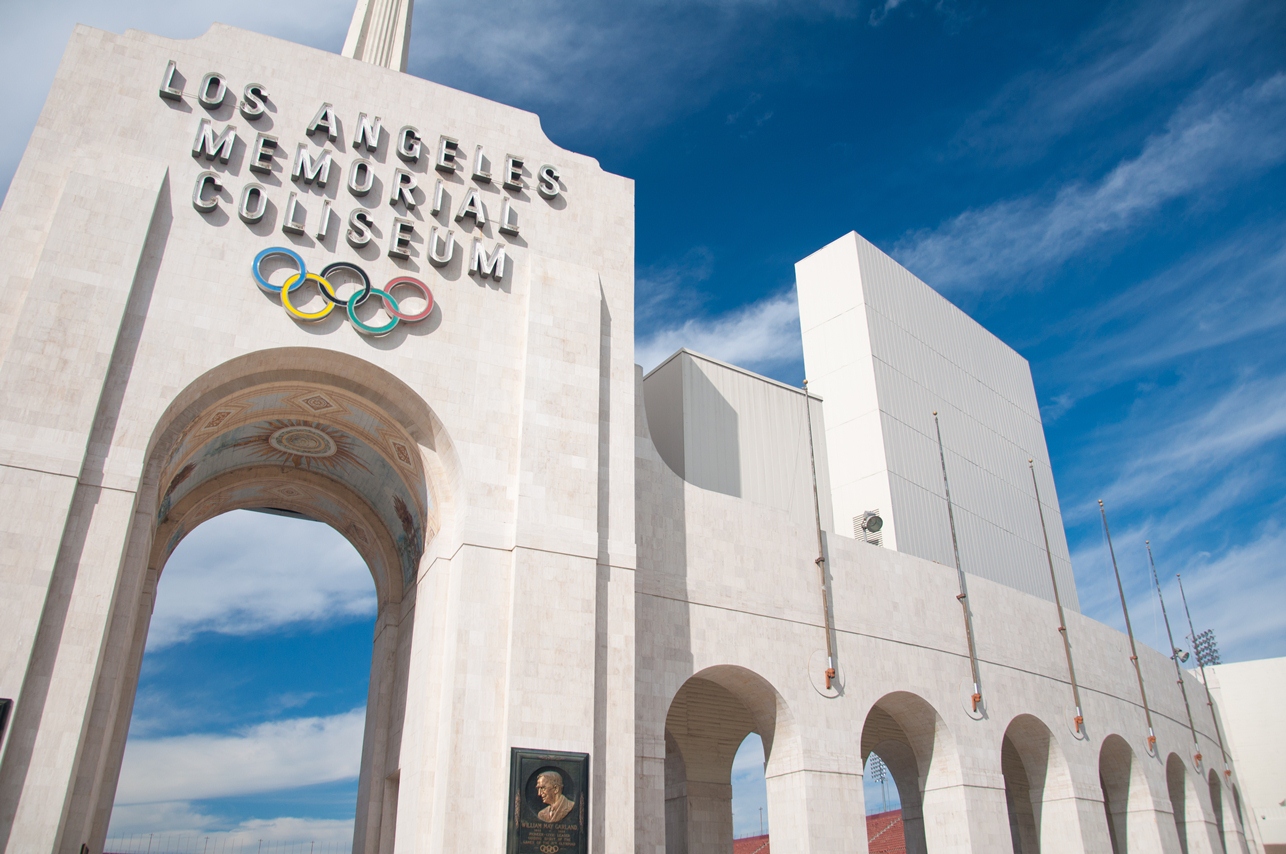
The iconic Los Angeles Memorial Coliseum served as the Olympic Stadium in 1932 and 1984 and would take centre stage again in 2024. Over the years the venue has hosted NFL, Major League Baseball, soccer and entertainment events in addition to regular sporting events staged by its owner, the University of Southern California (USC).
USC Athletics is funding a US$270m renovation of the Coliseum that is planned, Evans says, “irrespective of our bid”. These works are scheduled to take place between 2017 and 2019.
Another big conundrum for host cities is how to accommodate athletes during the Games. As with sports venues, possible solutions include building for legacy use, or using temporary or existing facilities. LA24 has opted for the latter, arranging for USC and the city’s other big university, UCLA, to accommodate athletes on its campus during the Games.
“It’s a great place for athletes as there are a lot of training facilities,” says Evans. “A lot of our athletes in the US come through the university training system so we are very pleased with our choice of UCLA.”
Listen to the IFs
Another challenge faced by Olympic bidding and organising committees is to make sure their venue plans are in line with the priorities of the international federations (IFs) that govern Olympic sports. Many IFs have expressed frustration with the Organising Committee of the Olympic Games (OCOG) for Rio 2016, with construction running behind schedule.
Olympic Agenda 2020 sets out to avoid this happening in future by determining to “enhance the role of the IFs in the planning and delivery of the Olympic competitions, including the study of transferring technical responsibilities from the OCOGs to the IFs.”
Evans says having most of the venues already built enables LA24 to focus on engaging with IFs during the bidding phase; and events like Host City and SportAccord Convention give bidding cities the opportunity to do so.
“It’s wonderful to be here to listen and learn and understand what federations would like to see in a bid and help bring that into our bid and understand things,” says Evans.
Between January and April 2016, Evans and LA24’s sports director Doug Arnot met with all 28 Olympic IFs to ask them about their priorities for their sports. “It was a real listening and learning exercise, so we could go home and take that back to our team and say, here’s what this IF would really like to see.
“And another thing we feel is that if and when we win the Games, since our venues are built, we can spend seven years working not only on venues and upgrades but also on making the athlete experience great. So I think the sustainability of LA and the fact that our venues are built is really powerful.”
Athletes at the heart
Another key aim of Agenda 2020 is to “put the athletes’ experience at the heart of the Olympic Games”. This is the Evans’ main area of focus now – “I know that’s what President Bach wants to see,” she says.
To achieve this, she is tapping into the US’s enviable network of Olympians and Paralympians – not just US natives but also Olympic alumni who have competed for other countries in the Games and now live in the US.
LA24 is running a road show of “Athlete Town Hall” meetings. “We want to ask for the input and advice of athletes. We felt there was no better way to receive that input than to speak to them in person.
“We are looking for opinions and advice and things that we can make better and things that were loved by the athletes.”
The first Athlete Town Hall meeting was in the Miami and Fort Lauderdale area of south Florida in early April. LA24 is to conduct between 12 and 15 of these meetings over the course of 2016 in cities throughout the US.
“We see this as a national bid, not just a bid for the state of California or the city of Los Angeles. It’s a bid from our entire country to bring the summer Games back to the US for the first time since 1996.”
Culture and creativity
Another aim of Agenda 2020 is to achieve a “further blending of sports and culture”. Los Angeles is famed for its entertainment industry, but Evans says this is just one part of the mix.
“I think Los Angeles is in a true renaissance. We have US$88bn of infrastructure going into our new transport system, in our airport; our city is changing everything – it’s vibrant and hip. We have this great accumulation of the entertainment world as well as technology and creativity.
“I believe if we have the honour of hosting the Games there are so many interesting things we could do to help promote sport and bring youth into the Games. Los Angeles is a mecca of creativity, of innovation, of change and I think that’s evident when you come to our city.”
Recent allegations and revelations of doping and bribery in some Olympic sports are a reputational threat to the Games. Asked what LA24 can do to safeguard against these threats, Evans says “I think there’s a lot of joy and positive things that are in this movement. That’s what we all believe in – I believe in the Olympic movement and what it does for future generations and in what athletics can portray to the world.
“We want to bring the positive – I want to find out what the athletes can bring to other people. I want everyone to experience the Olympics for what they really are, which is what I see as the Olympics, which is this great celebration of humanity, peace and friendship and continuity.
“So I think that’s what we need to remember: the Olympics are an incredible movement and I’m just proud to be a small part of it.”
-
European Championships – challenger or champion of Olympic sports?
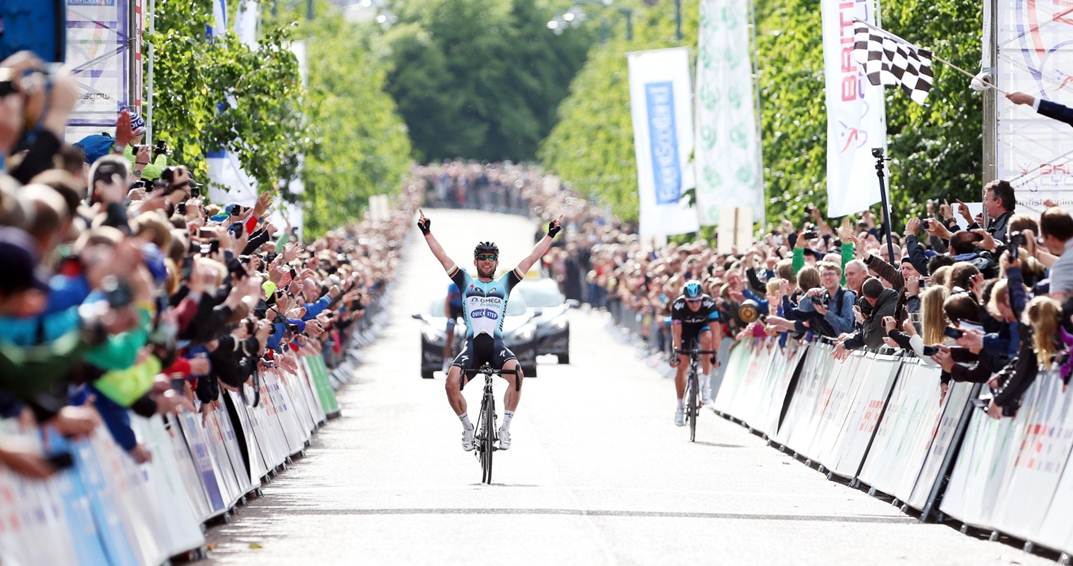
A new fixture has appeared on the calendar of international multi-sports events. The European Championships, taking place for the first time on 1-12 August 2018, has been described by observers as either a repackaging of existing championships or a serious challenger to the European Games – the continental mega event initiated by the European Olympic Committees (EOC) at Baku in 2015.
The organisers themselves describe the event as a “coming together of existing championships”. Six sports – aquatics, cycling, golf, gymnastics, rowing and triathlon – will be hosted in Glasgow, with athletics taking place in Berlin from 7-12 August.
The concept is run by and on behalf of the European Federations: European Athletics; Ligue Européenne de Natation (LEN, or European Aquatics); the European Cycling Union (UEC); World Rowing (FISA), the European Triathlon Union (ETU); the European Union of Gymnastics (UEG); and the European Tour and the Ladies European Tour as Golf Europe combined.
The broadcast partners for the event are the European Broadcasting Union (EBU)’s free to air members.
“We were very happy to see that Glasgow and Berlin were supporting the idea and particularly that the federations took this major step forward to agree to this concept of having their European championships under one umbrella in the two cities,” says Stefan Kürten, Director of Eurovision Services & Sports Rights at the EBU.
Elevating sports together
“For us, this is a milestone in the development of sports in Europe. This concept will clearly contribute to maintaining European sports on this level where it belongs,” says Kürten.
“We want the public in Europe to focus on the top Olympic sports in Europe. We want to show to the public the top athletes in these sports that are already visible on free to air, and we want to centralise that.
“By centralising them we are not creating an additional event; it is bundling existing events. We as broadcasters are not interested in more events. There is sometimes the belief that the more you create, the more interest you generate. I can say from a broadcaster’s perspective this is wrong. You have to focus on the top events and make them even more valuable.
“Therefore we think there will be an increase in audience by these multi-sports events so that will be to the benefit of the sports and of the host cities and clearly also to our benefit.
“On top of that, we think by putting these events together we also want to emphasise the relevance and importance of European sports, because the cradle of the Olympic sports is Europe and we are afraid that if that part falls, gets weaker, that has an impact on world sports and we don’t want that. We think as broadcasters: let’s promote the strongest, push it further, and be creative and innovative.
“The message that we got back from the members was that the broadcasters were extremely pleased with such a milestone event. We have 23 broadcasters with us already – the top broadcasters – and they will be all the main channels.”
Frank Kowalski, Managing Director of the Berlin 2018 local organising committee says: “Working together with Glasgow, we are really proud to be in the first move of this European project.
“For the city and for us it wasn’t easy because the situation came after awarding the 2018 European Athletics championships to Berlin. But we are totally convinced that this is the right step for the summer sports to get the power against other sports like football.
“We all have to learn not to produce what we like to produce, but what our clients like to have. I am convinced that we will have a lot of synergies and will take every opportunity we have for us, for the European Athletics Championships and for the city of Berlin. We have strong partners and we are getting closer and closer through the collaboration – and it makes sense.”
Scheduling around the crown jewels
“In athletics it’s very important that our time schedule is respected,” says European Athletics President Svein Arne Hansen. “We have a long tradition in having our biennial Championships in this week and we made very sure from the beginning that our prime time had to be protected. We agreed that with LEN and with our Glasgow friends.
“This is the jewel in the crown for European Athletics and we have to protect that jewel and I think we have achieved this – we’ll soon be ready to give out the timetable.”
Paolo Barelli, President of LEN says: “What we are doing is very easy, it is not so complicated. The first period, the first part of the Championships, is for aquatics. The second part is for track and field, with one day of overlapping.”
“It is a coordinated approach,” says Kürten. “The idea is to have as few overlaps as possible but to have a natural flow of medal ceremonies and heats so we have on-going interest that is well coordinated.”
Colin Hartley, Championships Director of Glasgow 2018 says: “The collaboration to create a schedule that works for as many reasons as possible is already at version one. When we unveil that schedule it will be as good as we can achieve in terms of city, sport and of course for the broadcast viewers.”
The challenge of selling tickets
Tickets go on sale on 22 August 2016 – the day after the Rio 2016 Olympic Games finishes. Berlin has the biggest sales challenge, in filling the 74,475 seat Olympiastadion.
“For us it’s a very big task to fill the Olympic stadium in Berlin,” says Arne Hansen. “But I hope that all the excitement of what’s happening up in Glasgow will carry over to people in Berlin, so people will see next week we are in Berlin to see the athletics.
“We have gone into it with open eyes, even if this contract was signed before my election, which was one year ago. I am fully enthusiastic and behind it.
“We all remember Berlin 2009 and that incredible atmosphere. It was really something, because of one thing; you had the local athletes plus some superstars from Jamaica. But local athletes are what you need.
“I am sure that the German federation will bring the best out in this Championships. 74,000 is a very big thing to sell, but if somebody can do it in Europe, Berlin can do it. We hope that they will have bigger viewership and more people coming to the stadium than ever.”
In Glasgow, the organisers are looking into possibilities for ticketing across the different sports.
“On the back of the Commonwealth Games in Glasgow, the appetite for sports is very much there,” says Colin Hartley, Championships Director of Glasgow 2018.
“People going to sports they haven’t seen before is a proven thing that they are interested. So on the back of that, we will definitely bring ticketing together. And we’ll be promoting the events in Berlin as they will in Glasgow. For the spectators, online and social media will be very much a seamless experience.”
A threat to the European Games?
The next European Games is due to take place in 2019, with EOC President Patrick Hickey having stated in November 2015 that Russia would be the preferred host.
However, Russia’s Sports Minister Vitaly Mutko is reported to have said that Russia never applied to host the Games and would be too busy to host any other major events until 2020. And with Russia’s participation in athletics at the Rio 2016 Olympic Games under threat from doping revelations, the country’s suitability to host the European Games is also under scrutiny.
Hickey and EOC Vice President Janez Kocijancic both contacted Host City to say the EOC would not be making a statement on this matter “for the moment”.
Hickey also referred Host City to a letter he sent to the European Federations in which he stated that their contract with the European Championships management company would violate EU competition law, as it seeks to restrict them from “competing in another multi-sport continental event within a year of the conclusion of the 2018 European Sport Championships”.
“I haven’t spoken with Patrick Hickey since the latest news about Russian internal things going on there,” said Arne Hansen at SportAccord. “We have an agreement with the EBU; our best athletes will be in Berlin. And if the conditions are right we will also be in the European Games.
“There will not be a European Athletics Championships of any kind in the European Games – no youth, junior, under 23, or senior. But I don’t say it will be low level. Athletics is a big sport; hopefully we can find other interesting things to put in the Games. I am not saying no to new competitions; that would be against my nature.”
It is also uncertain whether the EBU will put its weight behind the European Games. “We have had discussions, we have looked into it,” says Kürten. “It was difficult to follow the European Games on TV, there was not such broad interest in Europe. We think this is a bit of a different event, so for us it was clearly relevant to focus on the top sports.”
Barelli is keen to stress that the European Championships is not a threat to the activities of the European Olympic Committees or the other European Federations. “We are not creating any European Games. I know that someone tried to make some misunderstanding about that. Track and field manages its own championship; I don’t want to interfere with its championship, and track and field is not permitted to interfere with my championship.
“What we are doing is putting together seven sports, with the help of EBU, with the help of the family, with the help of Glasgow, just to have something more to add to the value of each discipline. It was very difficult to create but when someone put their mind to this project is was easy to answer the question why. We think this is going to be a good format for the future.”
Big host city sought for 2022
No additional sports are being considered for the 2018 event, says Kürten. “We didn’t want to overcharge; the idea was to go with specific group of sports that couldn’t clash; it couldn’t be too long. If you have the first edition of such an event it’s good to start with quality and not to overload it.”
If 2018 is successful, the European Championships will take place again in 2022. Arne Hansen says: “We have, together with EBU, together with other partners, set criteria for 2018. I that is fulfilled, we will go along with 2022.”
European Athletics already has 11 countries bidding for their 2022 Championships, in a process that was launched before the possibility of the combined event arose.
“It is a huge thing that we already have 11 countries in Europe bidding for the 2022 European Athletics Championships. We will go out to them, together with the other sports, to find potential bidders from the 11,” says Arne Hansen. “We have already started a bidding process, so it would be very hard to go outside those 11 countries to find the next organiser for the next European Athletics Championships.”
Kürten says the aim is to award the 2022 European Championships to a major European city. “The interest when looking at host cities is clearly there; in this respect we expect this to materialise in a big city – that’s what we are trying to achieve.
Asked if the next edition will take place in just one city next time, Kürten said “It’s too early to say. That’s open; probably one city”.
This article is Host City’s coverage of a European Championships media roundtable at SportAccord Convention, with further input from the EOC. -
Rio set to repeat London’s legacy success, says AECOM
With just two months to go until the opening ceremony of the Rio 2016 Olympic and Paralympic Games, the host city is “on the cusp” of reaping the same legacy benefits enjoyed by London, according to AECOM, the company behind both cities’ Olympic masterplans.
“Despite Brazil’s current economic and political challenges, the guiding principle has always been for the Games to serve Rio and boost its development, improving the quality of life for all its citizens,” said Bill Hanway, Global Sports Leader at AECOM.
Rio is aiming to stage the world’s best value Olympic Games by reducing public cost through partnership with the private sector, and by delivering a simple and sustainable venue plan that applies many of the legacy planning strategies of the London 2012 Games.
According to the IOC, 75 per cent of capital expenditure relating to London’s preparations for hosting the 2012 Olympic Games was invested in transport and utilities infrastructure, land and water clean-up, public open spaces, new homes, and permanent sports and leisure facilities.
A similar approach has been adopted in Rio. The Games is boosting the development of public transport, with Linha 4 of the metro to Barra, the site of the Olympic Park, due to be completed just in time for the Games.
Power and data facilities installed to cater for 20,000 journalists from the international media will make the Olympic Park one of the best connected districts in Rio.
“The Games are a catalyst for changing not only the city, but the aspirations of future generations. As with London, our approach is to take a long-term view that sees the Games as a milestone in the ongoing legacy programme,” said Hanway.
“The Games and the success of the event are the primary focus, but also serve as a driver for the future. It’s an opportunity to invest in underdeveloped areas and significantly upgrade transport and infrastructure. Rio is now on the cusp of reaping the legacy benefits.”
Parallel lines: Games and legacy masterplanning
For the London 2012 Games, AECOM delivered masterplanning, landscape architecture, engineering and sustainability services. Working closely with its partners at Rio’s Municipal Olympic Company (EOM), AECOM has reprised these roles in Rio with additional responsibility for the preliminary design of the Barra Olympic Park’s sports arenas and detailed design of the International Broadcast Centre.
AECOM’s masterplan for Rio covers a 20-year period, with three distinct phases: preparation for the event; a transitional phase; and the long-term legacy. All phases were planned in parallel to smooth the transition between modes. AECOM points to the layout of roads and the capacity of utilities in the Barra Park, which were designed to cater for the planned residential, educational, commercial and sporting legacy.
The deconstruction and repurposing of temporary structures will take between five and seven years to complete after the Games. And in the legacy phase, more than three-quarters of the site will become a new neighbourhood.
Just under a quarter of the Barra site will be occupied by permanent sports facilities, which in legacy mode will provide elite training facilities for the Brazilian Olympic team as well as a sports high school for future Olympians.
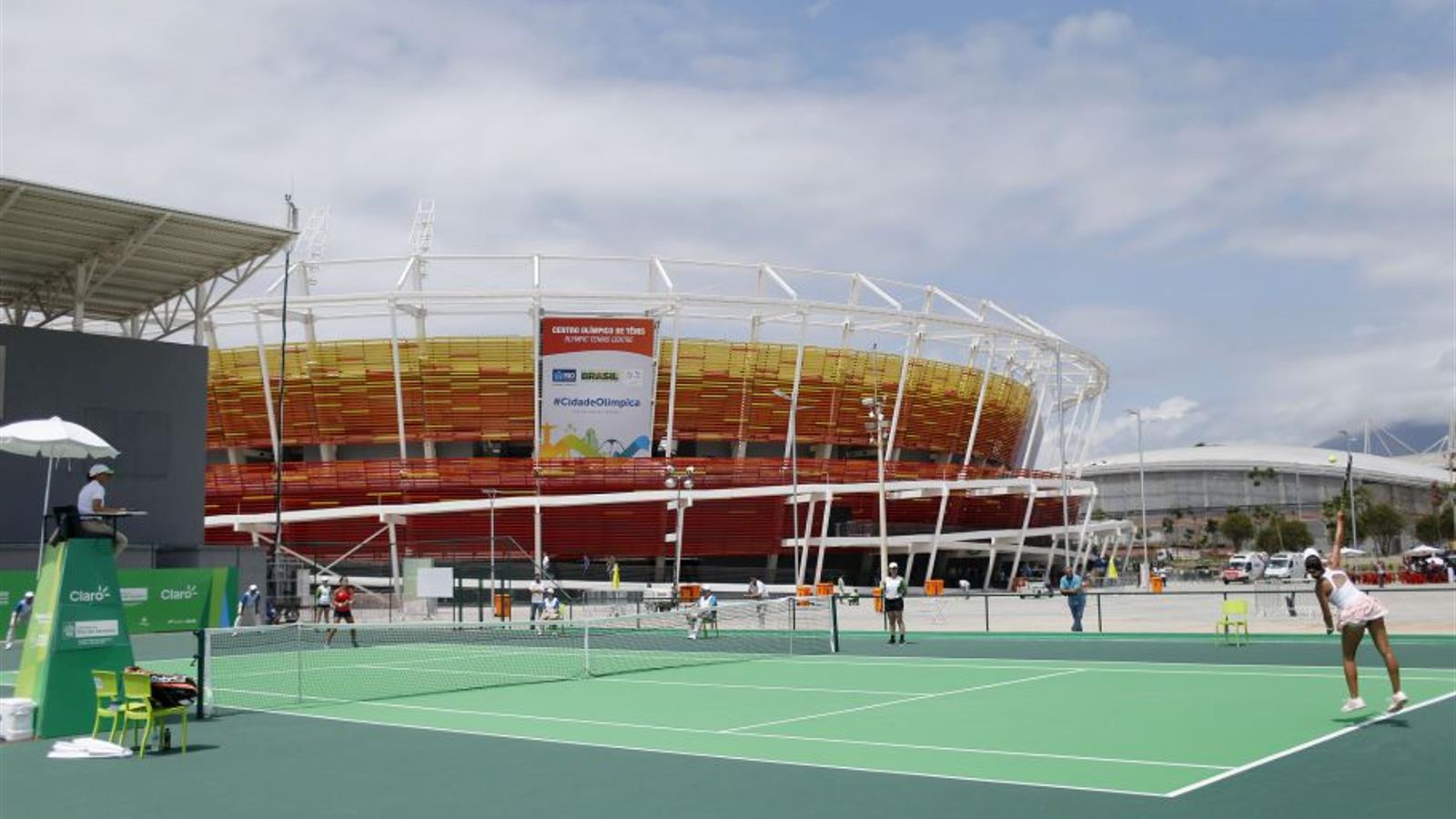
AECOM delivered preliminary designs for six new sports venues: the new velodrome, Olympic Aquatics Stadium and Tennis Centre, as well as three adjoining Carioca Arenas that will host basketball, judo, taekwondo and wrestling competitions.
The velodrome will remain a cycling venue, the tennis centre will be adapted to host tournaments, and the Carioca Arenas will become a Sports Academy School and multi-sport training facility. The Olympic Aquatics Stadium will be rebuilt as two smaller community pools.
AECOM was also tasked with delivering the strategy for reusable, temporary structures that could be moved and rebuilt as community facilities and schools after the Games.
Venues including the Handball Arena and Olympic Aquatics Stadium employ efficient, highly standardised designs based on modular, stacked and repeated bolted steel structures to ease dismantling and reassembly. This “nomadic architecture” approach will allow the Handball Arena to be transformed after the Games into four new primary schools across the city.
AECOM also provided full architectural services for the International Broadcast Centre, which meets strict environmental and sustainability standards while also fulfilling broadcasters’ needs in terms of power and data connectivity, acoustics and temperature control.
The Olympic Park is designed for more than 150,000 spectators to move safely and freely on peak days during the Games. After the Games, the focus will switch to turning the site into parkland, with AECOM’s landscape design strategy transforming large spectator areas into a new linear park for the community.