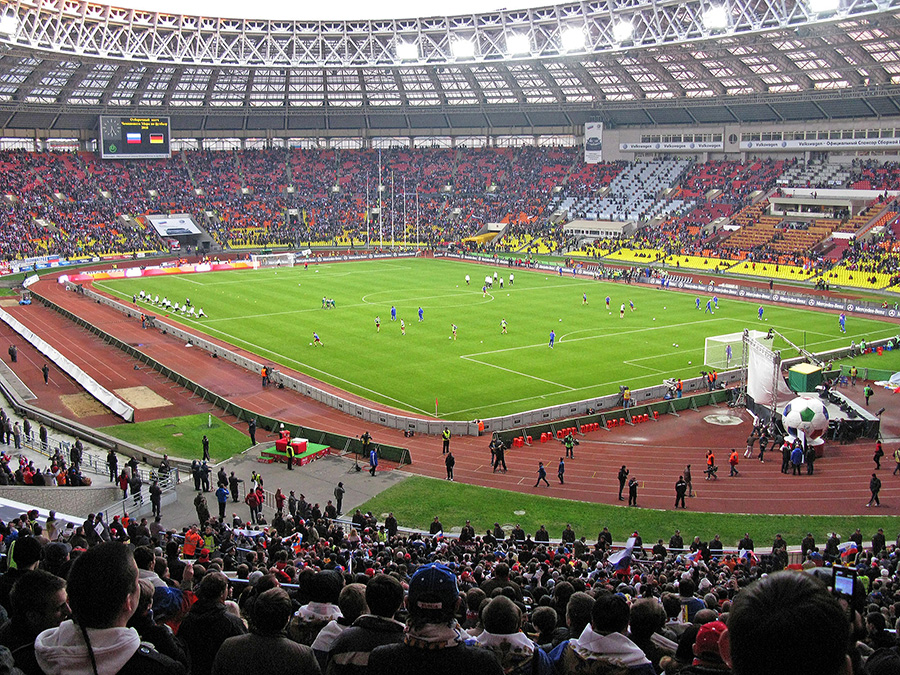
The FIFA World Cup final will be played on a surface incorporating artificial grass for the first time ever, after Russia 2018 organisers selected an innovative surface called SISGRASS from SIS Pitches.
A surface of 95 per cent natural grass impregnated with more than 150 miles of specially developed synthetic yarn will be installed at Moscow’s historic Luzhniki Stadium.
The pitch is scheduled to be ready in time for the Confederations Cup in May 2017.
SIS Pitches said its SISGRASS surface offers a safer, softer surface that protects players from injury, but with three times the playing time of natural grass alone.
“It’s the first time a World Cup final has been played on anything but all-natural grass and it’s like a dream for us as a company and a community,” said SIS CEO George Mullan.
“We have come so far to get this system to the pinnacle of world sport.”
The patented system was created after SIS Pitches approached Dutch engineers to design a ‘giant sewing machine on tracks’. This machine crawls across a pitch, implanting, or ‘stitching’, more than 240 million precise lengths of two-tone green synthetic yarn 180mm deep into the sub-surface.
“We didn’t want to simply improve on existing machinery. We chose a challenge to create the perfect hybrid pitch of natural and synthetic grass and start from scratch,” said Mr Mullan.
“It strengthens the structure of the natural grass, making it stronger and more resistant to damage which means more games can be played on a pitch. It also drains more effectively. For a busy tournament like the World Cup it is perfect.
“At the same time it is player-friendly. Our polyethylene construction actually gives it a softer feel, with more consistency and greater traction than natural grass alone. That reduces injury risk and the bounce and roll is always even, so the players love all these features,” adds Mr Mullan.
SIS Pitches says the durable surface is also visually indistinguishable from natural grass.
“TV Companies also love it because the surface stays looking beautiful at all times,” said Ilyas Kobal, SIS division managing director.
“It was a long tender process but in the end our advantages meant even the local Russian companies could not match us.”
SIS Pitches had to convince the FA, FIFA and a host of international testing bodies that its new system worked better than alternatives. This involved stringent accelerated wear trials by rigorous independent testing consultants STRI.
In these trials the new surface beat unreinforced grass for damage resistance, traction, grass cover and sheer strength, SIS said, claiming that the surface can be used three times longer in all weathers without damage and can be laid in just one week.
Construction work to transform Luzhniki Stadium is underway, due for completion in early 2017. A system of undersoil aeration, drainage, irrigation and heating is being installed to allow the pitch to be used all year. A custom designed rootzone will be laid, stitched with yarn and then seeded to be ready in time for the Confederations Cup.
During the 2018 World Cup the stadium will host the opening and final matches. SIS Pitches has also signed a two-year deal to maintain the pitch after the World Cup, when Luzhniki will be the home of the Russian national team.
Since its launch in summer 2015, SISGRASS has also been selected for Chelsea, Besiktas, Hull City FC and the English FA’s centre of excellence at St. George’s Park.
Blog
-
2018 World Cup breaks new ground with SIS Pitches reinforced turf
-
Cities are in a “battle for growth” – ECM president
Cities are embroiled in increasingly intense competition for branding, with digital and social media having transferred marketing from city officials to citizens, according to the president of European Cities Marketing (ECM).
“City branding is more complex than ever. CTOs (chief technology officers) have lost share of voice in the age of digital and social media. The city belongs to the people,” said ECM president Ignasi de Delàs in the run up to the next ECM meeting on 24-27 February in Madrid.
“And it’s definitely no longer just about the tourists. Cities compete more than ever for private investments, business conferences, world sports events, talents in research and science, film productions, political summits, international students, cruise ships, international headquarters and new airline connections.
“Ultimately, it’s all a battle for job growth, prosperity and quality of life. The winners get a global window and a place in the sun. The losers remain in the shadows among the non-places of globalisation.”
At the ECM Meeting in Madrid, February 24-27, ECM and Madrid Destino will present a parade of thought leading international experts highlighting European and North-American perspectives.
Experienced city brand marketeers will share their most valuable insights and learning for a full two-day conference on the latest trends, the pitfalls and the upsides of a branding discipline undergoing rapid change.
Among key speakers, Fred Dixon, President and CEO of NYC & Company and Robert Govers, Founding Chairman of the International Place Branding Association will provide opening notes with a seemingly joint message: “Leave the branding to the people”.
Copenhagen will discuss how it leaves its marketing voice and buzz to the people, while Nantes will describe how it uses culture to morph an old industrial port to a new global city. Other cities showcased include Munich, Istanbul, Hamburg and Paris, as well as small destinations such as Davos, home of the “The World Economic Forum” and Billund, the hometown of Lego Corp which aspires to be world’s “Capital of Children”.
A day of seminars will be coordinated by Peter Rømer Hansen, Former Executive Vice President – Strategy & Market Communications at Wonderful Copenhagen and actual Founder and CEO of Rømer Agency.
To find out more visit http://www.europeancitiesmarketing.com/ or contact Flavie Baudot, press@europeancitiesmarketing.com, +33 380 56 02 00
-
IOC welcomes “most sustainable ever” bids for 2024 Games
The International Olympic Committee (IOC) has received candidature files from Los Angeles (USA), Rome (Italy), Budapest (Hungary) and Paris (France) for hosting the Olympic Games 2024 by the Wednesday deadline.
The IOC has hailed the plans, which were submitted in digital-only format for the first time, as showing the potential for unprecedented venue sustainability.
“Following Olympic Agenda 2020, the Candidate Cities are making use of an extremely high percentage of existing and temporary venues, possibly the most ever,” said Jacqueline Barrett, Associate Director Olympic Games/Olympic Candidatures.
Olympic Agenda 2020 is the IOC’s strategic roadmap for the future of the Olympic Movement and the candidature process for the 2024 Games is the first to be launched following its adoption.
The new process encourages cities to present Olympic projects that best match their sports, economic, social and environmental long-term planning needs. It calls for the use of existing facilities where possible, and provides flexibility for the venue concept to meet local sustainability and legacy needs and ambitions.
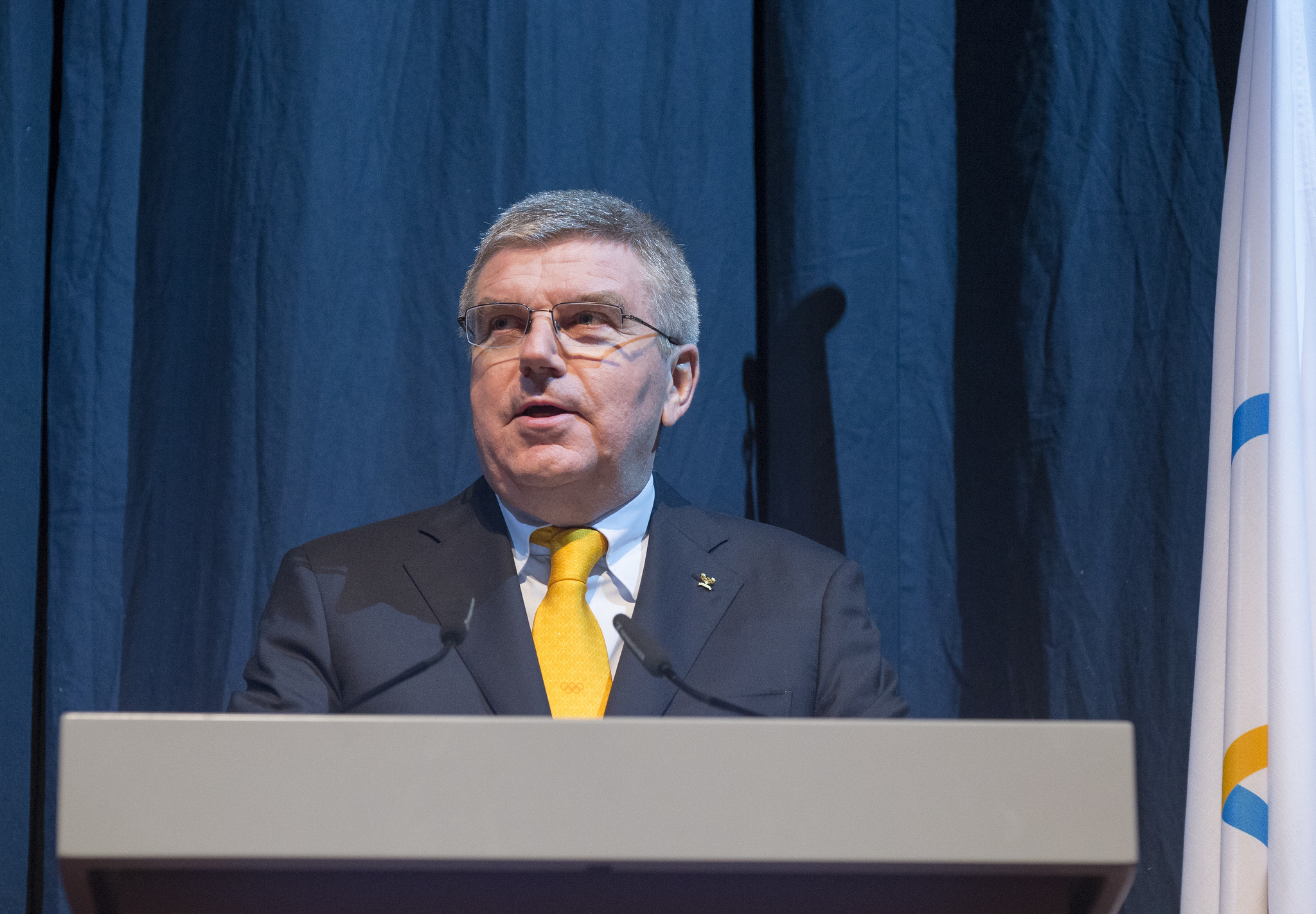
“Los Angeles, Rome, Budapest and Paris are all submitting projects fully in line with Olympic Agenda 2020,” said IOC President Thomas Bach.
“It is impressive to see how they have incorporated the Olympic project into the long-term development plans of their city, region and country. Coming from different starting points, for all four there is a clear focus on sustainable development, legacy and in particular how the facilities are going to be used after the Olympic Games,” said Bach.
“We are delighted to have four extremely strong candidatures and look forward to a fascinating competition.”
The submission of the Candidature Files on “Vision, Games Concept and Strategy” marks the end of the first part of the bidding process.
“The plans received indicate very thoughtful consideration of what the Cities and their people need for the future,” said Barrett.
“The IOC has significantly simplified the Candidature Process, symbolised by the fact that the submissions arrived for the very first time on a USB key only, instead of thousands of pages of paper documents.”
An IOC-appointed working group will now study the files and report to the IOC Executive Board (EB) in June 2016.
The next stage of the Candidature Process will focus on Governance, Legal and Venue Funding, to be submitted by 7 October 2016, followed by a final “Games Delivery, Experience and Venue Legacy” stage due on 3 February 2017.
During Stage 3, an IOC Evaluation Commission will make working visits to each City to study their projects in detail and issue a final report.
The host city of the 2024 Olympic Games will be elected in September 2017 at the IOC Session in Lima, Peru.
-
Scotland hosts international sports bodies as European Athletics evaluates Glasgow bid
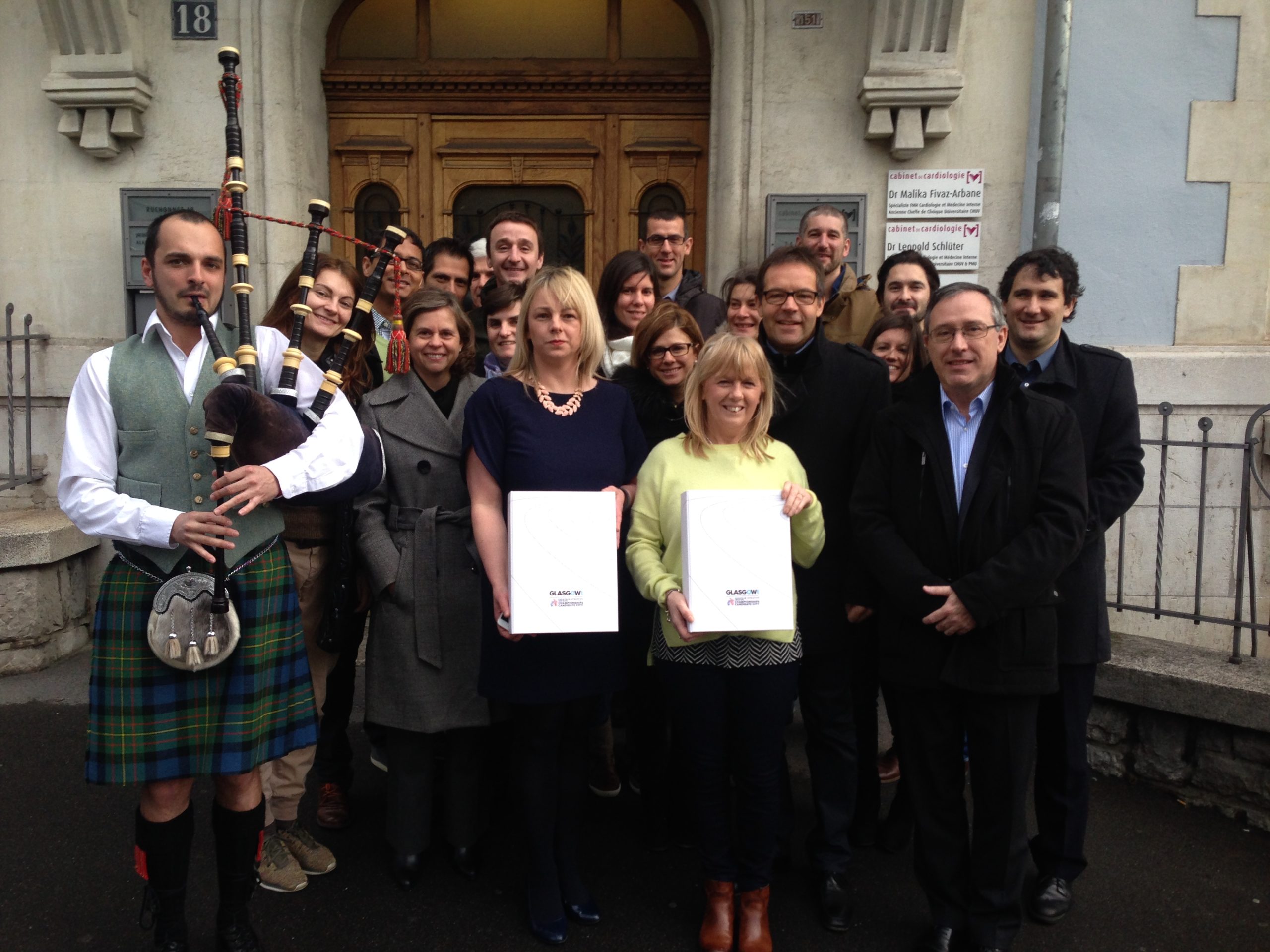
A delegation representing European Athletics arrived in Glasgow on Monday to spend two days in Scotland as part of evaluation visits to cities bidding for the 2019 European Athletics Indoor Championships.
And this is just one of a series of important meetings with international sports bodies scheduled for the year.
Further visits from international federations will take place over the next two to three weeks, an EventScotland spokesperson told Host City, as Scotland continues to bid for and secure the right to stage some of the world’s most prestigious events.
Glasgow is hosting the 2018 European Sports Championship with Berlin. And Glasgow will also welcome the world of sports, business and cultural events to Host City 2016 on 16 and 17 November.
Glasgow is one of four potential hosts of the 2019 Indoor Athletics Championships and, if successful, would be the first Scottish destination for a European Athletics event in 15 years.
The other cities competing to host the 2019 European Athletics Indoor Championships are Apeldoorn (Netherlands), Minsk (Belarus) and Torun (Poland).
Evaluation site visits are underway during February and March, before the Evaluation Commission files a report to the European Athletics Council.
The 2017 European Athletics Indoor Championships will take place in Belgrade, Serbia.
The Council will vote on which city will host the 2019 championships on 23 April at its meeting in Amsterdam after presentations by the bidders that meet the requirements of the evaluation process.
The Evaluation Commission consists of Karel Pilný (Evaluation Chair); Célia Mendes, Marcel Wakim and Bernadette Brun.
“In recent years Glasgow has established itself as one of the world’s top sporting cities thanks to our investment in new facilities and our international sporting events programme,” said Depute Leader of Glasgow City Council and Chair of Glasgow Life, Councillor Archie Graham OBE.
“Athletics has been at the very heart of our rise as a world-leading sporting city. This weekend’s Glasgow Indoor Grand Prix will take the sport to a new level and we hope to build on that success with the 2019 European Athletics Indoor Championships, which would see Europe’s top athletes return to the Emirates Arena. Our aim is to deliver a world-class event with athletes and spectators at its very heart.”
As well as meeting with bid partners, including the Scottish Government, EventScotland, Glasgow City Council, Scottish Athletics and British Athletics, the group toured the Emirates Arena.
The itinerary also includes a visit to proposed training venue Scotstoun Sports Campus, and an assessment of Glasgow’s ability to accommodate hundreds of athletes and, potentially, thousands of tourists.
“This weekend’s 2016 Glasgow Indoor Grand Prix has sold out months in advance, demonstrating the huge support for elite athletics there is within the Scottish public,” said Niels de Vos, Chief Executive of British Athletics.
“I’m delighted that Glasgow City and EventScotland decided to build on the success of the 2014 Commonwealth Games and previous British Athletics events held in the city by bidding to host European Athletics’ flagship indoor event at the Emirates Arena in 2019.”
-
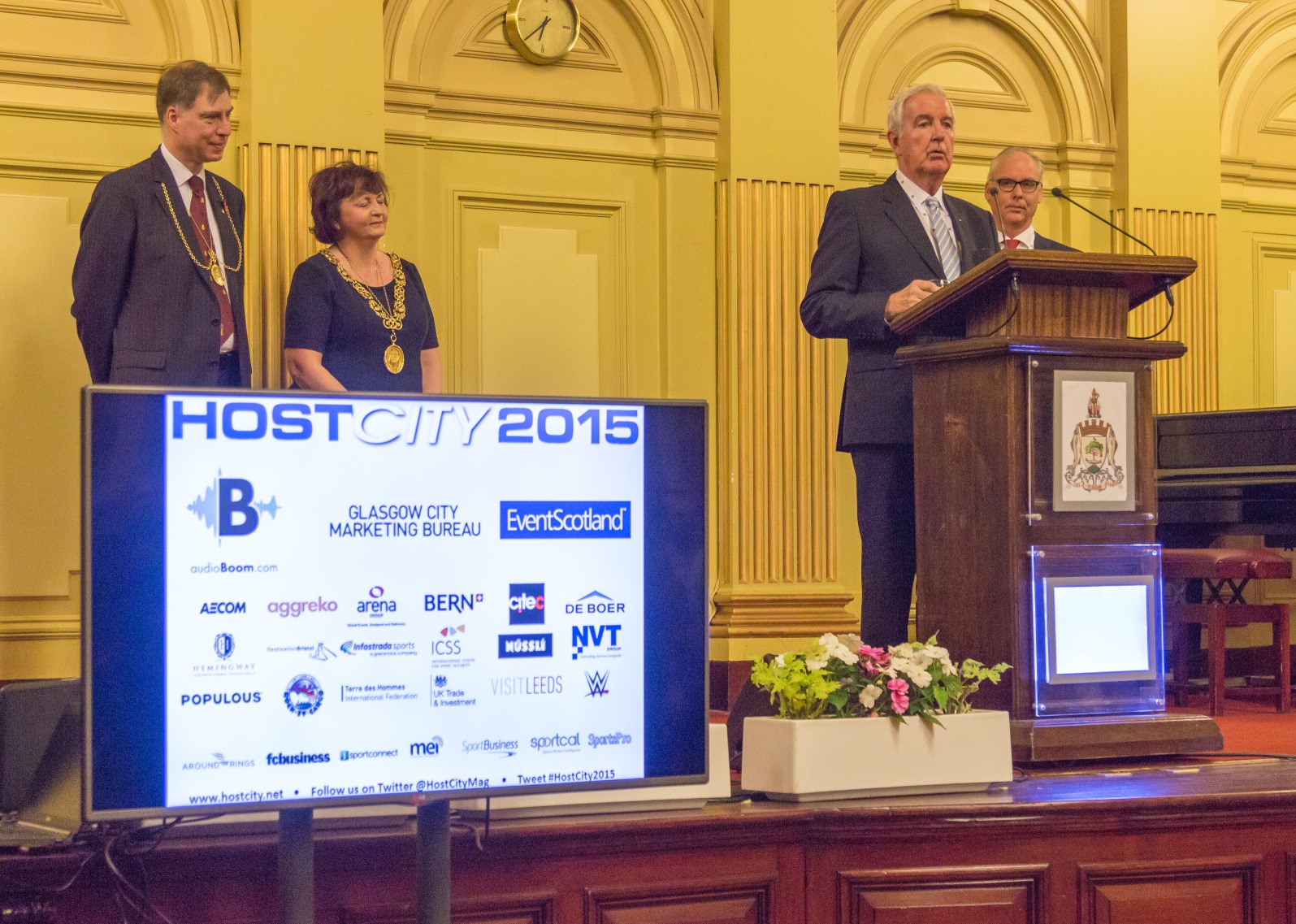
Exclusive: IOC VP Sir Craig Reedie on realising Agenda 2020 and clean sport
When the International Olympic Committee (IOC) approved Agenda 2020, its “strategic roadmap for the Olympic Movement” in 2014, the most evidently urgent issue was to boost the appeal of hosting the Olympic Games. Four European cities had pulled out of bidding for the 2022 Winter Olympic Games, leaving Almaty and Beijing as candidates.
The first three of Agenda 2020’s “20+20” recommendations focussed on reforming the bidding process. These changes have been quickly implemented and the results are evident in the strong field of cities bidding for the 2024 Olympic Games.
But Agenda 2020 is about much more than this, focusing on areas such as sustainability, blending sport and culture, launching an Olympic TV channel, engaging with communities – and an issue that has become extremely pressing for the Olympic Movement in recent months: the protection of clean athletes.
Sir Craig Reedie, in his dual roles as Vice President of the International Olympic Committee and President of the World Anti-Doping Agency, spoke exclusively to Host City about the challenges and opportunities ahead for the Olympic Movement and how the IOC is implementing Agenda 2020.
HOST CITY: How is the IOC encouraging organising committees to boost sustainability and reduce the cost of event delivery?
Sir Craig Reedie: Sustainability covers a wide range of operations. It effectively started under Agenda 2020 with the first two or three proposals, which were to shape the bidding process as an invitation; and then evaluating the cities, assessing key opportunities and risks; reduce the cost of bidding; and then to include sustainability in all aspects of the Olympic Games and the Olympic movement.
By framing the Games bidding process under the invitation, we get the opportunity to speak to a National Olympic Committee which wants to submit a city, and the city itself, right at the start of the programme. We can set out quite clearly that we wish them to consider a sustainability strategy, to develop a plan and to integrate and implement sustainability measures that cover the economic side, the social side and the environmental sphere in all stages of the project. And so far I have to say that seems to be working.
The Winter Games are sometimes a bit more complicated than Summer Games, because by the very nature of Winter Games there are some indoor facilities that are very sports specific – for example long track speed skating. A lot of work needs to be done by organising committees and candidate cities to make sure that what they build is sustainable after the Games.
For a summer Games it’s probably a little bit easier, because the facilities that have been built can frequently be used for more than one sport or more than one purpose. It’s certainly an integral part of the Agenda 2020 process and it’s underway.
We certainly wish to reduce the cost of bidding and that is clearly underway at the moment for the 2024 bidding process. The cities have far fewer presentations to make and they work very closely with the IOC. There are three specific stages and we are just at the beginning of stage one.
We want what is built to be sustainable; we don’t want any white elephants and we want cities to plan all that carefully all the way through.
HOST CITY: Looking ahead to Tokyo 2020 do you have confidence that their stadium will be a sustainable solution?
Sir Craig Reedie: Yes, they looked hard at the original plans for the main stadium primarily on the basis of cost and they have come back, as far as I can see, with a revised and more cost effective plan.
It’s more sustainable and it will be finished earlier, which is a good thing so you can fit that stadium with all the bits and pieces that are necessary for an Olympic Games; you’ve got not just sport taking part there but you’ve got major ceremonies.
Most recently there was a report from Tokyo on the whole sustainability structure and that gives me some confidence that what we wanted to happen is actually happening.
HOST CITY: A USD 20m fund was set aside to protect clean athletes through Agenda 2020. In the light of recent revelations in athletics, is this enough or are further measures necessary?
Sir Craig Reedie: The US$20m fund is clearly working. It was split into two parts. The first was US$10m for advanced anti-doping research; it was made available to WADA provided we got governments to match the US$10m. We managed to collect about US$6.5m, so we have received or are in the process of receiving US$6.5m of the original ten. So there is a new fund of about US$13m which WADA is dealing with.
The remaining US$3.5m, which was not matched by governments, is being invested by the IOC itself; and we clearly cooperate on the applications we get for that scientific research to make sure we don’t do the same thing. That process is working extremely well.
The second US$10m under the heading “protecting clean athletes” wasn’t anti-doping – it was for any forms of manipulation and corruption. Clearly that’s been in the media recently with accusations about wrongdoing in tennis several years ago, and the tennis authorities are clearly looking at that.
The IOC have invested some of that US$10m in an intelligence gathering system to which almost all the International Federations have signed up. So that process is underway as well.
HOST CITY: It must be very costly looking into and investigating the integrity of all the Olympic Sports combined. Is working with the International Federations (IFs) a way forward there?
Sir Craig Reedie: They are an integral part of the Olympic movement. The IOC itself, the IFs and the NOCs are the three pillars of the movement, so we are structured to deal with the IFs. Certainly in the anti-doping field, from WADA’s point of view, we work closely with all the IFs.
There is a debate at the moment about the creation of a new independent testing agency to take away the perceived conflict that IFs might have, who are supposed to develop and organise their sport, and at the same time to police their sport. The more we speak to people the more the feeling there is that this is a good idea and it might well happen.
So this is a major project, the whole anti-doping effort is a major effort and quite clearly there are major problems in sport of manipulation and corruption and the IOC are well aware of that and effectively putting their money where their mouth is.
HOST CITY: What’s the outlook for Russia’s involvement in Rio?
Sir Craig Reedie: Well, from the WADA perspective our job is, having removed the accreditation of the Moscow laboratory because it was criticised in the independent commission report, and having declared the Russian anti-doping agency to be non-compliant, our job is to deal with both of these situations so that the accreditation of the laboratory can be renewed and above all that the Russian anti-doping agency becomes compliant again.
Our job is not to do this so that people can take part in the Rio Games; our job is to assist Russia in becoming compliant again. It’s other people who decide whether they go to Rio. The one national federation at the moment that is suspended is the Russian athletics federation; it’s the responsibility of the IAAF to make sure that that particular national federation is compliant with all aspects of the world anti-doping code – plus other conditions that it has applied – these will all have to purified before they can be declared compliant and by definition then available to come to the Rio Games. There is a lot of work to be done.
HOST CITY: How will the IOC itself continue to show leadership in the good governance of its own affairs?
Sir Craig Reedie: As leaders of the Olympic movement, we start with ourselves. We now produce a very comprehensive and detailed annual report which is very transparent; it tells everybody everything we are doing, it tells what people are paid, and tells everybody that we produce the accounts under the international financial reporting system – even though that’s not a legal obligation on us.
We have imposed time limits on membership, time limits on periods that you can stay on committees. So we’ve looked very hard at our own governance.
We also speak regularly to the associations of international federations and encourage them to do the same – and many of them do.
As far as National Olympic Committees are concerned, they again are given guidelines – there are basic standard of good governance with which we expect them to comply. At the moment they self-monitor, but we try to ensure that across the whole movement high standards of good governance will apply.
HOST CITY: How will the Olympic movement engage with society and communities in the future?
In many cases the reform process was a serious think-tank. We did look very carefully at, and have a recommendation on, how we deal with communities.
The first one that is being worked on is to create a virtual hub for our athletes and we are quite a long way down the line in doing that.
We’re looking at doing the same for volunteers; we’re looking at ways we can engage the general public. Much of this is social media and how we can improve our website and how we can encourage people to keep in touch with us. We need to have a very clear policy ourselves on how we engage with young people – all of that work is underway.
We’re also going to develop, at no little expense, a television programme called the Olympic Channel, which is going to be a digital programme in its initial form that can then spread into being a full television programme if needs be at a later date, and if countries want it. That will allow us to inform, educate, hopefully excite, entertain and amuse millions and millions of people. All of that is quite an exciting prospect as we move forward.
HOST CITY: It’s interesting that it’s going digital first, because the majority of young people are now watching more on the internet than on traditional television.
Sir Craig Reedie: Yes, I suspect that that piece of statistical information was warmly welcomed in the offices of the digital channel in Madrid.
HOST CITY: Why is it so important to further strengthen the blending of sport and culture at the Olympic Games and in-between?
Sir Craig Reedie: At the end of the day it’s one of the absolutely defining characteristics of the Olympic movement and the Olympic Games – that there is this clear mix, this blend of sport and culture.
We’re trying to develop that; we’re looking at creating an Olympic Laurel award to celebrate any outstanding contribution to Olympism through culture, education, development and peace. We are looking to develop an Olympic House, to welcome the general public to engage in a dialogue with the Olympic movement.
There’s a programme called artists in residence which is being examined; that’s a very specific cultural connection. We’re looking at a curators committee composed of various global cultural players.
We also try as best we can to take the Olympic Museum out on the road: for example, specific Olympic Museums created in host cities at times of the Games. I think that’s quite an exciting project; it’s one of the projects I’m trying to develop, as I think it’s part of our heritage and it’s something we should celebrate.
HOST CITY: How is Agenda 2020 being implemented within the IOC?
Sir Craig Reedie: The whole Agenda 2020 process appears to have been warmly welcomed and we now work on it regularly at the Executive Board meetings. We look at the implementation plan to see what else we have to do; so it’s not just been a question of thinking through what we want to do, putting it down on paper and then hoping that it happens. There is a specific and detailed implementation plan that we look at on a very regular basis.
A lot of this will fall, in several years’ time, into our new headquarters in Lausanne, so everybody working for the IOC in Lausanne works under one roof. It’s a huge investment in the Olympic movement, it’s a huge investment in sport and it’s also a huge investment in Lausanne – particularly when you look at the way we’ve made a similar investment in the complete remodelling of the Olympic Museum. So we hope to be good citizens.
The IOC Executive Board will meet in Lausanne on 1 to 3 March 2016 to discuss the implementation of Olympic Agenda 2020
-
China’s giant sports investments
China’s economic growth may have cooled down from its double digit rates of recent years but the country’s sports sector is powering ahead, both at home and abroad, with sports identified as a key area of economic development for the coming ten years.
Investing at home
Beijing is set to invest USB 1.5bn in hosting the Olympic Games in 2022, but this is a tiny fraction of the total domestic investments into sport China is set to make over the next decade.
China’s national plans for investing in sport are unprecedented. According to the General Administration of Sports (GAS), the sector in China is set to expand to US$1tr by 2025 – more than the value of the entire global sports industry at present.
While this goal may sound unrealistic, recent figures support such a projection. The GAS says China’s sports sector grew by US$55bn in 2012 to reach US$170bn in 2013. Official estimates suggest that China’s sports sector will expand by US$62bn in 2015. And by 2020, the sports sector is expected to reach US$456bn.
To achieve this sustained growth in sports, the government has recently issued 50 documents setting out a series of measures, focusing on tax incentives, land security, specialized funds, technology and research and development.
China outbound
It’s not just on home turf where China’s ambitions lie. With international reserves far outweighing any other nation, China is investing far and wide – and focusing on sports properties.
In a process dubbed “stadium diplomacy”, China has built and financed the construction of 37 venues in Africa, five in Asia (including Syria), eight in the Caribbean, six in the South Pacific and one in Central America (Costa Rica).
And over the last two years, Chinese investors and firms have bought into football clubs in England, France, the Netherlands, Spain and the Czech Republic.
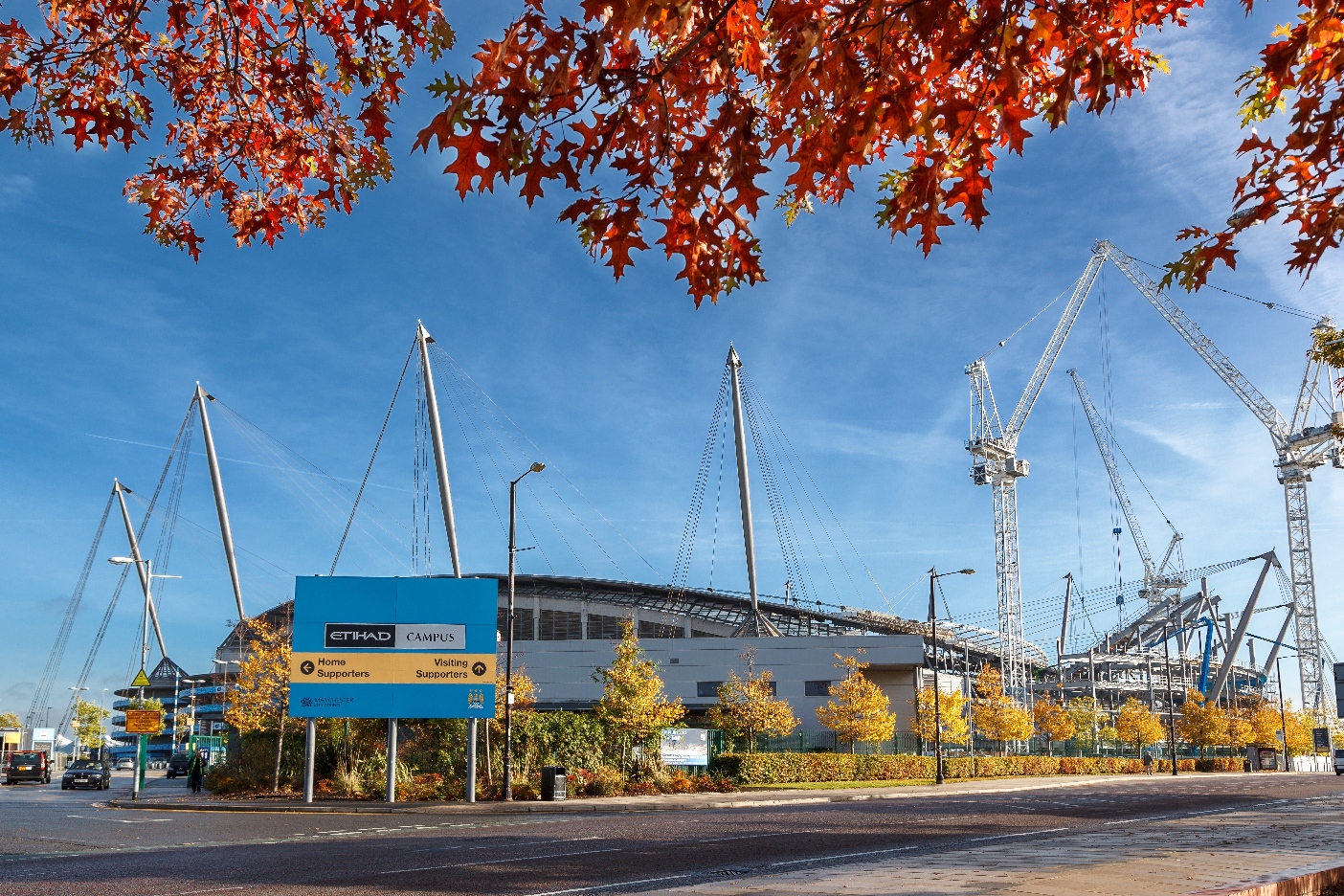
In December 2015 it was announced that a consortium of Chinese investors – CMC (China Media Capital) Holdings and CITIC Capital – was to acquire a 13 per cent stake in City Football Group (CFG)
CFG, the holding company of Manchester City, Melbourne City and New York City football clubs that is wholly owned by Sheikh Mansour’s Abu Dhabi United Group (ADUG), is valued at approximately US$3bn.
CMC Holdings and CITIC Capital’s investment of US$400m in City Football Group demonstrates just how highly China values the power of investing in football overseas.
For football clubs, the opportunity of Chinese investment brings access into China’s rapidly growing sports sector. The Chinese market is a crucial target for global football brands to grow their fan base, not only because of the sheer size of the market but because of the growing interest in football there.
“The deal will create an unprecedented platform for the growth of CFG clubs and companies in China and internationally, borne out of CFG’s ability to provide a wealth of industry expertise and resources to the rapidly developing Chinese football industry,” Manchester City said in a statement.
“The capital from the share acquisition will be used by City Football Group to fund its China growth, further CFG international business expansion opportunities and further develop CFG infrastructure assets.”
China Media Capital, a public equity and venture capital firm investing in sectors including culture, technology, media and entertainment, also secured the US$1.3bn broadcast rights for the Chinese football league in 2014.
World Cup hosting hopes
It’s not just state-owned investors that are capitalising on the global football industry – Chinese private enterprises are also getting in on the act.
Since 2012, Huawei has signed sponsorship agreements with Spain’s Professional Football League (LFP) and club side Atlético Madrid, the Russian national soccer team, German clubs Borussia Dortmund and FC Schalke 04, Premier League side Arsenal FC, French champions Paris Saint-Germain and Dutch Eredivisie giants Ajax, among others.
And in December 2015, FIFA announced China’s Alibaba E-Auto as sponsor of the FIFA Club World Cup – the first new sponsor signed by FIFA in two years.
“We are delighted to welcome Alibaba E-Auto as Presenting Partner of the FIFA Club World Cup and are excited to be working closely with them to embark on a journey to reach fans across the world,” said FIFA Marketing Director Thierry Weil.
“We also hope to benefit from their innovation, and are looking forward to seeing what they can bring to the FIFA Club World Cup over the next eight years.”
The “internet car” brand is owned by Alibaba Group and operated with Shanghai Automotive Industry Cooperation (SAIC).
Daniel Zhang, Alibaba Group CEO said: “Sports is at the intersection of Alibaba Group’s strategic themes of health and happiness, and we look forward to adding new value for participants and consumers in the sports sector through data-driven Internet technology.
“Partnering with a major sporting event with a global audience such as FIFA Club World Cup is also an important part of Alibaba Group’s globalisation strategy for connecting China to the world.”
The partnership is also seen as a means of increase China’s stature within FIFA.
China is not yet a major force when it comes to playing football. The country has only qualified for the FIFA World Cup once, in 2002, and it currently sits at 84th position in the world ranking.
But it is hoped that all this investment into sports will help raise the standard of the game in China. And while the country isn’t yet among the best at playing the game, it certainly has a strong track record of hosting major events and a bid to host the World Cup would be welcomed by FIFA.
The host of the 2026 World Cup is due to be elected at the FIFA Congress in Kuala Lumpur in May 2017. For the first time, all FIFA’s 209 member associations will have a vote, instead of just the Executive Committee members.
The bidding process has not officially begun and bids are unlikely to be announced until the dust begins to settle on FIFA’s process of transition.
FIFA dropped its policy of continental rotation in the bidding phase for the 2018 and 2022 World Cups and the organisation decided not to vote on reintroducing the policy at its Congress in 2015.
If the policy were to be reintroduced, China would be out of the picture until 2030 – assuming Qatar retains its right to host the 2022 World Cup.
But as things stand, a bid from China for the 2026 World Cup is possible and would be strong competition to a bid from the USA. With the coming years set to be a time of renewal for FIFA, taking its flagship event into the world’s largest growth area would no doubt be an appealing prospect for the world’s football leaders.
This article first appeared in the Winter issue of Host City magazine. Register here. -
Smart cities at RAID to share innovation strategies in Utrecht
The inaugural World RAID Congress, taking place at Jaarbeurs in Utrecht, the Netherlands on 31stMay – 1st June 2016, will be the largest cross-sector disruptive innovation event in Europe this year.
RAID stands for Robotics, Artificial Intelligence, Internet-of-Things and Data – the technological mega-trends that are transforming the world today. RAID informs the industry sectors of Energy, Finance, Healthcare and Transport, with a special focus on Cities.
Aimed at cross-sector C-level business and city leaders, RAID is an opportunity to learn from peers and experts about how to cope and innovate in the face of disruptive changes to established business sectors.
Alongside technology providers, city leaders will demonstrate how they are investing in RAID technologies to advance economic and social development.
The format will be one of cross-sector plenary panel discussions with VIP speakers on Day One, followed by dedicated streams for Auto/Transport, Cities, Healthcare, Energy and Financial Services on Day Two.
Dedicated to sustainable development, transport and health
The Cities stream at RAID is set to begin with VIP addresses on “The Challenges and Opportunities of RAID for Cities”.
A panel on “Energy in Transition” will discuss urban utilities for increased efficiency, smart and decentralised grids, RAID and urban renewables.
A session on “Urban Transport” will look at the impact of driverless vehicles and car sharing, the challenges of intercity transport management, AI and Intelligent transport systems for traffic management.
A panel on “Creating Healthier Cities through RAID” will examine how cities can integrate technology and health, while a session on “Urban Development, Security and Investment” will discuss how RAID technologies can make cities safer and economically stronger.
To view the full agenda visit www.raidconfex.com
Join RAID, Europe’s largest cross sector disruptive innovation event
RAID will take place on 31st May – 1st June 2016 at Jaarbeurs, the largest and most accessible venue in the Netherlands, just 20 minutes from Schiphol Airport. The host city of Utrecht is ranked by the European Commission as the most competitive place in the EU to do business.
The event is attracting a minimum of 500 attendees in its first year, with delegations confirmed from UK, China, Germany, France, US, Norway, Sweden and Denmark.
RAID is organised by Cavendish Group, which also stages the International Capital Conference and Host City, in partnership with Jaarbeurs and with strong support from industry organisations in France, the UK, Germany, the Netherlands and China.
Register here for the go-to event for cross-sector disruption and to find out about speaking opportunities contact ben.avison@cavendishgroup.co.uk
-
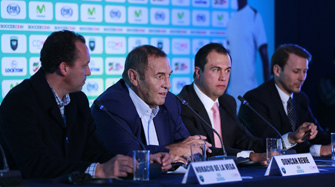
Soccerex announce Dein, Houllier, Torres, Mendieta, Movistar and Fox Sports for Mexico Forum
At a Soccerex press conference in Mexico City on Wednesday, a panel of distinguished guests announced the plans for the Soccerex Americas Forum 2016 and confirmed the first selection of VIPs set to attend the event, including Carlos Alberto Torres, captain of the legendary 1970 FIFA World Cup winning Brazil team, lifting the trophy in Mexico’s famous Azteca Stadium.
The Soccerex Americas Forum, held in partnership with leading sports marketing agency Global W Mexico and the Mexico City Government (CDMX), will be taking place at the Camino Real Hotel in Mexico City on 11-12 May. The event will bring together over 700 senior decision makers from the global football industry, with international experts delivering over 10 hours of top level business insight through a programme of conference panels and presentations and over 24 hours of unrivalled networking opportunities provided through an exhibition, featuring over 40 companies and a series of networking and social events.
Duncan Revie expressed his excitement at holding the first Soccerex in Mexico in partnership with the team at Global W Mexico and announced that the Americas Forum will see David Dein, one of the founders of The Premier League, look at the secrets of establishing league growth alongside representatives from MLS, Liga MX and LaLiga, who are partners of the event.
Revie also confirmed that the Forum will include a star studded session looking at the development of players, both in Mexico and globally, which will feature Gerard Houllier, former Liverpool FC Manager and now Head of Global Football, Red Bull, alongside Gaizka Mendieta and Carlos Alberto Torres. Torres is an ambassador for Soccerex and confirmed his attendance at the Forum via a specially recorded video message at the press conference.
Some of the topics to be addressed at the Forum include digital marketing, international growth, player transfers and the Hispanic influence on football business in the US.
Other topics to be addressed at the Forum include the impact of digital marketing in football, the international growth of the game, player transfers and the Hispanic influence on football business in the US.
Rodrigo Lopez Jurado welcomed Soccerex to Mexico and announced that Movistar will be partners of the event. He also spoke with former players Kikin Fonseca and Gaizka Mendieta about their experiences of Soccerex events and the impact they felt it could make on Mexico’s football industry.
With the support of key figures like Fonseca and Mendieta and football clubs such as Inter Milan, Manchester City, Manchester United, Barcelona and Valencia already signed up to join leading international brands such as Telefonica and Fox Sports, the Americas Forum will be a must attend event for anyone interested in doing business in the football industry.
For more information on the Soccerex Americas Forum, please go to www.soccerex.com/americas, call +44 (0)20 8987 5522 or email enquiry@soccerex.com.
Source: Soccerex
-
Glasgow and Berlin unite under new European Championships brand
The hosts and rights holders of the innovative event taking place in Glasgow and Berlin in 2018 have unveiled a new, unifying brand identity under the name “European Championships” – shortened from the previous title of “European Sports Championships”.
The multi-sport event in August 2018 brings together the existing European Championships of athletics, aquatics, cycling, gymnastics, rowing and triathlon, and also introduces a new golf team championship onto the European stage.
The brand is represented by a new logo, the star-like “Mark of a Champion” said to represent the vision at the heart of the new multi-sport championships, the aim of which is said to “create a must-attend, must-watch experience that elevates the status of European Champions”.
The logo was created in partnership by the sports federations, Host Cities Glasgow and Berlin and broadcast partner the European Broadcasting Union (EBU).
“The launch of this impressive brand is the starting gun for a European Championships concept that will help elevate the Berlin 2018 European Athletics Championships to a scale we have never seen before,” said European Athletics President Svein Arne Hansen, co-chair of the 2018 European Championships Board.
“In Berlin we have a fantastic host city for our Championships, and in the German athletics federation, we have a committed partner who have produced a great generation of athletes. We are all committed to delivering the best-ever European Athletics Championships.”
The organising partners said the event will take place every four years, anticipating a television audience of around 1 billion, plus multiple digital and radio platforms in 2018.
Around 1500 athletes are expected to compete in Berlin from 7-12 August as part of the European Athletics Championships, while approximately 3025 athletes are set to visit Scotland for the other six events between 1 and 12 August.
“I am delighted that Glasgow’s vibrant personality shines through this new brand,” said Councillor Frank McAveety, Leader of Glasgow City Council.
“We have worked together with these amazing sports to create something that reflects all of our values by embracing our ambition, our strength in unity and our ongoing journey to provide opportunities for all of our citizens through the power of sport and culture.”
Senator Frank Henkel, City of Berlin, said: “We are really pleased to see the unveiling of the umbrella brand for the European Championships of which we are part. Our city is well underway in its preparations for the European Athletics Championships, and our own Berlin 2018 mark will be unveiled soon.”
Each of the participating sports are due to unveil their own event logos in the coming months.
-
FIBA Europe to address policy challenges with EOC EU Office
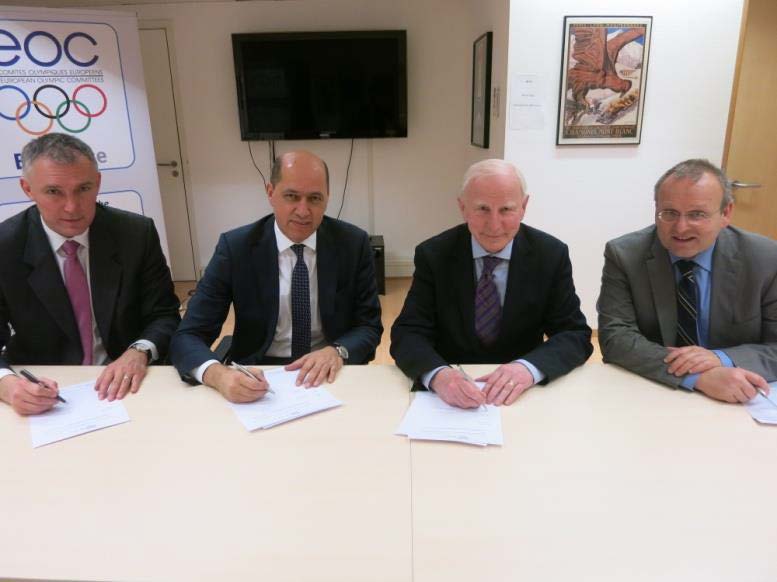
FIBA Europe, the European governing body for basketball, has joined seven other sports federations by becoming a partner of the European Olympic Committees (EOC) EU Office in Brussels.
The EOC EU Office represents the EOC to European institutions, working with towards a European Sports policy. It also represents the interests of the International Olympic Committee (IOC) at national, European and international level.
“I am extremely pleased to welcome the prestigious organisation of FIBA Europe as our latest partner. When we established the EOC EU Office, it was organisations such as FIBA Europe that we wanted to target in order to build a strong network of Olympic Movement sports’ organisations to partner with the EU’s institutions,” said EOC President Patrick Hickey.
“The European Union brings a number of challenges as well as opportunities for the field of sport. The EOC EU Office is our answer to facing these challenges and to taking full advantage of these opportunities. With basketball being one of the major team sports in Europe, I am sure that this partnership will be of mutual benefit to FIBA Europe and to the EOC in many EU policy areas, but also beyond the EU institutions.”
FIBA Europe is the sixth European Federation to partner with the EOC EU Office, following European Athletics, European Aquatics, the European Handball Federation, the European Volleyball Confederation and Rugby Europe. The EOC EU Office has also partnered with two International Federations: FIFA and the International Ice Hockey Federation (IIHF).
“At FIBA Europe, we are always looking to build partnerships with institutions that share our commitment to sport and the positive impact it has on young people and our societies,” said FIBA Europe President Turgay Demirel.
“The EOC EU Office is one such institution. Basketball is one of Europe’s leading sports, and this relationship will allow us to work more effectively towards our goal of strengthening the game in each of our member countries and beyond.”
Basketball has been featured in every edition of the European Youth Olympic Festival, dating back to the inaugural games in 1991.
“FIBA Europe’s commitment to the European Olympic family grew last summer in Baku when our exciting new format, 3×3, proved to be one of the biggest hits with fans at the inaugural European Games,” said FIBA Executive Director Europe Kamil Novak.
“Now, becoming a partner of the EOC EU Office is the next logical step in our mutually beneficial relationship.”
A full list of the EOC EU Office’s partners can be found at http://www.euoffice.eurolympic.org/partners