The German Olympic Sports Confederation (DOSB) has officially thrown its hat into the ring for the 2024 summer Olympic Games by confirming that either Berlin or Hamburg will bid for the event.
The DOSB had been expected to make a solid decision on its Olympic bid strategy at a meeting on December 6.
However, president Alfons Hörmann told the Frankfurter Allgemeine Zeitung newspaper earlier this month that the organisation had wanted to determine the results of the International Olympic Committee’s (IOC) ‘Agenda 2020’ initiative as well as gain a stronger insight into the strength of local support in the two cities, before proceeding.
This was expected to delay any formal announcement on a German bid for the 2024 Games until next year, but the DOSB has now committed to pursuing the Games with a final decision over its candidate city due on March 21.
The DOSB has added that it is likely to re-enter the bidding for the 2028 Olympics should its attempt at 2024 fail in what is expected to be a strong field.
“Olympic and Paralympic Games are the most important events for German sports,” Hoermann said.
“Sustainable Olympic and Paralympic Games are a chance for the entire country and especially for the city hosting the Games and its region. From Munich 1972 to London 2012 it becomes clear what they can trigger in the economy and society if well conceived and executed.
“We are confident that it will be a big opportunity for one of the cities and a big opportunity for the entire sport. We are also confident that an Olympic project can be – and will be – good for our country. We have two excellent candidates in Berlin and Hamburg.”
Germany last hosted the summer Olympics when Munich staged the 1972 Games, while Berlin was the setting for the 1936 Games. Berlin failed to land the 2000 summer Olympics in Sydney and Leipzig was defeated in the race for the 2012 Games in London.
The latest bid process comes with Munich’s failed effort to land the 2018 winter Olympics still fresh in the memory. The bid was rejected in a local referendum and the DOSB insists it has learned lessons from this experience.
Both Berlin and Hamburg plan referendums once it is known which of the two will be the candidate for the 2024 Games. The DOSB said that its latest polls indicate a narrow majority is against the Games in Berlin, while the project has the support of 53 per cent of the Hamburg population.
“We have to promote the product and convince the citizens,” Hoermann added.
Tag: Bidding Process
-

Germany commits to pursuing 2024 Olympic Games
-

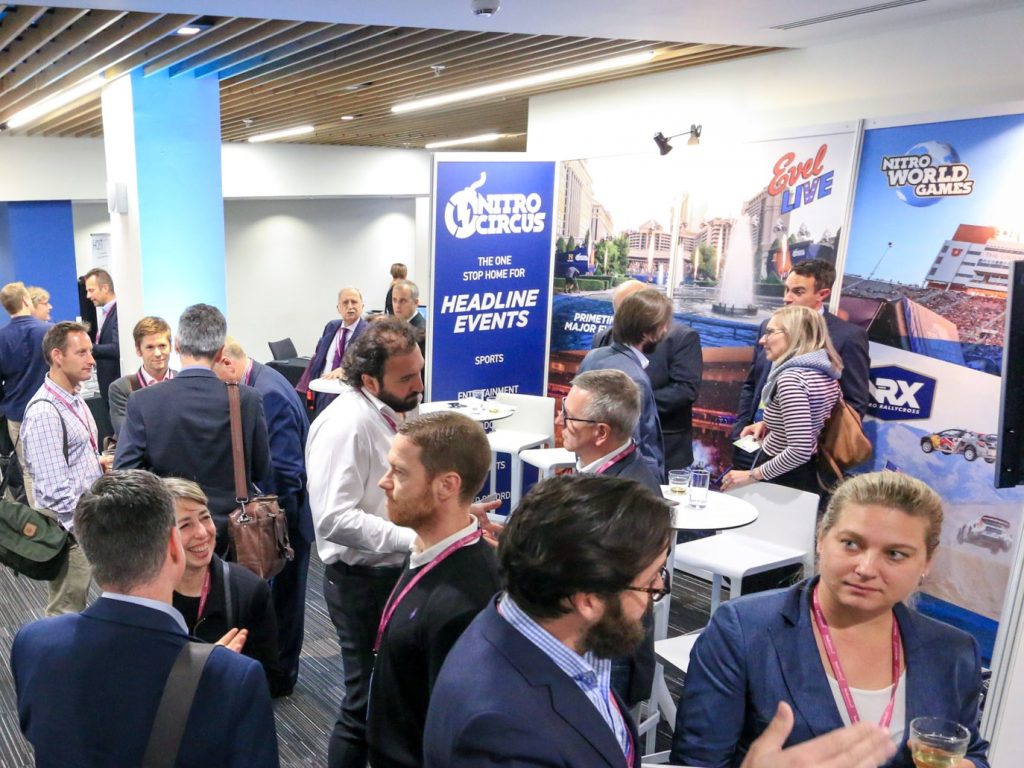
Event bidding comes under the spotlight at Host City conference
The inaugural Host City: Bid to Win conference has provided a thought-provoking and timely debate on bidding procedures for major events.
The conference examined engaging themes central to the debate including the IOC’s proposed Agenda 2020 reforms and emerging trends in the bidding for and hosting of large-scale, multi-sport and cultural events.
Speaking at the one-day conference at the St James’ Court, A Taj Hotel in London, IOC Vice-President, Sir Craig Reedie, said the IOC is determined to change its approach in response to the current bidding climate around major events.
“The evidence of the 2022 winter bids shows us that this is necessary. The IOC is right to look at its processes and try and correct the current situation. It wants to adopt a partnership approach and start a dialogue with bid cities.
Reedie also called for the communications gap to be plugged between the IOC and Host Cities.
“The IOC faces a communications gap. There has been a failure to get Host Cities and members of the public to understand that there are two budgets, an organising committee budget for staging the games, and a non-organising committee budget which looks at infrastructure and legacy for the host city.”
“Sochi was certainly not encouraged by the IOC to make the scale of investment that they did. It was for the future of the city not the two weeks the games were hosted.”
Stefan Lindeberg, President, Swedish Olympic Committee, agreed a breakdown in communication had occurred during Sweden’s recent attempts at bidding for the Winter Olympic Games.
Lindeberg, said: “The public has to understand the costs and the risks. The process needs to be transparent and this needs to be communicated much earlier in the bidding process.
“We want much more cooperation from the IOC. We want a situation where we start with a discussion about our city, our legacy, what we want from the Games then work with the IOC to create a host city contract that we understand not something that is imposed on us.”
On declining to bid for 2022 Winter Games, Lindeberg said: “If we could do it again our answer would be yes. At the time we needed a much clearer statement from the IOC about exactly what it means to bid. If we had had the discussion we are having now in January, our answer would have been yes.”
Speaking on the same panel, Alexander Koch, FIFA Corporate Communications Manager, discussed how rights holders choose host cities:
“We need to be asking the countries why they are bidding. In the media it is quite often reduced to the economic value but if you ask this question to each country you will get vastly different answers. If we take Germany, for example, they had a very clear vision for why they wanted to host the 2006 World Cup – to present a unified Germany to the world. The decision to host has to make sense for that country. That is why 2018 went to Russia and 2022 went to Qatar because their bids made the most sense for their countries.”
In a later panel which looked at evaluating bidding and hosting around the world Mario Andrada, Executive Director of Communications for Rio 2016, said:
“The venues will be ready on time; we are 100% confident of that. Our focus will be on transport, accommodation and getting the people ready so they have confidence in the legacy for Rio.
“We will, of course, learn lessons from London 2012 but Rio 2016 will be a different Games, it will have a Brazilian soul. We have to show it is good for the city, good for the country and good for the population. We want to focus on the self-esteem of our people and to deliver an intelligent and efficient Games with a clear and tangible legacy.”
WPP Chief Executive Sir Martin Sorrell, on the issue of the cost of hosting major events, said:
“The argument has not been as made cogently as it could be, bidding just accelerates the investment which is necessary anyway, be it airports, rapid transport or other city infrastructure. The benefit of the legacy is not being articulated as strongly as it could be by cities.
“Communicating the legacy of hosting these events, the intangible side of it, is critical to engaging the public. In order to achieve success you have to articulate clearly the benefits of staging an Olympics, a World Cup or a Grand Prix.”
Host City: Bid to Win brought together experts and decision makers to explore the challenges and benefits of bidding for major global events. At a time when the bidding process for events is under the spotlight Host City: Bid to Win has engaged expert insight into the heart of the debate including the IOC’s proposed Agenda 2020 reforms and emerging trends in the bidding for and hosting of large-scale, multi-sport and cultural events.
For further information on Host City: Bid to Win please visit: http://www.bidtowin-hostcity.net
-

What will London bid for next?
HOST CITY: Having hosted the biggest and best event in the world in 2012, what type and scale of events is London aiming to host over the next 10 years?
Iain Edmondson: We have secured a calendar of championships for Olympic sports, such as European Hockey 2015, World Track Cycling 2016 and the World Athletics 2017 in the permanent Olympic venues.
And there’s the Rugby World Cup next year, which takes place in existing venues and the new assets we have, including the Olympic stadium. Complementing that are events where London provides the opportunity to globalise, like the NFL.
What was once termed a decade of sport has now been rounded off with the announcement that the 2020 European football championships will be finishing here, with the semi-finals and finals.
What we are doing now is to see how we can bring our reputation from sport and major events into the cultural content that we have. People visit London largely because it is a diverse city with great attractions in a number of different ways – not just museums and galleries but the performing arts that appeal to people throughout the year.
You see some great examples of light festivals in cities around the world in the winter. The idea of a London Light Festival is something that we are looking at seriously.
HOST CITY: How seriously are you considering a bid for the 2025 World Expo?
Iain Edmondson: Very seriously. Our experience of delivering major international events over the past decade means we now have the capability to evaluate the practicalities as well as potential benefits of hosting the biggest and the best, like a World Expo.
Ten years or so ago we wouldn’t have had the same degree of understanding and intelligence to look at its potential to deliver our strategy and aims for London. We are better placed to consider whether or not the World Expo is right for the city and whether we want to enter the race.
If you are going to host something of that scale you need certain infrastructure, so we have looked into that as well. We are looking at the assets in the city that we have now, like Queen Elizabeth Olympic Park, what the situation might be for London in ten years’ time and how this might align with an Expo.
The good thing is that the Mayor understands the power of major events and wants to hear recommendations as to whether we should bid or not.
HOST CITY: What do you think the owners of major events are most looking for in a host city?
Iain Edmondson: There are basic factors that you’ve got to be able to demonstrate, such as transport and security, but one the biggest is the ability to reach an audience. Rights holders are interested in the markets where the events are hosted. If you’ve got partners that are proactively investing in engaging with and marketing events, then that is appealing to rights owners.
HOST CITY: How can London compete with emerging markets in this space?
Iain Edmondson: We are one of the best in the world in terms of an event-going public, so there is an appetite to attend and physically spectate. We are also one of the best from a media perspective, to be able reach people who aren’t seeing an event in person, but through media channels and the press.
Our challenge compared to some competitors is the ability to justify large sums of investment up front from public funds, because the business case for investing multi-millions in destination marketing for a city that is already established is different to a new city that needs to make a mark.
But we are working with the Mayor and all the difference agencies in the city to demonstrate that you don’t necessarily need that. We can still work to provide a commercially successful event, without having a large cash downpayment where there isn’t necessarily an audience behind it. However, there are often other grounds for justifying public investment, such as the long term business benefits where London has proven to have invested wisely over the past decade.
HOST CITY: What do rights holders need to do make bidding more attractive to cities?
Iain Edmondson: Transparency is a must-have for public democratic processes where big money is open to scrutiny. We work in an environment where we expect to be asked awkward questions and justify the answers.
If a bid process is open and transparent, you can choose to engage or not. It’s just a minimum requirement that everyone can see up front the basis on which they are making decisions.
Another thing that is important is recognising the ability for rights holders to work in partnership with hosts. The city staffs the event and puts together commercial deals – they often become the people with the most invested in the success of it, so if the rights owner can work closely with the city and understand its aspirations for hosting it, it’s more often going to be a win-win on both sides.
For example, the ASO are very well resourced; they have looked after the Tour de France for a hundred years. We’ve had some good experience of working with them in 2007 and 2014 and they understand what the host brings.
But some smaller federations often don’t have the capacity to do a lot of detailed planning. The more they can work together and align the events with the expectations of host cities, the better.
For more information about London’s event plans visit www.londonandpartners.com/events -

Wrong conclusions on bid report, says FIFA investigator
The findings of FIFA’s long awaited ethics report into the bidding process for the 2018 and 2022 World Cups were announced today (Thursday), with the judge’s summary saying there was limited evidence of improper conduct. However, the investigator who produced the report says the summary misrepresented his facts and made erroneous conclusions.
In his summary, Judge Hans-Joachim Eckert concluded that there was not enough evidence to remove Russia or Qatar’s rights to host the World Cup or reopen the process, saying that any breaches of rules by bidding nations had only a “limited scope”.
Michael Garcia was hired by FIFA 18 months ago to find out the truth about widespread allegations of collusion and bribery in the bidding process that saw Russia and Qatar win the hosting rights to the 2018 and 2022 World Cups respectively.
“Today’s decision by the Chairman of the Adjudicatory Chamber contains numerous materially incomplete and erroneous representations of the facts and conclusions detailed in the Investigatory Chamber’s report,” he said on Thursday. He is now expected to appeal to FIFA’s ethics committee.
In his 42-page summary of Garcia’s 430-page report, Eckert said that concerns over the activities of bidding nations were “limited” and not sufficient cause to question the outcome of the election.
“The effects of these occurrences on the bidding process as a whole were far from reaching any threshold that would require returning to the bidding process, let alone reopening it,” said Eckert.
Contraventions identified in the summary included improprieties in England’s bid campaign, namely incentives to executive committee member Jack Warner.
“England’s response to Mr Warner’s – improper – demands, in, at a minimum, always seeking to satisfy them in some way, damaged the integrity of the ongoing bidding process. Yet, such damage was again of rather limited extent,” said Eckert.
“We cooperated fully with the Ethics Committee’s investigation and continue to believe that a fair and appropriate review will demonstrate the integrity and quality of our bid,” said the Qatar 2022 Supreme Committee for Delivery and Legacy said in a statement.
“FIFA welcomes the fact that a degree of closure has been reached with the chairman of the adjudicatory chamber stating today that ‘the evaluation of the 2018/2022 FIFA World Cup bidding process is closed for the FIFA ethics committee. As such, FIFA looks forward to continuing the preparations for Russia 2018 and Qatar 2022 which are already well underway,” said FIFA’s statement.
-

IOC woos cities with proposal to pay bid costs
International Olympic Committee (IOC) president Thomas Bach today (Tuesday) revealed 40 recommendations from the Agenda 2020 review of the Olympic Movement, which detail how to reduce costs and increase benefits for countries contemplating hosting the Games.
Agenda 2020 was instigated in 2013, shortly after Bach’s election as IOC president and has since engaged a vast range of people. The review has taken place against a backdrop of Sochi 2014, which was perceived to be an extremely high cost event, and cities pulling out of bidding for the 2022 Winter Olympic Games due to cost concerns.
The first three of the 40 recommendations relate to bidding, including details of how the world’s biggest event owner might financially support bidding cities and develop wider benefits with the host nation.
Under the recommendations, the IOC would cover the travel and accommodation costs for six delegates for candidate city briefings to the IOC, ASOIF, AIOWF and the ANOC General Assembly, plus costs for 12 delegates travelling to the host city election at the IOC Session.
The cost of cities hosting IOC Evaluation Commission visits would also be borne by the IOC. Printed versions of the candidature files would be axed, and consultants and lobbyists working for bidding cities would be monitored and registered by the IOC.
These reductions in bidding cost are, however, tiny in relation to the costs of hosting the Olympic Games. This is why Agenda 2020 proposes “shaping the bidding process as an invitation” – a form of consultation with cities at an early stage, with a focus on cost and benefit.
Under Agenda 2020, the IOC plans to better communicate the difference between the two different budgets related to hosting the Olympic Games: “long-term investment in infrastructure and return on such investment on the one hand, and the operational budget on the other hand,” as well as better communicating the IOC’s contribution to the operational budget.
The IOC seeks to reduce the cost of venue infrastructure for cities by prioritising the use of existing and temporary facilities at this early stage of bid planning.
“The recommendations in Olympic Agenda 2020 are designed to change the bidding process in a positive way,” said Ole Einar Bjørndalen, IOC member for Norway, whose capital city Oslo pulled out of bidding for the 2022 Games in September 2014.
“I think it is important to bring the Olympic Winter Games especially back to their roots, where the organisers are creating genuine winter festivals and where the inhabitants of the host city are as important as the athletes.
It is a step forward that the bidding cities will have the chance to focus on Games that work in the local context – socially, economically and environmentally.”
Olympic Agenda 2020 also opens up the possibility of Olympic Games events being hosted outside the host city – and even outside the host nation, in exceptional circumstances.
“I think it is positive that the IOC will encourage the re-use of venues, temporary venues, and even the use of some venues in other regions and countries. This will lower the costs, which will hopefully make staging the Games more attractive for more countries,”said Bjørndalen.
-

2022 Olympic bids shock is a one-off
The drop-out of several European cities bidding for the 2022 Olympic Games has created “shockwaves”, but IOC reforms and stronger communication from cities will enable them build the public support needed to bid for future Games.
This is the view of Mike Lee, chairman of Vero, who led on the communications strategies for Rio 2016 and London 2012.
“The race for 2022 has sent a few shockwaves around the Olympic movement, so it’s good that the IOC have already been thinking about this for a while under President Bach,” Lee told HOST CITY.
A lack of public support led the European cities of Stockholm, Munich, Krakow and Oslo to withdraw from bidding for the 2022 Winter Games. The perceived cost of hosting, at a time when Sochi was investing billions in hosting the 2014 Winter Games, was a major factor in suppressing public appetite for hosting the Games.
The Olympic Agenda 2020 reforms set in motion by IOC president Thomas Bach are addressing this issue in a number of ways. “A number of the reforms that are being proposed for the bidding process and the way that cities engage with the IOC are all good news,” said Lee.
One important recommendation is the possibility of regional bids, which would allow existing venues in different cities to feature in bids. “There’s definitely going to be a lot more dialogue and flexibility – tailoring, if you wish, the way in which a bid is constructed.”
While these changes from the rights holder are clearly a positive step, city governors will also have a major role to play in building public support for bids.
“You will still need to have support from the relevant levels of government. The lessons from all the recent cycle of bidding is that that remains central. The way you have democratic scrutiny and, in some cases, all the requirements of a referendum – it’s a reminder that you need to build public support.”
The two cities left in the race for 2022 – Beijing and Almaty – do not have a tradition of public referendums. Some observers fear that democratic nations might remain disadvantaged in future bidding cycles.
“This issue of public opinion and political support go hand in hand and you’ve got to pay a lot of attention to it. It’s clearly solvable; otherwise you’d never see bids emerging from democratic countries.”
The timing of polls needs to be considered carefully. “Ideally you want to be able to test public opinion after you’ve had some sort of campaign, because if you have a cold test, don’t be surprised if you have a negative result.
“The London bid would be a very good example. If were depending on the poll in the early days of the London bid, London would never have progressed. It took some time to build the campaign and in the end the polling figures for London were very good, and the national joy came with London winning in Singapore.”
Warning Signals
Rights holders of major events can expect to see a larger number of applicant cities emerging from this bearish period. “It would be wrong to judge the state of the appetite for major events just from the Olympic bidding process for 2022,” says Lee.
“Most mega events do have multiple bidders – people can’t be looking at the willingness of cities to host purely through the prism of the 2022 Winter Games race, because that is a bit of a one-off. But it’s sent off some warning signals and Agenda 2020, from an Olympic perspective, is all a part of responding to that.”
-

High hopes for Olympic reforms create tough situation for IOC
The unanimous adoption of Olympic Agenda 2020 reforms may have had a galvanising effect internally on the IOC, but influential figures close to the IOC say the project has created high expectations that may prove difficult to fulfil in good time.
“I am very impressed. It’s a true sign of strength, both for the president and for the capability of change,” Sweden’s National Olympic Committee president Stefan Lindeberg said in an exclusive interview with HOST CITY. “But it’s also creating huge expectation for true change.”
The president of Slovenia’s National Olympic Committee and vice president of the International Skiing Federation, Janez Kocijan?i? was at the IOC session on Monday when Agenda 2020 was adopted.
“The main idea, under the very robust pressure of the president, Dr Thomas Bach, was to start the changes. The process of reform is open and I hope it will continue,” he said, speaking to HOST CITY exclusively.
But he also warned that implementing all 40 recommendations of Agenda 2020 will not be easy. “If somebody is too ambitious, it might be that the reforms stop before they really get started.
“I hope it will go further and I believe in the courage of the president and certain people around him that they will continue like that. But there is a lot of work that needs to be done.”
Kocijan?i? and Lindeberg both made valuable contributions as speakers at HOST CITY Bid to Win conference in London in October, where Agenda 2020 proposals were debated in great detail.
Lindeberg was the leader of Sweden’s bid to host the 2022 Olympic Games, which was abandoned due to a lack of political support for the project as the infrastructure costs for hosting Sochi 2014 were perceived to be spiralling out of control.
“The fear among politicians was so massive of taking this perceived risk,” he told HOST CITY.
An important goal of Agenda 2020 is to reduce the cost of hosting the Games and guarantee the sustainability of Games infrastructure – but this will take a decade to achieve, Lindeberg said.
“This is a really tough situation to face for the IOC, because it’s not until 2024 that we can see the full implementation of the new decisions regarding the buildings for the Games.
“They will do what they can to make as much change as possible for 2022 and even for the host city contracts for 2018. Expectations will be very high, so it’s really tough.”
Even aspects of Agenda 2020 that do not relate to physical infrastructure will take time to implement, Lindeberg warned.
“It’s been very positive when you look at the values parts of the Agenda 2020, with inclusion of sexual non-discrimination and workers’ rights. But we need to see results coming up quick so these values will be really shown in upcoming Games, and that’s the tough part.
“Now that the Host City contract is being made public, it’s very important the IOC carry these changes into the contract for 2022. Because if they don’t they will have a problem with credibility.
Neither Lindeberg nor Kocijan?i? were eligible to vote on Agenda 2020 but both stated their full support for the reforms.
“I would have voted for the recommendations, because I believe every process of reform has to be started,” Kocijan?i? told HOST CITY. “Agenda 2020 is a very positive approach because it means the very beginning of reforms. For the time being, I am satisfied with developments.”
HOST CITY contacted the IOC press office for a response to these reactions and a press release was promptly issued, in which president Thomas Bach said: “Following the success of the IOC Session in Monaco and the unanimous endorsement of my fellow IOC members for the Olympic Agenda 2020 recommendations, it is critical that we utilise the momentum and energy we have created throughout the Olympic Movement and start implementing straight away.”
-

FIFA ethics report to be published
In a dramatic U-turn, the members of FIFA’s executive committee have voted unanimously in favour of making public its report into alleged corruption surrounding the bidding process for the Russia 2018 and Qatar 2022 World Cups.
The full report was written by US lawyer Michael Garcia, but only a controversial summary by his counterpart on the Ethics Committee, Hans-Joachim Eckert, has yet been published.
Garcia dismissed Eckert’s summary as “erroneous and incomplete” and resigned from the Ethics Committee on Wednesday after his appeal was dismissed.
While many contributors to the report have spoken out in favour of publishing it in full, all were promised confidentially and the published report will be redacted for legal reasons – and it will not be published until the conclusion of ongoing investigations into five people connected to the affair.
FIFA vice president Jim Boyce of Great Britain is one of the executives who has spoken in favour of publishing the report, saying “If people have nothing to hide, why are they afraid of something being issued?”
-

IOC opens new invitation phase for 2024 Games bids
The International Olympic Committee has launched its reformed bidding procedure with a new invitation phase, during which National Olympic Committees can discuss their plans “at their earliest convenience” before the application deadline of 15 September.
This new consultative approach, launched four weeks after the adoption of Agenda 2020, will help NOCs to ascertain the viability of bidding for the Games before committing in full.
These early discussions with the IOC have the potential to reducing the cost of bidding and organising the Games for cities – one of the key aims of Agenda 2020.
The concept of “shaping the bid process as an invitation” has been central to the Agenda 2020 review right from its inception.
Another key aim of Agenda 2020 with regard to bidding process is to strengthen the evaluation of bid cities to more clearly highlight key opportunities and risks.
Until now, the bidding process for the Olympic Games has been split into two phases – the “applicant” and “candidature” phases, which will now follow the invitation phase.
In the applicant phase, cities send in an application file which is studied by an IOC working group, who assess the bid for the IOC executive board. If approved by the board, the bid then progresses to the candidature phase, which requires much more detailed plans in the form of a candidature file and site visits.
Interested NOCs and cities will now be able to receive “various levels of assistance and feedback” between now and the 15 September deadline for officially committing to a bid.
“Bidding for the Games is not a tender for a franchise, and there is no one-size-fits-all solution,” the IOC said in a statement.
“The bid process is about making proposals and offering solutions that will deliver excellent Games, with no compromise on the field of play for the athletes while also meeting the needs of the city and region to ensure the Games leave a positive, long-term, sustainable legacy.”
Cities considering bidding for the Games are encouraged to place greater emphasis on the use of existing, temporary and demountable venues.
During the invitation phase, the IOC will inform interested parties of the “core requirements” necessary to organise the Games in order “to assist interested cities and their NOCs to develop a project that best meets each city’s unique long-term development needs.”
The IOC also expressed its satisfaction with the “strong interest” in hosting the 2024 Olympic Games, with the NOCs of Germany, Italy and the United States already indicating their intention to bid. -

Host city selection is not political endorsement, says IOC president
In an address to the Danish National Olympic Committee (NOC) Congress on Thursday, IOC president Dr Thomas Bach made it clear that the choice of host city is not an endorsement of a country’s political system, because the IOC is politically neutral.
He also explained how the Host City contract now prevents discrimination of athletes and binds the organisers of the Games to uphold international agreements applicable in the host country.
The theme of the NOC Congress was called “Can Sport Save the World?”
Bach said “Sport can neither save the world alone nor can it alone make the world a better and peaceful place. But sport has the power to contribute to a better harmonious and peaceful world.”
Sport can do this through the universal law of fair play, he said. “Regardless of where we practice sport, regardless of who is playing sport, the rules are the same. They are recognized worldwide. They are based on a common ‘global ethic’ of fair-play, tolerance and friendship.
“This means in sport all people are equal. In order to be able to apply this universal law worldwide and to promote this global ethic sport must be politically neutral. If not, we could not ensure the equal treatment of all people without any kind of discrimination – sport would be torn apart by politics.
“We have seen this in the past with some political boycotts which did not serve any good purpose. Furthermore, boycotts are a fundamental contradiction to the spirit of sport depriving it of the means to work for peace, mutual understanding and solidarity.
“To be politically neutral does not mean to be apolitical. In fact in the past many people pretended falsely two things: Firstly, that sport has nothing to do with money. Secondly, that sport has nothing to do with politics.”
While remaining politically neutral, the IOC must consider the political implication of its decisions, Bach said.
“This is most obvious when it comes to choosing the venues for major sports events, above all for the biggest and most important of these, the Olympic Games. Because already a candidature for the Olympic Games draws the world’s attention to the candidate country. This is even more true for the host country with the additional economic implications and investments.
“Choosing a host city does not mean that the IOC necessarily agrees with the political and/or the legal system in the host country. It does not mean that we agree with the death penalty or with discrimination, just to give two examples.
“It means however that in every country where we organize Olympic Games, we want to send the strong message of tolerance, respect and fair play. It means that we require compliance with all the values of the Olympic Charter for all participants at the Olympic Games.”
Bach gave examples, such as how the IOC asked for and received assurances that Russia’s law prohibiting the public promotion of homosexual orientation would not apply to any of the participants of the Olympic Games.
He also cited how the IOC raised the issue unpaid migrant workers on the Olympic sites, leading to more than 500 companies being investigated and more than US$ 8m in unpaid wages being paid to 6175 workers.
In another example, he pointed out that the IOC made the internet fully accessible to all participants of the Youth Olympic Games in Nanjing.
Agenda 2020 has created a new clause in the Host City Contract that “the organization of the Games must comply with local, regional and national legislation and international agreements and protocols applicable in the host country with regard to planning, construction, protection of the environment, health and safety and labour laws.”
And through its Agenda 2020 review, the IOC has amended the Olympic Charter to state: “The enjoyment of the rights and freedoms set forth in this Olympic Charter shall be secured without discrimination of any kind such as race, colour, sex, sexual orientation, language, religion, political or other opinion, national or social origin, property, birth or other status.”
Bach said this language “mirrors the text of the United Nations Universal Declaration of Human Rights.”
“It is the responsibility of the IOC to ensure the application of the Olympic Charter at the Olympic Games. At the same time we must acknowledge that we have neither the mandate nor the capability to change the laws or the political system of a sovereign country.”
The full text of the speech is available here.