Tag: Bidding Process

  • Exclusive: Can La La Land win the biggest prize of all – the 2024 Olympic Games?

    Exclusive: Can La La Land win the biggest prize of all – the 2024 Olympic Games?

    After the film La La Land won six Oscars, seven Golden Globes and five BAFTAs you would have thought that Los Angeles is getting bored in 2017 celebrating the success of its city and famous residents.
    Don’t believe that for one Hollywood minute. That’s because the US city is still in the running for perhaps the year’s biggest prize of all – the hosting rights to the 2024 Olympic Games.
    The race to host the 2024 Games is down to two candidate cities and in September the International Olympic Committee (IOC) session in Lima, Peru, will decide whether it’s LA or Paris that gets the nomination.
    With the 130th IOC session fast approaching, the LA and Paris bid committees have been busy putting together the final touches of their showreel in order to garner votes for the 2024 election.
    One major showcase for both bids was the 2017 SportAccord Convention (SAC) in Aarhus, Denmark in April.
     
    Vive la difference
    The French capital put forward its bid of being ‘the right city, with the right vision at the right moment’. It also promised international federations and the Olympic movement that it would host the “most spectacular Games ever”.
    The Paris presentation revealed that 95% of venues were already existing or temporary and the city’s ultra-compact plan would ensure that 85% of venues will be within 30 minutes of the athletes’ village.
    Strong stuff from the “City of Light”, which is hoping to mark 100 years since it last hosted the Olympics in 1924.
    And during LA’s 15 minutes in the spotlight at SAC, Los Angeles mayor Eric Garcetti told delegates: “It’s important we draw a distinction in our vision, because although many believe the two bids in this race are quite similar… they are, in fact, very different.”
     
    Privately-financed bid
    With the heart of the film industry within its boundaries, it comes as no surprise that the Californians presented a strong narrative. When Host City asked LA 2024 Candidature Committee chairman Casey Wasserman if the entertainment industry could be drawn on for a potential LA 2024 Games, he replied: “We are very proud of our storytelling community, that’s what Hollywood is all about. When people want to speak to the world they come to LA. We think our ability of leverage that and bring that to the Olympic Games will be tremendous.”
    While LA will bring some razzmatazz to the Olympic Games, the city’s bid has another very big USP regarding the bid’s funding.
    “We are a privately-financed bid,” Angela Ruggiero, chief strategy officer for the LA 2024 Candidature Committee, former ice hockey star and IOC executive board member told Host City.
    “That’s very different from a government-financed project where you are sort of at the whim of the government. We’ve made that one of our key focal points as a bid is to have the lowest-risk approach with the most sound budget.”
    LA will require federal support for security matters, but the operations and management overlay is financed through the individual projects. “That’s a distinguishing factor between the two bids and we wanted to highlight that because we do things differently in regards to hosting events,” added Ruggiero.
    “We don’t have sports ministers for example. The way that we promote sport is through the private sector. Budgets can’t be slashed, therefore it’s a different kind of model.”
    For venues, LA has adopted a low-risk approach of utlising the city’s extensive existing sports assets. This tactic has helped grow public support in the Olympic bid to 88%.
    One asset, for example, is the LA Memorial Coliseum, which is planned to host the medal ceremonies and track-and-field events in 2024. On May 3 it was announced that the University of Southern California had secured approval from the Coliseum Commission to proceed with its $270 million privately funded upgrade of the LA Memorial Coliseum.
     
    The elephant in the room at SAC
    With two very strong and well-supported bids, one major city is going to miss out when the IOC makes its big decision in September. Or will it?
    The IOC Session in Lima could in fact name the host city for both 2024 and 2028 – meaning both Paris and LA win the right to host a summer games. A working group composed of the IOC’s four vice presidents is currently evaluating this possibility.
    Juan Antonio Samaranch, IOC vice-president, told a select group of journalists at SAC: “Basically what we are doing is not talking about 2024, internally we are thinking of how we can be more flexible to have a selection system that better suits our interests and the interests of the Olympic movement. The ideas that we might have for 2024 and 2028 are serious ones, but there is a process and both cities know what the process is.”
    Paris’ committee has said it only wants to host in 2024 while LA chairman Wasserman was also straight with his answer. He told Host City: “We are bidding for 2024. There should be no confusion about that. I applaud the IOC for their thinking because it’s strategic and timely, but it’s also hypothetical. We’re bidding for 2024. Hypotheticals are not interesting.”
    Next on the agenda for the IOC and the LA and Paris committees is the 2024 candidate briefing for IOC members and Summer Olympic IFs in July.
    Once that’s complete it will be back to the drawing board for both cities to put the finishing touches to their candidature bids.
    Will LA’s bid script see that big Hollywood ending? We will wait and see in September.

  • IOC board promotes plan to award Olympic Games to both LA and Paris

    IOC board promotes plan to award Olympic Games to both LA and Paris

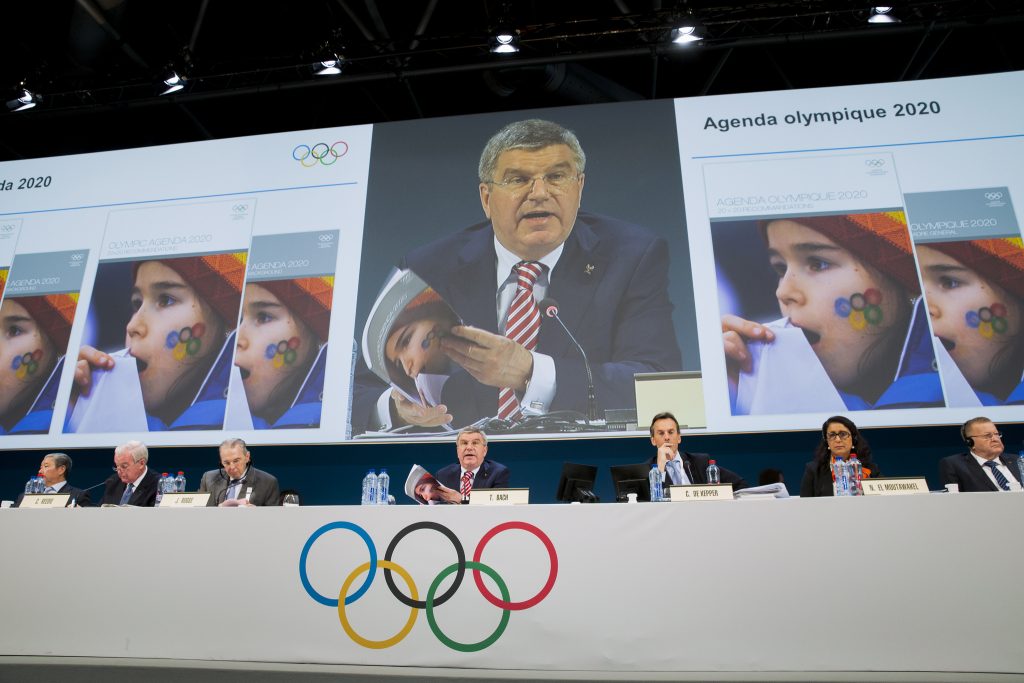
    The IOC Executive Board on 9 June put forward a proposal to award the 2024 and 2028 Olympic Games to Los Angeles and Paris simultaneously and address challenges around the bidding process for future Games.
    The dual awarding proposal will be put to IOC Members at a new Extraordinary Session in Lausanne on 11 and 12 July, when a “Candidate City Briefing” had already been scheduled.
    IOC Members had been scheduled to choose between Los Angeles and Paris as the host city of the 2024 Games at the IOC Session in Lima on 13-17 September. With this public statement from the Executive Board, IOC Members are now set to approve in July the proposal to award the Games to both candidates and seize what President Thomas Bach described as a “golden opportunity” and engage in a process of “discussions and negotiation” with the cities to establish when, and not if, they will host the Games.
    The IOC’s four Vice Presidents – John Coates, U?ur Erdener, Juan Antonio Samaranch and Yu Zaiqing – have been leading on internal discussions around this possibility in recent months. During SportAccord Convention in April, Samaranch told a small group of media including Host City “Internally we are thinking of how we can be more flexible to have a selection system that better suits our interests and the interests of the Olympic movement.”
    Throughout the bid process Paris has said it would not wait until 2028 while Los Angeles has taken a more flexible stance. LA 2024 Candidature Committee Chairman Casey Wasserman said in a statement earlier in the week “LA 2024 has never been only about LA or 2024. Even when the issue of a dual award for the 2024 and 2028 Games was initially raised, we didn’t say it’s ‘LA first’ or it’s ‘now or never’ for LA: that sounds like an ultimatum.”
    Wasserman and Los Angeles Mayor Eric Garcetti issued the following joint statement on Twitter: “We welcome the IOC Executive Board’s decision to recognise two excellent bids from two of the world’s greatest cities. With no new permanent venues to build and unwavering public support, Los Angeles is an eternal Olympic city an ideal partner for the IOC.
    “We look forward to sharing our unique story with the IOC membership in July and working together to offer the best path forward for our city the Olympic Movement’s future.”
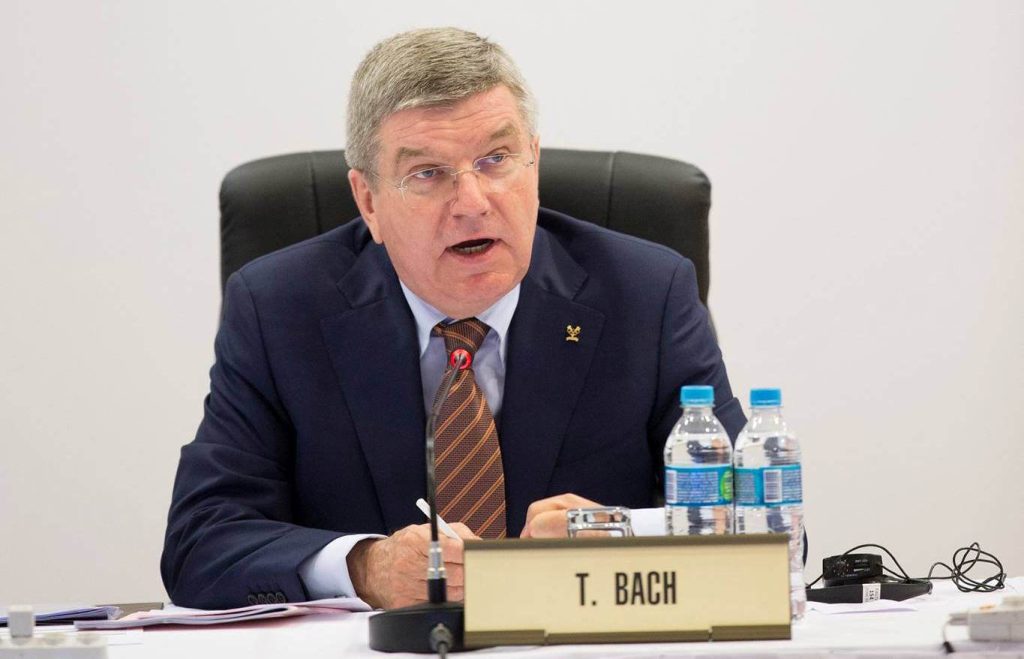
    Speaking at the press conference on 9 June, Bach said: “The situation of these candidature for 2024, having two such great cities and such great countries, having two candidatures which are really enthusiastic and really promoting the Olympic Games and Olympic Spirit in a great way – this represents a golden opportunity for the Olympic Games and the IOC.”
    “Both cities have really embraced Olympic Agenda 2020 in different ways but particularly in the way they are planning to use a record number of existing and temporary facilities. This is something we have not seen in this dimension before in the Olympic Games and this will lead to significant cost reductions in the organisation of the Olympic Games and will make the Games more sustainable and more feasible.”
    “We want to make this change and we can make this change and we can do it without amending the Olympic Charter. The Charter is flexible enough in this respect.”
    “First of all, it is the IOC Members who have to express themselves on this proposal and only after the Members have had this opportunity will we enter in to deeper discussions with the Candidate Cities. Conversations so far have been very open. No one has closed the door. Discussions and negotiation may start, but only after Members have given the green light to this.
    “The signal we are sending is very clear – a golden opportunity and a fascinating race. It is hard to imagine something better. It is also a strong signal of stability for the Olympic Movement and the Olympic Games. It is an expression of mutual confidence. It is also offering a great potential for the two cities to cooperate. Transfer of knowledge could even start from day one – there could also be the joint development of some turnkey solutions.  There is a great potential in such a double allocation.”
     
    2026 Olympic Games bids
    The Executive Board also agreed on the direction of changes to the bidding procedure for future Olympic Games, including the 2026 Winter Olympic Games, which Stockholm pulled out of bidding for in April.
    “There are two reasons why the Executive Board thinks a change is necessary: one external, one internal,” Bach said at the press conference.
    “Firstly, the change in the decision-making procedure in many western countries. Today if the establishment is united behind one project, people now say there must be something wrong. We could complain about this change in attitude but we cannot ignore it. Even less so, because we are giving some arguments for this scepticism.
    “To put it in a nutshell, the candidature procedure in this world we are living in has become too expensive and too onerous for potential candidate cities and in this way it is producing too many losers. The IOC will customize its approach to the needs of the cities in order to develop together the best value proposition for the cities and for the Games.  All this will lead to a lighter process for the cities with reduced costs.”
    IOC Members will discuss the new approaches at the Extraordinary Session in July.

  • Susan Sawbridge joins New Zealand Major Events to lead new prospecting unit

    Susan Sawbridge joins New Zealand Major Events to lead new prospecting unit

    Susan Sawbridge has joined the New Zealand Major Events team at the Ministry of Business, Innovation and Employment to head up a new unit focused on event prospecting.
    The New Zealand government has established a new Major Event Prospecting Secretariat and independent panel, which will see the country’s government agencies working together to drive a proactive major event prospecting programme.
    Led by Susan Sawbridge and housed within the Ministry of Business, Innovation and Employment, the Major Events Prospecting Secretariat will work closely with central government agencies, local government and sector bodies to ensure New Zealand continues to attract and develop significant international events. 
    Susan previously managed event prospecting and bidding for the city of Auckland.
     “This is a really exciting time for us and we are incredibly fortunate to have secured Susan’s talent to champion the government’s approach to prospecting,” said Devorah Blumberg, Manager of New Zealand Major Events.
    Susan Sawbridge said, “New Zealand’s major events capability is now very well established, so it’s a perfect opportunity to move prospecting into an even more collaborative and strategic space – both from our perspective and also for events rights holders.”
    New Zealand Major Events is a member of the International Association of Event Hosts and a participant in Host City 2017.

  • IOC approves awarding 2024 and 2028 Games hosts simultaneously

    IOC approves awarding 2024 and 2028 Games hosts simultaneously

    The membership of the IOC on Tuesday unanimously approved the proposal to award the hosting rights of both the 2024 and 2028 Games at the next IOC session in Lima in September.
    The unprecedented decision means both cities currently bidding for the 2024 Games – Los Angeles and Paris – are set to become Olympic host cities, subject to agreement from the respective cities and national Olympic committees over which city will host which edition.
    IOC President Thomas Bach described the IOC decision a “golden opportunity” for all involved.
    “We are ready to work with them on this ‘win-win-win’ approach,” said Emmanuel Macron, President of France who attended the IOC session in Lausanne.
    Paris Mayor Anne Hidalgo said: “I am fully committed with the Paris team to putting all my energy, our creativity and my resolve into reaching an agreement for Paris to experience once again this Olympic adventure that it has been longing for for 100 years.”
    Prior to this decision, Paris has ruled out hosting the Games in 2028, while Los Angeles had not dismissed this possibility. The city that hosts the 2028 Games is expected to ask for concessions from the IOC.
    “In Olympic history there’s only been 37 times in which there has been a tie for a gold medal. Maybe today is the 38th,” Los Angeles Mayor Garcetti said. “For Los Angeles, it’s a golden opportunity, one that we don’t take lightly.”
    The IOC proposal approved by the IOC membership is as follows: “Recognising the exceptional circumstances and unique opportunities presented by the candidatures of Los Angeles and Paris for the Olympic Games 2024, the International Olympic Committee takes the following decision:
    1. To authorise the IOC Executive Board to conclude a tripartite agreement with Los Angeles and Paris and their respective NOCs for the simultaneous election of the host cities of the Olympic Games 2024 and 2028 during the 131st IOC Session in Lima;
    2. Should such tripartite agreement be concluded, the 131st IOC Session will ratify the tripartite agreement, thereby electing one city for the Olympic Games 2024 and the other city for the Olympic Games 2028. To that effect, the 130th IOC Session hereby waives the seven-year deadline set out in Rule 33.2 of the Olympic Charter; and
    3. Should such tripartite agreement not be concluded, the 131st IOC Session will proceed with the election of the host city 2024 in accordance with the current election procedure.”
    Earlier in the day, the delegations of Los Angeles 2024, led by Mayor Garcetti, and Paris 2024, led by the President of the French Republic, Emmanuel Macron, made outstanding and emotional presentations at the 2024 Candidate City Briefing.
    “Ensuring the stability of the Olympic Games for 11 years is something extraordinary,” the IOC President said later at a press conference with the two mayors and leaders from the two candidatures.
    “That is why we say this is a great day for the Olympic Games and the Olympic Movement, and it’s a great day also for these two wonderful cities, these two great Olympic cities.”

  • Governments and rightsholders must work together to transform communities through event hosting

    Governments and rightsholders must work together to transform communities through event hosting

    The reasons behind the evolving event hosting landscape can be debated: better informed government officials; a new point of view from the public; PR-sensitive executives thinking about impact on sponsors – but there is no disputing that a major shift has occurred in the global event hosting landscape. The referendums and political hand-wringing taking place before major event bidding are prime examples of this evolution.
    This “new normal” provides a unique opportunity for government and rightsholders to align on mutually-beneficial outcomes, with both sides required to come to the bargaining table with current and accurate data to develop a plan that has meaningful results for the host community.
    Government can, and should, take responsibility for the pre-event work. Through online surveys, social listening and in-person attendance at community meetings, government officials can develop a firm understanding of the outcomes a host community would find most useful. This informed perspective will allow government officials to have direct conversations with rightsholders – a critical portion of the conversation that is often not addressed. Rightsholders are often willing to consider working with a government to provide them what they need, but typically, the government simply responds with “what are you offering” instead of leveraging this opportunity to create a meaningful impact. To create a meaningful environment of partnership and collaboration, government officials must approach this moment with specific deliverables the host community seeks.
    Government officials should come to the table with key pieces of data in-hand:

    Preferred sport or cultural activity of your constituents, by neighborhood, would allow government and rightsholders to focus on specific areas of a city that could be more receptive and supportive of hosting the event
    Education, arts, and health and wellness needs, by neighborhood, would allow government and rightsholders to consider short-term impact and long-term legacy plans that result in locally meaningful outcomes
    Planned infrastructure development would allow government and rightsholders to accurately involve event-necessary works to be integrated into already planned and funded projects
    Economic development goals, by neighborhood, would allow government and rightsholders to understand which local businesses can be event partners
    Tourism data that explains hotel occupancy, visitors by market, interest and spend, in addition to plans for growth into future markets

    Throughout the lead-up to the event, during the event and post-event, rightsholders should evolve beyond event producer to community partner. With the understanding that taking any free minute away from event preparation is difficult, elevating the needs of the host community into the day-to-day decision-making process has many benefits. This mindset has the potential to result in a host community that:

    Strives for a positive event experience for participants, staff and partners
    Understands and appreciates the event’s tangible and intangible outcomes
    Attends the main event and supports ancillary events
    Enthusiastically welcomes the event’s return

    Rightsholders also have the opportunity to significantly increase their positive impact on the host community by organizing their partners, sponsors, participants, fans and investors. Each one of these stakeholder groups has a vested interest in the success of the event, and therefore, has a vested interested in the host community. The greater understanding the rightsholder has of the social responsibility and financial goals of each stakeholder group, the better alignment they can foster with an informed government and interested host community.
    This approach may require rightsholders to reconsider which members of their organization have influence in their strategic planning. Specifically, rightsholders will need to examine if the most significant decisions their organization undertakes are weighed fully against commercial and community benefits. The rightsholders that can maximize commercial returns around community-focused decisions are the organizations that are most well-prepared for this moment in time.
    Lastly, rightsholders must understand government. There are many factors that influence the government decision-making process and pace. For instance, your event may align with all of the goals of the government, but it may not be an ideal time for a government leader to commit to your event from a political perspective. This is just one example of the difficult and frustrating process of working with government. In these situations, try and help your government partner get to “yes”. If there’s a groundswell of support from the community for hosting your event, then committing to the event just became a lot easier.
    Improved and informed dialogue between government and rightsholders has the potential to deliver results to host communities that they find meaningful and transformational, while keeping rightsholders commercially successful. With data-driven insights and measured outcomes at the center of these negotiations, plans and work, this moment of event hosting evolution can result in events driving meaningful transformation in neighborhoods, cities and countries.
     
    About the Author
    Mike Hopper has spent his career at the intersection of sports, government and community relations, while working side-by-side with Mike Bloomberg and George Steinbrenner. 
    Prior to establishing Advance Brand Consulting, Mike held senior positions with SPORTS195, Teneo Consulting, NYC & Company – NYC’s Official Tourism & Marketing Bureau, the New York City Mayor’s Office, and the New York Yankees. He now leads Advance Brand Consulting, which focuses on cultivating the relationship between sports leagues and teams, governments and communities, to ensure each party achieves their goals while understanding the goals of the others.
    Mike Hopper spoke at Host City 2015, the largest meeting of sports, business and cultural events.

  • “We should speak out more about the benefits of hosting the Games”

    “We should speak out more about the benefits of hosting the Games”

    I have the pleasure of welcoming you all to my host city for the third time – and seeing how this event has developed and grown over the years.
    The overall theme for this year is “High impact events in the current climate” and there are a number of very qualified people to speak about this today and tomorrow – not least my colleagues from the International Olympic Committee in the first two panels.
    The recent change by the IOC to award two summer Olympic Games at the same time to Paris in 2024 and Los Angeles in 2028 certainly covers the phrase “High Impact Events” – and you will hear from two absolute experts in that decision – Patrick Baumann who chaired the IOC Evaluation Commission and Christophe Dubi, the Olympic Games Executive Director. You will also hear from David Grevemberg, who ran the 2014 Commonwealth Games.
    I used to know what I thought was a lot about the IOC bidding process, having served on three Evaluation and two Coordination Commissions – and then bidding twice with Manchester and once with London as we tried to convince the IOC of the joys of our case – and thankfully, one of these efforts worked.
    I have been increasingly concerned that the IOC bidding process seems to be directed at how the process can be made shorter, cheaper and more accommodating. Perhaps we should also be prepared to speak out rather more about the huge benefits of hosting the Games that can be delivered by a well organised combination of political, organisational and sporting skills.
    I am not going to repeat the huge benefits from London 2012 – and echoed in many ways by the Glasgow 2014 Commonwealth Games – where the development of village, infrastructure and sports facilities provide legacy benefits for generations to come. But I was hugely encouraged by a recent report from the Mayor of London in October to the effect that East London – the home of the 2012 Games – is the fastest growing part of London as the “Olympic effect” continues to attract jobs and investment. This report reveals that an extra 110,000 jobs have been created in East London since the Games, more than three times the number forecast in 2012. This boom is expected to continue with an additional 125,000 jobs across the six Olympic Boroughs by 2030.
    This can only be described as high impact and I can only hope that any city or National Olympic Committee thinking of entering the Olympic Bidding race might well look at the London experience, as well as making full use of the revised IOC candidature process to fit the Games into their own long-term planning. Glasgow also has a terrific record of bidding for and organising individual World and European Championships – perhaps most recently World Badminton and World Gymnastics, the best presentation of indoor sport I have ever seen.
    You will all have the opportunity to study the context of this debate over the next day and a half with panels and discussions on practically every aspect – the size of the city, safety, technology, entertainment and many others. It should be interesting in the extreme and I am sure that Glasgow will be listening and paying full attention. And Glasgow should, because Host City is set to come back to Glasgow in 2018 – and expect even more interest and attendance than this year which is the best attended yet.
    Welcome back and enjoy.
    This article is edited from Sir Craig Reedie OBE’s opening address to Host City 2017 in Glasgow on 28th November 2017

  • IOC offers “glimmer of hope” for Olympic hosting in Africa

    IOC offers “glimmer of hope” for Olympic hosting in Africa

    [Source: IOC] The International Olympic Committee has approved plans to target African National Olympic Committees (NOCs) as potential host cities of the fourth edition of the Summer Youth Olympic Games (YOG) in 2022. The decision was made by members at the IOC Session, following the recommendation of the IOC’s Executive Board earlier this week.
    A targeted approach based on the principle adopted by the IOC Session in 2016 will replace the competitive stage seen for previous YOG host city selections, making the process more streamlined, simpler and shorter.
    Part of this evolution is to ensure the event is accessible to a greater number of cities, which will be encouraged to make full use of existing and temporary venues. The goal is to elect the host city at the next IOC Session, to be held in October 2018 in Buenos Aires, ahead of the YOG.
    This approach has been taken in line with a recent YOG review, to ensure a more impactful and effective concept for young elite athletes, and for host cities.
    IOC President Thomas Bach said, “Africa is the home of so many very successful Olympic athletes. Africa is a continent of youth.  That is why we want to take the Youth Olympic Games 2022 to Africa. The IOC will proactively approach a number of African NOCs to evaluate the feasibility of such a project.”
    The next few weeks will see the IOC engaging with selected African NOCs to establish the feasibility of staging the Youth Olympic Games 2022. This will be based on the criteria established by the revised YOG model, including use of existing infrastructure and affordable temporary fields of play, enhanced flexibility and adaptation to the local context, with the event to be used as a catalyst for wider youth and sport engagement programmes.
    Significant work has already been undertaken by the IOC on the African continent to use sport to protect and invest in young people and drive social transformation, starting with the Youth Olympic Development Centre in Zambia, a facility which supports over 10,000 young athletes, from grass roots through to the international level.
    This is supported throughout the continent with the Olympic Solidarity programme that offers assistance to NOCs for athlete development, training of coaches and sports administrators.
    Furthermore, in partnership with UNHCR, the IOC also established the Olympic Refuge Foundation in 2017, which aims to create safe, basic and accessible sports facilities in areas where there are refugees, a displaced migrant population and internally displaced people. The IOC has established projects in Rwanda and Ethiopia to ensure the safety and security of young refugees.
    IOC Member from Ethiopia, Dagmawit Berhane said,  “Our youth has been hoping and always dreaming to have the world come to Africa and experience the African nations. It’s a pleasure to hear our colleagues in the IOC have the faith and belief in an African nation to host the [Youth Olympic] Games.”
    Nawal El Moutawakel, IOC Member and Moroccan Olympic hurdling champion, also commented: “I would like to express my joy at finally seeing such a project being implemented on a continent which has for so long been on the margin of our Olympic Movement. This is going to be a great glimmer of hope for Africa.”
    A future Youth Olympic Games edition in Africa will go one step further to build on the sports development work, youth sport events and programmes that are already gaining momentum, such as the African Youth Games, and to further engage with the largest continental youth population.

  • IOC must watch the size of the Games

    IOC must watch the size of the Games

    After two successive Olympic bidding contests in which the number of cities in the race fell to just two, the head of the Association of Summer Olympic International Federations (ASOIF) says hard work is needed to make it more appealing to host the Games.
    The IOC’s 2022 and 2024 bid races were blighted with cities dropping out – some due to defeats in referendums – resulting in Beijing beating Almaty to win hosting rights for the Winter Olympics and the double awarding of the next two summer Games to Paris and Los Angeles.
    Ricci Bitti acknowledged the growing problems in perceptions of Olympic Games costs and a that there is a “trend” for taxpayers’ to withdraw from the prospect of paying the millions and billions of dollars perceived to be necessary to bid for and stage the IOC’s showpiece.
    “People don’t get it immediately with a big event. They prefer that public authorities invest in something else,” he said.
    “So we have to do a big effort in communication. I joke that we have a very rich product in the Olympic Games – that no one wants. We have to work on that.
    “There are three big factors to try to solve this problem. To change the bid procedures… and the IOC is working very hard on that, to work and interact in the invitation phase. Secondly, the vision to reduce the cost of the Games. The president of the IOC has given a target to reduce $1bn in the cost of the summer games, $500,000 for winter.
    “The third one is not on the table at the moment but should be in the near future – to monitor the size of the Games. I was in Gold Coast at the Commonwealth Games and you see that the size is more manageable.
    “I think the model of the Games has to be considered very soon because the Olympics is getting very big.”
    But this will be some way off, following the increase in the number of sports from 28 to 33 for the Tokyo Olympics. While the IOC continues to revamp the Olympic bidding concept, Ricci Bitti and ASOIF are getting down to the business of helping 2020 Games organisers deliver successful sports competitions.
    This article, based on an exclusive interview by Host City at SportAccord Convention in Bangkok, was first published in the Summer edition of Host City magazine. 

  • European Athletics approves three bids for 2024 Championships

    European Athletics approves three bids for 2024 Championships

    The European Athletics Executive Board has invited Göteborg in Sweden, the region of Silesia in Poland, and Minsk, the capital of Belarus, to proceed with bidding for the 2024 European Athletics Championships. 
    The seven-man board made the decision based on their review of an Evaluation Panel’s report and discussions with the prospective bidders.
    “An important topic of the individual discussions was the presentation by each bidder on the overall concept of their project for the event focusing on the key aspects of event organisation,” European Athletics said in a statement.
    The next stage in this revised bidding process is for the Member Federations and bidding destinations to sign a bid undertaking by March 2019. The submission deadline for the full bidding application is in June 2019.
    The pool is set to be reduced further still at that stage. “The goal is to select the two strongest bids, based on the strategic, financial and operational evaluation criteria,” said European Athletics.
    The bids will then be presented to the European Athletics Council in April 2020 to decide on where to allocate the hosting rights.
    This Council comprises European Athletics President and three Vice Presidents and 13 other elected members, plus the CEO of European Athletics and IAAF President.
    All future European Athletics Championships that take place in Summer Olympic years will follow this new process. “This new strategy focuses on individual discussions and a continuous interactive evaluation from the first step of a bidding process between the bidders and European Athletics in order to achieve a common goal of delivering a successful event,” said European Athletics.
    The next European Athletics Championships will take place in Paris on 26-30 August 2020, after the Tokyo 2020 Olympics.
    Bids for the following European Athletics Championships will take a different route, as it falls outside of a Summer Olympic Year and forms part of the multi-sport European Championships.
    The second European Championships takes place in the summer of 2022. For information about bidding, visit https://www.europeanchampionships.com/become-host-city

  • 33 cities express interest in hosting 2022 World Choir Games

    33 cities express interest in hosting 2022 World Choir Games

    [Source: The Sports Consultancy] INTERKULTUR, the world’s leading organiser of international choir competitions and festivals, is delighted to announce that it has received an unprecedented 33 expressions of interest from potential host cities in 19 countries following the launch earlier this year of its first ever formal host city bidding process for the 2022 World Choir Games. As a result, INTERKULTUR has announced today that it is extremely likely they will use this process to simultaneously award the 2024 host.
    Having chosen to partner with London based event-tendering specialists, The Sports Consultancy, INTERKULTUR has demonstrated the benefit of running a highly targeted and structured bidding process which clearly articulates the benefits and is based on a core value proposition.
    Applicants are now required to complete a bid file to be submitted by 25th October 2019; following which an evaluation will confirm the cities that will go through to the Candidate phase.  INTERKULTUR will visit all Candidates in January 2020, and the host(s) will be announced in March 2020. A handover for the 2022 host will then take place at the 2020 World Choir Games in Flanders, Belgium.
    The World Choir Games, launched in 2000 and hosted biennially, is the pinnacle of international competition for amateur choral singers and attracts over 25,000 vocalists from more than 70 countries around the world.
    Commenting on the bidding process, Günter Titsch, President INTERKULTUR said: “It is hugely satisfying to see the strong global appeal our event is generating reflected in the number of cities around the world interested in hosting future editions.  We are thankful to the work of The Sports Consultancy whose professional approach is clearly having a meaningful impact.”
    Sian Jenkins, Senior Consultant, The Sports Consultancy, added: “We are delighted with the response we have achieved so far. We see real value in this unique event, and we are excited to work closely with the cities who have expressed an interest as they develop their bids. It is of utmost importance to us that we deliver a structured and professional process and feedback to date has indicated our interested cities value this approach highly.”