Tag: Rio 2016

  • Rio 2016 to offer affordable ticketing

    Rio 2016 to offer affordable ticketing

    Rio 2016 said that the strategy would allow the event to be “open to everyone”, with a total of 7.5 million tickets set to go on sale covering 717 different competition sessions in 28 sports, as well as the opening and closing ceremonies.
    About 3.8 million tickets will be priced at R70 or less, with the cheapest ticket costing R40.
    Tickets for the ‘super final’ athletics events and the men’s volleyball final at the historic Maracana stadium (pictured), as well as the beach volleyball finals at the Copacabana and the men’s basketball final at the Barra complex, will be available from a starting price of R350, rising to R1,200.
    Opening ceremony tickets will cost between R200 and R4,600.
    The full ticketing programme will be disclosed alongside the competition schedule in November, when fans will be able to register their interest in particular sports and receive tailored news updates via email.
    The first of two ticketing draws for Brazilian residents will take place in March 2015 before non-Brazilian residents will be able to buy tickets from later in the year before a second worldwide phase in January 2016 is conducted on a first-come-first-served basis online.
    Earlier this month, Eventim was selected as Rio 2016’s ticketing services provider following an international tender process.
    The company has previous Olympic experience having served the 2006 and 2014 winter Games, in Turin, Italy and Sochi, Russia, respectively. 
    Eventim said: “In its partnership with Rio 2016, Eventim will continue to contribute to the Olympic and Paralympic movement by providing a robust, state-of-the-art ticketing platform, building on those which have been delivered for Torino 2006 and Sochi 2014 and embracing technological and operational know-how.”

  • Rio 2016’s golf course will be ready, states IOC’s Felli

    Rio 2016’s golf course will be ready, states IOC’s Felli

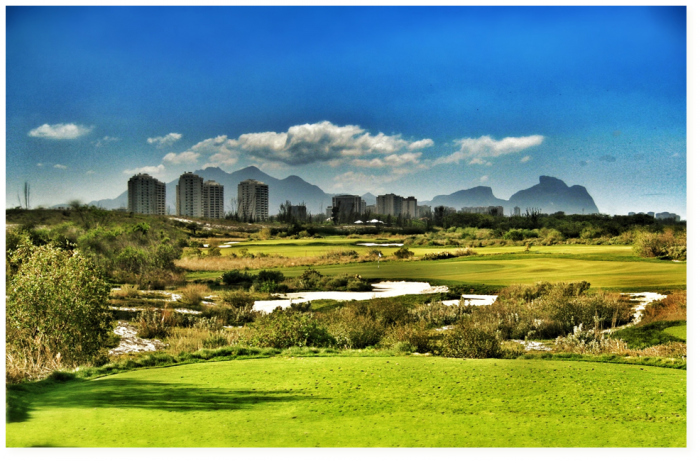
    The new golf course that is being developed for Rio 2016 has proved a controversial project owing to its location, speed of development and the fact the city already has a course that has hosted major events.
    The course is being developed in a nature reserve located in the Barra da Tijuca area of the city, a suburb that is also well known for its expensive real estate. Plans for the course include the construction of 160 high-end apartments that are selling for as much as $7m (€5.5m).
    Judge Eduardo Klasner said in a hearing last week that the defendants – the city and the developer – and the public prosecutor must find a way to protect the nature reserve with construction to be halted if a compromise is not reached.
    The prosecutor has requested that a number of holes on the course be altered and has asked the developer to return some of the land to the ecological reserve. Judge Klasner has allowed sodding on the course to continue, but the facility must be completed before the Brazilian summer begins in December, with no imminent ruling on the case expected.
    Felli in April was deployed by the IOC as a senior troubleshooter for Rio 2016 and said he is confident the ongoing troubles will not stop a test event from taking place ahead of the Games, either late in 2015 or early in 2016. 
    “Our understanding today is that we will be ready for the first test event which will be needed to be done for the golf,” Felli told the Associated Press news agency. “We are satisfied on the progress we see today. But we are not playing tomorrow. We know that we are going to play for the test event.”
    Carlos Nuzman, head of the Rio 2016 organising committee and president of the Brazilian Olympic Committee, said the matter is now in the hands of the city and Mayor Eduardo Paes. “Golf will be in the Olympics,” Nuzman said. “The city is responsible for the golf course.”
    Rio 2016 last week stepped up its preparations for the Olympics by unveiling its ticketing strategy. More than half of the tickets available for the summer Games will be priced at less than R70 (€24/$31).

  • Rio 2016’s full speed progress satisfies IOC

    Rio 2016’s full speed progress satisfies IOC

    In a marked contrast to its previous assessment, the IOC coordination commission has left Rio de Janeiro confident that Games preparations are back on track. 
    Over three days, the monitoring authority noted crucial improvements to venue works, public engagement and the support and coordination of the government. However, the timeframes for finishing construction and accommodation are particularly pressing, the commission observed. 
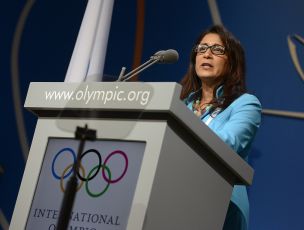
    “We leave Rio satisfied with the progress that has been made since our visit last March,” said Nawal El Moutawakel, chair of the commission. “We remain confident that, despite a very tight schedule, our Brazilian partners will deliver successful Games.” 
    The commission scrutinised the construction of venues and hotels particularly closely during the visit. “Although the schedule remains tight, the Rio team clearly demonstrated that they had the situation under control, with good progress being made,” the IOC said in a statement.
    “Accommodation was always going to be a challenge with the large number of hotels that have to be built ahead of the Games, but very clear and reassuring information was provided to the Commission that the 68 new hotels under construction were on track.”
    Moutawakel said “As we enter the final two years of preparations, we are able to see that the core works are progressing at full speed, particularly in venue construction, where we have been receiving solid development reports. We were also able to see first-hand the advancements being made, during our venue tour on Tuesday.”
    The commission visited the Olympic Golf Course, the Olympic Village, the Deodoro Olympic Park, and the Barra Olympic Park, where they were joined by Brazilian President Dilma Rousseff. 
    “The strong commitment of the Brazilian authorities to the success of the Rio 2016 Games has been underlined to us by the presence of President Rousseff during our visit to the Olympic Park yesterday,” said Moutawakel. 
    Other government partners that met with the IOC commission included Sports Minister Aldo Rebelo, Rio Mayor Eduardo Paes, Governor Luiz Fernando Pezão, and General Fernando Azevedo E Silva from the Olympic Public Authority (APO). 
    The commission heard that five times more was being invested in city development projects than in venue construction, with three bus rapid transit lines, a new metro, improved sanitation system coverage, better flood control, a city operations centre, and the regeneration of the city’s port area underway.
    Despite the country’s descent into recession this year, the coordination commission was told that a large part of Games and civic infrastructure projects are being financed by private funds. 
    “With the IOC’s guidance and the help of our sponsors, we have the confidence we need,” said Carlos Nuzman, president of the Rio 2016 organising committee. “It is very rewarding when we look around and see our partners from the city, state and federal governments, building the Games with us.”
    The commission was also encouraged by marketing activities. “Rio 2016 has begun to engage in earnest with the public this winter and we were able to take stock of what has already been done,” said Moutawakel. “We were pleased to hear that this engagement will continue with upcoming events like ticket sign-up, mascot launch, the Cultural Olympiad and test events.”
    The IOC statement described the test event schedule, which will feature more than 40 events in 2015 and early 2016, as “ambitious”, noting that the organising committee is “advancing full speed ahead towards these events”.
     

  • Event bidding comes under the spotlight at Host City conference

    Event bidding comes under the spotlight at Host City conference

    The inaugural Host City: Bid to Win conference has provided a thought-provoking and timely debate on bidding procedures for major events.
    The conference examined engaging themes central to the debate including the IOC’s proposed Agenda 2020 reforms and emerging trends in the bidding for and hosting of large-scale, multi-sport and cultural events.  
    Speaking at the one-day conference at the St James’ Court, A Taj Hotel in London, IOC Vice-President, Sir Craig Reedie, said the IOC is determined to change its approach in response to the current bidding climate around major events.
    “The evidence of the 2022 winter bids shows us that this is necessary. The IOC is right to look at its processes and try and correct the current situation. It wants to adopt a partnership approach and start a dialogue with bid cities.
    Reedie also called for the communications gap to be plugged between the IOC and Host Cities.
    “The IOC faces a communications gap. There has been a failure to get Host Cities and members of the public to understand that there are two budgets, an organising committee budget for staging the games, and a non-organising committee budget which looks at infrastructure and legacy for the host city.”
    “Sochi was certainly not encouraged by the IOC to make the scale of investment that they did. It was for the future of the city not the two weeks the games were hosted.”
    Stefan Lindeberg, President, Swedish Olympic Committee, agreed a breakdown in communication had occurred during Sweden’s recent attempts at bidding for the Winter Olympic Games.
    Lindeberg, said: “The public has to understand the costs and the risks. The process needs to be transparent and this needs to be communicated much earlier in the bidding process.
    “We want much more cooperation from the IOC. We want a situation where we start with a discussion about our city, our legacy, what we want from the Games then work with the IOC to create a host city contract that we understand not something that is imposed on us.”
    On declining to bid for 2022 Winter Games, Lindeberg said: “If we could do it again our answer would be yes. At the time we needed a much clearer statement from the IOC about exactly what it means to bid. If we had had the discussion we are having now in January, our answer would have been yes.”
    Speaking on the same panel, Alexander Koch, FIFA Corporate Communications Manager, discussed how rights holders choose host cities:
    “We need to be asking the countries why they are bidding. In the media it is quite often reduced to the economic value but if you ask this question to each country you will get vastly different answers. If we take Germany, for example, they had a very clear vision for why they wanted to host the 2006 World Cup – to present a unified Germany to the world. The decision to host has to make sense for that country. That is why 2018 went to Russia and 2022 went to Qatar because their bids made the most sense for their countries.”
    In a later panel which looked at evaluating bidding and hosting around the world Mario Andrada, Executive Director of Communications for Rio 2016, said:
    “The venues will be ready on time; we are 100% confident of that. Our focus will be on transport, accommodation and getting the people ready so they have confidence in the legacy for Rio.
    “We will, of course, learn lessons from London 2012 but Rio 2016 will be a different Games, it will have a Brazilian soul. We have to show it is good for the city, good for the country and good for the population. We want to focus on the self-esteem of our people and to deliver an intelligent and efficient Games with a clear and tangible legacy.”
    WPP Chief Executive Sir Martin Sorrell, on the issue of the cost of hosting major events, said:
    “The argument has not been as made cogently as it could be, bidding just accelerates the investment which is necessary anyway, be it airports, rapid transport or other city infrastructure.  The benefit of the legacy is not being articulated as strongly as it could be by cities.
    “Communicating the legacy of hosting these events, the intangible side of it, is critical to engaging the public. In order to achieve success you have to articulate clearly the benefits of staging an Olympics, a World Cup or a Grand Prix.”
    Host City: Bid to Win brought together experts and decision makers to explore the challenges and benefits of bidding for major global events. At a time when the bidding process for events is under the spotlight Host City: Bid to Win has engaged expert insight into the heart of the debate including the IOC’s proposed Agenda 2020 reforms and emerging trends in the bidding for and hosting of large-scale, multi-sport and cultural events. 
    For further information on Host City: Bid to Win please visit: http://www.bidtowin-hostcity.net
     

  • Rio 2016 announces business opportunities

    Rio 2016 announces business opportunities

    The organising committee of the 2016 Olympic and Paralympic Games in Rio de Janeiro has announced nine tenders. 
    The work covers a range of specialisms, with application deadlines ranging from November 2014 to February 2015. 
    Rio 2016 wishes to hire companies in the following fields and timeframes:
    IT Outsourcing. Application deadline: 13th November. 
    Barriers and Fences. Application deadline: 27th November.
    Temporary Arena with Overlay. Application deadline: 28th November.
    Medical Supplies and Products. Application deadline: 4th December.
    Commentators Positions & Tribunes. Application deadline: 4th December.
    Venue Hospitality. Application deadline: 4th December.
    Stands and Seating. Application deadline: 10th December.
    Cleaning and Waste Services. Application deadline: 22nd January 2015.
    Waste Services. Application deadline: 21 February 2015.
    UK companies interested in bidding should contact fabio.alves@fco.gov.uk 

  • Will the marvellous city live up to its name?

    Will the marvellous city live up to its name?

    Rio de Janeiro staged seven 2014 World Cup matches including the final, but the spotlight will shine even more brightly on the ‘Cidade Maravilhosa’ when it hosts the Olympic Games in 2016.
    Brazil had to overcome delays and doubts before staging a World Cup now destined to be remembered as more successful for the host nation off the pitch than on it.
    Now Rio is under pressure after International Olympic Committee (IOC) vice-president John Coates branded its preparations the “worst ever” in April.
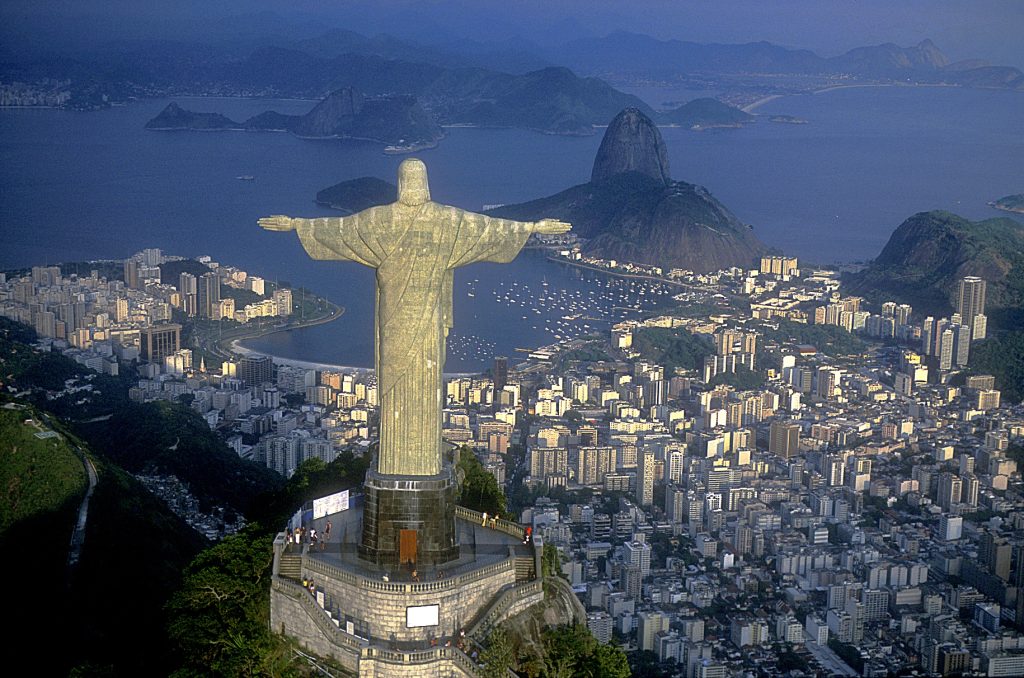
    The city of Sugarloaf Mountain and Christ the Redeemer promises a spectacular setting but also has a reputation for traffic jams and violent crime.
    So, did football’s showpiece event leave a legacy for the first Olympics in South America and what challenges remain?
     
    Games Infrastructure
    The renovated 78,838-seater Maracanã Stadium will be used for the opening and closing ceremonies of the Olympics and Paralympics and football matches, including both the men’s and women’s finals. 
    The Games will take place across four venue clusters:
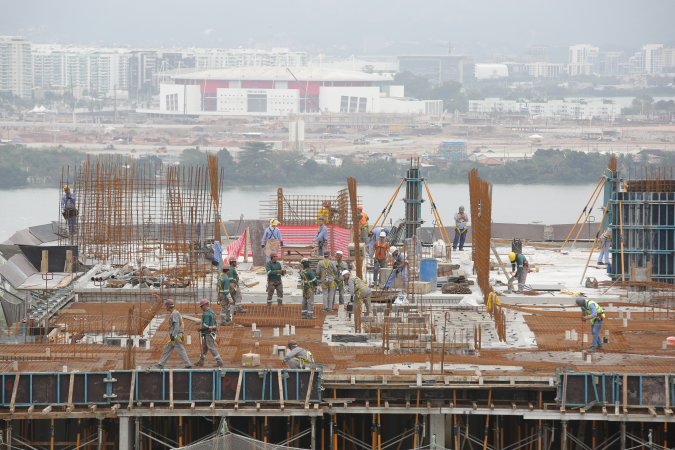
    •The Olympic Park in Barra da Tijuca (widely known as Barra) will host around 60 per cent of events, including track cycling, boxing, tennis, basketball and swimming, and feature the broadcast and press centres. Construction work at the site has recently been extended to 24 hours per day and work on three halls hosting indoor sports only began in August. Work on athletes’ housing in the Olympic Village is more advanced – with 31 17-storey towers already standing – and should be finished by the end of 2015.
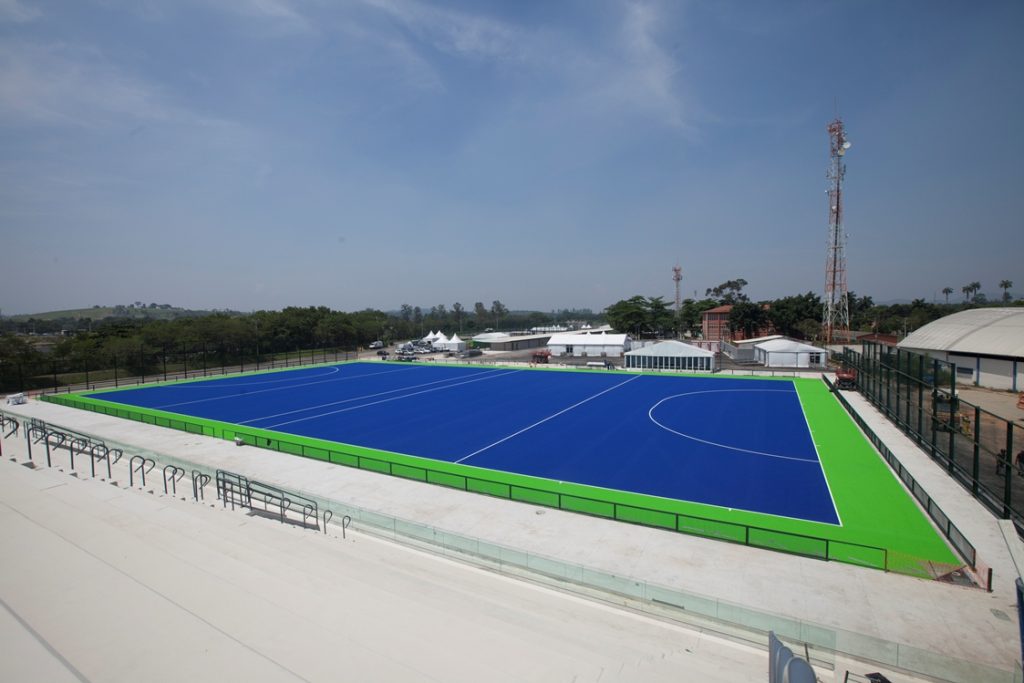
    •Deodoro, the next biggest cluster, will host 11 events, including equestrian, shooting and rugby sevens, across nine venues in a poor area of Rio. Three venues used in the 2007 Pan-American Games and 2011 World Military Games just need renovations. However, work on a new arena, hockey centre, BMX centre and whitewater stadium only began in July after the IOC warned Deodoro was two years behind schedule and questioned Rio’s social legacy planning. Two temporary structures will also be created – the Rugby and Modern Pentathlon Arena and the Olympic Mountain Bike Park.
    •The Maracanã cluster. As well as the football stadium, this includes the João Havelange Olympic Stadium that was built in 2007 for the Pan American Games and will host the athletics. Currently undergoing roof repairs, it is due to close again next year so the capacity can be raised from 45,000 to 60,000.
    •Copacabana cluster. A temporary 12,000-seater stadium on Copacabana beach will host beach volleyball. In Flamengo Park, 3,800 spectators in temporary seating will be able to see road cycling and race walking. Nearby, Guanabara Bay will host the sailing, while a temporary 10,000-seat pontoon in Rodrigo de Freitas lagoon will ensure a great atmosphere at the rowing and canoeing finish zone.
     
    Transport rush
    While some cities benefited from several World Cup-related urban mobility projects, Rio saw only one – the Transcarioca bus rapid-transit (BRT) scheme connecting Barra to the international airport.
    World Cup match ticket-holders were allowed to take the underground to the Maracanã for free and the municipal government declared public holidays for Rio’s three weekday games.
    While the arrangements allowed fans to travel without problems, critics say the city came to a halt – something Rio cannot afford over 17 days of the Olympics.
    “It appears from the outside that the city functioned well but it was not working as normal,” said Christopher Gaffney, a visiting professor of architecture and urbanism at the Federal University of Niteroi.
    The Olympic clusters are considerable distances apart and traffic leaving Rio’s beach zones often slows to a crawl around tunnels through the mountains.
    Barra is about 25km west of central Rio, the Maracanã is 13km north of Copacabana and Ipanema, while Deodoro is still more distant from tourist hotspots and hotels.
    But four BRT schemes – all terminating in Barra – will help speed traffic by providing express lanes for air-conditioned, articulated buses holding 160 passengers or more.
    The first 56km BRT opened in 2012 and the 39km Transcarioca began operating in June – along with a new international airport departures area – and is expected to carry 320,000 people daily and cut journey times by 60 per cent.
    The 26km Transolímpica, due to open in January 2016, will link the competition centres in Barra and Deodoro and is expected to be used by 400,000 people per day. 
    Finally, the 32km Transbrasil will connect Deodoro to central Rio and could benefit 900,000 passengers daily. However, Transbrasil’s tender date has been delayed and although work could begin in October, transport experts question whether it will be ready for the Games.
    A new 16km underground line, a light rail transit service and revitalisation of Rio’s port will also ease congestion and benefit visitors.
    The underground’s Linha 4, due to open early in 2016, will have six new stations linking Ipanema to Barra, and should carry more than 300,000 people daily.
    A ride from Ipanema to Barra will take 15 minutes and central Rio to Barra will take 34 minutes.
     
    Tough tactics
    The Ministry of Justice’s Extraordinary Secretariat for the Security of Big Events (SESGE) co-ordinated arrangements for the World Cup and will do so for the Olympics too. 
    Police averted the threat of large protests close to World Cup venues by establishing security perimeters 2km around the stadium.
    The tactic was condemned by civil rights groups and failed to prevent nearly 100 ticketless Chile fans breaking into the Maracanã ahead of a game against Spain.
    Police also used tear gas and batons against some demonstrators close to the cordon on the day of the final but the Brazilian government views World Cup security as a success given the fears of greater unrest.
    In early August Defence Minister Celso Amorim met top military officials in Brasilia to discuss issues for 2016 such as intelligence, disaster prevention and event access.
    Central to security planning has been the establishment of Police Pacification Units (UPPs) since 2008 in favelas previously controlled by drugs gangs. 
    Around 40 UPPs are now in operation with nearly 10,000 Military Police officers. At least two helicopters will transmit real-time video to a co-ordination centre in Deodoro during the Olympics.
    Dignitaries will be driven to events in a fleet of 36 armoured police sports utility vehicles with sirens and GPS systems.
    The threat of terrorism is considered low and there are no signs that major political protests are likely, but the security demands for the Olympics are still far greater than on any World Cup city.
    World Cup final day saw a record 25,787 security personnel deployed on Rio’s streets but Andrei Rodrigues, special secretary for security and safety at major events, says “several times” that figure will be called upon during the Olympics.
    This article was written by Robin Yapp, HOST CITY’s reporter in Brazil, and was first published in the Autumn issue of HOST CITY magazine

  • Rio will be ready, says Paralympic president

    Rio will be ready, says Paralympic president

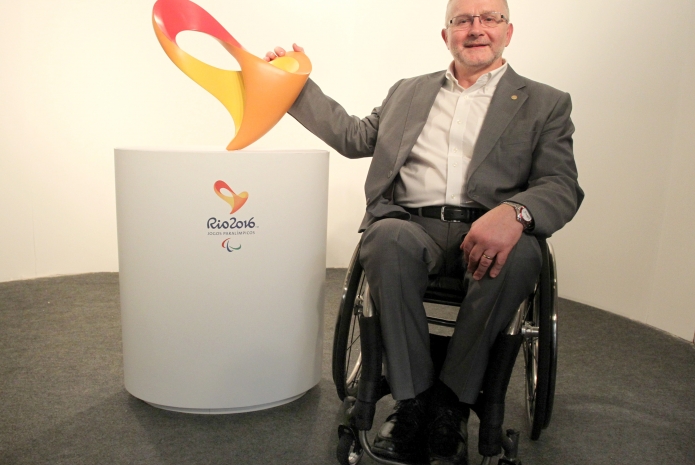
    2014 was full of questions about Rio’s readiness to host the Olympic and Paralympic Games but, according to International Paralympic Committee (IPC) president Sir Philip Craven, people can afford to relax in the knowledge that the city will deliver on time.
    “1 January 2015 marks exactly 615 days to go until the Rio 2016 Paralympic Games and I can assure you that my excitement is growing by the day,” Sir Craven said in his annual New Year’s message.
    “The Organising Committee has done a great deal of work in 2014, most recently highlighted by the successful launch of the Paralympic mascot Tom. I’m also delighted Rio 2016 has formed a Paralympic Integration Committee which is led by IPC Vice President Andrew Parsons.
    “The last full year before the Paralympics is always vital and, in 2015, Rio will be staging a number of test events, as well as the Chef de Mission seminar, as their preparations gear up for the final push.
    “People are a little more relaxed now they are seeing the venues grow in size each day and I am fully confident everything will be ready for our Games and that Rio will deliver a truly spectacular event. The atmosphere in Rio will be amazing; the Carioca like to party, and I hope Rio 2016 is one big party for the spectators and for the athletes (once they have competed of course!).”
    Rio 2016 is of huge importance to the Paralympic movement. 
    Speaking on 7 September 2014, two years before the start of the 2016 Paralympic Games, Craven said “Rio 2016 will be South America’s first Paralympic Games opening up a whole new continent to the power of the Paralympic spirit and Paralympic sport.
    “I believe the Games can be transformational not just for Rio and Brazil, but the whole of the Americas and the Paralympic Movement.”
    Although 2015 is not a Paralympic year, the large number of qualifying championships taking place will make the year one of the IPC’s busiest ever. 
    “Arguably the biggest and most important sporting event of the year is August’s Toronto 2015 Parapan American Games which will feature 1,600 athletes from 28 countries competing in 15 sports,” said Sir Philip.
    “It is vital that Toronto 2015 is a success and that we leverage the event to generate greater awareness of the Paralympic Movement in the Americas ahead of Rio 2016.”
    In his address, Sir Philip also cited the Sochi 2014 Paralympic Winter Games as the IPC’s Top Moment of 2014. 
     

  • IOC visits Rio to check progress on 2016 Games

    IOC visits Rio to check progress on 2016 Games

    The International Olympic Committee (IOC)’s Coordination Commission’s eighth visit to the “Marvellous City” of Rio de Janeiro gets underway on Monday, ahead of the IOC Executive Board meeting in the Olympic host city later in the week. 
    The Coordination Commission, chaired by IOC vice president Nawal El Moutawakel, is working with the local Organising Committee and its government partners over the next three days, the IOC said, “to see how Rio’s preparations are advancing ahead of the 2016 Olympic Games”.
    The inspection comes shortly after the vice president of the International Golf Federation (IGF) said construction on the golf venue is almost complete – a marked turnaround from the situation last year when concerns over venue infrastructure reached crisis point.
    The IOC noted that, with the Games now just over a year-and-a-half away, Rio 2016 now has a number of Games-time initiatives underway, such as its ticketing programme, volunteer training programme and the Olympic Torch Relay. 
    As well as hearing about these initiatives on the visit to Rio, the Coordination Commission will visit some of the Games venues and listen to reports on a number of key operational areas such as athletes’ services, sport, venues, National Olympic Committee services, International Federation services, accommodation, transport, marketing, media services and preparations for the Paralympic Games.
    The progress of Rio 2016 came under intense scrutiny last year, reaching its nadir in April when IOC vice president John Coates described the Games preparations as “the worst I have experienced”. 
    In less than a year, Rio 2016 appears to have turned the ship around – at least with respect to the golf course, which has received a vote of confidence from IGF vice president Ty Votaw.
    “The construction aspect of it is virtually complete,” he told Reuters on Friday. “There are a few items that need to be completed, some infrastructure things, but as far as the golf course itself and the design elements and the grassing of the golf course, that is virtually done.
    “We just need to continue to impress upon everybody in Rio, the 2016 organisers and the land owners, that all resources need to be brought to bear to get the golf course in the condition that it needs to be to host a competition of this nature.”
    The course was originally scheduled for a test event in November 2015 but questions have been raised about whether the grass would be ready. Votaw said a test event would take place before Rio 2016 but did not confirm the timeframe.
    “We want to get a sense of how the grow-in season goes over the next 60 to 90 days to determine what the chances are of a late ’15 or early ’16 test event.
    The IOC Coordination Commission runs from 23 to 25 February and is followed by the Executive Board meeting, which takes place from 26 to 28 February.
     

  • Red Bull gives beach volleyball wings

    Red Bull gives beach volleyball wings

    The International Volleyball Federation (FIVB) today announced a partnership with the Beach Major Company to assist with running and promoting FIVB World Tour events including the Season Final and the Major Series. 
    Swatch also today renewed its sponsorship of these events.
    The Beach Major Company is a joint venture between Red Bull and Hannes Jagerhofer, founder of ACTS Group, who have been cooperating closely for 20 years. 
    Soft drinks manufacturer Red Bull, with its slogan “Red Bull gives you wings” has emerged in recent years as a major player in event management and marketing. Jagerhofer has promoted and staged many volleyball events. 
    “This new partnership is the next step in the FIVB’s mission to ensure that volleyball is the world’s leading family sport entertainment through engagement, innovation and universality,” said Dr Ary S. Graça, president of the FIVB. 
    “Like the FIVB and volleyball, Red Bull is a dynamic, global brand and I look forward to working together to ensure that the FIVB’s beach volleyball events are a memorable spectacle for fans around the world.
    “Red Bull is unrivalled in its marketing expertise. In combination with the Red Bull Media House with its outstanding network and knowledge of content production and distribution – this makes them an ideal partner for the FIVB. We are also delighted to be working closely with Hannes Jagerhofer – a renowned promoter who has set the benchmark for staging world-class volleyball events for many years. 
    “Finally, today we are announcing the renewal of the relationship between beach volleyball and one of the most respected sponsors in sport – Swatch. These are all incredibly prestigious partners for the FIVB and I look forward to working closely together to ensure that volleyball continues to lead through innovation as the number one family sport entertainment in the world.” 
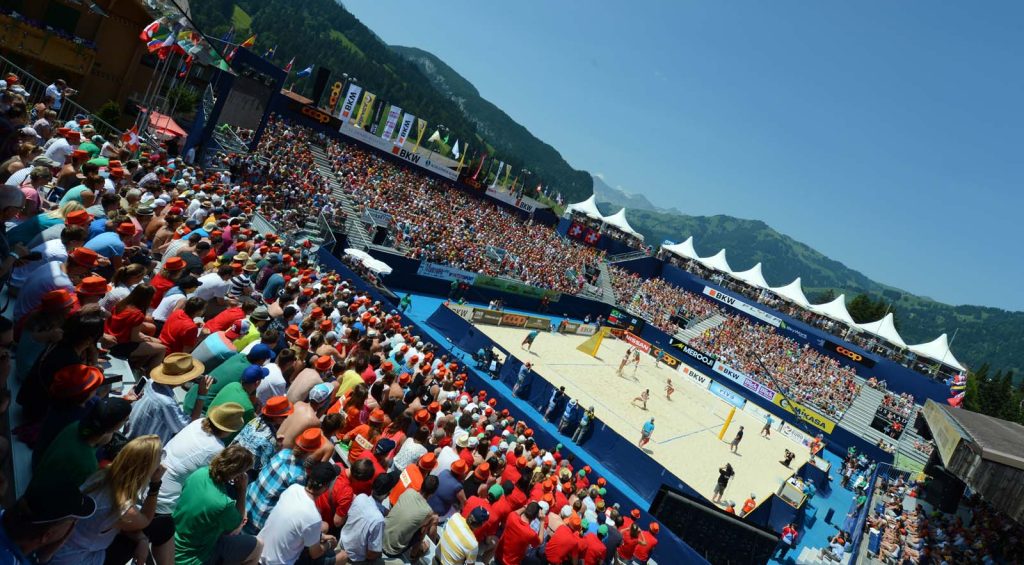
    The joint venture has committed to “long term backing” of the FIVB and is expected to significantly expand the Major Series, which has three events in 2015: Porec, Croatia; Stavanger, Norway and Gstaad, Switzerland.
    “The Swatch Beach Volleyball Major Series, together with the FIVB as the world governing body, was created to push beach volleyball to an entirely new level and position it on the world’s stage of top global sports,” said Hannes Jagerhofer, CEO of the Beach Major Company.
    “Only with the strong support of the International Federation, which is entirely responsible for the sport’s progress, is it possible to realise the vision of the Major Series. 
    “Bringing Swatch on board as title sponsor, which is not only a strong global iconic brand but also a year-long trusted partner, facilitator and driving force, is the best possible scenario for a new era in beach volleyball history.
    “To top it off, the Red Bull Media House, known for its award winning live productions, innovative content creation, action sports series and top ranked social media community will be committed to delivering new standards in beach volleyball production, distribution and entertainment.” 
    2015 promises to be a high profile year for the sport, with the 2015 FIVB World Tour marking the start of the second qualification process – alongside the Continental Cup – for the Rio 2016 Olympic Games. 
    Hosted on the iconic Copacabana Beach, beach volleyball is set to be the signature event of Rio 2016.
     

  • Rio 2016 at its most intense phase of preparation – IOC
    Rio 2016 at its most intense phase of preparation – IOC

    The International Olympic Committee’s coordination commission has concluded that Rio de Janeiro is making solid progress on preparing to host the Games, but there is an “intense year ahead” with operational activities coinciding with a series of test events that pose “very aggressive timelines” for some venues.
    IOC president Thomas Bach led a delegation to meet Brazilian President Dilma Rousseff, who pledged full support for the Games from “every level and ministry of [her] government as well as from State and City authorities.”
    Bach also met with Rio State Governor Luiz Fernando Pezão, Rio de Janeiro Mayor Eduardo Paes and Brazilian Minister of Sports George Hilton, and joined the commission on a tour of the Barra Olympic Park.
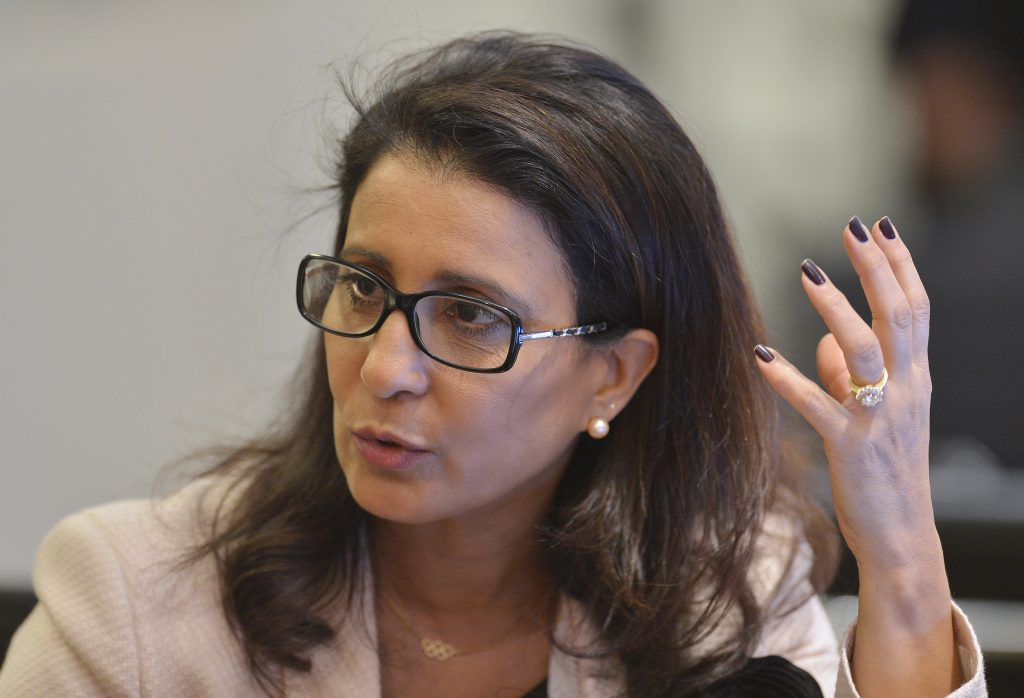
    Speaking at the end of the visit, commission chair Nawal El Moutawakel said: “We were pleased to be able to show President Bach that good progress has been made on the Rio 2016 Games. The advancements made on both the Barra and Deodoro Olympic Parks were very encouraging, with both areas on track to leave fantastic legacies to the people of Rio and the athletes of Brazil.
    “However, the Rio team is now entering the most intense phase in the preparation for the Games, as they reach a new level of detail while planning numerous test events.”
    Rio de Janeiro’s Games venues are set to host 21 test events in 2015.
    “Rio 2016 will have a lot to deliver while still preparing for the Games,” said El Moutawakel.
    “We were pleased to see that Rio and its government partners have put in place structures that will allow them to deal with what will be an intense year ahead, filled with thousands of details that will need to be dealt with before the Games. They will also need to ensure that the venues are delivered in time to host the test events.
    “The golf course, velodrome and equestrian cross-country venues all have very aggressive timelines that will need to be met over the coming months.”
    Carlos Nuzman, president of the Rio 2016 Organising Committee, said “As we move at high speed from the planning to the execution phase of the project, we are dedicated to delivering on our vision for the Games.
    “In a project of this magnitude, some obstacles will always exist, but with the help of our partners at the IOC and the three levels of government, we will overcome them. Our joint commitment to deliver excellent Games with memorable celebrations is stronger now than ever.”
    The IOC coordination commission was pleased with the level of unity shown by government partners with the Rio 2016 Organising Committee, “which emphasised the importance of having an integrated approach to the delivery of the Games, especially during a period which is as intense as the coming 17 months.”
    Accommodation and transport were also highlighted as areas that the organisers need to focus on.
    “A significant amount of work needs to be completed this year to ensure that the Games experience is delivered at the highest level for the athletes, participants and spectators,” the IOC said.
    The commission was pleased to see that a number of engagement initiatives have been launched in Brazil since its last visit, such as ticket sign-up, volunteer recruitment, mascots and the Olympic Torch Relay.
    Ticket sales are set to begin in late March. Volunteer training, torchbearer applications, and the cultural programme are due to get underway later in the year.