After decades of economic growth fuelled by exports, China is now concentrating on building domestic markets to sustain its economic growth. Sport has been identified as a particular area of potential, with $850m being invested in a programme of “Development of Sports Industry and Promoting Sports Consumption”.
Football is pivotal to this development programme. The Chinese Football Association has set targets for China to become a world football superpower by 2050 and President Xi Jinping has declared his ambition for the national team to win the World Cup.
The Prime Minister of India has also highlighted football as part of the National Vision. Just how far and fast can the development of football in India and China go, and how is it being achieved?
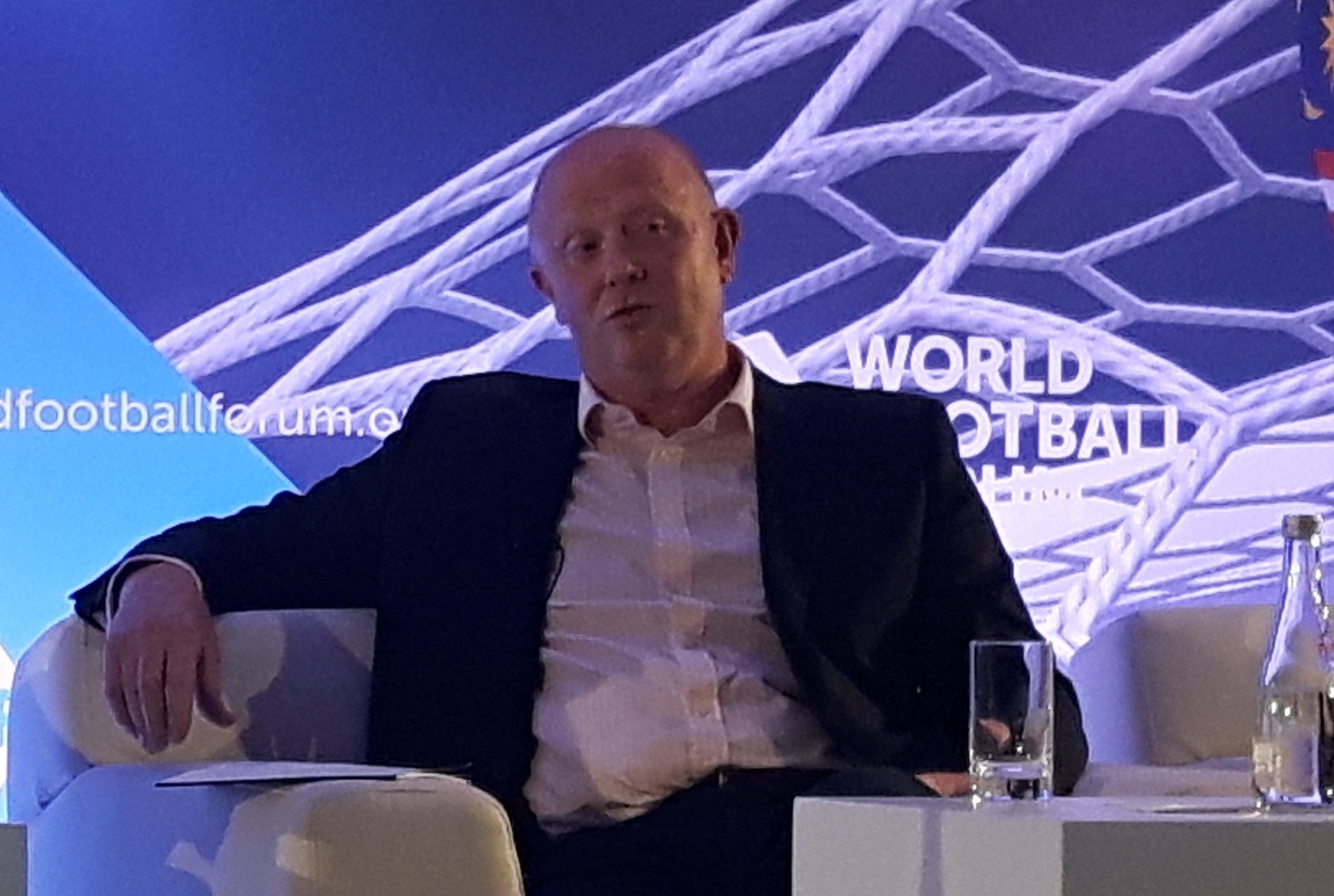
“What I perceive of those two countries is that there is clearly a much stronger interest in football. There is more dedication from the government,” Alexander Koch, Head of Corporate Communications at FIFA told delegates at World Football Forum.
“There is a much better focus from the FIFA side and we are working on interesting programmes on developing football.”
The growth of football in Asia is already bringing commercial rewards, with revenues from broadcasting international football in Asia on course to equal those from Europe.
“FIFA’s TV income for the 2018 World Cup will, for the first time, have more from outside Europe than in Europe,” he says. “Maybe in the long term we could think of getting one third from Europe and Africa, one third from Asia and one third from the two Americas.”
China and India may be geographical neighbours, but the world’s two most populous countries show contrasting approaches to development.
“It’s very dangerous to generalise,” says Mike Pfister, Senior Development Manager at FIFA. “An emerging market does not equal an emerging football market.
“India is vastly different to China, both in terms of development of football, the way it is structured as well as the opportunities and challenges for development.”
Indian renaissance
Way back in 1950, India was a regionally successful footballing nation that qualified for the World Cup, although they were unable to participate due to a lack of resources. But the 60s and 70s saw a marked decline in football development and it was not until 2005 that a permanent headquarters for India’s national football federation was established.
“There were no professional structures to develop football,” Mike Pfister says. “The first General Secretary came into FIFA in 2011. So in a way that’s a federation that’s just five years old!”
Peter Hutton, CEO of Eurosport was working for IMG when he moved to India in 1994 and found very little football on television. “I finally found an Indian football match on TV – the national cup final. It went to extra time, and the moment it went to penalties it cut off for the news and it didn’t come back! At that point you’ve got to think there’s an opportunity there.”
IMG launched the India’s first national league a year and a half later. “It didn’t follow all the dreams we had for it, but you tapped into the undeniable enthusiasm for football in India and you knew there was something there that could really grow, and it’s fantastic to see how it has grown in the last 20 years.”
The scale of India’s investment into football is incomparable to China’s. “We are behind in terms of investment; there is no comparison,” says Kushal Das, General Secretary at the All India Football Federation.
“But then that’s still the case for every industry – the investment levels in China have been significantly higher in every aspect. We don’t have that kind of money, that’s for sure – but we also don’t have a bubble.”
Outbound investment in sports
Chinese companies are rapidly investing in overseas sports and entertainment brands. Dalian Wanda alone has recently bought the Ironman triathlon, Infront Sports & Media, a 20 per cent stake in Atletico Madrid, worldwide sponsorship and licensing rights for FIBA events, US film studio Legendary Entertainment and North America’s second-largest cinema chain, AMC Entertainment.
Wanda became the first Chinese FIFA Partner in March 2016. In July it announced the launch of the “China Cup” international football tournament with the Chinese Football Association, the first edition of which will take place in Nanning in January 2017 between China and three major teams from Europe and the Americas.
Alisports – launched in 2015 by ecommerce giant Alibaba – has gained online broadcasting rights from World Rugby in exchange for investments in the development of rugby in China. China Everbright and Beijing Baofeng have bought a 65 per cent stake in Italian TV rights distributor MP & Silva. A Chinese consortium now owns 13 per cent of City Football Group, the owner of Manchester City and New York City football clubs.
India is not investing its way into the global sports market in the same way. “Indian corporates are not looking at investing in foreign clubs at the moment; it’s more about improving the standards of Indian football within India,” Sunando Dhar, CEO of I-League tells Host City.
“China’s paying huge amounts of money to bring foreign talent into China; I don’t think at the moment we can afford that kind of money in Indian football. We are trying to put a system in order first. Once that’s done, once the market becomes a little more advanced, maybe we can think of going global. At the moment we are trying to have a national feel to it.”
India’s sport industry is not outbound in the same way as its other more acquisitive industries, such as steel and automotive.
“The reason for that is that they are already developed in those industries. Football is still at a very nascent stage in India. We need to develop ourselves; that’s what we are trying to do now. Once we have done that – it may take five, ten, 15 or 20 years – once we do that we’ll think of the next plan.”
European football fever
Football is undoubtedly growing in popularity all over Asia. However, there is a concern that enthusiasm is focused on European rather than local teams.
“Growing markets are good for development if you can connect that with the passion that football can generate. However, what you also see quite often in these emerging football powers is a dichotomy of passion in football,” says Mike Pfister.
“You will find in South East Asia for example a great deal of football fans who are passionate about football – they will stay up until four in the morning to watch the Champions League final. But that is in stark contrast to their interest in local and national football teams.”
Peter Hutton says: “One of the sad things about South East Asia is that the Premier League is so prevalent and the local clubs struggle so much by comparison. I think India and China have the chance to do it a different way and really establish the strong basis for local clubs.
“The international leagues that broadcast into India and China have a fan base, a dedicated audience, but they don’t have that potential to engage so deeply with Chinese and Indian audiences. So the potential for local leagues is huge.”
However, the growing popularity of football in India is still mostly directed towards European football clubs, Sunando Dhar tells Host City.
“Football here is very popular. It’s maybe more popular than cricket in urban youth. But the thing is, football for most urban youth is the English Premier League, Bundesliga, La Liga, Serie A – so that’s what we are competing against.
“The European leagues to an extent are cannibalising Indian football – eating into it. That’s a tough battle to fight.
“So that’s why we are trying to put systems in place, trying to glamorise our sports, trying to bring big brand ambassadors into football – from cricket, from Bollywood – these are the two biggest industries people follow.
“And we have seen in season one and season two, bringing in players like Del Piero and Zico who not only bring their expertise on the field but also act as a brand ambassador for the game. That’s having an impact; people are coming to the stadiums, attendance is rising which is fantastic. We now need to create Indian stars.”
Hosting touring European clubs
The number of European football teams touring Asia continues to rise. There are many benefits for the hosts of these tours, says Paul Kam, Chairman of ProEvents Group, which promotes tours to Asia for European football clubs.
“There a number of benefits of overseas clubs coming to Asia,” he tells Host City. “Firstly for the local economy, it brings out all the benefits of job creation, it makes sure the city has better infrastructure – they have to maintain the stadium well to be able to host international events. These really put the country and the city on the football map.
“It also helps to improve football players’ conditions, their know-how and knowledge of looking after themselves as athletes. It also increases the popularity of the sport.”
The benefits for European clubs are clear. “They are able to secure more fans, so they may sell more shirts and they come here to get more fan base, which nowadays everybody is talking about – Manchester United is saying they have 600m fans all over the world. Where has that come from? It’s come from them reaching out to be face to face with the spectators.”
In the 25 years ProEvents has been in business, Kam has seen the growing trend of European clubs coming to Asia to compete against one another, instead of against local teams.
“There are many more matches coming up which are just purely foreign team versus foreign team. The trend is going to be there because people love football, from China’s point of view and from Asia’s point of view.
“The Premier League is by far the best league, in front of other leagues like La Liga and Serie A. So people love to see their players; they watch them on the TV every week – and now they can see it in front of them, so of course they will buy tickets.
“People come to watch an international event. If they buy a ticket to watch Barcelona versus Arsenal for example, they have expectations, they will see Messi, Neymar, Suarez, Giroud, Sanchez– they are the reason why they buy tickets to go and see the football match.”
The concern is that there is a missed opportunity for developing football in Asia if local players don’t have the chance to play alongside these big names.
“We always try to strike a balance. My theory is that they should play against local teams, which has much more meat in it because the locals will benefit, foreign teams will benefit – it’s a win-win thing. And then the local boys can improve.
“And what about Vietnam, Indonesia, Singapore for example? They are much lower down than China for example, but how do they improve if they don’t get a chance to play? In 2017 there will be a host of teams coming over to Asia to play against Asian teams, against other foreign teams.”
All-European matches also pose organisational challenges for their overseas hosts. “As a promoter, you have double costs. That means twice the security; twice the transportation, twice the food, flights and everything.
“If I can make the mathematics right it’s a good investment, but if the cost is too high then I personally would prefer to have a foreign team play against a local team.”
Grass roots development
The success of China and India’s football development programmes will depend on their ability to tap into talent all over the country. FIFA is working closely with the Chinese Football Association to build competence nationwide.
“It’s not a problem of spreading the support or making it more popular – the popularity is there. But if you look at where the big football hubs are in China, they are in coastal hubs around the economic powerhouses – Guangzhou and Shanghai,” says Mike Pfister.
“China needs to spread westward. The government’s ‘go west’ strategy still applies to football – going into the provinces again, tap into the 1.6bn people that you have. There is a lot of potential that is untapped there.
“Creativity is home-grown. Yes, you can bring in foreign coaches but you have to have your own physiognomy and philosophy. Money is important but passion is more so and this is needed to develop locally.”
Without major corporate outbound investment in sports brands and European clubs, India’s success will rely on building talent domestically.
“You can’t compare the Indian and the Chinese model. In India what we are doing at the moment is looking inward,” says Sunando Dhar.
“We are trying to improve our house, keep things simple, invest in grass roots development and hope clubs run their teams in a professional manner.”
Hosting and winning the World Cup
The ultimate aims for any footballing nation are to host and win the World Cup. At 152 in the FIFA world ranking, India has a long way to go, but the country is taking a major step forward by hosting the under 17 (U17) World Cup in 2017.
“One aspect of the U17 World Cup is to deliver FIFA-standard infrastructure,” says Kushal Das. “The challenge will be to have a very competitive Indian team, because we don’t have a system where it is developed from an early age.”
Whether India could one day host the men’s World Cup is a different question. “What India is doing next year with the U17 World Cup is an important step on that road. You certainly see the potential of the World Cup to change the perception of football in a country,” says Peter Hutton.
“I think that when you’ve got economies as big as India or China it’s got to be worth, from a FIFA perspective, considering that option.
“I think the sensible first move for India is to do the U17s. Let’s see how that works, let’s build an infrastructure that can support football – and then let’s keep an eye on what we can do in those sorts of markets. Because if we can genuinely make those markets football obsessed, football hungry and aware of their position in the world, then I think the potential is enormous.”
China, with a team ranked 81 in the world, is keen to host the World Cup within a generation. “They don’t have the patience to wait another 50 years,” says Ma Guoli, Deputy Chairman of LeSport – the sports arm of internet company LeEco, which owns the global broadcast rights to the Chinese Super League.
“There is definitely a bubble now; the question is how we can control this kind of investment to find the best team to work in Chinese football. I hope that there will be more and more professional people who really love football and know how to develop it in China. So 2030 is the right time for the World Cup in China.”
Whether China can reach its goal of winning the World Cup is another question. “It’s unrealistic. You can’t say from where they are now to say within the next ten or fifteen years they are going to win a World Cup – it’s not going to happen,” says former England footballer Mark Wright.
“That’s not being disrespectful, that’s just a fact. If you talk about 30 years when you start to educate children and then get the right people, coaches and education, certainly it’s possible to host a World Cup. But to actually go on and win one – this is a big ask and it will take a hell of a lot of hard work between now and 30 years’ time.”
This article first appeared in the Autumn 2016 issue of Host City magazine. It was based on exclusive interviews by Host City and panel discussions at World Football Forum 2016
Blog
-
Football rises within Asia’s giants
-
“Host cities are critical partners for sports federations” – IOC Vice President
Host City: What do you see as the most important issue facing major events today and why?
Prof. Dr. Ugur Erdener: Unpredictable international political situations, which result in security and economic issues, are much more in focus in the modern world. Then there is doping and match fixing – both serious issues that cannot be overlooked. Protecting clean athletes is a particular priority of mine.
How is World Archery leading the fight against doping?
As a lower risk sport our emphasis has progressively shifted towards education. However, we increased the number of in- and out-of-competition tests taking place in 2016 following two cases at the start of the year.
Both were rooted in a lack of knowledge and attributed to accidental use rather than performance-enhancing doping. These cases are very sad, as they are not intentional and are completely avoidable.
In the lead up to Rio 2016, World Archery actively targeted Russian athletes for doping control, which – in the end – allowed us to prove beyond reasonable doubt that they were not implicated in any doping activities. That allowed them to compete in Rio at the Olympic Games. I believe that we had to protect clean athletes’ rights for participating in the Rio Games.
What was the highlight of Rio 2016 for you?
The archery competition at the Olympic Games in Rio was great success. Our broadcast hit record numbers in Germany, France and Korea, and received excellent viewing figures in the USA and other major markets.
The quality of the competition on the field of play was excellent, featured athletes from 56 countries, and we ended with medals going to four of the five continents.
What for you will be the greatest legacy of Rio 2016?
Seven years ago, Brazil did not have a fully-formed archery team. Now, the nation has several professional archery athletes, and a good coaching and judging structure. If progress continues, Brazil will soon be challenging for medals.
World Archery substantially increased its worldwide exposure across all kinds of media. There was a 52 per cent rise in the number of Facebook fans during the Games period.
In general, we can say there is a huge transformation in the city, a big legacy related to many high level sports facilities – and of course their management and maintenance will be important going forwards.
As a speaker at Host City 2016, what are your expectations of this important event – what do you hope to share and learn?
Host cities are critical partners in the success of any event. As a sport federation, we are constantly working to see how to better exchange expectations and expertise with our host cities, to ensure our events are a win for both parties.
Hopefully, this event promotes and nurtures this positive collaboration.
Why is it important for cities and rights holders of sports, business and cultural events to have the opportunity to connect at Host City 2016?
Successful events only take place when stakeholders truly collaborate.
Not only is it important for sports – or event rights holders – and cities to find the correct fits, for both parties, but be able to define common objectives that allow them to work together to deliver results for both parties in a true partnership.
Prof. Dr. Ugur Erdener is delivering a keynote address at Host City 2016, the largest meeting of cities and sports, business and cultural events. For more information visit http://www.hostcity.com/events/host-city-2016 -
IOC “well pleased” with PyeongChang 2018 progress
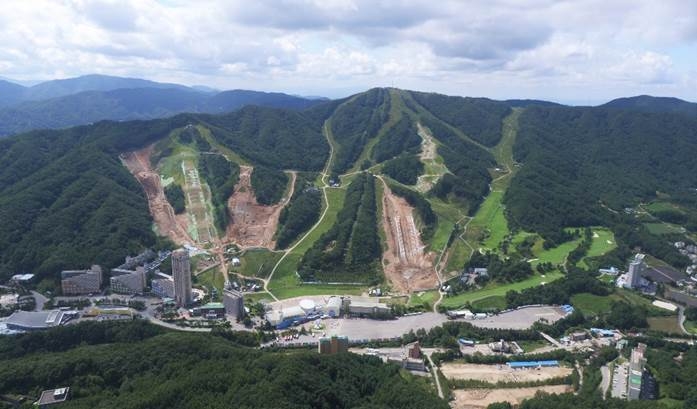
[Source: IOC] The International Olympic Committee (IOC)’s Coordination Commission for the Olympic Winter Games PyeongChang 2018 wrapped up its seventh visit well pleased with the progress of venue construction.
The Commission, led by IOC member Gunilla Lindberg, assessed every aspect of Games preparations during three days of venue visits and collaborative discussions with the PyeongChang 2018 Organising Committee.
The Games organisers reported that, on average, the new venues in PyeongChang and nearby Gangneung are 90 per cent complete in advance of 26 test events scheduled between this November and April 2017. PyeongChang will host the mountain events; Gangneung will host the ice sports.
“We saw first hand the progress of the construction projects,” Chair Lindberg said at a closing news conference with PyeongChang 2018 President Hee-beom Lee on Friday. “There is no doubt that the venues will be ready for the upcoming test events.”
President Lee also expressed satisfaction with the visit, calling it “a productive three days”.
He added: “With the Rio Games now behind us, it is time for PyeongChang. Based on thorough preparation, we will strive to provide the best of service to all participants and realise our goal of making the PyeongChang 2018 Games Cultural Olympics, Environmental Olympics, Olympics for Peace and Economic Olympics, and pleasantly surprise the world with our performance.”
President Lee also announced that PyeongChang 2018 will launch ticket sales in conjunction with the one-year-to-go milestone celebration in February 2017.
Representatives from all seven winter International Federations (IFs) joined the discussions in PyeongChang, which focused on 10 areas: test events, sport, venues, legacy, Games services, full stadiums, finance, accessibility, governance, and communications and engagement. The Commission and POCOG held two plenary sessions and a series of side meetings devoted to specific topics, such as athletes and National Olympic Committees; sport and IFs; and spectators.
The IFs were particularly focused on preparations for test events involving their sports. The first test event, scheduled for 23-26 November, will be the FIS Snowboard Big Air World Cup. Snowboard Big Air will make its Olympic debut at PyeongChang 2018.
“PyeongChang 2018 is entering the last stages of preparations,” Chair Lindberg said in her closing remarks. “My colleagues and I leave here more confident than ever that PyeongChang 2018 will deliver great Games.”
Source: IOC -

The sports data industry and data driven player management
Sports Data Industry
The big reason for the fast development of the sports data industry is enabling technology, which creates opportunities to use live data during games and training. This was not possible in the past, when data was collected with papers and pencils. Videos are also used for post-match analysis.
This change is driven by three major forces:
1: Consumers
The under 30s spend significant time online daily. The age pyramid globally shows most of us belongs into this group. The same people are likely to spend the most amount of money on sports during coming years – and they are online. To attract the fast paced mobile world, the sports data must be online in real time. Sports Digitized is a must.
2: Technology development
Manual data capture has mostly led to three issues so far: inaccuracy, slow availability and lots of data being out of reach. Technology development is fast and enables new possibilities for Sports Digitized services.
3: Competition
Only those being globally recognised are making big money. One should win on continuous bases to build a recognised brand. Doing so requires knowledge of sport, players, coaching and sports development. The key word is analysis; analysis based on automatic data capture. Winning teams are constantly improving their analytics skills and equipment.
Data Driven Player Management
Data driven player management is about coaching and scouting, where traditional manoeuvers are enhanced with technology enabled analytics.
Fast developing technology gives opportunities for teams, federations and businesses to stand out. It is important to understand that there are several ways to operate with sports data and there is no single right solution. Every organisation must choose the best solutions for them.
The next big thing is to include data capture for off-field (and off-season) training as well – all in the same database as team training. Technology enabling this is already there; databases are built ready for those setting the trends. While hunting the big wins or developing the players, it is necessary to have all useful data available.
When a player enters an academy and develops further to join the main team, it would be useful to have data from training and games from the whole journey. Data capture can be started even before joining the academy. We call this data driven player management.
Coaching
Anyone who follows sports knows that gut feeling of momentum – which team has it, or did it just turn. The home team may be pushing hard but after couple of scoring opportunities missed, the game starts to slide slowly more often into the home defence zone. Something changed, we all know it, but we just not always see what it is and – boom, suddenly we are running behind.
As in sport, delivery companies must standardise their drivers’ performance. If drivers are slowly starting to slip below the company standard level of driving behaviour, it causes lost money for the company in terms of increased fuel and vehicle maintenance cost. So these companies monitor their drivers’ performance continuously in real time with intelligent tools.
Data capture and analysis enable these companies to develop their operations, ensure quality and enable better management based on facts. With the facts, management is focused on the right things carefully and quickly. Managing the fleet and drivers has become data driven.
In sports there are many studies and known facts about performance, but systems able to gather real-time data from all practices is rare. This is especially so in team sports. Teams turning their coaching into a data driven process are travelling the same path that has been done in many industries. Gather the data, analyse it in real time and coach and manage the team based on facts, not just gut feeling.
Scouting
Player scouts watch and talk to prospects and people working with them daily. They should have objective data from the players in and outside of their prospect list. They are looking for players and their performance information beyond the 200 games they see live every year.
They should have performance history with enhanced data points, not just games played with goals and assists. Most likely they will recognise players outside the original list. They should be able to reach the players they never saw, with objective data to enhance the scouting.
There are millions of talented football players globally. There are no means to reach even a small proportion of interesting players. Scouts should do everything in their power to enable teams or sponsors to finance data collection solutions globally. Supporting locals and finding the best talent for the best teams is enabled by Data Enhanced Player Scouting by AiScreen Sports Digitized.
For more information visit http://www.aiscreen.co/ -
“Host City provides a great platform” – Sarah Lewis, FIS
Host City 2016 conference and exhibition takes place in Glasgow on the 21 and 22nd November 2016, drawing together the owners, organisers, hosts and enablers of sports, business and cultural events.
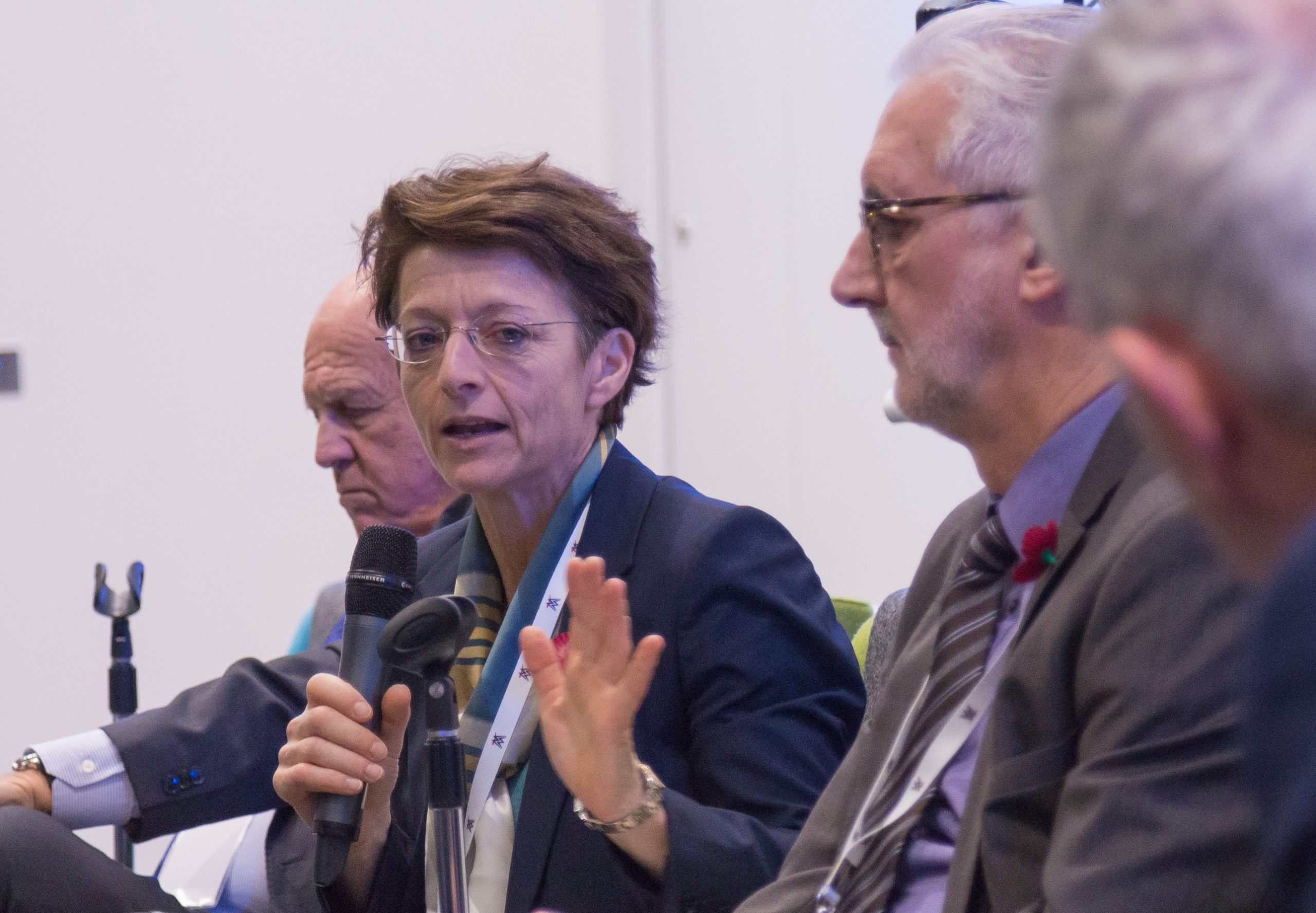
Sarah Lewis, Secretary General of FIS and the Association of Winter Olympic International Federations, is speaking at the conference, the theme of which is “Creating Safe and Engaging Events”.
In this exclusive interview, she talks about how Host City can help to create safe and engaging event experiences in a competitive world.
Host City: What do you see as the most important issues facing the events industry today and why?
Sarah Lewis: Guaranteeing a safe event is becoming increasingly complex and yet something every organiser must ensure, regardless of the costs and logistics.
The market has become so competitive to gain media attention and fan support with such a wide array of different events on offer for consumers to choose from.
As far as our FIS sport of Alpine and Cross-Country Skiing, Ski Jumping, Nordic Combined, Freestyle Ski and Snowboard are concerned, today it is not enough for the organisers to simply stage a competition to attract visitors and fans, there must be a complete experience and this is also an excellent opportunity for sponsor engagement.
How do you think public perception of Winter Olympic Games changed since Sochi 2014 and what are your expectations of the future for the Games?
Leading into the Sochi 2014 Games many of the headlines concerned the huge expenditure that was made for construction, but the reality is that this investment was related to building logistical infrastructure for developing tourism in the area including the roads, railway and airport as well as three ski areas and many hotels.
Recently the image of Sochi 2014 suffered another blow with revelations and allegations about corruption and doping that have further damaged the perception of these Games. But the extraordinary performances of the athletes captured the public’s imagination and hearts which is the fundamental mission of the Games.
The IOC has taken many steps to address the future of the Games in a proactive manner through measures adopted in Agenda 2020 and specifically for the Winter Edition through an expert working group that has looked into adapting the model to make them more accessible for more candidates. Looking at the number of countries that are presently studying potential bids for 2026, the new model appears to be making steps in achieving this objective.
What has been the highlight of 2016 for you so far in the event hosting world?
The two major events with the Rio 2016 Olympic Games and European Football Championships have had the biggest global impact and produced many memorable sporting accomplishments.
In the winter sport world, back in February the Winter Youth Olympic Games was on a different scale, but it successfully engaged youngsters and uncovered some future champions.
The ski and snowsport world is just gearing up for the main winter season and we have many highlights ahead, led by our FIS World Championships in Alpine Skiing (St. Moritz – Switzerland), Nordic Events (Lahti – Finland), Freestyle Ski and Snowboarding (Sierra Nevada – Spain).
Before these begin in early February, the FIS World Cups will be in full swing, including Olympic Test Events in PyeongChang, Korea as part of the tours.
As a speaker at Host City 2016, what are your expectations of this important event – what do you hope to share and learn?
Host City provides a great platform to communicate and promote our sports and events to a knowledgeable audience, and also gain valuable information from other important events. It is particularly interesting to encounter new and different events, who we are not generally meeting up with in the Olympic Movement.
Why is it important for cities, rights holders and their partners to have the opportunity to connect at Host City 2016?
Host City offers a convergence of the various stakeholders involved in staging events and it is always helpful to learn of the challenges and opportunities from other angles of event organisation and participation.
What can the organisers of sports, business, culture and entertainment events learn from one another?
Transfer of knowledge is important in every area of business, but perhaps none more so than the event industry. There is so much experience among those that hosts events, and so many excellent best practices out there, that it can only benefit organisers – and ultimately those that attend the events – to provide the most compelling consumer experience possible.
Sarah Lewis, the Secretary General of FIS and the Association of Winter Olympic International Federations, is speaking at Host City 2016. Register your attendance here. -

Arena Group Saddles Up with The Jockey Club
Building on a relationship dating back over over 26 years with The Jockey Club, Arena Group has been awarded a three year contract to supply Cheltenham, Aintree, Epsom Downs and Newmarket racecourses with temporary structures, interior design , furniture and tableware, spectator seating and scaffolding to the most notable dates in the equestrian calendar.
Ian Sidgwick, Group Purchasing Director, The Jockey Club, said: “Arena Group has worked closely with Jockey Club Racecourses over several years, advising on and delivering temporary environments. They support us in continuously raising the bar with new ideas to get the best value from our budgets, with flexibility to change their infrastructure to best suit our needs. I’m confident they will continue to help us exceed the hospitality expectations of both our brand sponsors and event guests alike.”
The contract provides additional scope and comes after a record year including Arena Structures installing the largest triple deck hospitality temporary structure in the world totalling 125m long and spanning 12,400sqm, along the home straight at The Festival – Jump Racing’s equivalent of the Olympics, staged at Cheltenham Racecourse.
Arena Group also proved pivotal in supporting The Jockey Club’s transformation of this year’s Grand National at Aintree Racecourse, with the installation of more than 7,750sqm of temporary structures complete with bespoke interior fit out, and more than 5,000 tiered grandstand seats offering prime visibility for the revered racing. Arena Group will be the exclusive provider at this event.
Grahame Muir, CEO Arena UK & Europe commented: “We are delighted to announce the further extension of our already excellent relationship with Jockey Club racecourses over the next three years. At Arena Group we pride ourselves with delivering temporary infrastructure of the highest standard to the most prestigious sporting venues and events in the UK, and this contract win is testament to the value, forward-thinking innovation and expertise we bring to clients. We look forward to further pushing the boundaries of customer experience with improved facilities, technology and bespoke design.” -
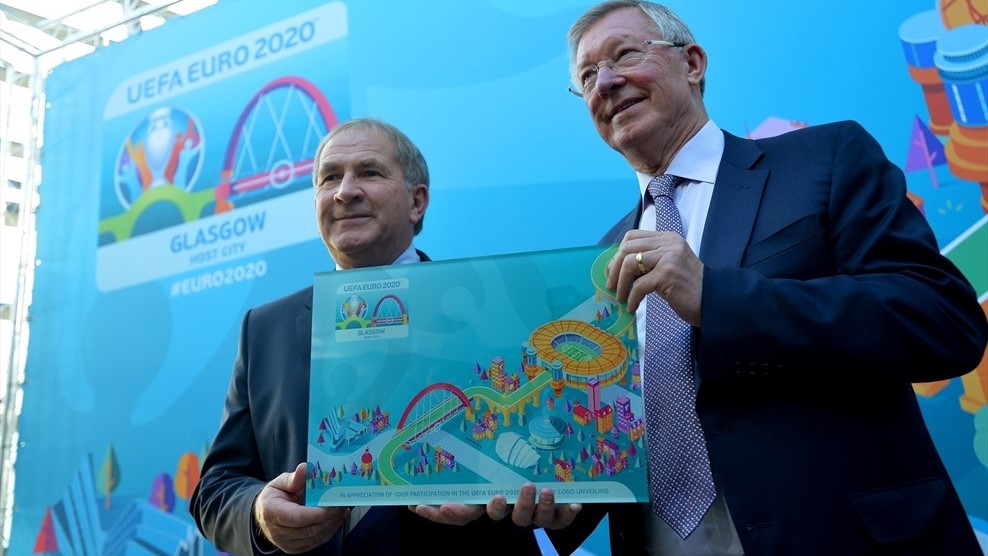
Glasgow unveils EURO 2020 host city logo
Football coaching legend Sir Alex Ferguson helped kick-off Glasgow’s UEFA EURO 2020 preparations at the official launch of the Host City branding in the Science Centre on the banks of the River Clyde on Tuesday.
“I was fortunate enough to play on that famous Hampden Park pitch as a young player, to watch the legendary Real Madrid side that came to Glasgow in 1960, and can look back fondly at cup final successes there as manager of Aberdeen,” said Sir Alex. “I look forward to Hampden being a key part of a historic UEFA EURO 2020.”
Glasgow is one of 13 cities that will play host to matches at UEFA EURO 2020 to commemorate the 60th anniversary of the championship.
The Scottish Football Association, Scottish Government, Glasgow City Council, Hampden Park Ltd and EventScotland are working in partnership to plan and deliver Glasgow and Scotland’s part in UEFA EURO 2020.
Stewart Regan, chief executive of the Scottish FA, said “People make Glasgow and Glasgow will make EURO 2020. Now as a UEFA EURO 2020 host city venue, Hampden Park will welcome new heroes to Glasgow and help create the next chapter in the long and illustrious history of our game.”
Hampden Park will play host to a Group Stage and a Round of 16 match for the championships.
Paul Bush OBE, VisitScotland’s Director of Events, said: “Scotland has demonstrated its capacity as the perfect stage for events on numerous magnificent occasions in recent years, and hosting these crucial UEFA EURO 2020 matches will build upon our sterling reputation as a world-leading host nation.
“We are delighted Hampden Park is set to play such a pivotal role during this landmark tournament, and look forward to further footballing history being made here in Scotland in 2020.”
Glasgow joins London, Rome, Baku and Bucharest in having revealed their host city logos, and ceremonies are scheduled to take place in the remaining cities – Amsterdam, Bilbao, Brussels, Budapest, Copenhagen, Dublin, Munich and St Petersburg – in the weeks to come.
“Glasgow enjoys a proud reputation as one of the world’s great footballing cities,” said Glasgow city council leader Frank McAveety. “The ‘Hampden Roar’ is legendary among visiting football fans from every nation. As a city, we recognise the value of football and major sporting events.”
The UEFA EURO 2020 visual identity sees each of the 13 city logos feature a single iconic bridge from the city in question – acting as a symbol of connection between the various venues. Glasgow’s logo incorporates the impressive Clyde Arc – affectionately known to Glaswegians as the Squinty Bridge – which spans the River Clyde.
In a message to Glasgow, UEFA President Aleksander ?eferin underlined the widely-held view that UEFA EURO 2020 would be “a unique and memorable tournament in a variety of different ways.”
“What better way could there be to celebrate football,” he added, “than to take the EURO final tournament for one single occasion to all four corners of the continent?”
Hampden Park hosted the classic 1960 European Cup final which saw Real Madrid beat Eintracht Frankfurt 7-3, and was the setting in 2002 for a wonder goal by Zinédine Zidane that gave Madrid UEFA Champions League success in the final against Bayer Leverkusen.
“This is a unique opportunity for Glasgow and Scotland to host matches as part of this prestigious championship,” said the Scottish government’s secretary for culture, tourism and external affairs, Fiona Hyslop. “It is likely to have a significant economic impact, not just for Glasgow, but for Scotland as a whole.” -
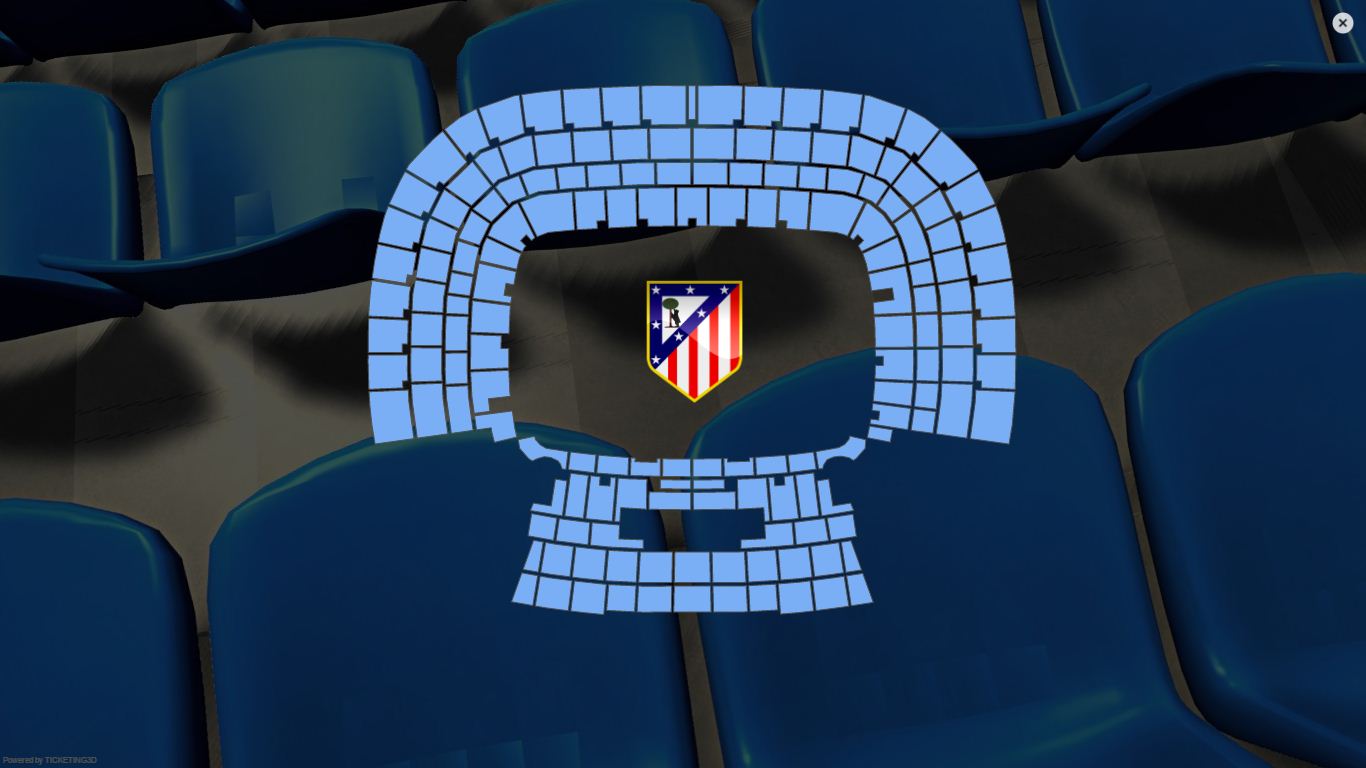
Atlético Madrid fans move into new stadium using Ticketing3D software
Using Ticketing3D’s virtual reality technology, Atlético Madrid has officially begun the move to their new stadium for the 2017-2018 season.
The relocation process began in June with club members applying online and requesting groups of up to 10 seats for family or friends at any location inside the stadium.
Through a 3D recreation of the new stadium, fans can experience the full panoramic view from the stands and every individual seat.
Although members cannot yet choose their exact seat, the club is assigning specific days and times for each group of members based on seniority between July 2016 and February 2017. This will be followed by a process that utilises a waiting list for non-members as well.
During just the first day of the virtual tour release, more than 25,000 fans visited the club’s web page to watch the video at https://nuevoestadiovirtualatleticodemadrid.com/.
Atletico Madrid’s current home ground, the Vicente Calderón stadium, has a capacity of 55,000. From the 2017/2018 season, the team will be playing in the rebuilt Estadio Olímpico de Madrid, also known as La Peineta, with a capacity of around 67,000 and a broader price range for tickets. Fans can see the different prices for each sector through Ticketing3D technology.
This new transfer process provided by Ticketing3D allows for a significantly faster and more efficient member-relocation process, in addition to offering an enhanced overall experience for the fans.
As well as hosting matches for the first team, the stadium will look to host the finals of national and European competitions.
The new stadium is designed to meet the highest standards of comfort, security and visibility. In order to access and enjoy the seats in the most satisfactory way, the distance between the rows has been increased.
More suitable accesses for disabled fans have also been set up. The location of the vomitoriums and the control of the traffic inside the stadium ensures the maximum safety for the spectators.
Ticketing3Ds clients also include Manchester City, Wembley Stadium, ATP Madrid Open, FC Barcelona, Liceu theatre and many more.
For more information visit http://ticketing3d.com/atleticomadrid -
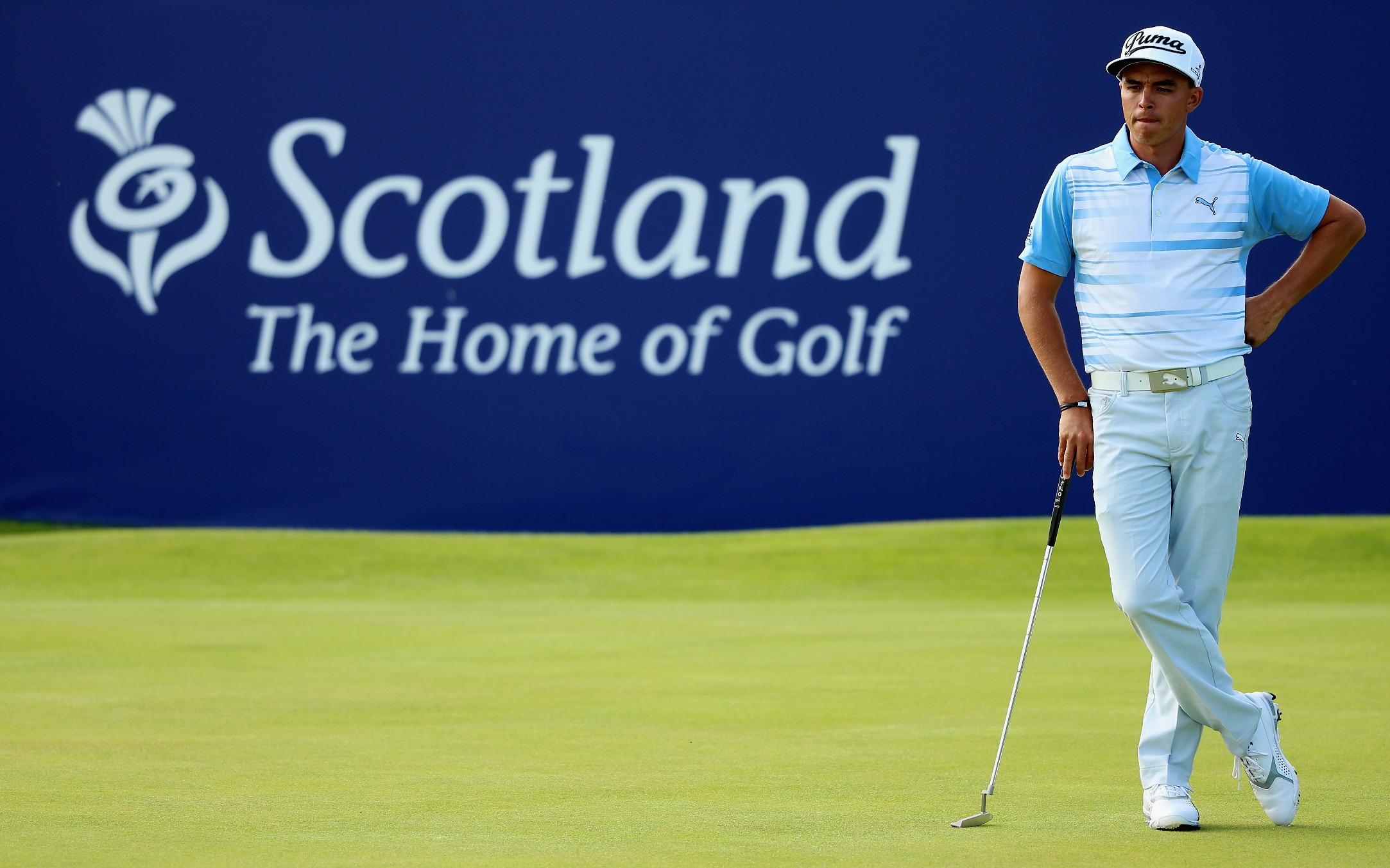
Find your USP like Scotland, The Home of Golf
Over the years I have listened to dozens of marketing experts talk about how to effectively promote and sell your product or brand in the face of stiff competition. Undoubtedly there are various techniques and tactics that marketeers can deploy but for me, the conversation has always seemed to end up back at one place – the unique selling point.
Working out what it is that differentiates your product from all others on the market is the key to not only standing out from the crowd but maintaining credibility in an environment where everyone is trying to shout louder than you.
In Scotland, our golfing USP was forged many centuries ago when the humblest beginnings of a game now played by more than 60 million people worldwide first took root. Few countries in the world have such a close association with a single sport than Scotland does with golf.
It is known around the world as the birthplace of the game, where every legend of the sport has played, where the rules were first established and where the game’s greatest championships were first played.
It is the place where golf clubhouses are the hubs of local communities, where a love of the game is celebrated in families and passed down through generations and where the finite elements of the game are regularly dissected over a few drinks in the 19th hole. In short, Scotland is the Home of Golf.
This USP represents the basis of all Scotland’s activities in golf, from promoting the country globally as a golf tourism destination to instilling it into the minds of Scotland’s schoolchildren as a game for everyone.
It has also been a catalyst for Scotland’s success in bidding for and securing the world’s most prestigious golf events. Don’t get me wrong, there are many factors that go into securing major events, not least past experience and an engaged and supportive Government, which we also have in abundance in Scotland.
But there is no doubt that when it comes to hosting a major golf event in Scotland, event organisers are drawn to the Scotland, the Home of Golf message and the added value it can bring to events.
A key example was The 2014 Ryder Cup, an event which was undoubtedly a huge success for Scotland, delivering economic impact, legacy and huge media profile in our key markets. But what was also apparent was the benefits that The Ryder Cup derived from being hosted in a country synonymous with the game and respected worldwide. Record numbers of overseas spectators at Gleneagles, including a larger proportion from the US than previous Ryder Cups, is indicative of that.
I don’t believe any other golf tourism brand can stand alongside that of The Ryder Cup and add value in the way that Scotland, the Home of Golf did in 2014. And in the current market with global golf sponsors and government support in shorter supply, in traditional markets at least, there is an even greater premium on a country being able to add brand value in this way.
When hosting a major event in Scotland, we endeavour to hand it back to organisers in a stronger position than when it came. This was a key element of our bid for The 2019 Solheim Cup and we firmly believe that Scotland, the Home of Golf can play its part in continuing to elevate the profile of not only The Solheim Cup but the women’s game globally.
There is an obvious quid pro quo in this equation. Our ultimate objective is to encourage more visitors to Scotland and we use our hosting of major golf events as a vehicle for achieving that. This event-led marketing strategy allows us to reach more potential visitors than we could through traditional marketing techniques and a limited budget, while adding further credibility to Scotland’s golfing proposition.
If you look closely at the golf events we support and the golf marketing we undertake, you’ll rarely see a VisitScotland logo when targeting golfing consumers. Instead, you’ll see the Scotland, the Home of Golf message because we know this resonates strongly with golfers around the globe.
This event-led technique also allows us to be innovative in the types of event we target, while also supporting the Scottish Government’s social inclusion and equality agenda. The 2019 Solheim Cup and the European Golf Team Championships – the world’s first mixed men’s and ladies professional event – in 2018 is further testament to that.
The golf tourism market is more competitive than it has ever been with golf tourists presented with more choice than ever before. Each destination has its proposition whether that be warm weather, cost, ease of access, new courses or luxury resorts. But among them Scotland continues to stand unique, as the only Home of Golf.
Paul Bush is speaking at Host City 2016, the largest meeting of cities and sports, business and cultural events. For more information visit www.hostcity.com/events/host-city-2016 -
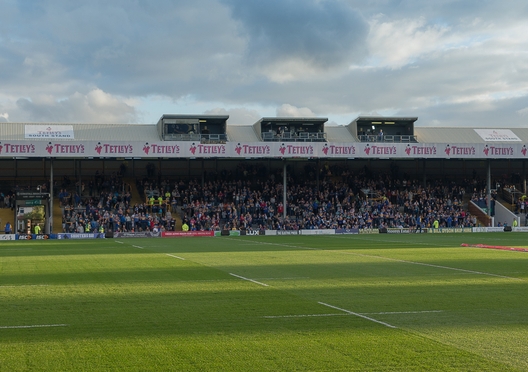
England to host 2021 Rugby League World Cup
England has beaten a rival bid from USA/Canada to host the Rugby League World Cup in 2021, the Rugby League International Federation (RLIF) announced on Thursday.
As well as hosting the 31-game Men’s tournament, England will host the Women’s and Wheelchair tournament.
“The news today that England has won the right to host the Rugby League World Cup in 2021 is transformative for our sport,” said Brian Barwick, Chairman of the Rugby Football League in England.
“Our commitment to grow the game internationally, attract more spectators than ever before and put on the biggest and best event in the sports history has clearly been recognised by the RLIF.
“With a sold out game between England and New Zealand this weekend in the Ladbrokes Four Nations it is clear that there is a real passion for international Rugby League in this country. The UK has a proud reputation for delivering world class sporting events and the Rugby League World Cup in 2021 will round off an incredible decade of major events in our country that began with the London Olympics in 2012. The hard work starts now, but we are confident that we can deliver.
“Finally, we would like to thank the government for their steadfast support for the bid. Their pledge to help financially support the staging of this event and their commitment to provide up to an additional £10m investment in infrastructure for the sport of Rugby League, has undoubtedly helped to bring yet another iconic world class sporting event to this country.”
The tournament will benefit from central government backing.
“I am delighted that England has been chosen to stage the Rugby League World Cup in 2021, said Minister for Sport, Tracey Crouch.
“The government is investing up to £15 million to put on a world class show and up to a further £10 million into the game’s infrastructure as part of the Northern Powerhouse agenda – and to help Rugby League grow outside its traditional home.
“The tournament will be a fantastic festival of rugby, enjoyed by a million spectators, and bringing economic benefits to host towns and cities. I look forward to working alongside the RLIF, RFL and UK Sport on an outstanding event.”
The bid was supported by The Sports Consultancy, who worked closely with the RFL and UK Sport from concept design through to development of the bid book.
“We are very grateful to The Sports Consultancy for their outstanding contribution in helping us to develop a high quality bid book that told a compelling story and ultimately won the RFL the rights,” said Jon Dutton, England 2021 Bid Lead.
“We believe it will be a transformative tournament for the sport both domestically and globally.The 2021 Rugby League World Cup will be the biggest edition since 2000, with 16 teams and 31 matches and plans to stage 80% of games in Lancashire and Yorkshire with “showpiece fixtures” proposed for London, the Midlands and the north east of the country.
“Firstly congratulations to the team at the RFL who have worked tirelessly to bring this flagship event to England and we are hugely proud to have played a pivotal role,” said Robert Datnow, Joint Managing Director, The Sports Consultancy.
“I would also like to offer congratulations to our bid consulting team for their part in another winning bid and who from initial workshop through to bid book submission have demonstrated their professional, passionate and collaborative approach.”
The 2017 Rugby League World Cup will take place in Australia & New Zealand.