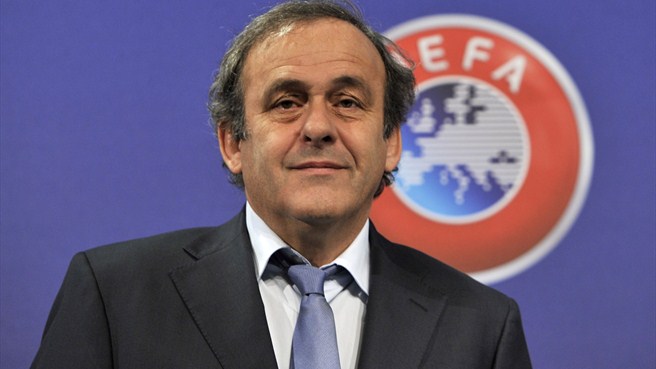
The adjudicatory chamber of the Ethics Committee chaired by Mr Hans Joachim Eckert has banned Mr Joseph S. Blatter, President of FIFA, for eight years and Mr Michel Platini, Vice-President and member of the Executive Committee of FIFA and President of UEFA, for eight years from all football-related activities (administrative, sports or any other) on a national and international level. The bans come into force immediately.
The proceedings against Mr Blatter primarily related to a payment of CHF 2,000,000 transferred in February 2011 from FIFA to Mr Platini. Mr Blatter, in his position as President of FIFA, authorised the payment to Mr Platini which had no legal basis in the written agreement signed between both officials on 25 August 1999. Neither in his written statement nor in his personal hearing was Mr Blatter able to demonstrate another legal basis for this payment. His assertion of an oral agreement was determined as not convincing and was rejected by the chamber.
The evidence available to the adjudicatory chamber in the present case was not sufficient to establish, to the extent required, that Mr Blatter sought the execution or omission of an official act from Mr Platini within the meaning of article 21 paragraph 1 of the FIFA Code of Ethics (FCE) (Bribery and corruption). However, the conduct of Mr Blatter towards Mr Platini without a legal basis constituted a breach of article 20 paragraph 1 of the FCE (Offering and accepting gifts and other benefits). Furthermore, Mr Blatter found himself in a situation of conflict of interest, despite which he continued to perform his related duties, failing to disclose said situation and the existence of personal interests linked to his prospective activities, thus violating article 19 paragraphs 1, 2 and 3 of the FCE (Conflicts of interest). By failing to place FIFA’s interests first and abstain from doing anything which could be contrary to FIFA’s interests, Mr Blatter violated his fiduciary duty to FIFA and breached article 15 of the FCE (Loyalty). Mr Blatter’s actions did not show commitment to an ethical attitude, failing to respect all applicable laws and regulations as well as FIFA’s regulatory framework to the extent applicable to him and demonstrating an abusive execution of his position as President of FIFA, hence violating article 13 of the FCE (General rules of conduct).
In consequence, Mr Blatter has been banned for eight years from all football related activities and fined CHF 50,000.
The investigation into the case of Mr Blatter was conducted by Mr Robert Torres, member of the investigatory chamber of the Ethics Committee. The investigation resulted in a final report which was submitted to the adjudicatory chamber on 20 November 2015. The adjudicatory chamber opened formal proceedings on 23 November 2015, and the hearing of Mr Blatter took place in Zurich on 17 December 2015.
The proceedings against Mr Platini primarily related to a payment of CHF 2,000,000 that he received in February 2011 from FIFA. The payment to Mr Platini had no legal basis in the written agreement signed between both officials on 25 August 1999. Mr Platini’s assertion of an oral agreement was determined as not convincing and was rejected by the chamber.
The evidence available to the adjudicatory chamber in the present case was not sufficient to establish, to the extent required, that Mr Platini obtained the payment for the execution or omission of an official act within the meaning of article 21 paragraph 1 of the FCE (Bribery and corruption). Nevertheless, the conduct of Mr Platini without a legal basis constituted a breach of article 20 paragraph 1 of the FCE (Offering and accepting gifts and other benefits). Furthermore, Mr Platini found himself in a situation of conflict of interest, despite which he continued to perform his related duties, failing to disclose said situation and the existence of personal interests linked to his prospective activities in violation of article 19 paragraphs 1, 2 and 3 of the FCE (Conflicts of interest). By failing to place FIFA’s interests first and abstain from doing anything which could be contrary to FIFA’s interests, Mr Platini also violated his fiduciary duty to FIFA and breached article 15 of the FCE (Loyalty). In addition, Mr Platini failed to act with complete credibility and integrity, showing unawareness of the importance of his duties and concomitant obligations and responsibilities. His actions did not show commitment to an ethical attitude, failing to respect all applicable laws and regulations as well as FIFA’s regulatory framework to the extent applicable to him and demonstrating an abusive execution of his position as Vice-President of FIFA and member of the FIFA Executive Committee, hence violating article 13 of the FCE (General rules of conduct).
In consequence, Mr Platini has been banned for eight years from all football related activities and fined CHF 80,000.
The investigation into the case of Mr Platini was conducted by Ms Vanessa Allard, member of the investigatory chamber of the Ethics Committee. The investigation resulted in a final report which was submitted to the adjudicatory chamber on 20 November 2015. The adjudicatory chamber opened formal proceedings on 23 November 2015, and the hearing took place in Zurich on 18 December 2015 in the presence of Mr Platini’s lawyers.
Source: FIFA
Category: Event Management
-
Blatter and Platini banned from football world
-
FIFA acting leaders look to the future
Dear friends of football,
FIFA has faced unprecedented difficulties this year in a crisis that has shaken global football governance to its core. We are now moving through a period of necessary change to protect the future of our organisation.
We maintain that the majority of those working in football governance do so in the right way and for the right reasons, but it has become clear that root-and-branch reform is the only way to deter future wrongdoing and to restore faith in FIFA. For these reasons, this year and the immediate years to come will be among the most important for FIFA since it was founded in 1904.
A new FIFA President will be elected at the Congress in February, offering the opportunity to start a new chapter. It is vital to recognise that this will be only the beginning. We will need to work hard together over the coming years to win back the trust and respect of fans, players, commercial affiliates and all the many millions of participants who make football the world’s most popular sport.
We are confident that the new reform measures approved by the FIFA Executive Committee in December, alongside the separate actions of the Swiss and US authorities, will lay the foundations for a stronger, more transparent and more accountable and more ethical governing body of football.
We call on all of FIFA’s member associations to fully support, implement and abide by the new reforms. The future of FIFA and the global development of football depend on our full commitment to embracing a change in culture from top to bottom, through the following key reform points:
• A clear separation of powers between the political side of global football and the day-to-day financial and business operations of FIFA, such as organising competitions and football development investments, will help to protect our integrity and avoid conflicts of interest. All financial transactions will be monitored by a fully independent body.
• Member associations must mirror the above structure and comply with principles of good governance, such as establishing independent judicial bodies. They will also be accountable for the conduct of their entire team and any third parties that they work with.
• Strict term limits for senior positions within FIFA of three four-year terms will ensure that no single person can wield too much power or influence.
• An explicit commitment in the FIFA Statutes to develop women’s football and to promote the full participation of women at all levels of football governance, including a minimum of one female representative from each region in the new FIFA Council.
• Central integrity checks by an independent body for all appointments to FIFA bodies and senior management.
• Members of the new FIFA Council must be elected by the member associations from each respective region under new FIFA governance regulations and monitored by the new, independent FIFA Review Committee.
• More independent and properly qualified members of key committees such as finance, development, governance and compliance to provide a stronger layer of neutrality and scrutiny.
• More involvement from the football community (players, clubs, leagues, member associations, etc.) in decision making.
• A statutory commitment by FIFA to uphold and protect internationally recognised human rights in all its activities.
There may be further challenges ahead, and it will take time for these reforms to take effect, but our resolve to rebuild FIFA for the better remains steadfast. Our aim is to establish a secure, professional and fully accountable sports organisation by the time of the 2018 FIFA World Cup™ in Russia.
We are confident that this is a realistic target, and we look forward to returning our full focus to FIFA’s primary mission of promoting and developing football everywhere, and for all.
The hundreds of millions of fans, players, coaches and others dedicated to football around the world deserve nothing less from those of us with the incredible responsibility and privilege of governing and guiding global football.
Yours faithfully,
Issa Hayatou Acting FIFA President
Markus Kattner Acting FIFA Secretary General
-
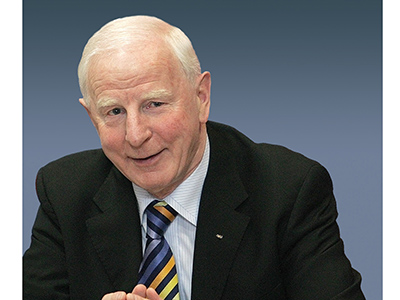
A New Year message from European Olympic Committees president Patrick Hickey
“How do you follow a year like 2015?” is something we will all be asking ourselves at the EOC head office in Rome this week.
My answer is to go back to basics and to revisit the EOC’s primary purpose as an organisation: to focus on the specific needs of Europe’s NOCs.
Last year was of course the year that Europe added the missing fifth ring to the continental games of the world by staging our inaugural European Games in Baku, Azerbaijan. Those wonderful 17 days of Games created more headlines and interest in the work of the European Olympic Committees than any previous initiative or programme in our history. It was a magnificent event and a great milestone for the EOC and the Olympic Committee of Azerbaijan. But it’s important to remember that the work of all 50 of our NOCs and affiliated organisations continued unabated before, during, and after the Games.
In 2015 our NOCs scaled great heights. To highlight a few for example: the NOCs of Austria, Liechtenstein and Georgia all showed expert teamwork, innovation and organisational capacity in staging the 2015 European Youth Olympic Festivals whilst the Czech Olympic Committee staged a hugely professional EOC General Assembly in Prague that exhibited the perfect balance of private support from partners and public support from volunteers. I highlight these examples not for praise above others but to give a small snapshot of the hard work, cooperation and innovative thinking that characterised the activities of all 50 European NOCs in 2015.
Last year, the sports industry as a whole started a process of important and necessary change to its collective governance to make transparency and accountability an absolute priority. These changes were, rightly, front and centre of everyone’s thinking. Yet it’s important to train our eyes to see the enormous amount of great work that was done in the background. This helps remind me why making these changes as soon as possible is so important: because sport is so important to people’s lives. If we govern our organisations better we will attract more participation in what we do, from corporate sponsors, from governments, from fans and from young people.
To ensure the changes take root, it is up to every single person in the sports world to shoulder more responsibility in defending the integrity of sport. It starts with the good governance of sports organisations and the individual honesty of sports administrators, but from here it must run through every strand of the sports world, touch every affiliate, every fan, and every athlete.
I echo Thomas Bach’s words for 2016 when he says “as the role and relevance of sport in society continues to grow, so do the expectations of the public vis-à-vis the integrity of athletes and sports organisations. It is our shared responsibility in the Olympic Movement to provide new answers to new questions.”
2016 is, of course, an Olympic year. And it is incredibly exciting that for the first time ever the Olympic Games will be staged in South America. It shows that the Olympic family is a truly global family and it is a wholly positive milestone for the Olympic Movement.
Europe has staged 30 editions of the summer and winter Games but must fight hard now to maintain its pre-eminence, which is why it is so pleasing to see three of the four 2024 Candidate Cities coming from Europe. In addition, as the most developed sports continent, we have a vital role to play in establishing the models of, not just good governance, but exceptional governance, which the whole Olympic family can benefit from.
I wish you all a great year in sport in 2016.
Patrick Hickey, President of the European Olympic Committees
-
A new dawn for UIPM
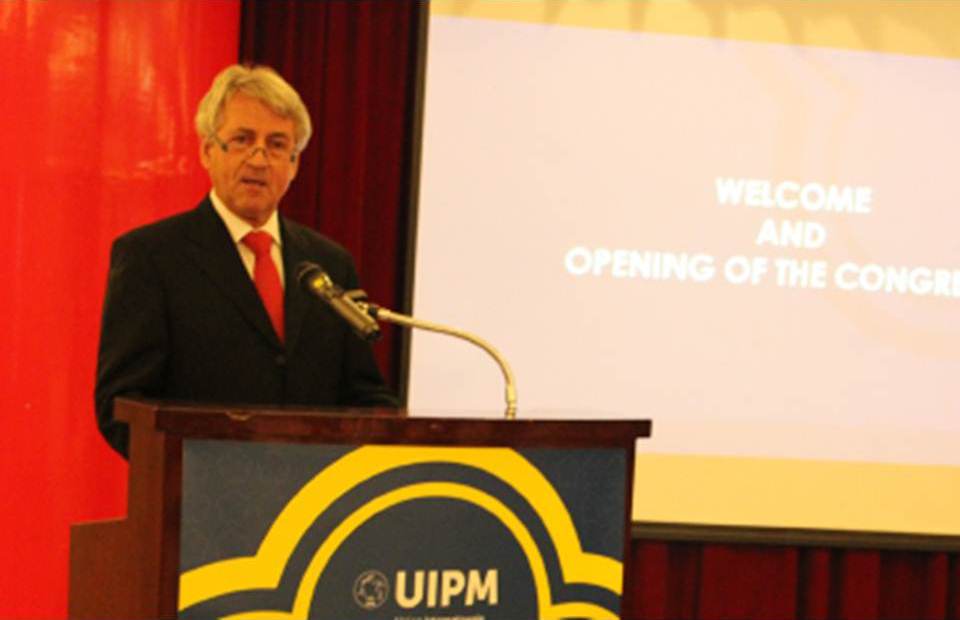
National Federations from around the world voted for significant changes to the governance of Modern Pentathlon at the 67th UIPM Congress (November 7-8) in Taipei.
The Congress approved a number of motions designed to modernise the way the UIPM manages Modern Pentathlon and its sub-sports, including:
• A comprehensive review and update of the entire structure of the UIPM, including changes to simplify and reduce the number of rules on internal organisations
• Changes to the UIPM Biathle/ Triathle competition rules
• Adoption of a code of ethics in line with the latest IOC requirements that provides for a clear and efficient procedure in cases of litigation
• A simplification of election rules for all elective seats within the UIPM.
“This Congress has been a big step forward for development with new member federations joining our global community and new innovations such as Laser Run making our sport even more accessible to the world,” said UIPM president Dr Klaus Schormann.
“The National Federations are very united in focusing on sport, education and the integration of society through sport. UIPM is committed to the IOC Agenda 2020 and to supporting the protection of the clean athletes.”
Expansion was the main theme of the UIPM Congress 2015 as Dr Klaus Schormann, UIPM President, and Shiny Fang, Secretary General, reviewed another year of relentless progress and innovation and looked ahead to a bright future.
“With a strong vision, with a clear understanding that change is a certainty, and with a total commitment by all the family, modern pentathlon can and will be successful in retaining and gaining on its position after the 2020 Olympic Games in Tokyo and, in fact, being considered as an essential part of the Olympic program and one of the International Federations that has adapted itself successfully to the challenges of these times,” said Secretary General Shiny Fang.
“As we continuously improve our structures centrally and in every country, ‘expanding’ our reach is our real next frontier. The right choices in this area will make a huge difference in the lead up to Tokyo 2020, when the IOC will once again review the sports program, and in the long run, also beyond 2020.”
UIPM delegates approved the membership of another six member nations: Bermuda, Afghanistan, Indonesia, Benin, Madagascar and Colombia.
UIPM also became the first International Federation to express its backing for the Declaration of Support for the Olympic Charter, which was signed by Olympians representing all five continents at the inaugural World Olympians Forum organised by the World Olympians Association (WOA), in Moscow, Russia in October.
The two-day conference also revealed the winners of the 2015 UIPM awards and named the venues for numerous future UIPM competitions.
Source: UIPM -
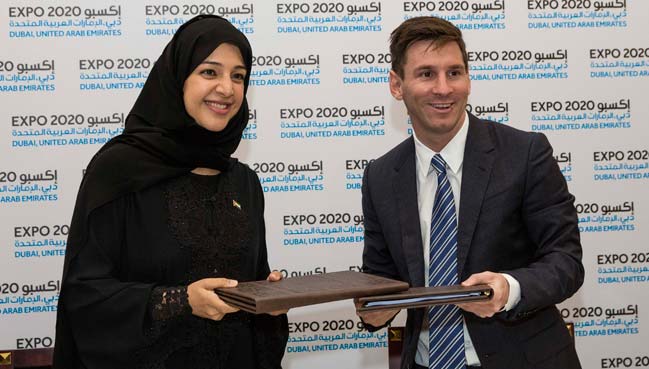
Messi signs with Expo 2020 as Global Ambassador
Multi-award-winning footballer, Lionel Messi has today been announced as the first Global Ambassador for Dubai’s World Expo, taking on an international role as a champion for Expo 2020 Dubai.
Messi, who yesterday won the coveted Ballon D’Or for a record fifth time, is one of the most widely known footballers in the world. With over 80 million followers on social media, and recognition levels above 85%, by international survey respondents, he is one of the most influential players in modern football.
“Expos are all about focusing attention on issues of global interest and global concern to help imagine a better future,” said Her Excellency Reem Al Hashimy, Director General of Expo 2020. “What better way to do this than by recruiting allies among people who are already working towards better future outcomes?”
Expo 2020 is guided by the belief that innovation and progress are the result of people and ideas combining in new ways. Under the theme ‘Connecting Minds Creating the Future’, the international event aims to bring together hundreds of countries and millions of people to celebrate human ingenuity.
“Lionel Messi’s performances on the football pitch bring people together, and as a result his influence reaches far beyond it. He is the ideal person to be our first global ambassador. He overcame youthful health challenges to achieve his dreams of international excellence through hard work; making him an inspiration. He is perfectly placed to reach out to young people around the world, bringing them together to join us as we work towards hosting our World Expo in 2020 ” H.E. Al Hashimy explained.
Expo 2020 Global Ambassadors will be recruited from leading figures in the sports, arts, music, culture and media, as well as international thought leaders in the fields of architecture & design, science & technology, business, economics, education, philanthropy and sustainability.
Ambassadors will travel the world, talking to stakeholders to explore connections between their work and that of Expo 2020, along with potential opportunities for collaboration and engagement.
The organisers of Expo 2020 Dubai will be making further ambassadorial appointments over the coming months.
Source: https://expo2020dubai.ae
-
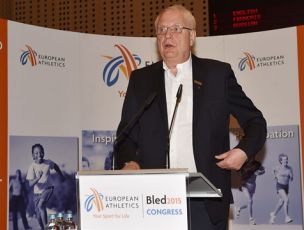
European Athletics backs UK call for review of world records
European Athletics President Svein Arne Hansen has announced a number of measures to bring about a “cultural revolution” in athletics.
These initiatives include a review of European records, in line with the UK Athletics proposal that world records should be reset in light of ongoing doping revelations.
“Rebuilding the reputation of athletics is likely to be the biggest job we have ever undertaken,” Hansen wrote in a statement issued to stakeholders.
“Symbolic gestures and cosmetic measures will not be sufficient, this grave and unprecedented situation calls for fundamental reform.”
“We believe a cultural revolution will be required for athletics to rebuild its reputation and bring the sport’s governance to where it needs to be.”
The reform programme includes further development of good governance structures; investing in a new mandatory anti-doping education programme, pushing IAAF and WADA to implement tougher penalties for doping offenses, developing a national anti-doping system of assessment and monitoring, and reviewing the European records, in line with the British Athletics proposal for world records.
“The recent scandals have reopened the discussion about the legitimacy of certain records in our sport. These link us to a past in which neither we nor the public can have full confidence,” said Hansen.
“Over the years different approaches for addressing this question have been proposed but the issue is very complex and so far nothing has happened. It is clear that now the situation is different.
“We will set up a special project team in the coming months to look again at what is best for the sport and possibly a new approach to records in Europe that could be an example for the IAAF and our Member Federations.
“We will also review the lists of all past award winners, like our European Athlete of the Year or our Coaching Awards, to see if action needs to be taken. Whatever changes we make will be clearly explained so that the public can see how European Athletics is coming to terms with the realities of our sport’s past.”
An independent WADA-commissioned report, published during HOST CITY 2015 on 9 November, revealed that officials at a WADA-accredited drug testing laboratory in Moscow destroyed samples and accepted bribes to cover up positive tests.
“Like everyone in athletics, I am gravely concerned and saddened by the recent WADA report on systemic doping in Russia, the serious corruption allegations against some former IAAF officials and the other scandals that seem to surface on a daily basis,” said Hansen.
“Although European Athletics has not been implicated in any way and these issues are not unique to athletics, the public image and reputation of our sport have been tarnished and this, of course, touches all of us.”
Hansen said European Athletics would take work with IAAF to “help Russia come back into the sport on the right terms.”
“Our philosophy will be one of “tough love” – firm, fair and respectful – but our tolerance for doping and any form of corruption must remain at zero.
“We will also support our Member Federations that have ideas to contribute to the discussion about our sport’s future now taking place, for example the ‘Manifesto for Clean Athletics’ published by UK Athletics.”
WADA is due to release another report later this week.
“When the second WADA report is released, we will carefully study it and any recommendations it contains. If immediate comments are called for, we will make them. Then, in light of the report, we will take our time to review the projects and proposals we have put forward and make any adjustments or additions required,” said Hansen.
Hansen endorsed the current leadership of the IAAF. “We have full confidence that IAAF President Sebastian Coe is the right man for the current challenges, and European Athletics will give him the backing and support he needs.”
-
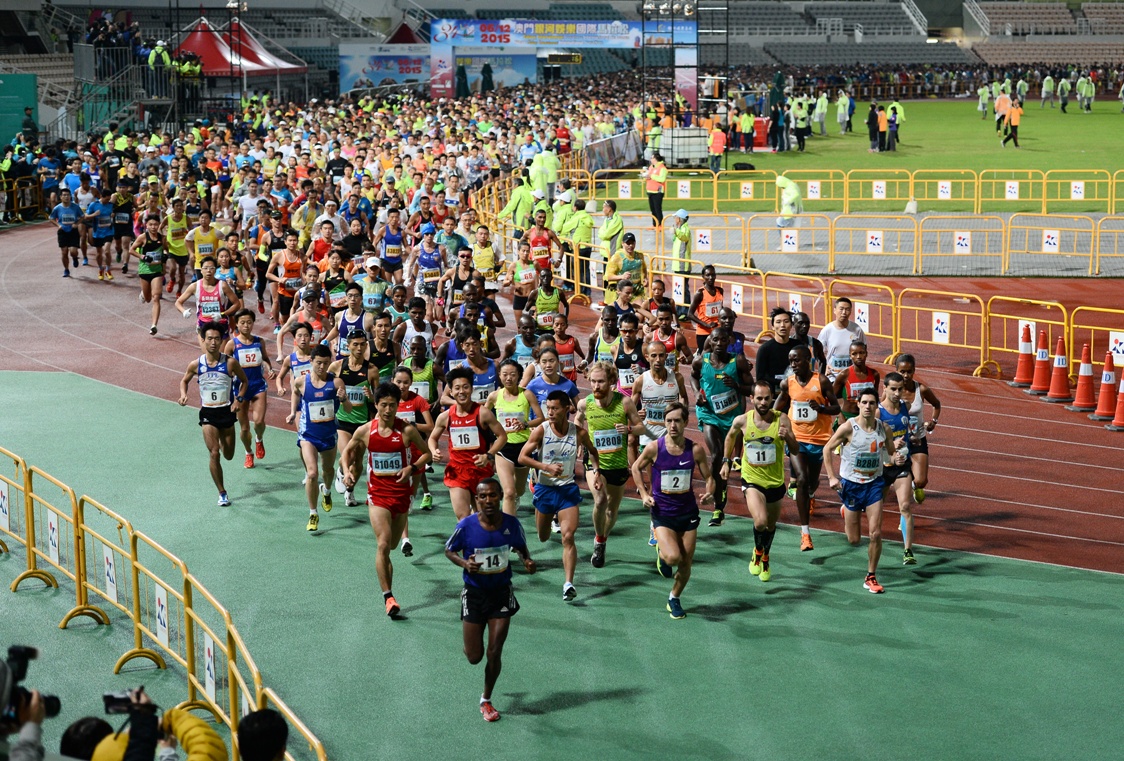
How Macau’s international marathon keeps growing
The Macau International Marathon has been successfully hosted for thirty three years with the aim of developing local sports, strengthening friendship between people from different parts of the world and promoting sport tourism in Macau.
“With a long history rooted in the community of the city, the Macau Galaxy Entertainment International Marathon has become one of the most popular sport events,” said Jose Tavares, President of Macau Sport Development Board of the Macau SAR Government.
“Through continuous enhancement, the event has been attracting long distance runners around the world, which raises the event profile and successfully attracts attention, locally and abroad.”
The 2015 Macau Galaxy Entertainment International Marathon took place on the Sunday 6th December 2015, organised by the Macao Sport Development Board and the General Association of Athletics of Macau.
“As the host of the event, we are dedicated to conduct welI-rounded preparation to welcome each and every participant with warm hospitality, as we believe that ideal conditions will optimise opportunities of better results,” said Tavares.
2015 marked the tenth anniversary of the inscription of the historic centre of Macau on the World Heritage List. The Macau International Marathon once again traversed the UNESCO world heritage site, passing through the A-Ma Temple.
The race started at the Olympic Sports Centre Stadium in Taipa and, for the first time, ran through the Hengqin campus of the University of Macau.
The event coincided with the “Parade through Macau, Latin City”, creating synergistic effects between the marathon, local tourism and culture.
“We are offering diversified programs and festive galas to sincerely welcome marathon lovers from different parts of the world,” said Alexis Tam Chon Weng, Secretary for Social Affairs and Culture of the Macau SAR Government.
“This year’s international marathon will integrate more cultural and tourism elements and provide a diversity of choices and wonderful experiences to participants and tourists.
“This not only demonstrates our friendliness and hospitality, but it also reflects the government’s determination to establish Macau as a ‘World Centre of Tourism and Leisure’.”
Global popularity
The Macau International Marathon continues to grow in size, with participants from 50 countries from around the world participating.
“The number of this year’s marathon runners has reached its new heights and this historical sport of long-distance running has been gaining more and more popularity around the world,” said Alexis Tam Chon Weng, Secretary for Social Affairs and Culture of the Macau SAR Government.
“Marathon, which signifies limits, difficulties and challenges, also stands for endeavour, perseverance and triumph. And all because of the difficulties, people can fully experience the spirits of sportsmanship like righteousness, courage, honour and happiness.”
In 2015, 8,000 athletes from 50 countries and regions participated, up from a quota of 6000 the previous year. The quota for the half marathon was full on the first day of registration while the general marathon was full on the second day of registration. Managing this growth is no small task.
“In order to cater to the needs of the rising number of running lovers, the organising committee has dedicated to create better conditions and overcome difficulties in increasing the registration quota,” said Ma Lao Hang, President of General Association of Athletics of Macau.
“All members from the General Association of Athletics of Macau, race judges and staff are committed to get every aspect of the event well prepared and provide the best conditions for all participants to create remarkable records.”
The Macau Galaxy Entertainment International Marathon is a truly global event, with former winners from Belarus, China, North Korea, Ethiopia, Hong Kong, Italy, Kenya, Poland, Portugal, South Africa, United Kingdom and Zimbabwe.
2015 was a good year for the Ukraine in Macau, with Vitaly Shafar and Olena Shurkhno winning the men’s and women’s general marathon respectively. The total prize money, awarded for the first ten finishing athletes in the different categories, amounts to US$187,000.
“With the number of participants being increased annually, better and better results have been made,” said Ma Lao Hang.
“The Macau International Marathon has always been an annual major event, we will move forward with all the participants to continue the long history of the Macau International Marathon and create legends for the sport development of Macau.”
-
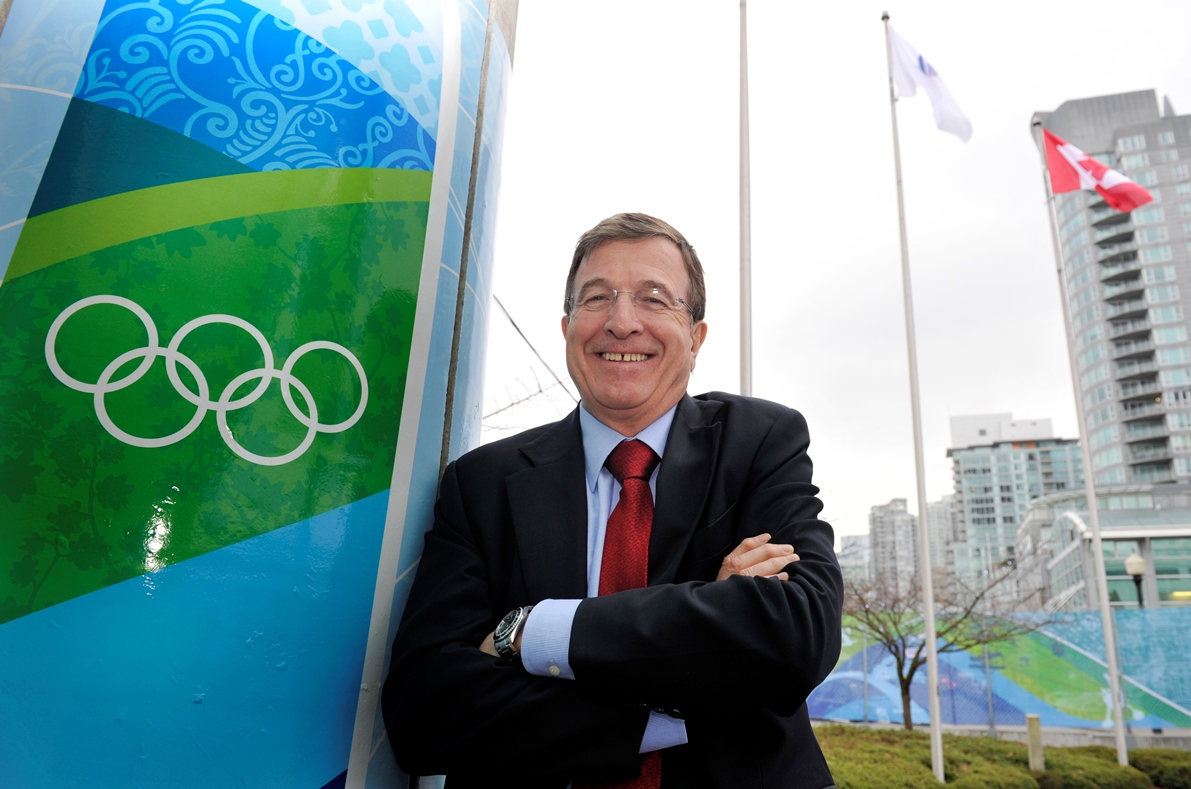
IOC’s Gilbert Felli to speak at AGES 2016 event
A number of high profile figures have confirmed to speak at the Association of Global Event Management (AGES) 2016 annual event, which takes place in St. Augustine, Florida, USA on 29 February and 1 March.
Internationally recognised figures speaking at the conference on day one of the event include: Gilbert Felli, IOC’s Senior Olympic Games Advisor;
Jerry Anderson, founder and Senior Principal of Populous; John Baker, VP Games Overlay and Broadcast Integration, Toronto 2015, José Quiñones González, President of the Peruvian Olympic Committee and Member of the board COPAL 2019 (Pan Am and ParaPan Am Games 2019, Lima) and Patrick D. Sandusky, Chief External Affairs Officer, United States Olympic Committee.
AGES has also announced that former Olympic Games Executive Director Gilbert Felli is now an Honorary Member of AGES.
According to AGES, a large majority of its members, associate members and partners have confirmed their presence at our event.
AGES also announced that its membership is growing, with two new members joining recently: Pro Construction, a market leader in Poland and that delivers event infrastructure works at international level, and Unitec Systems, a leading event supplier in Korea specialising in seating.
The AGES 2016 event is hosted by CAT ES, an AGES member and leading supplier of temporary power.
The second day of the event will include presentations from AGES partners EY and SOS Global, as well as working group activities.
One working group is developing a state-of-the art contract template for the delivery of overlay works while another is elaborating a table showing temporary import and export provisions for all major large events until 2020.
AGES members ES Global, GL events, Nüssli and MTD have delegated experts to these working groups. AGES says it will focus on finding suitable industry partners in the area of technology and sustainability in 2016.
For more information visit www.ages.international -
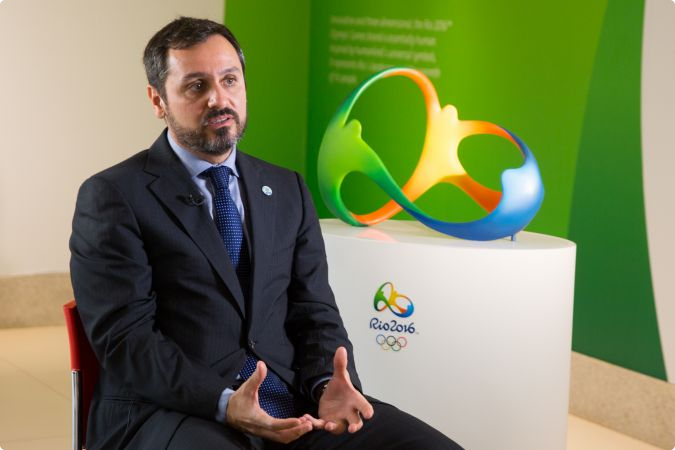
“Brazil is prepared,” promises Rio 2016 security chief
The challenges for guaranteeing safety at the Rio 2016 Olympic and Paralympic Games, the biggest sporting event on the planet, are plentiful, with around 15,000 athletes representing 206 countries and the majority of action concentrated in just one city.
However, certain aspects receive special attention from the Brazilian Federal Government, as revealed by Andrei Rodrigues, special safety secretary at the Ministry for Justice for major events.
“We have implemented the Integrated Anti-Terrorism Centre, a specific body of police, law enforcement and intelligence, to increase the exchange of information, training and knowledge,” he told rio2016.com. “Police from several countries are working with us, mutual cooperation between countries is vital.”
In 2015, Brazil sent around 100 police officers abroad to learn about the best practices at large international events, including the Boston and Berlin marathons, the IAAF World Athletics Championships in Beijing, the Baku 2015 European Games, the Tour de France and the UN General Assembly.
“We’re going to bring 10,000 officers from the National Force to Rio. And we’ll have almost 5,000 federal police officers from other parts of Brazil,” he said.
Rodrigues is in charge of a body of over 47,000 Brazilian security professionals who will work intensely during August and September. Added to this will be 38,000 members of the armed services, meaning the security operations around the Rio 2016 Games will be the largest in Brazilian history. Thus, Rodrigues maintains full confidence in Rio de Janeiro remaining free from terrorist attacks.
“Brazil is prepared. We have hosted a series of events which have not taken place in any other place, which has allowed us to advance and progress with each step taken”
The vision of the Brazilian Government also involves efforts to make Rio de Janeiro safer as a whole, not only the areas surrounding the Olympic venues. “We cannot think about staging the Games if the city as a whole isn’t safe,” said Rodrigues. “A very large effort is underway to maintain safety on a daily basis.”
With attention focused on Rio de Janeiro, the government promises to be attentive to security in other cities and regions (and not only the football co-host cities).
“There will probably be an increase in tourism in other places. The Games will signify reinforcement in security, wherever that may be,” Rodrigues said.
Source: rio2016.com
-
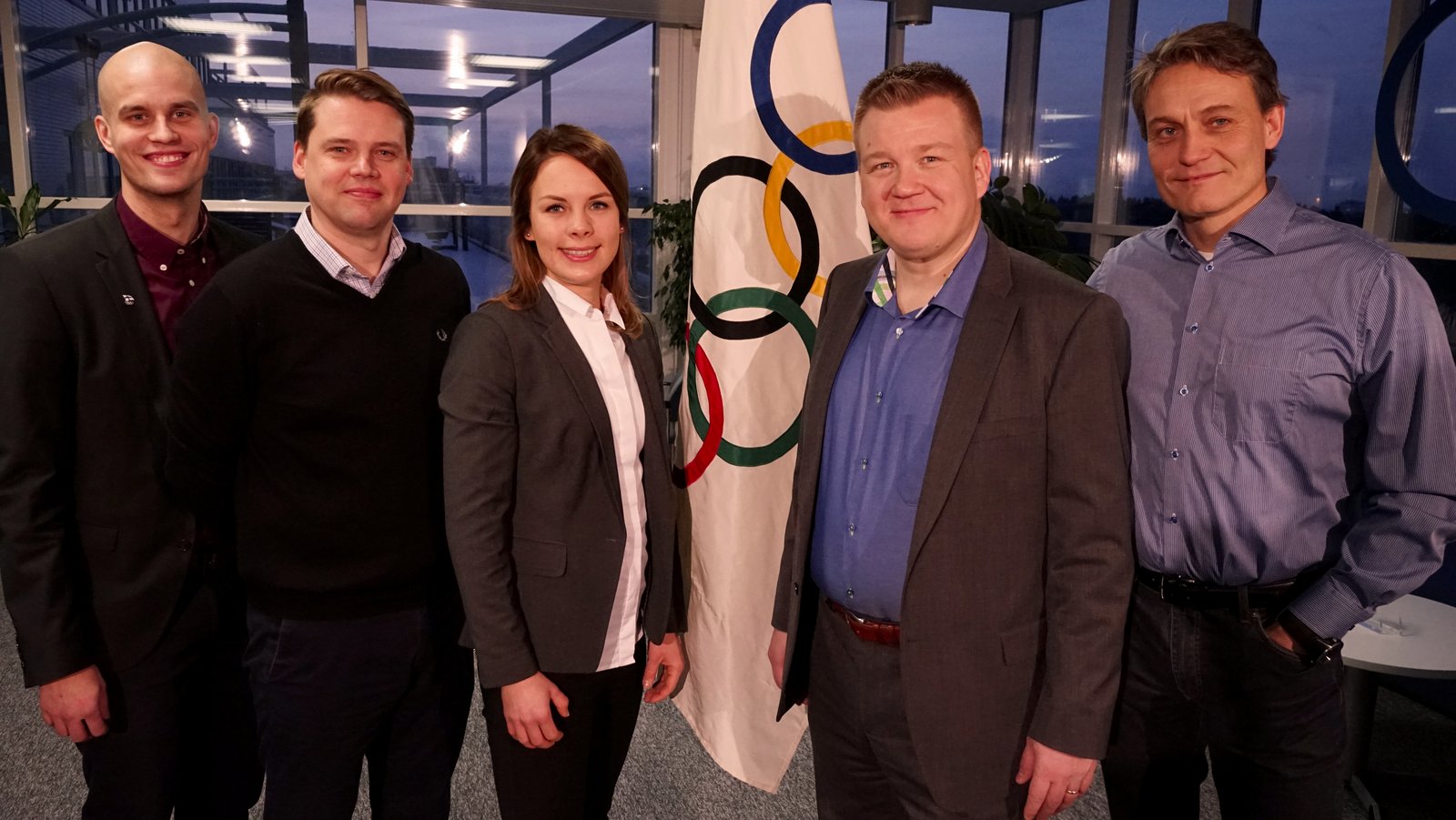
Atos signs contract with Finnish Olympic Committee
Atos, the Worldwide IT Partner of the Olympic Games since 1989, has signed a contract with the Finnish Olympic Committee (FOC) that includes IT services, sponsorship of local triathlete and joint marketing initiatives until 2018.
The Olympic Games is one of the world’s biggest IT-projects, its scope bringing special challenges to IT management systems and infrastructure. Atos has been a key technology provider for the Olympic Movement since 1989, when it provided services to the Barcelona 1992 Organising Committee, and is now delivering IT for the upcoming Rio 2016 and PyeongChang 2018 Olympic Games.
“It’s great to see how the international player Atos implements the IT during the Olympic Games in Rio. We will utilize this know-how also in Finland in our own IT-projects of the Finnish Olympic team,” said Ville Köngäs, Client Manager at the Finnish Olympic Committee.
“We pursue to reach a point where our own performance in IT-related issues will raise into a totally new level enabled by Atos.”
As part of the cooperation, audiences will be able to follow the sporting life and competition preparations of ITU Long Distance Triathlon World Championship silver-medalist Kaisa Lehtonen through social media channels. She will also participate in the upcoming Olympic events.
“It is great to be part of the cooperation with the Finnish Olympic Committee and Atos,” said Lehoten.
“Through the cooperation I can see from a vantage point the big role technology has also on our athletes’ work; and on the other hand let people follow my daily life as an athlete.
“The cooperation enables me to prepare determinedly to the upcoming competitions and helps me on my way to be part of the ultimate top of the world athletes.”
Atos provides consulting & systems integration services, managed services & BPO, cloud operations, big data & cyber-security solutions, as well as transactional services through Worldline, the European leader in the payments and transactional services industry.
The Group works with clients across a number of other business sectors including defence, financial services, health, manufacturing, media, utilities, public sector, retail, telecommunications and transportation.
Harri Saikkonen, Managing Director of Atos in Finland said “It is fantastic to start a local cooperation with the Finnish Olympic Committee. Being successful in sports and business has many common elements. Gold-medal achievements and succeeding in international arenas requires from companies an unconditional work ethic, at the same level as top athletes when preparing for competitions.
“Like FOC fosters the blue-and-white performance of the athletes, we at Atos commit ourselves to empower the performance of Finnish companies into internationally